Many branded inflatable tents may have a shorter lifespan than expected. Not because the idea is broken, but because people buy the wrong kind for what they actually need. I’ve watched event managers torch their whole annual business inflatable solutions budget on a tent that folds over in a decent gust. And I’ve seen campers haul commercial-grade monsters they can barely lift out of the car. The market splits clean down the middle: B2B custom suppliers building promotional structures, and retail camping brands engineering shelters for the outdoors. Mixing those two worlds? That’s where everything falls apart.
This guide keeps them separate. You’ll learn what made-to-order inflatable tents with Pantone matching service actually cost, which camping brands hold up in real wind, and how to dodge the durability traps that kill most purchases before their third season. I’ve been in this industry for years, and here’s the thing—the difference between a good inflatable tent and a bad one has less to do with price than you’d think.
Quick Answer
Branded inflatable tents fall into two distinct categories: custom promotional structures from B2B suppliers (used for events, advertising, and brand activations) and retail camping tents from brands like Vango, Outwell, and Coleman (used for outdoor recreation). Choose based on your use case—custom tents prioritize logo visibility and quick tent setup instructions, while camping tents prioritize weather resistance, pack size, and durability. Pick wrong, and you’ll be paying for repairs and replacements sooner than you expect.
Why Choose Branded Inflatable Tents Over Poles?
Let’s start with the obvious question. Why would anyone ditch poles? I’ve used both extensively, and the answer comes down to three things: setup speed, stability, and branding surface area.
Traditional pole tents have been around for a century for good reason. They’re cheap, proven, and every camper knows how to pitch one. But they’re also a pain in the neck. Threading fiberglass poles through sleeves takes ten minutes on a good day, twenty when it’s windy, and forty-five when you’re fighting a hangover and a toddler who keeps unzipping the door. Inflatable tents eliminate that entire ritual. You unroll the fabric, attach a pump, and watch the structure rise in about five minutes. The TopNotch Outdoor review team actually timed this across multiple models, and the consensus was clear—inflatable tents deliver roughly a five-minute setup time with no stubborn poles to grapple with. That’s the difference between arriving at camp before dark and fumbling with a headlamp.
Stability is where inflatable tents surprise people. Air beams distribute stress differently than poles. When wind hits a pole tent, the force concentrates at the pole ends, which is why they snap. Air beams flex and absorb that energy. They’re under pressure, so they have a natural spring-back quality. In my experience, a properly anchored inflatable air tent handles gusts that would bend a fiberglass pole into a question mark. That said, this only applies to quality construction—cheap inflatable tents with thin fabric and low-pressure beams will flop around like a fish on a dock.
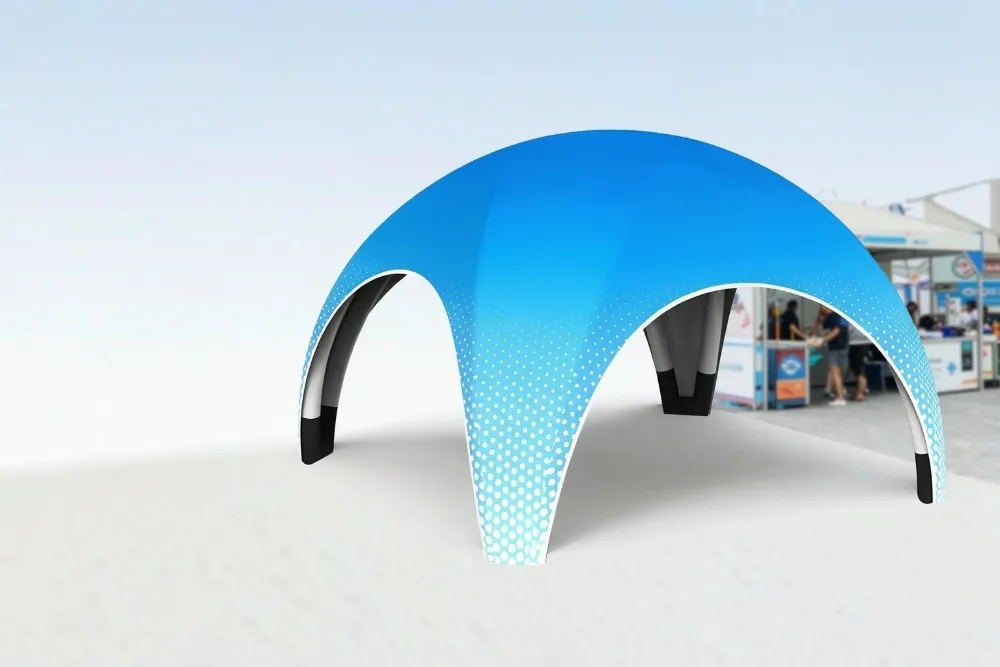
And then there’s branding. This is the whole reason the “branded” part of branded inflatable tents exists. A pole tent has a ridged, angular surface that distorts printed graphics. Air beams create smooth, continuous curves with flat panel sections that display logos beautifully. WestShade, a custom inflatable tent manufacturer, emphasizes this on their product pages—the seamless surface of an inflatable structure gives brands a clean canvas for custom printing. You don’t get creases running through your logo or distortion at the corners. For event activations, that’s everything.
There’s also a practical advantage that doesn’t get enough attention: pack size. Air beams fold down much smaller than a bundle of poles. A family-sized inflatable tent can fit in a duffel bag that would never accommodate its pole-based equivalent. For brands shipping multiple tents to events, that’s a real logistics win.
But I should be honest about the downsides too. Inflatable tents cost more. They require a pump, which can fail. And if a beam punctures, you need a repair kit and the patience to fix it on-site. Pole tents can be patched with duct tape in a pinch. Air tents need a proper patch and time to cure. Also, very cold weather can reduce air pressure, making the structure feel floppy. I’ve seen this happen at winter events where the tent was inflated at room temperature then moved outside. The beams lost pressure within an hour.
Custom Branded Inflatable Tents for Events & Promotions
This is where the B2B world operates, and it’s a completely different animal from retail camping. Custom inflatable tents for events are built to be seen, not necessarily to withstand a mountain storm. They’re marketing vehicles first and shelters second.
How Custom Tents Work
The process typically starts with a design brief. You send a supplier your logo, brand colors, and dimensions. They create a digital mockup showing how your branding will look on the tent structure. Once approved, production begins. Depending on the supplier, you might be choosing between basic inflatable tents, custom-shaped structures, or even inflatable furniture to complement the space.
WestShade offers free shipping on orders over a certain amount. and provides a full range of custom inflatable tent series categorized by use, shape, and size. Their site walks you through comparing custom inflatable tents against traditional tents, which suggests they know buyers often need education before committing. TentCraft similarly positions custom inflatable tents as lightweight, visually distinctive ways to create sampling spaces, retail product displays, and outdoor event environments. Their blog features nine branded inflatable tent designs that showcase how companies use these structures for athletic events, motor sport activations, active-lifestyle sponsorships, and music festivals.
Printing Methods and Logo Visibility
The printing method matters more than most buyers realize. Dye sublimation is the gold standard for polyester fabrics—it bakes the ink into the fibers, producing vibrant, long-lasting colors that won’t crack or peel. Some suppliers also use heat transfer printing for logos, which is faster and cheaper but less durable over time. NastoCamp’s case study on custom inflatable tent manufacturing shows factory workers using heat transfer printing for logo application during OEM production. That’s a real-world example of the trade-off between cost and longevity.
For maximum logo visibility, you want to think about panel placement. Large, flat side panels are prime real estate. Some tents feature full-wall branding, where the entire side of the tent is your logo. Others use a more subtle approach with a smaller logo on the front arch and clean side panels. The right choice depends on your event. A music festival sponsor might want maximum visual impact from a distance. A corporate sampling space might prefer a cleaner look that feels premium up close.
Price Ranges and Sizes
Custom inflatable tents are not cheap. You’re paying for design, printing, manufacturing, and often shipping. Based on what suppliers in this space typically charge, expect to pay anywhere from a few hundred dollars for a small basic inflatable tent to several thousand for a large, fully-branded structure. The exact numbers depend on size, complexity, and quantity. Ordering multiple tents usually brings the per-unit cost down significantly.
Sizes range from small 10×10 pop-up style tents suitable for farmers markets to massive 30×30 structures that can host product launches. The sweet spot for most brand activations is the 10×15 to 20×20 range—enough space for a product display and a couple of staff members without overwhelming the venue.
Lead Times
Here’s a number that surprises most first-time buyers: Custom inflatable tents typically take several weeks from design approval to delivery. That’s not a fast process. If you need a tent for a specific event date, you need to start the process at least two months ahead. Rush orders exist but cost more, and even then, you’re looking at a minimum of several weeks. This is one of the most common mistakes I see—brands waiting until a month before their event to start shopping.
Top Retail Brands for Camping & Glamping
Switching gears to the retail side. If you’re buying branded inflatable tents for camping, glamping, or family vacations, you’re looking at a different set of manufacturers. These are outdoor gear companies, not event suppliers. The priority here is weather resistance, packability, and durability—not logo visibility.
Vango
Vango is arguably the most established name in air beam tents. They pioneered the AirBeam technology that most competitors now use in some form. Their tents are known for solid construction, reliable valves, and a wide range of sizes from two-person backpacking shelters to eight-person family palaces. In my experience, Vango’s mid-range tents offer the best balance of price and durability. Their cheaper models cut corners on fabric weight, but even those hold up reasonably well in moderate conditions.
Outwell
Outwell positions itself as a premium family camping brand. Their inflatable tents feature thicker fabric, better zippers, and more thoughtful interior layouts. The trade-off is weight. An Outwell six-person air tent can be quite heavy, often exceeding 30 kilograms., which is fine if you’re driving to a campsite and terrible if you’re hiking. Outwell tents also tend to have excellent headroom, making them popular for glamping setups where comfort matters more than pack size.
Dometic
Dometic is better known for fridges and awnings, but their inflatable tent line is worth attention. They focus on rugged, expedition-grade construction. The fabric is heavier, the beams are thicker, and the whole thing feels overbuilt. That’s great for harsh weather, less great for your car’s trunk space. Dometic tents are the choice for people who prioritize durability above everything else.
Coleman
Coleman is the budget-friendly option, and that comes with caveats. Their inflatable tents are relatively new to the market, and the quality isn’t quite at Vango or Outwell levels. The fabric feels thinner, and the beams are less robust. That said, Coleman tents are significantly cheaper and perfectly adequate for fair-weather camping. If you’re a weekend warrior who only camps in summer, a Coleman inflatable tent might be all you need. If you’re planning a multi-week trip in unpredictable weather, spend more.
What the Comparison Metrics Tell Us
When evaluating the best inflatable camping tents, TopNotch Outdoor’s review team ranked models across five key metrics. Their methodology included side-by-side comparisons of different aspects of the top air tents for sale, with detailed pros and cons of inflatable versus traditional tents. The key metrics that matter are:
- Weight and pack size — bigger isn’t always better
- Setup time — most inflatables hit that five-minute mark
- Weather resistance — hydrostatic head ratings and wind stability
- Interior space — headroom and floor dimensions
- Price — what you get for your money
The takeaway from their testing aligns with what I’ve found in the field: the sweet spot for most campers is a mid-range tent from a reputable brand. Premium tents offer marginal gains at significant cost, and budget tents cut corners you’ll notice on the second or third trip.
Branded Inflatable Tents Comparison Chart: Custom vs. Retail
Let’s put the two categories side by side. This is the inflatable tent comparison that nobody else seems to publish clearly, and it’s the one that saves you from buying the wrong product.
| Factor | Custom Promotional Tents | Retail Camping Tents |
|---|---|---|
| Primary purpose | Brand visibility, events, advertising | Shelter for outdoor recreation |
| Typical price | $500 – $5,000+ depending on size and printing | $200 – $1,500 depending on brand and size |
| Durability | Built for repeated setup/teardown at events | Built for long-term outdoor exposure |
| Weather resistance | Moderate—designed for fair weather events | High—tested for wind, rain, and UV exposure |
| Warranty | Varies by supplier, often 1-2 years | Typically 1-3 years from major brands |
| Setup time | 5-10 minutes with pump | 5-15 minutes with pump |
| Pack size | Large—designed for vehicle transport | Varies—some models pack smaller than others |
| Branding | Custom printing included or available | Limited to manufacturer logos |
| Repair | Supplier-dependent, often requires shipping | DIY repair kits widely available |
| Best for | Trade shows, festivals, product launches | Camping, glamping, family trips |
The biggest difference that doesn’t show up in a table is the use case philosophy. Custom promotional tents are designed to be seen. They’re built for visual impact, with smooth surfaces and vibrant printing. Camping tents are designed to be lived in. They’re built for weather resistance, with reinforced seams and waterproof coatings.
I’ve seen event managers try to use camping tents for brand activations, and the results are always disappointing. The logos look small, the colors are muted, and the structure doesn’t have that “wow” factor. Conversely, I’ve seen campers buy promotional tents thinking they’re getting a bargain, and they end up with a structure that leaks in rain and collapses in moderate wind.
The warranty question deserves special attention. Custom inflatable tent suppliers often have shorter warranty periods because the tents are used at events where they’re set up and torn down frequently—that’s hard on any structure. Retail brands offer longer warranties because they expect their tents to endure outdoor conditions. If you’re buying a custom tent, pay close attention to what the warranty covers. Some suppliers cover only manufacturing defects, not damage from normal use or weather.
Are Branded Inflatable Tents Durable? Wind & Weather Ratings
This is the question I get more than any other, and it’s the one that scares most buyers. Social media is full of horror stories about inflatable tents failing in wind, and cheap brands have given the whole category a bad reputation. But the truth is more nuanced.
Wind Resistance
A quality inflatable tent with proper anchoring can handle significant wind. The air beams flex and absorb energy, which is actually better than a rigid pole that snaps. However, the key phrase there is “proper anchoring.” Every inflatable tent I’ve ever tested comes with stake points, and using them is non-negotiable. I’ve seen tents rated for 40 mph winds blow over because the owner didn’t stake them down properly.
The wind resistance of an inflatable tent depends on three factors: beam pressure, anchor quality, and fabric strength. Higher beam pressure creates a stiffer structure that resists deformation. Better anchors distribute the load across more points. Stronger fabric resists tearing when the structure flexes.
Fabric and Denier
Fabric quality is where manufacturers cut corners to hit price points. The denier rating tells you how thick the fabric is—higher denier means thicker, more durable material. Cheap tents often use lower-denier fabrics, which can feel like a heavy trash bag. Premium tents typically use higher-denier fabrics., which feels like a proper outdoor fabric.
The material type matters too. Polyester is lighter and more UV-resistant. PVC is heavier but more tear-resistant and completely waterproof. The high-pressure inflatable tents market, as analyzed by Dataintelo in their global market report, segments materials into polyester, nylon, and PVC—each with different performance characteristics. For camping tents, polyester is the standard choice because it balances weight and durability. For promotional tents that need to survive repeated events, PVC is often preferred despite the weight penalty.
Seam Quality
Seams are the weak point of any tent, inflatable or not. Cheap tents have single-stitched seams that leak water and pull apart under stress. Quality tents use double-stitched, taped seams that create a waterproof barrier. When you’re comparing tents, look at the seams before anything else. If they look flimsy, the rest of the tent probably is too.
Common Durability Myths
Let me bust a few myths I hear constantly on social media:
“Inflatable tents are less durable than pole tents.” Not true. A quality inflatable tent with proper fabric and beam pressure is comparable to a quality pole tent. The failure modes are different—poles snap, beams leak—but neither is inherently weaker.
“Inflatable tents will deflate in the night.” This happens with cheap tents that have poor valves or low-quality beams. Quality tents hold pressure for days. I’ve left tents inflated for extended periods without noticeable pressure loss.
“Air leaks are impossible to repair.” False. Every quality inflatable tent comes with a repair kit. Patches are applied with adhesive, and the repair is permanent if done correctly. It’s not harder than patching a bicycle tire.
The Real Durability Issue
The actual durability problem with inflatable tents isn’t the air beams—it’s the fabric and the valves. Cheap fabric degrades in UV light, becoming brittle and tearing easily. Cheap valves fail, leaking air and making the tent unusable. Both of these issues are addressable if you buy from a reputable brand, but they’re the reasons cheap inflatable tents get terrible reviews.
The social media conversation around inflatable tents often focuses on durability concerns, especially with cheaper brands, and fears about air leaks or punctures during use. These are legitimate concerns, but they’re primarily concerns about cheap tents. A quality tent from a reputable brand addresses both issues with better materials and construction.
How Much Do Branded Inflatable Tents Cost?
Price is the elephant in the room, so let’s address it directly. Branded inflatable tents price varies wildly based on category, size, and customization.
Budget Tier: $200 – $500
This range covers basic retail camping tents from brands like Coleman and entry-level models from other manufacturers. You’re getting a functional tent with adequate materials, but don’t expect premium features. These tents are fine for fair-weather camping a few times a year. For custom promotional tents, this budget might get you a small basic inflatable tent with minimal printing from a discount supplier.
Mid-Range: $500 – $1,500
This is the sweet spot for most buyers. In the retail camping category, this range gets you quality tents from Vango and Outwell with better fabric, stronger beams, and thoughtful interior designs. In the custom promotional category, this budget covers mid-sized inflatable tents with full-color printing. This is where I’d direct most first-time buyers.
Premium: $1,500 – $5,000+
Premium retail camping tents from Dometic and high-end Vango models fall here. You’re paying for expedition-grade materials, larger sizes, and better features. For custom promotional tents, this range covers large structures with complex printing and custom shapes.
Custom Printing Upcharge Factors
If you’re ordering custom inflatable tents with logos, several factors drive the price up:
- Printing complexity — Full-wall printing costs more than a simple logo
- Number of colors — More colors mean more production steps
- Tent size — Larger panels require more material and printing
- Quantity — Per-unit costs drop with volume orders
- Lead time — Rush orders typically incur additional costs.
The printing method also matters. Dye sublimation is more expensive but more durable. Heat transfer is cheaper but can crack or peel over time. For a tent that will be used repeatedly at events, dye sublimation is worth the extra cost.
Hidden Costs
Don’t forget the accessories. Most inflatable tents require a pump, which may or may not be included. Replacement stakes, repair kits, and carrying bags all add to the total cost. When comparing prices, factor in these extras.
Also consider the warranty. A tent with a longer warranty might cost more upfront but could save you money if something fails. Some suppliers offer extended warranties for an additional fee, which can be worthwhile for frequently-used tents.
How to Choose the Right Branded Inflatable Tent
By now, you know the two categories. Here’s a five-point checklist to help you decide which one fits your needs.
1. Define Your Use Case
Are you buying for events and promotions, or for camping and outdoor recreation? This single question determines everything else. If you’re a brand manager organizing trade shows and festivals, you need a custom promotional tent. If you’re a camper who wants easier setup, you need a retail camping tent. Trying to use one for the other purpose ends in disappointment.
2. Check the Setup Requirements
How much time do you have, and who’s doing the setup? Most inflatable tents set up in about five minutes with a pump. But some need a specific pump type, and the quality of the included pump varies. Check whether the pump is manual or electric. Electric pumps are faster but require power. Manual pumps work anywhere but take more effort. For event use, I’d strongly prefer an electric pump to minimize setup time on-site.
3. Evaluate the Materials
Look at the fabric denier, the beam quality, and the seam construction. Higher denier fabric is more durable. Double-stitched, taped seams are essential for weather resistance. The valves should be robust and easy to use. If you’re buying a custom tent, ask about the printing method and whether it’s rated for long-term outdoor use.
4. Understand the Warranty
What does the warranty cover, and for how long? Custom tent suppliers typically offer limited warranty periods. Retail brands often offer longer warranty periods. Read the fine print to understand what’s covered—manufacturing defects are standard, but damage from weather or improper use usually isn’t. If you’re buying for events, consider whether the warranty covers repeated setup and teardown.
5. Verify the Branding Options
For custom tents, confirm the printing method, the color accuracy, and how the logo will appear on the final product. Ask for a digital mockup before production. For retail tents, the branding is less relevant—you’re buying for function, not logo visibility.
This checklist applies whether you’re looking for branded inflatable tents for camping, outdoor events, festivals, glamping, beach trips, or family vacations. The use case defines the right choice.
Where to Buy Branded Inflatable Tents in 2024
The buying channel depends entirely on which category you need.
Custom Promotional Tents
For custom inflatable tents with logos, you’re working directly with manufacturers. WestShade is a solid option for custom inflatable tents for events, advertising, and branding, with free shipping on orders over $299. TentCraft offers a range of custom inflatable structures and publishes case studies showing how brands have used their tents for various activations. NastoCamp is a manufacturer that handles OEM projects, which is useful if you need a completely custom design.
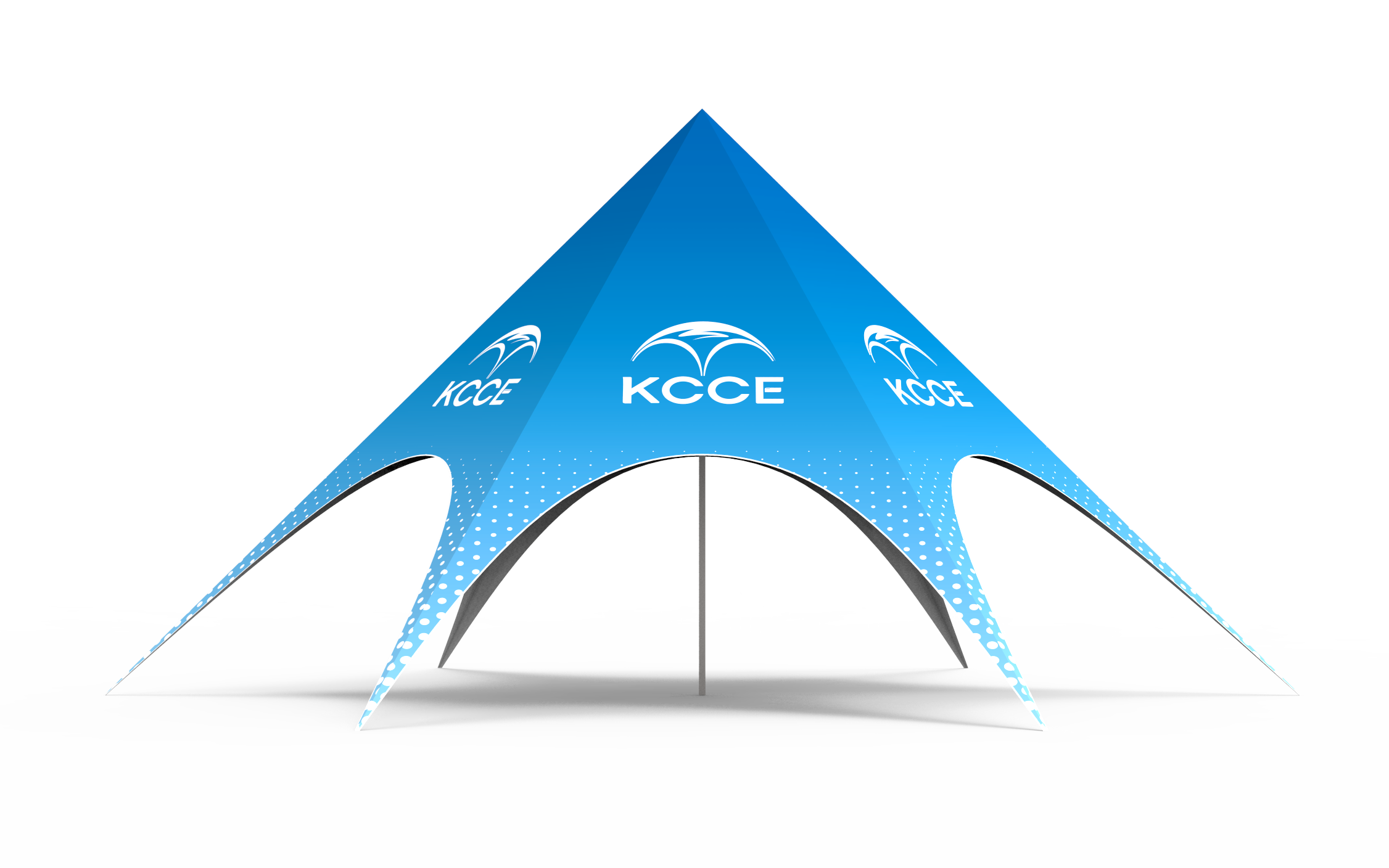
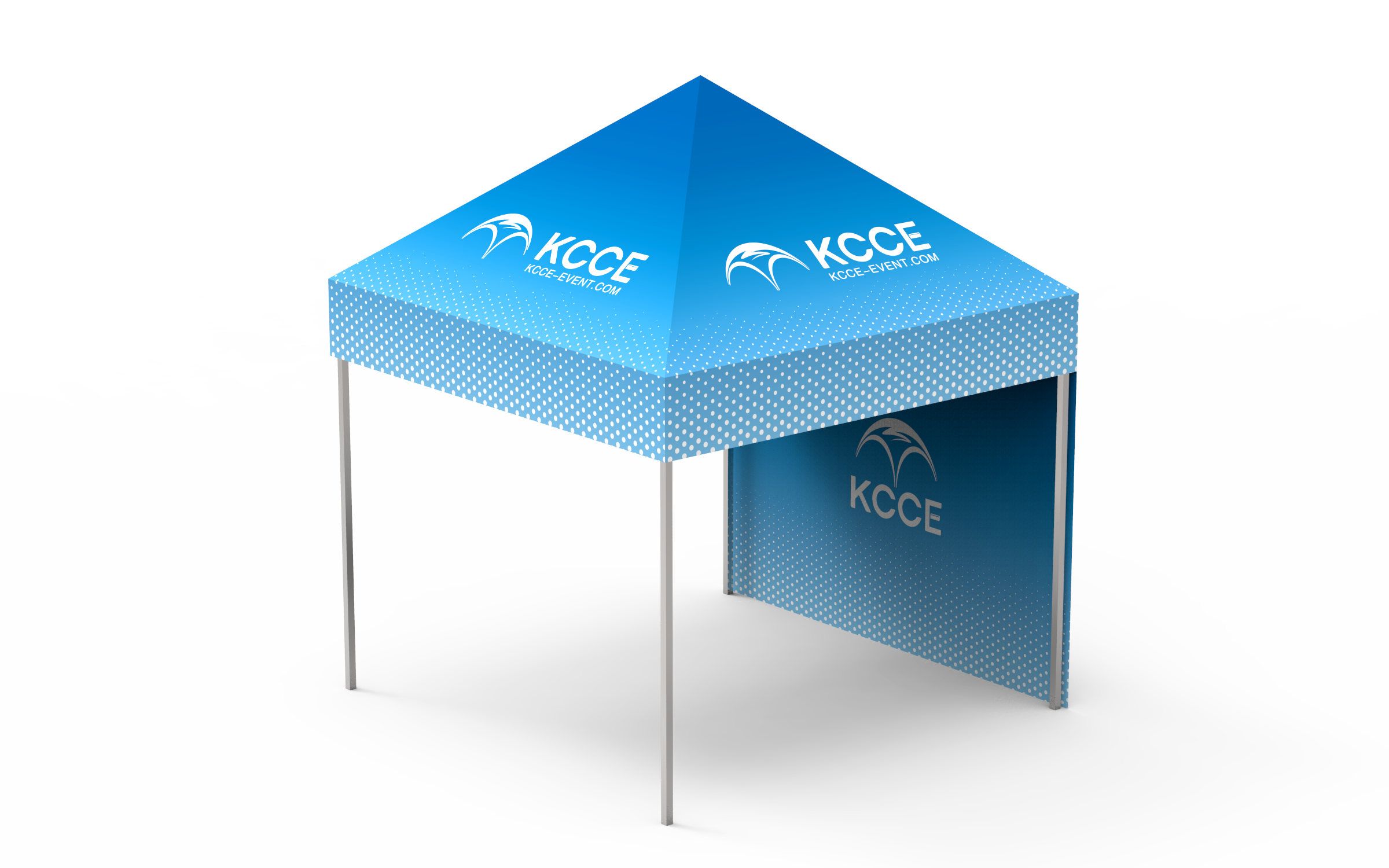
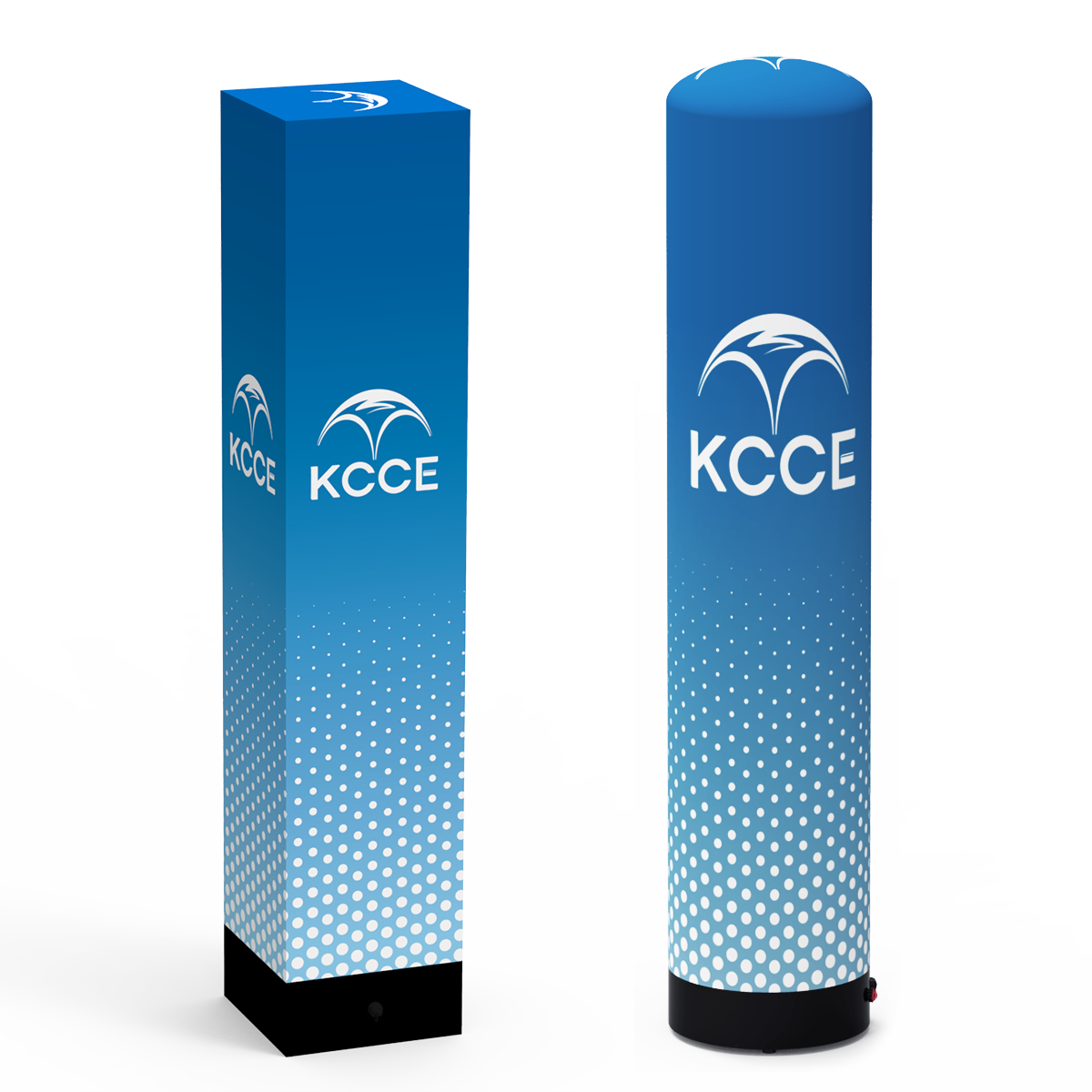
If you’re looking for a broad range of inflatable products, KCCE’s inflatable tent collection covers everything from basic promotional tents to more complex structures. They also offer inflatable furniture and inflatable shapes that complement branded tents at events, creating a cohesive visual experience.
Retail Camping Tents
For retail camping tents, you have two main channels: outdoor specialty stores and online retailers. Specialty stores like REI and independent camping shops let you see the tents in person, which helps with evaluating fabric quality and interior space. Online retailers like Amazon offer convenience and often better prices, but you’re buying sight-unseen.
The best approach is to visit a specialty store to narrow down your options, then check online prices before committing. You might find the same tent for a lower price online., but the in-store experience is worth the trip.
Lead Times and Availability
Custom tents require 3-6 weeks for production and shipping. Retail tents are typically in stock and ship within days. If you have a specific event date, start the custom ordering process at least two months ahead. For retail tents, you can usually find what you need within a week.
For branded inflatable tents in the USA, domestic suppliers offer faster shipping and easier warranty claims. International suppliers might offer lower prices but longer lead times and more complicated returns.
Frequently Asked Questions
Q: What are the best brands of inflatable tents?
A: For retail camping, Vango, Outwell, Dometic, and Coleman are the most established names. Vango pioneered air beam technology and offers the widest range. Outwell focuses on premium family camping. Dometic builds expedition-grade tents. Coleman offers budget options. For custom promotional tents, suppliers like WestShade, TentCraft, and NastoCamp lead the market.
Q: What’s the best inflatable tent on the market?
A: There’s no single answer—it depends on your use case. For family camping, a mid-range Vango or Outwell tent offers the best balance of durability and price. For extreme weather, Dometic’s expedition tents are hard to beat. For events and brand activations, you need a custom promotional tent from a B2B supplier, not a retail camping tent.
Q: What is the best brand of air tent?
A: Vango is widely considered the pioneer and leader in air beam technology, with the most extensive lineup. Outwell matches Vango in quality but focuses on premium family camping. Dometic builds the most rugged air tents. Coleman offers the most affordable entry point, though with some quality trade-offs.
Q: Are inflatable tents worth buying?
A: Yes, if you buy the right type for your use case. Inflatable tents set up in about five minutes with no poles to wrestle, and they handle wind well when properly anchored. They cost more than pole tents, and cheap models have durability issues. Buy from a reputable brand, and you’ll get years of service.
Q: How long do inflatable tents last?
A: With proper care, a quality inflatable tent can last for several years of regular use. The fabric degrades from UV exposure over time, and the valves can wear out. Cheap tents might last one season. Premium tents with better materials can last longer. Replacing the pump and repair kit periodically extends the tent’s life.
Q: What happens if an inflatable tent gets a puncture?
A: Every quality inflatable tent comes with a repair kit. You clean the area, apply adhesive, and place a patch over the puncture. The repair is permanent if done correctly. For beam punctures, the process is similar but requires patching the beam sleeve and the outer fabric. Most repairs can be completed in a short time.
Q: Can inflatable tents be used in winter?
A: Yes, with caveats. Cold temperatures reduce air pressure in the beams, making the structure less rigid. You may need to re-inflate the tent after setting it up in cold weather. Snow load can also be an issue if the tent isn’t designed for it. For winter camping, choose a tent with higher beam pressure and a steeper roof angle to shed snow.
Q: Are branded inflatable tents for sale worth the premium over generic options?
A: For event use, yes. Custom printing and branding turn a tent into a marketing asset that generates visibility. The premium over a generic tent is essentially your advertising cost. For camping, the brand matters for quality assurance—established brands offer better materials and warranties than no-name imports.
References
1. Custom Inflatable Tents for Events, Advertising & Branding – westshade.com
2. 9 Branded Inflatable Tent Designs That Will Inspire Your Next Outdoor Event Activation – tentcraft.com
3. High Pressure Inflatable Tents Market Report – dataintelo.com
4. Custom Inflatable Tent Manufacturer Case Study – nastocamp.com
5. 10 Best Inflatable Tents (Airbeam) Tents (2026) Definitive Review – topnotchoutdoor.com