Quick Answer
An inflatable tent with light is basically a camping or event shelter built on air-beam chambers, with LED lighting either sewn into the structure or hung from built-in attachment points. If you’re buying in bulk, though, the supplier matters way more than the tent itself. Check the MOQ, the CE/RoHS compliance, whether spare lights are actually available, and whether the factory truly manufactures or just resells.
Anyone sourcing tents for retail or events eventually hits the same wall. Search for an inflatable tent with light supplier and you get buried in DTC brand pages — Coody, Opus, a few Amazon listings — and practically nothing built for someone buying 50, 200, or 1,000 units. No MOQ tables. No OEM terms. No certification docs. Just pretty product shots and a “contact us” form.
That gap is exactly why I’m writing this. I’ve spent years on the manufacturing side of inflatable structures, and I’ve watched too many buyers get burned by suppliers who couldn’t answer basic questions about replacement LED modules or RoHS paperwork. So here’s what actually matters when you’re sourcing at volume — the light feature, how to vet a supplier, and the honest tradeoffs nobody puts on a landing page.
What Is an Inflatable Tent With Light?
Strip away the business inflatable solutions and it’s simple: an inflatable tent with light is a shelter whose frame is made of inflatable air beams rather than aluminum or fiberglass poles, combined with an LED lighting system. The lighting comes in two flavors. Integrated lighting means the LEDs are sewn or wired into the tent’s structure — usually along the roof seams or the air beams themselves. Add-on lighting means the tent ships with hanging points, cable ports, or a USB power channel, and you supply the lamp yourself.
The air-beam frame is the part that changes everything operationally. You inflate it with a blower specifications — manual or electric — and the whole shelter goes up in minutes instead of the twenty-or-thirty-minute pole wrestling match most campers know too well. That’s the core appeal for large inflatable tent camping setups and for event crews who need structures up fast.
Here’s the clean definition for anyone who just wants the snippet: An inflatable tent with light is a pump-up shelter using sealed air chambers as its frame, paired with either built-in LED strips or designated lighting attachment points, designed for quick setup without traditional poles.
Integrated vs. Removable Lights: What Buyers Must Know
This is where most sourcing decisions get made or broken, and honestly, most supplier pages gloss right over it.
Integrated LED systems look great in photos. The light is part of the tent, so there’s nothing to lose or forget. But when an LED strip dies — and they do die, especially after a season of UV exposure and folding — you’re not swapping a bulb. You’re either sending the whole tent back or living with a dead zone. Ask your supplier directly: can the LED module be replaced in the field? If the answer is vague, that’s your answer.
Removable lighting is less sexy but far more practical for anyone running a rental fleet or a retail brand that has to honor warranties. The tent has hanging loops, a cable port, maybe a USB pass-through. The customer brings their own light. Nothing to fail, nothing to replace under warranty.
On specs, the numbers you actually need to pin down:
- Lumens and runtime. A camping light in the 200–400 lumen range is plenty for a family tent interior. Event and display tents often want more. Runtime depends entirely on the battery — and the battery is usually the weak link.
- Power source. Battery, USB-rechargeable, or solar. Solar sounds great until you’re camping under cloud cover for three days. USB is the practical middle ground.
- Waterproof rating. IPX4 handles splashes and light rain. If the light is integrated into the tent skin, you want the whole assembly rated, not just the LED.
- Certifications. CE and RoHS are the baseline for anything with electronics shipping into the EU. If your supplier can’t produce those documents on request, walk. This isn’t a nice-to-have — it’s the difference between a customs clearance and a seized shipment.
And the blind spot nobody talks about: replacement and repair availability. Social media is full of campers complaining that a leaky air beam turned their tent into an expensive tarp, or that a dead LED bricked the whole unit. Before you commit to a supplier, ask what happens in year two. Do they stock replacement light modules? Can they ship a spare air beam? A supplier who can’t answer that is selling you a one-time transaction, not a product line.
Top Inflatable Tents With Lights Compared
I’m going to be straight with you: I’m not going to fabricate a spec-by-spec table with prices and MOQs I can’t verify. That’s how buyers get misled. What I can do is tell you which names actually show up in the market and what channel each one plays in — because that’s the part that determines whether they’re even an option for you.
| Brand / Source | Light Setup | Channel | Wholesale / OEM Available? |
|---|---|---|---|
| Coody | Integrated LED options on select models | DTC | No — retail only |
| Opus | Integrated lighting on premium models | DTC | No — retail only |
| WaldZimmer | Add-on / hanging points | Retail (Amazon, DTC) | Limited |
| SHANQUAN | Add-on | Retail | Limited |
| SENLEETO | Add-on, large-format | Retail | Limited |
| WildFinder | Skylight + attachment points | Retail | Limited |
| KCCE (Dacheng Outdoor) | Custom LED integration, OEM/ODM | Factory-direct | Yes — OEM/ODM, custom branding for inflatable tents, custom size |
See the pattern? Once it’s laid out, it’s obvious. The DTC brands — Coody, Opus — make genuinely nice consumer products, but they’re not going to private-label for you. They sell to campers, not to retailers. If you’re a brand owner or a retailer looking for an OEM inflatable tent with built-in lighting under your own label, your realistic path runs through a factory.
That’s where a manufacturer like KCCE comes in. Dongguan Dacheng Outdoor Products has been building inflatable structures since 2006, runs a manufacturing facility, and ships internationally — with Europe and the US as primary markets. They state that they hold CE and RoHS compliance. which matters the moment your product has electronics in it. Their inflatable tent range covers air-sealed pump-up models, and they do OEM/ODM with custom sizing, colors, and logo logo printed tents. For a buyer who needs an LED inflatable air tent under their own brand, that’s a different conversation than clicking “add to cart” on a DTC site.
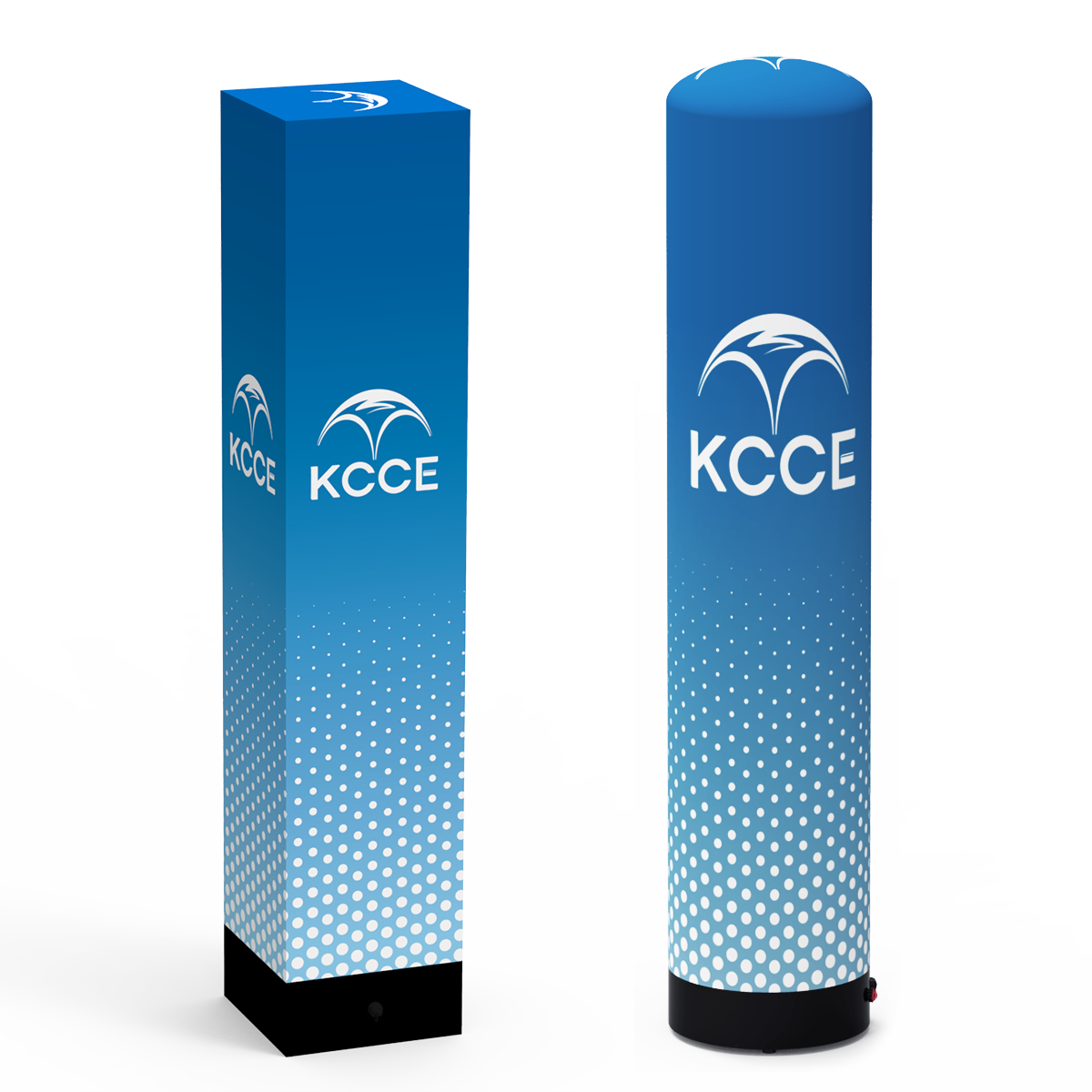
One more thing worth flagging: if you’re sourcing for events or brand activations rather than camping, the lighting conversation shifts entirely. You’re not lighting a sleeping area — you’re lighting a display. That’s where custom inflatable shapes and illuminated columns come into play, and the LED spec becomes a branding decision, not a camping convenience.
How to Vet an Inflatable Tent With Light Supplier
You might be wondering where to even start. Here’s the checklist I’d run, in order.
MOQ. This is your first filter. Some factories won’t touch an order under 500 units; others will do one piece for a sample. KCCE’s listings show a 1-piece MOQ on several products, according to product page listings. which is unusual and useful — it means you can order a single unit to inspect before committing to a production run. Always confirm MOQ per SKU, not per supplier, because it varies.
OEM/ODM capability. Ask specifically: can you change the light spec, the beam color, the logo placement? A real OEM partner says yes and quotes you a tooling or setup cost. A reseller says “we’ll check” and never gets back to you.
Sample lead time. Expect a few weeks for a custom sample. If a supplier promises a custom sample in three days, they’re either lying or they’re not actually customizing.
Factory audit. If the order is large enough to justify it, get eyes on the floor. Third-party inspection services exist for exactly this. At minimum, request a video walkthrough of the production line — not the showroom.
Certifications. CE and RoHS for anything with electronics. Get the actual documents, not a logo on a webpage.
Warranty terms and spare parts. This is the one buyers skip and regret. What’s the warranty period? Can you buy spare LED modules and air beams separately? Five years from now, will this supplier still stock the light that’s sewn into the tent you sold?
Shipping. China vs. local warehouse is a real tradeoff. Factory-direct from China gets you the lowest unit cost and full customization, but you’re looking at sea freight timelines and your own customs handling. A local warehouse — US or UK — costs more per unit but ships fast and handles returns domestically. If you’re searching for an inflatable tent with light supplier near me and you’re in the US or UK, you’re usually looking at a distributor, not a factory, and you’ll pay for that convenience.
Retail vs. Wholesale: Which Path Fits You?
Let’s cut to it. If you’re buying one tent for yourself, buy from Coody or Opus and be done. They make good products and you’ll have a warranty and a return address.
If you’re a retailer or a brand owner, the math changes completely. Cost-per-unit at volume from a factory is a fraction of DTC retail — but you take on inventory risk, certification responsibility, and customer service. Private-label options only exist on the factory path. There’s no version of this where you get Coody’s brand equity and factory pricing.
Quick decision checklist:
- Buying one or two for personal use? → DTC brand.
- Need 50+ units under your own label? → Factory, OEM/ODM.
- Need fast US/UK fulfillment with no customs hassle? → Local distributor, accept the markup.
- Selling into the EU with electronics? → Confirm CE/RoHS before anything else.
Pricing, MOQ & Shipping Realities
I won’t hand you fake unit-cost bands — pricing depends on size, material, light spec, and order volume, and any number I invented would be worse than useless. What I can tell you is the shape of the cost structure.
MOQ ranges across the inflatable tent market generally run from a single piece up to several hundred units per SKU, depending on whether the factory is customizing or shipping stock. Custom LED integration pushes MOQ up because it adds a production step.
Unit cost bands scale down hard with volume. The first unit is always the most expensive; the thousandth is not. Get quotes at three volume tiers before you decide anything.
Sea vs. air freight for inflatable bulk is not close. Inflatables are bulky but light — that’s the worst combination for air freight, because you’re paying for volume, not weight. Sea freight is the default for anything beyond samples. Air freight only makes sense for urgent restocks or high-value custom pieces.
Hidden costs to budget for: import duties, electronics compliance testing if your light spec isn’t already certified, and the cost of holding spare parts inventory. That last one is real — if you promise customers replacement lights, you have to actually stock them.
Frequently Asked Questions
Q: What is an inflatable tent with light?
A: It’s a pump-up shelter that uses sealed air chambers instead of traditional poles, paired with LED lighting — either built into the tent structure or attached via designated hanging points and cable ports. The air-beam frame is what enables the fast setup; the light is what makes it usable after dark without a separate lantern.
Q: Are inflatable tents worth buying?
A: For the right buyer, yes. Setup speed and packability are genuinely better than pole tents, and large inflatable tent camping setups are hard to beat for space. The tradeoffs are real, though: they need a pump, a punctured air beam can sideline the whole tent, and quality varies wildly by supplier. Buy from a source that stocks replacement parts.
Q: Where can I buy one — retail or supplier?
A: Retail if you want one or two units with a warranty and easy returns — DTC brands like Coody and Opus serve that market. If you need volume, private-label, or OEM inflatable tent production, go factory-direct. For an inflatable tent with light supplier usa or UK, you’re typically dealing with a distributor, which costs more but ships faster.
Q: Do tents come with lights or do you add them?
A: Both configurations exist. Integrated lighting is built into the tent and can’t be removed; add-on setups give you hanging points and you supply the lamp. For retail and rental fleets, add-on is often the safer bet because a failed light doesn’t take the tent out of service.
Q: What’s the difference between an air tent and an inflatable tent?
A: In practice, nothing — the terms are used interchangeably. Both describe tents framed by inflatable air beams. You’ll see “air tent,” “inflatable camping tent,” and “pump-up tent” all pointing at the same category. The meaningful distinction isn’t the name; it’s integrated vs. removable lighting and sealed vs. constant-air chambers.
Q: What is the best lightweight inflatable tent?
A: Lightweight usually means smaller air beams and lighter fabric, which trades some rigidity for packability. For solo or two-person trips, a compact inflatable camping tent with add-on lighting keeps weight down. For family or group use, accept the extra kilos — the space is worth it.
Q: Who makes the best inflatable tents?
A: Depends on your channel. For consumers, Coody and Opus are the names most often cited. For wholesale and OEM, the answer is a factory with verifiable certifications, spare-parts supply, and real customization capability — not a brand name. Vet the factory, not the logo.
Q: Where can I buy Atik Ailesi tents?
A: I don’t have verified sourcing information for Atik Ailesi, so I won’t guess. If you’re trying to source a specific brand, contact the brand directly for authorized distributors — buying through unofficial channels is how you end up with no warranty and no spare parts.
Conclusion
Here’s the thing I keep coming back to: the light is the differentiator, not the frame. Anyone can build an air-beam tent. The suppliers worth your time are the ones who can tell you the lumen output, the IPX rating, whether the LED module is field-replaceable, and whether they’ll still stock that part two years after you place the order.
So before you commit to a bulk order, do two things. Request a sample — a real one, not a brochure. And verify the CE and RoHS documents with your own eyes. If you’re sourcing an OEM inflatable tent with built-in lighting under your own brand, start with KCCE’s inflatable tent lineup and ask the hard questions up front. It’ll save you a very expensive lesson later.
References
1. Inflatable Tents Market Size, Share, Industry Report, 2035 – businessresearchinsights.com
2. Inflatable Tents Market Size, Share & Forecast 2026-2034 – fortunebusinessinsights.com
3. 6 Best Inflatable Tents 2026! Real Life Tested – youtube.com
4. 9 Branded Inflatable Tent Designs That Will Inspire Your Next Outdoor Event – tentcraft.com