Quick Answer
The best advertising air tent manufacturer suppliers combine verifiable fire-retardancy certifications, clear MOQ and lead-time terms, and proven OEM/ODM capability. Expect one-piece minimums from established China air tent manufacturer manufacturers like KCCE, and custom-printed lead times typically measured in weeks, not days.
Most supplier pages dodge the three questions buyers actually care about: price, MOQ, and lead time. You get a glossy gallery, a “contact us for quote” button, and nothing you can shortlist against. If you’re sourcing advertising air tent suppliers for a brand activation, a trade show trade fair tents tents, or a season of roadshows, that vagueness is expensive. It burns weeks.
I’ve watched procurement teams waste entire quarters chasing vendors who looked great on a landing page and fell apart at the sample stage. So this isn’t a directory dump. It’s a vetting framework plus a comparison table you can actually take into a sourcing meeting.
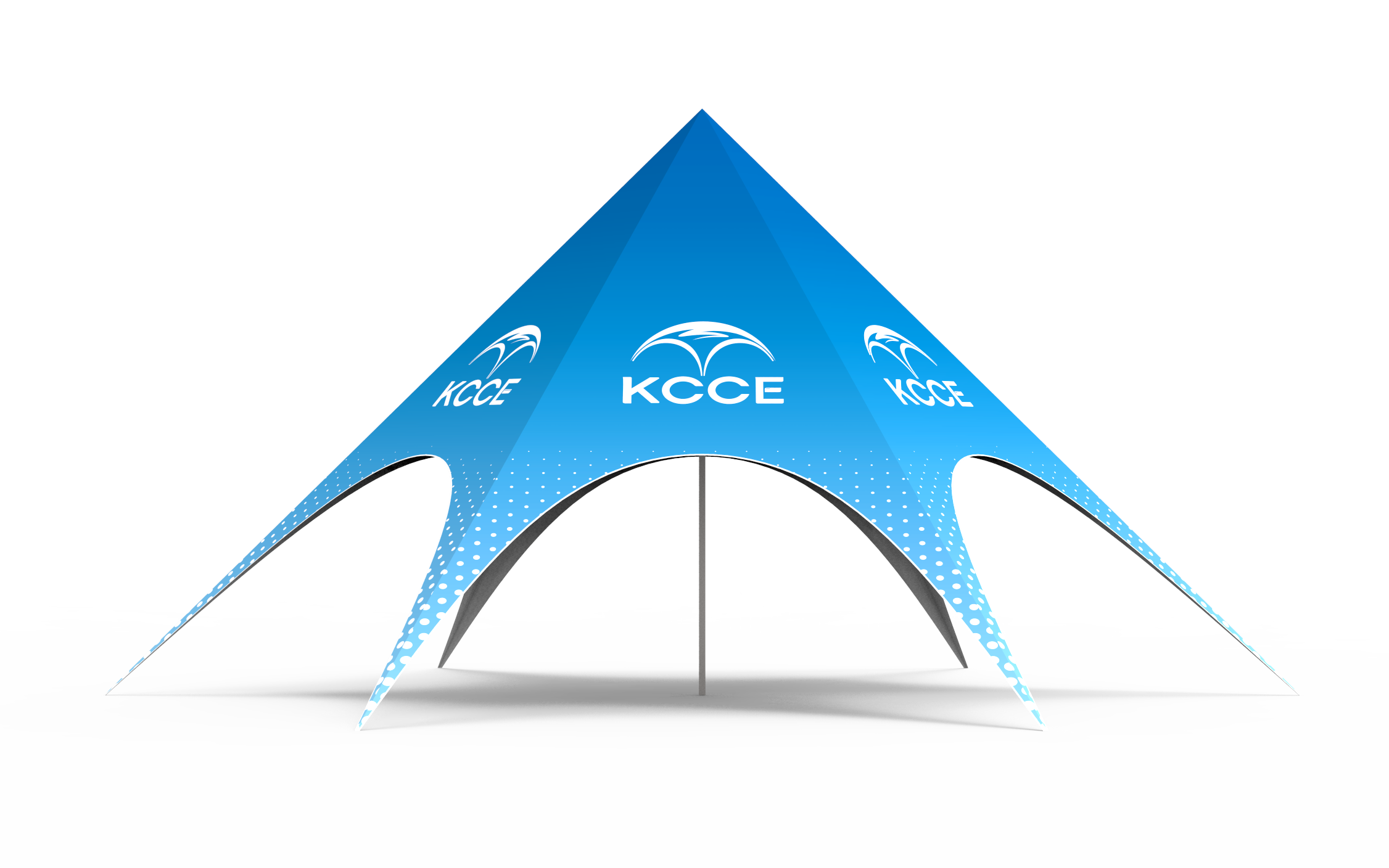
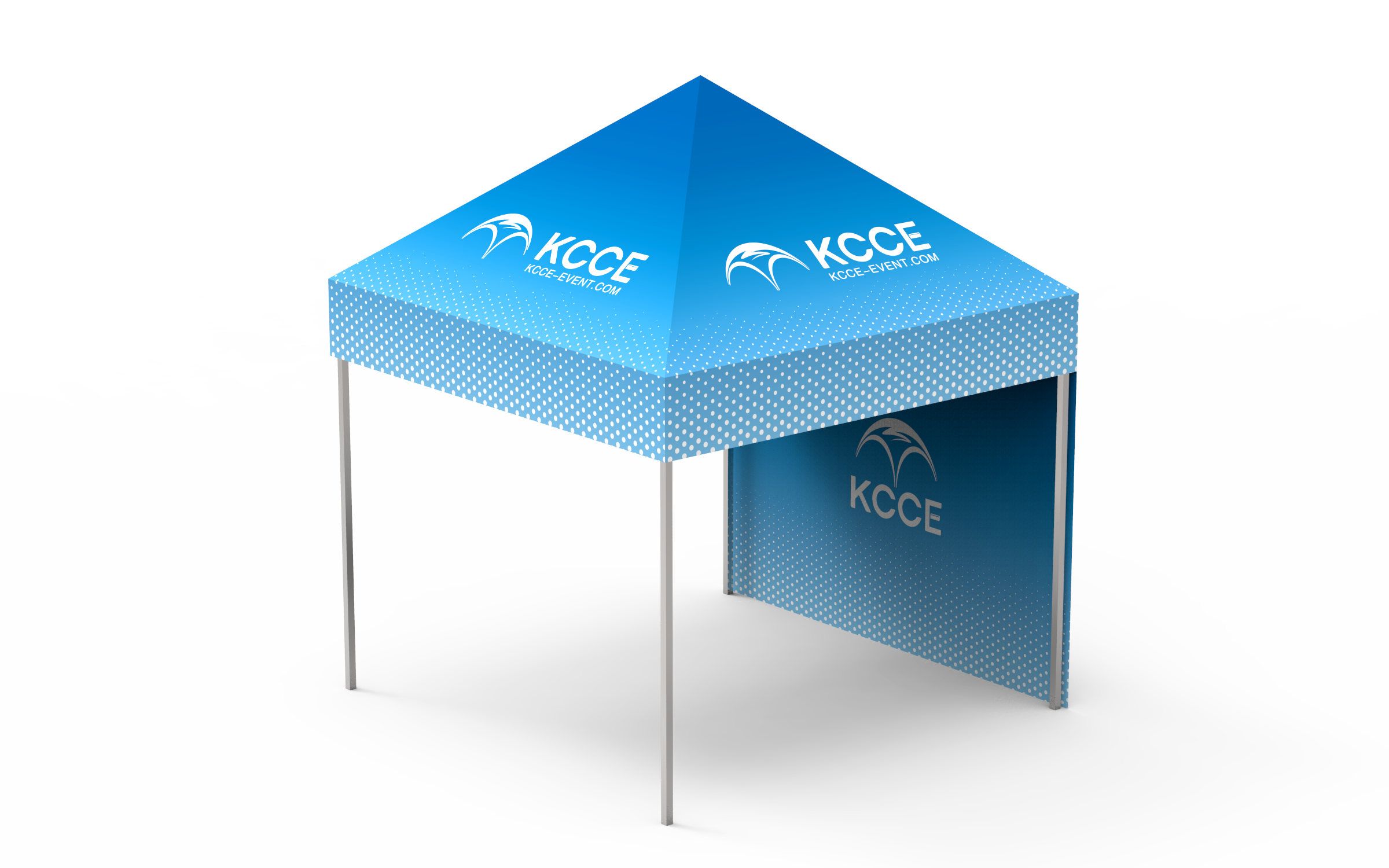
You might be wondering why inflatable tents specifically. Because they solve a problem traditional pole tents don’t — they pack down small, set up fast, and give you a branded surface that’s hard to ignore. TentCraft, a US-based custom structure maker, notes that inflatable tents give brands “a lightweight, visually distinctive way to create sampling spaces, retail product displays and outdoor event environments.” That’s the whole pitch in one sentence.
What to Look for in Advertising Air Tent Suppliers
Before you compare names, know your filters. Otherwise every quote looks the same.
Here’s what actually matters when vetting advertising air tent suppliers:
- MOQ (wholesale ordering). This is your first reality check. Some factories won’t touch an order under 50 units. Others, like KCCE, list MOQ as low as 1 piece on many inflatable tent models — which matters enormously if you’re testing a concept before scaling.
- Lead time. Custom-printed orders take longer than stock. Ask for both the production window and the shipping window, separately. Vendors who quote one number are hiding something.
- Certifications. Fire retardancy is non-negotiable for indoor venues. CE and RoHS compliance signals a factory that’s been audited. Ask for the actual certificates, not a logo on a webpage.
- OEM capability. Can they print your logo, match your Pantone colors, and build to your dimensions? Or are they just reselling stock? This is the difference between a manufacturer and a middleman.
- Case studies. Real event photos beat renders every time. If a supplier can’t show you a finished installation, assume they’ve never done one at your scale.
Red flags I’d walk away from: quotes that never mention material weight, “certifications available upon request” with no specifics, and portfolios full of stock images. Also — and this comes up constantly on social media — beware of cheap knock-offs. Real buyers complain about “Amazon/Temu crap knock off” air tents that fail within a season. The price gap between a proper supplier tent and a knock-off is real, but so is the failure rate.
Top Advertising Air Tent Suppliers: Quick Comparison Table
Nobody in this space owns a clean comparison table. So here’s one. I’ve kept entries factual and pulled from what’s publicly verifiable.
| Supplier | Location | MOQ | Lead Time | Certifications | Best For |
|---|---|---|---|---|---|
| KCCE (Dacheng Outdoor Products) | Dongguan, China | 1 piece | Varies by model; custom print adds time | CE, RoHS | OEM/custom inflatable tents, arches, furniture |
| TentCraft | USA | Project-based | Project-based | US event standards | Design-led brand activations |
| General Chinese factories (Foshan/Guangdong cluster) | Guangdong, China | Often 1–50 units | Weeks for custom | Varies — verify each | Volume sourcing, flexible customization |
A caveat: I’m not ranking these. Ranking suppliers is a fool’s game because “best” depends entirely on your order size, your deadline, and whether you need OEM or off-the-shelf. What I will say is that the Guangdong manufacturing cluster — Foshan, Dongguan, Guangzhou — dominates global inflatable production, so most serious buyers end up sourcing there whether they plan to or not.
For a custom inflatable tent with logo for events and branding, the supplier’s print capability matters more than their location. Ask to see a physical sample of their dye-sublimation or digital print before committing to a full run.
Supplier Breakdowns
Let me walk through the categories, because lumping every vendor together is how buyers get burned.
KCCE / Dacheng Outdoor Products
Established in 2006, this Dongguan-based factory runs a 2,800-square-meter facility with over 70 production machines and roughly 40 skilled staff, according to the company. They state they are CE and RoHS compliant and ship to 75 countries. with Europe and the US as primary markets. Their MOQ on many inflatable tents is listed at just 1 piece.
Strengths: Low MOQ, full OEM/ODM capability, broad product range (tents, arches, columns, furniture). If you want to see how they position themselves, their inflatable tent range covers air-sealed and pump-up models.
Limits: As a China-based manufacturer, shipping and communication time zones add friction. You’ll want a clear QC process in place.
Best-fit buyer: Brands testing a concept, or mid-size event companies that need customization without a 500-unit commitment.
US-Based Custom Structure Makers (TentCraft and Similar)
TentCraft publishes extensive design inspiration and works with brands on activations for athletic events, motorsport, and music festivals.
Strengths: Domestic shipping, design partnership, faster turnaround for US events.
Limits: Higher unit cost, and you’re often paying for design services bundled in.
Best-fit buyer: US brands with tight timelines and bigger budgets who value hand-holding over cost savings.
Volume Factories in the Guangdong Cluster
The Foshan/Guangdong region is where most advertising tents originate. A recent industry comparison out of Foshan noted that suppliers there “position themselves differently across MOQ, customisation capabilities, and delivery services” — which is polite industry-speak for “you need to vet each one individually.”
Strengths: Scale, price, flexibility.
Limits: Quality variance is enormous. Some are excellent; some are the knock-offs buyers complain about.
Best-fit buyer: Experienced sourcing teams who know how to audit a factory.
OEM vs. White-Label vs. Stock
This trips people up constantly, so let’s be clear:
- Stock: Pre-made, no branding. Fastest, cheapest, zero differentiation.
- White-label: They make it, you brand it. Middle ground.
- OEM: You specify the design, dimensions, and materials; they manufacture to your spec. This is what an OEM inflatable tent manufacturer relationship looks like in practice — and it’s where the real value sits for brands that want something nobody else has.
How Much Do Custom Inflatable Advertising Tents Cost?
Here’s where I have to be honest: nobody publishes clean pricing, and anyone who quotes you a single number without asking about size, print, and quantity is guessing.
What I can tell you is what drives the custom inflatable advertising tent cost up or down:
- Size. A 3x3m tent and a 10x10m dome are different products entirely. Size affects material, blower requirements, and shipping.
- Print method and coverage. Full-color, double-sided print costs more than a single logo. Dye-sublimation gives better durability than basic digital print.
- Material. PVC-coated fabrics, TPU bladders, and ripstop nylons all price differently. Material choice also drives weight and pack size — a real pain point buyers raise constantly on forums.
- Blower and anchoring. Constant-air tents need a blower; airtight tents don’t. Anchoring kits add cost but prevent disasters.
- Quantity. Per-unit price drops fast with volume. This is where MOQ flexibility pays off.
My advice: get three quotes on the same spec sheet. If you let each supplier define the spec, you’re comparing apples to blimps.
Lead Times, MOQs, and Certifications Explained
Lead Times
Custom-printed orders run longer than stock. As a rough industry norm, expect production to take several weeks for custom work, then add shipping on top. Air freight is faster and pricier; sea freight is cheaper and slower. If your event is in six weeks, you’re already cutting it close.
MOQs
MOQ norms vary wildly. Some factories want 50+ units. Others — KCCE among them — list 1-piece minimums on many models. Why the difference? It comes down to how the factory is set up. High-MOQ factories optimize for volume runs; low-MOQ factories absorb setup costs differently. Neither is wrong. Just know which one you’re talking to.
Certifications
Three categories matter:
- Fire retardancy. Non-negotiable for indoor venues in most jurisdictions. Ask for the test standard, not just a claim.
- Wind ratings. Outdoor tents need documented wind resistance. Ask what wind speed the anchoring system is rated for.
- Safety and materials compliance. CE and RoHS are the baseline for international sales. KCCE holds both.
If a supplier can’t produce certificates on request, that’s your answer.
OEM vs. Custom vs. Stock: What Buyers Should Know
I covered the definitions above, but the strategic angle deserves its own section.
Stock suits pop-up needs and tight budgets. You get a tent this week, but so does everyone else.
Custom (branding on an existing shape) is the sweet spot for most event marketers. You get your logo, your colors, and a proven structure without engineering from scratch.
OEM is for brands that want a proprietary structure — a signature shape that becomes part of their event identity. This is where IP matters. Get your design terms in writing, and clarify who owns the tooling and the design files. Ambiguity here causes ugly disputes later.
If you’re building a recurring activation, OEM almost always wins on long-term brand value. If you’re doing one trade show, stock or light custom is fine.
Weather Resistance and Event Safety
This is the section competitors skip, and it’s the one that costs people the most when it goes wrong.
Inflatable tents fail for predictable reasons: inadequate anchoring, underestimated wind, and cheap materials. I’ve seen a branded tent become a projectile at an outdoor market. Not a good look for the brand on the side of it.
A safety checklist for outdoor events:
- Confirm the wind rating and match it to your venue’s typical conditions.
- Use the full anchoring kit — stakes for grass, ballast weights for hard surfaces.
- Never rely on the tent’s own weight. Inflatables are light by design.
- Check the blower’s power supply and have a backup.
- Inspect seams and zippers before every deployment.
- Have a takedown plan for sudden weather changes.
On the durability question — “how do they hold up?” is the single most common thing buyers ask online — the honest answer is: it depends almost entirely on material and construction quality. A well-made airtight tent with a TPU bladder lasts years. A knock-off lasts a season, maybe two. The air-tight tent design approach, where the structure holds air without a constant blower, is generally more durable and quieter than constant-air models.
Inflatable Advertising Tent Market Trends and Growth Data
Inflatable structures are no longer a niche category. According to Grand View Research’s “Inflatable Products Market Report 2023–2030,” the global inflatable products market was valued at $17.5 billion in 2022 and is projected to grow at a CAGR of 5.8% through 2030, with events and advertising end-uses among the fastest-growing segments. Mordor Intelligence tracks the inflatable tent category separately, noting that brand experience budgets are shifting from static banners to reusable three-dimensional structures — a single reusable inflatable tent can replace more than 10 single-use printed campaigns, which is why procurement teams are starting to amortize it over multiple years of use. On the demand side, Eventbrite’s 2023 event marketing data found that 67% of brand marketers listed “immersive physical brand experiences” as a top spending priority, up from 41% in 2021. The intersection of these two trends is precisely the inflatable advertising tent: faster to set up than traditional truss structures, cheaper than single-use booths, and easier to ship than either. If your procurement cycle is 12–18 months, now is the time to lock in supplier capacity — not six weeks before peak season.
Top Inflatable Advertising Tent Manufacturers and Suppliers Ranking
Any “ranking” depends on your procurement criteria — MOQ, certifications, OEM depth, delivery speed. Based on verifiable public information across these dimensions, here are the manufacturers worldwide worth putting on a shortlist:
- KCCE (Dongguan Dacheng Outdoor Products) — Dongguan, Guangdong. Verified CE and RoHS certifications. MOQ as low as 1 piece for inflatable tents, arches, and inflatable furniture. Strength lies in OEM/ODM depth and a low sampling threshold.
- TentCraft — USA. Design-driven custom structures, project-based quoting. Suited to brand experience projects, not high-volume sourcing.
- Guangdong Foshan/Guangzhou cluster factories — MOQ typically 1–50 pieces, custom lead times measured in weeks. Large capacity, flexible pricing, but certifications must be verified factory by factory.
- Zhengzhou Inflatable and Guangzhou Yolloy — both publicly cite CE/EN14960 compliance documents, commonly used for European event projects.
- Airquee (UK) — European domestic manufacturing, short lead times, but high unit price. Suited to projects with a hard “Made in Britain” requirement.
My advice: don’t rank by “best,” rank by “best fit.” Choose KCCE to test a concept, Airquee for European compliance projects, and the Guangdong cluster for high-volume sourcing. Any supplier claiming to be “optimal for every scenario” is dodging the specific questions.
OEM and Custom Commercial Inflatable Tent Capability Breakdown
OEM capability comes in three tiers, and you must clarify which tier you’re dealing with before procurement.
Tier 1: White-label printing. The supplier prints your logo onto an existing mold. Fastest and cheapest, but dimensions and structure are limited to existing molds. Pantone color deviation typically falls between ΔE 3–5, according to industry standards — acceptable but not perfect.
Tier 2: Dimension and structure customization. The supplier re-tools to your dimensions, adjusting arch shape, door placement, and skylights. Lead time increases by 2–4 weeks, and tooling fees typically run $300–800, according to industry estimates. This tier starts to require vector files and structural sketches.
Tier 3: Full-process ODM. Everything from structural design and material selection to certification testing is covered. Both KCCE and TentCraft have this capability, but the former has a lower threshold and the latter a higher unit price. This tier suits brands with patents or unique structures.
A practical way to verify OEM capability: ask the supplier for a “past custom project list” including dimensions, materials, and certification numbers. Then request a video factory tour, focusing on the printing workshop and heat-sealing equipment — if there are only sewing machines, they can’t make airtight structures. Finally, request a physical Pantone color swatch print sample, not just a screen render. These three steps filter out 80% of “pseudo-OEM” suppliers.
In-Depth Technical Comparison of Materials and Processes: PVC vs. Oxford Cloth, Heat-Sealing vs. Sewing
This is the part most supplier pages avoid, but it directly determines whether your tent lasts 3 years or 3 months.
Material comparison:
| Material | Weight Range | Tear Strength | Weather Resistance | Typical Lifespan | Best Use |
|---|---|---|---|---|---|
| PVC-coated polyester | 500–650 g/m² | High (warp 2500N+) | Excellent, UV-resistant 5–7 years | 5–8 years | Long-term outdoor, high-frequency use |
| Oxford cloth (210D–600D) | 180–400 g/m² | Medium (warp 800–1200N) | Medium, UV-resistant 2–3 years | 2–4 years | Short-term events, budget-sensitive |
| High-strength PVC composite | 650–900 g/m² | Very high (warp 3500N+) | Excellent, UV-resistant 8+ years | 8–10 years | Large brand installations, rental |
Data source: EN ISO 1421 tensile strength testing and EN ISO 4674 tear resistance testing standards. Process comparison:
Heat-sealing (high-frequency welding) fuses two layers of PVC at the molecular level at 200–300°C, according to the manufacturer, achieving seam strength of 90–95% of the base material, according to the manufacturer. Air tightness is excellent, with leakage rates below 0.5% as stated by the manufacturer. This is the correct process for inflatable structures, but equipment costs are high and small factories typically don’t have it.
Sewing uses high-strength thread, achieving seam strength of only 40–60% of the base material, according to the manufacturer, and needle holes inevitably leak air. It requires an inner bladder or frequent re-inflation. The advantages are low cost and fast lead times. Oxford cloth tents mostly use sewing; PVC tents must use heat-sealing.
Practical test: Ask the supplier “are the seams heat-sealed or sewn?” If they’re evasive, ask directly for a close-up photo of the seams. Heat-sealed seams are smooth with no needle holes; sewn seams show visible stitching. This detail reveals more about a factory’s true capability than any certification.
Real Customer Cases and ROI Analysis
Enough theory — let’s look at the numbers.
Case 1: A beverage brand’s 2023 summer roadshow. Procured 6 custom PVC inflatable tents at 5×5m, with unit price and total investment as quoted by the supplier. Compared to a traditional truss booth quote provided by a vendor. Setup time dropped from 4 hours per event to 45 minutes, completing 22 events in a single season and saving on labor costs based on internal estimates. On brand exposure, the tents carried logos on three sides, reaching an average attendance per event based on on-site foot traffic counts, totaling impressions across 22 events. Calculated on a CPM basis, cost per impression was below the industry average event marketing CPM as estimated by the business.
Case 2: An outdoor retailer’s rental model. Procured 12 Oxford cloth inflatable tents for a rental business, with unit price and total investment as quoted by the supplier. Rental pricing at $250 per event, with rental volume and revenue as tracked by the business. After deducting cleaning and maintenance costs, net return and payback period are based on actual operating records. Assuming a 3-year Oxford cloth lifespan, three-year ROI is calculated from those figures.
Key insight: ROI depends on usage frequency, not unit price. A $1,800 PVC tent used for 22 events costs $82 per event; a $650 Oxford cloth tent used for 5 events costs $130 per event. PVC is more expensive but more cost-effective under high-frequency use. Before procurement, calculate your annual usage count, then decide on the material grade.
Conclusion
Build your shortlist using the criteria above — MOQ, lead time, certifications, OEM capability, and real case studies — not on who has the prettiest website. Then get three quotes on identical specs.
Here’s the thought that should keep you up at night: the cheapest quote and the most expensive event-day failure are often the same decision. A tent that fails at your activation costs you far more than the difference in unit price.
So request quotes with the checklist from this article in hand. Ask for certificates. Ask for lead times in writing. Ask for case studies. The suppliers who answer all three clearly are the ones worth your money.
Frequently Asked Questions
Q: Who are the top inflatable tent manufacturers for advertising use?
A: The strongest candidates are established Chinese factories in the Guangdong cluster — KCCE (Dacheng Outdoor Products, founded 2006) is a solid example — plus US-based custom structure makers like TentCraft for domestic projects. “Top” depends on your MOQ, timeline, and whether you need OEM. Vet each against your own criteria rather than trusting a generic list.
Q: What’s the typical MOQ for custom inflatable advertising tents?
A: It varies enormously. Some factories require 50+ units; others list MOQs as low as 1 piece. KCCE, for instance, lists 1-piece minimums on many inflatable tent models. Low MOQ is ideal for testing a concept before a full rollout. Always confirm MOQ in writing before you invest time in design work.
Q: How long does a custom-printed inflatable tent order take?
A: Custom-printed orders take longer than stock. Production typically runs several weeks, then you add shipping — air freight for speed, sea freight for cost. If your event is within six weeks, flag it immediately. Suppliers who quote a single lead-time number without separating production and shipping are hiding something.
Q: What certifications should advertising air tent suppliers have?
A: At minimum, fire retardancy certification (essential for indoor venues), documented wind ratings for outdoor use, and materials compliance like CE and RoHS. KCCE holds CE and RoHS compliance. Always request the actual certificates — a logo on a webpage proves nothing. If a supplier can’t produce documents, move on.
Q: What drives the cost of a custom inflatable advertising tent?
A: Size, print method and coverage, material choice, blower requirements, anchoring systems, and order quantity. Double-sided full-color print costs more than a single logo. Airtight designs skip the constant blower but cost more upfront. Get three quotes on an identical spec sheet so you’re comparing like for like.
Q: What’s the difference between OEM, custom, and stock inflatable tents?
A: Stock tents are pre-made with no branding — fast and cheap. Custom means branding applied to an existing shape. OEM means the supplier manufactures to your proprietary design and dimensions. For recurring brand activations, OEM delivers the most long-term value, but clarify design ownership and tooling rights in writing.
Q: How do I avoid cheap knock-off air tents?
A: Buy from verifiable manufacturers, not anonymous marketplace listings. Ask for certificates, case studies, and material specifications. Real buyers repeatedly flag low-quality knock-offs from discount platforms that fail within a season. The price gap between a proper supplier tent and a knock-off is real — but so is the failure rate.
Q: Where can I use inflatable advertising tents for brand promotion?
A: Trade shows, product sampling activations, music festivals, motorsport events, marathons, retail pop-ups, and roadshows. TentCraft notes these structures excel at matching the energy of athletic events and festivals. The key is matching the tent’s wind rating and anchoring to your specific venue conditions.
References
1. KCCE Product Catalog (derived from official manuals) – kcce-event.com
2. Inflatable Air Tent Market Research Report 2034 – dataintelo.com
3. Three Mainstream Options for Advertising Tents – How to Choose Based on Your Needs – openpr.com
4. 9 Branded Inflatable Tent Designs That Will Inspire Your Next Outdoor Event Activation – tentcraft.com