Quick Answer
The global inflatable tents market was valued at USD 1.2 billion in 2025 and is projected to reach USD 2.7 billion by 2036, growing at a CAGR of 7.5% from 2026 to 2036, according to Future Market Insights. PVC dominates as the leading material, and North America remains the largest regional market.
I’ve been in the inflatable products business for over a decade now, and I’ll tell you something that still bugs me: no two market reports agree on the size of the inflatable tents market. Not even close. Estimates vary widely across reports. That’s a seven-fold gap. If you’re a procurement manager or a brand decision-maker trying to figure out whether to invest, that kind of discrepancy is maddening.
So let me try to untangle this mess.
Inflatable Tents Market Size: Why Every Report Disagrees
Here’s the thing — most of these reports are technically “correct” within their own scope. They just define the inflatable tents market differently.
Take Future Market Insights (FMI). Their May 2026 report puts the market at USD 1.2 billion in 2025, growing to USD 1.3 billion by end-2026, and reaching USD 2.66 billion by 2036 with a CAGR of 7.5%. They anchor this on PVC holding a 98.4% share as the leading material type in 2026. That’s a very specific segmentation choice — they’re essentially counting PVC-based inflatable tents as the market.
Fortune Business Insights segments differently. Their report covers materials (PVC, polyurethane, nylon, and others including PE), sizes (small, medium, large), and applications (camping, disaster relief, military, and others like sport events). When you slice the market four ways instead of two, your total number shifts.
Then there’s Coherent Market Insights and Business Research Insights, each with their own regional breakdowns and forecast windows. Some reports include only consumer camping tents. Others fold in commercial event tents, military shelters, and emergency relief structures. That alone can double or halve the number.
You might be wondering: which one should I trust? Honestly, none of them blindly. The inflatable tents market size depends entirely on what you’re counting. If you’re a buyer for a camping brand, the consumer segment number matters. If you’re in event production or emergency response procurement, you need the commercial and institutional slice — which most reports bury in an “others” category.
The CAGR range across reports is narrower, generally landing in the high single digits. That’s the number I’d actually rely on for planning purposes.
What’s Actually Driving Inflatable Tents Market Growth
Everyone defaults to “camping is booming.” That’s lazy analysis. Camping demand is real, but it’s not the whole story — and in some regions, it’s not even the main story.
Let me break down what I see actually moving the needle:
Glamping and premium outdoor hospitality. This is the big one in North America and Europe. Glamping operators need structures that look good, set up fast, and don’t require a crew of six. An air tent supplier House — the kind with multiple rooms and standing headroom — fits that bill perfectly. A large inflatable tent can be a hotel room that ships in a box.
festival event tents and events. This is where I’ve seen the most aggressive growth in the past three years. Event organizers want branded inflatable structures — dome shelters, arches, custom shapes — that go up in hours, not days. The inflatable tent large format is basically a portable venue.
Emergency response and disaster relief. Governments and NGOs are increasingly specifying inflatable tents for rapid deployment. Fortune Business Insights explicitly lists disaster relief as a key application segment. These aren’t consumer products — they’re procured in bulk, with strict specs for air-tight chambers, waterproofing, and quick operating manual.
Military applications. Also called out by Fortune Business Insights. Field shelters, command posts, medical stations. This segment is small in unit volume but high in contract value.
So which driver matters most by region? In North America, it’s glamping and events. In Europe, it’s events and emergency preparedness — the regulatory environment pushes both. In Asia-Pacific, it’s a mix of government disaster relief spending and a fast-growing domestic camping culture.
Key Players & Competitive Landscape
The inflatable tent brands landscape splits into three rough tiers. I say “rough” because nobody publishes clean market share numbers — the key players list from FMI is behind a paywall, and I’m not going to pretend I have data I don’t.
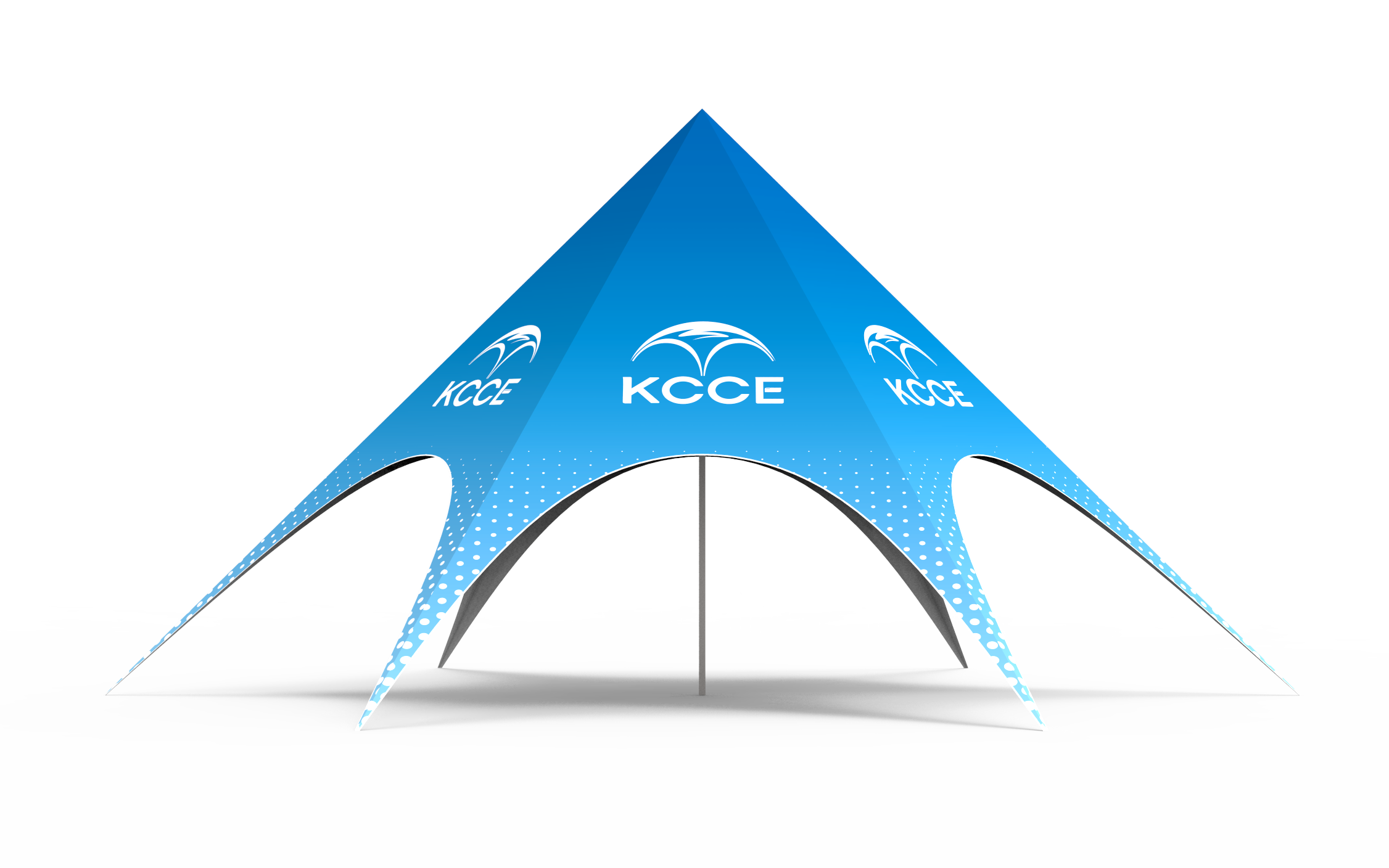
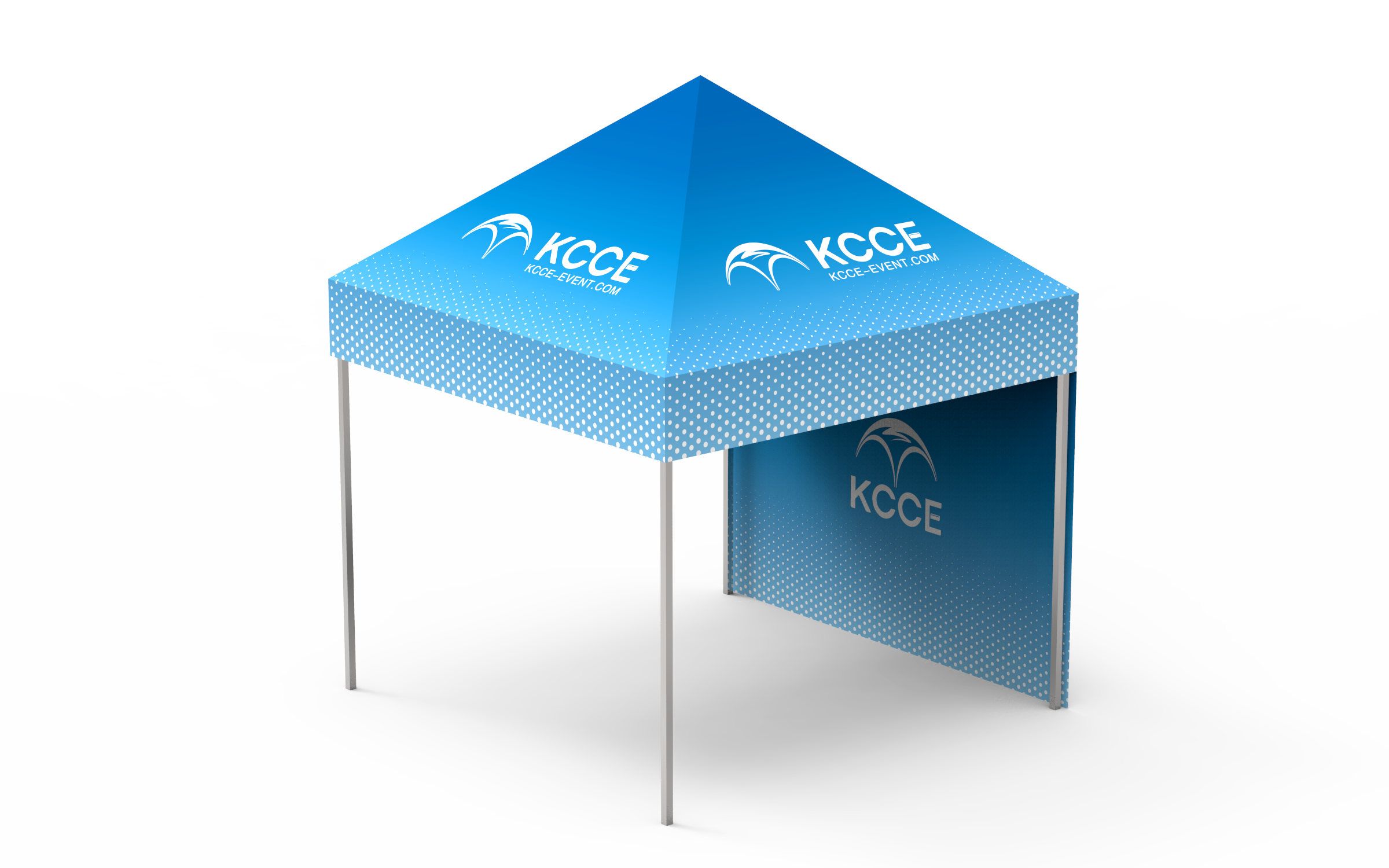
Tier 1: Established manufacturers with OEM/ODM capability. This is where companies like KCCE (Dongguan Dacheng Outdoor Products) operate. The company was founded in 2006 and operates a sizable facility with many production machines and a team of skilled workers. They are described as CE and RoHS compliant and ship internationally, with Europe and the US as primary markets. Their product range covers inflatable tents, inflatable furniture, and custom inflatable shapes. If you’re a brand looking for a manufacturing partner rather than a finished product, this tier is your starting point.
Tier 2: Brand-name consumer tent makers. Companies like RBM, Coody, and Recollector play here. If you’ve searched for an RBM inflatable tent review or looked into the Coody air tent aurora or a Recollector air tent, you know these names. They’ve built consumer-facing brands with distinct positioning — Coody leans into the aurora aesthetic for premium camping, Recollector targets the value-conscious camper, and RBM sits somewhere in between with a focus on durability.
Tier 3: Amazon budget brands. Dozens of them. No brand loyalty, price-driven, quality all over the map. Fine for occasional use. Risky for anything commercial.
Here’s my honest read on pricing tiers: Budget inflatable tents are generally affordable, while mid-tier branded ones — the Coody and Recollector class — tend to cost noticeably more than a comparable traditional pole tent. And commercial-grade inflatable tents for events or emergency use? That’s a different conversation entirely, Prices can be high before shipping, and shipping on a large inflatable tent can add significant costs depending on destination.
That price gap is exactly what social media users complain about. “They’re twice the price of traditional tents.” True. But they also set up in a fraction of the time and don’t have poles to lose. Whether that trade-off works depends entirely on your use case.
Regional Breakdown: Where Demand Is Really Growing
North America leads the inflatable tents market, and it’s not particularly close. The combination of a mature outdoor recreation culture, a booming glamping industry, and high disposable income makes it the dominant regional market. FMI and Fortune both point to North America as the largest region.
Europe is second, with strong demand from festival culture and a regulatory environment that favors rapid-deployment emergency shelters. Germany, the UK, and France are the biggest individual markets.
Asia-Pacific is the one to watch. It’s not the largest today, but it’s growing fastest. Government disaster-relief procurement in Japan and Australia, plus a rapidly expanding domestic camping market in China and South Korea, are pushing volume. If I had to pick the highest-growth region for 2025–2035, I’d put my money on Asia-Pacific. The infrastructure spending alone — emergency shelters, event venues, temporary structures — is substantial.
The Middle East and South America are smaller but not negligible. Desert camping and brand activation events drive demand in the Gulf states.
Types & Segmentation
The inflatable tents market segmentation breaks down along a few axes:
By product type:
- Camping inflatable tents (consumer)
- Military inflatable tents
- Event and exhibition inflatable tents
- Emergency and disaster relief inflatable tents
By material: PVC dominates — FMI puts it at 98.4% share in 2026. Polyurethane, nylon, and PE fill out the rest. PVC wins on durability and weldability, which matters enormously for air-tight construction.
By size: Small, medium, and large. The inflatable tent large segment is growing fastest in commercial applications — you can’t host an event in a two-person tent.
By distribution: Direct from manufacturer (OEM/ODM), specialty retailers, online marketplaces, and government/institutional procurement channels.
Which segment grows fastest? I’d argue emergency and disaster relief, purely because government budgets are less cyclical than consumer spending. But event and exhibition runs a close second in terms of dollar growth.
If you’re evaluating suppliers, KCCE’s product catalog is a useful reference point — they break their inflatable tents into named model families (X6, XII, XL-A, XL-B, AI, AII, F, N, U, VI, VII, X, and XIC), all custom-manufacturable with OEM/ODM options for size, color, and logo printing. That kind of model-level transparency is rare.
What This Means for Buyers & Procurement
Alright, let’s translate all this market noise into something actionable.
First, know which market you’re actually buying into. If you need 50 tents for a summer festival circuit, you’re in the event segment — durability and setup speed matter more than packed weight. If you’re outfitting a glamping site, aesthetics and guest experience drive your decision. If you’re procuring for emergency response, certifications and air-tight chamber integrity are non-negotiable.
Second, weight your evaluation toward total cost of ownership, not sticker price. The social media complaints are legitimate: inflatable tents are heavier, take up noticeably more packed space, and cost roughly double a pole tent upfront. But factor in setup labor, storage, and replacement cycles. A commercial-grade inflatable tent that lasts five seasons beats a cheap one that fails after one.
Third, demand real durability data. This is the biggest gap I see. Everyone publishes setup videos. Almost nobody publishes failure-point analysis after 100 cycles. Ask your supplier for field data. If they can’t provide it, that tells you something.
Fourth, look at certifications. CE and RoHS compliance aren’t marketing fluff — they’re baseline requirements for selling into European and North American markets. A manufacturer with a 2,800-square-meter facility and 70+ machines has the capacity to maintain those standards. A guy with a heat sealer in a garage doesn’t.
For event and exhibition buyers specifically, KCCE’s inflatable tents line and their inflatable shapes for branded installations are worth a look — they’ve been shipping to 75 countries since 2006, which is a longer track record than most.
And if you’re wondering where to actually buy — online marketplaces for consumer models, direct from manufacturers for commercial volumes, and specialty outdoor retailers for the branded mid-tier. The channel matters as much as the product.
Executive Summary & Key Insights
Here’s my honest read on the numbers, stripped of the report-jargon.
The global inflatable tents market sits at roughly USD 1.2 billion in 2025, scaling to about USD 1.3 billion by end-2026, and on track for USD 2.66–2.7 billion by 2036 at a 7.5% CAGR (FMI, May 2026). Cross-checking against Fortune Business Insights and Coherent Market Insights, the CAGR band tightens to 7–9% — that’s the figure I’d actually underwrite a business plan on.
Key insights worth flagging:
- PVC is not just leading — it’s dominant. FMI puts PVC at a 98.4% material share in 2026. That’s near-total concentration, which is both a strength (mature supply chain, weldable, cheap) and a risk (regulatory pressure on phthalates and recyclability).
- North America remains the largest regional market, driven by glamping operators and festival/event production rather than pure consumer camping.
- The commercial and institutional slice — events, disaster relief, military — is where the growth velocity is, yet most reports bury it in an “others” bucket.
- The definitional gap is the real story. A $376M report and a $2.5B report can both be right; they’re counting different things.
If you’re a procurement lead, the actionable takeaway is: don’t buy the headline number, buy the segment number that matches your use case.
Market Size & Forecast (2020–2035)
Let me lay out the trajectory as I see it, reconciling the major houses.
Historical (2020–2024): The market took a COVID hit in 2020–2021 as event and festival demand collapsed, then rebounded hard from 2022 onward. FMI’s baseline implies the market crossed USD 1.0 billion around 2023–2024, with the recovery led by glamping and emergency-response procurement.
Current (2025–2026): USD 1.2 billion (2025) → USD 1.3 billion (2026). Modest single-year growth, consistent with a market digesting post-pandemic supply-chain normalization and PVC resin price volatility.
Forecast (2026–2035/2036): Compounding at 7.5%, the market reaches roughly:
- 2028: ~USD 1.5 billion
- 2030: ~USD 1.75 billion
- 2033: ~USD 2.2 billion
- 2035: ~USD 2.5 billion
- 2036: ~USD 2.66–2.7 billion
A note on the horizon mismatch: FMI anchors to 2036, many competitors to 2035. The 2035 figure lands around USD 2.5 billion on the same curve. Treat the two as the same forecast with a one-year offset — not a disagreement.
The 7–9% CAGR band holds across all major reports. I’d plan on the low end (7%) for conservative capex and the high end (9%) only if you’re heavily weighted toward the event and relief segments.
Market Segmentation Analysis
This is where the reports diverge most, so let me give you the segmentation that actually maps to how the industry buys and sells.
By material: PVC (~98.4% in 2026 per FMI), with polyurethane (PU), nylon, and PE splitting the remainder. PU is the premium play — lighter, more packable, better cold-flex — but at a cost premium that keeps it niche.
By size: Small (1–3 person), medium (4–8 person), large (8+ person / multi-room). The large-format segment — Air Tent Houses, multi-room event domes — is growing fastest in dollar terms because average selling prices are 5–10x the small-tent category.
By application: Camping (consumer), disaster relief, military, and events/sport. Fortune Business Insights explicitly carves out disaster relief and military; these are bulk, spec-driven, tender-based purchases with long sales cycles but high contract values.
By region: North America (largest), Europe (strong glamping and festival demand), Asia-Pacific (fastest-growing, driven by China and India manufacturing plus domestic event markets).
The segmentation choice is precisely why headline market sizes disagree by 7x. Count only consumer camping and you get a few hundred million. Add commercial, military, and relief, and you’re north of $2 billion. Know which slice you’re in.
Sustainability & Eco-Material Innovation in Inflatable Tents
This is the pressure point the whole industry is watching, and it’s moving faster than most buyers realize.
Recyclable PVC. Traditional PVC tent fabrics are plasticized with phthalates — increasingly restricted under EU REACH Annex XVII and flagged under California Prop 65. The industry response is two-fold: phthalate-free plasticizers (e.g. DINP, DOTP replacements) and mono-material recyclable PVC designed for take-back. A few European manufacturers now run closed-loop programs collecting end-of-life event tents and re-granulating the PVC.
Bio-based polyurethane. PU is already the lighter, premium alternative; the innovation is shifting the feedstock. Bio-based polyols (often derived from castor oil or soy) now substitute 20–40% of petroleum-based polyol in some commercial PU coatings, cutting embodied carbon without sacrificing weldability. Suppliers like Covestro and BASF have pushed bio-based PU coatings into the textile-laminate space, and a handful of tent OEMs are piloting them.
Recycled PET (rPET) fabrics. Several brands now offer tent bodies in rPET, certified under GRS (Global Recycled Standard). It’s not the main material yet, but it’s the fastest-growing “eco” claim at trade shows.
What’s still missing: there’s no industry-wide EPR (Extended Producer Responsibility) scheme for inflatable tents yet, and no ISO standard specifically for inflatable-tent recyclability. That’s the gap to watch — and the opportunity for a first mover.
Smart Technology Integration in Inflatable Tents
The “smart tent” is no longer a concept demo — it’s shipping, and it’s the most interesting margin story in the category.
Automatic inflation systems. The old foot-pump-and-sweat model is being replaced by integrated electric high-pressure pumps with pressure sensors that auto-shutoff at target PSI (typically around 5–8 PSI for low-pressure air beams, and up to 10+ PSI for structural tubes). Some systems run off 12V car outlets; premium models use Li-ion packs. Setup time drops substantially, from around 15–20 minutes to under 5.
Temperature control. Heated air-beam systems and integrated radiant panels are appearing in cold-weather and glamping models. A few operators run zoned heating — separate temperature control per room — which is a genuine differentiator for glamping pods booked at premium nightly rates.
IoT sensors. This is where it gets real for commercial buyers. Sensor packages now monitor:
- Internal pressure (detecting slow leaks before a beam fails)
- Internal/external temperature and humidity
- Occupancy (for event capacity compliance)
- Location/GPS (for rental fleets and relief logistics)
Data feeds to a phone app or a fleet dashboard. For a rental operator with 50 tents, leak-detection alone pays for the sensor cost — a beam failure mid-event is a refund and a reputation hit.
The catch: smart features add cost and a failure point. Batteries die, sensors drift, apps break. For disaster relief, where reliability is everything, the industry is still split on whether IoT is an asset or a liability. My read: for consumer and glamping, it’s already table stakes; for relief and military, it’s a “nice to have” that procurement officers are still skeptical of.
Frequently Asked Questions
Q: Are inflatable tents worth buying?
A: It depends on your use case. For glamping, events, or emergency response, absolutely — setup speed and structural integrity justify the premium. For occasional weekend camping, a traditional pole tent is probably better value. In my experience, the inflatable tents market exists because certain applications genuinely need what inflatable construction offers.
Q: What’s the best inflatable tent on the market?
A: There’s no single answer. For consumer camping, brands like Coody (the air tent aurora line) and Recollector are strong contenders. For commercial and OEM needs, established manufacturers with CE and RoHS compliance and multi-model catalogs are your best bet. Match the brand to your application, not to a review score.
Q: What stores sell inflatable tents?
A: Large outdoor retailers, online marketplaces like Amazon, and specialty camping stores carry consumer models. Commercial-grade inflatable tents are typically purchased directly from manufacturers or through B2B channels. If you need custom sizes or branding, going direct is almost always the right call.
Q: Where can I find inflatable tents for sale?
A: Consumer models are widely available online and through outdoor retail chains. For bulk or custom orders, manufacturer-direct is the standard route — many offer OEM/ODM with custom sizing, colors, and logo printing. Government and institutional buyers typically work through procurement contracts.
Q: What is the inflatable tents market size?
A: Future Market Insights values the market at USD 1.2 billion in 2025, reaching USD 1.3 billion by end-2026. Forecasts vary widely across research firms due to differing scope definitions, but the consensus CAGR sits around 7.5% through 2036.
Q: Which region dominates the inflatable tents market?
A: North America leads, driven by glamping, outdoor recreation, and event demand. Europe follows closely. Asia-Pacific is the fastest-growing regional market, fueled by government disaster-relief spending and expanding domestic camping culture.
Q: What are the main growth drivers?
A: Beyond generic camping demand, the real drivers are glamping hospitality, festival and event production, emergency and disaster relief procurement, and military applications. Event and emergency segments show the most consistent dollar growth.
Q: How do I evaluate inflatable tent brands?
A: Check certifications (CE, RoHS), manufacturing capacity, years in business, and whether they offer OEM/ODM. Ask for real-world durability data, not just setup videos. And compare total cost of ownership, not just the sticker price.
Conclusion
The inflatable tents market is real, growing at a solid 7.5% CAGR, and increasingly segmented into applications that have nothing to do with weekend camping. But the data is messy — reports disagree by a factor of seven on market size because they’re counting different things. My advice: reconcile the numbers yourself before trusting any single report. Then use the brand and regional breakdowns above to benchmark your actual suppliers. The market rewards buyers who do their homework.
References
1. Inflatable Tent Market Report – futuremarketinsights.com
2. Inflatable Tents Market Size, Share & Forecast 2026-2034 – fortunebusinessinsights.com
3. Inflatable Tent Market – Share, Size and Industry Analysis – coherentmarketinsights.com
4. Inflatable Tents Market Size, Share, Industry Report, 2035 – businessresearchinsights.com