Quick Answer
An inflatable tent holds its shape with pressurized air beams or sealed air chambers instead of metal poles. China dominates global production, with factories clustered in Guangdong, Zhejiang, and Jiangsu. Expect FOB prices from roughly USD 80 for small camping models to several thousand for large event structures, with MOQs often starting at one piece for custom OEM work.
Let me be blunt about something first. Type “inflatable tents china” into Google and half the results are video game threads, band pages, and someone’s 2011 forum post about a pool float. Nobody’s actually serving the person who needs to place a purchase order. That’s who I’m writing for — importers, Amazon and FBA sellers, procurement managers, event companies sourcing at container scale.
I’ve spent years on the factory side of this business, watching buyers walk in with a spec sheet and walk out with a container, and watching others get burned by a “factory” that turned out to be a guy with a laptop and a WeChat account. So here’s the real version: a supplier shortlist, a vetting checklist, and actual cost and MOQ ranges.
What Are Inflatable Tents? (Quick Definition)
An inflatable tent is a portable shelter that uses pressurized air beams or sealed air chambers — not metal poles — to hold its structure. Most fall into two families: air-beam (pump-up) tents, where a single bladder inflates the whole frame, and air-tight tents, where each chamber is sealed and stays rigid for days without a pump attached.
Main use cases: camping and glamping, event and party rentals, trade show inflatable tents booths, emergency and medical response, and brand activation. The camping side is where the consumer volume lives. The event side is where the margin lives.
Why Source Inflatable Tents From China
The short answer is clusters. China’s inflatable products industry concentrated around Guangdong (Dongguan especially), Zhejiang, and Jiangsu, and once you have 70+ cutting and welding machines under one roof, your per-unit cost drops in ways a small domestic workshop can’t match.
Here’s what that looks like in practice. Dacheng outdoor products LTD. (KCCE) states that it was established in 2006 and runs a facility with over 70 production machines and roughly 40 skilled staff. According to the company, its products ship to many countries and regions, with Europe and the US as primary markets. That’s a mid-sized factory by Chinese standards — and it still dwarfs most Western inflatable workshops.
The other advantage is OEM/ODM capability. Custom size, custom color, custom logo printing — that’s table stakes for Chinese factories, and it’s how you build a differentiated product line instead of reselling the same generic tent as everyone else.
China vs. Vietnam vs. domestic production — the honest tradeoffs:
- Vietnam: Lower tariffs into some markets, but the inflatable supply chain is thinner. Fewer TPU bladder suppliers, fewer RF welding specialists. You’ll pay more per unit for comparable quality.
- Domestic (US/EU) production: Faster lead times, easier communication, no customs headache. But you’re looking at multiples of the Chinese price, and most domestic shops can’t scale to container volume anyway.
- China: Best cost-to-capability ratio, deepest supplier pool, real OEM infrastructure. The catch is variance — the gap between a good factory and a bad one is enormous, and that’s exactly what the vetting section below is for.
Top Inflatable Tent Manufacturers & Suppliers in China
I’m not going to pretend there’s a definitive ranking. There isn’t. What I can give you is a shortlist of supplier types worth putting on your RFQ list, with what each is actually good at.
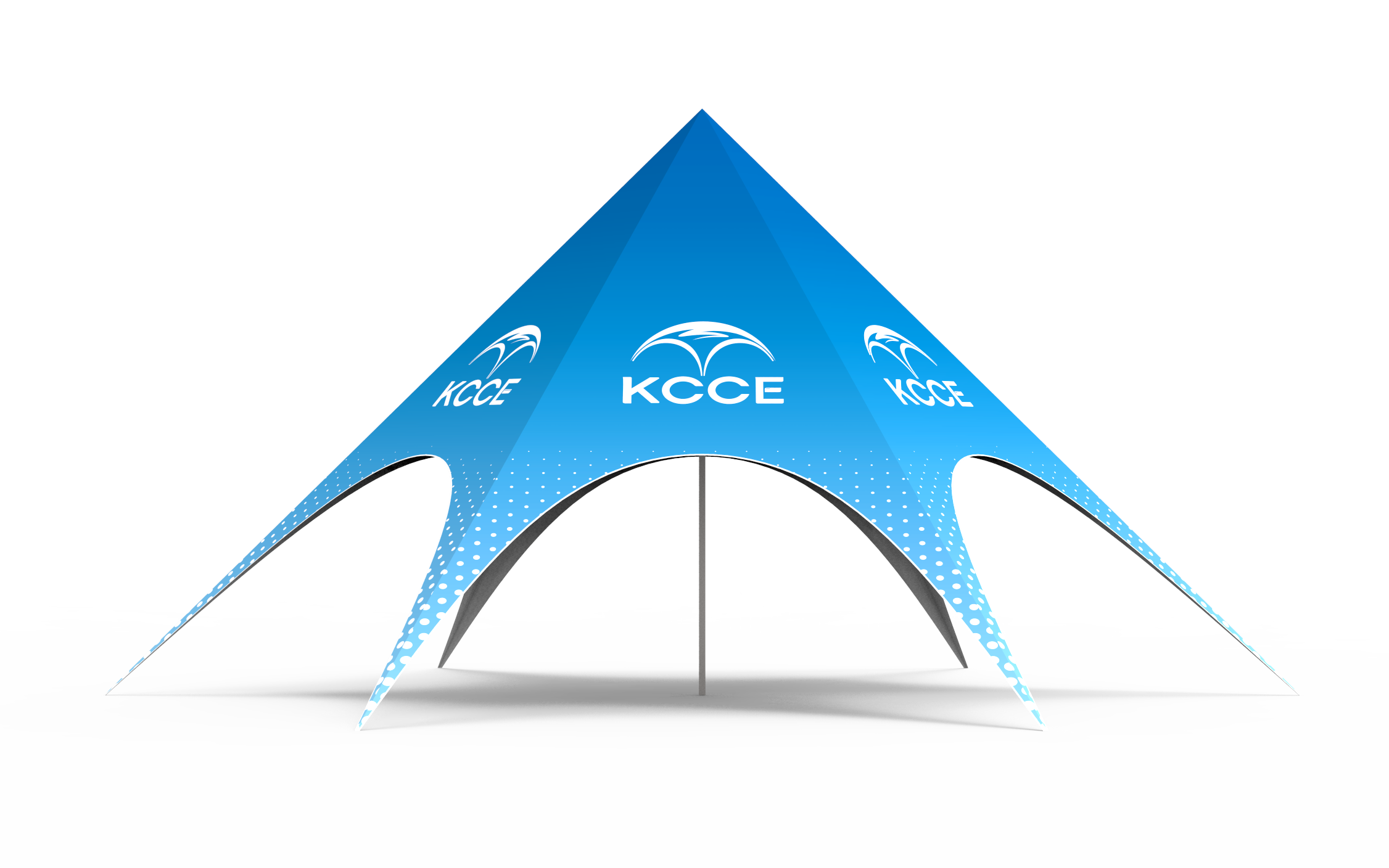
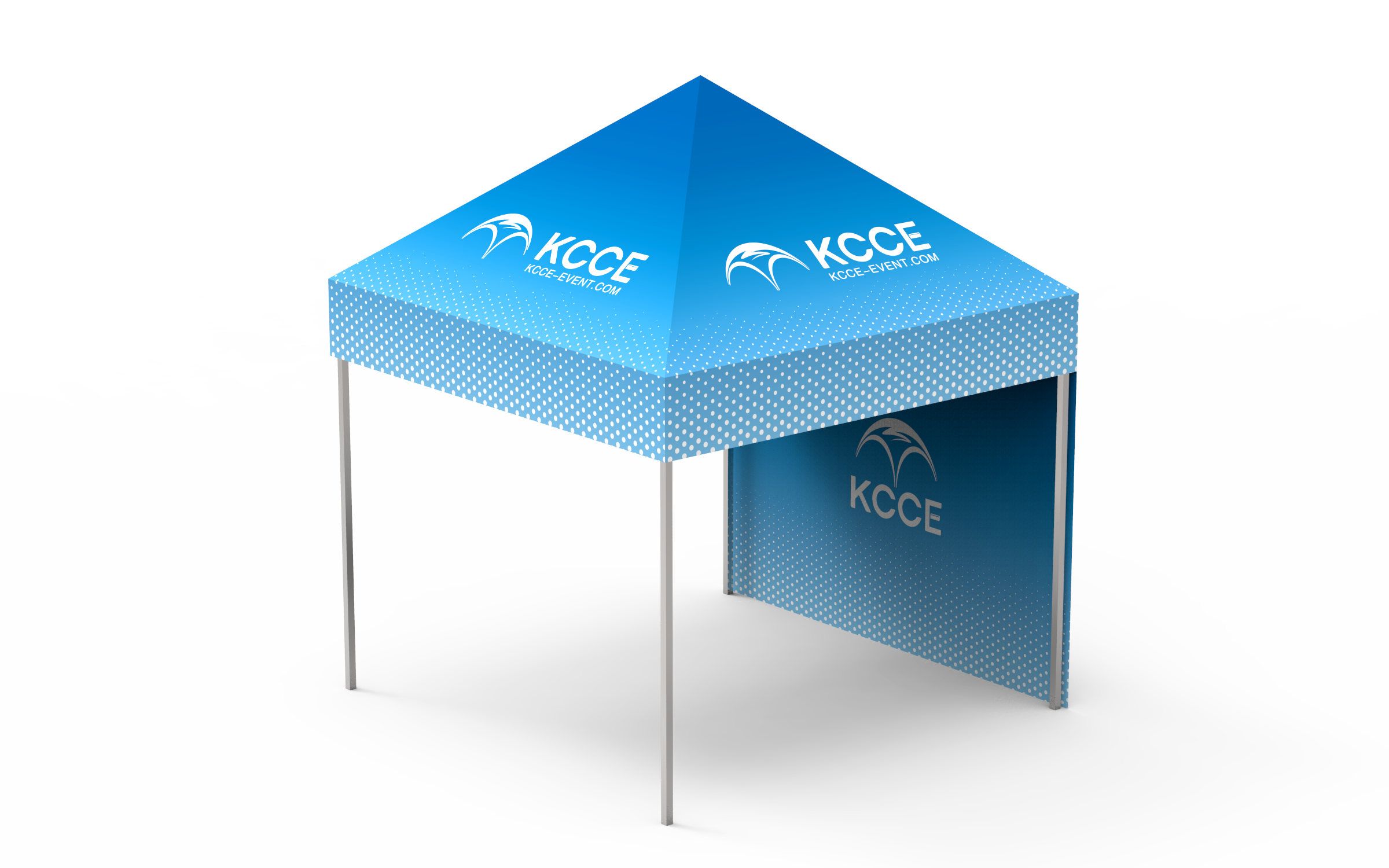
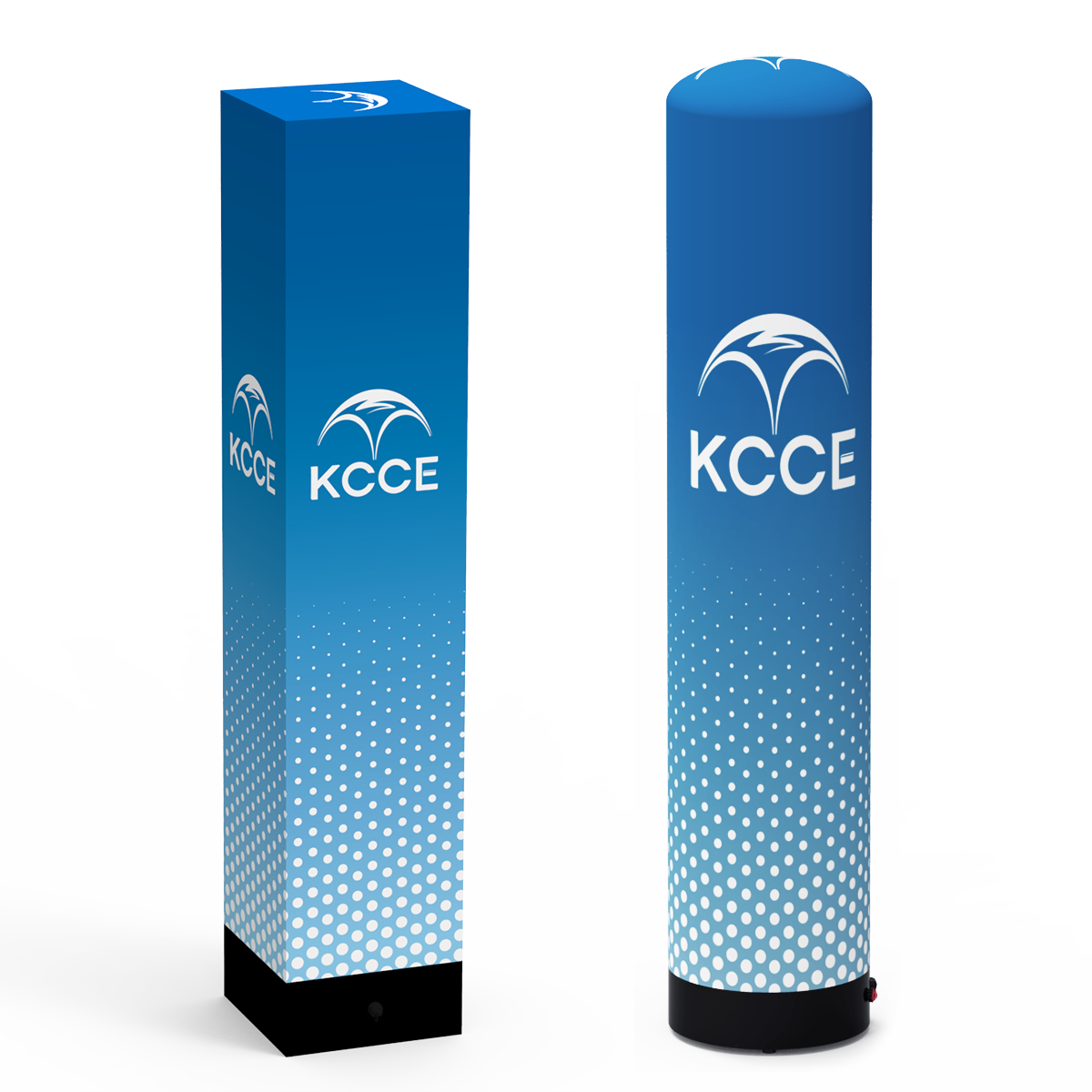
Dacheng outdoor products LTD. (KCCE) — Dongguan, Guangdong. Established 2006. Main lines: inflatable tents, inflatable arches, inflatable columns, inflatable furniture, trade show tents, event tents. Holds CE and RoHS compliance. OEM/ODM supported, MOQ as low as 1 piece on many catalog items. Their product range is stated to include air-sealed tents across the X6, XII, XL-A, XL-B, AI, AII, F, N, U, VI, VII, and X series, plus airtight arches and columns. For event and exhibition buyers, this is the profile you want: factory-direct, export-experienced, cert-carrying. You can see their inflatable tent line here if you want a reference point for what “factory catalog” actually looks like.
Large Guangdong event-structure factories — the tier that builds 10m+ inflatable tents for events and inflatable party shelters for rental companies. Higher MOQs (often 5–20 pieces per SKU), but the structural engineering is real.
Zhejiang camping-focused manufacturers — smaller air-beam camping tents, closer to consumer price points. Good for Amazon and FBA sellers who need repeatable SKUs at volume.
Jiangsu and Shandong trading-heavy suppliers — often trading companies rather than factories. Not automatically bad, but you need to verify who actually welds the seams.
Specialist OEM/ODM houses — factories that only do custom work: your logo, your colorway, your dimensions. Higher tooling and setup cost, but you own the design.
The budget tier (marketplace-sold brands) — the Vevor-type listings you see at around $1,100. Real product, thin margins, minimal support. Fine for price-sensitive buyers, painful for anyone who needs replacement parts.
The premium tier (RBM, Coody and similar) — $2,000+ retail. Different material spec, different QC process. The price gap versus budget Chinese brands is genuinely large, and whether it’s justified depends entirely on your use case.
If you’re sourcing wholesale inflatable tents China-side, my advice is to shortlist three: one factory-direct event specialist, one camping-volume producer, one custom OEM house. Compare quotes on the same spec sheet. The spread will surprise you.
Inflatable vs. Traditional Tents: Which to Import
| Factor | Inflatable Tent | Traditional Pole Tent |
|---|---|---|
| Setup time | 5–15 min with pump | 15–45 min, two people |
| Packed weight | Heavier (fabric + pump) | Lighter for small sizes |
| Wind performance | Good when properly guyed; poor if under-inflated | Depends on frame quality |
| Puncture repair | Patch kit, field-repairable | Pole replacement, usually easy |
| Price (comparable size) | Higher upfront | Lower upfront |
| Spare parts | Pump, bladder, valve | Poles, stakes, fly |
The buyer takeaway: inflatable wins for event rentals, glamping, and brand activation — anywhere setup speed and visual impact matter more than pack weight. Traditional poles still win for backpacking and ultralight camping, where every gram counts and a failed pump is a trip-ending problem.
That’s the real friction point, by the way. The most common complaint I see from actual users is that you have to carry an extra pump — it’s weight, it’s space, and it’s a single point of failure. Fair criticism. If your target customer is a car camper or an event crew, it’s a non-issue. If they’re thru-hiking, sell them something else.
Cost, MOQ & Lead Times (Real Numbers)
Let’s talk money, because this is where most guides get vague and useless.
Price tiers by size and material (FOB, indicative):
- Small air-beam camping tents (2–4 person, Oxford/polyester): roughly USD 80–250 per unit at volume
- Mid-size glamping and family tents (TPU or PVC bladder): roughly USD 300–900
- Large event and party tents (6m+, heavy PVC): roughly USD 1,000–4,000+
- Custom OEM with logo printing and custom dimensions: add 10–30% over catalog pricing, plus one-time setup
For context on the retail end: budget Chinese inflatable tents are commonly listed at around $1,100, while premium brands like RBM and Coody are often priced at $2,000+. That gap is the entire reason buyers go looking for a China inflatable tent manufacturer in the first place.
MOQ: This is where China genuinely surprises Western buyers. Many factories — KCCE included — list MOQ as low as 1 piece on catalog items. Custom OEM runs typically start at 10–50 units per SKU depending on printing and tooling. That’s dramatically lower than most categories.
Lead times: Samples usually 7–15 days. Production runs 20–40 days after deposit, longer in Q3 and Q4 when everyone’s rushing holiday inventory. Add 25–40 days for sea freight.
FOB vs. EXW: FOB means the factory handles export clearance and gets the goods onto the vessel — you take over from the port. EXW means you arrange everything from the factory gate. FOB is the right default for most first-time importers. EXW only makes sense if you already have a freight forwarder with a China presence.
Sample costs: Expect to pay for samples, and expect to pay more than unit price — factories aren’t set up to profit on one-offs. Some will credit the sample cost against your first bulk order. Ask. It’s a normal request.
Materials & Certifications to Verify
Three material families dominate, and the choice drives everything downstream.
PVC — the workhorse for large event tents. Heavy, extremely durable, UV-resistant when properly coated, and weldable with RF (radio frequency) technology, which produces stronger seams than stitching. Downside: heavy and bulky to ship.
TPU — lighter, more flexible in cold weather, and increasingly used for airtight bladders. Pricier than PVC. If you’re selling into markets with real winters, TPU bladders outperform.
Oxford/polyester with PU coating — the camping-tent standard. Light, packable, cheap. Not in the same durability class as PVC, but fine for consumer camping.
Air-beam vs. pole construction is the other axis. Air-beam tents inflate as one unit — fast, but a single puncture can compromise the frame. Pole-construction inflatables use separate air chambers, so a failure is localized. For event rentals, separate chambers are safer.
Certifications to ask for, in writing:
- CE — required for EU market access
- RoHS — restricts hazardous substances, relevant if you’re selling into the EU
- SGS — third-party testing reports, usually on material composition and flammability
- BSCI — social compliance audit, increasingly demanded by larger retailers
- REACH — EU chemical regulation compliance
- ISO — quality management systems
KCCE, for example, states full CE and RoHS compliance. That’s the baseline. Anything less and you’re taking on regulatory risk you don’t need.
Actionable step: Request test reports before you pay the deposit, not after. Any factory with real certifications has PDFs ready to send within a day. If they stall, that tells you something.
How to Vet a Chinese Inflatable Tent Supplier
This is the section that saves you money. Run every candidate through it.
The checklist:
- Factory video call, live. Not a pre-recorded walkthrough. Ask them to walk to a machine and turn it on. Ask to see the welding floor.
- Business license and establishment date. KCCE’s parent entity, Dongguan Dacheng, is stated to date to 2006. Longevity matters — factories that survive 15+ years usually do so for a reason.
- Certification documents. CE, RoHS, and any third-party test reports, in PDF form.
- Sample order first. Always. Test the seams, the valves, the pump compatibility, and the packed weight yourself.
- Trade assurance or escrow. If the platform offers it, use it. It’s cheap insurance.
- Reference customers. Ask for two buyers in your region or your segment. Then actually contact them.
- Spare parts availability. Ask specifically about replacement pumps, bladders, and valve kits. If they can’t supply parts, you’ll be fielding angry emails in month eight.
Red flags — walk away:
- No live factory video, only stock photos
- Vague or shifting MOQ answers
- No certifications, or “we can get them later”
- Prices dramatically below everyone else on identical spec
- Pressure to pay outside the platform
- No physical address, or an address that doesn’t match the business license
You might be wondering whether a trading company is automatically disqualifying. It isn’t — some trading companies have better QC than factories. But you should know which one you’re dealing with, because it changes who’s accountable when something goes wrong.
Frequently Asked Questions
Q: Are the inflatable tents any good?
A: For the right use case, yes. Inflatable camping tents and event tents are genuinely good for car camping, glamping, festivals, and rentals — fast setup, big interior volume, no poles to lose. They’re weaker for ultralight backpacking and extreme wind exposure. The quality variance between suppliers is the real issue, not the category itself.
Q: How much does a Chinese tent cost?
A: FOB pricing runs roughly USD 80–250 for small air-beam camping tents, USD 300–900 for mid-size glamping models, and USD 1,000–4,000+ for large event structures. Custom OEM adds 10–30%. Retail-side, budget Chinese inflatable tents sit around $1,100 while premium brands like RBM and Coody exceed $2,000.
Q: Who makes the best inflatable tents?
A: There’s no single answer. For event and exhibition structures, look at Guangdong-based factory-direct manufacturers with CE and RoHS compliance and export experience — Dongguan Dacheng Outdoor Products (KCCE) is one established example, operating since 2006. For consumer camping volume, Zhejiang producers compete hard on price. Match the supplier to your segment, not to a ranking.
Q: What is the best Chinese ultralight tent?
A: Honestly, inflatable isn’t the right category for ultralight. Air-beam tents carry a pump, and that’s dead weight a trekking-pole or freestanding tent doesn’t have. If ultralight is your priority, look at Chinese silnylon and DCF trekking-pole tents instead. Inflatable shines when pack weight is secondary.
Q: Are inflatable tents good for camping?
A: For car camping and family camping, absolutely — setup takes minutes and the interior feels roomier. For backcountry trips, the pump weight and the risk of a punctured beam are real drawbacks. Match the tent to how you actually camp, not to how you’d like to.
Q: Where are inflatable tents made?
A: Predominantly China, with manufacturing clustered in Guangdong, Zhejiang, and Jiangsu provinces. Smaller volumes come from Vietnam and a handful of domestic workshops in Europe and North America. If you want the deepest supplier pool and OEM capability, China is the default.
Q: Are inflatable tents worth it?
A: Depends on frequency of use and your tolerance for maintenance. If you camp a few times a year and want fast setup, yes. If you’re in serious wind or remote wilderness regularly, a pole tent is the safer bet. Users who say “you get what you pay for” aren’t wrong — the cheap end of the market deflates and fails, and the good end performs.
Q: How do I choose outdoor tents for my business?
A: Start with your end customer’s use case, then work backward to spec. Event rentals need separate air chambers, heavy PVC, and spare parts availability. Consumer camping needs light Oxford fabric and a competitive retail price. Then shortlist three suppliers, order samples from each, and compare on the same spec sheet.
Conclusion
Here’s my one piece of advice, and I’ll keep it short: request samples from three shortlisted suppliers before you commit to anything. Not two. Three. The third quote is usually where the truth shows up.
And ask yourself one uncomfortable question — is your current supplier actually a factory, or a trading company with a nice website? Because that answer determines who’s accountable when a seam fails in month six.
If you’re building an event or exhibition product line, it’s worth looking at what a factory-direct catalog actually contains — KCCE’s inflatable tent range is a reasonable benchmark, and their inflatable furniture and custom inflatable shapes lines show how far the OEM/ODM model extends. Print the vetting checklist above. Run it against every candidate. Then order.
References
1. Research – brenebrown.com