Commercial Outdoor Tents for Sale: Specs First, Guesswork Last
Most buyers shortlist commercial outdoor tents for sale on price. Then the wind rating gap shows up — usually the week before the event, usually with a client already contracted. I’ve watched that movie more times than I’d like.
So here’s what this piece does: it walks through what commercial-grade actually means, how frame, pole, clearspan, and pop-up tents differ, what sizes hold how many guests, and what real money looks like. No fluff, no phantom discounts.
Quick Answer
Commercial outdoor tents for sale are graded by fabric weight, frame gauge, and wind load rating — not by price alone. A true commercial tent carries fire certification such as NFPA 701 or CPAI-84, is built for repeated tent setup instructions and takedown, and is typically priced from a few hundred dollars for pop-up canopies to $10,000 and up for clearspan structures.
What “Commercial-Grade” Actually Means
A tent built for a single backyard inflatable party shelters and a tent built for a rental fleet are engineered to completely different standards. That’s not custom inflatables for business language — it’s the core distinction that separates consumer tents from commercial ones.
Consumer-grade tents are designed to survive a handful of uses before they’re thrown away. Commercial tents need to withstand repeated setup, takedown, transport, and storage cycles, hold up under real wind loads, and meet the compliance standards that large public events actually require. Rental companies, in particular, need equipment that can go up and come down hundreds of times a year.
Three specs separate the two categories:
- Fabric weight. Measured in ounces per square yard. Heavier coated polyester holds up to UV, rain, and repeated folding. Thinner material is where cheap tents die first.
- Frame gauge. Wall thickness and alloy quality determine whether a frame survives a season or a decade. This is the single most expensive component to replace.
- Wind load rating. The number that matters most and gets quoted least. A tent without a stated wind rating is a tent without an engineering claim behind it.
On the compliance side, look for NFPA 701 and CPAI-84 fire retardant certifications. Large public venues, municipal properties, and most insurance carriers will ask for one of these before they let you put a structure on the ground. If a listing doesn’t mention fire certification, that’s not an oversight — it usually means there isn’t one.
You might be wondering why I’m hammering specs before price. Because a $400 tent that fails in month three costs more than a $2,000 tent that runs for eight years. That math isn’t complicated, but it’s easy to ignore when you’re staring at a quote sheet.
Frame vs. Pole vs. Clearspan vs. Pop-Up: Which to Buy
This is the decision that shapes everything downstream — cost, setup labor, lifespan, and what events you can actually bid on.
| Type | Typical Cost Band | Max Span | Wind Performance | Setup | Lifespan |
|---|---|---|---|---|---|
| Pop-up inflatable canopies | A few hundred dollars | Small, single-unit | Low without ballast | Minutes, 1–2 people | Short, light-duty cycles |
| Pole tent | Mid-range | Medium to large | Moderate, depends on staking | Hours, crew required | Years with care |
| Frame tent | $2,000+ | Medium to large | Better, freestanding options | Hours, crew required | Years, good for fleets |
| Clearspan | $10,000+ | Largest, column-free | Engineered ratings available | Days, professional crew | Long-term, near-permanent |
A few decision cues, based on what I’ve seen work:
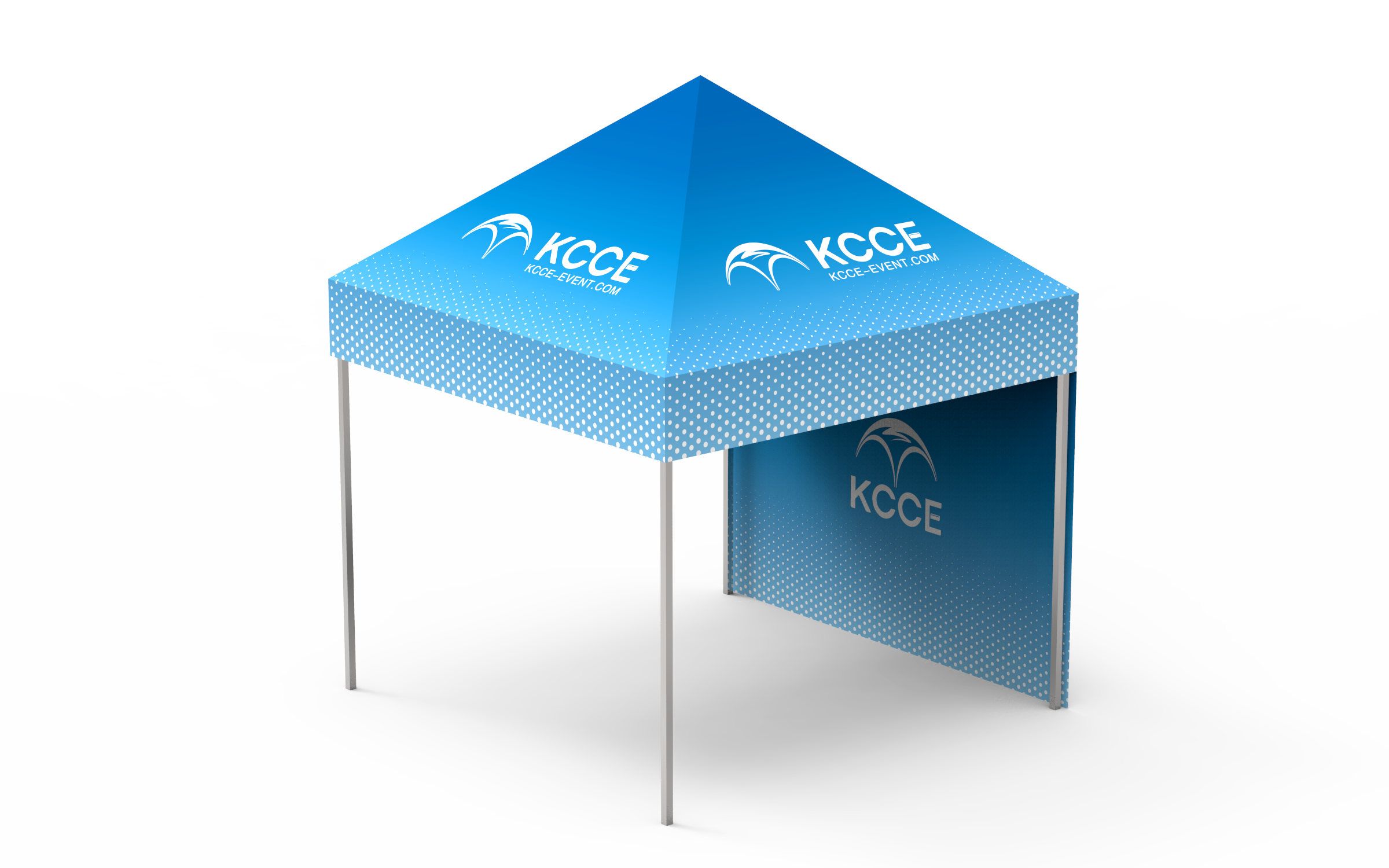
- Pop-up canopy tents — exhibition inflatable tents, farmers markets, food truck setups, single-day vendor pitches. Fast, portable, and fine as long as you’re not chasing big wind exposure.
- Pole tents — weddings, festivals, and anything where you want that classic peaked silhouette. Cheaper per square foot than frame, but they depend on staking, so hard surfaces are a problem.
- Frame tents — the rental fleet workhorse. No center poles, more usable interior, and they can be weighted rather than staked when you’re on asphalt or concrete.
- Clearspan — large commercial tents for warehouses, construction sites, equipment storage, and long-run operations. Tentnology, which engineers industrial and commercial fabric buildings, positions these structures for exactly that: protected usable space for businesses that need coverage quickly, without the delays of conventional construction.
Honestly, if you’re buying for a rental business, frame tents are where I’d start. They’re the most flexible asset in the fleet.
Commercial Tent Sizes and Capacity Table
Sizing questions are where most buyers get stuck, so let’s just put the numbers down. Capacities below assume standard seated banquet rounds, cocktail standing, and theater-style standing.
| Size (ft) | Square Feet | Seated (banquet) | Cocktail (standing) | Theater (standing) |
|---|---|---|---|---|
| 10×10 | 100 | 8–10 | 15–20 | 20–25 |
| 10×20 | 200 | 16–20 | 30–40 | 40–50 |
| 20×20 | 400 | 32–40 | 60–80 | 80–100 |
| 20×40 | 800 | 64–80 | 120–160 | 160–200 |
| 20×60 | 1,200 | 96–120 | 180–240 | 240–300 |
| 30×60 | 1,800 | 144–180 | 270–360 | 360–450 |
| 40×80 | 3,200 | 256–320 | 480–640 | 640–800 |
Working backward from a guest count is the right move. For 100 guests seated at rounds, you’re generally looking at a 20×40 or a 30×60 depending on how much room you want for a dance floor, buffet line, or bar. Add sidewalls and you change the usable footprint — and you change the climate inside, which matters more than people expect.
Two things that quietly eat capacity: sidewalls (great for weather, but they reduce airflow and can complicate egress planning) and leg options. A tent with mid-legs or additional support posts isn’t giving you the same clear interior as one without.
Specs That Matter: Wind, Fabric, Fire, Snow
If you’re building a product grid or a spec sheet, these are the four fields that should never be blank.
Wind load. Stated in mph. Ask what the rating assumes — staked, weighted, or both. A rating without a ballast condition is half a rating.
Fabric weight. Ounces per square yard, and whether it’s PVC-coated polyester or something lighter. UV-resistant fabric is table stakes for anything staying up more than a weekend.
Fire certification. NFPA 701 or CPAI-84. Non-negotiable for public events and most venues.
Snow load. If you’re in a cold-climate market, this determines whether the structure can stay up year-round or has to come down before the first storm.
Here’s a sample spec block layout for a product grid — keep it consistent across every listing:
- Size: 20×40 ft
- Fabric: PVC-coated polyester, [oz weight]
- Frame: [alloy], [leg diameter]
- Wind rating: [mph], staked / weighted
- Fire cert: NFPA 701
- Snow load: [value or “seasonal takedown required”]
- Sidewalls: included / optional
- Stake kit / weight plates: included / optional
On the “are commercial tents waterproof” question — coated polyester is water-resistant by construction, but seams, stitching, and venting decide whether you stay dry in a real storm. Waterproof is a system property, not a fabric label.
Who’s Buying: Rental, Restaurant, Municipal, Fleet
Different buyers, genuinely different purchase logic. I’ve sold into all four, and the conversations don’t overlap much.
Rental companies care about setup and takedown cycle count, replacement parts availability, and whether the tent can be repaired rather than retired. Turnover is the whole business. They also buy in multiples — this is where wholesale commercial tents and bulk pricing conversations actually happen.
Restaurants and breweries are buying outdoor seating capacity. Brand matters here: custom walls, printed valances, signage. They want something that looks intentional, not like a rental tent that showed up.
Municipal and government buyers are permit-and-compliance first. Fire certs, engineered wind ratings, documented load conditions. If your spec sheet can’t survive a procurement review, you’re not in the running.
Fleet and long-term operators — construction sites, warehouse overflow, equipment and vehicle storage — are buying semi-permanent space. Tentnology’s industrial line is aimed squarely at this: equipment and machinery coverage, inventory and materials, construction sites, warehouse overflow, vehicles and fleets, emergency and government response.
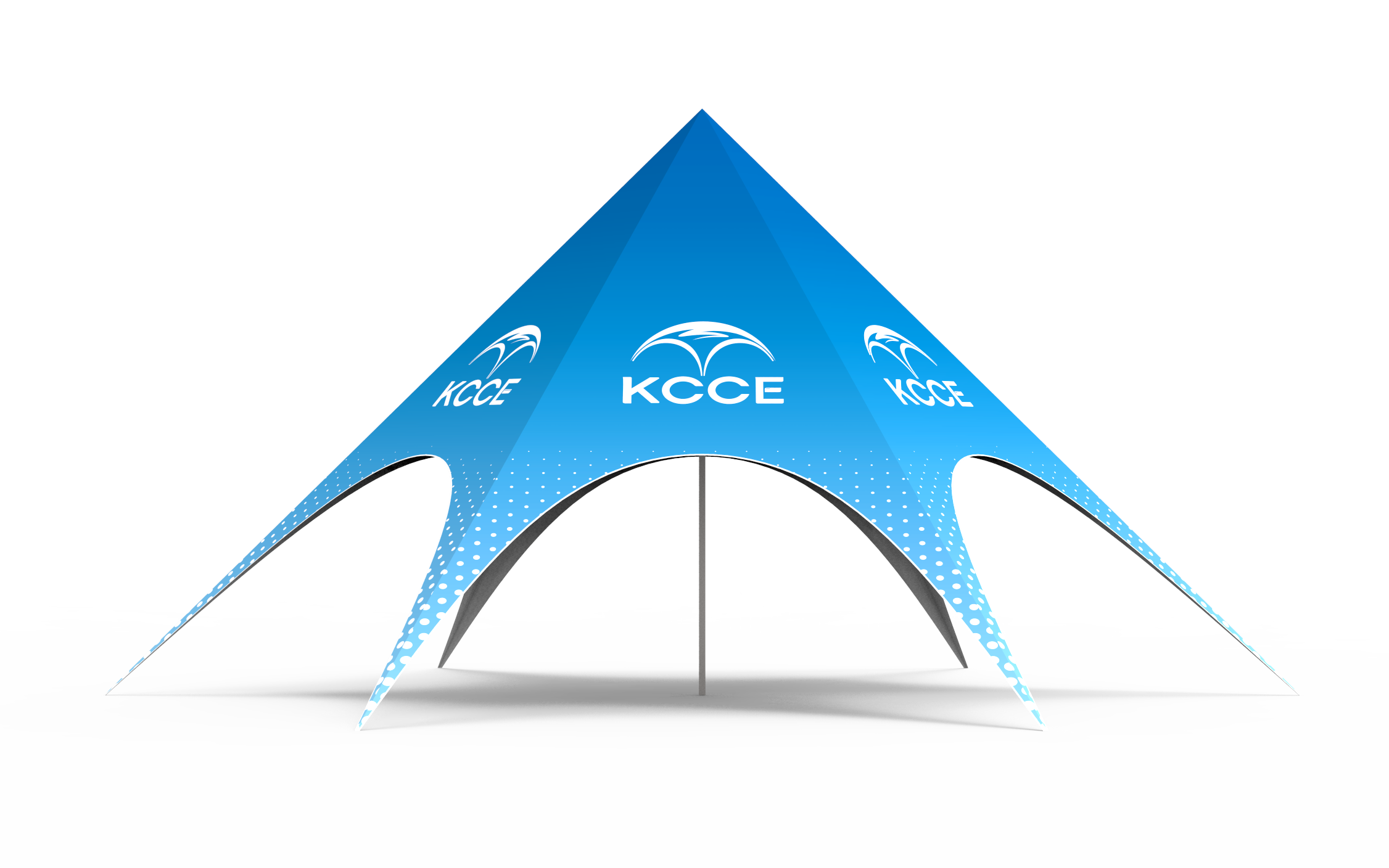
For branded, high-visibility applications, inflatable structures are worth a look too — KCCE builds custom advertising inflatable tents with OEM/ODM sizing, color, and logo printing, which suits brand activations and trade show footprints where you want the structure to do marketing work.
What Commercial Outdoor Tents Cost (Real Numbers)
Let’s talk about how much a commercial tent actually costs, because the anchor prices floating around online are mostly misleading.
- Pop-up canopies: a few hundred dollars. Fine for light duty. Not a fleet asset.
- Frame tents: $2,000 and up, scaling with size, fabric, and sidewall count.
- Clearspan structures: $10,000 and up. The ceiling depends entirely on span, engineering, and installation scope.
Notice what’s missing? Any number that treats “commercial tent” as one category. It isn’t. A 10×10 pop-up and a 40×80 clearspan aren’t the same product with different price tags — they’re different engineering problems.
Lead time is the other number nobody asks about until it’s too late. Custom sizes, printed branding, and engineered structures all add weeks. If your event calendar is fixed, order against the calendar, not against the quote.
On financing: fleet purchases and multi-unit orders are commonly structured rather than paid outright. If you’re a rental operator buying five or ten units, ask. It’s a normal conversation in this segment.
Permits, Wind Zones, and Year-Round Use
Permit rules for a commercial tent vary wildly by state and municipality — there’s no national shortcut here. What typically triggers a permit: structure size above a local threshold, duration of placement, occupancy, and whether the tent is staked into public ground.
Wind and snow zones matter just as much. A tent rated for one region’s conditions may be underspecified for another. This is why localized content and local suppliers win — the rules genuinely differ, and a spec sheet that satisfies one jurisdiction may not satisfy the next.
Can commercial tents stay up year-round? Some can. It depends on snow load rating, anchoring method, and local code. In cold markets, seasonal takedown is often the practical answer regardless of what the rating says.
For fixed branding and display needs that sit outside the tent-permit conversation entirely, KCCE’s modular display frames are a separate category worth knowing about — different compliance path, different use case.
Frame Tents
Frame tents are the backbone of most rental fleets, and for good reason: they don’t require perimeter staking, so they work on asphalt, decks, and rooftop slabs where a pole tent simply can’t go.
Construction is straightforward. An aluminum or galvanized steel frame — typically 1-5/8″ to 2″ OD tubing, with wall thickness from 14 gauge up to 11 gauge on fleet-grade units — assembles in 10-foot bays. The top is a coated polyester or vinyl laminate, commonly around 14 oz to 18 oz per square yard, tensioned over the frame with a valance and optional sidewalls.
Key spec points buyers miss:
- Leg tubing matters. 14-gauge legs flex and dent; 11-gauge legs survive a decade of truck loading. The price gap between them is real, and so is the replacement cost.
- Expandability. A 20×20 frame tent that grows into a 20×40 with an added center section is worth more than a fixed 20×20.
- Wind ratings. Most quality frame tents are tested per the IFAI or ASTM E330 method, but the rating only holds when ballast or stakes match the spec sheet.
Setup runs two to four hours with a crew of three to four for a 20×40. That labor number is the one you plug into your bid.
Pole Tents
Pole tents are the oldest tent form still in commercial production, and they still win on two counts: cost per square foot and that classic peaked silhouette clients ask for by name.
The structure is simple. Center poles push the top up, side poles hold the perimeter, and tension comes from stakes driven into the ground at each guy point. No frame to assemble means fewer parts to lose, faster packing, and a lower purchase price than an equivalent frame tent — typically around 20 to 30 percent less for the same footprint.
The tradeoff is ground conditions. Every pole tent needs staking, and the staking pattern matters. A 40×60 pole tent can require around 30 to 50 stakes, each driven roughly 30 to 42 inches deep, depending on soil and wind exposure. On asphalt, that means drilling and patching. On concrete, it means ballast and a reduced wind rating. On turf, it means calling the utility locate service before you touch a stake — every time.
Fabric is usually around 16 oz to 21 oz coated polyester or vinyl, with a scalloped or straight valance. Sizes run from 20×20 up to 60×120 and beyond. Setup is crew-heavy — four to six people for three to five hours on a large unit — because the top has to be walked up over the poles.
Installation and Maintenance Costs: The ROI Math
Here’s the number most buyers never run: total cost of ownership, not purchase price.
Take a 20×40 frame tent. Purchase price commonly runs around $4,500 to $7,500 depending on fabric weight and frame gauge. Add installation labor at commonly quoted rates of around $35 to $55 per hour per crew member, with three crew for about three hours — roughly $350 to $500 per setup. Add takedown and pack, another roughly $300 to $450. That’s approximately $650 to $950 per event in labor alone.
Maintenance commonly runs around 3 to 5 percent of purchase price per year for a working fleet: top cleaning, minor frame repair, stake and rope replacement, and periodic re-waterproofing. On a $6,000 tent, a common budget range is around $180 to $300 annually.
Now the revenue side. A 20×40 frame tent commonly rents for around $800 to $1,400 per weekend in many US markets, plus delivery and setup fees that typically cover the labor line above. At 20 rentals per season, gross revenue can land in the range of roughly $16,000 to $28,000 against a $6,000 asset with roughly $250 in annual maintenance.
That can amount to a payback period of under one season for a tent that may run five to ten years with care. The math only breaks when the tent is under-spec’d — a 14-oz top on an 11-gauge frame in a high-wind market will fail inside two seasons, and the replacement cost wipes out the margin.
The single highest-ROI maintenance item I’ve seen: store tents dry, on pallets, out of UV. Fleets that do this may get eight to ten years. Fleets that don’t may get four to five. Same tent, same price, double the asset life.
Frequently Asked Questions
Q: Where can I find commercial heavy-duty tents for sale?
A: Specialist commercial tent manufacturers and event rental suppliers are the most reliable channel — they publish fabric weight, frame gauge, and wind ratings, which general retailers usually don’t. Economy Tent International and Tentnology both sell commercial event and industrial tents directly. For branded or inflatable structures, manufacturers like KCCE sell direct with OEM/ODM options.
Q: Who makes the highest quality tents?
A: There’s no single winner — it depends on category. For industrial and large-scale commercial fabric buildings, Tentnology engineers structures around site, climate, and operational needs. For event tents, brands like Economy Tent International focus on commercial event and party tents. In inflatable structures, KCCE states that it has manufactured since 2006 and holds CE and RoHS compliance, shipping to 75 countries.
Q: How much does a 20×20 tent cost?
A: A 20×20 covers roughly 400 square feet. Pop-up versions sit in the few-hundred-dollar range, while commercial frame tents in that size typically start around $2,000 and climb with fabric weight, sidewalls, and frame spec. Clearspan options cost considerably more. Always compare against wind rating and fire certification, not price alone.
Q: How big of an outdoor tent for 100 guests?
A: For 100 guests seated at banquet rounds, a 20×40 or 30×60 is the usual range — roughly 800 to 1,800 square feet. If you’re adding a dance floor, buffet, or bar, size up. Cocktail-style standing for 100 fits comfortably in a 20×40. Sidewalls and leg configuration affect usable interior space, so factor those in.
Q: What size commercial tent do I need for 100 guests?
A: Same math as above, but work backward from your layout, not just the headcount. Seated dinner, cocktail reception, and theater seating all produce different footprints for the same 100 people. A 20×40 handles seated dining; a 30×60 gives you room to breathe once you add staging or a bar.
Q: Are commercial tents waterproof?
A: Coated polyester fabric is water-resistant by construction, but true waterproofing depends on seam sealing, stitching quality, and ventilation. Commercial tents handle rain far better than consumer canopies, but no fabric alone guarantees a dry interior in a sustained storm. Ask about seam treatment specifically.
Q: How long do commercial event tents last?
A: Lifespan tracks setup cycle count, storage conditions, and frame quality more than calendar age. Rental fleets that go up and down hundreds of times a year wear differently than a restaurant tent that stays put for a season. Replacement parts availability is often the real limit — a tent you can’t repair is a tent you retire early.
Q: Do I need a permit for a commercial tent?
A: Usually, yes — depending on size, duration, occupancy, and whether you’re staking into public ground. Requirements vary significantly by state and municipality, and wind and snow zone rules differ regionally. Check with your local authority before ordering, because the permit condition may dictate the anchoring method you need.
Conclusion
Here’s the one insight I’d leave you with: spec transparency shortlists faster than price anchoring. Buyers who see wind ratings, fabric weight, and fire certs on the listing stop shopping around — they start comparing on substance. Buyers who only see a price keep looking, because there’s always a cheaper number somewhere.
So before you request a quote on commercial outdoor tents for sale, ask for the spec sheet and the wind certification. If a supplier can’t produce both, that tells you something.
What’s your wind zone and guest count? Those two answers narrow the field faster than any filter on a product page.
References
1. Industrial & Commercial Tents for Sale – tentnology.com
2. High Quality Commercial Event Tents for Sale – economytent.com
3. What to Look for When Buying Large Commercial Outdoor Tents – tentsupply.com
4. Camping Tent Market Size, Share, and Industry Analysis – fortunebusinessinsights.com
5. Outdoor Camping Tents Market Research Report – dataintelo.com