Cheap canopies fail in one season. I’ve watched it happen more times than I can count — a vendor buys a $120 pop-up at a big-box store, uses it for three weekends, a gust hits, and the whole thing folds like a lawn chair. Then they buy a real one anyway. They just paid twice.
That’s the gap commercial grade tents are supposed to fill. But here’s the problem: the term gets slapped on everything now. A $150 Amazon listing says “commercial grade.” So does a $2,400 frame tent from a rental house. Both can’t be right.
I’ve spent years around event tents — rental fleets, vendor installation guide, municipal jobs. What follows is what I actually know: what the specs mean, what breaks first, what things cost, and which tent fits which job. No fluff.
Quick Answer
Commercial grade tents are heavy-duty shelters built with thicker steel or aluminum frames, heavier waterproof and UV resistant inflatable canopies fabric, and tested wind ratings — typically backed by multi-year warranties. They differ from standard big-box canopies in frame gauge, fabric weight, and engineering, and they cost significantly more because they’re built to survive repeated commercial use.
What “Commercial Grade” Actually Means (Commercial Grade Tents Defined)
Let’s cut through it. “Commercial grade” isn’t a regulated term. Nobody certifies it. So manufacturers use it loosely, and buyers get burned.
What separates a real commercial grade tent from a standard canopy comes down to four things:
- Frame gauge and material. Commercial frames use thicker-wall steel or aluminum. The joints are welded or reinforced, not crimped. A standard canopy frame is thin tubing that dents if you look at it wrong.
- Canopy fabric weight and coating. Commercial canopies run heavier fabric with proper waterproof coating and UV treatment. Budget canopies use thin material that fades and tears within a season.
- Wind rating. Real commercial tents publish a tested wind rating. Cheap ones either don’t mention wind at all or say something vague like “weather resistant.”
- Warranty. A genuine commercial tent comes with a multi-year warranty on frame and fabric. A big-box canopy gives you 30 days, maybe 90.
You might be wondering why this matters so much. It matters because the difference between commercial and standard tents isn’t cosmetic — it’s structural. The frame either holds in wind or it doesn’t. The fabric either blocks UV or it degrades. There’s no middle ground once you’re past the custom inflatables for business copy.
If you’re sourcing heavy duty commercial grade tents for a rental fleet or a recurring event program, this is the checklist you run before you wire any money.
Commercial vs Standard Tents: What Breaks First
The difference between commercial and standard tents shows up fastest at the failure points. Here’s how they stack up:
| Spec | Standard / Big-Box Canopy | Commercial Grade Tent |
|---|---|---|
| Frame | Thin steel tubing, crimped joints | Thick-gauge steel or aluminum, welded/reinforced joints |
| Fabric | Lightweight, minimal coating | Heavy waterproof, UV resistant fabric |
| Wind rating | Usually none published | Tested rating, published by manufacturer |
| Lifespan | Often one season | Multiple seasons with care |
| Warranty | 30–90 days typical | Multi-year on frame and fabric |
Now, where do cheap tents actually fail? Three places, consistently:
The joints. This is the first thing to go. Crimped connectors loosen, then snap. Once one joint fails under load, the whole frame twists.
The stakes and anchors. Budget tents ship with thin wire stakes that pull out of soft ground. Wind gets under the canopy, and the tent becomes a kite. This is the failure mode people post about after every storm.
UV degradation. Fabric left in the sun breaks down. It gets brittle, then it tears at the seams. A UV resistant tent with proper coating resists this for years. A cheap one turns chalky in months.
Honestly, the joints and the stakes are where I see 80% of failures. The fabric usually outlasts the frame on budget tents, which tells you everything about where they cut corners.
Tent Types for Commercial Use: Frame, Pole, Pop-Up
Three main types. Each has a job it’s good at and jobs it isn’t.
Frame tents. A rigid frame — usually steel or aluminum — with no center poles. Setup takes two or more people and real time. But you get clear-span interior space, good wind performance, and the ability to anchor properly. This is the workhorse for rentals, wedding marquee tents, and anything where you need open floor space.
Pole tents. Classic event look, tensioned fabric over poles. Great for weddings and long-term installations. Not something you move every weekend. Setup is slow and needs skill.
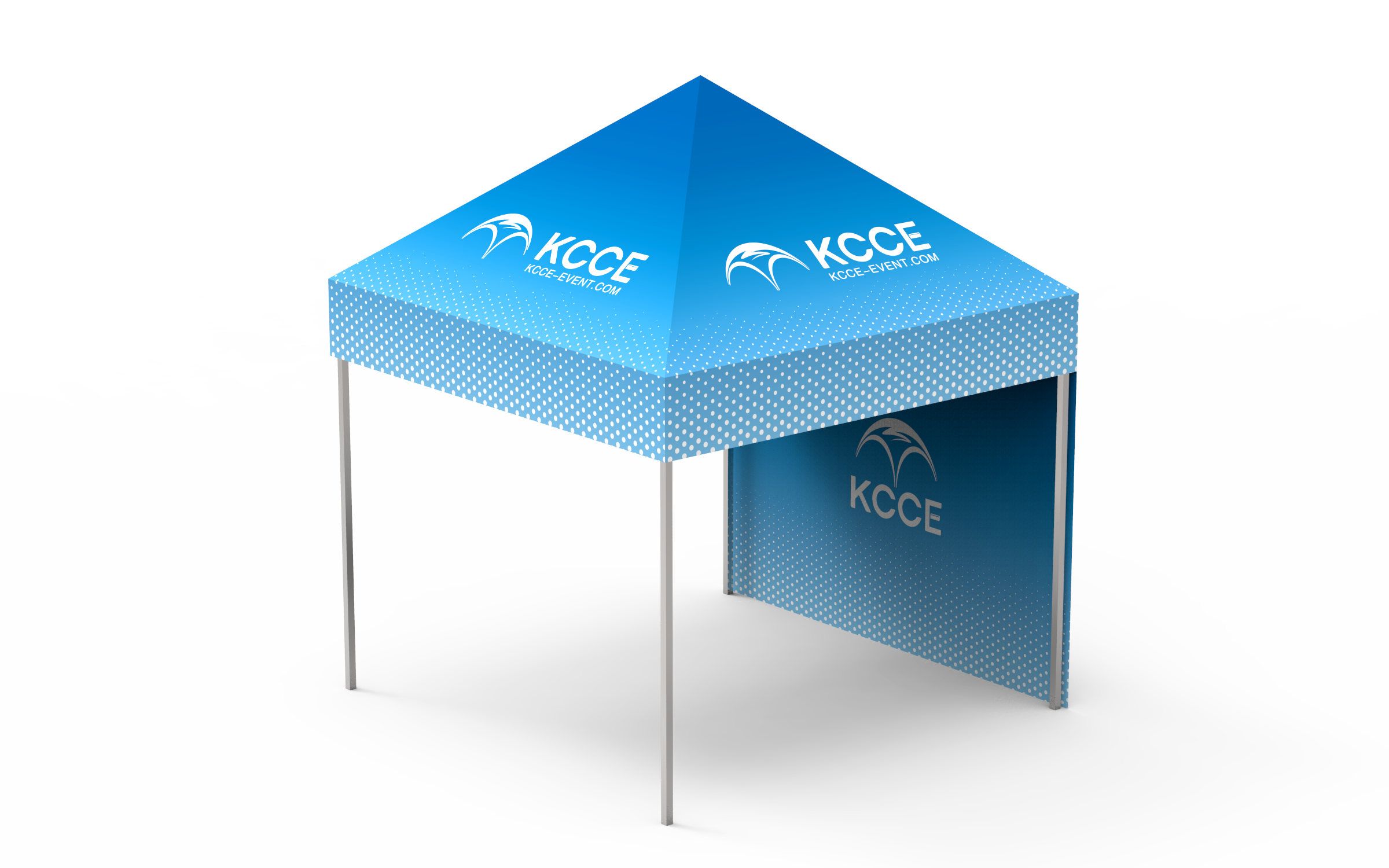
Pop-up canopies. The portable option. One or two people can set these up in minutes. The trade-off is span and wind performance — you’re limited in size, and the folding frame has more failure points. Commercial pop up tents are still a real category, just understand the limits.
For large events, look at clear-span and high-peak options. Clear-span means no interior poles blocking your layout. High-peak gives you more headroom and better water shedding. If you’re covering a big tent footprint guide — think 20×40 or larger — these matter.
Which brings me to a category worth flagging: industrial grade tents. These are built for longer-term deployment, harsher conditions, and heavier use than even standard commercial tents. If your application is a construction site, a semi-permanent structure, or a municipal job, industrial grade is the tier above.
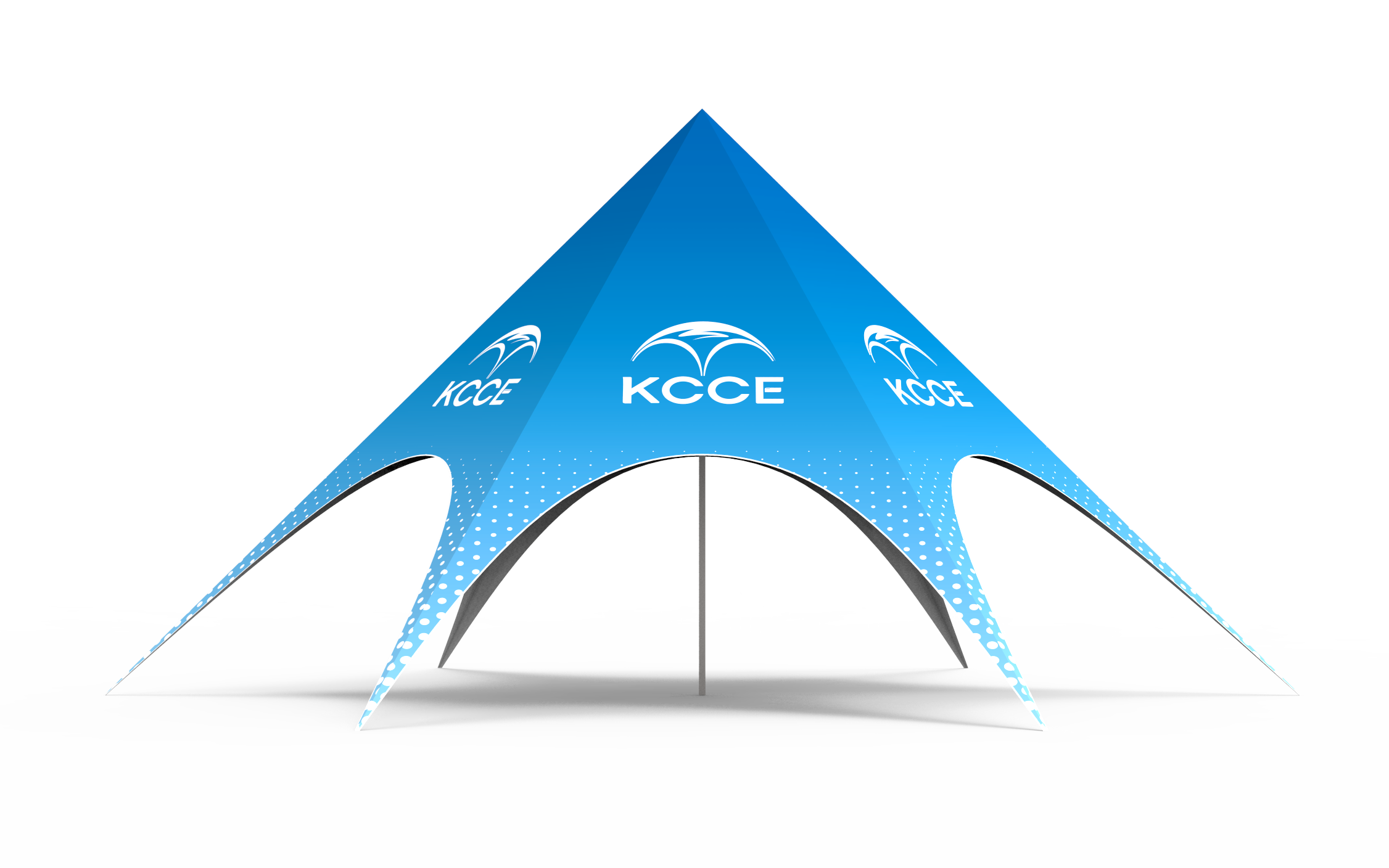
And here’s an angle most buyers miss — inflatable structures. For certain event and branding applications, an inflatable marquee tent for events can be a legitimate alternative to a frame tent. Different animal, but worth knowing it exists.
What Commercial Grade Tents Cost (Honest Price Ranges)
This is where most product pages go silent. You’ll see “Request a Quote” and nothing else. Why? Because transparent pricing invites comparison, and many sellers would rather you not compare.
Here’s the honest landscape. Prices vary by size, material, and brand, so treat these as ranges, not quotes:
- 10×10 commercial pop-up: entry point for commercial quality. Budget canopies sit far below this; real commercial units sit meaningfully above.
- 10×20: roughly scales up from the 10×10, but frame and fabric upgrades push it higher.
- 20×20 frame tent: a jump into real event-tent territory.
- 20×40 and larger: serious money, and at this size you’re often buying from a manufacturer or rental supplier, not a retail listing.
The pattern: cost climbs fast with size, and it climbs again when you move from pop-up to frame or pole construction. A 20×40 frame tent isn’t just “two 10x20s” — the engineering is different.
I’ll be straight with you: I can’t give you exact dollar figures here without a current manufacturer quote in front of me, and I’m not going to invent numbers. What I can tell you is the shape of the curve — and that the gap between budget and commercial pricing is real and justified. If you’re comparing commercial grade tent prices, the cheapest “commercial” listing is usually the one that skipped a spec.
For buyers sourcing at volume — rental companies, event agencies — wholesale commercial grade tents come with different economics. MOQ structures matter, and so does whether the manufacturer will customize. KCCE, for instance, runs a one-piece MOQ on many of its inflatable event products, which changes the math for smaller buyers. You can see how that works on their outdoor inflatable product line.
How Long Do Commercial Grade Tents Last?
“How long do commercial grade tents last” is the question I get most, and the honest answer is: it depends on fabric, frame, and how you treat them.
By fabric: Heavier, properly coated waterproof and UV resistant fabric lasts years. Thin, lightly coated fabric lasts a season or less under regular sun exposure.
By frame: Thick-gauge steel or aluminum with reinforced joints lasts many seasons. Thin tubing with crimped joints fails early — often at the joints, as I said.
By use cycle: A tent that goes up and comes down every weekend wears faster than one that’s installed for a season. Every setup-and-teardown cycle is stress on the frame. Vendors who set up 30 weekends a year will wear a tent faster than a wedding venue that installs once.
What should you demand before buying? Three things:
- A published wind rating, in mph. If the seller won’t give you a number, walk away.
- UV treatment specifics. Not “UV resistant” as a slogan — ask what the coating is.
- A written warranty on both frame and fabric. Frame-only warranties hide fabric failures.
That’s the whole game. Get those three in writing and you’ve filtered out most of the junk.
Which Tent Fits Your Use Case?
Here’s where I stop talking specs and start matching tents to jobs. The “best commercial grade tent” doesn’t exist in the abstract — it’s the best one for your scenario.
Rentals. Frame tents, clear-span, in a range of sizes. You need durability across many cycles and easy repair. Buy commercial grade tents with replaceable parts.
Weddings. Pole tents for the classic look, or high-peak frame tents for a cleaner line. Fabric quality and UV resistance matter because photos are the point.
Outdoor vendors. Commercial pop up tents, 10×10 and 10×20. Portability versus sturdiness is the real tension here — solo vendors need something one person can handle, but it still has to hold in weather.
Municipal and industrial. Industrial grade tents or heavy duty commercial grade tents, deployed longer-term. Wind rating and anchoring are non-negotiable.
Parties and camping. Commercial grade tents for parties lean toward pop-ups and smaller frames. Commercial grade tents for camping is a different conversation — most camping tents aren’t built to commercial spec, so be careful with that label.
Quick-pick table:
| Use Case | Type | Spec Priority |
|---|---|---|
| Rentals | Frame, clear-span | Durability, replaceable parts |
| Weddings | Pole or high-peak frame | Fabric quality, UV resistance |
| Vendors | Commercial pop-up | Portability vs. sturdiness |
| Municipal/industrial | Industrial grade | Wind rating, anchoring |
| Parties | Pop-up / small frame | Setup speed, size |
If you’re a solo vendor, my honest take: prioritize setup by one person over maximum span. A tent you can’t put up alone is a tent you won’t use.
Types of Commercial Grade Tents: Frame, Pole, Clear-Top, and Custom
Four categories cover almost every commercial job I’ve quoted.
Frame tents use an assembled steel or aluminum skeleton — no center poles. That clear-span interior is why they dominate vendor booths and rental fleets. A 20×20 frame tent with 2″ OD legs and 1-5/8″ cross members is the workhorse spec.
Pole tents (tension or high-peak) rely on center poles and perimeter staking. They’re cheaper per square foot but eat floor space with poles and demand serious anchoring — usually stakes or ballast. Best for open fields where you can drive stakes.
Clear-top tents use transparent PVC (typically 20 oz, fire-rated) for the roof panel. They let in light and read as premium at weddings and brand activations, but they cost 20–40% more and scratch. They also run hotter in direct sun without a liner.
Custom tents are engineered to a footprint, not pulled off a shelf — think 40×80 with a custom valance, branded panels, or a curved roof profile.
One note: a “pole tent” from a big-box store and a commercial pole tent share a name and nothing else. The commercial version is tensioned, staked to engineering specs, and rated for wind.
Commercial Event Tent Applications: Weddings, Parties, Festivals, Corporate Events
Each application drives a different tent selection, and getting it wrong shows up fast.
Weddings — 100–200 guests typically need a 40×60 or 40×80 frame tent, seated at 10–12 sq ft per person with room for a dance floor (which alone eats 400–600 sq ft). Clear-top with sidewalls and a liner is the common spec.
Parties — smaller footprints, 20×20 to 30×30. Often pole tents on residential lawns where staking is legal but truck access isn’t.
Festivals — this is where you see 10×10 and 10×20 pop-up vendor canopies by the dozen. The commercial-grade ones (heavy vinyl top, steel frame, weighted ballast) are the only ones that survive a three-day run. I’ve seen a festival row lose six cheap canopies in one afternoon gust while the commercial row held.
Corporate events — larger clear-span structures, often with HVAC and power runs. These jobs get engineered drawings and stamped wind calculations because the client’s insurer asks.
The pattern: the more people and the more public exposure, the more the tent becomes an engineered structure, not a pop-up.
Industrial and Commercial Fabric Structure Applications: Warehousing, Construction, Equipment Storage, Emergency Response
Beyond events, commercial fabric structures do industrial work — and here the spec language changes to “fabric building” or “tension membrane.”
Warehousing — clear-span fabric buildings run from 30′ to 150’+ wide with no interior columns, which is the whole point for racking and forklift lanes.
Construction — covered work areas, material staging, and weather-protected pours. These get specified with snow load and wind ratings per local code.
Equipment storage — salt domes, sand, aggregate, and machinery. Fabric buildings resist corrosion better than steel in coastal and chemical environments because there’s no rust path.
Emergency response — FEMA and municipal contracts. These specify deployable frame tents and fabric structures that can be erected in hours and meet fire and structural requirements. The 2020 COVID field hospitals were largely this category.
The common thread: these are permitted as structures, not accessories, and get engineered for the site.
How to Choose the Right Commercial Grade Tent: Size, Capacity, Climate, and Site
Size it from the inside out. Start with occupancy, then add for what goes in the tent.
- Standing/cocktail: 6–8 sq ft per person
- Seated at tables: 10–12 sq ft per person
- Theater seating: 8–10 sq ft per person
- Buffet line: add 100–150 sq ft
- Dance floor: add 2–3 sq ft per dancing guest
- Bar: add 100 sq ft
So a 150-guest seated wedding with a dance floor and buffet lands around 40×60 to 40×80.
Climate. Snow load and wind rating drive frame choice — aluminum is lighter, steel is stronger per dollar. In high-wind zones, you’re looking at ballast weights and engineered anchoring, not stakes.
Site. Can you drive stakes? Is there power? Is the ground level? Asphalt and concrete mean ballast; grass means stakes; sloped ground means you re-plan.
Access. A 40×80 tent arrives on a truck. If the truck can’t reach the site, the tent doesn’t go up.
Get these four right and the tent choice falls out of the math.
Commercial Grade Tent Materials and Manufacturing Quality: Commercial Materials, Made in the USA
The material spec is where commercial and consumer tents separate for good.
Frame. Commercial frames are commonly made of galvanized steel or anodized aluminum, with wall thickness varying by manufacturer. depending on span. Consumer canopies use thin tubing — often under 1″ OD and 20+ gauge. The commercial frame is welded at load points; the consumer frame is crimped.
Fabric. Commercial tops often use PVC-coated polyester. with UV inhibitors and a fire rating. Consumer canopies often use polyethylene or thin polyester. That’s a 3x–5x weight difference.
Fire rating. Commercial tents in the US are typically tested to NFPA 701 (the standard for flame propagation of textiles and films). Many venues and fire marshals require it in writing. Consumer canopies rarely carry it.
Made in the USA. Domestic manufacturing matters here for two reasons: NFPA 701 documentation and code-compliant engineering are easier to source, and replacement parts (a frame leg, a top panel) are available in weeks, not months. I’ve watched a rental company wait a full season on an overseas replacement leg. That’s a season of lost revenue.
Custom Tent Options: Meeting Special Requirements
Custom is where a tent stops being a product and becomes a build.
What gets customized:
- Footprint — non-standard widths, L-shapes, connecting multiple bays
- Branding — printed valances, full-wall graphics, custom color tops
- Structure — curved roofs, clear-top panels, integrated doors and windows
- Systems — HVAC tie-ins, power drops, lighting truss points, floor systems
- Compliance — engineered drawings and stamped calculations for permitting
The trigger for custom is usually one of three: the site won’t fit a standard size, the brand needs something a stock tent can’t deliver, or the jurisdiction requires stamped engineering.
Custom costs more and takes longer — figure a premium over stock and a lead time of several weeks depending on scope. But if a standard tent can’t legally or physically do the job, custom isn’t a luxury. It’s the only path.
Commercial vs Consumer Tents: Detailed Comparison
Here’s the spec table I actually use when someone asks whether a tent is “really” commercial grade.
| Spec | Consumer / Big-Box | Commercial Grade |
|---|---|---|
| Frame material | Thin steel tubing, <1″ OD, 20+ gauge | Galvanized steel or aluminum, 2″–2-3/8″ OD, 14–11 gauge |
| Joint construction | Crimped connectors | Welded or reinforced joints |
| Fabric | 4–8 oz polyethylene/polyester | 16–22 oz PVC-coated polyester |
| UV treatment | Minimal or none | UV inhibitors throughout |
| Fire rating | Rarely tested | NFPA 701 compliant, documented |
| Wind rating | Usually unpublished | Tested and published, often high wind ratings depending on anchoring |
| Anchoring | Thin wire stakes | 30″–40″ stakes or ballast weights |
| Lifespan | Often one season | 5–10+ years with care |
| Warranty | 30–90 days | Multi-year on frame and fabric |
The fire rating line is the one that trips people up. A fire marshal at a venue will ask for NFPA 701 documentation, and a consumer canopy can’t produce it. That’s not a marketing gap — it’s a legal one.
Tent Selection Guide by Commercial Scenario
Numbers, not vibes.
| Scenario | Guests / Use | Recommended Size | Notes |
|---|---|---|---|
| Cocktail party | 100 standing | 20×40 | 6–8 sq ft/person |
| Seated dinner | 150 | 40×60 | Includes dance floor |
| Wedding, full program | 200 | 40×80 | Ceremony + reception + catering |
| Vendor booth | 1–2 staff | 10×10 | Weighted ballast required |
| Festival row | Per vendor | 10×10 / 10×20 | Commercial pop-up, heavy vinyl |
| Corporate activation | 300+ | 60×100+ | Engineered, HVAC capable |
| Construction staging | Material + crew | 30×60 fabric building | Snow/wind rated per code |
Climate adjustment: add extra footprint in hot climates for shade coverage, and in high-wind zones budget for ballast at a minimum per leg.
Site adjustment: asphalt or concrete means ballast; grass means stakes; sloped ground means re-plan the layout before you quote.
Total Cost of Ownership and ROI
This is the math that convinces rental fleets to stop buying cheap.
Consumer canopy: $120–$250 purchase. Replace annually. Over 5 years: $600–$1,250, plus labor, plus the event you ruined when it folded.
Commercial tent: $1,200–$3,000 for a comparable 10×20 to 20×20, plus anchoring. Lifespan 5–10 years. Over 5 years: $1,200–$3,000 total, with a multi-year warranty covering defects.
ROI for a rental operation. A 20×20 commercial frame tent can rent for several hundred dollars per event in many US markets. At a typical number of rentals per year, that can generate meaningful revenue against a unit cost that is often a fraction of annual rental income. Payback in under one season. A consumer canopy can’t be rented at commercial rates because it won’t survive the rental cycle.
The hidden cost of cheap. Every failed tent carries a replacement cost, a labor cost, and a reputation cost. I’ve watched vendors lose a client over a collapsed canopy. That’s not a $200 problem.
The commercial tent isn’t more expensive. It’s just paid for differently — once, upfront, instead of every season.
Frequently Asked Questions
Q: What are the best commercial tents?
A: The best commercial grade tents match your use case — there’s no single winner. For rentals, clear-span frame tents with replaceable parts. For vendors, commercial pop up tents that one person can set up. For long-term deployment, industrial grade tents. Judge by frame gauge, fabric weight, published wind rating, and warranty length, not by brand marketing claims.
Q: What is the best quality tent brand?
A: Honestly, brand names matter less than specs. A brand with a published wind rating, a multi-year frame and fabric warranty, and transparent fabric specs beats a famous name with vague claims. Ask for the spec sheet before you ask for the logo. In my experience, the brands worth buying are the ones that answer technical questions directly.
Q: What tent does the US military use?
A: Military tents are a specialized category — built for extreme conditions, rapid deployment, and long-term field use, which puts them in the industrial grade tier. They’re engineered to specs most commercial buyers don’t need and priced accordingly. For event and vendor use, you don’t need military-spec construction, but the principle holds: buy to a published standard, not a slogan.
Q: Which heavy-duty tent is the best?
A: The best heavy duty commercial grade tent is the one whose wind rating, frame gauge, and warranty survive your actual use. If you set up 30 weekends a year, prioritize joint strength and anchoring. If you install for a season, prioritize UV resistance and fabric weight. There’s no universal best — only best for your cycle.
Q: How much do commercial grade tents cost?
A: Commercial grade tent prices climb with size and construction type. A 10×10 commercial pop-up sits at the entry point, 10×20 and 20×20 frame tents jump higher, and 20×40+ units are a serious investment. Budget canopies cost far less because they skip frame gauge, fabric weight, and wind testing. Get a current quote — don’t trust a number without a spec sheet behind it.
Q: Are commercial grade tents worth it?
A: Yes, if you use a tent more than a handful of times. A cheap canopy that fails in one season means you buy twice — and you lose the event. Commercial grade tents cost more upfront but spread across multiple seasons. For one-off use, rent instead.
Q: What is the difference between commercial and standard tents?
A: Frame gauge, fabric weight, wind rating, and warranty. Standard canopies use thin tubing, light fabric, no published wind rating, and short warranties. Commercial grade tents use reinforced frames, heavy waterproof and UV resistant fabric, tested wind ratings, and multi-year warranties. The difference shows up at the joints, the stakes, and the seams.
Q: Where can I buy commercial grade tents near me?
A: Start with rental suppliers and event-equipment dealers in your region — they know local wind and weather conditions. For volume or custom work, go direct to manufacturers. Commercial grade tents USA buyers often source from manufacturers with customization options and low MOQs, which beats retail markup for fleet purchases.
Conclusion
One action before you buy: demand the wind rating and the warranty in writing. If a seller can’t produce both, you’re looking at a standard canopy wearing a commercial label.
So — will your next tent survive season one, or season ten?
References
1. kcceinflatable.en.made-in-china.com – kcceinflatable.en.made-in-china.com
2. kcce-event.com – kcce-event.com