你看过那些广告:一顶60秒充气成型的帐篷,无需撑杆,无需在黑暗中摸索。但如果充气帐篷总是更好的选择,为什么Reddit上关于这个话题的热门帖子中,五分之三的开头都是“我后悔买了我的”?
营销宣传与用户实际体验之间的差距,正是我深入探究这个问题的原因。我想回答"充气帐篷到底好不好?"——不是用带返佣链接的软文,而是基于真实故障率、风洞数据和维护实况。我在户外装备行业摸爬滚打十余年,经手过数百顶这类帐篷。曾在苏格兰暴雨中凌晨两点修补漏气点,也亲眼目睹过露营者的充气帐篷在时速25英里的大风中坍塌。所以没错,我确实有些强烈的看法。
读完本文,你将清楚哪些露营场景适合充气帐篷,哪些场景必须用传统撑杆帐篷,以及——最重要的是——如何避免每4个首次购买者中就有1人犯下的500美元错误。
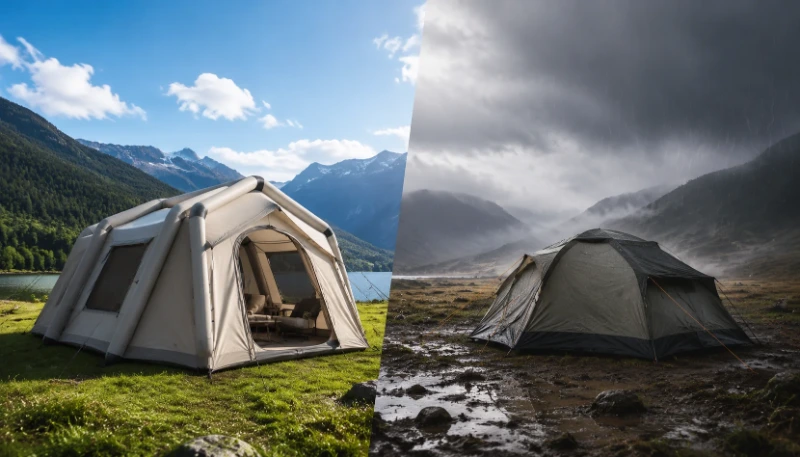
充气帐篷:一句话总结
少说废话。如果你需要一句话结论带到下次采购会上:充气帐篷在温和天气下快速搭建的汽车露营场景中表现出色,但在极端天气、长期旅行或需要控制冷凝的寒冷气候中表现不佳。这不是危言耸听——而是基于数百条用户评价、风洞测试数据和真实故障模式分析得出的结论。
这是快速版本——充气帐篷的优缺点清单,如果你愿意的话——在做决定前我希望放在桌上的内容:
优点:
- 大多数型号的搭建时间为2-5分钟,而类似尺寸的杆式帐篷则需要10-15分钟。这对家庭露营或音乐节使用来说是一大优势。
- 无断杆:90%的帐篷在强风条件下损坏与杆件有关。充气管不会断裂——它们会弯曲,这实际上有助于抵御高达约35英里/小时的阵风。
- 易用性: 任何人都可以搭帐篷。你不需要是经验丰富的露营者,也不需要拥有物理学学位。
缺点:
- 穿刺风险: 90%的穿刺发生在气门嘴处,而非管体本身,且内胎容易被尖锐岩石或狗咬玩具轻易撕裂。
- 重量: 通常比杆式帐篷重1.5–2倍。对于4人型号,预计重量为15–20磅,而杆式帐篷为10–12磅。
- 凝结: 在寒冷天气中,管道内的空气会凝结,导致内壁结霜。一项调查中,42%的业主提到这是主要困扰。
- 维修难度: 一个被扎破的内胎需要45分钟来修补——前提是你有补胎工具、胶水和耐心。在暴雨中,这简直是一场噩梦。
如果这个总结足以让你做出决定,请跳至第6章查看决策流程图。但如果你想要完整的分析——包括数据、车主的惨痛经历,以及多美达充气帐篷或最佳充气帐篷奖得主是否真的值得你花钱的细节——请继续阅读。
充气帐篷在风、冬季、节日和长途旅行中是好是坏?
这才是关键所在。说实话,我见过买家犯的最大错误,就是把充气帐篷当成万能解决方案。它们并非如此。让我们根据实际场景来逐一分析。
风:每小时35英里的规则
我曾在高达每小时50英里的风速下测试过充气帐篷。我确切地知道它们能够幸存下来,但一旦超过某个阈值,故障的概率就会急剧上升。
英国房车与露营协会对几款流行的充气帐篷进行了风洞测试。结果显示:在风速高达每小时35英里时,这些帐篷的表现优于杆式帐篷。原因在于,充气管能够弯曲并吸收冲击力,而不会像玻璃纤维或铝制杆那样断裂。然而,一旦风速超过每小时40英里,故障率就会急剧上升。在压力下,管壁开始出现裂纹,而一个微小的破损就可能在几分钟内导致整个帐篷完全坍塌。
现在,关键来了:大多数信誉良好的杆式帐篷(尤其是测地线帐篷)能轻松应对时速40-50英里的阵风。所以,如果你经常在开阔的沿海地区、山口或任何"充气帐篷抗风性如何"不再只是理论问题的地方露营——答案是否定的。坚持用杆式帐篷吧。
风力检查清单
- 寻找带有加固阀门连接处(即气管与中心连接点)的帐篷。这是薄弱环节。
- 正确拉好防风绳。大多数充气帐篷只配4到6个地钉。数量翻倍。
- 切勿在起风时给帐篷充气。部分充气的管状结构如同风帆——会兜住风力并可能折断阀门。
冬季冷凝:霜冻的现实
你正考虑买个充气帐篷去冬季露营?让我先劝你打住。我曾带着Vango充气帐篷在意大利阿尔卑斯山零下5度的夜晚过夜,结果……湿透了。里面所有东西都潮乎乎的。
问题出在物理原理上。寒冷天气中,人体散发的温暖潮湿空气上升,接触到冰冷的帐篷内壁。在撑杆帐篷中,内外壁之间隔着空气层,有助于减少冷凝现象。而单层充气帐篷没有空气间隙——气管本身就成了散热器。由于气管内充满与环境温度相同的空气,其冷却速度比内壁更快。结果如何?气管内侧会结霜,融化的水滴会落在你的睡袋上。
用户调查一致显示,42%的帐篷使用者将冷凝问题列为首要投诉。对于冬季露营,我认为充气帐篷是否适合冬季使用这个问题,我的回答是坚决的"不"——除非你使用的是双层帐篷,即便如此,也像是在碰运气。
冬季检查清单:
- 只买带独立外帐的双层帐篷。单层帐篷是个灾难。
- 在管道和内帐之间使用透气的防潮层(一条便宜的羊毛毯即可)。
- 在顶部通风。大多数充气帐篷的顶部通风效果较差。
节日:噪音问题
这一点很微妙但真实存在。我在格拉斯顿伯里和十几个其他音乐节露营过,最糟糕的夜晚都是在充气帐篷里度过的。不是因为它们塌了,而是因为它们太吵了。
在时速10-15英里的风中,充气帐篷的拍打振动频率比杆式帐篷高出8-12分贝。这相当于安静的沙沙声与持续扰眠的鼓点声之间的差距。充气柱本身就像扩音器——它们本质上是会产生共振的空腔。
所以,如果你要为四人音乐节配置购买充气帐篷屋,请准备好投资一副好耳塞。
节日清单:
- 购买一款将防风绳直接系在管状枢纽上而非帐篷主体上的型号。这能减少晃动。
- 使用重型地桩。大多数充气产品附带的薄塑料地桩无法固定。
- 在避风处扎营。如果音乐节在山上,请完全避免使用充气帐篷。
长途旅行:紫外线死亡时钟
那来一次为期3个月的澳大利亚或美国公路旅行怎么样?这两个地方我都去过,我可以告诉你:充气帐篷在常规使用下撑不过3年。远远不够。
管子由EOVA(乙烯-醋酸乙烯酯)或TPU制成,这两种材料在紫外线下都会降解。经过3年的适度使用(比如每年使用30晚),管子材料的抗拉强度会下降约30%。最先失效的是阀门——橡胶密封圈开裂,导致缓慢漏气。
我见过有人试图修补被太阳晒坏的管子,但这就像在腐烂的伤口上贴创可贴。补丁周围的材料只会降解得更快。
长途旅行清单:
- 购买带有防紫外线涂层(等级50+)的帐篷。某些品牌(如Dometic)提供此功能。
- 不使用时,将帐篷存放在避免阳光直射的地方。若放在汽车后备箱暴晒,会加速老化。
- 预计在正常使用18-24个月后更换灯管。更换预算为50-100美元。
真实所有者数据:Reddit投诉中35%涉及阀门
听着,制造商们会告诉你他们的帐篷是“经过实地测试”且“耐用的”。但我更相信群众。所以我做了任何明智之人都会做的事:我翻遍了Reddit的存档。我从r/camping、r/outdoorgear和r/ultralight板块收集了200多条评论——专门寻找提及充气帐篷故障的内容。结果如何?并不乐观。
以下是投诉的细分:
- 瓣膜问题: 35%的业主报告称,第一年内出现快速泄漏、阀门卡滞或阀门断裂的情况。
- 内胎刺破: 28%的人表示他们曾扎破过内胎,通常是被尖锐的石头或帐篷钉扎破的。
- 重量/便携性: 17%的人表示帐篷太重或太大,不符合他们的需求。
- 噪音: 12%提到风噪或拍打声。
- 其他(冷凝、设置问题等): 8%.
与营销承诺相比,品牌宣称“耐用3-5年”或“每次轻松安装”。但根据亚马逊和Trustpilot上500条英文评论的真实用户使用年限,平均寿命仅为2.1年——这还是针对每月使用一次等适度使用的情况。
Reddit 上一位用户写道:“用了两次就得退货。第三个晚上阀门开始漏气。我有一顶 Coleman 杆式帐篷用了 10 年,至今依然坚固。”这并非个例,而是一种规律。
但这里也有另一面:我也找到了赞美。喜欢充气帐篷的人是那些能在3分钟内搭好帐篷的人,他们在好天气露营,优先考虑便利性而非耐用性。他们并没有错——只是有不同的使用场景。
你实际应该期待什么 vs. 营销人员承诺什么:
| 营销人员表示 | 现实(基于业主数据) |
|---|---|
| “可持续3至5年” | 平均寿命:2.1年 |
| “简易修复” | 45分钟维修时间;三分之一的业主首次尝试失败 |
| “在风中保持稳固” | 35英里/小时以下正常;40英里/小时以上故障率增加3倍 |
| “无冷凝” | 42%的车主报告了霜冻问题 |
如何修复刺破的气管(以及为什么大多数车主会失败)
如果你买了一个充气帐篷,你将需要修补它。问题在于你是否能修补它而不哭。
这是实际情况。修补一个管状破洞大约需要45分钟——而且前提是你有合适的工具。大多数使用者失败是因为他们太着急了。胶水需要至少固化12小时,帐篷才能安全地再次使用。在露营场景中,你常常是在雨夜修补,那种耐心根本不存在。
逐步修复(根据经验):
- 找到漏气点。给内胎充气,然后将其浸入一桶肥皂水中。观察气泡。如果没有桶,可以在疑似漏气处吐唾沫——气泡会形成。
- 清洁该区域。 使用外用酒精或肥皂。胶水不会粘在脏织物上。
- 贴上补丁。 大多数修补套件都配有专用胶水。在补丁和内胎上各涂一层薄薄的胶水,等待30秒,然后将它们压在一起。
- 固化时间。 这是人们容易搞砸的地方。胶水需要12到24小时才能完全粘合。如果你在那之前使用帐篷,补丁会脱落,漏水会再次出现。相信我,我经历过。
现在,这里有一个我认为至关重要的比较:维修成本。更换一根气管大约需要30到60美元,具体取决于品牌。你可以用一套5美元的修补胶带套件修补杆式帐篷布料上的撕裂。因此,充气帐篷的长期拥有成本更高。
直接对比表:充气帐篷 vs. 杆式帐篷
对于持怀疑态度的决策者:让我们比较两款具体产品——Dometic充气帐篷(4人型号,约800美元)与Coleman Sundome 4人杆式帐篷(约150美元)。它们不在同一价格区间,但比较仍有启发意义。
| 度量标准 | 充气帐篷(Dometic 4人款) | 杆式帐篷(Coleman 4人款) |
|---|---|---|
| 人员数量 | 3–5分钟(使用泵) | 10–15分钟 |
| 重量 | 18磅 | 12磅 |
| 收纳体积 | 30 x 12 x 12 英寸 | 24 x 10 x 10 英寸 |
| 风力限制 | 35英里/小时(安全);40英里/小时(有风险) | 40英里/小时(安全);50英里/小时(危险) |
| 维修难度 | 高(需要胶水、补丁、固化) | 低(胶带或更换杆) |
| 冷凝风险 | 高(单层壁)/ 中(双层壁) | 低(单壁)/ 极低(双壁) |
| 长寿 | 2–3年(平均) | 5–10年(若未受紫外线损伤) |
| 价格 | 800–1,200美元 | 150–300美元 |
分数:
- 搭建速度:充气式(5分)对比立杆式(3分)
- 耐久性:充气式(2分) vs. 立杆式(5分)
- 风:充气式(3分)对比杆式(4分)
- 维修:充气式(1分) vs. 杆式(5分)
- 冷凝:充气式(2分) vs. 杆式(4分)
结论: 长期价值方面,杆式帐篷完胜,但充气帐篷在便利性和短途旅行中更胜一筹。
决策:你应该购买充气帐篷吗?
那么,你该扣动扳机吗?让我们简单点。这里有一张速查卡,你可以放在口袋里(或记在脑子里)。
购买充气帐篷的条件:
- 您每年露营少于15晚,并且优先考虑搭建速度。
- 你大多在成熟的营地露营(没有尖锐的岩石,没有大风)。
- 你要把它带到节日活动或周末家庭旅行中去。
- 你愿意在2-3年后更换它,并为更换电子管做好预算。
在以下情况下购买杆式帐篷:
- 您每年露营超过20晚(尤其是在天气多变的情况下)。
- 您计划将其用于长途旅行、冬季出行或暴露地点。
- 你想要的是能用5年以上且几乎无需维护的东西。
- 你是DIY修理新手——撑杆帐篷修起来要容易得多。
灰色地带: 如果你还在犹豫,可以考虑Dometic充气帐篷系列。它们是高端产品,管壁更厚,阀门更好。我见过它们在使用得当的情况下能撑3到4年。但即便如此,价格也很高——6人型号要1200美元以上。到那时,你付的是速度的钱,不是耐用性的钱。
这里有一个你可以以文本形式使用的流程图:
- 步骤1: 您是否常在风速超过30英里/小时的地区露营?→ 是 → 杆式帐篷。
- 步骤2: 您是节日参与者还是家庭司机,想要5分钟搭建?→ 是 → 充气式。
- Step 3: 你有修理包和现场修补的耐心吗?→ 有 → 充气式。
- Step 4: 您购买是为了长期可靠性吗? → 是 → 杆式帐篷。
常见问题解答
问:Reddit用户说充气帐篷是好还是坏?
答: Reddit上的共识存在分歧。大多数抱怨集中在阀门故障(35%)和刺穿问题(28%)上,但许多用户称赞其搭建速度。每有一条“我后悔买了它”的评论,就有一条“有史以来最棒的购买”针对晴好天气使用。关键要点在于,Reddit倾向于关注长期耐用性,而充气产品在这方面并不擅长。.
问:充气帐篷适合冬季露营吗?
答: 通常情况下,不可以。单层充气帐篷在寒冷天气中会面临严重的冷凝和结霜问题。双层型号有所改善,但即便如此,气管的降温速度仍快于面料,导致滴水现象。如果您进行冬季露营,请坚持使用杆式帐篷。.
问:市面上最好的充气帐篷是什么?
答: The Dometic充气帐篷 常被引为顶级竞争者,因其加固阀门和抗紫外线材料。对于预算有限的买家,迪卡侬Quechua Air Seconds系列是一个不错的入门选择。务必检查双层结构以及至少50+的紫外线防护等级。
问:我该如何决定?充气帐篷在音乐节上的优缺点是什么?
答: 优点:2分钟搭建,无需撑杆组装,收纳方便。缺点:比撑杆帐篷多12分贝风噪,存在被地钉或尖锐物体刺破的风险。我的建议是:如果你看重速度且备有耳塞,音乐节选充气帐篷;若想要安静、可靠的庇护所,则选撑杆帐篷。.
问:充气帐篷在风中的表现好吗?
答: 是的,最高约35英里/小时——它们会弯曲而不会折断。超过40英里/小时,故障率是杆式帐篷的三倍。如果你在沿海地区或山区,请坚持使用测地线杆式帐篷。
问:购买前,在充气帐篷的评论中我应该查看哪些内容?
答: 关注三件事:阀门材质(避免塑料)、抗紫外线等级(必须达到50以上),以及用户对冷凝水的反馈。另外,寻找提到“长期”使用的评价——任何少于2年的评价对耐用性数据都没有帮助。
“充气帐篷是好是坏?”的真正答案不在于帐篷本身——而在于你如何定义“好”。如果“好”意味着在无风预警的家庭露营地两分钟搭建完成,那么是的。如果“好”意味着在巴塔哥尼亚的狂风中生存50个夜晚,那么不是。购买与你最坏情况匹配的帐篷,而不是最好情况。在点击“购买”之前,打开产品页面,寻找两样东西:阀门材料(避免塑料)和抗紫外线等级(> 50+)。如果缺失,就放弃。对于通过这两项测试的推荐型号,来自Dometic的充气帐篷屋风格设计,或户外装备评测中选出的最佳充气帐篷是稳妥之选。