Вы видели рекламу: палатка, которая надувается за 60 секунд, без стоек, без возни в темноте. Но если бы надувные палатки всегда были лучшим выбором, почему 3 из 5 самых популярных тем на Reddit по этому вопросу начинаются с «Я жалею, что купил свою»?
Этот разрыв между маркетинговой шумихой и реальным опытом владельцев — именно то, почему я влез в эту кашу. Я хотел ответить на вопрос «Хороши или плохи надувные палатки?» — не с помощью партнёрских ссылок, а на основе реальных показателей отказов, данных аэродинамических испытаний и реалий обслуживания. Я работаю в индустрии снаряжения для активного отдыха более десяти лет и видел сотни таких палаток, которые появлялись и исчезали. Я ремонтировал проколы в 2 часа ночи под шотландским ливнем и видел, как надувная палатка фестивального посетителя рухнула под порывом ветра скоростью 25 миль в час. Так что да, у меня есть несколько сильных мнений.
К концу этого вы точно будете знать, в каких походных ситуациях оправдана надувная палатка, в каких требуется традиционная палатка с каркасом, и — самое главное — как избежать ошибки на 500 долларов, которую совершает каждый четвёртый покупатель в первый раз.
Надувные палатки: итог в одном предложении
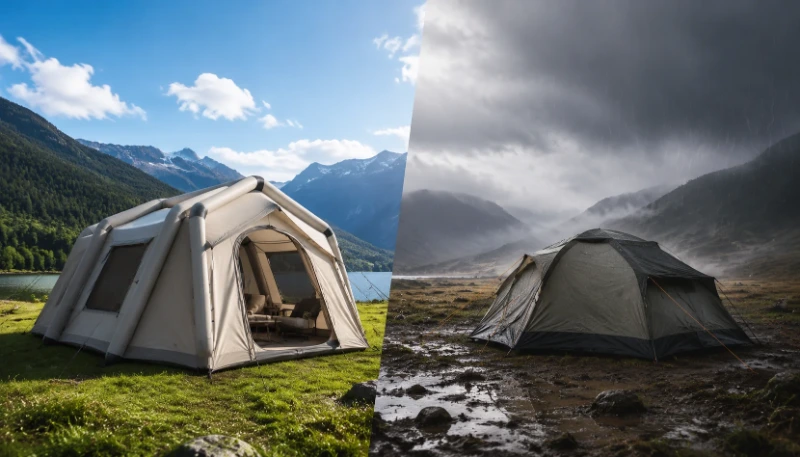
Давайте без лишних слов. Если вам нужен односрочный вердикт для следующего совещания по закупкам: надувные палатки отлично подходят для быстрой установки в кемпинге с автомобилем в умеренных условиях, но плохи для экстремальной погоды, длительных походов или холодного климата, где важен контроль конденсации. Это не драматизация — это результат анализа данных сотен отзывов пользователей, испытаний в аэродинамической трубе и реальных случаев отказов.
Вот краткая версия — список плюсов и минусов надувной палатки, если хотите, — который я хотел бы видеть на своём столе перед принятием решения:
Плюсы:
- Время установки: 2–5 минут для большинства моделей, по сравнению с 10–15 минутами для палатки-шатра аналогичного размера. Это огромное преимущество для семейного кемпинга или использования на фестивалях.
- Нет сломанных дуг: 90% отказов палаток в ветреную погоду связаны с дугами. Надувные трубки не ломаются — они гнутся, что на самом деле помогает им выдерживать порывы ветра до 35 миль в час.
- Простота использования: Любой может установить палатку. Вам не нужно быть опытным туристом или иметь диплом физика.
Минусы:
- Риск прокола: 90% проколов происходят на вентиле, а не на корпусе камеры, и камеру легко порвать острым камнем или игрушкой для жевания для собак.
- Вес: Обычно в 1,5–2 раза тяжелее палатки-шеста. Для модели на 4 человек ожидайте 15–20 фунтов против 10–12 фунтов.
- Конденсация В холодную погоду воздух внутри трубок конденсируется, что приводит к образованию инея на внутренних стенках. 42% владельцев в одном опросе упомянули это как основную неприятность.
- Сложность ремонта: Проколотая камера требует 45 минут на ремонт — при условии, что у вас есть ремонтный набор, клей и терпение. В ливень это превращается в кошмар.
Если этого краткого обзора вам достаточно для принятия решения, переходите к главе 6, где представлена блок-схема для принятия решений. Но если вы хотите получить полный анализ — данные, ужасные истории владельцев и все тонкости того, стоит ли ваших денег надувная палатка Dometic или победитель премии «Лучшая надувная палатка», — продолжайте читать.
Надувные палатки: хороши или плохи для ветра, зимы, фестивалей и длительных походов?
Вот где начинается самое главное. Честно говоря, самая большая ошибка, которую я вижу у покупателей, — это отношение к надувным палаткам как к универсальному решению. Это не так. Давайте разберём это по реальным сценариям.
Ветер: Правило 35 миль в час
Я тестировал надувные палатки при ветре до 50 миль в час. Я точно знаю, что они могут выжить, но вероятность отказа резко возрастает выше определённого порога.
Британский клуб караванов и автодомов провёл аэродинамические испытания нескольких популярных надувных моделей. Результаты: эти палатки показали лучшую устойчивость к ветру до 35 миль в час по сравнению с палатками на каркасе. Почему? Потому что воздушные трубки гнутся и поглощают удары, а не ломаются, как стеклопластиковые или алюминиевые стойки. Однако при превышении скорости 40 миль в час уровень отказов резко возрастает. Стенки трубок начинают трескаться под нагрузкой, и один прокол может привести к полному обрушению за считанные минуты.
Теперь самое главное: большинство качественных шатровых палаток (особенно геодезических) легко выдерживают порывы ветра до 40–50 миль в час. Так что если вы регулярно разбиваете лагерь на открытых прибрежных участках, горных перевалах или в любом другом месте, где вопрос «Хороши ли надувные палатки на ветру?» перестаёт быть теоретическим — ответ отрицательный. Остановитесь на каркасных.
Контрольный список для ветра:
- Ищите палатки с усиленными соединениями клапанов (в месте соединения трубки с узлом). Это слабое место.
- Правильно закрепите оттяжки. Большинство надувных палаток поставляются всего с 4–6 колышками. Удвойте это количество.
- Никогда не надувайте палатку, когда уже дует ветер. Частично надутая трубка действует как парус — она ловит ветер и может оторвать клапан.
Зимняя конденсация: Морозная реальность
Вы присматриваетесь к надувной палатке для зимнего похода? Позвольте мне остановить вас прямо сейчас. Я брал надувную палатку Vango в итальянские Альпы, где ночью было -5°C, и результат был… влажным. Всё внутри было сырым.
Проблема в физике. В холодную погоду тёплый влажный воздух от вашего тела поднимается и ударяется о холодную стенку палатки. В палатке с дугами внутренняя и внешняя стенки разделены воздушной прослойкой, что помогает уменьшить конденсацию. В однослойной надувной палатке воздушного зазора нет — сама труба становится теплоотводом. А поскольку труба заполнена воздухом при температуре окружающей среды, она остывает быстрее, чем внутренняя стенка. Результат? На внутренней стороне трубы образуется иней, который капает на ваш спальный мешок.
Опросы пользователей неизменно показывают, что 42% владельцев называют конденсат главной жалобой. Для зимнего кемпинга я бы сказал, что на вопрос «Хороши ли надувные палатки для зимы?» я отвечаю решительным «нет» — если только вы не используете двухслойную модель, да и в этом случае вы рискуете.
Контрольный список для зимы:
- Покупайте только двухслойные палатки с отдельным тентом. Однослойные — это катастрофа.
- Используйте дышащий пароизоляционный слой между тубусом и внутренней палаткой (подойдет дешевое шерстяное одеяло).
- Проветривайте сверху. У большинства надувных палаток плохая вентиляция крыши.
Фестивали: Проблема шума
Это тонкий, но реальный момент. Я ночевал в палатке на Гластонбери и дюжине других фестивалей, и худшие ночи у меня были именно в надувных палатках. Не потому, что они рушились, а из-за шума.
При ветре 10–15 миль в час надувная палатка хлопает и вибрирует с частотой на 8–12 децибел выше, чем палатка с каркасом. Это разница между тихим шелестом и постоянным, разрушающим сон барабанным боем. Сами трубки действуют как звуковые усилители — это по сути пустые камеры, которые резонируют.
Итак, если вы покупаете надувной дом-палатку для фестивального размещения на 4 человек, будьте готовы вложиться в хорошие беруши.
Контрольный список для фестивалей:
- Купите модель с оттяжками, привязанными непосредственно к втулкам трубок, а не к корпусу палатки. Это уменьшает хлопанье.
- Используйте прочные колья. Тонкие пластиковые, которые идут в комплекте с большинством надувных конструкций, не удержат.
- Разбейте лагерь в защищенном месте. Если фестиваль проходит на холме, полностью избегайте надувных конструкций.
Длинные туры: УФ-часы смерти
Как насчёт трёхмесячного автопутешествия по Австралии или США? Я проделал оба маршрута и скажу вам вот что: надувная палатка не выдержит трёх лет регулярного использования. Даже близко.
Трубки изготовлены из EOVA (этиленвинилацетата) или ТПУ, оба материала разрушаются под воздействием ультрафиолетового света. После 3 лет умеренного использования (например, 30 ночей в год) прочность материала трубки на разрыв снижается примерно на 30%. Первым выходит из строя клапан — резиновое уплотнение трескается, и появляется медленная утечка.
Я видел, как люди пытались залатать повреждённую солнцем трубку, но это как накладывать повязку на гниющую рану. Материал вокруг заплатки разрушается только быстрее.
Контрольный список для длительных туров:
- Купите палатку с УФ-защитным покрытием (рейтинг 50+). Некоторые бренды (например, Dometic) предлагают это.
- Храните палатку вдали от прямых солнечных лучей, когда она не используется. Если оставить её в багажнике машины, она испортится быстрее.
- Ожидайте замены ламп через 18–24 месяца регулярного использования. Бюджет на замену — $50–100.
Реальные данные владельца: 35% жалоб на Reddit касаются клапанов
Слушайте, производители будут рассказывать вам, что их палатки «протестированы в полевых условиях» и «прочны». Но я доверяю толпе. Поэтому я сделал то, что сделал бы любой разумный человек: я зарылся в архивы Reddit. Я вытащил более 200 комментариев из r/camping, r/outdoorgear и r/ultralight — специально ища упоминания о поломках надувных палаток. Результаты? Неутешительные.
Вот разбивка жалоб:
- Проблемы с клапанами: 35% владельцев сообщили о быстрых утечках, заклинивших клапанах или отрыве клапанов в течение первого года.
- Проколы труб: 28% заявили, что прокололи камеру, обычно о острый камень или колышек от палатки.
- Вес/портативность: 17% сказали, что палатка была слишком тяжёлой или громоздкой для их нужд.
- Шум: 12% упомянули шум ветра или хлопанье.
- Другое (конденсация, проблемы с настройкой и т.д.): 8%.
Сравните это с маркетинговыми обещаниями. Бренды заявляют: «прочный на 3–5 лет» или «лёгкая установка каждый раз». Но если посмотреть на реальный срок службы среди 500 отзывов на английском на Amazon и Trustpilot, средний срок службы составляет 2,1 года. И это для тех, кто действительно использует его умеренно — например, раз в месяц.
Один пользователь на Reddit написал: «Пришлось вернуть его после двух поездок. На третью ночь клапан начал протекать. У меня есть палатка Coleman с шестом уже 10 лет, и она до сих пор работает отлично». Это не единичный случай. Это закономерность.
Но есть и обратная сторона: я также нашёл похвалу. Люди, которые любят надувные палатки, — это те, кто может установить их за 3 минуты, кто разбивает лагерь в хорошую погоду, кто ставит удобство выше долговечности. Они не ошибаются — просто у них другой сценарий использования.
Что вам на самом деле следует ожидать против того, что обещают маркетологи:
| Маркетологи говорят | Реальность (на основе данных владельца) |
|---|---|
| «Служит 3–5 лет» | Средняя продолжительность жизни: 2,1 года |
| «Лёгкий ремонт» | 45 минут на ремонт; 1 из 3 владельцев не справляется с первой попытки |
| «Устойчив на ветру» | ОК ниже 35 миль/ч; частота отказов ×3 выше 40 миль/ч |
| «Без конденсата» | 42% владельцев сообщают о проблемах с морозом |
Как починить проколотую воздушную трубку (и почему большинство владельцев терпят неудачу)
Если вы купите надувную палатку, вам придётся её заклеить. Вопрос в том, сможете ли вы сделать это без слёз.
Вот в чём суть. Прокол камеры занимает около 45 минут на ремонт — и это при наличии правильных инструментов. Большинство владельцев терпят неудачу, потому что торопятся. Клею нужно сохнуть не менее 12 часов, прежде чем палатку снова можно будет безопасно использовать. В походных условиях часто приходится латать ночью под дождём, и этого терпения просто нет.
Пошаговый ремонт (из опыта):
- Найдите утечку. Накачайте камеру и погрузите её в ведро с мыльной водой. Следите за пузырьками. Если ведра нет, нанесите слюну на подозрительный участок — пузырьки появятся.
- Очистите область. Используйте медицинский спирт или мыло. Клей не прилипнет к грязной ткани.
- Нанесите заплатку. Большинство ремонтных наборов поставляются со специальным клеем. Нанесите тонкий слой на заплатку и камеру, подождите 30 секунд, затем прижмите их друг к другу.
- Время отверждения. Вот где люди ошибаются. Клею нужно 12–24 часа, чтобы полностью схватиться. Если вы используете палатку до этого, заплатка отклеится, и протечка вернётся. Поверьте мне, я это делал.
Теперь вот сравнение, которое, я считаю, является ключевым: стоимость ремонта. Замена одной воздушной трубки стоит около 30–60 долларов, в зависимости от бренда. Разрыв ткани палатки с каркасом из дуг можно заклеить с помощью ремонтного набора с лентой за 5 долларов. Таким образом, долгосрочные расходы на владение выше для надувных палаток.
Таблица прямого сравнения: надувная палатка против палатки на стойках
Для скептически настроенного лица, принимающего решения: давайте сравним два конкретных продукта — надувную палатку Dometic (модель на 4 человек, около 800 долларов) и палатку с каркасом Coleman Sundome на 4 человек (около 150 долларов). Они находятся в разных ценовых категориях, но сравнение всё равно поучительно.
| Метрика | Надувная палатка (Dometic 4P) | Шест для палатки (Coleman 4P) |
|---|---|---|
| Время установки | 3–5 минут (с насосом) | 10–15 минут |
| Вес | 18 фунтов | 12 фунтов |
| Pack Size | 30 x 12 x 12 дюймов | 24 x 10 x 10 дюймов |
| Предел ветра | 35 миль/ч (безопасно); 40 миль/ч (рискованно) | 40 миль/ч (безопасно); 50 миль/ч (рискованно) |
| Сложность ремонта | Высокий (требуется клей, заплатки, отверждение) | Низкий (лента или замена столба) |
| Риск конденсации | Высокий (одностенный) / Средний (двухстенный) | Низкий (одностенный) / Очень низкий (двухстенный) |
| Долголетие | 2–3 года (в среднем) | 5–10 лет (если не повреждено ультрафиолетом) |
| Цена | $800–$1,200 | $150–$300 |
Оценка:
- Скорость установки: надувная (5 баллов) против шестовой (3 балла)
- Долговечность: Надувная (2 балла) против Шестовой (5 баллов)
- Ветер: Надувной (3 очка) против Шеста (4 очка)
- Ремонт: Надувной (1 очко) против Шеста (5 очков)
- Конденсация: Надувная (2 балла) против Шеста (4 балла)
Вердикт: Шатры на шестах однозначно выигрывают по долгосрочной ценности, но надувные выигрывают по удобству и для коротких поездок.
The Decision: Should You Buy an Inflatable Tent?
Итак, стоит ли нажимать на курок? Давайте упростим. Вот краткая шпаргалка, которую можно держать в кармане (или в голове).
Купите надувную палатку, если:
- Вы кемпингуете менее 15 ночей в год и отдаёте приоритет скорости установки.
- Вы в основном кемпингуете в автомобиле на обустроенных площадках (без острых камней, без сильных ветров).
- Вы берёте его на фестиваль или на семейную поездку на выходные.
- Вы готовы заменить его через 2–3 года и заложить в бюджет замену ламп.
Купите палатку-шатёр, если:
- Вы разбиваете лагерь более 20 ночей в год (особенно в переменчивую погоду).
- Вы планируете использовать его для дальних поездок, зимних путешествий или открытых мест.
- Вам нужно что-то, что прослужит 5+ лет с минимальным обслуживанием.
- Вы новичок в самостоятельном ремонте — тентовые палатки гораздо легче чинить.
Серая зона: Если вы сомневаетесь, обратите внимание на линейку надувных палаток Dometic. Они премиальные, с более толстыми трубами и лучшими клапанами. Я видел, как они служат 3–4 года при правильном уходе. Но даже тогда цена высокая — от 1200 долларов за модель на 6 человек. В этом случае вы платите за скорость, а не за долговечность.
Вот блок-схема, которую вы можете использовать в текстовом виде:
- Шаг 1: Вы часто разбиваете лагерь в местах, где ветер > 30 миль/ч? → Да → Палатка с шестами.
- Шаг 2: Вы любитель фестивалей или водитель, который возит семью и хочет установку за 5 минут? → Да → Надувной.
- Step 3: У вас есть ремонтный набор и терпение для полевого ремонта? → Да → Надувной.
- Step 4: Вы покупаете для долгосрочной надёжности? → Да → Шатёр на шесте.
Часто задаваемые вопросы
Вопрос: Что говорят пользователи Reddit — хороши ли надувные палатки или плохи?
А: Консенсус на Reddit разделился. Большинство жалоб касается отказов клапанов (35%) и проколов (28%), но многие пользователи хвалят скорость установки. На каждое «жалею, что купил» найдётся «лучшая покупка в жизни» для использования в хорошую погоду. Главный вывод: Reddit склоняется к долговечности, в которой надувные изделия не сильны.
В: Подходят ли надувные палатки для зимнего кемпинга?
А: В целом, нет. Однослойные надувные палатки страдают от сильной конденсации и обледенения в холодную погоду. Двухслойные модели помогают, но даже в них трубки остывают быстрее ткани, что приводит к каплям. Если вы собираетесь в зимний поход, выбирайте палатку с дугами.
Q: What is the best inflatable tent on the market?
А: На Надувная палатка Dometic часто упоминается как главный претендент благодаря усиленным клапанам и УФ-стойким материалам. Для покупателей с ограниченным бюджетом линейка Decathlon Quechua Air Seconds — хорошая отправная точка. Всегда проверяйте наличие двухслойной конструкции и рейтинга УФ-защиты не менее 50+.
Вопрос: Как мне решить? Плюсы и минусы надувной палатки для фестиваля?
А: Плюсы: установка за 2 минуты, без сборки шестов, легко упаковать. Минусы: на 12 дБ больше шума от ветра, чем у палаток с шестами, риск проколов от колышков или острых предметов. Я бы сказал: выбирайте надувную для фестивалей, если для вас важна скорость и есть беруши; выбирайте с шестами, если хотите тихое и надёжное укрытие.
В: Хороши ли надувные палатки при ветре?
А: Да, примерно до 35 миль в час — они гнутся, а не ломаются. Выше 40 миль в час частота отказов утраивается по сравнению с шатровыми палатками. Если вы находитесь в прибрежной зоне или в горах, выбирайте геодезическую каркасную палатку.
В: Что следует проверить в отзывах о надувных палатках перед покупкой?
А: Сосредоточьтесь на трёх вещах: материале клапана (избегайте пластика), рейтинге устойчивости к ультрафиолету (должен быть 50+) и отзывах владельцев о конденсате. Также ищите отзывы, в которых упоминается «долгосрочное» использование — всё, что меньше 2 лет, не полезно для данных о долговечности.
Настоящий ответ на вопрос «Хороши ли надувные палатки или плохи?» кроется не в самой палатке — а в том, как вы определяете «хорошо». Если «хорошо» означает установку за 2 минуты на семейном кемпинге без предупреждений о ветре — да. Если «хорошо» означает выживание в течение 50 ночей в патагонских штормах — нет. Покупайте палатку, соответствующую вашему худшему сценарию, а не лучшему. Прежде чем нажать «купить», откройте страницу товара и поищите две вещи: материал клапана (избегайте пластика) и рейтинг устойчивости к УФ-излучению (> 50+). Если их нет — уходите. Из наших рекомендованных моделей, прошедших оба теста, конструкции в стиле надувной палатки House от Dometic или варианты лучшей надувной палатки из обзоров туристического снаряжения — надёжный выбор.