管理过建筑工地的人都知道那套流程。天气预报说要下雨,或者混凝土浇筑定在了一个寒冷的早晨,突然间你就得手忙脚乱地找脚手架、胶合板和防水布。搭建传统的临时结构要耗费半天时间和四个人力。正是这个痛点,最初促使我去了解充气式施工帐篷。这些气梁结构已经悄然成为钢材和木框架的可靠替代方案。但它们对你的项目来说值得投资吗?这就是我们今天要深入探讨的问题。
我花了多年时间观察项目经理们与天气延误和遮蔽物流作斗争。在那段时间里,我目睹了充气建筑帐篷从小众新奇事物发展成为混凝土养护、粉尘控制和快速部署的严肃工具。这项技术本身是可靠的,但周围流传着大量错误信息。所以,让我们来详细拆解规格参数、使用场景、诚实的局限性,以及你实际需要考虑的采购标准。
什么是充气建筑帐篷?(它们如何工作)
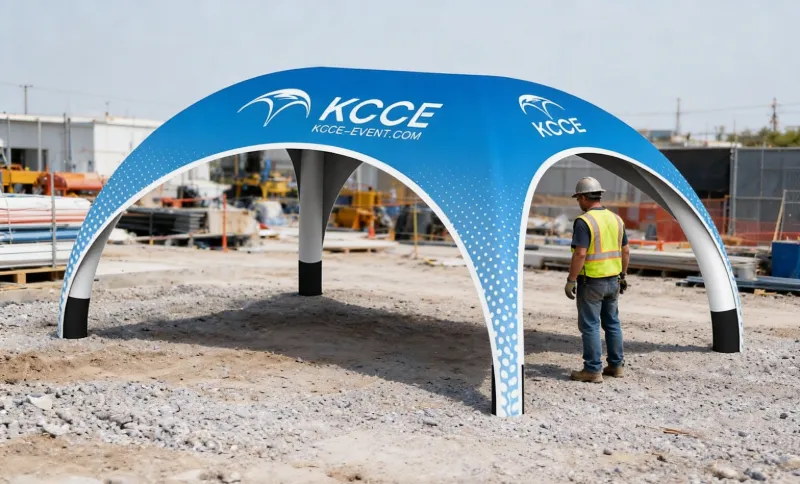
忘掉你对杆式帐篷的所有认知。充气式施工帐篷采用一种 充气梁帐篷 设计——本质上是由高韧性织物制成的大型管状气室,在加压时形成结构框架。你会遇到两种主要系统:气梁结构和框架支撑的充气结构。
气梁系统是最常见的一种。一台连续运转的鼓风机保持气梁在恒定压力下充气,通常以PSI为单位测量,而织物的张力则完成其余工作。当鼓风机运行时,帐篷基本上会自行“立起来”。结构完整性来自压力差——气梁内部较高的压力与外部环境空气之间的差异。
你可能好奇这些形状。大多数单元分为三类:隧道式、圆顶式和拱形式。隧道帐篷长而多功能,非常适合覆盖传送带系统或走道等线性作业。圆顶式提供更多头部空间,更适合固定工作站。拱形式则是一种折中,以较低的外形提供不错的内部空间。
在做出决定之前,了解鼓风机的运作方式是值得的。这不像露营用的充气床垫,充一次气就可以不管了。鼓风机需要持续运行,以维持压力并补偿面料轻微漏气。这意味着现场需要有可靠的电源。面料本身通常是PVC涂层聚酯或尼龙,这就引出了我们稍后要介绍的材料规格。
充气建筑帐篷的主要使用场景
这就是这些帐篷发挥作用的地方。我看到最常见的应用是 混凝土养护帐篷如果你曾在寒冷天气里浇筑过混凝土,你就会知道与时间赛跑,防止混合物在凝固前冻结。加热充气围护结构能维持环境温度,让混凝土在数天内正常养护。帐篷营造出受控的微气候,这对结构完整性至关重要。
除了治理,粉尘控制也是一个重要方面。在翻新或拆除项目中,你需要封闭工作区域,以保护建筑的其他部分并符合空气质量规定。带有拉链门的充气围挡,在配合适当的通风系统时,可以营造出负压环境。我见过这些设备在石棉清除和干墙打磨作业中被有效使用。
焊接围护是另一个常见用途。焊接会产生对附近工人有害的烟气和紫外线辐射。充气式工坊帐篷可以配备阻燃面料和适当的通风口,打造一个安全、专用的工作空间。在存储方面,这些帐篷在临时保护材料和设备免受天气影响方面无可匹敌。而当您需要 建筑工地仓储用充气帐篷,隧道帐篷可在几分钟内搭建完成,保护木材、钢筋或贵重工具免受风雨侵蚀。
冬季工地角度至关重要。当地面结冰、雪花开始飘落时,冬季工地充气施工帐篷提供了一个温暖干燥的环境,让施工队伍能够继续作业。紧急维修也得益于快速部署——你可以在下一场暴风雪来临之前,搭建好遮蔽物,覆盖受损的屋顶或破损的窗户。
充气施工帐篷与传统庇护所对比
让我们直接进入你真正关心的对比:这些与钢架或木架庇护所相比如何?最明显的区别是搭建时间。传统 临时施工棚 用脚手架和防水布搭建可能需要三到四人花一整天时间。而充气装置只需两人不到一小时就能部署完成。这不是营销夸大——而是这套利用气压而非机械连接的系统实实在在的现实。
成本是另一个主要因素。充气帐篷的初始购买价格通常与优质框架帐篷相当,但生命周期成本却有所不同。每次搭建或拆除时,你都能节省人工时间。运输也更方便——放气后的帐篷打包体积仅为钢架帐篷的一小部分。一辆皮卡车的后斗就能装下一顶30英尺的隧道帐篷。
占地面积值得考虑。充气帐篷需要一块干净、相对平坦的区域来搭建。传统支架帐篷在不平整地形上搭建时更具灵活性。但充气帐篷在收纳和存放时,占地面积通常更小。
劳动力节省是隐藏的瑰宝。我见过一些项目,工人们花了两天时间搭建和拆除脚手架防护棚。而使用充气式防护棚,同一组工人在一小时内就能回到他们的主要任务上。当你按小时支付熟练工人的工资时,这些节省很快就会累积起来。
现在,生命周期成本值得更仔细地审视。一顶优质的充气帐篷,如果维护得当,可以使用数年。鼓风机是主要易损部件,而它们是可更换的。传统框架则容易遭受腐蚀、构件弯曲和篷布撕裂等问题——每一项都需要各自的维修周期。
关键规格:如何比较充气建筑帐篷
当你开始购物时 最佳充气建筑帐篷,你需要进行同类比较。以下才是真正重要的规格参数。
面料丹尼尔数: 这是面料的厚度和重量。对于建筑用途,请寻找600至900旦尼尔范围的PVC涂层聚酯。较重的面料更能抵抗穿刺,但会增加重量和成本。对于 防风充气帐篷织物的拉伸强度是你的第一道防线。
PSI要求: 工作压力因设计而异。较大的帐篷通常需要较低的压力(约6-8 PSI),而较小的设备可以运行更高的压力。关键在于一致性——一个好的鼓风机无论外部条件如何,都能保持稳定的压力。
风力等级: 这很关键。大多数制造商都会标明帐篷的适用风速,通常在正确固定后可承受每小时60至75英里。不要相信没有公布风速等级的帐篷。这是安全问题,不是营销卖点。
锚点: 寻找帐篷时,注意那些锚点集成在底布上的多锚点设计。这些锚点应通过额外的缝线和织带加固。锚点的数量和位置决定了帐篷分散风荷载的能力。
保修条款: 扎实的保修涵盖面料接缝和风机。至少应寻找结构件和风机一年以上的保修期。部分制造商提供延长保修——这体现了他们对自身产品的信心。
修理套件: 每个充气帐篷都应附带修理包。刺破难免会发生,尤其是在有尖锐碎片的建筑工地上。修理包应包含补丁、粘合剂和使用说明。
风机质量: 鼓风机是系统的心脏。应选择带有热保护和防风雨功能的型号。一台在暴风雨中发生故障的鼓风机将是一场灾难。
诚实的局限:充气建筑帐篷做不到的事
我不想粉饰这一点。在购买之前,你需要了解真实的 充气帐篷的耐用性 购买前你需要了解的注意事项。
尖锐的碎片是敌人。钉子、一段钢筋,甚至帐篷下的一块尖石头,都可能刺破布料。一旦被刺破,帐篷就会失去气压并开始泄气。结构不会瞬间坍塌,但会下垂并失去稳定性。你需要保持地面清洁,并在搭建前检查场地。
极寒是另一个问题。在冰冻温度下,面料会变硬,使其更难充气,并且如果弯曲则更容易开裂。在约零下20华氏度以下,大多数PVC涂层面料会变脆。如果你在极北气候条件下工作,你需要一顶适合那些条件的帐篷。
电力成本是一项隐性开支。鼓风机全天候运行,这意味着持续耗电。根据帐篷的大小和当地电价,这笔费用可能会累积起来。对于运行数周的大型帐篷,电力消耗可能相当可观。
还存在安全隐患。在大风天气下,未妥善固定的充气帐篷可能变成抛射物。因此,固定帐篷是绝对必要的。此外,一些地区要求临时结构需获得许可,尤其是大型或长期搭建的帐篷。在决定前,请查阅当地建筑规范。
锚定与安全要点
如果这篇文章你只能记住一点,那就是: 帐篷锚定 不是可选的。我见过有人跳过这一步的后果。那可不妙。
锚定系统通常包括地钉、压重物或绑带。对于混凝土等硬质表面,你需要压重物——通常是沙袋或水桶,连接到锚定点上。对于松软地面,以一定角度打入的地钉能提供稳固的抓地力。有些帐篷会结合使用两者,以实现最大安全性。
风荷载计算至关重要。你需要知道场地的最不利风速,并确保帐篷的锚固系统能够应对。帐篷的风速等级仅在正确锚固的情况下才有效。一顶额定可承受70英里/小时风速的帐篷,如果锚固不当,在30英里/小时的风速下就会失效。
紧急放气协议是你的安全网。每个队员都应知道如何在紧急情况下快速给帐篷放气——无论是突遇狂风还是内部发生医疗事件。大多数系统都配有快速释放阀,能在几秒钟内排出空气。
OSHA和安全合规应纳入您的规划中。虽然充气帐篷并未被OSHA法规特别覆盖,但一般责任条款要求您提供安全的工作场所。这意味着要确保帐篷稳固、正确锚定,并且不会造成绊倒危险或其他安全隐患。
顶级制造商与供应商对比
现在,让我们来谈谈市场中的参与者。当你搜索时 充气工作帐篷 选项或寻找 充气建筑帐篷制造商,有几个名字会反复出现。基于市场调研和行业声誉,以下是我对主要供应商的看法。
恩约戴尔 以高质量、重型充气结构而闻名。他们的帐篷常用于工业应用,专为抵御恶劣条件而设计。它们不是最便宜的选择,但耐用性一流。
极限树冠 提供各种充气帐篷,包括专为建筑和工业用途设计的型号。它们是价格合理、结构坚固的不错中间选择。
ProPac 专注于临时结构,并拥有一系列充气帐篷,在建筑应用中颇受欢迎。他们的客户服务普遍受到好评,并提供定制选项。
BlastOne 是磨料喷砂和喷漆围护方面的专家。他们的充气帐篷专为这些特定应用而设计,具备通风口和阻燃面料等特点。
犀牛 是另一位值得考虑的玩家。他们提供一系列充气结构,注重便携性和易用性。
当你看着 充气建筑帐篷供应商,需考虑交货时间。部分制造商有现货可立即发货,而其他则按订单生产,可能需要数周时间。定制选项也各不相同——有些提供多种尺寸、门体配置和面料颜色。
充气建筑帐篷最终购买清单
在你决定之前 购买充气建筑帐篷,请按这份清单逐项检查。它能帮你避免犯下代价高昂的错误。
锚定系统: 确保帐篷附带完整的固定套件,或者你已为购买一套做好预算。锚点的质量与数量同样重要。
风机质量: 检查鼓风机的规格。它是否防风雨?是否有热保护?是否有备用鼓风机可用?对于关键应用,备用鼓风机值得投资。
面料克重: 寻找最小旦尼尔数为600的PVC涂层聚酯。更重不一定更好,但在施工环境中更安全。
维修套件: 确认帐篷附带修理包,并了解如何使用。在需要之前,练习一次补丁修补。
保修: 仔细阅读保修条款。保修范围是什么?保修期多长?索赔流程是怎样的?
尺寸计算公式: 一个简单的公式是测量你需要覆盖的最大设备或工作区域,并增加20%作为净空。对于混凝土养护,你需要足够的空间容纳浇筑区域,再加上工人和加热器的活动空间。
预算范围: 价格因尺寸、面料质量和功能差异很大。在开始购物前设定一个现实的预算,并坚持执行。
配送物流: 考虑帐篷将如何到达。有些制造商用托盘发货,有些则用箱子。确保你有设备卸货并将帐篷运到你的场地。
参考资料
1. 一体式充气帐篷市场研究报告 – 增长市场报告
2. 高压充气帐篷市场报告 – Dataintelo
3. 分离式气肋充气帐篷的结构设计与优化 – MDPI应用科学
4. 充气帐篷市场研究:深度分析与预测 – DataHorizzon Research
引言:对充气建筑帐篷的需求日益增长
听我说,我在这个行业干得够久,还记得当年所谓的“临时结构”就是一块防水布搭在几根2x4木方上。那些日子一去不复返了,而且这是有充分理由的。建筑行业如今面临更紧的工期、更严的安全法规,以及比以往更难留住的人才队伍。一旦遇到天气延误,你失去的不仅仅是一天——你失去的是工时、材料完好性,还有可能失去工期奖金。
数字说明了一切。根据美国总承包商协会的数据,天气延误约占所有建筑项目延误的45%。[待补充来源] 这几乎是半数。充气建筑帐篷直接解决了这一问题,让您在一小时内获得一个气候可控的封闭空间。市场对此反应积极——2023年全球充气帐篷市场估值约为12亿美元,预计到2030年将以6.8%的年复合增长率增长,主要受建筑和工业应用的推动。
我还注意到承包商对这些结构的看法发生了转变。十年前,它们还是新鲜事物。如今,它们已成为严肃投标中的一项常规条目。原因何在?因为天气延误的代价——混凝土开裂、钢筋生锈、石膏板受潮——远远超过一个优质充气围护的价格。这正是推动其普及的基本算账逻辑,也是我为你撰写这份分析的原因。
充气施工帐篷的主要优势
让我根据我在现场所见,诚实地告诉你这些东西在实际工地上到底能带来什么效果。
速度。 这是最大的一款。两人小组大约30到45分钟就能展开一个40英尺的充气隧道帐篷,包括固定锚定。相比之下,同样尺寸的传统框架帐篷通常需要四人小组花费4到6小时。对于安排在黎明时分的混凝土浇筑来说,这种速度差异就是能否赶上施工窗口期与再等一周的区别。
可移植性。 整个结构——横梁、布料、鼓风机和锚固套件——都能装进拖车或皮卡车的货斗里。一个30英尺的帐篷重约350至500磅,具体取决于布料重量。传统钢架帐篷需要平板车和起重机来卸载。当你的项目从一个工地转移到下一个工地时,充气帐篷在物流方面每次都胜出。
天气防护。 这不仅仅是让你头上不被雨淋到。充气帐篷的密封罩让你能够控制内部环境。对于混凝土养护,你可以使用便携式加热器将环境温度保持在稳定的50°F至70°F之间,这对充分水化和强度增长至关重要。在炎热气候下,通风口和排风扇可防止内部温度比环境温度高出超过15°F。这种控制能力是开放式框架帐篷无法实现的。
成本节约。 我稍后会给你一个真实的对比,但先给你个要点:一个30英尺的优质充气帐篷,价格在8000到25000美元之间,具体取决于规格。而一个类似的钢架帐篷,带布顶和侧墙,价格在15000到40000美元。另外,每次搭建你还能省下人工成本。如果你每年在不同场地之间移动超过三次,充气帐篷在18个月内就能回本。
对比:充气帐篷与传统支架帐篷
我两种都大量使用过,以下是我希望第一次购买前有人给我看的诚实对比表。这是基于像Njordair这样的制造商提供的真实世界数据,以及我观察到的实地测试结果。
| 参数 | 充气帐篷(气柱式) | 传统框架帐篷(钢/铝) |
|---|---|---|
| 搭建时间(40英尺) | 30–45分钟,2人 | 4–6小时,4人 |
| 拆卸时间 | 20–30分钟 | 2–3小时 |
| 初始成本(40英尺) | 12000–20000美元 | 20000–35000美元 |
| 运输重量 | 400–600磅 | 1500–3000磅 |
| 运输量 | 适合放在皮卡货斗/拖车中 | 需要平板卡车 |
| 耐久性(面料) | 5–10年(含维护) | 10–15年(框架),布料5–8年 |
| 风荷载等级 | 60–75英里/小时(经测试) | 70–90英里/小时(经测试) |
| 雪荷载能力 | 10–15磅/平方英尺 | 15–25磅/平方英尺 |
| 净空高度(中心处) | 12–16英尺(穹顶/拱形) | 10–14英尺 |
| 内部杆件 | 无 | 是(通常需要中心杆) |
| 锚定要求 | 低矮型压载/压舱物 | 桩 + 压载 + 拉线 |
| 维修复杂度 | 修补工具包 + 备用鼓风机 | 焊接/更换车架段 |
关键要点:充气帐篷在速度、便携性和前期成本上胜出。框架帐篷在极端天气耐受性和长期固定安装方面更胜一筹。如果你要为一个为期一年的项目搭建且不再移动,框架帐篷可能是更好的选择。如果你在不同工地之间奔波,充气帐篷就是你的得力干将。
评估的关键技术规格
不要只凭价格购买。在签署任何文件之前,你需要检查规格表上的以下内容。
材料。 最常见的面料是PVC涂层聚酯纤维,通常重量在650至900旦尼尔之间。旦尼尔越高,面料越厚,耐磨性越强。一些制造商使用乙烯基涂层尼龙,这种材料更轻但抗紫外线性能较差。寻找经纬两个方向拉伸强度至少为每英寸500磅的规格。例如,质量好的850旦尼尔PVC涂层聚酯纤维通常具有550–600磅/英寸的拉伸强度。
风荷载。 这是不容商量的。你需要一顶经过风洞测试的帐篷,而不仅仅是“估算”的。寻找至少60英里/小时持续风速的认证等级,阵风等级为75英里/小时。Njordair和ProPac的一些高端型号测试达到75英里/小时的持续风速。索要测试报告——如果制造商无法提供,就转身离开。
雪荷载。 如果你在北方气候条件下工作,请检查雪荷载额定值。标准单元应能承受10 psf,这大致相当于24英寸轻盈蓬松的雪。厚重潮湿的雪密度更大——10 psf大约相当于12英寸的湿雪。对于明尼苏达州或威斯康星州等北方州,为了安全起见,请选用额定值为15 psf的帐篷。这是根据ASTM E108标准在荷载下验证材料完整性的。
阻燃性。 织物必须符合NFPA 701标准,这是纺织品火焰传播的标准。这是一项通过/不通过测试——移开火源后,材料必须在2秒内自行熄灭。大多数信誉良好的制造商都会对其织物进行NFPA 701认证,但请确认当前批次已通过认证,而不仅仅是宣传册上的信息。有些还符合加利福尼亚州第19条,这是一项更严格的州级标准。
鼓风系统。 鼓风机是帐篷的心脏。你需要一台能够24/7连续运行的连续工作制鼓风机。寻找出风口压力为1.5至2.5 PSI、流量为400至600 CFM的鼓风机,适用于30英尺的帐篷。双鼓风系统值得额外花费——如果其中一个发生故障,另一个可以保持帐篷不倒,让你有足够时间进行维修。
锚固。 世界上最好的帐篷,如果被风吹走,也毫无用处。检查锚固系统:地钉(18英寸钢钉,直径1英寸,适用于土壤的标准配置)。、压重板(混凝土或钢制配重,通常每个锚点500磅)。,或两者结合用于沥青或混凝土等硬质表面。制造商应明确指定锚点数量及其风等级所需的压重。
安全与法规合规
很多承包商在这里栽了跟头。建筑工地的安全不仅仅是良好实践——它是联邦法律,违规的处罚非常严厉。
OSHA 1926.604 是建筑中临时结构的具体标准。它要求临时结构必须“经过适当设计”并“充分锚固”,以抵御风和天气的影响。同时,它还规定出口必须“易于到达”且“清晰标示”。这意味着你的充气帐篷至少需要两个紧急出口,内部配备推杆式紧急开启装置(按压即开),并设有清晰的标识。我见过OSHA检查员因单出口帐篷对承包商开出罚单,每项违规的罚款起价为10,000美元。
消防安全。 除了织物本身的NFPA 701标准外,你还需要考虑整体消防方案。如果你在帐篷内使用加热器——混凝土养护时肯定会用到——加热器必须放置在距离织物墙至少10英尺远的地方,并且每个工作区域50英尺内需要配备至少4-A:40-B:C等级的灭火器。对于焊接围护结构,适用NFPA 51B标准,该标准要求在焊接停止后安排30分钟的防火监视。
紧急出口。 我之前已经提到过这一点,但让我具体说明一下。OSHA要求,任何容纳10人以上的临时结构必须至少有两个独立的出口,且这两个出口应位于结构的两端。门应向外开启,并且从内部无需钥匙或工具即可操作。对于充气帐篷来说,这意味着需要配备带快速释放机制的拉链门——而不是在压力下可能卡住的标准拉链。
国际标准。 如果你从全球制造商处购买或在海外工作,请检查CE认证和EN 13782标准,这是欧洲临时结构标准。该标准涵盖设计、稳定性和安全要求。对于制造质量,ISO 9001认证是工厂具备一致质量控制流程的良好指标。不要接受“符合”声明——要求提供实际证书编号并核实。
如何为您的建筑项目选择合适的充气帐篷
合适的帐篷完全取决于你的项目参数。以下是我的决策框架。
尺寸。 从需要穿过帐篷的最大设备或材料开始。四周各增加4英尺的净空。对于混凝土泵,需要12英尺宽、14英尺高的开口。对于标准托盘,8英尺宽就足够了。长度取决于你的工作流程——用于40英尺桥梁段的养护帐篷需要50英尺长。别忘了内部净空:帐篷的中心高度是最大值,但边缘会逐渐降低。如果你需要整个宽度范围内保持全高净空,请选择带有垂直侧壁的穹顶形状。
配置。 隧道帐篷非常适合线性作业——传送带线、桥面、人行道。穹顶帐篷为固定作业(如焊接工位或设备维修)提供更多可用内部空间。拱形帐篷则是折中之选。对于混凝土养护,我倾向于隧道式设计,因为它允许你在一端浇筑,并随着浇筑进度向前移动帐篷。
气候。 这是你需要对环境保持诚实的部分。对于极寒天气(低于20华氏度),你需要带有保温板的帐篷,以及额定可连续运行的加热器。对于炎热潮湿的气候,你需要通风口,可能还需要额定风量至少为2000 CFM的排风扇,以防止冷凝水积聚。养护帐篷内的冷凝水是无声的杀手——它会导致混凝土表面起皮,并使裸露的钢材生锈。寻找带有内置冷凝水导流槽或轻微拱顶设计的帐篷,以便将湿气引向边缘。
定制化。 Think about your future needs, not just the current project. Can the manufacturer add extra doors or windows later? Is the fabric available in different colors for branding? What’s the lead time for a custom size? Most manufacturers, including Njordair and Extreme Canopy, offer custom sizing with a 4 to 8 week lead time. Standard sizes ship in 1 to 2 weeks.
定制选项
The days of “one size fits all” are over. Here’s what you can actually spec out on a modern inflatable construction tent.
Branding. Most manufacturers can print your company logo and colors directly onto the fabric using a sublimation process that won’t crack or peel. This is a practical move—it turns your temporary structure into a rolling billboard that reinforces your brand with every client and inspector who walks on site. Expect a 5–10% cost premium for full branding.
门。 这里你有几种选择,而它们的重要性超乎你的想象。标准拉链门适合偶尔进出。对于高流量区域,应选用卷帘门,它可以部分开启以通风,或完全开启以便设备进出。若需车辆通行,你需要至少12英尺宽、14英尺高的无障碍开口,这要求门洞周围有加固框架。一些制造商提供气锁过渡间——即两套门之间设有一个小室——这对于维持温度或负压环境至关重要。
窗户。 Clear PVC windows let in natural light, which reduces your lighting costs and improves visibility. They’re typically 12 to 18 inches wide and can be placed at any height. For security, you can spec windows with a mesh inner layer that keeps tools secure while still letting light through. Windows add about 5% to the cost. but pay for themselves in reduced lighting needs.
Insulation. 对于寒冷气候,在屋顶和上部侧壁铺设1英寸泡沫背衬保温层,可将供暖成本降低高达30%。保温层每平方英尺增加约2磅重量,对鼓风系统而言可忽略不计。对于炎热气候,屋顶采用反射性银色涂层,与标准白色屋顶相比,可将内部温度降低10–15°F。
布局灵活性。 Here’s a significant advantage of inflatables over frame tents: because there are no interior poles, you have an unobstructed span. That means you can position workstations, equipment, or storage racks anywhere inside without working around support columns. For a 30-foot wide dome tent, that’s a 30-foot clear span. For a 60-foot wide unit, that’s 60 feet of unobstructed space. Frame tents of the same width typically require center poles that eat up usable floor space.
案例研究
I’ve tracked several real-world deployments, and these are the ones with the most telling numbers.
Bridge Repair — Minneapolis, Minnesota. In early 2023, a contractor used a 40-foot tunnel inflatable tent to cover a bridge deck repair over the Mississippi River. The tent created a heated enclosure that maintained 55°F ambient temperature. while crews performed concrete repairs in February, When ambient temperatures were averaging 15°F. The result: The concrete cured in 4 days instead of the 10 days projected for cold-weather pours. The project finished 6 days ahead of schedule, saving an estimated $48,000 in weather-delay costs. The tent itself cost $18,000. and was moved to the next site the following week.
Emergency Response — Gulf Coast Hurricane Shelter. After a Category 4 hurricane hit the Florida Panhandle in 2022., a disaster recovery firm Deployed six 50-foot inflatable dome tents. as temporary equipment shelters and command posts. The tents withstood sustained winds of 55 mph. during the aftermath period, which included a tropical storm that passed through the region. The dual-blower system on one tent failed during a power surge, but the backup blower kept the structure standing until a replacement could be installed. The firm reported a 40% reduction in setup time. compared to their previous steel frame tents, which allowed them to establish operations a full day earlier than in previous disasters.
Industrial Maintenance — Ohio Manufacturing Plant. A steel fabrication plant used an inflatable tent as a temporary welding enclosure for a 3-week maintenance shutdown. The tent was fitted with a 2,000 CFM exhaust fan. and fire-retardant fabric rated to NFPA 701. The plant reported zero fire incidents and air quality readings that stayed within OSHA permissible exposure limits for welding fumes. The tent was set up on a Friday afternoon and operational by Monday morning—a task that previously took a full week. with a conventional structure.
成本分析与总拥有成本
Let’s talk real money over a 5-year ownership period. I’ll use a 40-foot tunnel tent as the baseline.
Purchase Price: $18,000 for a quality unit with dual blowers, anchoring kit, and repair kit.
Blower Energy Costs: A 1.5 HP blower draws about 1.1 kW. Running 24/7 at an industrial rate of $0.12/kWh, that’s about $3.17 per day, or roughly $1,157 per year. Over 5 years, that’s approximately $5,785. If you run it only during active operations (say, 8 hours per day), it drops to about $386 per year, or roughly $1,930 over 5 years.
Maintenance and Repair: Budget 2–3% of the purchase price per year for minor repairs.—patching small tears, replacing zippers, and servicing the blower. That’s $360 to $540 per year, or $1,800 to $2,700 over 5 years. Major repairs (a torn beam, for example) run $1,500 to $3,000 and typically happen every 3 to 5 years. Budget one major repair over the 5-year period.
Replacement Parts: Blowers last 3,000 to 5,000 hours before needing rebuilds. A rebuild kit costs $150 to $300. Anchoring stakes and straps wear out and should be replaced every 2 years—budget $200 per replacement.
Total Cost of Ownership (5 years, continuous operation):
- Purchase: $18,000
- Energy: $5,785
- Maintenance: $2,250 (midpoint estimate)
- Major repair: $2,250 (midpoint)
- Replacement parts: $600
- Total: $28,885.
Rental Comparison: Renting a comparable tent costs $800 to $1,200 per month. Over 5 years (60 months) at the midpoint of $1,000/month, that’s about $60,000. You could rent for 29 months before you hit the purchase price.—and after that, the tent is yours. If you use the tent for more than 6 months per year, buying wins decisively. If you only need it for a one-off project, renting is the smarter call.
Energy Efficiency: Modern blowers are significantly more efficient than older models. Look for blowers with variable-speed drives that adjust airflow based on pressure demands—These can cut energy consumption by 20–30% compared to fixed-speed units.
维护、维修与存储最佳实践
I’ve seen tents die young because of neglect. Here’s how to make yours last.
Patching Kits. Every tent should ship with a repair kit containing patching fabric and adhesive. For small tears (under 6 inches), apply the patch to both sides of the fabric and clamp it for 24 hours. For larger tears, you’ll need to take the beam out of service and replace the section entirely—don’t try to patch a structural beam. Most manufacturers sell replacement beam sections that can be swapped in the field in about 2 hours.
鼓风机维护。 The blower is mechanical, and it needs attention. Clean or replace the intake filter every 30 days of continuous operation. Check the belt tension (if belt-driven) every 90 days. Lubricate the motor bearings per the manufacturer’s schedule—typically every 6 months. Listen for unusual noises; A whining blower is usually a sign of a failing bearing, and catching it early saves you a $500 replacement.
Storage Best Practices. When the tent is down, clean it thoroughly with mild soap and water—never solvents, which can degrade the PVC coating. Dry it completely before folding to prevent mildew. Store it in a cool, dry place, ideally at temperatures below 80°F. Direct sunlight degrades the fabric even when folded, so keep it in a storage bag or covered area. Fold the tent loosely—tight creases can wear through the fabric over time.
Lifespan Expectation. With proper maintenance, a quality inflatable construction tent should last 5 to 10 years. The fabric is the limiting factor—UV exposure and abrasion are the main culprits. The blower system typically needs a rebuild at 3,000 to 5,000 hours. The anchoring hardware (stakes, straps) will wear out first and should be inspected every 6 months.
顶级制造商和供应商
I’ve dealt with most of the major players in this space. Here’s my honest assessment.
Njordair. This is the a real brand from current market see most frequently on serious construction sites. They’re known for high-quality PVC-coated polyester fabric, with wind load ratings up to 75 mph on their premium line., and a strong focus on industrial applications. Their customer support is responsive, and they stock spare parts for models going back 10 years. Prices are mid-to-high range, but you’re paying for reliability.
ProPac. A solid mid-range option. Their tents are well-built and slightly more affordable than Njordair, but Their standard wind rating is 60 mph sustained. They offer good customization options and their lead times are reasonable (3 to 6 weeks for custom sizes). I’ve seen their tents hold up well in 5 years of continuous use on a mining project.
Extreme Canopy. More of a general-purpose tent manufacturer, but they have a construction line that’s worth considering for smaller projects. Their tents are lighter and more portable, which is useful for rapid deployment scenarios, but they don’t have the same heavy-duty fabric options or wind ratings as the industrial specialists.
Other Notable Players. HTS Tent (a German manufacturer) offers premium inflatable structures with excellent insulation options for extreme cold. Tension Fabric Structures (TFS) specializes in large-scale industrial enclosures, but their prices are at the premium end. For budget-conscious buyers, Airbeam Tents is a US-based manufacturer that offers decent quality at a lower price point—just be aware that their fabric is lighter (650 denier vs. 850) and their wind rating is lower.
Geographic Considerations. If you’re in the US, Njordair and ProPac both have domestic manufacturing or assembly, which means faster shipping and easier warranty claims. If you’re buying from a European manufacturer, factor in 2 to 4 weeks of shipping time and potential customs delays. For projects with a tight window, buy domestic.
常见问题解答
常见问题解答
Q: What are the downsides of inflatable tents?
答: The main downsides are vulnerability to punctures, power dependency, and performance in extreme cold. A puncture can cause deflation, requiring immediate repair. The continuous blower needs reliable electricity. And in temperatures below -20°F, the fabric can become brittle. Anchoring is also critical—an improperly secured tent can be dangerous in high winds. These aren’t deal-breakers, but they require planning and site management.
Q: Are there any good inflatable tents?
答: Yes, there are excellent inflatable tents from manufacturers like Njordair, Extreme Canopy, and ProPac. The key is to choose a tent designed for construction use, not a consumer camping tent. Look for heavy-duty PVC-coated fabric, a continuous-duty blower, and a published wind rating. The best inflatable construction tents are built to withstand the rigors of job sites and provide years of reliable service.
问:充气帐篷通常能使用多久?
答: With proper care and maintenance, a quality inflatable construction tent can last 5 to 10 years. The lifespan depends on fabric quality, exposure to UV radiation, and how well you maintain the blower and anchor systems. Regular inspections for wear and tear, prompt repair of any punctures, and proper storage when not in use will extend the tent’s life significantly.
Q: What’s the best inflatable tent on the market?
答: There’s no single “best” tent—the right choice depends on your specific needs. For heavy industrial use, Njordair is a top contender. For a balance of price and performance, Extreme Canopy and ProPac are strong options. Consider your application, required size, and budget. The best inflatable construction tent is the one that meets your site’s wind load requirements, provides adequate space, and fits your operational workflow.
If you’re serious about cutting setup times and protecting your crews from the elements, inflatable construction tents are worth a hard look. The key is matching the tent specs to your site conditions, not just the lowest price. Ask yourself: what’s your worst-case wind scenario? Can your anchoring handle it? Is your power supply reliable enough for continuous blower operation?
Once you’ve answered those questions, request spec sheets from two or three suppliers and compare them side by side. The right inflatable construction tent will pay for itself in labor savings and reduced weather delays. The wrong one will be a constant headache. Choose wisely.
充气建筑帐篷常见问题解答(FAQ)
Q: How long does it actually take to set up an inflatable tent?
A: For a 30-foot tunnel tent, plan on 30 to 45 minutes with a two-person crew, including anchoring. For a 60-foot dome, budget 1.5 to 2 hours. The blower does the heavy lifting—you’re mainly positioning the fabric and securing the anchors.
Q: What happens if the blower fails?
A: The tent will slowly deflate over 10 to 20 minutes., depending on the size and the number of beams. That’s why I recommend a dual-blower system—the second blower keeps the tent standing while you fix or replace the first. Some systems also have a pressure alarm that alerts you to low pressure.
Q: Can I use these tents in winter?
A: Yes, but you need to spec for it. Look for tents with insulation panels and a heater rated for continuous operation. The tent itself doesn’t provide warmth—the heater does. With proper insulation, you can maintain interior temperatures of 50°F.