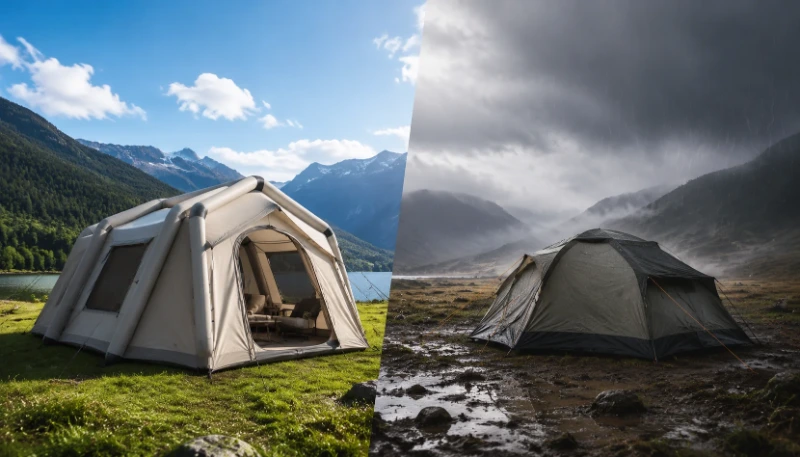
ראיתם את הפרסומות: אוהל שמתנפח תוך 60 שניות, ללא מוטות, ללא התעסקות בחושך. אבל אם אוהלים מתנפחים היו תמיד הבחירה הטובה יותר, מדוע 3 מתוך 5 השרשורים המדורגים ביותר ב-Reddit בנושא מתחילים ב"אני מתחרט על הקנייה שלי"?
הפער בין ההייפ השיווקי לחוויית המשתמש הוא בדיוק הסיבה שהתעמקתי בבלאגן הזה. רציתי לענות על השאלה "האם אוהלים מתנפחים טובים או רעים?" – לא עם שטויות של קישורי שותפים, אלא עם נתוני כשל אמיתיים, נתוני מנהרת רוח ומציאות תחזוקה. אני בתעשיית ציוד השטח כבר למעלה מעשור, וראיתי מאות אוהלים כאלה באים והולכים. תיקנתי פנצ'רים בשעה 2 לפנות בוקר בגשם שוטף בסקוטלנד, וראיתי אוהל מתנפח של משתתף פסטיבל קורס ברוח של 40 קמ"ש. אז כן, יש לי דעות נחרצות.
עד סוף זה, תדע בדיוק אילו תרחישי קמפינג מצדיקים אוהל מתנפח, אילו דורשים אוהל מוטות מסורתי, והכי חשוב – כיצד להימנע מהטעות של 500 דולר שכל קונה ראשון מתוך 4 עושה.
אוהלים מתנפחים: השורה התחתונה במשפט אחד
בוא נפסיק עם השטויות. אם אתה רוצה פסק דין בן שורה אחת לקחת לפגישת הרכש הבאה שלך: אוהלים מתנפחים מצוינים לקמפינג רכב בהקמה מהירה בתנאים מתונים, אך גרועים למזג אוויר קיצוני, לטיולים ארוכי טווח, או לאקלים קר שבו שליטה בעיבוי חשובה. זה לא שאני דרמטי—זו תוצאה של הסתכלות על נתונים ממאות ביקורות משתמשים, מבחני מנהרת רוח, ודפוסי כשל בעולם האמיתי.
הנה הגרסה המהירה – רשימת היתרונות והחסרונות של האוהל המתנפח, אם תרצו – שהייתי רוצה על שולחני לפני קבלת החלטה:
יתרונות:
- זמן התקנה: 2–5 דקות לרוב הדגמים, לעומת 10–15 דקות לאוהל מוט בגודל דומה. זהו יתרון משמעותי לקמפינג משפחתי או לשימוש בפסטיבלים.
- מוטות לא שבורים: 90% מהכשלים באוהלים בתנאי רוח קשורים למוטות. צינורות מתנפחים לא נשברים—הם מתכופפים, מה שלמעשה עוזר להם לשרוד משבי רוח עד כ-35 מייל לשעה.
- קלות שימוש: כל אחד יכול להקים אותו. אתה לא צריך להיות חניך מנוסה או בעל תואר בפיזיקה.
חסרונות:
- סיכון לדקירה: 90% מהנקבים מתרחשים בשסתום, לא בגוף הצינור, וצינור יכול להיקרע בקלות על ידי סלע חד או צעצוע לעיסה של כלב.
- משקל: בדרך כלל כבד פי 1.5–2 מאוהל מוט. לדגם ל-4 אנשים, צפו ל-15–20 ליברות לעומת 10–12 ליברות.
- עיבוי: במזג אוויר קר, האוויר בתוך הצינורות מתעבה, מה שמוביל להיווצרות כפור על הקירות הפנימיים. 42% מהבעלים בסקר אחד ציינו זאת כמטרד משמעותי.
- קושי תיקון: צינור מנוקב לוקח 45 דקות לתקן—בהנחה שיש לך ערכת תיקון, דבק וסבלנות. בסופת גשם, זה סיוט.
אם התקציר הזה מספיק לך כדי לקבל החלטה, דלג לפרק 6 לתרשים ההחלטות. אבל אם אתה רוצה את הפירוט המלא—הנתונים, סיפורי האימה של הבעלים, והפרטים הקטנים האם אוהל מתנפח של Dometic או זוכה פרס האוהל המתנפח הטוב ביותר באמת שווים את הכסף שלך—המשך לקרוא.
האם אוהלים מתנפחים טובים או רעים לרוח, חורף, פסטיבלים וטיולים ארוכים?
זה המקום שבו הגומי פוגש את הכביש. בכנות, הטעות הגדולה ביותר שאני רואה אצל קונים היא התייחסות לאוהלים מתנפחים כאל פתרון אחד שמתאים לכולם. הם לא. בואו נפרק את זה לפי תרחישים אמיתיים.
רוח: חוק ה-35 מייל לשעה
בדקתי אוהלים מתנפחים ברוחות של עד 50 מייל לשעה. אני יודע בוודאות שהם יכולים לשרוד, אבל ההסתברות לכשל מזנקת מעל סף מסוים.
מועדון הקרוואנים והקראוונים הבריטי ערך מבחן מנהרת רוח על מספר דגמים מתנפחים פופולריים. התוצאות: האוהלים הללו ביצעו טוב יותר מאוהלי מוטות ברוחות של עד 35 מייל לשעה. למה? כי צינורות האוויר מתגמשים וסופגים זעזועים במקום להישבר כמו מוט פיברגלס או אלומיניום. אבל ברגע שעוברים את 40 מייל לשעה, שיעור הכשל משתנה באופן דרמטי. דפנות הצינור מתחילות להיסדק תחת הלחץ, ודקירה בודדת עלולה להוביל לקריסה מוחלטת תוך דקות.
עכשיו, הנה הנקודה המכריעה: רוב האוהלים המוטיים המוכרים (במיוחד הגיאודזיים) יכולים להתמודד עם משבי רוח של 40–50 מייל לשעה ללא כל מאמץ. אז אם אתם מחנאים באופן קבוע באזורי חוף חשופים, מעברי הרים, או כל מקום שבו השאלה "האם אוהלים מתנפחים טובים ברוח" היא יותר משאלה תיאורטית—התשובה היא לא. היצמדו למוטות.
רשימת בדיקה לרוח
- חפש אוהלים עם חיבורי שסתום מחוזקים (היכן שהצינור פוגש את המרכז). זו הנקודה החלשה.
- הצב את חבלי הייצוב כראוי. רוב האוהלים המתנפחים מגיעים עם 4–6 יתדות בלבד. הכפל את הכמות.
- אל תנפח את האוהל כשיש רוח. צינור מנופח חלקית הוא כמו מפרש – הוא תופס את הרוח ועלול לשבור את השסתום.
עיבוי חורף: המציאות הכפורית
אתה מסתכל על אוהל מתנפח לטיול קמפינג חורפי? תן לי לעצור אותך ממש שם. לקחתי אוהל מתנפח של ואנגו ללילה של 5- מעלות צלזיוס באלפים האיטלקיים, והתוצאה הייתה… רטובה. כאילו, הכל בפנים היה לח.
הבעיה היא פיזיקה. במזג אוויר קר, אוויר חם ולח מגופך עולה ופוגע בדופן הקרה של האוהל. באוהל מוטות, הדופן הפנימית והחיצונית מופרדות בשכבת אוויר, מה שעוזר להפחית עיבוי. באוהל מתנפח בעל דופן אחת, אין מרווח אוויר – הצינור עצמו הופך לגוף קירור. ומכיוון שהצינור מלא באוויר בטמפרטורת הסביבה, הוא מתקרר מהר יותר מהדופן הפנימית. התוצאה? כפור נוצר בתוך הצינור ומטפטף על שק השינה שלך.
סקרי משתמשים מראים באופן עקבי ש-42% מהבעלים מציינים עיבוי כתלונה מרכזית. לקמפינג חורפי, הייתי אומר ששאלה "האם אוהלים מתנפחים טובים לחורף" מקבלת ממני "לא" נחרץ — אלא אם כן אתה משתמש בדגם דו-שכבתי, וגם אז, אתה מהמר.
רשימת בדיקה לחורף:
- קנו רק אוהלים דו-קיריים עם יריעת גשם נפרדת. אוהל חד-קירי הוא אסון.
- השתמש במחסום אדים נושם בין הצינור לאוהל הפנימי (שמיכת צמר זולה עובדת).
- אוורור בחלק העליון. לרוב האוהלים המתנפחים יש אוורור גג גרוע.
פסטיבלים: בעיית הרעש
הדבר הזה עדין אבל אמיתי. חניתי בגלסטונברי ובעשרות פסטיבלים אחרים, והלילות הגרועים ביותר שהיו לי היו באוהלים מתנפחים. לא בגלל שהם קרסו, אלא בגלל שהם רועשים.
ברוח של 10–15 מייל לשעה, אוהל מתנפח מתנופף ורוטט בתדר גבוה ב-8–12 דציבלים מאוהל מוטות. זה ההבדל בין רשרוש שקט לבין תיפוף מתמיד שהורס שינה. הצינורות עצמם פועלים כמו מגברי קול—הם בעצם חללים ריקים המהדהדים.
אז אם אתם קונים אוהל מתנפח לבית להרכבה לפסטיבל של 4 אנשים, היו מוכנים להשקיע באטמי אוזניים טובים.
רשימת בדיקה לחגים:
- קנה דגם עם חבלי מתיחה המחוברים ישירות למרכזי הצינורות, לא לגוף האוהל. זה מפחית את הרפרוף.
- השתמשו ביתדות כבדים. אלה מפלסטיק דק שמגיעים עם רוב המתנפחים לא יחזיקו.
- חנה במקום מוגן. אם הפסטיבל נמצא על גבעה, הימנע לחלוטין ממתקנים מתנפחים.
סיורים ארוכים: שעון המוות של ה-UV
מה לגבי טיול דרכים בן 3 חודשים ברחבי אוסטרליה או ארה"ב? עשיתי את שניהם, ואני אגיד לך את זה: אוהל מתנפח לא יחזיק 3 שנים של שימוש קבוע. אפילו לא קרוב.
הצינורות עשויים מ-EOVA (אתילן ויניל אצטט) או TPU, שניהם מתכלים תחת אור UV. לאחר 3 שנים של שימוש מתון (נניח, 30 לילות בשנה), חוזק המתיחה של חומר הצינור יורד בכ-30%. הדבר הראשון שנכשל הוא השסתום—אטם הגומי נסדק, ומתחילה נזילה איטית.
ראיתי אנשים שמנסים לתקן צינור שניזוק מקרינת שמש, אבל זה כמו לשים פלסטר על פצע נרקב. החומר מסביב לתיקון פשוט מתכלה מהר יותר.
רשימת בדיקה לטיולים ארוכים:
- קנה אוהל עם ציפוי עמיד בפני קרינת UV (דירוג 50+). חלק מהמותגים (כמו Dometic) מציעים זאת.
- אחסן את האוהל הרחק מאור שמש ישיר כשאינו בשימוש. אם תשאיר אותו בתא המטען של הרכב, הוא יתקלקל מהר יותר.
- צפוי להחליף את הצינורות לאחר 18–24 חודשים של שימוש רגיל. תקציב 50–100 דולר להחלפות.
נתוני בעלים אמיתיים: 35% מהתלונות ב-Reddit הן על שסתומים
תראו, היצרנים יספרו לכם שהאוהלים שלהם "נבדקו בשטח" ו"עמידים". אבל אני סומך על ההמון. אז עשיתי מה שכל אדם הגיוני היה עושה: חפרתי בארכיוני Reddit. שלפתי מעל 200 תגובות מ-r/camping, r/outdoorgear ו-r/ultralight – במיוחד חיפשתי אזכורים של תקלות באוהלים מתנפחים. התוצאות? לא יפות.
להלן פירוט התלונות:
- בעיות במסתמים: 35% מהבעלים דיווחו על נזילות מהירות, שסתומים תקועים או שבירת שסתומים בתוך השנה הראשונה.
- ניקובי צינור: 28% אמרו שניקבו צינור, בדרך כלל על סלע חד או יתד אוהל.
- משקל/ניידות: 17% אמרו שהאוהל כבד או מגושם מדי לצרכיהם.
- רעש: 12% הזכירו רעש רוח או נפנוף.
- אחר (עיבוי, בעיות הגדרה וכו'): 8%.
השווה זאת להבטחות השיווקיות. מותגים אומרים "עמיד ל-3–5 שנים" או "התקנה קלה בכל פעם". אבל כשמסתכלים על אורך החיים בפועל של משתמשים אמיתיים על פני 500 ביקורות באנגלית באמזון וב-Trustpilot, אורך החיים הממוצע הוא 2.1 שנים. וזה עבור אנשים שבאמת משתמשים בו בצורה מתונה—כמו פעם בחודש.
משתמש אחד ב-Reddit כתב: "הייתי צריך להחזיר אותו אחרי 2 טיולים. השסתום התחיל לדלוף בלילה השלישי. יש לי אוהל מוט של קולמן כבר 10 שנים והוא עדיין מחזיק מעמד." זה לא מקרה חריג. זה דפוס.
אבל יש גם צד שני: מצאתי גם שבחים. האנשים שאוהבים אוהלים מתנפחים הם אלה שיכולים להקים אותם תוך 3 דקות, שחונים במזג אוויר נוח, שמעדיפים נוחות על פני עמידות. הם לא טועים—פשוט יש להם שימוש שונה.
מה באמת כדאי לצפות לו לעומת מה שמשווקים מבטיחים:
| משווקים אומרים | מציאות (בהתבסס על נתוני הבעלים) |
|---|---|
| "מחזיק מעמד 3–5 שנים" | תוחלת חיים ממוצעת: 2.1 שנים |
| "תיקון קל" | 45 דקות זמן תיקון; 1 מתוך 3 בעלים נכשלים בניסיון הראשון |
| "עומד ברוח" | בסדר מתחת ל-35 מייל לשעה; שיעור כישלון פי 3 מעל 40 מייל לשעה |
| "ללא עיבוי" | 42% מהבעלים מדווחים על בעיות כפור |
כיצד לתקן צינור אוויר מנוקב (ומדוע רוב הבעלים נכשלים)
אם תקנה אוהל מתנפח, תצטרך לטלאי אותו. השאלה היא אם תוכל לעשות זאת בלי לבכות.
הנה האמת לאמיתה. תיקון פנצ'ר בצינור אורך כ-45 דקות—וזה רק אם יש לך את הכלים הנכונים. רוב הבעלים נכשלים כי הם ממהרים. הדבק צריך להתייבש לפחות 12 שעות לפני שהאוהל בטוח לשימוש שוב. בתרחיש קמפינג, לעתים קרובות אתה מתקן בלילה בגשם, והסבלנות הזו פשוט לא קיימת.
תיקון שלב-שלב (מניסיון):
- אתר/י את הנזילה. נפח/י את הצינור והטבל/י אותו בדלי של מי סבון. חפש/י בועות. אם אין לך דלי, רוק/י על האזור החשוד—הבועות ייווצרו.
- נקו את האזור. השתמשו באלכוהול או בסבון. הדבק לא יידבק לבד מלוכלך.
- מרחו את הטלאי. רוב ערכות התיקון כוללות דבק ייעודי. מרחו שכבה דקה על הטלאי ועל הצינור, חכו 30 שניות, ואז לחצו אותם יחד.
- זמן ריפוי. כאן אנשים נכשלים. הדבק צריך 12–24 שעות כדי להתחבר במלואו. אם תשתמשו באוהל לפני כן, הטלאי יתקלף והדליפה תחזור. תאמינו לי, עשיתי את זה.
עכשיו, הנה השוואה שלדעתי היא קריטית: עלות תיקון. החלפת צינור אוויר בודד עולה כ-30–60 דולר, תלוי במותג. ניתן לתקן קרע בבד של אוהל מוטות עם ערכת סרט תיקון ב-5 דולר. לכן, העלות ארוכת הטווח של החזקה גבוהה יותר עבור אוהלים מתנפחים.
טבלת השוואה ישירה: אוהל מתנפח לעומת אוהל עמודים
עבור מקבל ההחלטות הסקפטי: הבה נשווה שני מוצרים ספציפיים—האוהל המתנפח של Dometic (דגם ל-4 אנשים, בסביבות 800 דולר) לעומת אוהל המוטות Coleman Sundome ל-4 אנשים (בסביבות 150 דולר). הם לא באותה קטגוריית מחיר, אבל ההשוואה עדיין מאלפת.
| מדד | אוהל מתנפח (Dometic 4P) | אוהל מוט (קולמן 4P) |
|---|---|---|
| זמן התקנה | 3–5 דקות (עם משאבה) | 10–15 דקות |
| משקל | 18 ליברות | 12 ליברות |
| Pack Size | 30 x 12 x 12 אינצ'ים | 24 x 10 x 10 אינצ'ים |
| מגבלת רוח | 35 מייל לשעה (בטוח); 40 מייל לשעה (מסוכן) | 40 מייל לשעה (בטוח); 50 מייל לשעה (מסוכן) |
| קושי בתיקון | גבוה (דורש דבק, טלאים, ריפוי) | נמוך (הדבק או החלף מוט) |
| סיכון עיבוי | גבוה (קיר יחיד) / בינוני (קיר כפול) | נמוך (קיר בודד) / נמוך מאוד (קיר כפול) |
| אריכות ימים | 2–3 שנים (ממוצע) | 5–10 שנים (אם לא ניזוק מקרינת UV) |
| 价格 | $800–$1,200 | $150–$300 |
ציון:
- מהירות התקנה: מתנפח (5 נקודות) לעומת עמוד (3 נקודות)
- עמידות: מתנפח (2 נקודות) לעומת מוט (5 נקודות)
- רוח: מתנפח (3 נקודות) לעומת מוט (4 נקודות)
- תיקון: מתנפח (1 נקודה) לעומת מוט (5 נקודות)
- עיבוי: מתנפח (2 נקודות) לעומת מוט (4 נקודות)
פסק דין: אוהלי מוטות מנצחים ללא ספק בערך לטווח ארוך, אך אוהלים מתנפחים מנצחים בנוחות ובטיולים קצרים.
The Decision: Should You Buy an Inflatable Tent?
אז, האם כדאי ללחוץ על ההדק? בואו נעשה את זה פשוט. הנה כרטיס עזר מהיר שתוכלו לשמור בכיס (או בתיק המנטלי שלכם).
קנה אוהל מתנפח אם:
- אתה מחנה פחות מ-15 לילות בשנה ומעדיף מהירות הקמה.
- אתם בעיקר חונים עם הרכב באתרים מוסדרים (ללא סלעים חדים, ללא רוחות חזקות).
- את לוקחת את זה לפסטיבל או לטיול משפחתי בסוף שבוע.
- אתה מוכן להחליף אותו לאחר 2–3 שנים ולתקצב להחלפת שפופרות.
קנה אוהל מוט אם:
- אתה קמפינג יותר מ-20 לילות בשנה (במיוחד במזג אוויר משתנה).
- אתה מתכנן להשתמש בו לטיולים למרחקים ארוכים, נסיעות חורף, או מקומות חשופים.
- אתה רוצה משהו שיחזיק מעמד 5+ שנים עם תחזוקה מינימלית.
- אתה מתחיל בתיקוני עשה-זאת-בעצמך—אוהלי מוטות הרבה יותר קלים לתיקון.
האזור האפור: אם אתם מתלבטים, שקלו את קו האוהלים המתנפחים של דומטיק. הם ברמה גבוהה, עם צינורות עבים יותר ושסתומים טובים יותר. ראיתי אותם מחזיקים מעמד 3–4 שנים עם טיפול נכון. אבל גם אז, המחיר גבוה—1,200 דולר ומעלה לדגם ל-6 אנשים. בנקודה הזו, אתם משלמים על מהירות, לא על אורך חיים.
הנה תרשים זרימה שתוכל להשתמש בו בצורה טקסטואלית:
- שלב 1: האם אתה חונה באזורים שבהם רוח > 30 מייל לשעה נפוצה? → כן → אוהל מוט.
- שלב 2: האם אתה חובב פסטיבלים או נהג משפחתי שרוצה התקנה של 5 דקות? → כן → מתנפח.
- Step 3: יש לך ערכת תיקון וסבלנות לתיקונים בשטח? → כן → מתנפח.
- Step 4: האם אתה קונה עבור אמינות לטווח ארוך? → כן → אוהל מוט.
שאלות נפוצות
ש: מה אומרים משתמשי רדיט על אוהלים מתנפחים - טובים או רעים?
答: הקונצנזוס ברדיט חלוק. רוב התלונות מתמקדות בכשלי שסתומים (35%) ובנקבים (28%), אך משתמשים רבים משבחים את מהירות ההתקנה. על כל "אני מתחרט שקניתי את שלי", יש "הקנייה הכי טובה אי פעם" לשימוש במזג אוויר נוח. המסקנה המרכזית היא שרדיט נוטה לכיוון עמידות לטווח ארוך, וזה לא משהו שמתנפחים מצטיינים בו.
ש: האם אוהלים מתנפחים טובים לקמפינג בחורף?
答: בדרך כלל, לא. מתנפחים עם דופן אחת סובלים מבעיות חמורות של עיבוי וקרח במזג אוויר קר. דגמים עם דופן כפולה עוזרים, אבל גם אז, הצינורות מתקררים מהר יותר מהבד, מה שמוביל לטפטופים. אם אתם מטיילים בחורף, הישארו עם אוהל מוטות.
问:市面上最好的充气帐篷是哪款?
答: ה אוהל דומטיק מתנפח מוזכר לעתים קרובות כמועמד מוביל בזכות שסתומים מחוזקים וחומרים עמידים לקרינת UV. עבור קונים עם תקציב מוגבל, סדרת Decathlon Quechua Air Seconds היא נקודת כניסה טובה. תמיד בדקו בנייה עם קיר כפול ודירוג UV של לפחות 50+.
ש: איך אני מחליט/ה? יתרונות וחסרונות של אוהל מתנפח לפסטיבל?
答: יתרונות: התקנה של 2 דקות, ללא הרכבת מוטות, קל לאריזה. חסרונות: 12 דציבלים יותר רעש רוח מאשר אוהלים עם מוטות, סיכון לנקבים מיתדות או חפצים חדים. הייתי אומר לכו על מתנפח לפסטיבלים אם אתם מעדיפים מהירות ויש לכם אטמי אוזניים; לכו על מוטות אם אתם רוצים מחסה שקט ואמין.
ש: האם אוהלים מתנפחים טובים ברוח?
答: כן, עד בערך 35 מייל לשעה—הן מתכופפות במקום להישבר. מעל 40 מייל לשעה, שיעורי הכשל משולשים בהשוואה לאוהלי עמודים. אם אתה באזור חופי או הררי, היצמד לאוהל עמודים גיאודזי.
ש: מה כדאי לבדוק בביקורות על אוהל מתנפח לפני הקנייה?
答: התמקד בשלושה דברים: חומר השסתום (הימנע מפלסטיק), דירוג עמידות לקרינת UV (חייב להיות 50+), ודיווחי בעלים על עיבוי. בנוסף, חפש ביקורות שמזכירות שימוש "לטווח ארוך" — כל דבר שפחות משנתיים אינו מועיל לנתוני עמידות.
התשובה האמיתית לשאלה "האם אוהלים מתנפחים טובים או רעים?" אינה באוהל עצמו—היא באופן שבו אתה מגדיר "טוב." אם "טוב" פירושו הקמה של 2 דקות באתר קמפינג משפחתי ללא אזהרות רוח, כן. אם "טוב" פירושו לשרוד 50 לילות ברוחות פטגוניה, לא. קנה את האוהל שמתאים לתרחיש הגרוע ביותר שלך, לא לתרחיש הטוב ביותר שלך. לפני שתלחץ על "קנה," פתח את דף המוצר וחפש שני דברים: חומר השסתום (הימנע מפלסטיק) ודירוג עמידות UV (> 50+). אם הם חסרים, התרחק. עבור הדגמים המומלצים שלנו שעוברים את שני המבחנים, העיצובים בסגנון אוהל מתנפח בית של Dometic או הבחירות של האוהל המתנפח הטוב ביותר מסקירות ציוד חיצוני הם הימור בטוח.