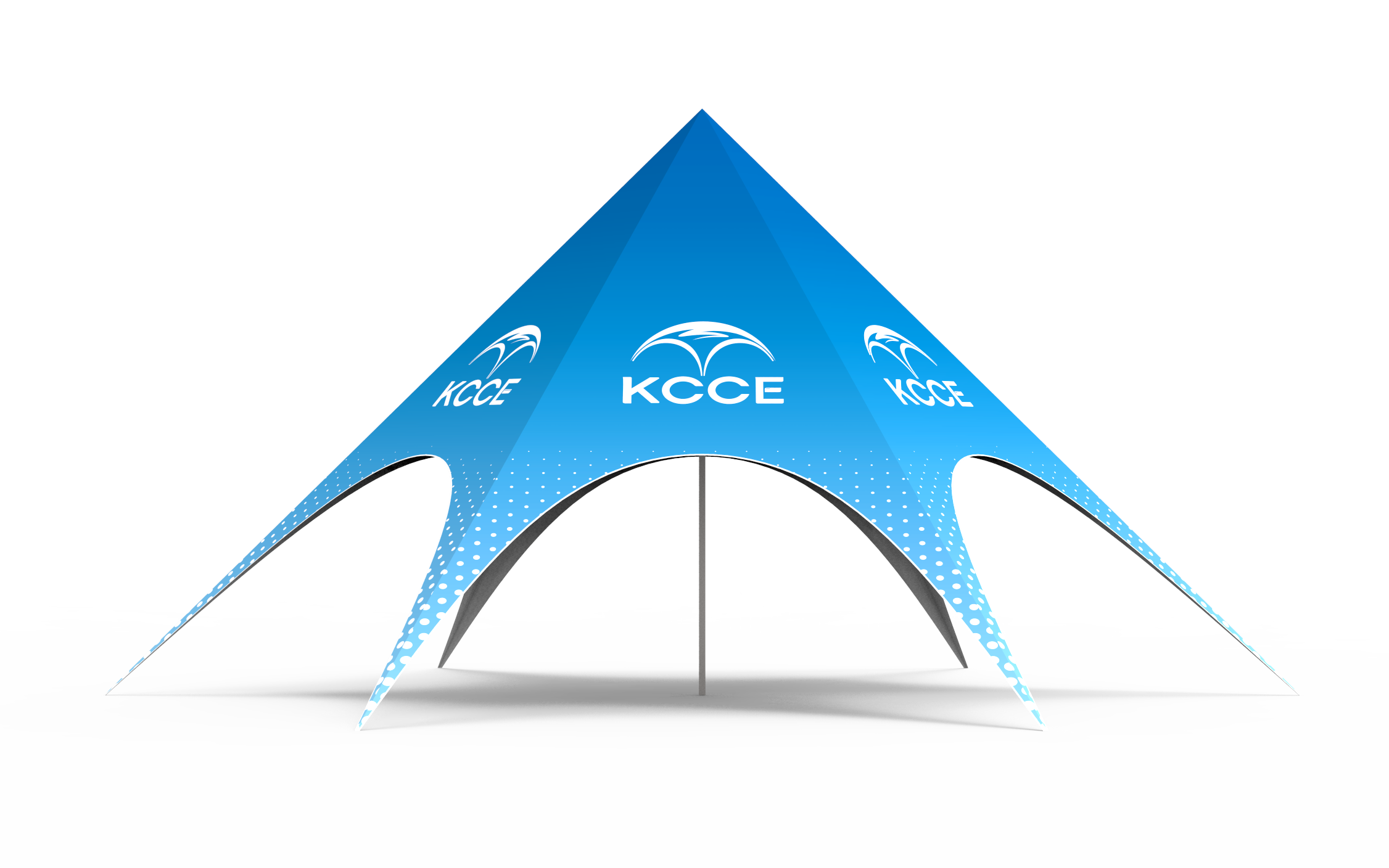
你花了几千块定制了一个充气拱门,准备用于大型户外音乐节。烈日当空,人群聚集,然后…… 砰. 。帐篷开始倾斜、塌陷,甚至更糟——接缝裂开。大多数人会怪罪风力或劣质材料。但真正的罪魁祸首是什么?几乎总是——气压不正确。理解 充气广告帐篷的最佳气压指南 这一点不仅仅是一条枯燥的技术说明——它决定了你是看起来专业,还是遭遇一场代价高昂、令人难堪的灾难。我将给你精确的数值、背后的科学原理,以及针对天气、帐篷尺寸和面料老化所需的简单调整方法。不再靠猜。.
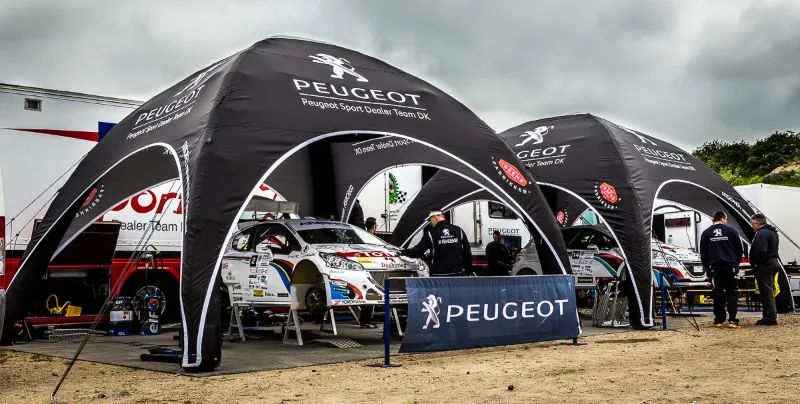
基准值——为何0.3–0.5 PSI是“最佳区间”
让我们从最重要的数值开始。对于绝大多数标准PVC和乙烯基充气广告帐篷——穹顶、拱门、遮阳棚——安全有效的运行范围在 0.3至0.5 PSI. 之间。我知道,这听起来低得离谱。你可能会想:“我的汽车轮胎都要35 PSI,这不可能对吧。”但关键在于:你不是要把帐篷变得像石头一样硬。你是利用气压来张紧面料,赋予结构形状。其物理原理完全不同。.
这样想吧。在传统撑杆帐篷中,框架是刚性的——铝合金或钢材。而在充气帐篷中,空气本身就是框架。帐篷的形状(面料裁剪并缝制成管状的方式)提供了结构刚性,而非内部空气的硬度。空气只是让这些气管保持充气状态并处于张紧状态。这是YOLO Outdoor的工程师在其详细技术分析中反复强调的原理。他们指出,结构完整性来自于“空气梁系统”被正确张紧,而非过度加压。.
那么,0.3–0.5 PSI这个数值从何而来?这是多年来现场测试和制造商建议中形成的共识值。以下是我使用的一个简单参考表:
- 小型遮阳棚(10×10英尺): 0.3 – 0.4 PSI
- 中型拱门(10×20英尺): 0.35 – 0.45 PSI
- 大型穹顶/隧道(20×30英尺以上): 0.4 – 0.5 PSI
关键要点:切勿依赖气泵自带的压力表。那些东西的准确性出了名的差。在进行任何调整之前,购买一个独立的、经过校准的数字压力计。这是一笔15美元的投资,却能为你节省数千美元的帐篷维修费用。我见过有人因为相信廉价气泵,一直充到“感觉够紧”为止,结果把接缝撑爆了。别做那种人。.
改变数值的五个变量
好了,你知道基准值了。但大多数人在这里犯错:他们设置好压力后就再也不管了。现实是,充气帐篷的理想气压是一个动态目标。它会根据几个变量而变化。.
温度:最大的“反派”
你可能还记得高中物理中的查理定律。该定律指出,在压力保持恒定的情况下,气体的体积与其绝对温度成正比。在密封气室帐篷(没有持续运转的鼓风机的那种)中,体积变化不大,因此压力会随之变化。根据我的经验,这是最常见的故障原因。.
我曾在一场展会的寒冷早晨损失了一顶帐篷。前一天晚上我在舒适的70°F温度下搭建了它。一夜之间,温度降到了40°F。气梁内部的空气收缩,压力下降,到了早上,帐篷塌陷得厉害,我不得不把它拆下来重新充气。反过来,我也见过一顶帐篷在100°F的高温天里接缝直接爆开——那声音吓人极了,帐篷彻底报废。.
以下是我遵循的快速调整经验法则:
- 烈日暴晒(温度比搭建时升高30°F以上): 检查压力。你可能需要 放气 稍微释放约0.1 PSI,以避免接缝过度受力。.
- 寒冷夜晚(温度下降20°F以上): 增加0.1–0.15 PSI以补偿空气收缩。你的帐篷会感觉松一些,但会更安全。.
风力:被误解的敌人
在阵风天气下,你的本能可能是把压力调高。克制住这种冲动。为了抗风而过度充气是一个危险的错误。当压力过高时,面料会变脆,吸收风力动态载荷的能力下降。相反,你应该维持基准范围的上限(0.5 PSI)。帐篷需要足够坚固以保持形状,但又需要足够柔韧以轻微变形来卸掉风载荷。YOLO Outdoor的工程指南将此解释为充气结构的“柔性吸能”原理。.
而且,看在专业性的份上,请确保你的锚固件和配重牢固可靠。如果帐篷没有绑好,过度充气也救不了你。我见过一个20英尺的拱门在海滩音乐节上被风吹离地面,因为沙锚太短了。当时压力完美,但锚固却是一场灾难。.
海拔(高度)
这个变量不太常见,但对高海拔活动至关重要。随着海拔升高,环境气压下降。如果你在海平面充好帐篷,然后开车到5000英尺的高度,气梁内部的空气会相对于外部膨胀。这可能导致过充。反之,如果你在高海拔充气,下山后压力就会过低。.
粗略估算:海拔每升高1000米(3280英尺),目标压力应降低约0.03–0.05 PSI,以补偿环境气压差。这个数值不大,但对于在山区音乐节或高海拔研究站点使用的大型昂贵帐篷来说,它很重要。.
面料状况与使用年限
说实话:你的帐篷不是永久性结构。PVC或TPU面料会因紫外线照射、摩擦和日常磨损而随时间老化。根据KCCE Event分享的数据,每天暴露在直射阳光下的充气帐篷,其可用寿命比传统帐篷短25%。一顶全新的高品质帐篷可以承受压力范围的上限。而一顶老旧、被太阳晒透、接缝胶带出现微裂纹的帐篷呢?你需要运行在压力下限——最高0.3 PSI——否则就有爆裂的风险。.
如果你发现帐篷出现“起泡”(面料层之间形成小气泡)或接缝开始分离,说明你施加的压力对其当前状况来说太大了。立即降低压力。.
帐篷尺寸与容积
这一点很直观,但值得重申。一个10×10的小型遮阳棚比一个30英尺的大型穹顶空气容积小。更大的结构需要略高的压力,才能在其更大的表面积上维持相同的结构张力水平。这就是为什么上面的基准表从小型帐篷的0.3到大型帐篷的0.5递增。.
密封气室系统 vs. 持续供气系统:压力管理的影响
Not all inflatable advertising tents are created equal when it comes to inflation systems. This distinction is crucial for your proper inflation pressure guidelines.
密封气室系统
These are the most common for commercial-grade advertising tents. You inflate them once, and the tent holds the air inside via check valves. The pump is removed, and the tent is sealed. The major advantage is no constant noise from a blower. The disadvantage is that the pressure is entirely dependent on the ambient temperature. If it gets cold, you lose pressure. If it gets hot, you risk overinflation.
持续供气系统
These are often used for larger inflatable arches and tunnels. A low-pressure blower runs continuously, constantly pushing air into the fabric. The tent has intentional “exhaust” points (often the entrance or other openings). The pressure in these systems is much lower—often around 0.1 to 0.2 PSI—because the air is always moving. Overinflation is less of a risk here because the blower can’t generate that much pressure, but underinflation from a blocked intake is a risk.
For sealed-air systems, optimal tent air pressure settings are critical. For constant-air systems, you need to focus on ensuring the blower isn’t obstructed and that the exhausts aren’t blocked.
气候分区适配:综合参考表
One of the biggest gaps in the current search results is a practical, climate-specific reference. So, let me fix that. Here’s my reference table for air pressure settings in different climates, based on real-world experience and manufacturer data:
| Climate Zone | Temperature | Pressure Baseline | Key Adjustments |
|---|---|---|---|
| Tropical/Summer | 85°F+ | 0.3 – 0.4 PSI | Start low. Monitor closely as temp rises. May need to vent air. |
| Desert (Hot/Dry) | 100°F+ | 0.3 PSI | High risk of overinflation. Use digital gauge. Anchor for wind. |
| Temperate (Spring/Fall) | 50-75°F | 0.35 – 0.45 PSI | Most stable zone. Set at middle of range. |
| Cold/Winter | < 35°F | 0.4 – 0.5 PSI | Expect pressure loss overnight. Add 0.1-0.15 PSI. |
| High Altitude | 各不相同 | Adjust per altitude | Use the 0.03 PSI per 1,000m rule. |
| Beach/Coastal | 各不相同 | 0.4 – 0.5 PSI | Wind is primary threat. Anchor aggressively. |
分步充气与压力监测指南
You can’t manage what you don’t measure. And trust me, the “thumb test” is not your friend. “If it feels like a basketball, it’s too hard. If you can push in an inch, it might be OK.” That’s a recipe for failure.
Here is the exact setup process I follow for every event:
- Inflate to Baseline: Using your powered pump, inflate the tent until it stands up. Don’t overdo it.
- Let It Settle: Turn off the pump and let the tent sit for 5 minutes. This allows the fabric to stretch and the air pressure to equalize throughout the beams.
- Measure with a Digital Gauge: This is the most important step. Use your calibrated pressure gauge on the Best air pump for inflatable advertising tents or directly on the valve. Record the PSI.
- Adjust for Temperature: Based on the current and forecasted temperature, adjust the pressure up or down using the rules above.
- Secure Anchors: Tension the ropes or straps. Make sure the floor weights (water barrels, sandbags) are placed on the base of the legs, not just tied to the side.
- Re-Check After 30 Minutes: A properly sealed tent should hold pressure for hours. If it loses more than 0.1 PSI in 30 minutes, you have a leak.
How to check air pressure in an inflatable tent? It’s simple. Use a digital tire pressure gauge or a low-pressure manometer (0-2 PSI range). Never use a high-pressure pump gauge.
常见错误及规避方法
Based on years in this industry, here are the mistakes I see most often:
- Mistake 1: Using a Camping Tent Pump on an Advertising Tent. This is the #1 killer of inflatable advertising tents. Camping tents use 5–8 PSI. Advertising tents use 0.3–0.5 PSI. A camping pump will blow your tent’s seams instantly.
- Mistake 2: Overinflating for “Stability.” You think more air means more stable. It doesn’t. It makes the fabric rigid and prone to stress fractures. When the wind hits, it will snap, not bend.
- Mistake 3: Ignoring the Temperature Swing. This is the silent killer. Set up in the evening, it’s 70°F. You go to bed. Morning comes, it’s 45°F. Your tent looks like a deflated parade float. Just add a little air.
- Mistake 4: Neglecting to Buy a Pressure Gauge. The pump’s gauge is always wrong. Every single time. Spend the $15 on a digital gauge. It’s the single best investment you can make for your tent’s longevity.
充气帐篷过充与欠充分别会怎样?
Let’s be crystal clear about the consequences:
- Underinflation (The Wobbler): The fabric flaps in the wind like a sail. This causes abrasion at the seams. The top of the tent can pool water, leading to a collapse. The tent looks unprofessional. Honestly, it’s embarrassing for a paid event.
- Overinflation (The Balloon): The seams are stressed to their breaking point. In hot sun, the pressure rises even further, leading to a catastrophic seam failure or “blisters” in the vinyl. A tent doesn’t just leak air when it’s overinflated. It explodes. I’ve seen it. It’s a total loss.
在正确压力下锚固充气帐篷的最佳实践
Even with perfect pressure, your tent is a giant sail. You need to anchor it. For concrete, use 40-pound water barrels on each leg. For grass, use long (18-inch) screw stakes. For sand, use 24-inch sand stakes or large sandbags. And always tie down the top of the tent to the stakes using the included ropes, not just the legs.
在哪里购买用于解决压力问题的充气帐篷维修包
Even with the best pressure guidelines, things happen. A sharp rock, a careless forklift operator, a drunken festival-goer. When you get a leak, you need a repair kit fast. Look for kits that include:
- High-quality PVC or TPU patches (matching your fabric).
- Industrial-grade adhesive (not super glue).
- A small roller for pressing out air bubbles.
You can find these at most tent manufacturers’ websites or on Amazon. Just make sure the kit is rated for your tent’s material. A PVC patch won’t stick to TPU.
Here’s the simple truth: an inflatable advertising tent isn’t a balloon. It’s a precision structure that relies on a very low pressure to work perfectly. Your goal isn’t to inflate it hard; it’s to inflate it right for the conditions right now. Get a decent pressure gauge, learn the 0.3–0.5 psi range, and respect the weather. That’s the formula for a tent that stands tall every single time.
常见问题解答
Q: What PSI should an inflatable tent be?
A: For most standard inflatable advertising tents made from PVC or TPU, the ideal pressure range is between 0.3 and 0.5 PSI. This is significantly lower than camping tents. Your car’s tire at 35 PSI is a completely different engineering application. Always verify with a digital gauge, as pump meters are notoriously inaccurate.
Q: Do inflatable tents need constant air?
A: It depends on the system. Sealed-air tents do not need constant air once inflated and checked for leaks. Constant-air tents, which use a continuously running low-pressure blower (often for large arches or tunnels), do. For sealed tents, a small slow leak over 12-24 hours is normal, but a significant drop requires a repair.
Q: What is the PSI for an inflatable dinghy?
A: Inflatable dinghies operate at a much higher pressure, typically between 2 and 3 PSI (or even higher for high-pressure floor boards). This is a completely different class of inflatable. Never apply dinghy pressure standards to an advertising tent—you will destroy the tent’s seams. The material thickness and structural design are different.
Q: Is positive pressure good for a grow tent?
A: This question is about grow tents, not advertising tents. Positive pressure in a grow tent (using an intake fan) can help keep dust and pests out, but it’s unrelated to inflatable structures. For advertising tents, the pressure is a structural requirement, not an air quality one. Stick to our 0.3-0.5 PSI guidelines for your event tent.
参考资料
1. Inflatable Tent Engineering: TPU vs PVC Air Beams, Wind Load Guide – YOLO Outdoor
2. 充气帐篷的缺点:购买前您需要了解的事项 – KCCE Event