You’ve just landed that prime expo booth. Your brand needs to pop. You want an inflatable tent – but the moment you start searching, every vendor throws numbers at you: 10×10, 10×20, 13×13, 20×20, maybe even 30×40. Which one actually fits your event? More importantly, which one fits your budget and your vision for the brand?
So why did I put this together? Because I’ve seen too many people pick a size on a hunch and regret it later. Whether you’re a marketing manager planning a trade show activation, a wedding planner, or a festival organizer, the size of your inflatable structure directly impacts your ROI, your guest experience, and your sanity during setup.
Here’s what you’ll get in this guide – a full-sized decision kit. I’m including a ready-to-use size chart, event-by-event recommendations, the real limits of custom sizing, and a head-to-head comparison with traditional pop-up and frame tents. By the time you finish reading, you won’t be guessing anymore. You’ll know exactly what to order.
标准 Inflatable Branded Tent Sizes At a Glance
Let’s start with the basics. If you’ve ever scrolled through a supplier’s website, you’ve probably seen the same few sizes listed over and over. That’s because there are standard sizes that most manufacturers stock and that ship the fastest. These are your bread-and-butter options.
Below is a clear table of the most common sizes. I’ve included both feet and meters because if you’re in the US, you think in feet, but if you’re in Europe, Canada, or Australia, meters are king.
| Feet (ft) | Meters (m) | Square Footage | Approx. Capacity | Common Use |
|---|---|---|---|---|
| 10×10 | 3×3 | 100 sq ft | 4-6 people | Trade show booth, small promotion |
| 10×20 | 3×6 | 200 sq ft | 8-12 people | Larger booth, demo area |
| 13×13 | 4×4 | 169 sq ft | 6-8 people | Mid-size events, product launches |
| 20×20 | 6×6 | 400 sq ft | 16-24 people | Weddings, corporate parties |
| 20×30 | 6×9 | 600 sq ft | 25-35 people | Festivals, large activations |
| 20×40 | 6×12 | 800 sq ft | 35-50 people | Major brand activations, concerts |
Most vendors stock these sizes because they fit standard shipping pallets and are easy to manufacture in bulk. If you order a 10×10 or a 10×20 inflatable canopy tent, you’re looking at the fastest turnarounds – sometimes as little as 5–7 business days for printing. These are also the most common sizes for an inflatable canopy 10×10, which is probably the single most popular size in the industry.
But here’s the thing: “capacity” in this table assumes people are standing or sitting at small tables. If you’re setting up a full sit-down dinner, you’ll need to shrink those numbers. A 10×20 inflatable booth with a few round tables? You’re looking at maybe 6–8 seated guests, not 12. Always account for furniture.
Custom Sizes – What’s Possible (and What’s Not)
You might be wondering: what if none of these standard sizes fit my specific space? Can I get a custom size? The short answer is yes, but with some serious constraints.
The Real Limits of Customization
Custom inflatable tents are absolutely a thing. But you can’t just ask for any random dimension and expect to get it in a week. There are manufacturing limits.
- Minimum width: Most shops won’t go below 8 feet (about 2.4 meters). Anything smaller is just a glorified pop-up and defeats the purpose of an inflatable structure.
- Maximum length: This is the big one. The largest single-piece inflatable tents I’ve seen produced are around 60 feet long (18 meters). Beyond that, the air beams become too large to inflate reliably, and the structure becomes unstable even with good anchoring.
- Height: Standard wall height for most inflatable gazebo tents is around 8 to 10 feet. Some custom builds can go up to 16 feet peak height, but that requires thicker fabric and more robust air beams.
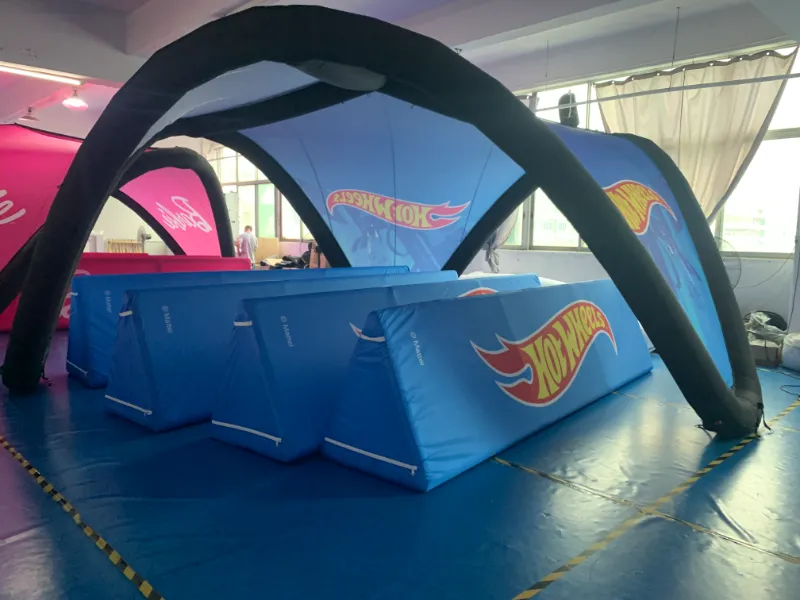
- 形状:方形、矩形、拱形、穹顶、隧道、定制: You can get cube, dome, tunnel, spider, or arch shapes. But if you want something truly exotic – like a flying saucer or a brand mascot – that’s a different product category altogether.
Lead Times and Warranty Impacts
Here’s the real cost of going custom. According to data from a leading supplier like Instant Promotion, custom sizes typically add 2–4 weeks to production. That’s because the design team has to create a new pattern, new cutting files, and new seam maps. They can’t just grab a pre-made template.
And about warranty: if you decide on custom inflatable tents, always ask about the warranty on the seams. Custom sizes often have more seams per square foot. More seams mean more potential failure points. Most manufacturers will still offer a 1-year warranty, but you might lose the “no-leak” guarantee that comes with stock sizes.
Mini Checklist Before Requesting Custom Sizes
Before you call a supplier, have these answers ready:
- Exact ground space (length, width, height obstructions like trees or power lines)
- Number of people you need to accommodate (standing vs. seated)
- Desired air beam diameter – thicker beams mean more stability but heavier packed weight
- Shipping constraints – can you accept a single pallet that’s 50 inches wide and 80 inches long? If not, you might need a modular design
If you follow this checklist, you’ll save yourself at least one round of revisions.
Which Inflatable Tent Size for Your Event Type?
This is where things get really practical. The size you choose depends heavily on what kind of event you’re running. Let’s break it down by the most common scenarios.
Trade Shows and Expos
Trade shows are the bread and butter of brand activations. You’re competing for attention in a hall full of other companies. The standard booth size in most US trade shows is 10×10 feet. That’s why an inflatable canopy 10×10 is the most popular size for this channel.
But let’s be honest – a 10×10 is tight. You barely have room for a banner stand and a small table. If you have any interactive element (like a demo station, a photo booth, or a product display), you’ll feel cramped. My recommendation: if your budget allows, go with a 10×20 inflatable booth. It gives you twice the space and allows for a much more comfortable experience for your staff. Plus, you can add sidewalls for a more enclosed, premium feel.
真实案例: I worked with a tech startup that initially ordered a 10×10 for a major expo. By day two, they realized they had no space for their VR demo. They had to rent a second 10×20 just for the experience zone. Cost them an extra $2,000 in rush fees. Don’t be that person.
Weddings and Receptions
If you’re planning an outdoor wedding, an inflatable tent for weddings is a fantastic option. It’s elegant, fast to set up, and can be branded with the couple’s monogram or a creative hashtag.
The sweet spot for a wedding of 50–80 guests is a 20×20 (400 sq ft with dining tables). For 100–150 guests, you’ll want a 20×30 or even 20×40. And don’t forget the dance floor! You’ll need a separate structure or a clear zone that adds about 10 feet of width.
My opinion? For weddings, go bigger than you think. Guest comfort is everything. A 20×30 is rarely too much space; it’s almost never too little.
Festivals and Outdoor Events
Festivals need big structures. You’re dealing with hundreds of people, unpredictable weather, and a need for high visibility.
For a brand booth at a music festival, consider a 20×20 or even a custom 30×40 inflatable tent. The larger footprint allows for a queue barrier, a merchandise table, and a small chill zone for staff. According to industry reports from the inflatable tents market (Credence Research, 2024), the commercial segment for large event tents is growing at over 8% annually. Demand is high because these structures handle foot traffic better than any frame option.
Pool Parties and Backyard Events
A quick note on inflatable canopy pool setups. These are typically smaller events where you’re shading a seating area near the water. A 10×10 or a 13×13 works perfectly. Just make sure the fabric is UV-resistant and that the tent is properly anchored. A sudden gust of wind near a pool is a disaster waiting to happen.
Brand Activations and Product Launches
For a single-day product launch, you want something that makes an immediate visual impact. A 13×13 inflatable dome is my personal favorite for these. It’s not too big that it looks empty, but it has enough height and wall space to print a massive logo. Plus, the dome shape naturally draws the eye. If you’re looking for a branded tent size guide, this is the shape I always recommend for high-footfall urban locations.
Inflatable vs. Pop-Up vs. Frame Tents – Size Flexibility Compared
One question that comes up constantly: why not just buy a pop-up? They’re cheaper, right?
Yes. They are. But there’s a critical difference in terms of size and branding.
Span Without Center Poles
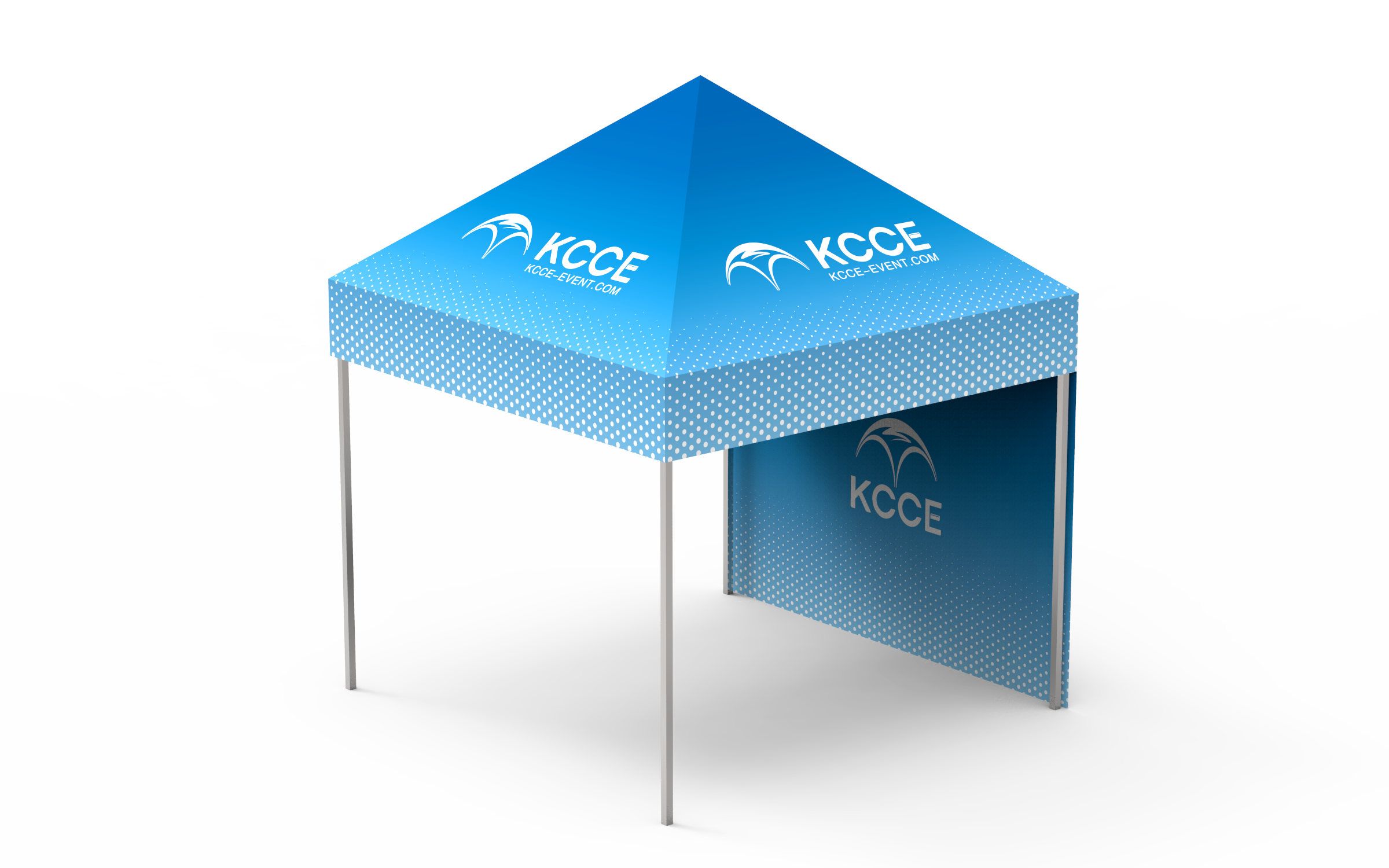
Pop-up tents (also called instant canopies) have a central pole or a scissor frame system. This means that for anything larger than a 10×20, you’re dealing with multiple legs that get in the way of your floor plan. Servicing a pop-up at 20×20 is a two-person job for an hour. And you cannot have a continuous printed surface – there’s a center pole right in the middle of your logo.
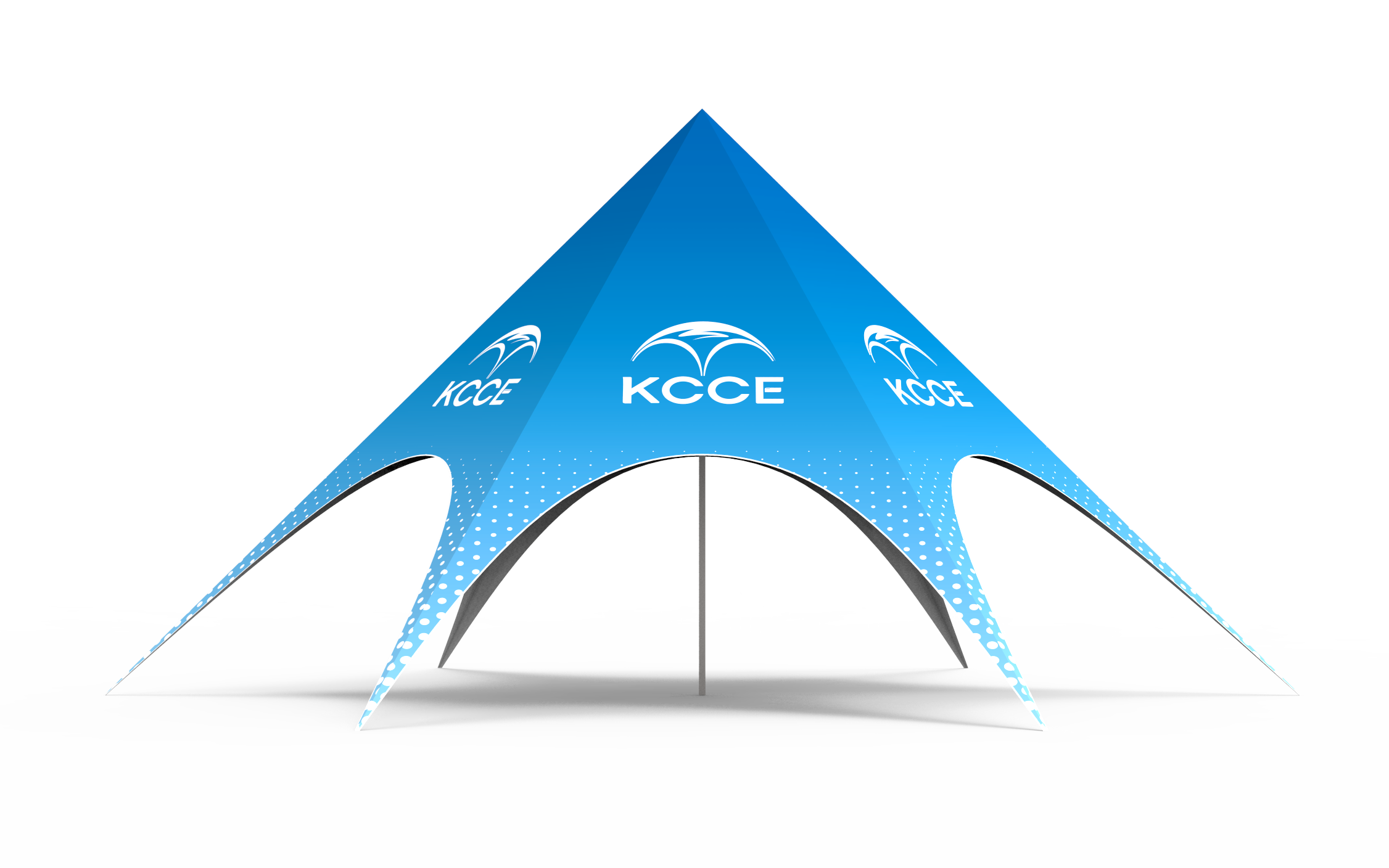
Inflatable tents, on the other hand, have no center poles. The air beams run along the perimeter or through the roof arches. This gives you an uninterrupted branding area. For an inflatable tent, the printed surface is the whole structure. For a pop-up, you’re constrained to the canopy top and the sides.
Size Ceilings
- Pop-ups: Maximum standard size is around 20×20. Beyond that, they become structurally unstable and require additional support poles.
- Frame tents: Customizable to virtually any size. You can get a 40×100 if you have the budget and the crew. But they are heavy, require a truck, and take hours to set up.
- 充气帐篷: Up to 40×60 in a single shell for the biggest stock sizes. Custom can go to 60 feet in length.
人员数量
This is where inflatables crush the competition. A 10×20 inflatable tent can be inflated in 30 to 60 seconds using a battery-powered pump. A 20×30 might take 2 minutes. Compare that to a frame tent where you’re threading poles, staking corners, and adjusting tension for 45 minutes. For an event organizer, time is money.
Actionable takeaway: If brand visibility is your #1 priority, an inflatable tent is unmatched for size-to-printed-surface ratio. And if you need to be mobile, the portability is a game-changer. Just remember: they’re light to carry but bulky. The packed volume of a 10×10 inflatable tent is about the size of a large duffel bag, but a 20×30 might fill the back of a pickup truck.
How to Measure Your Space for the Perfect Fit
You have the table. You know your event type. But before you order, you need to physically measure the footprint. This sounds obvious, but I’ve seen people order a 10×20 for a spot that was clearly 9 feet wide.
Step-by-Step Guide
- Mark the boundaries of your designated area using tape or cones.
- Measure the length and width at multiple points. Don’t just trust the map. Corners are rarely perfect 90-degree angles.
- Add at least 2 feet on each side for guylines and stake points. This is crucial for safety.
- Check overhead clearance. If you’re under a tree branch, a power line, or a low roof, your peak height matters.
- Look at the ground surface. Flat grass? Concrete? Sand? Each requires different anchoring systems.
- Check fire codes. Some municipalities require a minimum of 3 feet between the tent edge and any building, and a 12-foot firewall between multiple tents.
Printable Checklist
For those of you who want a quick reference:
- Length at center (ft)
- Width at center (ft)
- Height from ground to tallest obstacle (ft)
- Surface type (grass/concrete/sand)
- Wind exposure (open field vs. sheltered)
- Number of guests (standing/seated)
- Furniture dimensions
- Proximity to fire exits
If you skip any of these, you’re rolling the dice. I’ve seen a 20×40 inflatable branded tent that was perfectly sized but placed in a wind tunnel between two buildings. It was a disaster.
People Also Ask – Quick Answers to Common Questions
Here are the most common questions I get from readers about inflatable tent sizes.
Q: How big is a 10×10 inflatable tent?
A: A 10×10 inflatable tent covers 100 square feet of ground space. It can comfortably accommodate 4–6 guests standing or 4 people seated at a small table. It’s the standard size for a single trade show booth.
Q: What is the standard size for an inflatable canopy?
A: The most popular standard size is 10×10 feet (3×3 meters). This is followed closely by the 10×20 and then the 13×13. These sizes ship fastest and have the lowest cost.
Q: Can you get custom sizes for inflatable tents?
A: Yes. Custom inflatable tents are available, but with limits. Minimum width is about 8 feet, and maximum length is around 60 feet. Custom orders typically add 2–4 weeks to lead time.
Q: How many people fit in a 10×20 inflatable tent?
A: For a standing reception or cocktail event, 8–12 people. For a seated dinner, 6–8 guests. If you’ve adding furniture like a bar or a demo table, expect to reduce capacity further.
Q: Are inflatable tents waterproof?
A: Most reputable models are made from PVC or poly-cotton fabrics with a waterproof rating of PU1000 to PU2000. They are designed to handle rain, but they are not meant for submersion. Always check the waterproof rating before buying.
Buying Tips – What to Check Before You Order
A final set of practical tips. You now know the sizes. Let’s talk about the other factors that matter.
Material: PVC vs. TPU
Most inflatable tents use PVC (polyvinyl chloride) because it’s strong, affordable, and easy to print on. But TPU (thermoplastic polyurethane) is gaining traction. It’s lighter, more flexible, and doesn’t get as brittle in cold weather. The trade-off? TPU costs about 20-30% more. For North American climates, I generally recommend PVC for summer events and TPU for year-round use in cold regions.
Anchoring Method
Stakes work on grass. Sandbags work on concrete. Water barrels work for semi-permanent setups. But don’t skimp here. A 20×20 inflatable tent in a moderate wind (20 mph) can generate enough lift to drag itself across a parking lot if it’s not anchored properly. I’ve seen it happen.
Storage Weight
The packed weight of an inflatable tent depends on size and material. A 10×10 is about 30–40 lbs. A 20×20 can be 100–150 lbs. A 20×30 might weigh over 200 lbs. Store it in a cool, dry place. Direct sunlight degrades the fabric over time.
Printed Area Resolution
This is critical for branding. Ask for a CAD proof that shows the exact size of your printed graphic. Make sure the resolution is at least 200 DPI at full size. Some suppliers print at 150 DPI, and the result looks pixelated. You don’t want a blurry logo on a 20-foot wide inflatable gazebo tent.
Warranty on Seams
The most common failure point is the seam – where the air beams are bonded to the fabric. Look for a manufacturer that offers at least a 1-year warranty on that specific junction. Some premium brands go up to 3 years. Avoid anyone who won’t disclose their warranty terms.
常见问题解答
问:市面上最好的充气帐篷是什么?
A: “Best” depends on your needs. For trade shows, Instant Promotion and Extreme Canopy are top choices for their print quality and fast shipping. For festivals, West Shade does excellent large-format inflatable tents. Always check the build quality, the warranty, and the air pump included in the box.
Q: What are the different sizes of tents?
A: Tents in general range from small 2-person camping tents to massive 100+ person event structures. For inflatable branded tents, the standard sizes are 10×10, 10×20, 13×13, 20×20, and 20×30 feet. Custom sizes can extend up to 60 feet in length.
问:充气帐篷有哪些缺点?
A: The main drawback is the packed volume. While light, they are bulky. They also require a power source for the inflation pump. In very high winds (40+ mph), they are less stable than hard-frame tents. And repairs often require specialized seam tape, not a needle and thread.
Q: What is the largest inflatable tent you can buy?
A: The largest single-shell inflatable tents available for purchase are around 40×60 feet (2400 sq ft). For larger spaces, you can connect multiple units using specialized coupling tunnels. Custom builds can reach 60 feet in length, but anything beyond that usually requires engineering approval.
Now you know exactly what sizes are available for inflatable branded tents, and how to pick the right one. Honestly, the biggest mistake I see is people guessing the size. You now have a table, a flowchart, and a custom-size guide – use them.
Will your next trade-show booth be 10×10… or will you go bold with a 20×20 inflatable structure that turns heads from across the hall? Bookmark this guide, measure your space, then contact a custom tent supplier with your size request. Need a recommendation? Start with the three trusted brands listed below.
参考资料
1. 定制充气帐篷 – Branded Canopy Tents
2. Inflatable Tents Market Size, Trends, Share and Forecast 2024–2032 – Credence Research
3. High Pressure Inflatable Tents Market Forecast Report 2035 – WiseGuy Reports
4. Top 5 Reasons To Choose Inflatable Tent For Your Next Event – Custom Tent With Logo