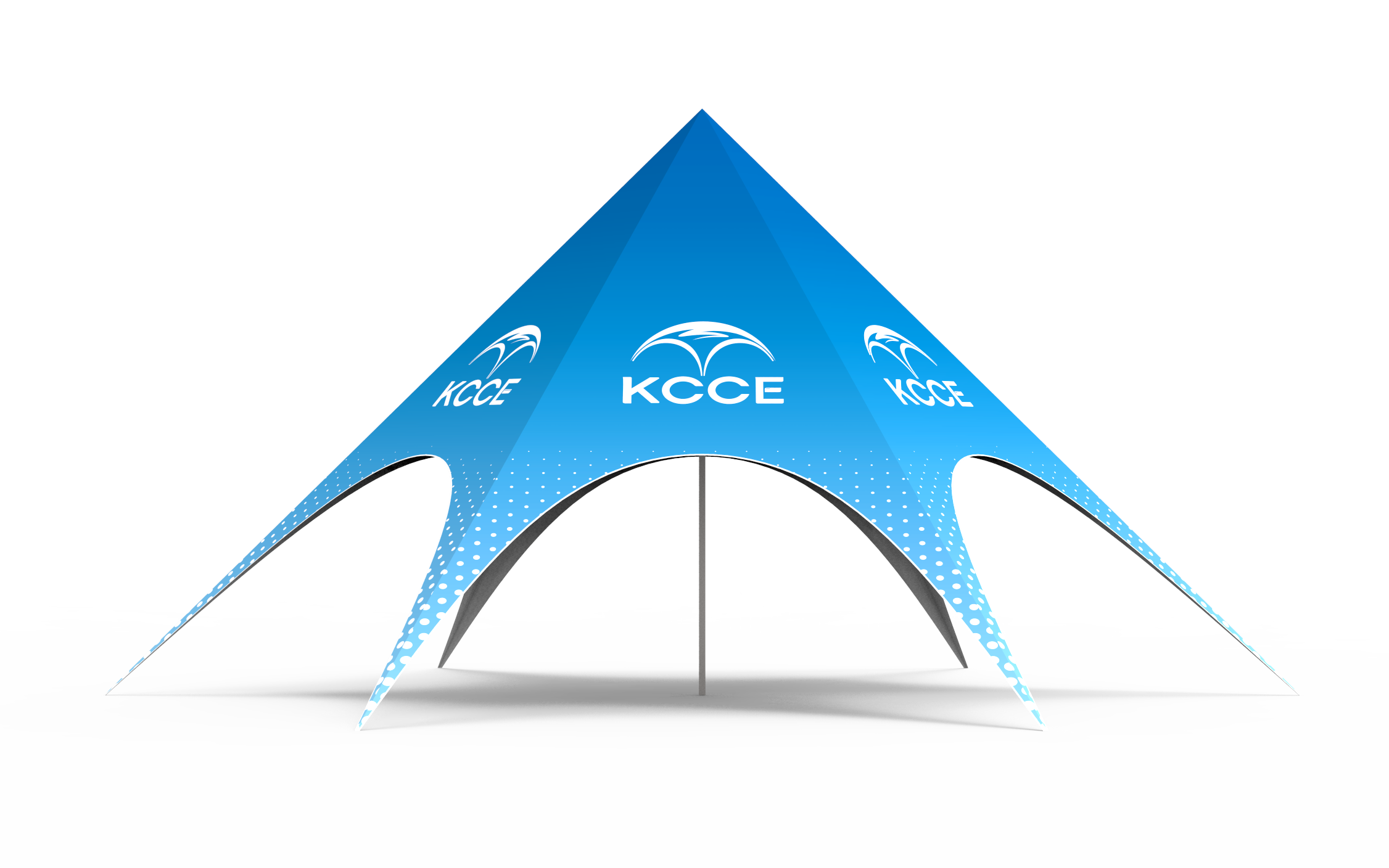
U heeft duizenden euro's uitgegeven aan een op maat gemaakte opblaasbare boog voor een groot buitenevenement. De zon brandt, de menigte verzamelt zich, en dan… boem. De tent begint te hellen, door te zakken, of—erger nog—een naad scheurt open. De meeste mensen geven de wind of goedkope materialen de schuld. Maar de echte boosdoener? Bijna altijd is het de verkeerde luchtdruk. Het begrijpen van Optimale luchtdrukrichtlijnen voor opblaasbare reclame tenten is niet zomaar een saaie technische opmerking—het is het verschil tussen er professioneel uitzien en een kostbare, gênante ramp hebben. Ik ga u de exacte cijfers geven, de wetenschap erachter, en de eenvoudige aanpassingen die u nodig heeft voor weersomstandigheden, tentformaat en stofleeftijd. Geen giswerk meer.
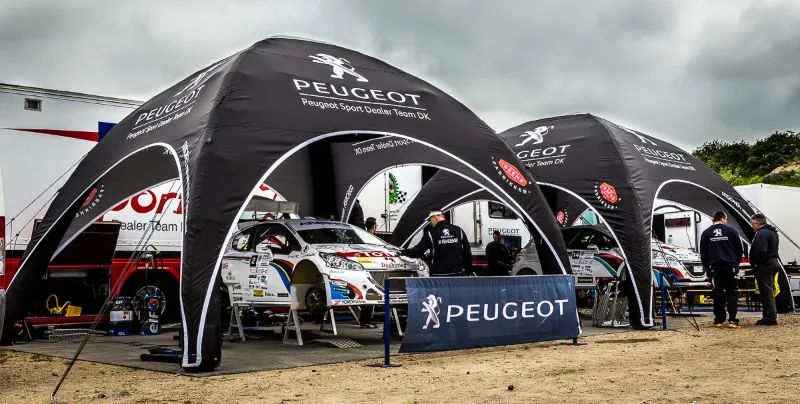
De Basis – Waarom 0,3–0,5 PSI de “Gouden Middenweg” is”
Laten we beginnen met het getal dat er het meest toe doet. Voor de overgrote meerderheid van standaard PVC- en vinyl opblaasbare reclame-tenten—koepels, bogen, luifels—ligt het veilige, effectieve werkingsbereik tussen 0,3 en 0,5 PSI. Ik weet het, dat klinkt belachelijk laag. U denkt misschien: “Mijn autobanden staan op 35 PSI. Dat kan niet kloppen.” Maar dit is het punt: u probeert de tent niet zo hard als een rots te maken. U gebruikt luchtdruk om de stof op spanning te brengen en de constructie zijn vorm te geven. De natuurkunde is totaal anders.
Bekijk het op deze manier. Bij een traditionele tent met palen is het frame rigide—aluminium of staal. Bij een opblaasbare tent is de lucht zelf het frame. De vorm van de tent (de manier waarop de stof is gesneden en genaaid in buizen) zorgt voor de structurele stijfheid, niet de hardheid van de lucht binnenin. De lucht houdt die buizen alleen maar opgeblazen en onder spanning. Dit is een principe dat zelfs ingenieurs bij YOLO Outdoor benadrukken in hun gedetailleerde technische analyses. Zij merken op dat structurele integriteit voortkomt uit het feit dat het “luchtbalkensysteem” correct op spanning is gebracht, niet overdreven onder druk staat.
Dus, waar komt 0,3–0,5 PSI vandaan? Het is een consensusgetal dat is ontstaan uit jarenlange veldtesten en aanbevelingen van fabrikanten. Hier is een eenvoudige referentietabel die ik gebruik:
- Kleine Luifel (10×10 ft): 0,3 – 0,4 PSI
- Middelgrote Boog (10×20 ft): 0,35 – 0,45 PSI
- Grote Koepel/Tunnel (20×30+ ft): 0,4 – 0,5 PSI
De belangrijkste conclusie: vertrouw nooit op de ingebouwde meter van uw pomp. Die dingen zijn berucht onnauwkeurig. Voordat u aanpassingen maakt, koop een aparte, gekalibreerde digitale drukmeter. Het is een investering van $15 die u duizenden euro's aan tentreparaties zal besparen. Ik heb mensen naden zien openscheuren omdat ze een goedkope pomp vertrouwden en bleven oppompen totdat het “strak aanvoelde.” Wees niet die persoon.
De Vijf Variabelen Die het Getal Veranderen
Oké, u kent dus de basis. Maar dit is waar de meeste mensen het verprutsen: ze stellen de druk één keer in en vergeten het. De realiteit is dat de ideale luchtdruk voor opblaasbare tenten een dynamisch doelwit is. Het verschuift op basis van een handvol variabelen.
Temperatuur: De Grootste Boosdoener
U herinnert zich misschien de wet van Charles van natuurkunde op de middelbare school. Deze stelt dat het volume van een gas recht evenredig is met de absolute temperatuur—als de druk constant wordt gehouden. In een tent met afgesloten lucht (een zonder continu draaiende ventilator) verandert het volume niet veel, dus verandert de druk in plaats daarvan. Naar mijn ervaring is dit de meest voorkomende oorzaak van falen.
Ik heb ooit een tent verloren op een koude ochtend op een beurs. Ik had hem de avond ervoor opgezet bij een comfortabele 70°F. Overnacht daalde de temperatuur naar 40°F. De lucht in de balken trok samen, de druk daalde, en tegen de ochtend zakte de tent zo erg door dat ik hem moest afbreken en opnieuw opblazen. Aan de andere kant heb ik een tent letterlijk een naad zien openscheuren op een dag van 100°F—het geluid was angstaanjagend en de tent was een totaal verlies.
Hier is een snelle aanpassingsregel die ik volg:
- Hete Zon (temperatuur stijgt 30°F+ vanaf opzetten): Controleer de druk. U moet mogelijk laten ontsnappen —laat ongeveer 0,1 PSI ontsnappen om overbelasting van de naden te voorkomen.
- Koude Nacht (temperatuur daalt 20°F+): Voeg 0,1–0,15 PSI toe om de samentrekking van de lucht te compenseren. Uw tent zal losser aanvoelen, maar het zal veilig zijn.
Wind: De Verkeerd Begrepen Vijand
Uw instinct bij windstoten is misschien om de druk op te voeren. Weersta die drang. Overmatig oppompen bij wind is een gevaarlijke fout. Wanneer de druk te hoog is, wordt de stof broos en minder in staat om de dynamische belasting van de wind te absorberen. In plaats daarvan wilt u het hoge einde van het basisbereik (0,5 PSI) handhaven. De tent moet stevig genoeg zijn om zijn vorm te behouden, maar flexibel genoeg om licht te vervormen en de windbelasting af te voeren. De technische gids van YOLO Outdoor legt dit uit als het principe van “flexibele energie-absorptie” van opblaasbare constructies.
En alsjeblieft, voor alles wat professioneel is, zorg ervoor dat uw ankers en gewichten stevig zijn. Overmatig oppompen zal u niet redden als de tent niet is vastgebonden. Ik heb een boog van 20 voet van de grond zien tillen op een strandfestival omdat de zandpinnen te kort waren. De druk was perfect, maar het anker was een ramp.
Hoogte (Altitude)
Dit is minder gebruikelijk maar cruciaal voor evenementen op grote hoogte. Naarmate u hoger gaat, daalt de omgevingsluchtdruk. Als u een tent op zeeniveau opblaast en vervolgens naar 5.000 voet rijdt, zal de lucht in de balken uitzetten ten opzichte van de buitenlucht. Dit kan overmatige druk veroorzaken. Omgekeerd, als u op hoogte opblaast, zal de druk te laag zijn wanneer u naar beneden gaat.
Een ruwe schatting: voor elke 1.000 meter (3.280 ft) hoogtewinst, moet u uw streefdruk met ongeveer 0,03–0,05 PSI verlagen om rekening te houden met het verschil in omgevingsdruk. Het is geen groot getal, maar het doet ertoe voor grote, dure tenten die worden gebruikt op bergfestivals of onderzoekslocaties op grote hoogte.
Stofconditie en Leeftijd
Laten we eerlijk zijn: uw tent is geen permanente constructie. Het PVC- of TPU-materiaal degradeert na verloop van tijd door UV-blootstelling, slijtage en algemene gebruiksschade. Volgens gegevens gedeeld door KCCE Event hadden opblaasbare tenten die dagelijks aan direct zonlicht werden blootgesteld een 25% kortere bruikbare levensduur dan traditionele tenten. Een gloednieuwe, hoogwaardige tent kan het hoge einde van het drukbereik aan. Een oude, door de zon verbrande tent met microscheuren in de naadtape? U moet aan het lage einde werken—maximaal 0,3 PSI—of het risico lopen op een klapband.
Als u merkt dat uw tent “blaren” vertoont (kleine luchtbellen die zich vormen tussen de stoflagen) of dat de naden beginnen te scheiden, gebruikt u te veel druk voor de conditie ervan. Verlaag de druk onmiddellijk.
Tentenformaat en Volume
Dit is intuïtief maar het is de moeite waard om te herhalen. Een kleine 10×10 luifel heeft minder luchtvolume dan een enorme koepel van 30 voet. Grotere constructies hebben iets hogere druk nodig om hetzelfde niveau van structurele spanning over hun grotere oppervlak te behouden. Daarom loopt de basistabel hierboven van 0,3 voor kleine tenten tot 0,5 voor grote.
Systemen met Afgesloten Lucht vs. Systemen met Continue Luchtstroom: Implicaties voor Drukbeheer
Niet alle opblaasbare reclame-tenten zijn gelijk als het gaat om ophlaassystemen. Dit onderscheid is cruciaal voor uw proper inflation pressure guidelines.
Systemen met Afgesloten Lucht
These are the most common for commercial-grade advertising tents. You inflate them once, and the tent holds the air inside via check valves. The pump is removed, and the tent is sealed. The major advantage is no constant noise from a blower. The disadvantage is that the pressure is entirely dependent on the ambient temperature. If it gets cold, you lose pressure. If it gets hot, you risk overinflation.
Systemen met Continue Luchtstroom
These are often used for larger inflatable arches and tunnels. A low-pressure blower runs continuously, constantly pushing air into the fabric. The tent has intentional “exhaust” points (often the entrance or other openings). The pressure in these systems is much lower—often around 0.1 to 0.2 PSI—because the air is always moving. Overinflation is less of a risk here because the blower can’t generate that much pressure, but underinflation from a blocked intake is a risk.
For sealed-air systems, optimal tent air pressure settings are critical. For constant-air systems, you need to focus on ensuring the blower isn’t obstructed and that the exhausts aren’t blocked.
Aanpassing aan Klimaatzones: Een Uitgebreide Referentietabel
One of the biggest gaps in the current search results is a practical, climate-specific reference. So, let me fix that. Here’s my reference table for air pressure settings in different climates, based on real-world experience and manufacturer data:
| Climate Zone | Temperature | Pressure Baseline | Key Adjustments |
|---|---|---|---|
| Tropical/Summer | 85°F+ | 0,3 – 0,4 PSI | Start low. Monitor closely as temp rises. May need to vent air. |
| Desert (Hot/Dry) | 100°F+ | 0.3 PSI | High risk of overinflation. Use digital gauge. Anchor for wind. |
| Temperate (Spring/Fall) | 50-75°F | 0,35 – 0,45 PSI | Most stable zone. Set at middle of range. |
| Cold/Winter | < 35°F | 0,4 – 0,5 PSI | Expect pressure loss overnight. Add 0.1-0.15 PSI. |
| High Altitude | Varieert | Adjust per altitude | Use the 0.03 PSI per 1,000m rule. |
| Beach/Coastal | Varieert | 0,4 – 0,5 PSI | Wind is primary threat. Anchor aggressively. |
Stapsgewijze Handleiding voor Ophlazen en Drukbewaking
You can’t manage what you don’t measure. And trust me, the “thumb test” is not your friend. “If it feels like a basketball, it’s too hard. If you can push in an inch, it might be OK.” That’s a recipe for failure.
Here is the exact setup process I follow for every event:
- Inflate to Baseline: Using your powered pump, inflate the tent until it stands up. Don’t overdo it.
- Let It Settle: Turn off the pump and let the tent sit for 5 minutes. This allows the fabric to stretch and the air pressure to equalize throughout the beams.
- Measure with a Digital Gauge: This is the most important step. Use your calibrated pressure gauge on the Best air pump for inflatable advertising tents or directly on the valve. Record the PSI.
- Adjust for Temperature: Based on the current and forecasted temperature, adjust the pressure up or down using the rules above.
- Secure Anchors: Tension the ropes or straps. Make sure the floor weights (water barrels, sandbags) are placed on the base of the legs, not just tied to the side.
- Re-Check After 30 Minutes: A properly sealed tent should hold pressure for hours. If it loses more than 0.1 PSI in 30 minutes, you have a leak.
How to check air pressure in an inflatable tent? It’s simple. Use a digital tire pressure gauge or a low-pressure manometer (0-2 PSI range). Never use a high-pressure pump gauge.
Veelvoorkomende Fouten en Hoe U Ze Kunt Vermijden
Based on years in this industry, here are the mistakes I see most often:
- Mistake 1: Using a Camping Tent Pump on an Advertising Tent. This is the #1 killer of inflatable advertising tents. Camping tents use 5–8 PSI. Advertising tents use 0.3–0.5 PSI. A camping pump will blow your tent’s seams instantly.
- Mistake 2: Overinflating for “Stability.” You think more air means more stable. It doesn’t. It makes the fabric rigid and prone to stress fractures. When the wind hits, it will snap, not bend.
- Mistake 3: Ignoring the Temperature Swing. This is the silent killer. Set up in the evening, it’s 70°F. You go to bed. Morning comes, it’s 45°F. Your tent looks like a deflated parade float. Just add a little air.
- Mistake 4: Neglecting to Buy a Pressure Gauge. The pump’s gauge is always wrong. Every single time. Spend the $15 on a digital gauge. It’s the single best investment you can make for your tent’s longevity.
Wat Gebeurt Er als een Opblaasbare Tent Te Hard of Te Zacht Is Opgeblazen?
Let’s be crystal clear about the consequences:
- Underinflation (The Wobbler): The fabric flaps in the wind like a sail. This causes abrasion at the seams. The top of the tent can pool water, leading to a collapse. The tent looks unprofessional. Honestly, it’s embarrassing for a paid event.
- Overinflation (The Balloon): The seams are stressed to their breaking point. In hot sun, the pressure rises even further, leading to a catastrophic seam failure or “blisters” in the vinyl. A tent doesn’t just leak air when it’s overinflated. It explodes. I’ve seen it. It’s a total loss.
Beste Praktijken voor het Verankeren van een Opblaasbare Tent met de Juiste Druk
Even with perfect pressure, your tent is a giant sail. You need to anchor it. For concrete, use 40-pound water barrels on each leg. For grass, use long (18-inch) screw stakes. For sand, use 24-inch sand stakes or large sandbags. And always tie down the top of the tent to the stakes using the included ropes, not just the legs.
Waar U een Reparatieset voor Opblaasbare Tent voor Drukproblemen Kunt Kopen
Even with the best pressure guidelines, things happen. A sharp rock, a careless forklift operator, a drunken festival-goer. When you get a leak, you need a repair kit fast. Look for kits that include:
- High-quality PVC or TPU patches (matching your fabric).
- Industrial-grade adhesive (not super glue).
- A small roller for pressing out air bubbles.
You can find these at most tent manufacturers’ websites or on Amazon. Just make sure the kit is rated for your tent’s material. A PVC patch won’t stick to TPU.
Here’s the simple truth: an inflatable advertising tent isn’t a balloon. It’s a precision structure that relies on a very low pressure to work perfectly. Your goal isn’t to inflate it hard; it’s to inflate it right for the conditions right now. Get a decent pressure gauge, learn the 0.3–0.5 psi range, and respect the weather. That’s the formula for a tent that stands tall every single time.
Veelgestelde Vragen
Q: What PSI should an inflatable tent be?
A: For most standard inflatable advertising tents made from PVC or TPU, the ideal pressure range is between 0.3 and 0.5 PSI. This is significantly lower than camping tents. Your car’s tire at 35 PSI is a completely different engineering application. Always verify with a digital gauge, as pump meters are notoriously inaccurate.
Q: Do inflatable tents need constant air?
A: It depends on the system. Sealed-air tents do not need constant air once inflated and checked for leaks. Constant-air tents, which use a continuously running low-pressure blower (often for large arches or tunnels), do. For sealed tents, a small slow leak over 12-24 hours is normal, but a significant drop requires a repair.
Q: What is the PSI for an inflatable dinghy?
A: Inflatable dinghies operate at a much higher pressure, typically between 2 and 3 PSI (or even higher for high-pressure floor boards). This is a completely different class of inflatable. Never apply dinghy pressure standards to an advertising tent—you will destroy the tent’s seams. The material thickness and structural design are different.
Q: Is positive pressure good for a grow tent?
A: This question is about grow tents, not advertising tents. Positive pressure in a grow tent (using an intake fan) can help keep dust and pests out, but it’s unrelated to inflatable structures. For advertising tents, the pressure is a structural requirement, not an air quality one. Stick to our 0.3-0.5 PSI guidelines for your event tent.
Referenties
1. Inflatable Tent Engineering: TPU vs PVC Air Beams, Wind Load Guide – YOLO Outdoor
2. Disadvantages Of Inflatable Tents: What You Need To Know Before Buying – KCCE Event