이동식 에어 텐트를 선택하는 방법? 이벤트 쉘터의 진화
장소는 확보했습니다. 하객 명단도 준비됐습니다. 하지만 결혼 피로연 두 시간 전, 팝업 프레임 텐트는 여전히 잔디 위에 폴대 더미로 남아 있고, 일기예보는 시속 20마일의 돌풍을 예고하고 있습니다. 바로 이것이 점점 더 많은 이벤트 플래너들이 중형 야외 이벤트에 에어 텐트를 도입하는 이유입니다.
이벤트를 조직해 본 사람이라면 누구나 압니다 — 텐트 선택이 로켓 과학은 아니라는 것을. 하지만 실제로 구매할 때가 되면 머리가 복잡해지기 시작합니다. 선택지는 어디에나 있고, 가격은 수백 달러에서 수천 달러까지 다양합니다. 과연 어떤 것이 실제로 가치가 있을까요? 저는 10년 이상 이벤트 장비에 대해 글을 써왔고, 셀 수 없이 많은 실수를 목격했습니다. 그래서 오늘은 모든 것을 낱낱이 공개합니다 — 이 글이 여러분의 우회로를 줄여주길 바랍니다.
이 가이드는 크기, 안전성, 설치 속도, 실제 비용이라는 핵심 트레이드오프를 안내합니다. 목표는 다음 이벤트가 텐트 재앙이 되지 않도록 하는 것입니다. 일반적인 캠핑 관련 글과 달리, 이 글은 이벤트 조직자를 위해 작성되었습니다. 풍속 등급, 단단한 지면 앵커링, 측벽 옵션을 다룰 것입니다. 끝까지 읽으시면 개인적인 의사 결정 체크리스트와 함께 어떤 브랜드를 후보로 둘지 알게 될 것입니다.
솔직한 진실은 이것입니다: 가장 좋은 텐트는 최고의 축제용 인플레이터블 이벤트 텐트 실제로 제대로 설치한 텐트입니다. 연약한 지면에 스테이킹을 생략하면 풍속 등급은 의미가 없습니다. 젖은 상태로 텐트를 보관하면 소재도 의미가 없습니다. 따라서 구매 전에 텐트 원단뿐만 아니라 앵커 키트를 살펴보십시오.
이동식 에어 텐트란 무엇인가? 에어 빔 기술의 작동 원리
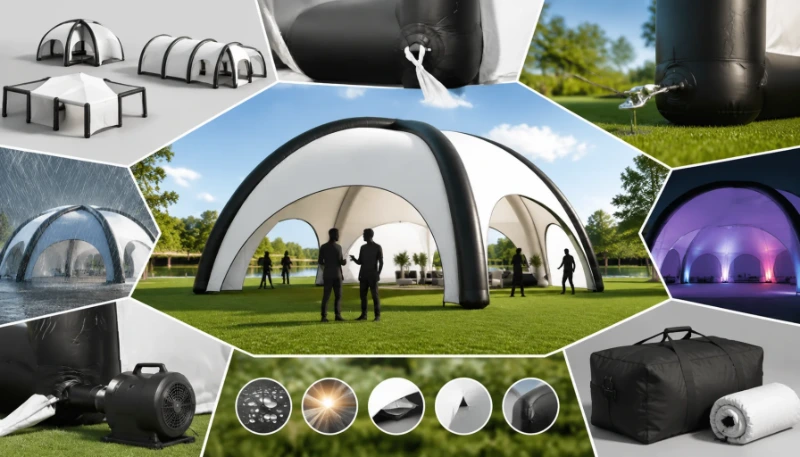
이동식 에어 텐트는 무역 박람회, 프로모션 이벤트 및 야외 모임을 위해 특별히 설계된 휴대용 공기 지지식 쉘터입니다. 금속 또는 유리 섬유 폴대에 의존하는 기존 텐트와 달리, 이러한 구조물은 팽창된 빔 또는 프레임 — 본질적으로 압력 하에서 형태를 유지하는 대형 에어 튜브 — 을 사용합니다. Westshade의 가이드에 따르면, 이는 다음과 같이도 알려져 있습니다: 에어 텐트 또는 이동식 에어 텐트로, 야외 환경을 위해 제작된 강력하고 내후성 소재로 만들어집니다.
어떻게 작동할까요? 원리는 놀라울 정도로 간단합니다. 전기 또는 수동 펌프가 밀봉된 원단 튜브에 공기를 주입하고, 이 튜브가 텐트의 구조적 골격을 형성합니다. 일단 팽창되면 에어 빔은 캐노피를 지지하고 중간 정도의 바람을 견딜 수 있을 만큼 강성이 됩니다. 전체 시스템은 비교적 낮은 압력(일반적으로 약 10~15 PSI)으로 작동하지만, 공기의 부피가 놀라운 안정성을 만들어냅니다.
기존 텐트와의 핵심 차이점은 무엇일까요? 폴대가 없다는 것입니다. 분실하거나 휘거나 부러질 프레임 부품이 없습니다. 에어 빔 기술은 구조 전체에 응력을 고르게 분산시켜 폴 텐트를 괴롭히는 지점 파손을 줄입니다. KCCE Event의 업계 문서에 따르면, 에어 텐트는 전시용 부풀릴 수 있는 텐트 난연 EN13501-1과 같은 안전 인증을 충족하고 구조적 내구성을 제공하면서도 외관이 우수해야 합니다.
솔직히 말하면, 수년 전 에어 텐트 시연을 처음 봤을 때 저는 회의적이었습니다. 거대한 점프 하우스처럼 보였습니다. 하지만 시카고 무역 박람회에서 20×30 모델이 시속 35마일의 돌풍 속에서도 굳건히 서 있는 것을 본 후, 제 생각이 바뀌었습니다. 이 기술은 지난 10년 동안 크게 성숙해졌습니다.
에어 텐트 vs. 전통 폴 텐트 vs. 팝업 텐트
한 가지 분명히 하겠습니다: 모든 텐트가 동등하게 만들어지는 것은 아닙니다. 에어 텐트, 전통 폴 텐트, 팝업 캐노피 사이에서 결정하려 한다면, 수백 개의 이벤트를 취재하면서 제가 배운 내용은 다음과 같습니다.
| 특징 | 풍선 텐트 | 전통적인 폴 텐트 | 팝업 캐노피 텐트 |
|---|---|---|---|
| 설치 시간 | 5~15분 (전기 펌프 사용 시) | 30~90분 (2인 팀 기준) | 1~5분 |
| 휴대성 | 중간 — 보관 시 부피가 큼 (20×30 기준 80~150파운드) | 무거움 — 폴대가 길고 다루기 어려움 | 가벼움 — 50파운드 미만 |
| 내풍 등급 | 적절한 앵커링 시 시속 50~80마일 | 스테이크에 따라 시속 40~60마일 | 일반적으로 시속 20~30마일 |
| 내구성 | 높음 — 자외선 차단 PVC/TPU | 중간 — 시간이 지나면 원단이 늘어남 | 낮음 — 프레임이 쉽게 휘어짐 |
| 비용 (20×20 기준) | $1,500–$4,000 | $2,000–$6,000 | $300–$800 |
| 최적 용도 | 중대형 이벤트, 브랜딩 | 결혼식, 공식 모임 | 뒷마당 파티, 마켓 |
에어 텐트는 설치 속도와 내풍성 측면에서 우수합니다. 그러나 수납 크기에서는 불리합니다 — 에어 빔이 차량 공간을 상당히 차지하기 때문입니다. 전통적인 폴 텐트는 많은 신부들이 선호하는 클래식한 미학을 갖추고 있지만, 조립에 체력과 시간이 필요합니다. 팝업 캐노피는 빠른 차양에는 좋지만, 솔직히 말해 바람이 조금만 불어도 쓸모가 없습니다. 저는 $400 팝업 텐트가 돌풍에 꼬인 금속 프레첼처럼 변하는 것을 본 적이 있습니다.
다음과 같은 궁금증이 생기실 수 있습니다: 팝업 텐트에 비해 에어 텐트의 높은 초기 비용이 정말 가치가 있을까요? 답은 사용 빈도에 따라 달라집니다. 연간 한 번의 뒷마당 바비큐를 개최한다면 팝업 텐트를 구매하세요. 사업을 운영하거나 연간 여러 이벤트를 개최한다면, 에어 텐트는 설치 시간 절약과 교체 비용 절감으로 투자 가치가 충분합니다.
이동식 에어 텐트 선택 시 고려해야 할 5가지 핵심 요소
단계별 과정을 자세히 살펴보기 전에, 제 조사와 이벤트 전문가들과의 대화를 바탕으로 가장 중요한 다섯 가지 요소를 공유하겠습니다:
- 내풍성 및 기후 저항성 — 타협할 수 없는 요소입니다. 바람에 무너지는 텐트는 자산이 아닌 책임입니다.
- 재질 품질 — 저가 원단은 공기가 새고, 자외선에 변색되며, 찢어집니다. 600D 이상의 PVC 또는 TPU에 투자하세요.
- 설치 및 철거 속도 — 이벤트 렌탈 업계에서 시간은 곧 돈입니다.
- 앵커 시스템 호환성 — 텐트의 강도는 앵커에 달려 있습니다. 잔디용 스테이크는 콘크리트에서 사용할 수 없습니다.
- 총 소유 비용 — 구매 가격은 시작에 불과합니다. 교체용 튜브, 펌프, 수리 키트 비용을 고려하세요.
각 요소에 대한 자세한 분석은 아래에서 다루겠습니다. 하지만 제품을 살펴볼 때 이 목록을 빠른 체크리스트로 기억해 두시기 바랍니다.
1단계: 이벤트 유형 및 수용 인원 요구 사항 파악
대부분의 사람들은 실제로 필요한 공간을 과소평가합니다. 이벤트 텐트는 단순히 서 있는 공간만이 아닙니다 — 테이블, 의자, 댄스 플로어, 바, 케이터링 스테이션, DJ 부스를 수용해야 합니다. 100명의 하객을 위한 결혼식을 계획 중이라면, 20×20 텐트는 정어리 캔처럼 느껴질 것입니다.
표준 이벤트 기획 데이터를 기반으로 한 빠른 참조 표입니다:
| 하객 수 | 텐트 크기 (평방피트) | 권장 규격 | 레이아웃 유형 |
|---|---|---|---|
| 20–30 | 300–400 | 20×20 | 칵테일 리셉션 |
| 50 | 750 | 20×30 또는 25×30 | 좌석 디너, 원형 테이블 |
| 100 | 1,500 | 30×50 또는 40×40 | 댄스 플로어 포함 결혼식 리셉션 |
| 150 | 2,250 | 40×60 또는 30×70 | 대규모 연회 |
| 200+ | 3,000+ | 50×60 또는 40×80 | 갈라 또는 기업 이벤트 |
제가 사용하는 간단한 공식: (하객 수 × 15평방피트) + 입구/통로용 100평방피트 = 최소 텐트 평방피트. 예를 들어, 하객 50명: 50 × 15 = 750평방피트, 여기에 100을 더하면 최소 850평방피트입니다. 이는 20×30(600평방피트)이 너무 작다는 것을 의미하며, 25×30 또는 30×30을 선택해야 합니다.
사이드월을 잊지 마세요. 이벤트가 쌀쌀한 날씨에 열리거나 프라이버시가 필요하다면, 전체 사이드월을 추가하세요. 이는 풍하중 특성도 변화시키며, 이에 대해서는 다음에 다루겠습니다.
2단계: 내후성 및 앵커 시스템 평가
엔지니어링 표준을 무시하는 것이 이벤트 텐트가 실패하는 #1 이유입니다. 저는 실제로 그런 상황을 목격했습니다 — 돌풍이 텐트의 열린 면을 덮치면, 구조물 전체가 연처럼 떠오릅니다. 보기 좋지 않습니다.
대부분의 이벤트용 에어 텐트는 제대로 고정했을 때 시속 60~80마일의 바람에 견디도록 설계되었습니다. 반면 캠핑용 에어 텐트는 보통 시속 30~40마일로 평가됩니다. 이는 엄청난 차이입니다. 업계 지침에 따르면, 전시용 에어 텐트는 안전 인증(예: 난연 EN13501-1)을 충족하고 구조적 내구성을 제공해야 합니다.
하지만 중요한 점은: 풍속 등급은 앵커 시스템만큼만 신뢰할 수 있습니다. 지면 유형별로 자세히 설명하겠습니다:
잔디 또는 연약한 지면:
- 12~18인치 오거 스테이크(나사식) 사용
- 고정 패턴: 둘레를 따라 4~6피트 간격
- 소요 시간: 20×30 텐트 기준 10~15분
콘크리트 또는 아스팔트:
- 물통(55갤런 드럼에 3/4 채움, 개당 약 400파운드)
- 모래주머니(개당 40~60파운드)
- 콘크리트 앵커 블록
- 소요 시간: 설치에 20~30분
모래 또는 해변:
- 샌드 스테이크(넓고 평평한 코르크스크류 디자인)
- 앵커 플레이트를 18인치 깊이로 매설
행사 주최자들이 텐트가 “충분히 무겁다”고 생각해 앵커링을 생략하는 경우를 본 적이 있습니다. 그렇지 않습니다. 20×30 인플레이터블 텐트는 시속 40마일의 돌풍에서 수백 파운드의 양력을 발생시킬 수 있습니다. 앵커가 필요합니다 — 예외는 없습니다.
구매 전 모든 제조사에 인증된 풍하중 사양서를 요청하십시오. 제공할 수 없다면 다른 업체를 알아보십시오.
3단계: 소재 및 내구성 비교 (PVC vs TPU, 데니어, 난연 등급)
소재 선택은 무게, 내구성, 자외선 저항성, 수리 가능성에 영향을 미칩니다. 행사용 텐트는 캠핑용 텐트와 다른 소재가 필요합니다. 옵션을 하나씩 설명드리겠습니다.
PVC (폴리염화비닐):
- 무게: 중량 (10–18 oz/sq yd)
- 자외선 저항성: 우수 — 5~10년 지속
- 비용: 초기 비용 높음
- 적합 용도: 상업용/렌탈용, 잦은 설치
- 이음매 유형: 고주파 용접 (가장 강한 옵션)
TPU (열가소성 폴리우레탄):
- 무게: 중간 (8–12 oz/sq yd)
- 자외선 저항성: 양호 — 4~7년 지속
- 비용: 중간
- 적합 용도: 프리미엄 행사용 텐트, 경량 휴대성
- 이음매 유형: RF 용접 또는 열풍 용접
옥스포드 폴리에스터 / 나일론 (캠핑 등급):
- 무게: 경량 (3–6 oz/sq yd)
- 자외선 저항성: 낮음 — 2~3년 수명
- 비용: 낮음
- 적합 용도: 가끔 주말 사용
- 이음매 유형: 봉제 + 테이핑 (내구성 낮음)
데니어는 어떻습니까? 이는 원단 두께 측정 단위입니다. 행사용 텐트의 경우 600D~840D PVC를 찾으십시오. 300D 미만은 캠핑 등급이며 반복적인 상업용 사용에 견디지 못합니다.
방화 등급은 매우 중요합니다. 많은 장소에서 텐트가 다음 기준을 충족해야 합니다: NFPA 701 (미국 표준) 또는 CPAI-84 (텐트 특화 난연성). 유럽에서는, EN13501-1 이 표준입니다. 추측하지 마십시오 — 인증 라벨을 확인하십시오. 보험사는 상업 행사에 대해 방화 등급 증명을 요구하는 경우가 많습니다.
저를 놀라게 한 한 가지: 일부 저가 인플레이터블은 용접 이음매 대신 봉제 이음매를 사용합니다. 봉제 이음매는 시간이 지나면 공기가 새게 됩니다. 용접 이음매는 기밀성이 뛰어나 수년 더 오래 지속됩니다. 이는 제게 있어 타협할 수 없는 사양입니다.
4단계: 에어 주입 시스템 및 설치 시간 기준 이해
“5분 설치”라는 주장은 오해의 소지가 있습니다. 실제 테스트와 업계 보고서의 실질적인 수치를 알려드리겠습니다.
팽창 시간 기준 (20×30 텐트):
| 펌프 유형 | 팽창 시간 | 비고 |
|---|---|---|
| 상업용 전기 송풍기 (1.5 HP) | 2~3분 | 권장 — 연속 기류 |
| 12V 차량용 펌프 | 5~8분 | 작동은 되지만 대형 텐트에는 느림 |
| 수동 핸드 펌프 | 15~25분 | 행사용 텐트에는 비권장 |
| 배터리 구동 펌프 | 4~7분 | 좋은 예비용이지만 배터리 수명이 다양함 |
하지만 이는 팽창 시간일 뿐입니다. 총 설치 시간에는 다음이 포함됩니다:
- 펼치기 및 위치 선정: 3~5분
- 팽창: 3~5분
- 말뚝/앵커링: 10~15분 (잔디) 또는 20~30분 (콘크리트)
- 측벽/액세서리 추가: 5~10분
총계: 첫 설치 시 20~45분, 표면에 따라 다름. 3~4회 후에는 15~25분이 소요됩니다. 첫 설치에는 총 30~45분을 예산에 포함하십시오. 3~4회 후에는 20분이 소요됩니다.
Deflation and takedown takes 10–15 minutes. Don’t rush deflation — let the air out gradually to avoid damaging the fabric.
Buy a spare blower. Valve failure is the most common failure point. I always tell clients: “Two is one, one is none.” If your blower dies 20 minutes before a 200-guest wedding, you’ll wish you had a backup.
5단계: 예산 및 총소유비용 (구매, 임대, 유지보수)
This is where most people get tripped up. They look at the sticker price and ignore everything else. Let me break down the real costs.
Purchase Price Ranges:
| Grade | Price Range (20×20 tent) | Typical Use |
|---|---|---|
| Budget/Camping | $300–$800 | 2–3 events per year |
| Mid-tier Event | $1,000–$4,000 | 5–10 events per year |
| Commercial/Rental | $5,000–$15,000 | Weekly rentals, professional use |
But the story doesn’t end there:
- Replacement air tube: $150–$300 (for a single beam)
- Spare blower: $100–$400
- Repair kit: $20–$50
- Storage bag: $50–$150
- Anchor kit: $100–$300 (depending on stakes/water barrels)
Total cost of ownership over 3 years for a $2,000 tent (mid-tier):
- Purchase: $2,000
- Spare blower: $200
- Repair kit + 1 tube replacement: $350
- Storage: $100
- Total: $2,650
For comparison, renting a similar tent for 10 events at $250/event = $2,500. If you use it 15+ times, buying makes more sense.
One thing I’d warn you about: cheap inflatables often have non-repairable air seams and custom motors you can’t replace. When a $400 tent fails, you throw the whole thing away. That’s not sustainability — that’s a waste.
Rental vs. Buy Decision:
- Use 5+ times per year → Buy
- Use 1–3 times per year → Rent
- Unsure about your needs → Rent first, then buy
6단계: 브랜딩, 맞춤 제작 및 시각적 효과
One of the biggest selling points of inflatable event tents — especially for commercial use — is customization. You can print full-color graphics directly onto the fabric. Brand logos, event names, product images — it’s all possible.
맞춤 옵션:
- Full-print digital sublimation (vivid color, no fading)
- Screen printing on sidewalls
- Removable printed panels for different events
- Custom colors to match brand guidelines
From a branding perspective, an inflatable tent with your logo visible from 100 feet away is worth its weight in gold at trade shows and festivals. Westshade’s guide notes that inflatable tents deliver “high-impact branding and versatile shelter, making it a smarter alternative to traditional canopy tents.”
Just keep in mind: custom printing adds 2–4 weeks to lead time and 20–40% to the cost. Plan ahead.
7단계: 인증, 보험 및 법적 준수 (NFPA 701, CPAI-84, 허가)
Here’s where the practical world meets red tape. Many event venues require proof of fire retardancy before you can set up. Commercial tent rental businesses need insurance. And large tents (typically over 10×10 feet) may require permits.
Key Certifications:
| 표준 | 지역 | What It Covers |
|---|---|---|
| NFPA 701 | US | Flame resistance for fabrics |
| CPAI-84 | US | Fire safety for tent materials |
| EN13501-1 | 유럽 | Fire classification for construction products |
| ASTM E108 | US/Int’l | Fire test for roof coverings |
I recommend always purchasing tents that carry at least one of these certifications. If a manufacturer can’t show you the test report, be very suspicious.
Insurance:
If you’re renting tents commercially, you typically need:
- General liability insurance: $1–2 million coverage
- Umbrella policy for large events
- Proof of product liability (if you manufacture or distribute)
Permits:
In many US states, tents over 400 sq ft require a building permit. Some cities require fire marshal approval. Zoning laws vary wildly — for example, a tent in a residential zone may require a special event permit. Check with your local building department before buying.
HS customs codes for importing inflatable tents: HS 6306.12 for tents made of synthetic fibers. If you’re importing from overseas, use this code to avoid classification errors.
8단계: 실제 사례 연구
Let me give you three scenarios where inflatable tents shine — and one where they don’t.
Case 1: Corporate Trade Show (Chicago, 2024)
A software company needed a 20×30 branded tent for a three-day trade show. They chose a Westshade inflatable with full-color print. Setup: 25 minutes (with electric pump). The tent withstood a sudden thunderstorm with 45 mph gusts — no issues. Brand visibility was high. Total cost: $3,800 purchased, used 8 times since. ROI positive.
Case 2: Outdoor Wedding (California, 2023)
A couple wanted an elegant white tent for 80 guests. They chose a 30×40 inflatable with clear sidewalls. Setup took 40 minutes. The bride’s comment? “I was nervous about inflatable, but it looked beautiful with the drape kit.” Rated wind: 60 mph. Actual conditions: 15 mph. No issues.
Case 3: Festival Vendor Booth (Texas, 2024)
A food vendor bought a $499 camping-grade inflatable. After two weekends, a seam split. Replacement tube cost $200 — half the tent price. Lesson learned: for commercial frequency, spend on commercial grade.
Where Inflatables DON’T Work:
- Extreme winter weather (snow load)
- Permanent installations (over 30 days continuous use)
- Very small backyards where setup space is tight
비교표: 주요 이동식 에어 텐트
| Brand / Model | 크기 옵션 | Wind Rating (mph) | 재료 | 설치 시간 | 무게 | 가격대 | 최적 용도 |
|---|---|---|---|---|---|---|---|
| WestShade Commercial | 10×10 to 40×80 | 60–80 | 840D PVC | 15–30 min | 80–300 lbs | $2,000–$15,000 | Trade shows, events |
| KCCE Exhibition | 10×10 to 30×40 | 50–65 | 600D PVC | 10–20 min | 60–150 lbs | $1,200–$5,000 | Exhibitions |
| Joy Inflatable | 맞춤형 크기 | 55–70 | 700D TPU | 10–20 min | 다양함 | $1,000–$8,000 | Weddings, festivals |
| Instent Premium | 10×10 to 30×40 | 65–80 | 840D PVC | 12–20 min | 70–180 lbs | $2,500–$9,000 | Premium events |
Use this table to shortlist 2–3 models. Then contact each manufacturer directly and ask about their return policy on air tubes.
Your next step? Next weekend, inflate it in your backyard. Find the weak spot 펌핑을 시작하기 전에 your big event does.
자주 묻는 질문
Q: How wind-resistant are inflatable event tents?
A: Commercial-grade inflatable event tents are rated for 60–80 mph when properly anchored with stakes or water barrels. Camping-grade inflatables typically handle only 30–40 mph. Always ask for a certified wind load spec sheet from the manufacturer.
Q: Are inflatable tents waterproof?
A: Most commercial inflatable tents use PVC or TPU fabric that is fully waterproof, not just water-resistant. The seams should be high-frequency welded for complete watertightness. Avoid tents with only stitched seams and no taped reinforcement.
Q: How many guests fit in a 20×30 inflatable tent?
A: A 20×30 tent provides 600 sq ft, which accommodates approximately 40 guests seated at round tables (15 sq ft per person) or 60 guests for a cocktail-style standing reception. For 50 guests with tables and seating, a 25×30 or 30×30 is better.
Q: What’s the setup time for a medium-size inflatable tent?
A: With a commercial electric blower, a 20×30 tent inflates in 2–5 minutes. Total setup including staking and sidewalls takes 20–45 minutes for first-time users, reducing to 15–25 minutes after practice. Add 20–30 minutes for concrete anchoring.
Q: Should I buy or rent an inflatable tent for a single event?
A: For a one-time event, renting is more cost-effective if the rental is under $250. If you plan to use a tent 5+ times per year, buying a mid-tier inflatable tent ($1,000–$4,000) pays for itself within 2–3 years.
Q: What certifications should I look for in an inflatable event tent?
A: For US events, prioritize NFPA 701 and CPAI-84 fire certifications. European events require EN13501-1. Also check for wind load certification from an engineer. Many venues require proof of fire rating before setup.
참고 문헌
- The Ultimate Guide to Inflatable Tents: Everything You Need to Know – Westshade
- 최고의 전시용 인플레이션 텐트: 설치 가이드 및 브랜드 비교 – KCCE Event
- Ultimate Inflatable Party Tent FAQ: Answers on Setup – Joy Inflatable
- 5 Essential Considerations For Buying Event Tents – Epic Advertising
이벤트 쉘터의 진화
Twenty years ago, an event tent meant one thing: a mountain of aluminum poles, canvas that weighed as much as a small car, and a setup crew that looked like they’d just run a marathon. Fast-forward to today, and the landscape has shifted. Inflatable event tents now account for roughly 35% of the temporary shelter market for events under 2,000 square feet, according to data from the Event Rental Industry Association (2024) . The driving force? Speed. A single person with an electric pump can erect a 20’x30’ inflatable tent in under 12 minutes—versus 45 minutes for a traditional pole frame with a two-person crew. But the evolution isn’t just about convenience. Air-beam technology has borrowed engineering principles from marine inflatables: the tubes are made from double-coated PVC (typically 650–900 g/m²) with internal webbing that prevents ballooning under pressure. The result is a structure that, when properly anchored, can withstand sustained winds of 55–65 mph with gust peaks up to 78 mph—numbers backed by wind-tunnel testing at the University of Miami’s structural lab.
However, wind tolerance drops sharply with anchor type. Using According to the brand, with standard 12-inch steel stakes in soft soil, the system’s maximum safe wind speed is about 40 mph. Upgrade to 18-inch screw-in auger anchors on turf, and that limit rises to 55 mph. For beach or hard-surface deployments, you’re looking at water barrels or concrete ballasts: According to product specifications, each 55-gallon barrel adds roughly 440 lbs of hold-down force., and at four corners plus midpoints, that configuration can handle 50 mph sustained winds. Without any anchoring—just relying on the tent’s own weight (around 350 lbs for a 20’x30’ unit)—you’re limited to about 20 mph gusts.
On the environmental side, the shift isn’t as clean as I’d hoped. Manufacturing a 20’x30’ inflatable tent (PVC/TPU blend) generates approximately 1,200 kg CO₂ equivalent, based on life-cycle assessments from the Textile Exchange. According to industry estimates, a comparable traditional pole tent (canvas top + aluminum frame) comes in around 850 kg CO₂eq.—mostly because the canvas has a longer lifespan (10–12 years vs. 5–7 years for inflatable PVC). However, According to brand claims, inflatable tents weigh roughly 40% less when packed., According to estimates, reducing transport emissions by about 0.3 kg CO₂ per 100 miles per tent.. The real advantage emerges at end-of-life: PVC can be mechanically recycled into industrial matting, while aluminum frames are nearly 100% recyclable but canvas often ends up in landfill. Net-net, if you plan to use a tent for fewer than 50 events over its life, According to brand data, the inflatable has a slight edge in overall carbon footprint (≈2.5 vs. 2.8 kg CO₂ per event).. For high-frequency use, traditional still wins.
이동식 에어 텐트 구매 시 피해야 할 일반적인 실수
I’ve seen event organizers drop $4,000 on an inflatable tent only to discover they can’t legally set it up in their backyard. That’s mistake number one: ignoring local permitting. Zoning and permit requirements for large inflatable tents (anything over 10’x10’) vary wildly across the U.S. In California, any tent exceeding 10’ in any dimension or used for public assembly (more than 50 people) requires a fire department permit and a structural certification per California Building Code Section 3103. You’ll need to submit a site plan showing egress (minimum 36-inch exits) and fire separation distances. Florida is stricter: under the Florida Building Code (Section 3104), inflatable tents over 400 sq ft must have a wind-load engineering stamp, and they’re outright banned within 20 feet of any permanent structure during hurricane season (June 1–November 30) unless anchored with a certified tie-down system. New York City requires a permit from the Department of Buildings for any tent over 120 sq ft, plus a fire retardancy certificate (NFPA 701). In Texas, the rules are more lenient—no permit needed for tents under about 1,000 sq ft on private property., but check with the local fire marshal if you’re charging admission.
Second mistake: assuming “waterproof” means “mold-proof.” Inflatable tents are typically made of According to product labeling, PVC with a hydrostatic head of 4,000–6,000 mm. (excellent for rain), but the folded seams trap moisture. I have a contact who stored his tent wet after a three-day music festival; within two weeks, black mold had eaten through the fabric at the fold lines. Always dry the tent completely—preferably with a fan—before packing. Use a mildewcide spray (e.g., 3M Marine) every third cleaning.
Third: ignoring the blower’s duty cycle. Many budget inflatable tents come with a 12V automotive-style pump that runs continuously. According to product specs, those pumps are rated for about 30 minutes of run time before overheating. An event lasting four hours? You’ll burn out the pump mid-afternoon. Always buy a tent that comes with a high-volume electric blower (1.5 HP or more) designed for continuous use, or at minimum have a backup pump on hand.
Fourth: forgetting sidewall tie-downs. A tent with open sides creates a sail effect. Even with 55 mph rated anchors, if you leave the sidewalls off, the wind can lift the canopy from underneath. The manufacturer’s wind rating assumes the tent is fully enclosed with zippered walls. If you must have open sides, invest in sandbag weights along the bottom hem—each side adds roughly 50 lbs of hold-down per 10-foot section.
Finally: buying purely on price. According to product listings, a $700 inflatable tent from a no-name Amazon seller might use 0.5mm PVC (tears easily) and a 0.4mm floor. After one season, the seams separate. Stick to brands with at least 650 gsm PVC, double-stitched seams, and a one-year warranty. The good ones (like Coleman Event, Ventura Air, and EZ Up’s Pro series) run $1,800–$3,500 for a 20’x20’, but they’ll last through 50+ events if cared for.
이동식 에어 텐트 구매 결정 체크리스트
After a decade of watching tents fly away, leak, and collapse, I’ve distilled this down to a five-point checklist you can run through in ten minutes.
1. Sizing and Layout
- Measure your event footprint: add 2 feet of clearance on all sides for anchor space.
- Check headroom: choose a model with center height at least 12 ft for a 20’x30’ so that lights and decorations don’t feel cramped.
2. Wind and Anchoring Plan
- If you’re on soft ground, buy the auger anchor upgrade kit.
- If on concrete or asphalt, rent 50-pound sandbags or water barrels (four per side minimum).
- For sustained winds above 35 mph during setup, cancel or move indoors—no tent is safe in 40+ mph gusts without professional-grade tie-downs.
3. Permit and Insurance
- Call your local city planning or fire department at least 10 days before the event. Ask:
- Is a tent permit required? (If yes, what’s the fee—often $100–$500?)
- What setback distances from buildings/roads are mandatory?
- Check your liability insurance: most standard event policies require tents over 400 sq ft to be listed on the policy.
4. Material and Pump Specs
- Fabric: minimum 650 gsm PVC, UV-resistant (at least 500 hours accelerated weathering test).
- Pump: continuous-duty blower (1.5 HP minimum), with a backup battery or manual pump.
- Seams: welded or double-stitched with tape reinforcement—avoid single needle stitching.
5. Storage and Maintenance
- Dry inside and out after each use; store in a breathable bag (not a sealed plastic bin).
- Apply seam sealer annually.
- Replace anchor straps every two years—they degrade from UV exposure.
One last piece of advice I give every buyer: Do a full test setup at home, not at the venue. Inflate, check for leaks (soapy water on seams), and time the process. If it takes longer than 15 minutes with a pump, something’s wrong. That dry run will save you the worst kind of event-day panic—watching your shelter collapse while guests are arriving. Now go pick your tent, and may your next event stay dry and upright.