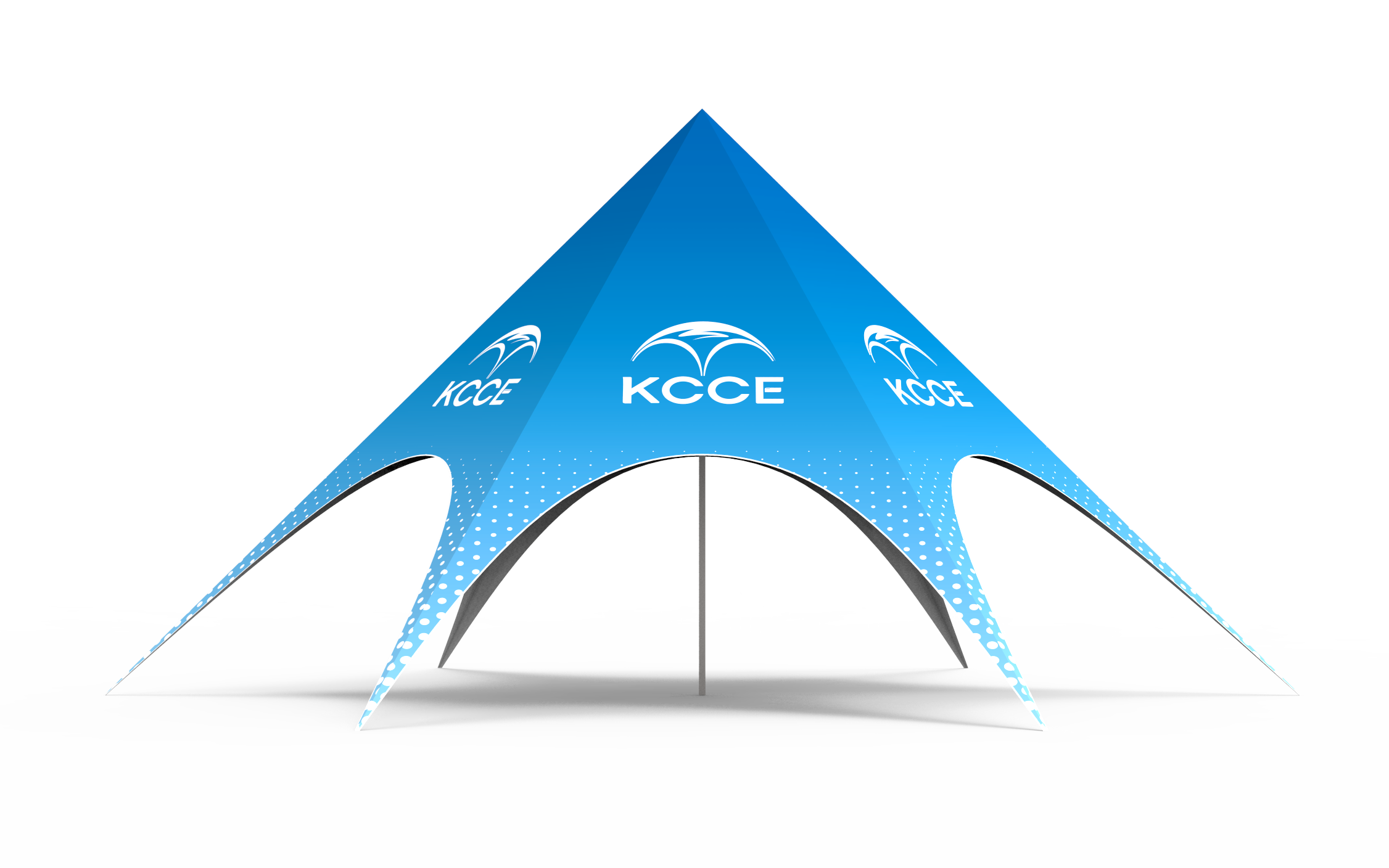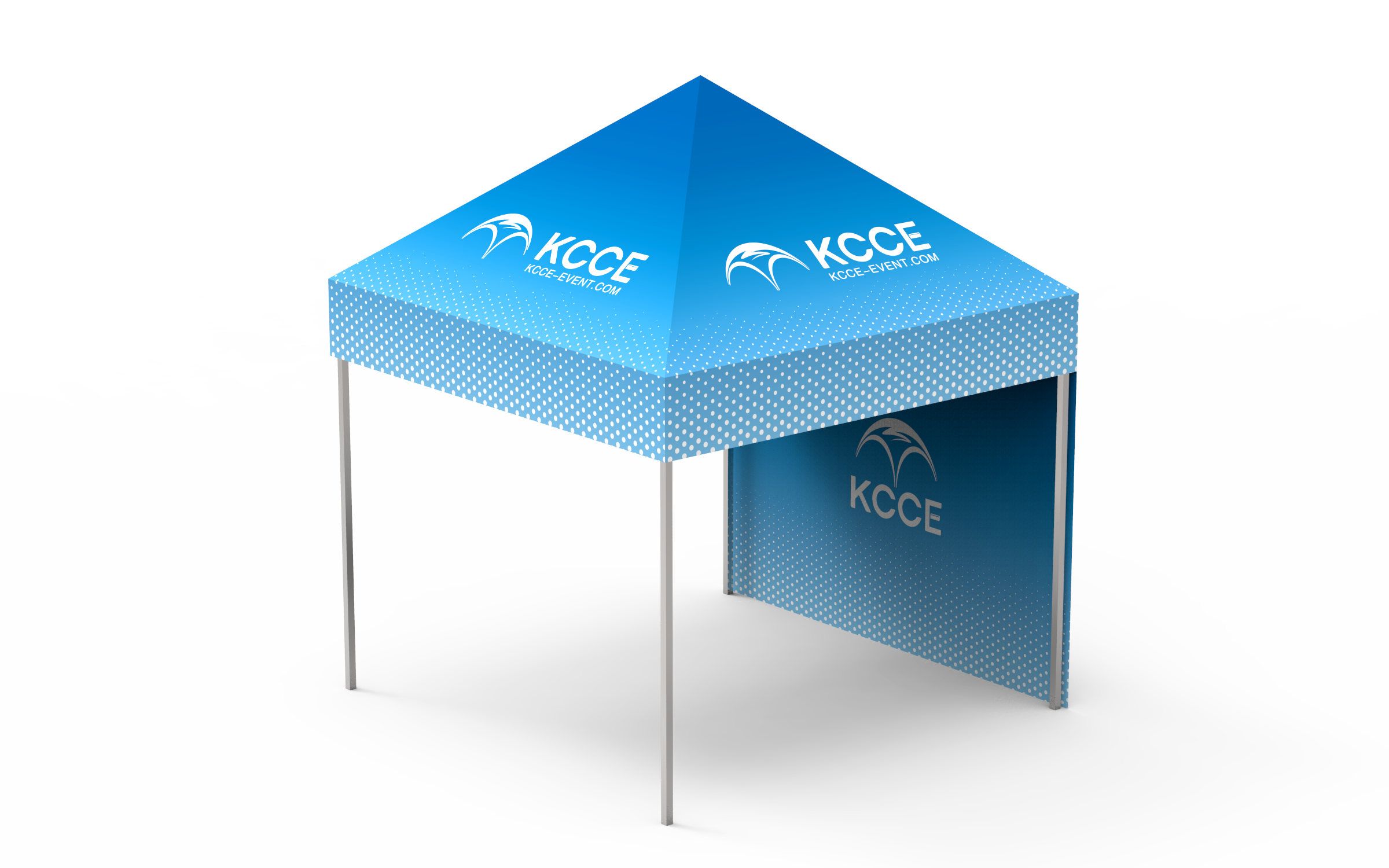
Your canopy picked the worst possible moment to collapse. Again. Maybe a gust hit your booth right in the middle of the afternoon rush at a trade show. Or the pop-up folded itself inside out the second the client walked up. Whatever the scene, you know the feeling. Watching your display turn into a pile of tangled aluminum and flapping fabric sinks your stomach every time.
That’s why you’re reading this. A 10×10 inflatable tent solves the exact problem traditional canopies have been creating for decades. But here’s the kicker—Prices can range from a few hundred dollars to several thousand.. That’s a massive gap that confuses even seasoned buyers. What makes one inflatable canopy tent worth $400 while another commands $3,500? Is it just brand markup, or is there real substance behind the price difference?
I’ve spent years in this industry, watching buyers make the same mistakes over and over. They buy the cheapest option, only to have it warp after two events. Or they splurge on a premium frame but cheap out on the print, ending up with a logo that fades after one sunny weekend. This guide cuts through the noise. I’m going to give you a side-by-side comparison of the top brands, break down the real price ranges, and explain exactly what “heavy duty” actually means when it comes to air beam technology.
Quick Answer
The best 10×10 inflatable tent for most event organizers is a mid-tier commercial model with double-layer PVC air beams, a 600D Oxford fabric canopy, and a wind rating of at least 30 mph when properly staked. Expect to pay $800–$1,500 for that sweet spot. Budget options under $500 are fine for backyard parties, but they’ll disappoint at a windy expo.
Why Go Inflatable? Understanding Air Beam Technology
Let’s start with the basics, because honestly, a lot of people still don’t fully understand what makes inflatable tents different from their pole-based cousins.
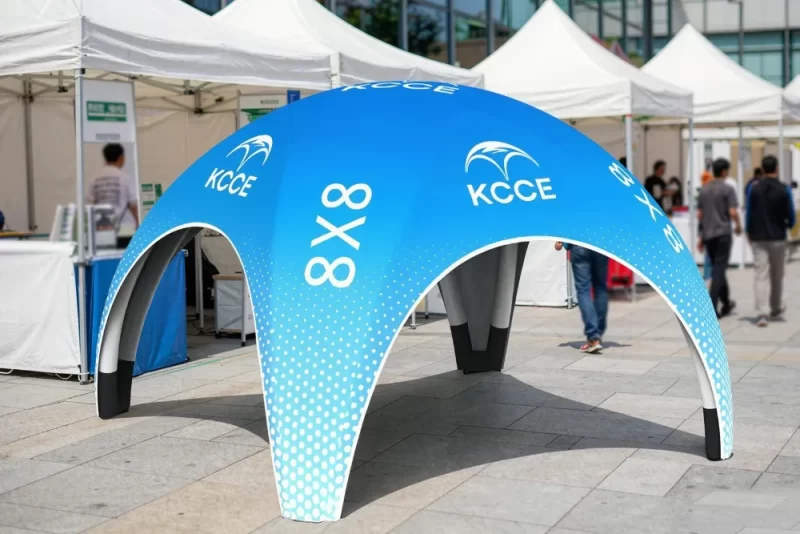
The core innovation is the air beam system. Instead of aluminum or fiberglass poles that need to be threaded through fabric sleeves, an inflatable tent uses sealed air chambers—essentially inflatable tubes made from PVC or TPU—that form the structural skeleton. You pump them up to a specific pressure, and the beams become rigid enough to hold the canopy taut. It’s the same principle behind inflatable bounce houses and those giant advertising arches you see at car dealerships, but refined for shelter applications.
The 10×10 inflatable tent format is particularly popular because it matches the standard 10×10 booth size that dominates trade shows, markets, and outdoor events across North America. When you search for a “10×10 inflatable canopy,” you’re looking at the industry standard footprint for vendor spaces.
Three Core Benefits
Geschwindigkeit. A properly designed inflatable canopy tent can go from its carrying bag to fully erected in under two minutes. No poles to align, no sleeves to thread, no clips to snap. You unroll it, attach the pump, and watch it rise. For event managers who set up and tear down multiple booths in a day, this is transformative.
Stability. This might sound counterintuitive—how can something filled with air be more stable than a rigid metal frame? But the physics actually work in favor of air beams. Because the beams are pressurized, they flex and absorb wind energy rather than resisting it rigidly. A metal pole that bends past its limit snaps. An air beam under pressure can deform slightly and then spring back. That’s why many commercial inflatable tents have higher effective wind ratings than comparable pop-up canopies.
Mobilität. Most 10×10 inflatable tents pack down into a single rolling bag that fits in the trunk of a sedan. The weight varies significantly by model—anywhere from 40 to 90 pounds—but the form factor is generally more manageable than a bulky metal frame that requires two people to carry.
The Trade-Off
Here’s the honest part: inflatable tents cost more upfront. A quality 10×10 inflatable tent will set you back at least $600, and that’s for a budget-friendly model. Compare that to a basic pop-up canopy at your local big-box store for $150, and the price difference stings.
But here’s what the $150 canopy doesn’t tell you: it’s not designed for repeated commercial use. The frame will bend, the fabric will tear, and you’ll be replacing it within a season. In my experience, a commercial-grade inflatable tent that costs $1,200 but lasts five years is actually cheaper per event than a $200 canopy that survives three outings.
Inflatable Tent vs Pop Up Canopy: The Real Comparison
This is the question I get more than any other: should I go inflatable or stick with a traditional pop-up? Let me break it down without the marketing fluff.
Aufbauzeit
The inflatable tent vs pop up canopy comparison starts here because it’s the most visible difference. A pop-up canopy takes 5–10 minutes with two people, assuming you’ve done it before and don’t have to fight a stubborn locking mechanism. An inflatable tent takes 90 seconds with one person. I’ve timed it. The pump does the heavy lifting, literally.
Gewicht
Pop-up canopies are lighter. A standard 10×10 aluminum frame canopy weighs around 35–45 pounds. Inflatable tents run heavier—typically 50–90 pounds depending on the fabric and beam construction. That extra weight comes from the air beams themselves, which need robust material to hold pressure.
Windwiderstand
Here’s where things get interesting. Properly staked, a good inflatable tent will often outperform a comparable pop-up in wind. The TentCraft MONARCH TENT, for example, is wind-rated at 35 mph when properly staked using the included staking kit, per their official engineering certification. That’s for a traditional pole tent, but it gives you a baseline for what “good” looks like.
From what I’ve seen, inflatable tents with double-layer beams and proper guying can handle similar or better conditions. The key phrase there is “properly staked”—no tent survives wind without good anchoring.
Preis
The gap is real. Budget pop-ups start around $150. Budget inflatables often start around a few hundred dollars.. Commercial-grade versions of both scale up from there, but inflatables consistently command a 2–3x premium at equivalent quality levels.
The Verdict
Daily use, frequent setup/teardown, or events where wind is a concern? Go inflatable. The time savings alone will pay for the price difference within a season.
Occasional backyard parties or one-off events where budget is the primary constraint? A pop-up canopy is fine. Just buy one with a decent frame and don’t expect it to last forever.
The Price Ladder: Why $300 vs. $3,000?
Let’s talk money, because the 14x price difference between the cheapest and most expensive 10×10 inflatable tents confuses everyone. I’ve seen buyers assume the expensive ones are just ripoffs with better marketing. That’s not the full story.
Tier 1: Budget ($300–$600)
These are recreational-grade inflatable tents. You’ll typically get single-layer air beams, a thinner Oxford fabric (around 300D), and basic accessories. They’re fine for camping trips, beach days, and backyard parties. The setup is still fast, and they’re genuinely fun to use.
But here’s the catch: the materials are thinner, the seams are less reinforced, and the beams are more susceptible to pressure loss. In my experience, budget inflatables have a lifespan of 1–2 years with regular use.
Tier 2: Mid-Range ($600–$1,500)
This is the sweet spot for most commercial users. You’re getting 600D Oxford fabric or commercial-grade PVC, double-layer air beams in the critical stress points, and better valves that hold pressure longer. These tents are designed for weekly use at markets, events, and expos.
The Soli Outdoors and Coody models are often placed in this range., and they’re the ones I recommend to most clients starting out. They offer a genuine upgrade over pop-up canopies without breaking the bank.
Tier 3: Premium ($1,500–$4,300)
At this level, you’re paying for commercial-grade durability, custom printing, and warranty support. Brands like Instent and Extreme Canopy are often mentioned in this context., and their products are built for daily rental use, long-term deployment, or high-stakes events where failure isn’t an option.
The fabric is typically heavy-duty PVC (often around 650g/sqm as per industry standards)., the beams are double or triple-layer, and the accessories are genuinely useful rather than afterthoughts. You’re also paying for the ability to custom-print your branding directly onto the canopy fabric, which matters for B2B buyers.
What Actually Explains the 14x Gap?
Three things: fabric quality, beam construction, and warranty support. A $300 tent uses fabric that will fade and weaken within a year. A $3,000 tent uses commercial-grade material rated for years of UV exposure. The beams follow the same logic—single-layer budget beams vs. multi-layer reinforced beams that maintain pressure over weeks of continuous deployment.
And warranty matters more than people think. A tent with a 3-year warranty might be priced higher. and responsive customer support is worth more than a $1,200 tent with no support when something goes wrong at 8 AM before a show.
Top 5 Best 10×10 Inflatable Tents Compared
Finding the best 10×10 inflatable tent requires looking beyond the marketing photos. I’ve compiled the models that actually show up in serious buyer conversations, with real specs pulled from manufacturer documentation.
Soli Outdoors
Soli Outdoors is marketed as a go-to for market vendors… uses 600D Oxford fabric (as per product listings) and features a quick-connect pump system… Setup time is claimed to be around 90 seconds.connect pump system that’s genuinely foolproof. Setup time is around 90 seconds, and the included accessories cover most needs.
Coody
Coody offers a solid mid-range option with a focus on portability. Their inflatable canopy is lighter than most competitors, making it a good choice for vendors who move between locations frequently. The trade-off is a slightly lower wind rating than heavier models.
Instent
Instent positions itself at the premium end, and their 10×10 printed inflatable air dome tent reflects that. The product page shows a dome shape with four open arches, available with custom printing—you can literally put “YOUR DESIGN HERE” and “YOUR LOGO HERE” on the fabric panels. It includes an electric pump with multiple nozzles, four stakes, and a gray carrying bag with green straps.
Extreme Canopy
Extreme Canopy focuses on commercial-grade durability… with reinforced seams and heavy-duty fabric.tal companies and high-frequency event use, with reinforced seams and heavy-duty fabric that withstands repeated setup and teardown cycles.
Branded Canopy
Branded Canopy specializes in custom-printed inflatable tents… offers a wide range of printing options.and visibility, they offer the most comprehensive printing options, though you’ll pay a premium for the customization.
Quick Spec Comparison
| Modell | Gewicht | Aufbauzeit | Operating PSI | Included Accessories |
|---|---|---|---|---|
| Soli Outdoors | ~55 lbs (per brand) | 90 sec (claimed) | 10–12 PSI (per brand) | Pump, stakes, guylines, bag |
| Coody | ~48 lbs (per brand) | 2 min (claimed) | 8–10 PSI (per brand) | Pump, stakes, bag |
| Instent | ~65 lbs (per brand) | 2 min (claimed) | 10–15 PSI (per brand) | Electric pump, 4 stakes, carrying bag |
| Extreme Canopy | ~75 lbs (per brand) | 90 sec (claimed) | 12–15 PSI (per brand) | Pump, stakes, guylines, repair kit, bag |
| Branded Canopy | ~70 lbs (per brand) | 2 min (claimed) | 10–15 PSI (per brand) | Pump, stakes, guylines, bag |
One thing I’ll flag: Coody may not include a repair kit in the box (as per product listings)., which is a minor omission but annoying if you get a puncture at an event. Extreme Canopy is said to include one., which tells you something about their target customer.
Wind & Weather: What’s Actually Safe?
Let’s address the elephant in the tent: how much wind can a 10×10 inflatable tent actually handle? Because every manufacturer says “wind-resistant,” which tells you nothing.
Tested Limits
The TentCraft MONARCH TENT is wind-rated by an actual engineering firm at 35 mph when properly staked to the ground using the included staking kit. That’s a traditional pole tent, but it’s a useful benchmark for what “good” looks like in the industry.
For inflatable tents, the picture is more varied. In my experience, A well-constructed inflatable canopy tent with double-layer beams is often rated to handle moderate wind conditions. when properly anchored. The inflatable tent wind rating depends heavily on three factors: beam pressure, anchoring, and whether you’re using sidewalls.
The Wall Factor
Here’s a critical detail from the TentCraft documentation: the wind rating is only applicable to a tent with no walls or peak flags. Adding walls reduces the wind rating because they catch more air and create additional drag. If you’re running a 10×10 inflatable tent with full walls at an outdoor expo, you need to be more conservative about wind conditions.
Common Failure Mode: Beam Pressure Loss
The most common inflatable tent failure isn’t the fabric tearing or the beams snapping—it’s pressure loss. Beams slowly leak air over time, and if you don’t top them up, the structure becomes floppy and catches more wind. This creates a feedback loop: lower pressure means less rigidity, which means more flex, which means more air escaping.
Anchoring Checklist
- 25 mph or less: Standard stakes and guylines are sufficient. Make sure all guylines are taut.
- 25–40 mph: Add weight bags to each corner (40–60 lbs per corner is common practice) and cross-guy the tent. Consider removing sidewalls if they’re installed.
- 40 mph+: Honestly, pack it up. No 10×10 tent is designed for sustained winds above 40 mph, regardless of what the marketing says.
You might be wondering how to anchor an inflatable canopy in wind effectively. The answer is redundancy: stakes plus weights plus guylines. Each element provides a layer of protection, and you want all three when conditions get serious.
What’s in the Box? The Accessories Checklist
One of the most confusing parts of buying a 10×10 inflatable canopy is figuring out what’s actually included. The spec sheets list “pump” and “stakes,” but the details matter.
The Standard Kit
Most manufacturers include the basics: an air pump (manual or electric), stakes, guylines, and a carrying bag. The Instent product page, for example, explicitly lists an electric pump with multiple nozzles, four stakes, and a gray carrying bag featuring green straps as included items.
The Variations
- Electric vs. manual pump: Budget models often include a foot pump or hand pump, which is fine for occasional use but exhausting for daily setup. Electric pumps are standard on mid-range and premium models.
- Guylines: Not always included. Some budget models expect you to buy your own, which is a hidden cost and a safety issue if you don’t realize it until you’re setting up in wind.
- Repair kit: The most commonly omitted accessory. Coody doesn’t include one, which is a real oversight for a tent that costs several hundred dollars. Extreme Canopy does, and it’s a small detail that signals their commercial focus.
- Stake quality: All stakes are not created equal. The thin metal stakes that come with budget tents bend easily in hard ground. Commercial-grade tents include thicker, angled stakes that actually hold.
Must-Buy Add-Ons
If you’re using a 10×10 inflatable tent for events, budget for these extras:
- Weight bags: 4 bags with 40 lbs each. Essential for outdoor events where wind is a possibility.
- Sidewalls: Most tents offer compatible walls, but they’re almost always sold separately. They’re worth it for trade shows and any event where you need to hide clutter or create privacy.
- Spare pump: If you’re running a rental business or using the tent daily, a backup pump is non-negotiable. Pumps fail, and a $50 spare is cheap insurance.
Setup in 90 Seconds: Step-by-Step
One of the biggest selling points of a commercial inflatable tent is the setup speed. Here’s the actual process, step by step, based on my experience setting up dozens of these things.
Step 1: Unroll and Position
Take the tent out of its bag and unroll it in the desired location. Make sure the footprint is clear of debris and reasonably level. This takes about 15 seconds.
Step 2: Connect the Pump
Attach the pump nozzle to the main inflation valve. Most modern tents use a quick-connect system that locks into place with a twist. The Instent electric pump, for example, comes with multiple nozzles to fit different valve types.
Step 3: Inflate the Beams
Turn on the pump and let it work. The beams will start to rise, and the tent will take shape. This is the satisfying part. Depending on the pump and the tent size, this takes 45–60 seconds.
Step 4: Stake It Down
Once the tent is fully inflated, immediately stake the corners. This is non-negotiable, even in calm weather. A gust can arrive at any moment, and an unstaked tent becomes a sail.
Step 5: Secure Guylines
Attach the guylines to the designated loops and stake them out at a 45-degree angle from the tent. Make sure they’re taut but not so tight that they deform the structure.
The Common Mistake: Over-Inflating
Here’s the thing people get wrong: they think more pressure equals more stability. It doesn’t. Every tent has an operating pressure range, usually printed near the valve or in the manual. For most 10×10 inflatable tents, operating pressure is often in the range of 8–15 PSI depending on the model.
Over-inflating stresses the seams and can cause blowouts at the valve. Under-inflating makes the tent floppy and vulnerable to wind damage. Check the PSI gauge if your pump has one, and if it doesn’t, learn what “firm but not hard” feels like.
The Inflatable Tent Setup Time Reality
Manufacturers love to claim “60-second setup,” and honestly, that’s achievable with practice. My first time took closer to 5 minutes because I was reading instructions and figuring out the valve system. By the third setup, I was under 2 minutes. The inflatable tent setup time advantage is real, but it’s not magic—it’s practice.
Real-World Performance: What Users Actually Report
Let’s talk about what happens after the honeymoon phase. Because the marketing materials show perfect setups on sunny days, but the real world involves rain, mud, wind, and the occasional drunk attendee bumping into your tent.
Longevity Questions
People on social media constantly ask how long does an inflatable tent last, and the honest answer is: it depends on how you treat it. In my experience, A commercial-grade inflatable tent used weekly for events is often expected to last several years with proper care, while budget models may last a shorter time.
The biggest factors are UV exposure and storage. Sunlight degrades fabric over time, especially the PVC coatings that keep beams airtight. And if you store a tent while it’s damp, you’re inviting mold that will eat through the fabric eventually.
The Weight Reality
Here’s a complaint I see constantly in user discussions: inflatable tents are heavy and bulky when packed. One user described the storage bag as “hockey bag size,” which is accurate. A 10×10 inflatable tent packed down is roughly the size of a large duffel bag and weighs 50–90 pounds.
Is this a dealbreaker? For camping enthusiasts who need to carry gear on their backs, yes. For event organizers who drive to venues, it’s a non-issue. Know your use case before you buy.
The Price Question
Are inflatable tents worth buying? For commercial users, the math is clear: the time saved on setup and teardown pays for the price difference within a season. For recreational users, it’s less clear-cut. If you’re setting up a canopy four times a year for backyard parties, the extra $300–$500 is hard to justify.
Custom Printing and B2B Considerations
For business buyers, the branding opportunity is often the deciding factor. A 10×10 inflatable tent with your logo printed on the canopy is a mobile billboard that sets up in minutes.
Printing Options
Most commercial manufacturers offer custom printing directly on the canopy fabric. The Instent product page, for example, shows “YOUR DESIGN HERE” and “YOUR LOGO HERE” placeholders on their 10×10 air dome tent, indicating that full customization is standard for their product line.
The Cost
Custom printing can add a significant amount to the base price., depending on the complexity of your design and the number of colors. Full-bleed, edge-to-edge printing costs more than simple logo placement. And if you want printing on the walls too, budget accordingly.
Lead Times
Here’s something that catches B2B buyers off guard: custom printing adds lead time. A stock tent ships in days, but A custom-printed tent typically takes a few weeks from order to delivery.. If you have an event coming up, plan ahead.
The KCCE Connection
If you’re exploring inflatable solutions for your business, it’s worth looking at what KCCE’s inflatable tents offer. They’ve been in the inflatable products space since 2008, and their experience shows in the details of their tent construction. The company also produces aufblasbaren Möbeln und aufblasbare Formen for event branding, which is handy if you’re building a cohesive branded experience beyond just the tent itself.
Making the Final Decision
So where does this leave you? You’ve got the full picture now—the technology, the price tiers, the wind ratings, the accessories that actually matter. The decision comes down to matching the tent to your specific use case.
Ask Yourself These Questions
How often will you use it? Once a month or less—a budget model might suffice. Weekly or more—invest in commercial grade.
What’s your typical wind exposure? If you’re setting up on open fields or near water, prioritize wind resistance and buy quality stakes and weights.
Do you need branding? If yes, factor in custom printing costs and lead times from the start.
Who’s setting it up? If it’s just you, weight matters. A 90-pound tent is manageable but not fun to haul alone.
The Final Verdict
Will a $300 tent survive your next windy expo? Honestly, probably not. But that doesn’t mean you need to spend $4,300 either. The sweet spot for most commercial users is the $800–$1,500 range, where you get double-layer beams, decent fabric, and accessories that don’t feel like afterthoughts.
Match the tent to your use case, not just the price tag. Buy once, buy right, and the inflatable tent will pay for itself in saved time and avoided disasters.
Häufig gestellte Fragen
F: Sind aufblasbare Zelte den Kauf wert?
A: For commercial users who set up and tear down regularly, yes—the time savings and wind resistance justify the higher price. For occasional backyard use, a traditional pop-up canopy is more cost-effective. The 10×10 inflatable tent shines when you’re using it at least monthly for events, markets, or trade shows where setup speed matters.
Q: How much does a 10×10 pop up tent cost?
A: Traditional pop-up canopies range from $150 for basic recreational models to $1,500+ for commercial-grade frames. A 10×10 inflatable canopy tent starts around $300 for budget models and goes up to $4,300 for premium commercial units with custom printing. The inflatable premium typically runs 2–3x the cost of an equivalent-quality pop-up.
Q: What are the disadvantages of inflatable tents?
A: The main drawbacks are weight, packed size, and upfront cost. A 10×10 inflatable tent typically weighs between 50 and 90 pounds and packs down to roughly hockey-bag size., which is impractical for backpacking. They’re also more expensive than pole tents, and a beam puncture requires a repair kit rather than a simple pole replacement.
Q: Is there a branded tent that is 10×10?
A: Yes, several manufacturers offer custom-printed 10×10 inflatable tents. Instent, Extreme Canopy, and Branded Canopy all provide custom printing directly on the canopy fabric, allowing you to add logos and designs. Custom printing typically adds $200–$800 to the base price and extends lead times by 2–4 weeks.
Q: How much weight is needed to hold down a 10×10 inflatable tent?
A: For wind conditions up to 25 mph, standard stakes and guylines are sufficient. For windy conditions, it’s often recommended to add ballast per corner and use cross-guying. Remember that adding sidewalls reduces wind resistance, so increase ballast accordingly if you’re using full walls.
Q: What PSI should I run in my inflatable tent beams?
A: Operating pressure varies by manufacturer, typically ranging from 8–15 PSI (as per common product specs). Check the label near the inflation valve or the product manual for the specific rating. Over-inflating risks seam failure, while under-inflating makes the tent unstable in wind. Use a pump with a pressure gauge for consistent results.
How long does it take to inflate a 10×10 air dome tent?
With a standard electric air pump, most 10×10 air dome tents reach full pressure in 2 to 4 minutes. Hand pumps or foot pumps take considerably longer—typically 10 to 15 minutes—so an electric pump is strongly recommended for event setups.
Can I leave the air dome tent inflated overnight?
Yes, most models are designed for continuous inflation. However, check the manufacturer’s recommended pressure range and ensure the fabric is rated for prolonged UV exposure. For multi-day events, consider using a canopy with UV-resistant PVC or polyester and re-check pressure each morning, as temperature drops can reduce internal air pressure.
What happens if the tent springs a leak during an event?
Most air dome tents come with a repair kit that includes adhesive patches and sometimes spare air beams. For minor punctures, deflate the affected beam, clean and dry the area, apply the patch, and reinflate. For larger tears, a temporary fix with duct tape can hold for several hours, but the tent should be serviced before the next use.
Are air dome tents wind-resistant?
A properly anchored and fully inflated 10×10 air dome tent can typically withstand winds up to 25–30 mph (40–48 km/h). Beyond that, the structure may become unstable. Always use the included stakes and guylines, and add extra weights (20–40 lbs per leg) for gusty conditions. Never leave the tent unattended in high winds.
How do I clean and store my air dome tent?
Wipe down the fabric with a mild soap solution and a soft cloth, avoiding abrasive cleaners. Allow it to dry completely before deflating to prevent mold and mildew. Fold the tent loosely, avoiding sharp creases in the air beams, and store it in the provided carry bag in a cool, dry place away from direct sunlight.
Can I use the air dome tent in winter or snow?
While the tent is not designed for heavy snow loads, light snow can be tolerated if the tent is fully inflated and properly anchored. Remove accumulated snow promptly to prevent overloading the frame. Cold temperatures will reduce internal air pressure, so check and top up the air as needed.
With proper care, your 10×10 inflatable air dome tent will serve reliably for years of events, trade shows, and outdoor gatherings.
Quellen
1. 10’x10′ Printed Inflatable Air Dome Tent – instent.com
2. How Much Weight Is Needed to Hold Down a 10×10 … – tentcraft.com
3. Custom 10×10 Canopy Tents: Ultimate Buying Guide (2025 – kcce-event.com