Anyone who’s ever managed events, marketing budgets, or a company booth knows the drill. You type “custom 10×10 canopy tent” into a search bar, and suddenly you’re drowning in a sea of tabs, conflicting specs, and prices that seem to have been pulled out of a hat. It looks simple enough—a tent, some fabric, your logo—but the reality is that the industry is full of hidden costs, confusing jargon, and quality differences you can’t see until the thing collapses in a light breeze.
I’ve spent years in this industry, and I’ve seen buyers make the same mistakes over and over. They buy the cheapest option, only to have it warp after two events. Or they splurge on a premium frame but cheap out on the print, resulting in a logo that fades after a single sunny weekend. This guide is designed to cut through the noise. I’m going to give you a side-by-side comparison of the top brands, break down the real price ranges, and explain exactly what “heavy duty” actually means on a spec sheet. No fluff, just the details you need to make a smart purchase.
Quick Answer
A custom 10×10 canopy tent typically costs between $200 and $1,500 depending on frame material, fabric quality, and printing method. For most businesses, a mid-range aluminum frame with 600D polyester and dye-sublimation printing offers the best balance of durability and visual impact. Always verify wind ratings and warranty terms before purchasing.
What Is a Custom 10×10 Canopy Tent?
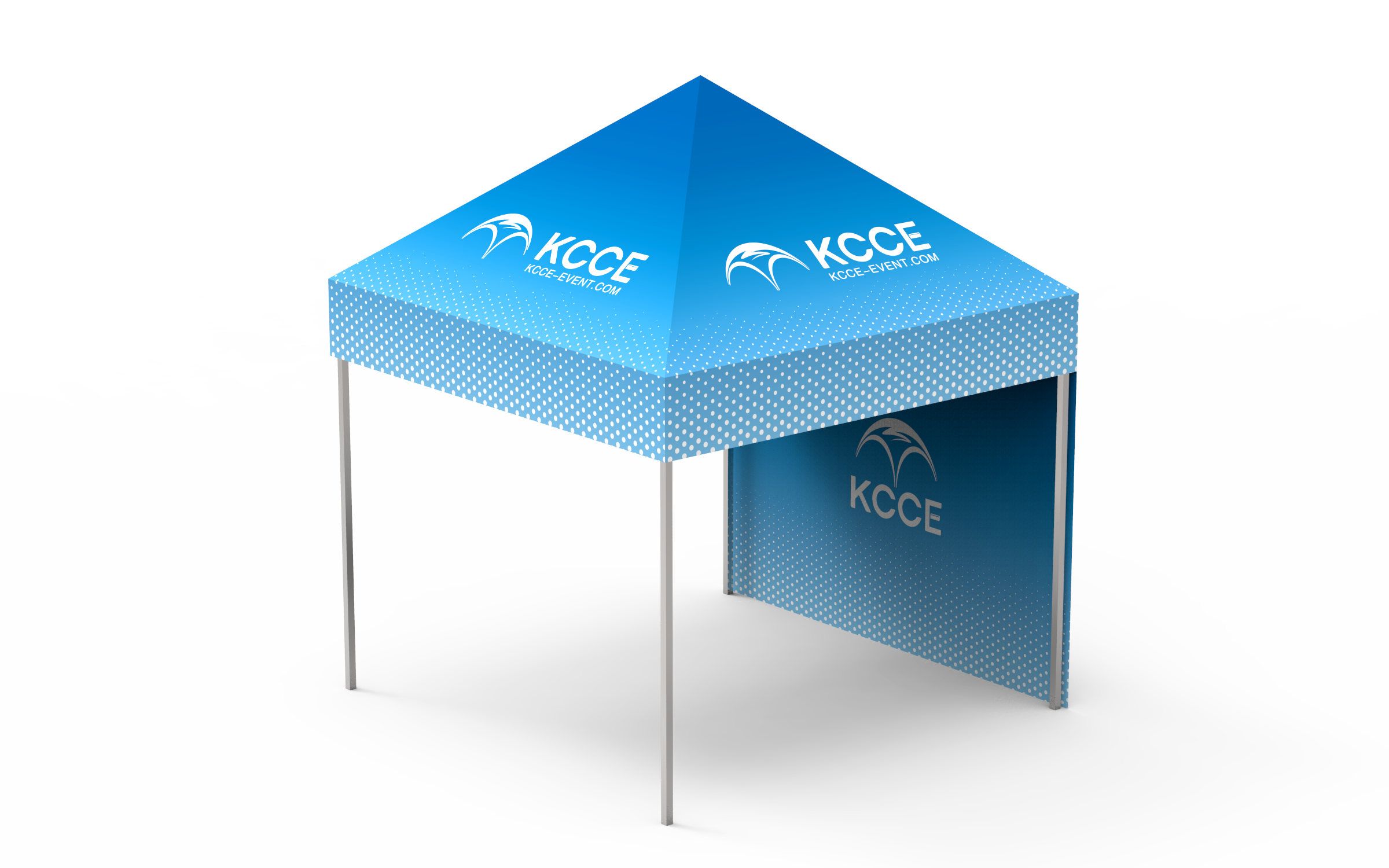
Let’s start with the basics, because surprisingly, a lot of people don’t fully understand what they’re buying. A 10×10 canopy tent is a portable, freestanding shelter that covers a 100-square-foot area. It’s the standard footprint for trade shows, craft fairs, farmers’ markets, and corporate events. The “custom” part means you’re not buying the generic, unbranded pop-up from a big-box store; you’re getting a tent with your company logo, colors, and messaging printed directly onto the fabric.
The dominance of the 10×10 canopy tent size isn’t an accident. It’s the universal standard for booth spaces in the trade show industry. Most convention centers and exhibition halls layout their floors in 10×10 grids, making it the default rental size. If you’ve ever walked through a trade show floor, you’ve seen hundreds of these units—some looking sharp and professional, others looking like they were thrown together with duct tape and hope. The difference usually comes down to the quality of the custom printing and the robustness of the frame.
When we talk about the 10×10 canopy tent, we’re usually talking about one of three frame types:
- Pop-Up Canopies: The most common type. These use a scissor-style folding frame that expands into place. You can set them up in about five minutes with two people. They’re portable and relatively lightweight, but they can be less stable in windy conditions compared to other options.
- Instant Canopies: A slight variation on the pop-up, often featuring a one-piece frame that locks into place quickly. They’re popular for events where speed is critical.
- Traditional Frame Tents: These use a modular frame of straight poles and connectors. They’re more labor-intensive to set up but offer superior stability and a more “permanent” look. They’re often used for longer-term events or when you need a more polished appearance.
The choice of frame impacts everything from portability to wind resistance. But honestly, for most businesses, the pop-up style is the go-to because of the balance between setup speed and cost. The key is to find a heavy duty 10×10 canopy that doesn’t skimp on the frame gauge or the fabric quality.
Customization Options: Prints, Fabrics, and Frames
This is where the “custom” in custom 10×10 canopy tent really comes to life. You have three main areas to customize, and each one has a significant impact on the final look, durability, and price.
Printing Methods: Getting Your Logo Right
The way your logo gets onto the fabric is arguably the most important decision you’ll make. It affects the vibrancy, the durability, and the cost. There are three main methods used in the industry:
- Dye-Sublimation Printing: This is the gold standard for custom canopy tent printing. The design is printed onto a transfer paper and then heat-pressed onto the fabric. The dye becomes part of the fabric itself, rather than sitting on top of it. This means the colors are incredibly vibrant, they don’t crack or peel, and they’re highly resistant to fading. The downside? It’s more expensive than other methods, and it works best on polyester fabrics. For a custom canopy tent 10×10 with a complex, multi-color logo, this is the way to go.
- Siebdruck: This is a traditional method where ink is pushed through a mesh stencil onto the fabric. It’s great for simple, one or two-color logos and is often more cost-effective for large runs. However, it’s not great for photographic images or gradients. The ink sits on the surface, so it can crack over time, especially with frequent folding and unfolding.
- Vinyl Application: This involves cutting your logo out of adhesive vinyl and heat-pressing it onto the canopy. It’s a budget-friendly option that’s good for simple text and shapes. However, vinyl edges can peel over time, especially in cold weather, and it doesn’t look as premium as dye-sublimation. It’s a decent option if you’re on a tight budget and need a custom 10×10 canopy tent with company logo, but I’d recommend saving up for sublimation if you plan to use the tent more than a few times.
Fabric Choices: More Than Just Color
The fabric is the skin of your tent. It takes the brunt of the sun, wind, and rain. The two main types you’ll encounter are polyester and vinyl, with canvas being a niche option for specific uses.
- Polyester: This is the most common material for event canopies. It’s lightweight, resistant to mildew, and takes dye-sublimation printing beautifully. The quality is often measured in “denier”—a unit of fiber thickness. A standard canopy might use 300D polyester, while a heavy duty 10×10 canopy with sides might use 600D. The higher the denier, the thicker and more tear-resistant the fabric.
- Vinyl: This is a heavier, more waterproof material. It’s often used for sidewalls or for canopies that need to withstand harsh weather. Vinyl is excellent for blocking wind and water, but it’s also heavier and harder to print on with the vibrant dye-sublimation method. It’s a practical choice for a commercial 10×10 canopy tent that will be used in variable weather conditions.
- Canvas: This is a heavyweight cotton or cotton-blend fabric. It has a classic, premium look and is extremely durable. However, it’s very heavy, prone to mildew if not dried properly, and expensive. It’s rarely used for portable pop-up canopies, more for permanent or semi-permanent structures.
Frame Materials: The Backbone
You can have the best print in the world, but if the frame buckles, you’re done. The frame is what makes a 10×10 canopy tent heavy duty or just a flimsy shelter.
- Steel: This is the budget option. Steel frames are heavy, which makes them stable, but they can rust if the coating is scratched. They’re also harder to transport. You’ll find steel frames on cheaper canopies, and they’re fine for occasional, indoor use. But for outdoor events, I’d steer you away from them.
- Aluminum: This is the industry standard for commercial use. Aluminum frames are lightweight, resistant to rust, and strong. The quality of the aluminum frame is determined by the alloy and the gauge (thickness) of the tubing. A thicker gauge (e.g., 0.045″ vs. 0.025″) will be much more robust. This is where you want to spend your money.
- Fiberglass: You see this on cheap, consumer-grade canopies. Fiberglass is lightweight and flexible, but it can splinter and break under stress. It’s not suitable for a heavy duty 10×10 canopy that needs to survive multiple events.
Custom 10×10 Canopy Tent Price Breakdown
Let’s talk money, because this is where most of the confusion lies. The price of a custom 10×10 canopy tent can range from around $200 to well over $1,500. That’s a huge spread, and understanding what drives the cost is key to getting a fair deal.
The custom canopy tent 10×10 price is determined by a combination of factors:
- Frame Quality: This is the biggest single driver. A cheap steel frame might cost the manufacturer $40. A premium aluminum frame might cost $150. That difference is passed on to you. You’re paying for durability and weight savings.
- Fabric Quality: The difference between 300D and 600D polyester is significant. The higher denier fabric costs more, but it’s also more tear-resistant and blocks more sunlight. The type of fabric (polyester vs. vinyl) also impacts the cost.
- Print Complexity: A simple one-color logo screen-printed on a canopy is cheap. A full-color, edge-to-edge dye-sublimation print with gradients and photographic elements is expensive. The more ink and the more complex the setup, the higher the price.
- Zubehör: Are you getting a custom 10×10 canopy tent with sides? Sidewalls add cost. What about a carrying bag, stakes, and weights? These are often sold separately or as part of a “package” that can inflate the price.
To give you a rough idea of the landscape:
- Budget Range ($200–$400): You’re looking at a steel or light-gauge aluminum frame, 300D polyester, and screen-printed or vinyl lettering. This is fine for a single indoor event or a backyard party. It’s not built to survive a season of weekend markets.
- Mid-Range ($400–$800): This is the sweet spot for most businesses. You’re getting a better aluminum frame, 600D polyester, and a good quality dye-sublimation print. This is a solid heavy duty commercial 10×10 canopy that will last for years if you take care of it.
- Premium ($800–$1,500+): This is for the professional who needs the best. You’re getting a top-of-the-line aluminum frame with a thicker gauge, commercial-grade fabric, a high-resolution dye-sublimation print, and a full set of accessories like sidewalls and a premium carrying bag. This is an investment, but it’s one that will pay for itself in the long run.
The Hidden Costs Nobody Tells You About
When you’re budgeting for a custom 10×10 canopy tent, don’t just look at the sticker price. There are hidden costs that can catch you off guard:
- Versand: These tents are bulky and heavy. Shipping can cost anywhere from $30 to $100+, depending on the carrier and your location. Some companies offer free shipping, but they usually build it into the product price. Always check the total delivered cost.
- Setup and Teardown: You might need to pay staff to set up and take down the tent at each event. If you’re at a trade show, you might also have to pay union labor fees (drayage) if you don’t set it up yourself.
- Zubehör: A tent is rarely just a tent. You’ll likely need weights to secure it, a carpet for the floor, a table, and chairs. These add up quickly.
- Maintenance and Repairs: Even the best 10×10 canopy tent will need maintenance. You might need to replace a worn-out top, fix a bent frame pole, or re-waterproof the fabric. Budget for these costs.
Top Brands Compared: E-Z UP vs. KD Kanopy vs. TentCraft
Now, let’s get into the nitty-gritty of brand comparison. The market is crowded, but a few names consistently come up when you search for the best custom 10×10 canopy tent. I’m going to share my perspective on the major players, based on years of seeing these products in the field.
E-Z UP
E-Z UP is the 800-pound gorilla in the industry. They’re the brand that most people think of when they think “pop-up canopy.” Their dominance is well-earned; they have a massive dealer network, and their products are widely available.
- Langlebigkeit: E-Z UP offers a range of models, from consumer-grade to commercial-grade. Their commercial line is solid, but it’s not the absolute top-tier in terms of frame strength. The key is to look for their “Commercial” or “Pro” series, not their “Eclipse” or “Express” consumer models.
- Print Quality: They offer custom printing through their network, but it’s not their core focus. The quality is good, but you might not get the same level of design support or print precision as you would from a company that specializes in custom printing.
- Garantie: They have a standard warranty, but it’s not the best in the business. It covers manufacturing defects but might not cover wear-and-tear from regular use.
- Preis: E-Z UP is generally mid-to-high range. You’re paying a premium for the brand name and the widespread availability.
My Take: E-Z UP is a safe bet. If you need a tent quickly and you want a brand with a solid reputation, they’re a good choice. But if you’re looking for the absolute best custom 10×10 canopy tent with sides, you might be able to get more value elsewhere.
KD Kanopy
KD Kanopy is another major player, known for their heavy-duty frame systems. They’ve been around for decades and have a strong following among event professionals.
- Langlebigkeit: This is where KD Kanopy shines. Their frames are famously robust, and their “Maxi” and “Summit” lines are built like tanks. If you need a heavy duty 10×10 canopy that can withstand wind and rough handling, KD Kanopy is a top contender.
- Print Quality: They offer custom printing, but again, it’s not their primary focus. They’re known for their hardware, not their graphics. The print quality is good, but the design process might be less collaborative than with a print specialist.
- Garantie: They offer a solid warranty on their frames, which gives you peace of mind.
- Preis: KD Kanopy is in the premium price range. You’re paying for the exceptional frame quality.
My Take: If your priority is frame strength and longevity, KD Kanopy is hard to beat. They’re a favorite among rental companies and event organizers who put their equipment through hell. However, if you need a stunning, high-resolution print that turns heads, you might want to look at a company that specializes in graphics.
TentCraft
TentCraft is a different kind of company. They’re not just a tent manufacturer; they’re a custom graphics company that happens to make tents. This is a crucial distinction.
- Langlebigkeit: Their tents are good, but they’re not the absolute best in the industry. They use a solid aluminum frame and commercial-grade fabric, but they’re not in the same league as KD Kanopy for raw frame strength. They’re built for the marketing and events world, not necessarily for heavy industrial use.
- Print Quality: This is their superpower. TentCraft is known for their vibrant, full-color dye-sublimation printing. They have a strong in-house design team, and their print quality is exceptional. If you want a custom 10×10 canopy tent with company logo that looks like a billboard, TentCraft is a top choice.
- Garantie: They offer a lifetime warranty on their frames and a solid warranty on their fabric. This is a big plus.
- Preis: They’re in the premium range, but given the print quality and warranty, it’s often worth the investment.
My Take: TentCraft is my recommendation if you’re looking for a custom canopy tent 10×10 that doubles as a marketing tool. Their print quality is outstanding, and their warranty is one of the best in the business. They’re not the cheapest, but you get what you pay for.
Extreme Canopy
Extreme Canopy is a brand that has gained a lot of traction in recent years, particularly among value-conscious buyers who don’t want to sacrifice quality.
- Langlebigkeit: They offer a range of models, and their commercial-grade options are quite good. They use a thick-gauge aluminum frame that’s comparable to E-Z UP’s commercial line. They’re not as heavy-duty as KD Kanopy, but they’re more than adequate for most business uses.
- Print Quality: They offer dye-sublimation printing, and the quality is good. They’ve invested in their printing capabilities, and it shows. Their graphics are vibrant and durable.
- Garantie: They offer a decent warranty, typically covering the frame for a longer period than the fabric.
- Preis: This is where they shine. Extreme Canopy often comes in at a lower price point than E-Z UP or TentCraft for comparable specs.
My Take: Extreme Canopy is a great “best value” pick. They offer a good balance of quality and price. If you’re on a budget but you need a reliable tent with a quality print, they’re definitely worth considering.
Master Canopy
Master Canopy is another brand that’s popular for its balance of price and features. They have a wide range of products, from cheap consumer units to more robust commercial options.
- Langlebigkeit: Their commercial line is decent, but you have to be careful to choose the right model. Their lower-end tents are not built for regular use. Look for their “Commercial” or “Heavy Duty” series.
- Print Quality: They offer custom printing, but the quality can be inconsistent. It’s not their core competency, so you might get better results from a print specialist.
- Garantie: They offer a standard warranty, but it’s not exceptional.
- Preis: They’re generally in the budget-to-mid range, making them accessible to small businesses.
My Take: Master Canopy is a budget-friendly option. They’re fine for occasional use, but I’d be cautious about relying on them for a demanding event schedule. If you’re looking for a cheap 10×10 canopy tent with sidewalls wholesale, they might be worth a look, but check the specs carefully.
Brand Comparison Table
| Marke | Haltbarkeit | Druckqualität | Garantie | Preisspanne |
|---|---|---|---|---|
| E-Z UP | Good (Commercial series) | Good | Standard | $$ – $$$ |
| KD Kanopy | Excellent | Good | Solid | $$$ – $$$$ |
| TentCraft | Good | Excellent | Excellent (Lifetime Frame) | $$$ – $$$$ |
| Extreme Canopy | Very Good | Very Good | Good | $$ – $$$ |
| Master Canopy | Fair (Commercial series) | Fair | Standard | $ – $$ |
Durability Specs: What “Heavy Duty” Really Means
” Heavy duty” is thrown around so loosely in this industry that it’s almost meaningless. A $150 tent on Amazon claims to be “heavy duty.” A $1,500 TentCraft also claims to be “heavy duty.” They are not the same. To make an informed decision, you need to look at the actual specifications. Here’s what to look for:
Denier Weight (Fabric Thickness)
As I mentioned earlier, denier (D) is a unit of measurement for the linear mass density of fibers. In practical terms, the higher the denier, the thicker and heavier the fabric thread. For a 10×10 canopy tent, you’ll typically see:
- 300D Polyester: This is the standard for consumer-grade canopies. It’s lightweight and affordable, but it’s more prone to tearing and UV degradation over time.
- 450D Polyester: A step up, offering better tear resistance and durability.
- 600D Polyester: This is what you want for a heavy duty 10×10 canopy. It’s thick, robust, and can withstand regular use and harsher weather conditions. It also blocks more sunlight, keeping the area underneath cooler.
Frame Tube Gauge & Wind Rating
The frame’s strength is determined by the thickness (gauge) of the aluminum or steel tubing. A thicker tube is stronger and more resistant to bending.
- Gauge: You’ll sometimes see this listed as a decimal (e.g., 0.045-inch wall thickness) or a gauge number (e.g., 18-gauge). A lower gauge number or a higher decimal means thicker metal. For a commercial-grade tent, you want a wall thickness of at least 0.04 inches.
- Windbeständigkeit: This is a critical spec, but it’s also the most often exaggerated. A canopy’s wind rating is usually expressed in miles per hour (mph) or a Beaufort scale number. A standard pop-up might be rated for 15-20 mph winds. A heavy duty commercial 10×10 canopy might be rated for 25-30 mph, according to some manufacturers. However, these ratings usually assume the tent is properly staked and weighted down. In reality, most canopies will take flight in a sudden gust if they’re not secured. I always recommend erring on the side of caution and taking the tent down if winds exceed 20 mph, regardless of the rating.
Waterproof Rating (Hydrostatic Head)
This spec is measured in millimeters (mm) and indicates the water pressure the fabric can withstand before leaking. A higher number means better waterproofing.
- 1,000 mm: This is the minimum for a “waterproof” tent. It’ll handle a light drizzle but might leak in a heavy downpour.
- 2,000 mm: A good rating for a canopy that will see regular outdoor use.
- 3,000 mm+: This is a genuinely heavy-duty waterproof rating. You’ll find this on premium canopies and sidewalls.
Fire Retardant Certifications
This is a non-negotiable for trade shows and many public events. You need a canopy that meets fire safety standards. In the US, the standard is often CPAI-84, while in Europe it’s often DIN 4102 B1 or M2. These certifications mean the fabric has been treated to resist combustion. Always verify that your custom 10×10 canopy tent meets the specific requirements for the venues where you’ll be exhibiting.
Sizing Guide: Is 10×10 Right for You?
The 10×10 canopy tent size is the standard for a reason, but it’s not always the right choice. Let’s look at how it compares to other popular sizes and when you might want to size up or down.
10×10 vs. 10×15 vs. 10×20
- 10×10 (100 sq ft): This is the bread and butter. It fits a standard trade show booth, a small market stall, or a single check-in station. It’s portable and easy to manage. Most cars can transport a folded 10×10 in the trunk.
- 10×15 (150 sq ft): This gives you 50% more space. It’s great for a product demonstration area, a small lounge, or a market stall where you need room for a table and a display rack. It’s still manageable with two people, but it’s a bit heavier and more cumbersome.
- 10×20 (200 sq ft): This is a significant investment in both money and logistics. It’s used for larger booths, multi-table displays, or for creating a defined “compound” at an outdoor event. Setting up a 10×20 usually requires at least three or four people, and it needs a larger vehicle for transport.
Table and Booth Fit
Think about what you’re putting inside the tent. A standard 6-foot banquet table will fit nicely inside a 10×10. You can fit one table against the back wall, or two tables in an “L” or “U” shape, leaving room for people to walk around. If you need more than two tables, you’ll probably want to size up.
Weight Limits and Portability
A 10×10 canopy tent is the largest size that a single person can realistically handle, although it’s much easier with two. The weight ranges from about 40 lbs for a light aluminum model to over 80 lbs for a heavy-duty steel or high-end aluminum model. Consider how you’ll be transporting it. Will it fit in your car? Do you have a cart or dolly for getting it from the parking lot to the event site?
When to Size Up or Down
- Size Down: If you’re just setting up a single small table at a sidewalk sale, a 10×10 might be overkill. A 6×6 or 8×8 might be more appropriate and easier to manage. Also, some venues have strict size limits for outdoor spaces, so check your permit.
- Size Up: If you’re doing demos, have a lot of inventory, or want to create a “destination” feel at a festival, consider a 10×15 or 10×20. The extra space can be a game-changer for customer engagement.
Ordering Process: Turnaround, Proofs, and MOQs
Once you’ve decided on the tent and the customization, you need to understand the ordering process. This is where a lot of projects get delayed or go over budget.
Minimum Order Quantities (MOQs)
One of the most common questions I get is about MOQs. For a custom 10×10 canopy tent with company logo, the MOQ is often just one unit! Many manufacturers are set up to do single-unit production runs. However, if you’re looking for a 10×10 canopy tent with sidewalls wholesale, the MOQ might be higher, like 10 or 20 units, to get a better price break.
Proofing Steps and Artwork Requirements
The proofing process is crucial. After you place your order, the manufacturer will send you a digital mockup of your tent, called a proof. This is your chance to catch any errors in spelling, logo placement, or color.
- File Formats: Most companies accept vector files (AI, EPS, PDF) or high-resolution raster files (PSD, TIFF, PNG). A vector file is ideal because it can be scaled infinitely without losing quality. If you only have a low-resolution JPEG of your logo, the print might come out blurry. Be prepared to provide a high-quality file.
- Color Matching: What you see on your screen isn’t always what gets printed. Dye-sublimation printing uses a CMYK color process. If you have a specific brand color, you might need to provide a Pantone (PMS) code to ensure an accurate match. The manufacturer will often do a “strike-off” or a small sample print to verify the colors before the full run.
Typical Turnaround Times
This is the part that stresses everyone out. A standard turnaround time for a custom 10×10 canopy tent is often quoted as 2 to 6 weeks from the date of proof approval.val. This includes the manufacturing time and shipping. If you’re in a rush, some companies offer expedited production for an extra fee, but you should never rely on this. Plan ahead.
How to Choose: Quick Decision Matrix
So, you’ve made it this far. You know the specs, the brands, and the costs. Now, how do you actually decide? It comes down to matching the tent to your specific use case. Here’s a quick matrix to help you narrow it down.
- For the Budget-Conscious Startup: If you need a custom 10×10 canopy tent for a few events a year and you’re watching every penny, look at Master Canopy or the budget lines from E-Z UP. Choose a screen-printed or vinyl logo to save money. You might not get 5 years out of it, but it’ll get you started.
- For the Regular Event Marketer: If you’re doing a trade show or market every month, you need a reliable workhorse. I’d recommend Extreme Canopy or a commercial-grade E-Z UP. Invest in a 600D polyester top with dye-sublimation printing. This is the best value for your money.
- For the Brand-Conscious Professional: If your tent is a key part of your brand image and you want it to look stunning, go with TentCraft. Their print quality is unmatched, and their warranty is excellent. You’ll pay a premium, but your tent will be a showpiece.
- For the Heavy-Duty User: If you’re a rental company, a construction company, or you’re setting up in harsh conditions, KD Kanopy is your best bet. Their frames are built to last, and they can take a beating. Prioritize frame strength over print quality.
Final Recommendations
Let’s be real: there’s no single “best custom 10×10 canopy tent” for everyone. It’s about finding the right balance of durability, print quality, and price for your specific needs.
My personal advice? Don’t just look at the price tag. Think about the total cost of ownership. A $300 tent that lasts for one season is a worse deal than an $800 tent that lasts for five years. And don’t underestimate the power of a great print. Your canopy is a billboard for your brand. A high-quality, vibrant print can draw people to your booth, while a faded, peeling logo can drive them away.
Will your tent survive 20 events or just one? That’s the question you need to answer. If you’re an occasional user, a budget tent might be fine. But if you’re serious about your brand and your events, invest in a heavy duty commercial 10×10 canopy that will represent you well for years to come.
My final piece of advice: request samples. Before you commit to a large order, ask for a sample of the fabric and a sample of the print. See it in person, feel the weight, and check the color accuracy. It’s a small investment of time that can save you from a costly mistake.
Häufig gestellte Fragen
Q: How much does it cost to make a custom 10×10 tent?
A: The custom canopy tent 10×10 price typically ranges from $200 for a basic model with a simple screen print to over $1,500 for a premium tent with full-color dye-sublimation printing, sidewalls, and a heavy-duty frame. The cost is driven by frame material, fabric denier, and print complexity.
Q: Can I get a custom canopy top for a 10×10 tent?
A: Yes, you can. Many manufacturers sell replacement tops that fit standard 10×10 frames. You can order a replacement top with your custom canopy tent printing, allowing you to refresh your branding or change your design without buying a whole new frame.
Q: How many people fit in a 10×10 canopy tent?
A: A 10×10 canopy tent covers 100 square feet. For a standing reception, it is commonly said to hold 8-10 people. If you’re using it for a trade show booth with a table and chairs, it’s more suitable for 2-4 staff members to work comfortably.
Q: How much do custom canopy tents cost?
A: The cost of a custom canopy tent varies widely based on size and features. A standard custom 10×10 canopy tent will generally cost between $300 and $1,000. Larger sizes like 10×15 or 10×20 will cost more, as will adding features like sidewalls, custom weights, and premium carrying bags.
Q: Are 10×10 canopy tents waterproof?
A: Most commercial-grade 10×10 canopy tents are water-resistant, but not all are fully waterproof. Look for a canopy with a hydrostatic head rating of at least 2,000mm for reliable rain protection. Also, ensure the seams are taped or sealed, and consider adding vinyl sidewalls for extra weather protection.
Q: What is the best heavy duty 10×10 canopy?
A: For the best heavy duty 10×10 canopy, I recommend looking at brands like KD Kanopy for superior frame strength or TentCraft for a combination of solid construction and excellent print quality. Look for a model with a thick-gauge aluminum frame and 600D polyester fabric.
Q: How do I choose a 10×10 canopy tent?
A: To choose a 10×10 canopy tent, first determine your primary use case. Consider the frame material (aluminum is best), fabric denier (600D is ideal), and printing method (dye-sublimation is highest quality). Also, factor in setup time, portability, and your budget to find the best fit.
Q: How do I set up a 10×10 canopy tent with sides?
A: Setting up a 10×10 canopy tent with sides is similar to a standard pop-up. Extend the frame, lock the legs into place, and then attach the sidewalls using the zippers or hook-and-loop fasteners provided. Ensure the sidewalls are properly secured to prevent flapping in the wind.