Quick Answer
China’s top inflatable tent manufacturers cluster in three regions: Guangdong, Hebei, and Jiangsu. The names that keep coming up? KCCE (Dongguan Dacheng Outdoor Products), Hebei Jiayouding Technology, and MARVELOUS. Most of them do OEM/ODM, and some will even do a one-piece sample order. If you want to separate real factories from trading companies, look for CE, RoHS, and ISO certifications.
Here’s something that bugs me. Most “top 10 inflatable tent manufacturers in China” lists floating around online? The manufacturers wrote them. And guess who’s always number one — the company that published the article. Funny how that works.
I’ve watched buyers get burned for years. Not because Chinese factories are bad — because they picked the wrong one. The quality control roulette is real. Order from some random Alibaba listing and you might get a tent that leaks at the seams within a month. Order from the right factory and you get something that rivals Vango, Outwell, or Dometic at half the price.
This guide is different. No factory paid to be here. I’m ranking based on verifiable data — years in business, certifications, export reach, MOQ flexibility. Then I’ll walk you through how to vet any supplier yourself. Because honestly? Your due diligence matters more than any list.
Let’s get into it.
Top Inflatable Tent Manufacturers in China (Ranked List)
1. KCCE (Dacheng outdoor products LTD.) — Best for Custom Event & Exhibition Tents
Location: Dongguan, Guangdong
Specialty: Inflatable event tents, advertising inflatables, custom shapes
Years in business: Since 2006
Facility: 2,800 sqm, 70+ production machines, ~40 skilled staff
MOQ: 1 piece (samples), negotiable for bulk
Certifications: CE, RoHS
Export markets: 75 countries, primarily Europe and the US
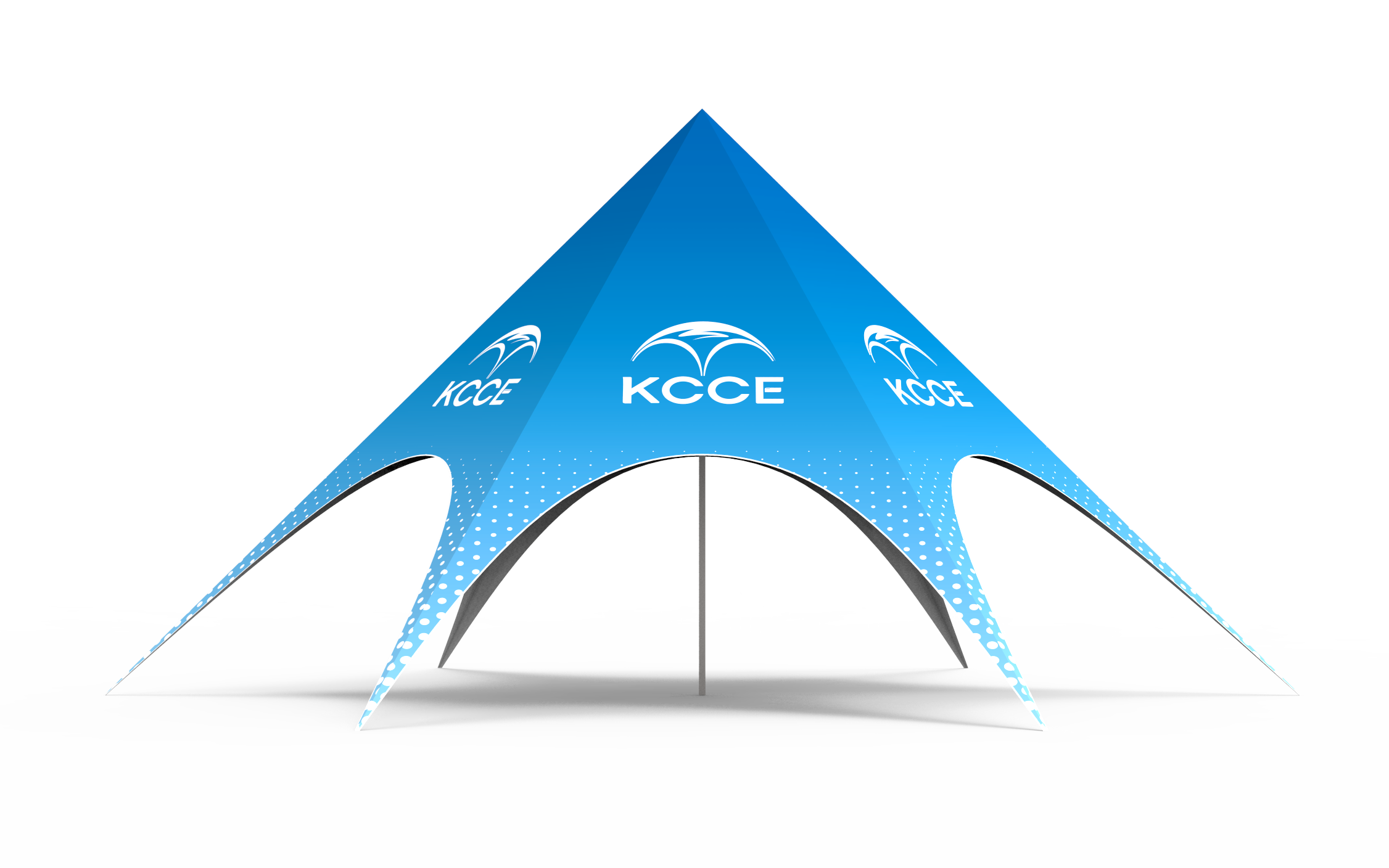
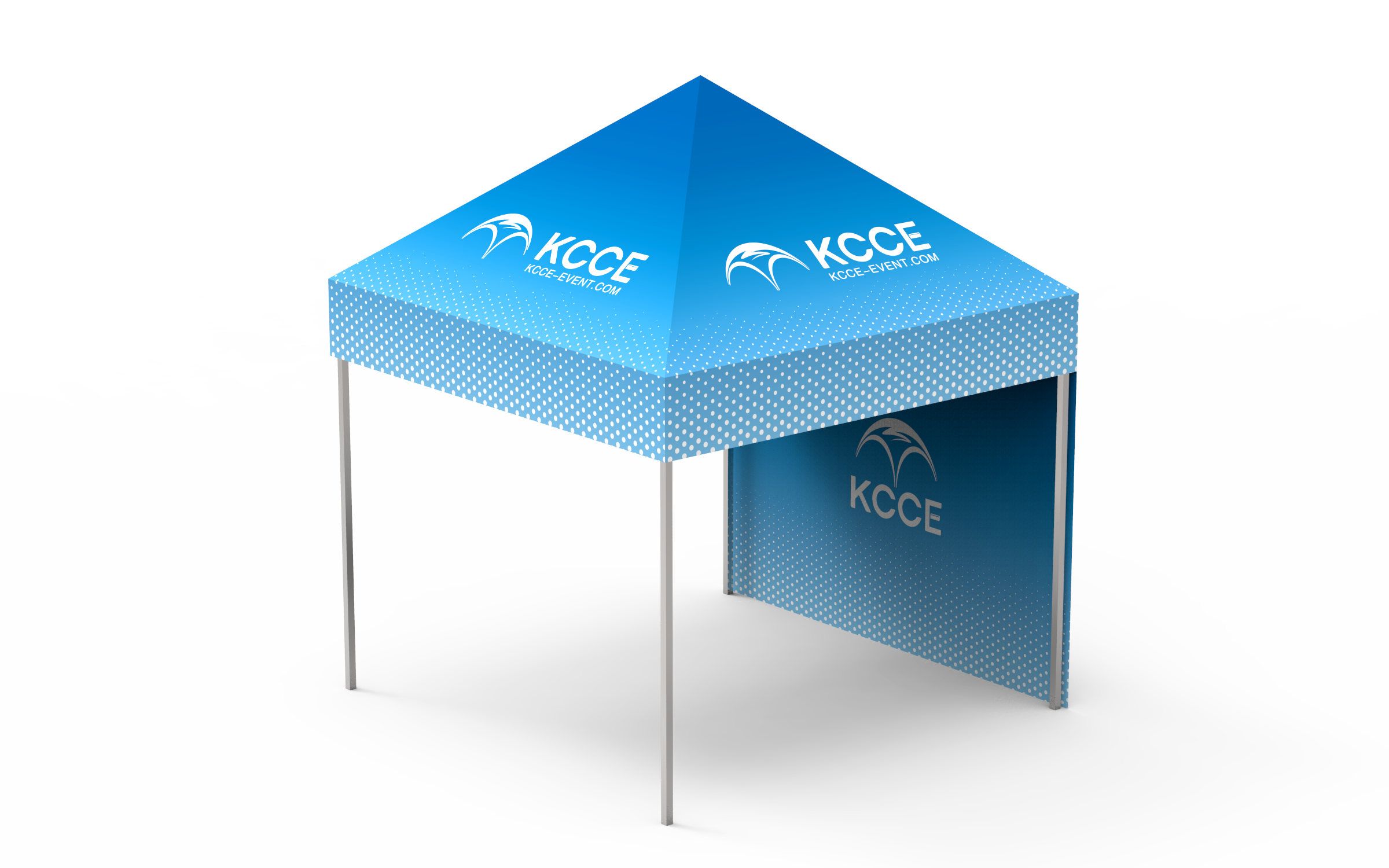
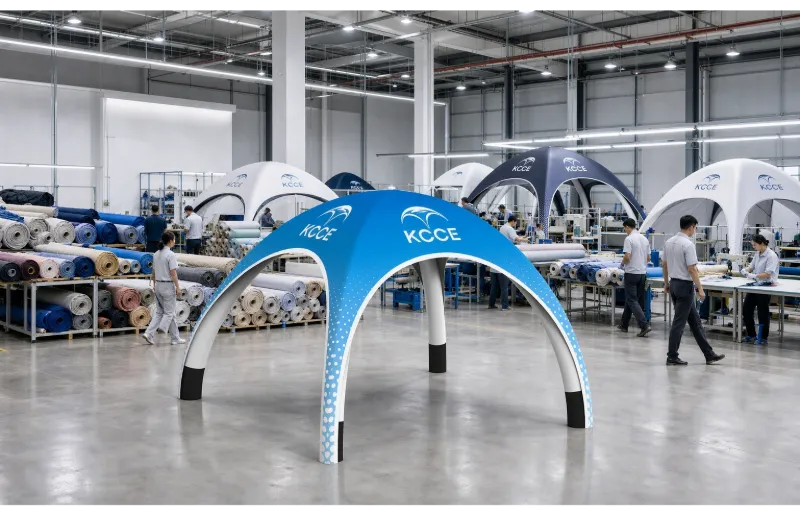
KCCE is a name I keep coming back to when buyers need custom inflatable tents for events, exhibitions, or brand activations. They’ve been at it since 2006 — that’s nearly two decades. In an industry where fly-by-night operations pop up constantly, that kind of staying power says something.
Their inflatable tent range covers air-sealed and pump-up models, with full OEM/ODM capability. Custom sizes, colors, logo printing — all standard. They also make 充气家具 and custom inflatable shapes, which is handy if you’re kitting out a trade show booth.
The CE and RoHS compliance matters if you’re importing into Europe. Not every factory bothers with both.
2. Hebei Jiayouding Technology Co. Ltd. — Best for Large-Scale Industrial Textile Tents
Location: Hengshui, Hebei
Specialty: Industrial textile products, outdoor amusement equipment, inflatable structures
Established: 2020
Registered capital: 50 million CNY
MOQ: Varies by product
Certifications: Not publicly listed in available data
Hebei Jiayouding appears among Baidu’s B2B rankings for inflatable tents, with a high overall score. Their registered capital of 50 million CNY is substantial — this isn’t a small workshop. They operate out of the High-Tech Industrial Development Zone in Jizhou District, and their business scope covers industrial textile manufacturing, outdoor product sales, and amusement equipment.
That said, they’re newer (2020), so if you need a supplier with a long export track record, weigh that accordingly. For large inflatable structures — big event tents or outdoor amusement setups — they’re worth a look.
3. MARVELOUS — Best for Camping and Rooftop Tent Integration
Location: China (manufacturer publishes export data)
Specialty: Camping tents, hard shell rooftop tents, inflatable tents
Years in business: Not specified in available data
MOQ: Not specified
Certifications: Not specified in available data
Export markets: Australia (documented customer use)
MARVELOUS shows up in camping tent manufacturer evaluations as a reference for OEM/ODM production. They publish verifiable production and export information, which is more than most. If you’re building a camping brand and need a China camping tent supplier who also handles inflatable models, they’re a reasonable starting point.
4. Other Notable Factories to Consider
Beyond the top three, here’s what I’ve seen in the market:
- Guangzhou-area factories: Strong for large event inflatables and exhibition tents. Competitive pricing, but quality varies wildly.
- Jiangsu-based manufacturers: Often specialize in outdoor camping tents, including inflatable models. Good for mid-volume orders.
- Hebei cluster: Growing fast for industrial textile products, including emergency and medical inflatable tents.
Honestly, the “best” factory depends entirely on your use case. A glamping operator needs different specs than someone sourcing 500 emergency shelters.
Comparison Table: Inflatable Tent Factories at a Glance
| 工厂 | City | Specialty | MOQ | Certifications | Export Markets |
|---|---|---|---|---|---|
| KCCE (Dacheng Outdoor) | Dongguan, Guangdong | Event/exhibition tents, custom inflatables | 1 piece (sample) | CE, RoHS | 75 countries, EU & US focus |
| Hebei Jiayouding | Hengshui, Hebei | Industrial textiles, large inflatable structures | 各不相同 | Not listed | Primarily domestic (B2B platform ranked) |
| MARVELOUS | China (unspecified) | Camping & rooftop tents, OEM/ODM | Not specified | Not specified | Australia (documented) |
If you’re searching for an inflatable tent supplier China-based that handles both small custom orders and volume production, KCCE’s one-piece MOQ is unusually flexible. Most factories won’t touch a single unit.
How to Vet a Chinese Inflatable Tent Manufacturer
Here’s where most buyers fail. They see a shiny Alibaba storefront, a few good reviews, and hit “order.” Then the tent arrives and the zipper’s already broken.
Real Factory vs. Trading Company
This is the first filter. Trading companies mark up prices 15-30% and have zero control over production quality. How to tell the difference?
- Check the business license. A manufacturer’s scope includes “production” or “manufacturing.” A trading company’s says “sales” or “trading.”
- Ask for a factory video tour. Real factories will show you the production floor. Trading companies make excuses.
- Look at the address. If it’s an office building in a city center, red flag. Factories are in industrial zones.
Red Flags to Watch For
- Prices 40%+ below everyone else (they’re cutting corners on material)
- No certifications (CE, RoHS, ISO are baseline for export)
- Vague answers about production capacity
- Pressure to pay via Western Union or personal accounts
- No physical address or only a PO box
Certifications That Matter
CE and RoHS are non-negotiable for European imports. ISO 9001 indicates some quality management system. BSCI or SEDEX audits matter if you’re a brand that gets scrutinized for labor practices. KCCE, for example, holds CE and RoHS — that’s a starting point. Ask any potential supplier for their certificate numbers and verify them.
Sample Process and QC Inspection
Always order a sample first. A reliable inflatable tent supplier will charge for it (expect $50-200 depending on size), but the cost is worth it. Inflate it, leave it up for a week, check for leaks. Then, for bulk orders, hire a third-party inspector (SGS, Bureau Veritas, QIMA) to check 10-20% of units before shipment.
OEM vs. ODM for Inflatable Tents
These get thrown around like they’re interchangeable. They’re not.
OEM (Original Equipment Manufacturing): You provide the design, specs, and branding. The factory builds exactly what you tell them. You own the IP.
ODM (Original Design Manufacturing): The factory has existing designs. You pick one, slap your logo on it, and sell. Faster and cheaper, but you don’t own the design — and competitors can buy the same tent.
When does each make sense?
- OEM: You’re building a brand, have design capabilities, and want differentiation. Higher upfront cost (tooling, patterns), but you control your product.
- ODM: You need to test a market fast, or you’re a reseller who doesn’t care about unique design. Lower cost, quicker turnaround.
For custom inflatable tents, most buyers start with ODM to test demand, then move to OEM once they have volume. IP protection is the big concern with OEM — make sure your contract explicitly states that designs remain your property.
Inflatable Tent Pricing, MOQs & Lead Times in China
What drives cost? Four things:
- 材质: PVC vs. Oxford cloth vs. TPU. PVC is cheapest and heaviest. TPU is lighter and more durable but costs more.
- Size: Obviously. A 3x3m tent vs. a 10x20m event structure is a different ballgame.
- Printing: Full-color digital printing adds cost. Simple logos are cheaper.
- Accessories: Blowers, repair kits, carry bags, stakes — they add up.
Typical MOQ ranges from 1 piece (samples) to 50-100 for custom production runs. Sample lead time is usually 5-10 days. Bulk production runs 15-30 days depending on complexity.
充气广告帐篷 inflatable tent factory China-based will often quote FOB (Free On Board) pricing. That means you pay for shipping from the Chinese port. CIF (Cost, Insurance, Freight) includes shipping to your port — simpler, but you have less control over logistics.
How to Work With a Chinese Manufacturer (Sourcing Process)
Here’s the step-by-step I’d follow:
- Shortlist 3-5 factories using the table above and your own research.
- Request samples from your top 2-3. Compare quality side by side.
- Negotiate terms. Payment is typically 30% deposit, 70% before shipment via T/T (bank transfer). LC (Letter of Credit) is safer for large orders.
- Confirm specs in writing. Material, dimensions, colors, accessories, packaging — everything.
- Arrange third-party QC inspection before final payment.
- Book shipping. FOB means you arrange freight; CIF means the factory handles it.
- Clear customs and inspect on arrival. Document any issues immediately.
Common scams? Fake certifications, bait-and-switch on materials, and disappearing after deposit. Using a platform with escrow (Alibaba Trade Assurance) or paying via LC reduces risk.
China’s Inflatable Tent Manufacturing Landscape
China produces the overwhelming majority of the world’s inflatable tents. and the industry clusters into three belts: Guangdong (Dongguan, Foshan, Shenzhen) for event/advertising inflatables and OEM/ODM work; Hebei (Hengshui, Jizhou District) for large industrial textile and amusement structures; and Jiangsu/Zhejiang (Nantong, Ningbo, Yiwu) for camping-grade tents and outdoor gear. Most factories sit in the roughly 2,000–10,000 sqm range with around 30–200 staff. and the sector runs on an OEM/ODM model — buyers bring specs, factories cut and weld.
What changed the game is automation. High-frequency (RF) welding machines and hot-air seam welders have replaced a lot of hand-glued seams, which is why leak rates on good factory output dropped noticeably over the last decade. Lead times typically run around 15–30 days for stock models and around 30–45 days for custom tooling. The trap: a huge share of “manufacturers” on Alibaba are trading companies with no welding floor at all. Ask for a video walkthrough of the actual production line before you commit.
Product Categories and Application Scenarios
Inflatable tents split into two structural families, and the choice drives everything downstream:
- Air-sealed (airtight) tents — welded closed, inflated once, no continuous pump needed. Best for long-duration event installations and exhibitions.
- Pump-up (continuous inflation) tents — rely on a blower running throughout use. Cheaper, faster to deploy, but useless if power drops. Standard for camping and quick activations.
By application: event & exhibition tents (KCCE’s lane) need large spans and custom branding; camping/rooftop tents (MARVELOUS’s lane) prioritize packed weight and hydrostatic head; industrial and amusement structures (Hebei Jiayouding’s lane) favor heavy PVC and high wind-load ratings; emergency/medical tents require rapid deploy and negative-pressure options. Know which family and scenario you’re buying for before you compare quotes — a camping tent spec sheet and an exhibition tent spec sheet aren’t comparable.
Quality Control and Certification Standards
Certifications are your first filter, and they’re not optional if you export to regulated markets:
- CE — required for EU market access; for tents this usually ties to EN ISO 5912 (camping tents) or the applicable GPSR/EN standards.
- RoHS — restricts lead, cadmium, and other substances in materials and electronics (pumps, LED strips).
- ISO 9001 — factory-level quality management. Ask for the certificate number and verify it, not just a PDF.
- EN 13501-1 / NFPA 701 — flame-retardancy for event and public-occupancy tents. This one gets skipped a lot and bites buyers at venue inspections.
- REACH / CPSIA — chemical compliance for EU and US respectively.
On the floor, real QC means: seam peel tests on welded joints, 24-hour inflation hold tests, and hydrostatic head testing for camping fabric. Ask for test reports per batch, not just a one-time certificate. A factory that can’t produce a batch test report is a factory that doesn’t test.
Material and Process Comparison: PVC vs. TPU (and How They’re Joined)
This is where most buyers get lost, so here’s the direct comparison:
| 因素 | PVC (coated polyester) | TPU |
|---|---|---|
| 成本 | Lower (~$2–4/sqm) | Higher (~$5–9/sqm) |
| 重量 | 更重 | 30–40% lighter |
| Cold performance | Stiffens below ~-10°C | Flexible to ~-30°C |
| UV/aging | Good with additives | Excellent, no plasticizer migration |
| Eco/compliance | Phthalate concerns (REACH) | Phthalate-free, food-safe grades |
| Weldability | Excellent RF/hot-air weld | Good, but needs tuned parameters |
| 最适合 | Event, industrial, budget camping | Premium camping, cold climate, eco buyers |
Joining methods matter as much as the fabric: RF (high-frequency) welding gives the strongest seam on PVC and is the industry benchmark; hot-air welding is faster and works on both but is more operator-dependent; gluing is the weak link — it’s where leaks start. Ask any factory which method they use on stress seams (corners, valve bases). If the answer is “glue,” walk.
Manufacturer Capability Assessment Framework
Don’t rank factories on price alone. Score them across six axes:
- R&D — in-house design team? Can they produce a 3D render and a structural load calculation, or just copy a sample?
- Production — machine count and type (RF welders, CNC cutters), floor size, staff.
- QC — documented batch testing, in-house lab, defect rate data.
- 认证 — valid, verifiable, and covering the target market.
- Logistics — export experience, Incoterms flexibility, packing for sea/air, and whether they handle documentation.
- Communication — English-speaking sales, response time, willingness to do a paid sample.
Weight these by your project. A one-off event tent buyer cares most about R&D and communication; a container-volume camping buyer cares about production capacity and QC consistency. Ask each shortlisted factory the same six questions and compare answers side by side — the gaps show up fast.
常见问题解答
问:谁制造的充气帐篷最好?
答: There’s no single “best” — it depends on your use case. For custom event and exhibition tents, KCCE (Dongguan Dacheng Outdoor Products) stands out with CE/RoHS certifications and 75-country export reach. For camping, MARVELOUS publishes verifiable OEM/ODM data. For large industrial structures, Hebei Jiayouding ranks highly on B2B platforms. Always order samples before committing.
Q: Who are the top 10 tent manufacturers?
答: Rankings vary by source and category. Baidu’s B2B platform lists Hebei Jiayouding as a top-ranked inflatable tent manufacturer with a 4.9/5 score. KCCE has operated since 2006 with a 2,800 sqm facility. MARVELOUS appears in camping tent evaluations. Beyond these, look at factory clusters in Guangdong, Hebei, and Jiangsu — each has strengths depending on tent type.
Q: What are the best air tents?
答: Air tents (inflatable tents) win on setup speed and portability. For camping, look for TPU or heavy-duty PVC construction. For events, air-sealed models that don’t require constant pumping are better. KCCE’s X-series and air-tight arches are designed for repeated setup and teardown. The “best” one matches your climate, frequency of use, and budget.
Q: Which company makes the best tents?
答: Depends on category. For inflatable event tents, KCCE and similar Guangdong factories lead. For camping tents, brands like Vango, Outwell, and Dometic dominate Western markets — but Chinese OEM factories produce comparable quality at lower cost. For industrial and emergency tents, Hebei-based manufacturers are strong. No single company wins across all categories.
Q: How do I find a reliable inflatable tent supplier in China?
答: Start with platforms like Alibaba or Made-in-China, but verify everything. Check the business license (manufacturer vs. trading company), request a factory video tour, ask for certification numbers, and order samples. Third-party QC inspections before shipment are non-negotiable for bulk orders. If a supplier avoids any of these steps, walk away.
Q: Can I get custom inflatable tents?
答: Yes. Most Chinese manufacturers offer OEM/ODM services. You can customize size, color, material, logo printing, and structure. KCCE, for example, offers full customization on their inflatable tent range. Minimum order quantities for custom work vary — some factories accept one-piece sample orders, while others require 50+ units.
Q: What’s the difference between OEM and ODM?
答: OEM means you provide the design and the factory builds it — you own the IP. ODM means you pick from the factory’s existing designs and add your branding — faster and cheaper, but you don’t own the design. For custom inflatable tents, OEM gives you differentiation; ODM gets you to market quicker.
Q: How much does it cost to manufacture an inflatable tent in China?
答: Pricing depends on material (PVC vs. TPU), size, printing complexity, and accessories. Small camping tents might run around $30-80 per unit at volume. Large event structures can reach $500-2,000+. Always request FOB quotes and factor in shipping, duties, and QC costs. The cheapest quote rarely equals the best total cost.
Conclusion
Here’s my one piece of advice: before you commit to any factory, request samples from 2-3 shortlisted suppliers. Inflate them. Leave them up. Check the seams. The cheapest quote almost never wins on total cost — returns, replacements, and lost customers eat the savings fast.
Use the comparison table above to build your shortlist. Then do the work: verify certifications, order samples, inspect before shipment. That’s how you avoid the quality control roulette and find a manufacturer you can actually build a business with.
参考资料
1. 2026 Top 10 Inflatable Tent Manufacturers in China – b2bdata.baidu.com
2. 中国顶级充气帐篷制造商:2026年采购指南 – kcce-event.com
3. Top Camping Tent Manufacturers in China: 2026 Shortlist Guide – htnxt.com
4. 2026 Top 10 Construction Tent Manufacturers in China – b2bdata.aipage.com