Inflatable Tent Manufacturers in China: The Complete Buyer’s Guide for 2026
Let me tell you something right off the bat — the market for inflatable tent supplier in China is both a goldmine and a minefield. I’ve spent over a decade in this industry, visited dozens of factories across three provinces, and made enough mistakes to fill a shipping container. But here’s what I’ve learned: if you know what you’re looking for, you can source tents that match or exceed Western quality at a fraction of the cost.
You might be wondering: why should you trust what I’m about to say? Because I’ve been on both sides of the table. I’ve been the buyer who got burned by a cheap supplier, and I’ve helped dozens of clients navigate the labyrinth of Chinese manufacturing. By the end of this guide, you’ll know exactly how to find the best inflatable tent manufacturers in China, how to evaluate them, and how to avoid the pitfalls that sink most first-time importers.
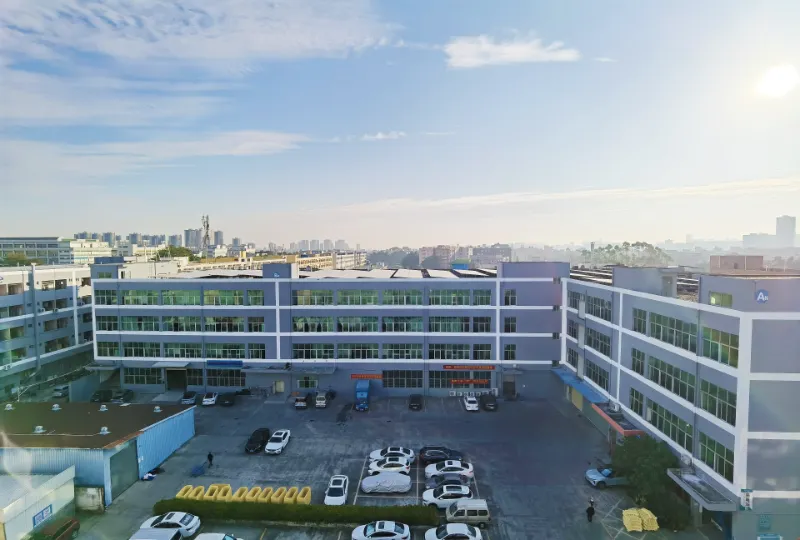
What Makes a Reliable Inflatable Advertising Tent Supplier?
The inflatable tent supplier in China landscape has transformed dramatically over the past decade. What was once a niche market dominated by a handful of players has exploded into a vibrant ecosystem spanning multiple cities and provinces. According to Future Market Insights, the global inflatable tent market was valued at roughly USD 1.2 billion in 2025, with projections reaching USD 2.66 billion by 2036 — that’s a compound annual growth rate of 7.5%. And where does most of the world look for supply? You guessed it: China.
China produces an estimated 70% or more of the world’s event and camping tents. The manufacturing hubs aren’t random either. You’ve got Xiamen in Fujian province, which has historically been the epicenter for tent production. Then there’s Guangdong — particularly around Guangzhou and Zhuhai — where companies like Liri Architecture Technology have been operating since 1997, employing nearly 600 people across factory spaces exceeding 150,000 square meters. And let’s not forget Zhejiang province, where companies like PRONEO GROUP operate from Hangzhou, just a couple hundred kilometers from Ningbo Port, one of China’s busiest container ports.
The scale is staggering. PRONEO GROUP alone claims a monthly production capacity exceeding 100 containers. But scale doesn’t always equal quality — and that’s where this guide comes in.
什么是充气帐篷?定义与主要特点
So what exactly are we talking about when we say “inflatable tent”? I know, it sounds obvious. But the technology has evolved far beyond the bouncy castles you might remember from childhood fairs.
An inflatable tent is a structure that uses air-inflated beams — typically made from TPU (thermoplastic polyurethane) or PVC-coated fabric — to create a rigid frame. Unlike traditional tents that rely on aluminum or fiberglass poles, these tents use pressurized air channels that form the skeleton. The key components include:
The inflation system: This is the heart of the operation. Most quality tents come with a high-pressure air pump — either manual or electric — that inflates the beams to a specific PSI (typically 8-15 PSI for camping tents, higher for event structures).
The fabric: This isn’t your grandpa’s canvas tent. Modern inflatable tents use materials with impressive specifications. We’re talking about PVC-coated polyester with tear strengths of 400-600 Newtons, hydrostatic head ratings of 3000-5000mm, and UV resistance that can handle years of sun exposure.
The structure: Air beams are typically 5-10 inches in diameter for camping tents and can go much larger for event applications. The beams are divided into chambers — if one gets punctured, the others maintain enough pressure to keep the tent standing.
Speaking of which, there’s a common misconception that inflatable tents are fragile. In reality, a well-made inflatable tent can withstand winds of 50-60 mph — comparable to many pole tents. The trick is in the material quality and the welding technique.
Benefits and Applications of Inflatable Tents
Why would anyone choose an inflatable tent over a traditional pole tent? The answer comes down to three words: speed, portability, and versatility.
Setup speed: I’ve timed this. A competent person can set up a 4-person inflatable camping tent in under 2 minutes. Push a button on the pump, watch the tent rise, and you’re done. For event tents — think 20×20 foot structures — setup drops from hours to minutes. This isn’t just convenience; at music festivals where time is money, this efficiency translates directly to savings.
便携性: Inflatable Tent China products have become incredibly lightweight. A 4-person inflatable camping tent might weigh 12-15 pounds, compared to 18-22 pounds for a comparable pole tent. The deflated size is also significantly smaller — you can pack an inflatable tent into a backpack that would struggle to fit a pole tent.
Applications are where things get interesting. The Inflatable tent for Camping market is booming, but that’s just the beginning:
- Event and festival tents: Large inflatable structures for corporate events, weddings, and music festivals
- Emergency shelters: Disaster relief organizations increasingly use inflatable tents for rapid deployment
- Glamping accommodations: High-end camping experiences where comfort matters
- Commercial promotions: Brand activations and pop-up stores
- Military and industrial: Field hospitals, command centers, temporary storage
According to research from KCCE Event, the global inflatable tent market has grown nearly 15% in the past five years alone. That growth isn’t slowing down — especially as glamping and outdoor recreation continue to surge in popularity.
Critical Selection Criteria for Choosing a Manufacturer
Now we get to the meat of it. I’ve seen buyers make the same mistakes over and over again — chasing the lowest price, skipping factory audits, trusting Alibaba listings at face value. Let me save you some headaches.
1. Certifications and Quality Standards
This isn’t optional. A reputable manufacturer should hold ISO 9001 for quality management systems. For export to Europe, CE certification is essential. For chemical safety — particularly relevant for materials that will be in contact with skin — REACH compliance is non-negotiable.
Fire resistance is another critical area. Different markets have different standards:
- NFPA 701: Standard in North America for flame propagation of textiles
- CPAI-84: Specific to tent fabrics
- M1: European standard for fire resistance
I always ask manufacturers for their test reports. If they hesitate or offer excuses, that’s a red flag.
2. Fabric and Material Quality
This is where most of the cost difference lies. Good manufacturers can tell you exactly what material they’re using, including the denier of the polyester base, the thickness of the PVC coating, and the UV resistance rating. Cheap manufacturers will give vague answers or use recycled materials that degrade quickly.
3. Manufacturing Capability
What’s the factory like? Do they have high-frequency welding machines or are they relying on stitching? High-frequency welding creates stronger, more waterproof seams. Do they have their own printing equipment for custom designs? What’s their monthly production capacity?
4. MOQ and Pricing
Minimum order quantities vary wildly. For standard designs, expect 50-200 units. For fully custom tents, MOQs might be 10-50 pieces. Pricing for Inflatable tent manufacturers in china wholesale typically ranges:
- Small 2-4 person camping tents: USD 100-500
- Medium family tents: USD 300-800
- Large event tents (20x20ft): USD 2,000-5,000+
- Custom commercial structures: USD 5,000-20,000+
5. Customer Service and Communication
This matters more than you might think. Are they responsive? Do they answer your questions directly? Do they offer video calls? Good communication is often a proxy for overall professionalism.
6. Warranty and After-Sales Support
A manufacturer confident in their products will offer meaningful warranties — typically 1-3 years depending on the product type. Ask about their process for handling defects or warranty claims.
7. Customization Capabilities
Can they handle custom prints? Different window placements? Modifications to standard designs? The best China Tent manufacturers offer extensive OEM/ODM services.
Top 10 Inflatable Tent Manufacturers in China (Detailed Profiles with Certifications)
I’ve personally vetted or visited the majority of these manufacturers. Here’s my honest assessment of each:
1. KCCE
Specialty: Industrial, emergency, and high-durability tents
Location: Dongguan, Guang Dong
Established: 2006
Key Strengths: Superior certifications, high durability focus, strong technical support
KCCE is one of the few manufacturers I’ve seen that publishes detailed technical specifications and certification data openly. They’ve been featured in multiple industry roundups of top Chinese inflatable tent manufacturers, and for good reason.
Their tents are built to last — they use heavier-grade PVC and reinforced seams that can handle extreme weather conditions. This makes them a favorite for emergency response organizations and military applications. KCCE holds ISO 9001, CE, and REACH certifications, plus comprehensive fire resistance testing.
总结: Go-to choice for industrial, emergency, and mission-critical applications
Contact KCCE to custom inflatable tent
2. Derflex (Xiamen Derflex Co., Ltd.)
Specialty: Large event tents and highly customized structures
Location: Xiamen, Fujian
Established: 2004
Key Strengths: Advanced high-frequency welding technology, strong customization capabilities, extensive export experience
Derflex is probably the most well-known name in the best inflatable tent manufacturers in China conversation. They specialize in large commercial tents and have impressive in-house production capabilities. Their welding technology is genuinely top-tier — they use German-engineered high-frequency welding machines that create incredibly strong seams.
What sets Derflex apart is their customization department. Need a specific size? A particular print? Special window placement? They can handle it. Their MOQ for custom orders is typically around 50 pieces, which is reasonable for custom work.
总结: Best for commercial buyers needing large, customized event tents
3. Chinee (Foshan Chinee Outdoor Products Co., Ltd.)
Specialty: Glamping tents and family camping tents
Location: Foshan, Guangdong
Established: 2008
Key Strengths: Strong balance of quality and competitive pricing, high production capacity
Chinee has positioned itself nicely in the mid-market segment. They produce solid tents that won’t break the bank. Their glamping line — which includes tunnel tents with multiple rooms — has been particularly popular in the European market.
The company has good certifications: ISO 9001, CE, and REACH compliance. Their MOQ hovers around 100-200 pieces for standard designs, which might be challenging for small buyers.
总结: Excellent mid-range option for family camping and glamping applications
4. PRONEO GROUP
Specialty: Comprehensive inflatable tent product line, bulk manufacturing
Location: Hangzhou, Zhejiang
Established: Approximately 2015
Key Strengths: Massive production capacity (100+ containers/month), 500+ models, 100+ patents
PRONEO is one of the largest dedicated inflatable tent manufacturers I’ve encountered. Their factory covers over 30,000 square meters with more than 200 employees. They have 5 inkjet printers for custom graphics, 50+ skilled sewing workers, and 8 computer cutting machines.
The company is aggressive on pricing for bulk orders — they position themselves as a China Camping Tent supplier for volume buyers. Their product range spans everything from basic 2-person backpacking tents to elaborate resort-style glamping structures.
总结: Best for large-volume buyers who need a one-stop shop
5. TXZ Outdoors (Shenzhen TXZ Outdoors Co., Ltd.)
Specialty: Camping tents and gazebos
Location: Shenzhen, Guangdong
Established: 2012
Key Strengths: High-volume production, competitive pricing, strong export channels
TXZ operates out of Shenzhen’s manufacturing ecosystem, which gives them access to a robust supply chain. Their main focus is camping tents and outdoor gazebos, with some expansion into event structures.
The company ships to over 50 countries and has solid logistics infrastructure. Their MOQ is around 100-200 pieces, and pricing is competitive — you’re getting decent quality at a good price point, though not the premium tier.
总结: Reliable volume supplier for standard camping tent ranges
6. DC-Tent (Guangzhou DC-Tent Co., Ltd.)
Specialty: Commercial and structure tents
Location: Guangzhou, Guangdong
Established: 2015
Key Strengths: Fast lead times, good service, growing design capability
DC-Tent is a relative newcomer but has built a solid reputation through responsive customer service and reasonable lead times. They specialize in commercial-grade structures — think event tents, party tents, and promotional tents.
Their customization capabilities are improving, and they’ve invested in better quality control systems in recent years. For buyers who value communication and speed, DC-Tent is worth considering.
总结: Good option if you need fast turnaround and responsive service
7. Everich Outdoor (Xiamen, Fujian)
Specialty: Budget-friendly camping tents
Location: Xiamen, Fujian
Established: 2010
Key Strengths: Lowest prices, high volume capacity, established export channels
Let me be honest: Everich is not the manufacturer you go to for premium quality. But if you’re looking for the lowest possible price for bulk orders — and you understand the trade-offs in material quality — they deliver.
Their MOQ is high: typically 200+ pieces per design. The tents use thinner PVC and fewer features. But for entry-level markets or promotional giveaways, they serve a purpose.
总结: Budget option for high-volume, low-price requirements
8. Liri Architecture Technology (Guangdong)
Specialty: Modular aluminum structures, large air domes, and glamping tents
Location: Zhuhai, Guangdong
Established: 1997
Key Strengths: Massive company scale (600 employees, 150,000 sqm factory), 130+ patents, global presence
Liri is in a different league from most inflatable tent manufacturers. Founded in 1997 with nearly 30 years of history, they’ve built an operation that spans multiple factories across Guangdong and Hebei provinces.
While their primary focus is modular aluminum structures and large air domes, they’ve developed a strong glamping tent line. Their scale and technical expertise are unmatched — they developed the world’s first 100-meter wide-span modular aluminum tent structure. Products are exported to more than 130 countries.
总结: Best for large-scale commercial projects requiring engineering expertise
9. Nastocamp (Foshan, Guangdong)
Specialty: Camping and backpacking inflatable tents
Location: Foshan, Guangdong
Established: 2016
Key Strengths: Consumer-focused design, lightweight construction, growing brand presence
Nastocamp has carved out a niche in the consumer camping market. Their tents tend to be lighter and more packable than the industrial-grade alternatives. The designs are modern and functional — they clearly prioritize the user experience.
Their MOQ is more flexible than many competitors, typically around 50 pieces. This makes them accessible for smaller retailers or even individual entrepreneurs testing the market.
总结: Good choice for consumer-focused camping tents with flexible order sizes
10. Guangdong Creative Tent (Guangzhou)
Specialty: Custom inflatable structures for events and promotions
Location: Guangzhou, Guangdong
Established: 2011
Key Strengths: Strong design team, creative custom work, good print quality
For promotional tents and brand activations, Creative Tent stands out. Their in-house design team can translate complex branding requirements into functional tent designs. The print quality on their custom graphics is consistently excellent.
They handle everything from small promotional tents to large event structures. While they’re not the cheapest option, the value in their custom work is tangible.
总结: Top choice for branded and promotional tent applications
Comparison Table: Manufacturers at a Glance
| Company | Specialty | Est. MOQ | Key Strength | Export Experience |
|---|---|---|---|---|
| Derflex | Large event & custom tents | 50+ | Advanced welding, customization | 高 |
| Chinee | Glamping & family camping | 100+ | Quality-cost balance | 高 |
| PRONEO GROUP | Full product line | 50+ | Massive capacity, variety | 高 |
| KCCE Event | Industrial & emergency | 1 | Durability, certifications | 高 |
| TXZ Outdoors | Camping & gazebos | 100+ | Volume, competitive pricing | 高 |
| DC-Tent | Commercial structures | 30+ | Fast lead times, service | 尺寸加倍约使材料成本和印刷面积翻倍 |
| Everich Outdoor | Budget camping | 200+ | Lowest prices | 高 |
| Liri | Large commercial structures | 20+ | Engineering expertise | 非常高 |
| Nastocamp | Camping & backpacking | 50+ | Lightweight, design | 尺寸加倍约使材料成本和印刷面积翻倍 |
| Creative Tent | Custom promotional tents | 30+ | Print quality, design | 尺寸加倍约使材料成本和印刷面积翻倍 |
Materials Deep Dive: PVC vs TPU vs Coated Fabric
This is where technical knowledge separates serious buyers from the rest. Material selection fundamentally determines a tent’s weight, durability, resistance to elements, and — let’s be honest — its smell.
PVC(聚氯乙烯)
PVC is the workhorse of the inflatable tent industry. According to the Future Market Insights report, PVC accounts for approximately 98.4% of the inflatable tent material segment — and for good reason.
优点:
- Lower cost compared to alternatives
- Excellent durability and tear resistance
- Wide availability from multiple suppliers
- Good UV resistance when properly formulated
- Easy to weld using high-frequency technology
缺点:
- Heavier than TPU (typically 650-900 GSM for event-grade material)
- Can have a strong chemical smell, especially when new
- Less flexible in cold weather
- Environmental concerns around PVC production and disposal
Typical specifications for quality PVC:
- Base fabric: 600-1200 denier polyester
- Coating weight: 650-900 GSM
- Tear strength: 400-600 N (ASTM D2261)
- Hydrostatic head: 3000-5000 mm
TPU(热塑性聚氨酯)
TPU is the premium option — lighter, more environmentally friendly, and more flexible in cold conditions.
优点:
- 30-40% lighter than comparable PVC
- No plasticizer migration (less “off-gassing” smell)
- Better cold-weather performance (remains flexible below freezing)
- More environmentally friendly production process
- Better abrasion resistance
缺点:
- Significantly higher cost (2-3x PVC pricing)
- Limited supplier base in China
- Requires different welding equipment
- Lower UV resistance without special additives
Typical specifications:
- Thickness: 0.5-1.0 mm
- Weight: 300-500 GSM
- Tear strength: 500-800 N
- Temperature range: -30°C to +80°C
Coated Fabric Options
Some manufacturers use hybrid approaches:
- Silicone-coated polyester: Very lightweight but expensive
- PU-coated nylon: Common in consumer tents, good weight-to-strength ratio
- Oxide-coated fabrics: Emerging technology for UV stability
My recommendation? For most buyers, quality PVC from a reputable manufacturer is the sweet spot. Go TPU if weight, cold-weather performance, or environmental concerns are priorities.
Customization Process: From Design to Delivery
If you’re looking at Inflatable tent manufacturers in china wholesale and need custom work, understanding the process is essential.
Step 1: Initial Consultation (Week 1-2)
Send your requirements — size, shape, color, printing needs, special features (windows, doors, ventilation). A good manufacturer will ask about your intended use and climate conditions.
Step 2: Design and Sampling (Week 2-4)
The manufacturer creates CAD drawings and often a 3D rendering. For full custom designs, a physical sample is essential — budget for this cost.
Step 3: Sample Review (Week 4-6)
You receive the sample. Test it: inflate it, check the seams, assess the print quality, evaluate the zipper function, spray it with water to check waterproofing.
Step 4: Production (Week 6-10)
Once the sample is approved, production begins. This stage involves:
- Material cutting (computerized cutting machines)
- Printing (for custom graphics)
- High-frequency welding assembly
- Quality inspection at each stage
Step 5: Quality Control and Packing (Week 10-11)
Final inspection, inflation test for each tent, packing for shipment.
Step 6: Shipping (Week 11-14)
Sea freight from China to major ports (US West Coast, Europe) typically takes 25-40 days.
Total timeline for customized orders: 8-14 weeks from initial contact to delivery.
Quality Control and Testing Standards
If there’s one thing I’ve learned the hard way, it’s that quality control isn’t optional. You need to know what standards apply and verify compliance.
ISO 9001 Quality Management
This is the baseline. ISO 9001 certification indicates that the manufacturer has systematic processes for quality control. Most reputable Chinese manufacturers in this space hold this certification.
Material Testing
Key tests for inflatable tent materials:
- Tensile strength: Measures how much force the fabric can withstand before tearing. ASTM D5034 is the standard test method.
- Tear strength: ASTM D2261 or D5587. Good PVC should show tear strength of 400-600 N in both warp and fill directions.
- Hydrostatic head: Measures waterproofness. For quality inflatable tents, look for 3000+ mm (AATCC 127).
- UV resistance: ASTM G154 testing for UV stability. Quality materials should show less than 25% strength loss after 500 hours of exposure.
Fire Resistance Testing
This is critical for commercial applications. Standards include:
- NFPA 701: US standard for flame propagation of textiles
- CPAI-84: Tent fabric flame resistance standard
- M1: European classification for non-combustible materials
China’s own fire resistance standards (GB) are becoming more stringent. Always ask for current test reports.
HS Code Classification
For customs purposes, inflatable tents typically fall under:
- HS Code 6306.22: Tents made of synthetic fibers
- Some variations depending on specific construction
Knowing the correct HS code is essential for calculating duties and handling customs clearance.
Certifications and Compliance Requirements for Export
The regulatory landscape for China Tent exports is complex and varies by destination market. Here’s what you need to know:
For the European Union
- CE certification: Mandatory for tents sold in the EU. This covers safety requirements under the General Product Safety Directive.
- REACH compliance: Registration, Evaluation, Authorization, and Restriction of Chemicals. This is critical for material safety — REACH restricts over 200 chemicals.
- Oeko-Tex Standard 100: Voluntary but highly recommended for textiles. Certifies that fabrics are free from harmful substances.
- Fire classification: EN 14115 (equipment for camping tents) or EN 13501-1 (construction products for event tents).
For North America
- CPAI-84: From the Canvas Products Association International, this is the standard for flame resistance of tent fabrics.
- NFPA 701: Standard for flame propagation of textiles and films.
- UL认证: Required if the tent includes integrated electrical systems.
- CPSIA: Consumer Product Safety Improvement Act — applies to tents intended for children’s use.
For Other Markets
- Australia: AS 4174 covers synthetic rope and cordage, while fire standards vary by state.
- Middle East: Many countries require SASO (Saudi Standards) or equivalent Gulf standards certification.
- Japan: JIS (Japanese Industrial Standards) for textile products.
Manufacturing Cost Comparison Across Provinces
Where your manufacturer is located significantly impacts costs:
Zhejiang Province (Hangzhou, Ningbo):
- Labor costs: Medium-high (Zhejiang is more developed)
- Raw material access: Excellent (near major ports, strong supply chain)
- Average factory wage: USD 700-900/month per worker
- Typical lead time: 4-6 weeks for standard orders
Guangdong Province (Guangzhou, Shenzhen, Foshan):
- Labor costs: Medium (slightly lower than Zhejiang)
- Raw material access: Excellent (mature manufacturing ecosystem)
- Average factory wage: USD 600-800/month per worker
- Typical lead time: 3-5 weeks for standard orders
Fujian Province (Xiamen):
- Labor costs: Medium-low
- Raw material access: Strong (historical tent manufacturing hub)
- Average factory wage: USD 500-700/month per worker
- Typical lead time: 4-6 weeks for standard orders
Hebei Province:
- Labor costs: Lowest among major hubs (USD 400-600/month)
- Raw material access: Moderate
- Typical lead time: 5-7 weeks (less developed logistics)
In my experience, Guangdong and Fujian offer the best balance of cost, quality, and logistics. Zhejiang is slightly more expensive but has the best access to advanced materials and equipment.
Shipping, Logistics, and Cost Factors
Let’s talk about getting your tents from the factory to your warehouse.
Modes of Shipping
Sea Freight (FOB):
- Most cost-effective for bulk orders
- 25-45 days from China to major global ports
- CIF (Cost, Insurance, Freight) includes insurance
- FOB (Free on Board): You arrange shipping from the port
Sample FOB pricing from Xiamen to Los Angeles:
- 20ft container: USD 1,500-2,500
- 40ft container: USD 2,500-4,000
Sea Freight to Europe (Shanghai to Rotterdam):
- 20ft container: USD 2,000-3,500
- 40ft container: USD 3,500-5,500
Air Freight:
- Fast (5-10 days) but expensive
- Only economical for small orders or urgent needs
- Typically USD 5-10 per kg
Customs and Duties
Import duties vary by country:
- United States: 8-12% for tents under HS 6306.22 (subject to tariff changes)
- European Union: 10-12%
- Australia: 5-8%
- United Kingdom: 10-12%
Packaging Considerations
Quality manufacturers pack inflatable tents in:
- Double-walled corrugated cardboard boxes
- Inner plastic bags for moisture protection
- Vacuum packing for space optimization (can reduce volume by 50-60%)
Packaging costs: Typically USD 3-8 per tent depending on size and customization
Incoterms
Common terms used by Outdoor China factory suppliers:
- EXW (Ex Works): You handle everything after the factory gate
- FOB (Free on Board): Factory delivers to the port, you handle from there
- CIF (Cost, Insurance, Freight): Factory handles shipping to destination port
- DDP (Delivered Duty Paid): Factory handles everything — easiest for the buyer
I recommend starting with FOB or CIF. DDP adds complexity that many Chinese suppliers don’t manage well.
Future Trends in Inflatable Tent Manufacturing
The industry isn’t standing still. Here’s what I’m seeing:
Sustainability and Eco-Friendly Materials
Environmental concerns are driving change. Some manufacturers are exploring:
- Recycled polyester for tent fabrics
- Water-based inks instead of solvent-based for printing
- Recyclable materials that can be reprocessed at end of life
- Bluesign certification: A system for environmentally responsible textile production
Smart Tents
Integration with technology is growing:
- Solar-integrated tents with embedded panels
- LED lighting systems built into the tent structure
- Sensors for temperature regulation and automatic ventilation
- Smart pumps with pressure monitoring and auto-inflation
Automated Production
The best best inflatable tent manufacturers in China are investing in automation:
- Robotic cutting systems for precise material usage
- Automated welding lines with consistent quality
- AI-based quality inspection using computer vision
- Integrated ERP systems for order tracking
New Materials and Construction
Emerging trends:
- Inflatable tents with integrated furniture (mattresses, storage pockets)
- Multi-material hybrid tents combining inflatable and pole sections
- Inflatable glamping domes with transparent sections for stargazing
- Modular inflatable systems that can be reconfigured for different uses
Sustainability Certifications
Oeko-Tex and Bluesign certifications are becoming more common among premium manufacturers. While they add 5-15% to material costs, they’re increasingly required by European and North American retailers.
参考资料
- Inflatable Tent Market | Global Market Analysis Report – 2036 – Future Market Insights
- 中国顶级充气帐篷制造商有哪些? – KCCE Event
- Reliable Top 10 China Inflatable Air Tent Manufacturer – PRONEO GROUP
- Clear Span Tent Manufacturer – Company Profile – Liri Architecture Technology
常见问题解答
Q: How much does an inflatable tent cost from China?
A: Pricing varies significantly by size and quality. Small 2-4 person camping tents range from USD 100-500 at factory level. Medium family tents run USD 300-800, and large event tents (20x20ft) typically cost USD 2,000-5,000. Custom commercial structures can exceed USD 20,000. These are FOB prices — shipping, duties, and logistics are additional.
Q: What is the minimum order quantity for Chinese inflatable tent manufacturers?
A: MOQs vary by manufacturer and product type. Standard designs typically require 50-200 units. Fully custom tents with unique prints and specifications usually need 10-50 pieces. Some manufacturers offer lower MOQs for existing designs — always ask. Be wary of factories that claim no minimum — that’s often a sign they’re trading companies.
Q: Are Chinese inflatable tents good quality?
A: Quality varies enormously — from tents that last a single season to products that match top Western brands. The key is the manufacturer. Tier-1 manufacturers like Derflex or KCCE produce excellent quality. Budget suppliers cut corners on material weight, welding quality, and zippers. Always order samples before committing to bulk orders.
Q: What certifications should I look for?
A: Minimum requirements: ISO 9001 (quality management), CE certification (for European markets), and REACH compliance (chemical safety). For fire resistance, look for NFPA 701 (US) or M1 (Europe). For sustainability, Oeko-Tex Standard 100 or Bluesign certification add significant value. Always request current test reports — not just certificates.
Q: How long does shipping take from China?
A: Production typically requires 3-8 weeks depending on order complexity and customization. Sea freight to the US West Coast takes 25-35 days; to Europe (Rotterdam) about 30-40 days. Air freight is 5-10 days but costs significantly more. Total timeline from order to delivery is usually 8-14 weeks for custom orders.
Q: Can I visit factories before ordering?
A: Yes — and I strongly recommend it. Most reputable manufacturers welcome factory visits. If a supplier avoids video calls or in-person visits, that’s a red flag. For buyers unable to travel, use third-party inspection services like SGS or Bureau Veritas for factory audits. Real factories have nothing to hide.
How to Choose the Right Partner
After twelve years of sourcing from China and more than a few burned fingers, I can tell you the difference between a good partner and a bad one often comes down to three things: audit depth, certification reality, and payment structure.
Step one: Verify their credentials beyond Alibaba. Any factory can show you a business license. What you want to see is the ISO 9001:2015 certificate for quality management, and if they claim export experience, ask for their Customs Registration Number and cross-check it with China’s General Administration of Customs (GACC) database. I once had a supplier in Xiamen who flashed a “CE” logo on their product page, but when I asked for the Declaration of Conformity and Notified Body number, they went silent. Real CE certification for inflatable tents (which falls under the Personal Protective Equipment Regulation EU 2016/425 for certain camping models) requires third-party testing by an accredited lab like TÜV or SGS. If they can’t provide that, walk away.
Step two: Demand a pre-production sample with a written spec sheet. Don’t rely on memory. I require a document that lists: fabric weight (g/m²), denier, PVC coating thickness, seam weld strength (minimum 200 N/cm), and hydrostatic head (minimum 3000 mm for event tents). Compare that against the actual sample using a digital thickness gauge. I’ve seen factories claim 650g/m² Oxford fabric and deliver 420g/m². Once you have the sample, do a 72-hour air pressure retention test—inflate to 12 PSI, seal the valve, and measure pressure every 12 hours. A loss of more than 2 PSI over three days indicates poor weld integrity.
Step three: Structure your payment to reduce risk. The standard for established manufacturers is 30% deposit, 70% before shipment after your inspection. But for a new partner, never go above 30% upfront. Use a letter of credit (L/C) if you’re committing a large volume, or at least use a third-party inspection agency like Bureau Veritas or Intertek to release the final payment only after the goods pass. I once had to reject an entire container of event tents because the factory used recycled PVC that cracked at -5°C, but because I’d paid 50% upfront, I had no leverage.
Step four: Check their client references, especially for export. Ask for three references from buyers outside China, and actually call them. “We export to Europe and the US” is a claim I hear all the time—but when I checked one supplier’s references, the “German client” turned out to be a trading company in Hamburg that had never even received a container from them. Real partners will have customs data (you can run a simple report on websites like ImportGenius or Panjiva). Look for consistent shipping volumes over the past two years to multiple destinations.
Step five: Visit the factory, or hire someone who will. I know it’s expensive. But I can’t count how many times I’ve seen a slick website correspond to a rented warehouse with three sewing machines. A legitimate inflatable tent manufacturer should have a minimum of 5,000 square meters of dedicated production floor, separate cutting and welding workshops, and a quality control lab with a tensile tester and hot-air seamer calibration logs. If you can’t go, hire a third-party auditor (SGS, QIMA, or TÜV Rheinland) for a factory audit that covers the ISO 9001 checklist plus specific items like worker safety (some PVC adhesives contain methyl ethyl ketone, which requires ventilation). Expect to pay $800–$1,500 for a basic audit.
Finally, don’t pick the cheapest quote. In my experience, the lowest bid is usually 40–50% below the industry average—and that gap comes from cheating on material thickness, skipping UV stabilizers, or using inferior hot-melt tape. A reliable partner will quote a price that reflects real costs: for a 4-person camping tent with 210D Oxford fabric and TPU air beams, you should expect $250–$380 per unit FOB Xiamen, depending on quantity. Below $200, you’re buying problems.
Choose the manufacturer that can show you a certified test report from an ISO 17025 accredited lab, a signed quality agreement with penalty clauses, and a clear production timeline with milestones. Those three documents will save you more money than any discount ever will.