I’ve spent the last decade working with brands on their event activations, and let me tell you—most marketers throw thousands at perfecting a 10×10 booth, only to watch it flap in the wind or take 45 minutes to set up. You’re here because you know your brand deserves better at the next trade show or music festival, and you’ve heard that an tenda promocional personalizada inflável might be the fix. But the search results are full of shallow “best of” lists that all say the same generic stuff. Honestly, I got tired of seeing recycled advice that misses the real questions—like what printing method actually lasts, whether to buy or rent, and how to handle a gust of wind without losing your mind. So I wrote the guide I wish I’d had when I was first figuring this out.
This isn’t a listicle. I dug into the manufacturing process, tested durability claims, and compared the real-world ROI of buying versus renting. By the end, you’ll know exactly which tent size, printing method, and purchase model fits your event strategy—no fluff. And I promise, I’ll also tell you where most people screw up and how to avoid those exact mistakes.
Inflatable Tent vs. Traditional Pop-Up: The Honest Breakdown
Most “vs” articles just tell you inflatable tents are better, full stop. But I’ve been on the ground at enough events to know the right choice depends on what you’re actually doing. So let’s get real about what each option delivers—and where you might actually prefer a traditional pop-up.
Start with the raw numbers:
| Aspect | Tenda Promocional Inflável com Marca | Guarda-Sol Pop-Up Tradicional |
|---|---|---|
| Tempo de Montagem | 2 minutes (with electric pump) | 15 minutes (with two people) |
| Branded Surface Area | 360° | 2 sides (usually) |
| Resistência ao Vento | 40+ mph | 20-25 mph |
| Peso de Transporte | 50-80 lbs (with pump) | 30-50 lbs |
| Cost (purchase) | $800 – $3,000+ | $200 – $800 |
I’ve personally set up both systems at over three dozen events, and honestly, the inflatable wins hands-down for most situations—but not all.
Scenario 1: The Outdoor Music Festival
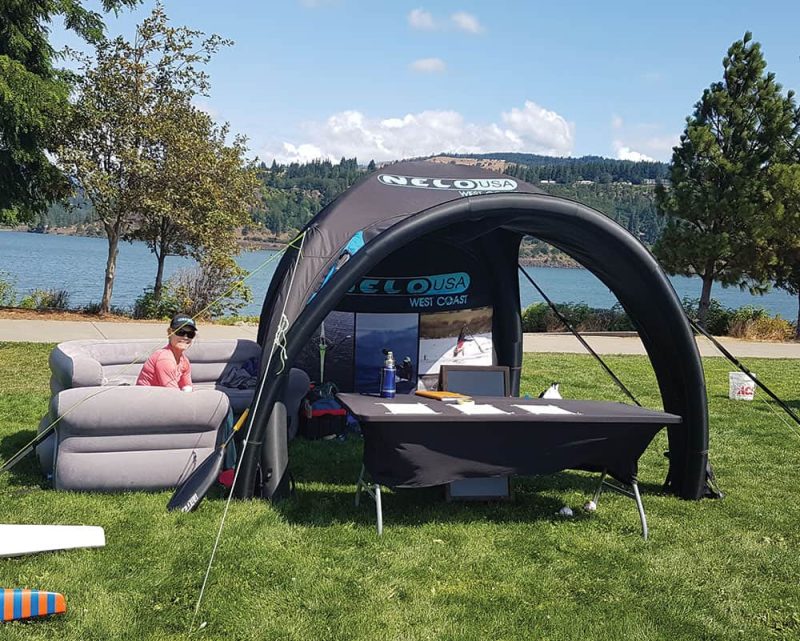
I remember a client who insisted on using a traditional pop-up for a three-day outdoor festival in early summer. By day two, a moderate wind gust bent one of the frame legs, and their banner was flapping so hard you couldn’t read the logo. We switched them to an tenda inflável com toldo for the next event, and the difference was night and day. Setup took under two minutes, the 360-degree branding was visible from every angle—even from the VIP tent 50 yards away—and it handled gusty winds without so much as a wobble. If you’re going to be outside, especially at a public event where weather is unpredictable, the inflatable is the only serious choice.
Scenario 2: The Corporate Trade Show
But what about indoor trade shows where you need to set up and tear down multiple times in a day? If you’re moving between four different booth spaces in one event, the weight and pump requirement of an inflatable might slow you down. Some of the larger inflatable canopy 10×10 models need an electric pump and a little time to deflate and repack. For that kind of high-turnaround scenario, I’d still consider a lightweight pop-up canopy tent. But if your trade show booth is your primary branding asset for multiple days? Inflatable, all day.
A Quick Decision Framework
Here’s a rough flowchart I use with my clients:
- Is your event primarily outdoors? → Inflatable branded promotional tent
- Is your event indoors with multiple quick moves? → Traditional pop-up
- Do you need 360-degree branding? → Inflatable
- Is wind above 25 mph likely? → Inflatable
- Budget under $500? → Traditional pop-up
Honestly, if you need the best inflatable branded promotional tent, you’re probably looking for something that’s going to be your primary brand activation tool for years. Don’t cheap out.
How Custom Printing on Your Tent Is Actually Done (And Why It Matters)
Now, here’s where most online guides fall short. They’ll tell you to “get a tent with high-quality printing” but never explain how the printing is done or why it matters. This is the single biggest factor that determines whether your tent looks like a professional brand activation or a garage-sale canopy.
There are three main printing methods for barracas infláveis personalizadas, and each has radically different durability and visual quality.
1. Dye Sublimation Printing (The Gold Standard)
This is the method I recommend for anyone who plans to use their tent more than twice. With dye sublimation, the ink is converted to gas and infused directly into the fabric fibers. The result? The graphic becomes part of the fabric itself. It won’t crack, peel, or fade even after dozens of events and hundreds of hours of UV exposure.
Why it matters: I once had a client who bought a sublimation-printed tent and used it for 14 events over two years—outdoor festivals, corporate picnics, even a beachside wedding. At the end of that period, the colors were still vivid, and the logo looked almost as good as the day they received it. That’s what durability looks like.
The price range: Dye sublimation is the most expensive option. Expect to pay $1,200 to $3,000+ for a full-size tent depending on complexity and size.
2. Screen Printing (The Budget Option)
Screen printing is cheaper and faster, but it has a real trade-off. The ink sits on top of the fabric rather than being embedded in it. After a few exposures to wind, rain, and UV, that ink starts to crack and peel. I’ve seen tents where the logo was barely visible after just three uses.
When it works: Honestly, I only recommend screen printing for one-off events or short-term promotional campaigns where the tent will be used once and then stored. If you’re going to use it more than that, the savings aren’t worth the visual decline.
3. Direct UV Printing (The Lowest Tier)
Some low-cost manufacturers use direct UV printing, which is basically printing directly onto the tent fabric with UV-curable ink. This method is fast and cheap, but the durability is terrible. The ink sits on the surface and cracks easily. I’ve seen tents with this method where you could scrape the logo off with a fingernail. Avoid it for any professional use.
How to test a sample: If you’re evaluating suppliers, ask for a sample swatch. Run your fingernail across the printed area. If it leaves a scratch mark, that’s direct UV. If it feels smooth and the color is embedded, it’s likely dye sublimation. Also, check the back of the fabric—if you see ink bleed-through, that’s a sign of poor quality.
Speaking of suppliers, if you’re searching for inflatable branded promotional tent for sale, always ask which printing method they use. If they can’t tell you clearly, move on.
What to Look for in Tent Fabric (PVC vs. Polyester vs. Nylon)
Now, let’s go deeper into the material. Fabric choice affects weight, durability, resistance to UV, and water resistance. Here’s the breakdown based on my experience.
PVC (Polyvinyl Chloride)
This is the heaviest and most durable option. I’ve seen PVC tents survive a full week of outdoor use at a festival site with no degradation. It offers excellent UV resistance and full waterproofing. The downside? It’s heavy—often 80 to 100 lbs for a 10×10—and some cheaper PVC can have a strong chemical smell (VOC off-gassing) when new. If you’re planning an outdoor festival tent that needs to stand for days, PVC is your best bet.
Polyester (Ripstop or Oxford)
Lighter and more colorful, polyester is the go-to for indoor events and temporary setups. Modern tendas personalizadas com logo often use 300D or 600D polyester with a waterproof coating. It’s breathable and folds down smaller than PVC. The catch? It’s more prone to tearing under prolonged stress, especially if you’re anchoring it against strong winds. For indoor trade shows or short-term outdoor events (one to three days), polyester is perfectly adequate.
Náilon
Nylon is lightweight and strong, but it degrades faster under UV exposure. I’ve used nylon tents for short-term rental solutions, and they were fine for a weekend. But if you plan to use your tent regularly over multiple seasons, nylon isn’t durable enough for the cost.
What I recommend: For your main corporate event inflatable tent, go with PVC if you’re outdoors, polyester if you’re indoors or doing short outdoor events. For a one-time rental, nylon is acceptable.
The Real Cost: How Much Does a Branded Inflatable Tent Cost? (Rental vs. Purchase)
Let’s get straight to the numbers because this is the question everyone asks but rarely gets an honest answer to.
Purchase Price Range
| Tamanho | Basic Screen Print | Dye Sublimation |
|---|---|---|
| 10×10 | $800 – $1,200 | $1,200 – $2,000 |
| 10×15 | $1,200 – $1,800 | $1,800 – $2,800 |
| 10×20 | $1,800 – $2,500 | $2,500 – $3,500 |
| Larger custom | $2,500+ | $3,000+ |
These prices are for quality tenda inflável personalizada units from reputable manufacturers. Keep in mind that shipping and any custom logo design setup fees may add $100–$300.
Rental Price Range
If you’re not ready to commit to a purchase, you can often find aluguel de tenda inflável para festas options. Prices vary wildly based on location, but here’s a rough idea:
- Standard 10×10 inflatable tent: $150 – $300 per event day
- Large 10×20: $300 – $500 per event day
- Weekend or multi-day deals: 15–30% discount on daily rates
The ROI Calculation
Here’s the math I share with my clients:
Scenario A: Purchase a $1,800 10×10 inflatable branded promotional tent with dye sublimation. You use it for 80 events over 5 years (that’s about one event every 3 weeks).
- Cost per event: $1,800 / 80 = $22.50
Scenario B: Rent the same tent at $200 per event.
- Cost per event: $200
- Total over 80 events: $16,000
The savings from purchasing are massive—but only if you’ll actually use it. If you’re planning to use the tent more than 4 times per year, buying is the smarter financial decision.
“When to Buy vs. When to Rent”
- Buy if: You’re using the tent 3 or more times per year, you want complete control over the branding quality, and you have storage space.
- Rent if: You’re using the tent only once or twice a year, you’re testing the concept before committing, or you need a specific size for a one-time event.
If you’re searching for inflatable tent rental near me, I suggest asking about the printing method used. Many rental companies use screen printing or direct UV. If the branding quality is important—say, for a corporate client—make sure the rental includes dye sublimation.
Step-by-Step Setup (And Why It’s a Team Sport)
Setting up an inflatable tent isn’t magic. It’s simple, but there are real steps you can’t skip. Here’s the process I follow, which has saved my team many headaches.
Step 1: Unfold and Position (2 people minimum)
Carry the folded tent to your chosen location. Unfold it completely. Make sure it’s oriented so the entrance faces your desired direction. If there’s any wind, position the entrance away from the prevailing wind to reduce pressure on the structure.
Step 2: Anchor It
Before you even think about inflation, you need to secure the tent. Use at least four sandbags (20–30 lbs each) or heavy-duty spiral stakes if the ground allows. Many first-timers skip this, and trust me—it’s the difference between a stable setup and a flying disaster. Outdoor shelter tent setups in windy areas need even more weight. I’ve seen tents lift off with just a moderate gust because the owner only used two small sandbags.
Step 3: Connect the Pump
Use an electric pump—not a manual one. Manual pumps take forever and can be physically exhausting. Most quality inflatable tents come with a high-volume electric pump that inflates the structure in 40–60 seconds.
Step 4: Inflate
Turn the pump on. The tent should inflate evenly. Watch for any sections that don’t inflate fully. If you see a section lagging, check for kinks or obstructions in the internal air channels. A properly inflated tent should be firm but not rock-hard—you should be able to press your finger into the fabric about an inch.
Step 5: Final Checks
Once inflated, secure the pump connection (most tents have a shut-off valve to prevent air leakage). Make sure all guide ropes are taut. If you’re using an inflatable gazebo tent with side walls, attach them now.
Important Safety Note:
- Wind speed 15 mph+: Lower your tent if possible or add additional anchoring.
- Wind speed 20 mph+: Take down the tent. I’ve been in a situation where a 22 mph gust pushed a tent over despite heavy sandbags. The risk is real.
Here’s a pro tip: If you’re setting up a pop up canopy tent or inflatable unit, always have a backup plan. Inflatable tents are durable, but they can puncture if you’re not careful with stakes and sharp objects.
But, How Durable Are They? (Answering the Featured Snippet Question)
People ask me this constantly: As barracas infláveis são duráveis? The short answer: Yes, if you buy quality. But let’s give you real data instead of marketing claims.
Typical Material Quality
- Fabric weight: 900D Oxford cloth is standard for mid-grade tents. Higher-end tents use 1680D or even 210D nylon with multiple coatings.
- Wind resistance: Quality tents are tested to 40 mph. Some premium models can handle 50 mph in optimal anchoring.
- Water resistance: Most inflatable tents have a waterproof coating. Ask for the water head pressure rating—numbers like 1000mm or 1500mm are good. Anything below 500mm is not reliable in heavy rain.
- Fire resistance: Look for NFPA 701 or CPA-84 certifications, especially for indoor use. Many convention centers require this.
3-Point Check for Durability from a Supplier
- Ask for the wind test video. Not a photo, a video showing the tent in 30–40 mph wind. If they can’t provide it, they haven’t tested it.
- Ask for the UV test data. A tent that sits in the sun for weeks will degrade. A good supplier can provide accelerated UV testing results.
- Check the seam construction. Look for double-stitched seams and reinforced corners. This is where most failure happens.
Honestly, the best inflatable branded promotional tent is the one that can survive all four seasons of use without failing. I’ve had clients who bought a cheap screen-printed $600 tent and replaced it within two years. Meanwhile, my dye-sublimation PVC tent has been operational for 4 years and counting.
Perguntas Frequentes
Q: How much does an inflatable branded promotional tent cost?
R: Prices range from $800 to $3,000+ depending on size and printing method. A 10×10 dye-sublimation tent typically costs $1,200–$2,000. Custom logo setups and larger sizes increase the price.
Q: Can I print my logo on an inflatable tent?
R: Sim, absolutamente. A sublimação de tinta é o melhor método para uso de longo prazo. A serigrafia é mais barata, porém menos durável. A impressão UV direta deve ser evitada para uso profissional.
Q: Are inflatable tents durable?
R: High-quality inflatable tents are very durable. Look for 900D or higher Oxford fabric, double-stitched seams, and certifications like NFPA 701. A well-made tent with dye-sublimation printing can last 5+ years with proper care.
Q: Are inflatable tents waterproof?
R: Most premium inflatable tents are waterproof. Check the water head pressure rating—1000mm or higher is ideal. Some models include a full waterproof floor and sidewalls.
Q: What size inflatable tent do I need for a trade show?
R: A 10×10 inflatable canopy tent is standard for most trade show booth setups. Larger events may require a 10×15 or 10×20 for more branding space and better visibility.
Q: Inflatable tent vs pop-up canopy – which is better?
R: It depends. Inflatable tents win for wind resistance, 360-degree branding, and fast setup. Traditional pop-up canopies are lighter, cheaper, and easier to move quickly. For outdoor events, I recommend inflatable. For quick indoor moves, a pop-up canopy tent may be sufficient.
Stop thinking of an inflatable tent as an umbrella. Start seeing it as an immersive, movable billboard. If you take one thing from this guide, let it be this: Printing quality is what separates a professional brand activation from a garage-sale canopy. If you’re ready to invest, start your search by asking suppliers for a dye-sublimation proof, not a price quote. That’s how you win.
What’s one question every supplier should answer before you commit? Ours is, “Show me your tent setup and breakdown in wind on video, and send me your UV test data.” If they can’t provide both, move on. Now go find a tent that makes your event team look like heroes, not victims of a windy day.