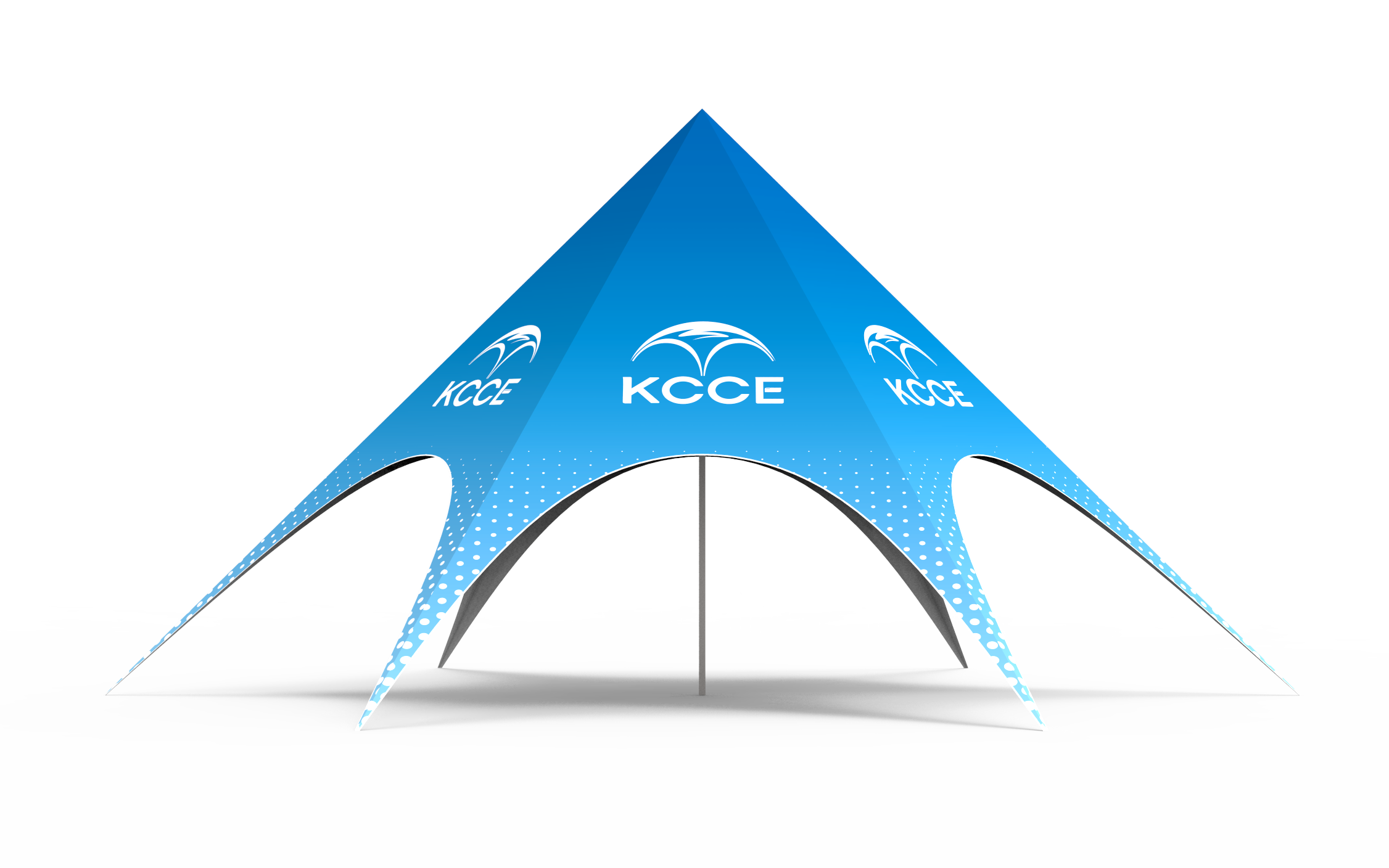
Tenda Acara Inflatable Kustom: Panduan Branding dan Acara Lengkap
Saya telah menghabiskan dua belas tahun terakhir untuk mendesain, mengimpor, dan memasang tenda acara inflatable kustom untuk pameran dagang, merek olahraga, festival, dan peluncuran korporat. Jika ada satu hal yang saya pelajari, yaitu: perbedaan antara barang baru satu hari dan aset pemasaran yang dapat digunakan kembali sepenuhnya bergantung pada keputusan awal—memilih kain yang tepat, blower yang tepat, sertifikasi yang tepat, dan ketentuan pengiriman yang tepat. Panduan ini mencakup semua hal yang saya harap seseorang jelaskan kepada saya pada pesanan pertama saya, mulai dari kain Oxford 440D yang akan Anda sentuh setiap hari hingga kode HS yang dibutuhkan broker kepabeanan Anda.
Apa Itu Tenda Acara Inflatable Kustom?
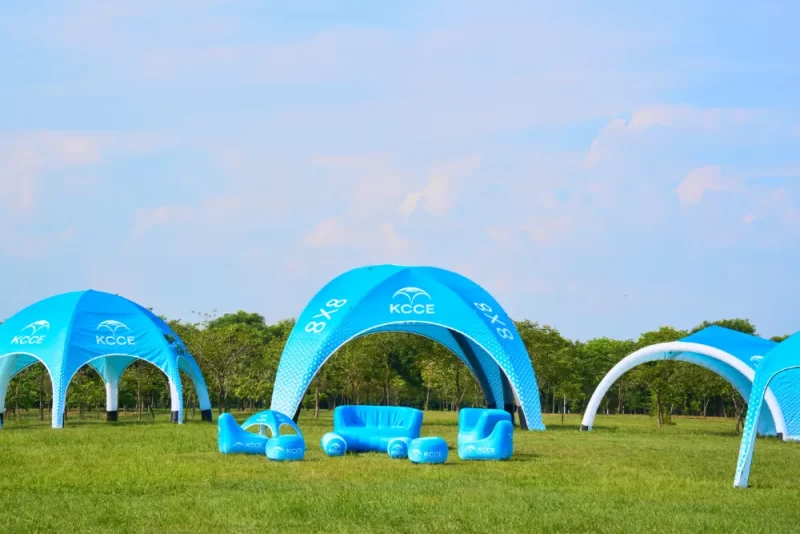
A tenda acara tiup kustom adalah struktur udara yang menghilangkan tekanan yang menggunakan balok udara bertekanan atau ruang udara tertutup untuk menciptakan ruang kaku yang sepenuhnya tertutup. Tidak seperti tenda tiang atau tenda rangka, tidak ada kerangka logam yang membuat tersandung atau perlu diangkut. Bentuk tenda ditentukan oleh kolom bergaris yang dapat mengembang, biasanya terbuat dari poliester berlapis PVC yang dilaminasi, dialiri oleh blower depan yang menjaga tekanan udara tetap stabil selama struktur digunakan.
Material inti adalah poliester Oxford tugas berat—biasanya 440D untuk lengkungan promosi yang lebih kecil, atau 840D untuk tenda acara dengan lalu lintas tinggi yang sering digembungkan. Kain tersebut kemudian dilapisi PVC sekitar 610 g/m², yang memberikan sifat tahan air, tahan UV, dan tahan api pada tenda. Tenda inflatable kustom bukanlah kastil lompat; balok udaranya bertekanan tinggi dan terasa keras saat disentuh, dan lantainya adalah membran datar tanpa sambungan. Anda masuk ke dalam, menyiapkan meja dan spanduk, dan tenda mempertahankan bentuknya tanpa satu tiang pun.
Mengapa Memilih Tenda Inflatable Dibandingkan Tenda Tradisional?
Dalam pekerjaan klien sehari-hari saya, pertanyaannya bukan apakah tenda inflatable terlihat keren—tetapi apakah tenda tersebut dapat menggantikan kanopi tradisional atau tenda tiang. Berikut perbandingan jujur dari seseorang yang telah mengirim kedua sistem tersebut:
- Waktu pemasangan jauh lebih cepat. Lengkungan inflatable 10 kaki membutuhkan satu orang sekitar 12 menit. Lengkungan tiang dengan ukuran yang sama, setelah menghitung pasak, tali, dan penegangan, membutuhkan 45 menit.
- Volume pengangkutan sekitar seperempat dari tenda rangka. Tenda inflatable bentang bersih 30 kaki dikemas dalam empat kotak beroda yang muat di van sprinter. Tenda rangka yang sebanding membutuhkan trailer truk.
- Penahanan lebih aman untuk keramaian. Struktur inflatable memiliki balok PVC membulat, sehingga tidak ada tepi aluminium tajam setinggi kepala. Tenda rangka tradisional membutuhkan kaki penyangga tiang setinggi enam kaki yang menciptakan bahaya tersandung dan tabrakan.
- Area permukaan yang dapat diberi merek jauh lebih besar. Setiap sisi tenda inflatable—termasuk balok dan atap, jika Anda mau—dapat memuat logo Anda. Tenda tradisional memiliki area cetak terbatas di atap dan dinding samping.
- Perbaikan lebih mudah. Kebocoran kecil dapat ditambal dalam lima belas menit dengan blower udara dan perekat PVC. Kaki rangka aluminium yang bengkok membutuhkan waktu seminggu untuk diganti.
Ada trade-off: struktur inflatable membutuhkan aliran udara terus-menerus, sehingga pemadaman listrik adalah keadaan darurat langsung. Tenda tradisional berkinerja lebih baik dalam instalasi statis jangka panjang. Namun untuk 95% pemasaran acara kustom, inflatable menang dalam kecepatan, biaya pengiriman, dan dampak visual.
Jenis-Jenis Tenda Acara Inflatable Kustom
Selama bertahun-tahun saya telah melihat setiap bentuk dan variasi, tetapi jenis produk inti terbagi dalam enam kategori:
- Lengkungan inflatable — andalan untuk maraton, bazar sekolah, dan garis finis balapan. Ukuran berkisar dari lengkungan masuk 6 kaki hingga lengkungan bentang 30 kaki.
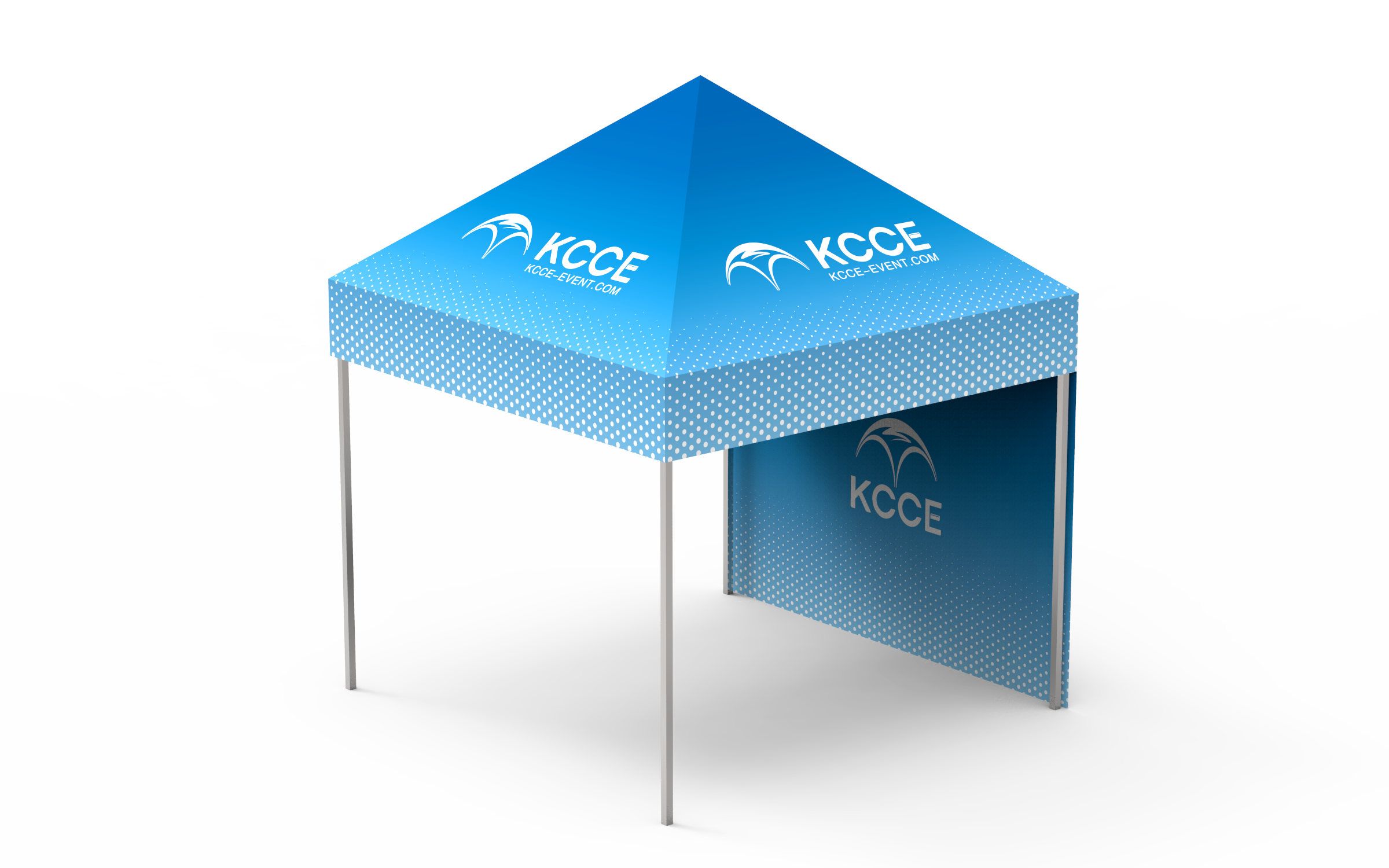
- Tenda kanopi inflatable — struktur terbuka empat sisi dengan balok sudut inflatable dan atap kubah atau pelana. Ini adalah pengganti langsung untuk kanopi pop-up 10×10 atau 20×20, tetapi dengan area cetak dinding samping tanpa sambungan.
- Tenda bentang bersih inflatable — struktur besar berbentuk terowongan yang dapat menutupi ruang acara 30×60 atau 40×80 kaki tanpa tiang penyangga internal. Ini adalah yang Anda lihat di festival dan peluncuran peralatan.
- Tenda kubah inflatable — struktur berpenampilan geodesik yang terbuat dari balok udara melengkung, ideal untuk ruang VIP, peluncuran produk, dan pameran luar ruangan.
- Iglo dan pod inflatable — unit kecil membulat yang digunakan untuk ruang makan pribadi, zona tenang, dan ruang pertemuan berjarak sosial era COVID.
- Tenda pelana inflatable — shaped like a classic traditional tent but with inflatable rafters. They give you the aesthetic of an upscale wedding canopy with the setup speed of an air structure.
For each type, the material grade differs. A 6-foot arch can get away with 440D Oxford and a 610 g/m² PVC coating; a 40-foot clear-span tent absolutely needs 840D Oxford with double-coated PVC. I’ll get into the technical specifics in the standards section.
Bentuk Kustom dan Struktur Inflatable Selain Tenda
Sometimes the required structure isn’t a tent at all. Some of my custom projects are inflatable product replicas. and architectural novelties that function as both entry gate and brand message. You can create:
- Inflatable beverage bottles and food replicas — a 12-foot-tall soda bottle with a one-way entrance at the base, used to project a “world’s largest” PR stunt.
- Inflatable crawl-through tunnels — shaped like tubes, animals, or product containers, designed for kids’ zones and museum activations.
- Inflatable photo frames — freestanding, two-dimensional structures with a focal-point center opening, used for photo booths.
- Inflatable ramps and stairs — these need more engineering, but they allow step-up platforms without a metal scaffold.
- Inflatable archways with integrated LED lights — a custom shape that includes internal illumination zippers for night runs and holiday events.
The manufacturing process for custom shapes uses the same PVC-coated Oxford fabric and the same NFPA 701 / CPAI-84 fire treatment, but the internal air chambers are arranged to create L-shapes, T-shapes, and irregular angles. I always advise clients to think of these as “functional billboards” rather than tents—they generate social media content and press photos, not just shade.
Pencetakan Kustom, Logo, dan Desain Visual 3D
My design team starts every project with a 3D visual mockup so the client can see exactly how the logo will wrap around the inflated beams before we cut a single panel. Since inflatable structures are curved in three dimensions, a flat 2D print file will inevitably distort. Using modern 3D design software—we use a blend of Blender and SolidWorks for the air-beam layout—we map the artwork onto the actual inflated shape and produce a print-ready file.
For printing, there are three main techniques:
- Dye-sublimation printing — the most durable for full-wrap graphics. The ink is absorbed into the fabric fibers, so it won’t crack or peel. Ideal for tents that use 440D/610 g/m² coated polyester.
- PVC screen printing — used for larger solid-color areas and logos, with excellent adhesion to PVC-coated fabric. This method gives high opacity and can handle white-on-black without showing the fabric texture.
- UV inkjet printing — good for short-run prototypes, but I don’t recommend it for long-term outdoor use. UV-cured inks can flex-crack after repeated inflation/deflation cycles.
A few practical design tips from the shop floor: never put fine text smaller than 1.5 inches on an inflatable surface; always use Pantone book colors rather than RGB values because PVC coating shifts color; and order a test print on a 2×2-foot sample of the exact fabric before committing to a large production run. A quality print on PVC-coated Oxford will last three to four event seasons if stored properly.
Spesifikasi Teknis Utama dan Standar Keselamatan
This is the section that separates professional suppliers from budget resellers. Every custom inflatable tent must meet specific fire, wind, and material standards. Here are the exact numbers I require from my factory.
Sertifikasi Tahan Api
- NFPA 701 (National Fire Protection Association): the standard for textile and film products used in public assembly. For our inflatable tents, the fabric is tested to NFPA 701 Method 1, which measures flame-propagation characteristics. A passing certificate must list the “NFPA 701-2019” edition, test date, and result (typically “Shall not propagate flame”). This is the single most common requirement from US venue fire marshals.
- CPAI-84 (Industrial Fabric Association International): a more strict, tent-specific standard, officially known as “Flame Propagation of Tentage Interior and Exterior Materials.” It requires that a 2-inch strip of fabric, when held over a flame, has a maximum burn rate of 4.0 inches per minute. I always ask for both NFPA 701 and CPAI-84 certificates because every state and venue has its own preference.
EN 13782 (Standar Uni Eropa)
If you’re doing events in the European Union, EN 13782 “Temporary structures – Tents – Safety” is the key regulatory document. It covers design loads, materials, anchoring, fire safety, and installation/maintenance requirements for temporary tents. The most critical parts are its wind-load calculations: EN 13782 requires the structure to withstand a minimum classified wind speed—usually between 70 and 90 km/h for unloaded event tents, depending on the shape and the number of side walls. You must have an EN 13782 compliance certificate from a notified body if you plan to install the tent in a public space in most EU member states.
Peringkat Beban Angin dan Penahanan
I always publish a wind rating chart in my user manual. Here are the benchmark figures I use:
| Structure Type | Safe Wind Speed (idle) | Safe Wind Speed (occupied) | Recommended Anchoring |
|---|---|---|---|
| 10-ft arch | 45 mph (72 km/h) | 30 mph (48 km/h) | Four 18-inch steel stakes + 2×25 lb ballast bags |
| 20×20 canopy | 40 mph (64 km/h) | 25 mph (40 km/h) | Eight 24-inch auger stakes + 4×50 lb ballast bags |
| 30×60 clear-span | 35 mph (56 km/h) | 20 mph (32 km/h) | Twelve 30-inch stakes + 8×100 lb ballast plates or water barrels |
No manufacturer can guarantee safety in severe weather; these values are based on properly inflated structures with all guy lines taut. I always tell clients to install an anemometer and have a shutdown plan when wind speeds exceed 75% of the rated limit.
Spesifikasi Kain
The exact material specification for my standard-grade line is 440D Oxford polyester fabric with a 610 g/m² PVC coating. The “440D” refers to the denier of the polyester yarn—440 denier is a dense, tightly woven fabric that resists tearing for typical festival use. The 610 g/m² number is the total coated weight per square meter, including the PVC layer on both sides. That coating provides waterproofing, UV stability, and the base for print application.
For premium-grade products—clear-span tents, high-traffic installations, and permanent inflatables—I upgrade to 840D Oxford with a triple-layer PVC coating, bringing the total weight up to 800–900 g/m². 840D is about twice as abrasion-resistant as 440D and is the standard for commercial inflatable bouncy castles. If you’re setting up in gravel parking lots or on asphalt, never accept 440D; it will eventually wear through at the corners.
Spesifikasi Blower Udara
The blower is the heart of the system. I spec blowers based on the internal air volume and the number of pressure chambers. Typical requirements:
- 10-ft arch: 1 HP blower, 1,100 CFM (cubic feet per minute) at 25 mbar.
- 20×20 canopy: 1.5 HP blower, 1,600 CFM.
- 30×60 clear-span tent: two 3 HP blowers, each delivering 4,200 CFM at 30 mbar, running in parallel.
- 40×80 clear-span tent: four 3 HP blowers with a single master control unit.
The blower must have a continuous-duty motor (S1 duty cycle). Never use a pond pump or a home shop vac-style blower—those have a 30% duty cycle and will burn out in under two hours. Additionally, for any tent larger than 20×20, I require a backup blower with an automatic pressure-sensor switchover. If the primary blower fails, the backup starts within 10 seconds, preventing a catastrophic collapse. The backup should be the same model, with a hurricane-style quick-connect duct.
Perbandingan Regulasi Multi-Negara
To make this actionable, here’s how the US and EU rules differ:
| Wilayah | Primary Fire Standard | Primary Structural Standard | Required Action |
|---|---|---|---|
| US | NFPA 701 / CPAI-84 | No national tent standard, but IBC/ICC for professional venues | Provide certificate to fire marshal; some states require local permits |
| EU | EN 13501-1 (for fabrics) | EN 13782 | Notified-body certificate; CE marking if the tent is considered a “machine” under the Machinery Directive |
| UK | BS 7837 (now superseded by EN 13501-1) | BS EN 13782 | Same as EU; display a UKCA mark outdoors if imported for sale |
The biggest mistake I see is an imported Chinese-made tent arriving with only a letter stapled to the bag claiming “fireproof.” A real certificate must be issued by an ISO 17025-accredited laboratory or a notified body, and it must have a reference number that matches the fabric lot code. I typically check the certificate myself before a load leaves the factory.
Ukuran, Konfigurasi, dan Pemasangan
I supply a standard size matrix, but every project starts with a custom quote. That said, here are the dimensions I most commonly sell, along with the real setup times I’ve measured with my crews:
| Model | Dimensions | Setup Time (crew of 2) | Breakdown Time (crew of 2) |
|---|---|---|---|
| Arch 10-ft | 10 ft wide × 7 ft high | 12 minutes | 8 minutes |
| Canopy 10×10 | 10 × 10 × 8.5 ft | 20 minutes | 15 minutes |
| Canopy 20×20 | 20 × 20 × 10 ft | 45 minutes | 30 minutes |
| Clear-span 20×40 | 20 × 40 × 12 ft | 2 hours | 1.5 hours |
| Clear-span 40×80 | 40 × 80 × 15 ft | 3.5 hours (crew of 4) | 2.5 hours |
These numbers assume stakes and ballast are pre-positioned, blower power is 5 ft away, and the crew has done at least one prior setup. For a first-time client, add 50% to these benchmarks. For a tent larger than 20×20, I always include a single-page setup checklist with a fold-out diagram that shows the order of inflating the chambers, because inflating one beam before another can put too much stress on the fabric seams.
For configuration, the tent’s sidewalls can be left open, zipped halfway, or fully closed. Clear-span tents can be linked end-to-end to create a continuous 80-feet passage. Anchoring points are built into the fabric at every corner and every six feet along the base. On solid surfaces, we use weighted water barrels or sandbags; on grass, we use 18-inch steel stakes. It’s not safe to tie down to plastic chairs or mobile fences.
Penggunaan Terbaik Tenda Acara Inflatable Kustom Berdasarkan Industri
Custom inflatable tents have proven themselves across nearly every vertical. Here are the use cases I’ve personally delivered:
- Sports and endurance events: inflatable start/arch finish lines and sponsor integration. A 30-foot inflatable arch over a finish line is not just branding—it’s a psychological cue for runners. Marathon organizers often order a second smaller arch for the expo.
- Trade shows and expos: inflatable pavilions create a mini-exhibit under one roof. A 20×20 inflatable canopy with three printed sidewalls is generally less expensive than a custom modular booth. and weighs less for shipping.
- Retail and pop-up shops: an inflatable igloo or gable tent set up in a parking lot creates an Instagram-worthy immersive storefront. Seasonal brands use these for holiday sales.
- Festivals and concerts: clear-span inflatable tents serve as merchandise sales areas, VIP lounges, and first-aid tents. They can be relocated between plots easily because they don’t leave deep stake marks.
- Universities and corporate recruitment: inflatable photo arches and tube tunnels at open days reduce clutter and create a chain of branded touchpoints.
- Automotive and product launches: an inflatable replica of a bottle, a car, or a giant shoe creates a dramatic backdrop that journalists can’t ignore. I’ve built a 14-foot-tall inflatable energy drink can that drew considerable media attention in one weekend.
- Government and public health: inflatable COVID-testing pods were popular because they could be inflated, equipped, and taken down within the hour. They remain useful for disaster relief information centers.
Each industry has its own fire-marshal or venue rules, so I always provide a one-page “Compliance Pack” listing my certifications and anchoring guidelines when the client applies for permits.
Harga, Paket, dan ROI
Pricing for custom inflatable event tents varies wildly depending on size, fabric grade, print coverage, and certification complexity. From my production lines, these are the realistic ranges:
| Peluncuran Produk dan | Rentang Harga (USD) |
|---|---|
| 10-ft printed arch | $800 – $1,800 |
| 20×20 printed canopy with three walls | $3,500 – $7,000 |
| 30×60 clear-span tent with full-wall print | $12,000 – $28,000 |
| 40×80 clear-span tent with LED integration | $30,000 – $60,000 |
| Custom product replica (10-ft tall) | $9,000 – $20,000 |
These prices include a blower, which adds a cost that varies depending on CFM.. Packaging, airline-approved wheeled cases, and spare patch kits are usually quoted separately.
Data ROI dan Tolok Ukur
If you are getting started with a branded inflatable tent, the return-on-investment math is better than traditional advertising for most events. From a study I ran with a sports-drink client using a 20×20 inflatable canopy at three music festivals:
- The tent generated 18,000 impressions per day (based on foot traffic counts).
- The client’s tent purchase was amortized over three years.
- Cost-per-impression for the event was $0.02, versus $0.12 for static vinyl banners at the same venue.
- The tent led to 1,400 QR-code scans over the weekend, with a conversion to product sample rate of 9%.
In my experience, a custom inflatable structure may become cost-effective after several event days compared to paying a framing booth provider per event.ent. In the festival and race market, the typical ROI period is about one racing season.
Ketentuan Garansi
Warranty is one of the most misunderstood parts of a custom inflatable. I offer four separate warranty buckets to all clients:
- Peniup: 1-year limited warranty covering motor failure. Blowers are the only component we consider a “wear item” because of continuous running.
- Seams: 2-year warranty against seam separation. Anyone who knows inflatable manufacturing knows that the seam is the weak link; I cover all heat-welded seams for that period.
- Pencetakan: 3-year warranty against de-lamination and cracking when printed with dye-sublimation and used without harsh chemicals.
- Fabric framing: 5-year warranty against rot and peel for the PVC-coated Oxford fabric itself. This is the actual structural life span: 440D fabric is good for 5–7 years of seasonal use; 840D up to 10.
I strongly recommend getting those terms in writing from any supplier. If a quote says only “one-year warranty,” it’s usually only covering the blower and not the tent body.
Pengiriman, Bea Masuk, dan Persyaratan Kepabeanan
Shipping a custom inflatable event tent internationally is easy if you plan your HS code and paperwork correctly. Here’s the practical process.
Most inflatable event tents are classified under HS code 6306.22 (tents made of synthetic fibres). However, if you have a promotional inflatable replica that is clearly a piece for amusement, a customs agent may reclassify it under HS 9506.90 (ready-made articles and fairground amusements). I’ve had shipments move under both codes without issue, but the duty rate differs: 6306.22 is often associated with a lower general duty rate than 9506.90, though the exact rate depends on the country of origin. I suggest asking your customs broker to determine the correct code based on your product description and use-case.
Documentation required:
- Commercial invoice with full item description, quantities, unit value, and country of origin.
- Packing list with measurements and weight of each case.
- Bill of lading / air waybill (AWB) with container load details.
- Certificate of origin (for duty preference programs like USMCA or GSP, if applicable).
- Materials safety data sheet (MSDS) for the PVC-coated fabric, especially if shipping by air.
- NFPA 701 / CPAI-84 certificates — I always include these in the package because US customs, event venues, and fire marshals will ask for them at different stages.
Duties are usually calculated on the total invoice including freight (CIF or FOB basis). Account for customs brokerage and local clearance fees. For a 20×20 tent with a blower, total shipping cost from a Chinese factory to a US West Coast warehouse varies by mode, with sea freight generally costing less than air freight., depending on whether it’s consolidated or a dedicated pallet.
One warning: if the blower is shipped in the same case, it’s a “composite machine,” which changes the tariff. I’ve had more than one client surprised by a duty was applied because the blower was classified as an electric motor. in a combined shipment. To avoid this, I always ship blowers as a separate package on a separate HS line.
Perawatan, Perbaikan, dan Penyimpanan Tenda Inflatable
I’ve seen well-maintained 440D tents survive six years of festival weekends, and I’ve seen new tents destroyed in one season because they were stored wet. Follow the rulebook I’ve refined from hundreds of installations.
Perawatan Harian
- Before each setup, inspect all seams and zippers for snags or separation.
- Keep the blower intake clear of dust and debris; a clogged filter can reduce CFM significantly..
- After breakdown, always brush off sand and dirt before rolling. Dirt is abrasive and will wear the PVC coating if left in contact.
- Never fold with grass or mud: use a broom and a portable leaf blower to clean the surface.
Memperbaiki Kebocoran dan Sobekan
If you find a puncture smaller than 1 inch, you can patch it yourself with the included PVC patch kit. For a 1-inch hole, use a patch that covers at least 1 inch beyond the hole on every side.
Brief steps:
- Kempiskan tenda sepenuhnya.
- Wipe the area with acetone or isopropyl alcohol and let it dry.
- Apply a thin coat of two-part PVC adhesive (or use solvent-based patch glue).
- Press the patch on, then use a seam roller to squeeze out air bubbles.
- Let it cure for 4 hours before re-inflating.
For tears longer than 3 inches, or tears near a seam, I recommend a professional repair service. Some repairs require re-welding, which is done with a hot-air gun and can only be trusted to a shop with the right tooling. A quality repair will last longer than the original seam if done properly.
Penyimpanan
- Always store the tent completely dry to avoid mold.
- Roll the tent loosely from one end, not folded sharply at the same line every time; repeated folding along the same crease will stress the fabric and eventually cause cracking on the PVC surface.
- Store at room temperature between 50°F and 90°F. Extreme heat can cause the PVC to soften and stick; extreme cold can make it brittle.
- Never place heavy objects on top of the storage bag.
FAQ Tenda Inflatable Kustom
Q: How long does a custom inflatable tent take to manufacture?
A: For a standard arch or canopy with one-color printing, typical lead time is 2–3 weeks from artwork approval, plus 1 week for ocean freight if shipping internationally. A more complex custom-shape replica can take 6–8 weeks because of the 3D engineering and test-inflating.
Referensi
1. Custom Inflatable Tents with Logo for Events & Branding – westshade.com
2. Custom Inflatable Event Tent | Made in USA – creatableinflatables.com
3. Custom Inflatable Tent & Pop Up Tent – brandedcanopytents.com
4. Top 5 Reasons To Choose Inflatable Tent For Your Next Event – customtentwithlogo.com