Quick Answer
X-shaped inflatable advertising tents — people also call them spider tents — are winning over brands for a few practical reasons: they inflate in minutes, they wrap a logo across a full 360° surface, and they pack down into a single bag. Speed, visibility, repeat-use value. That’s the combination event marketers keep coming back for.
Walk through any trade show floor or outdoor activation these days and you’ll notice something. The plain white pop-up canopies are still there, sure. But the booths that actually pull a crowd? A lot of them are sitting under a weird, angular, almost spider-like silhouette that seems to float without poles. That’s the X-shaped inflatable advertising tent, and it’s quietly become the go-to structure for brands that care about being seen, not just being sheltered.
I’ve watched this shift happen over the past few years. Honestly, it wasn’t love at first sight for me either — I was a frame-tent guy. But after enough events where the inflatable setup beat us to the ground and drew three times the foot traffic, I started paying attention. Here’s what I’ve learned, plus a straight comparison so you can decide for yourself.
What Is an X-Shaped Inflatable Advertising Tent?
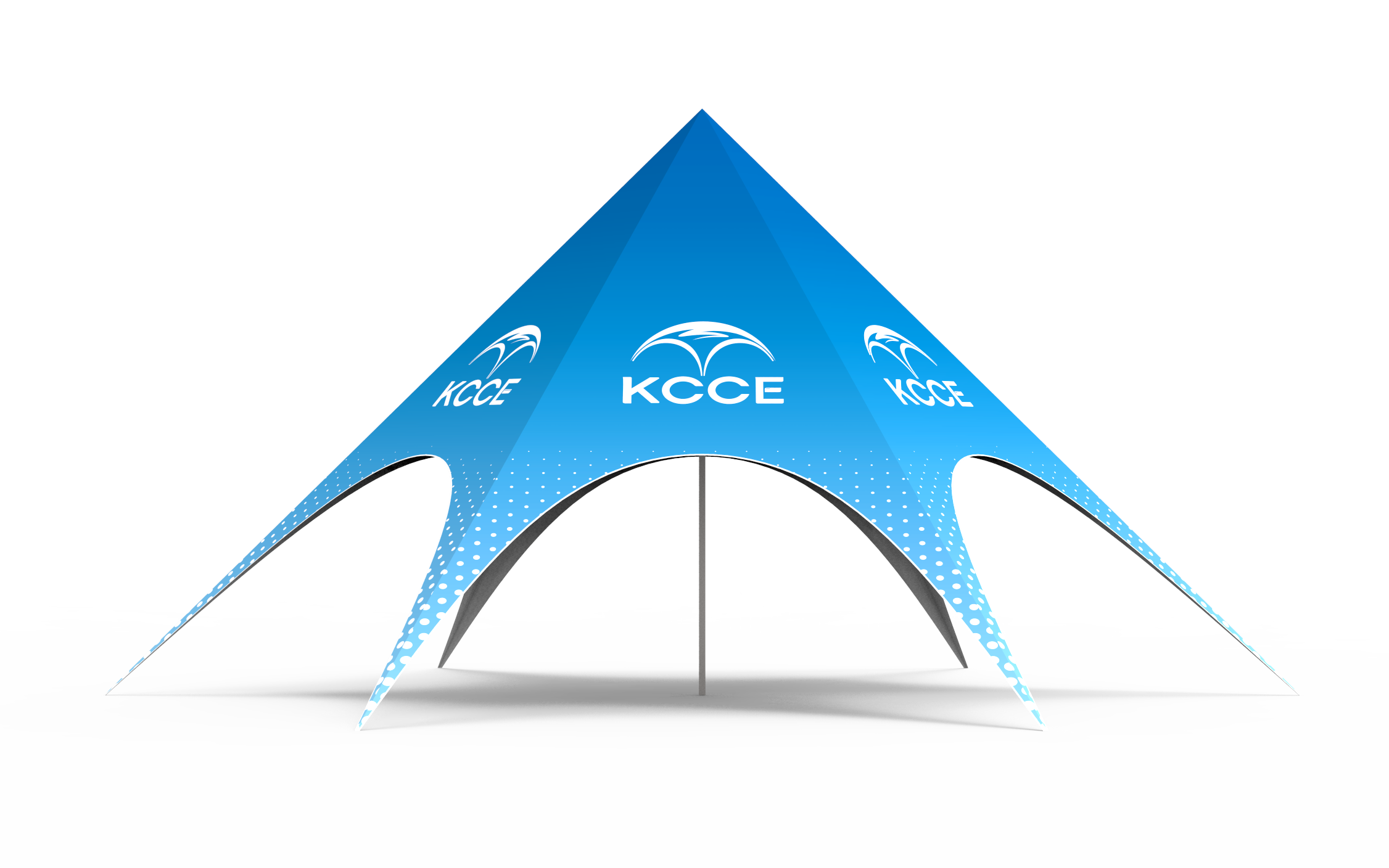
An X-shaped inflatable advertising tent is a portable structure built from inflatable air beams that cross in an X (or spider-leg) pattern, creating a wide, stable canopy with no metal frame. Because every leg and panel is a printable surface, it works as a freestanding billboard as much as a shelter.
The form factor matters more than people give it credit for. A traditional square canopy has one obvious “front” — the valance where your logo goes. An X-shaped inflatable, by contrast, gives you a 360° branding surface. Logos, taglines, brand colors, even full photographic prints can wrap around the legs and the roof panels. From the entrance, from the side, from a drone shot overhead — it reads as your brand.
That silhouette recognition is the quiet superpower here. In a sea of identical rectangles, an angular spider tent stands out at a distance. And in event marketing, being noticed from 200 feet away is half the battle.
Why Brands Are Switching: The Core Reasons
Let me just list these out, because the reasons are pretty concrete and I don’t want to bury them in prose.
- Aufbaugeschwindigkeit. Inflatable tents go up in minutes with a blower; frame tents can eat an hour or more of crew time.
- Branding area. A 360° printable surface versus a single valance face.
- Visual standout. The X-shape reads as a distinct object, not generic shelter.
- Logistics. They deflate and fold into a compact bag — easier to transport and store.
- Reusability. A well-made inflatable is a repeat-use asset across a whole season.
- Weather coverage. With proper anchoring, they handle wind and rain while keeping a sealed, dry interior.
You might be wondering whether all six actually hold up in the real world. Fair question. Let me take them one at a time.
Setup Speed and Event Logistics
This is where inflatables crush the competition, and I don’t say that lightly.
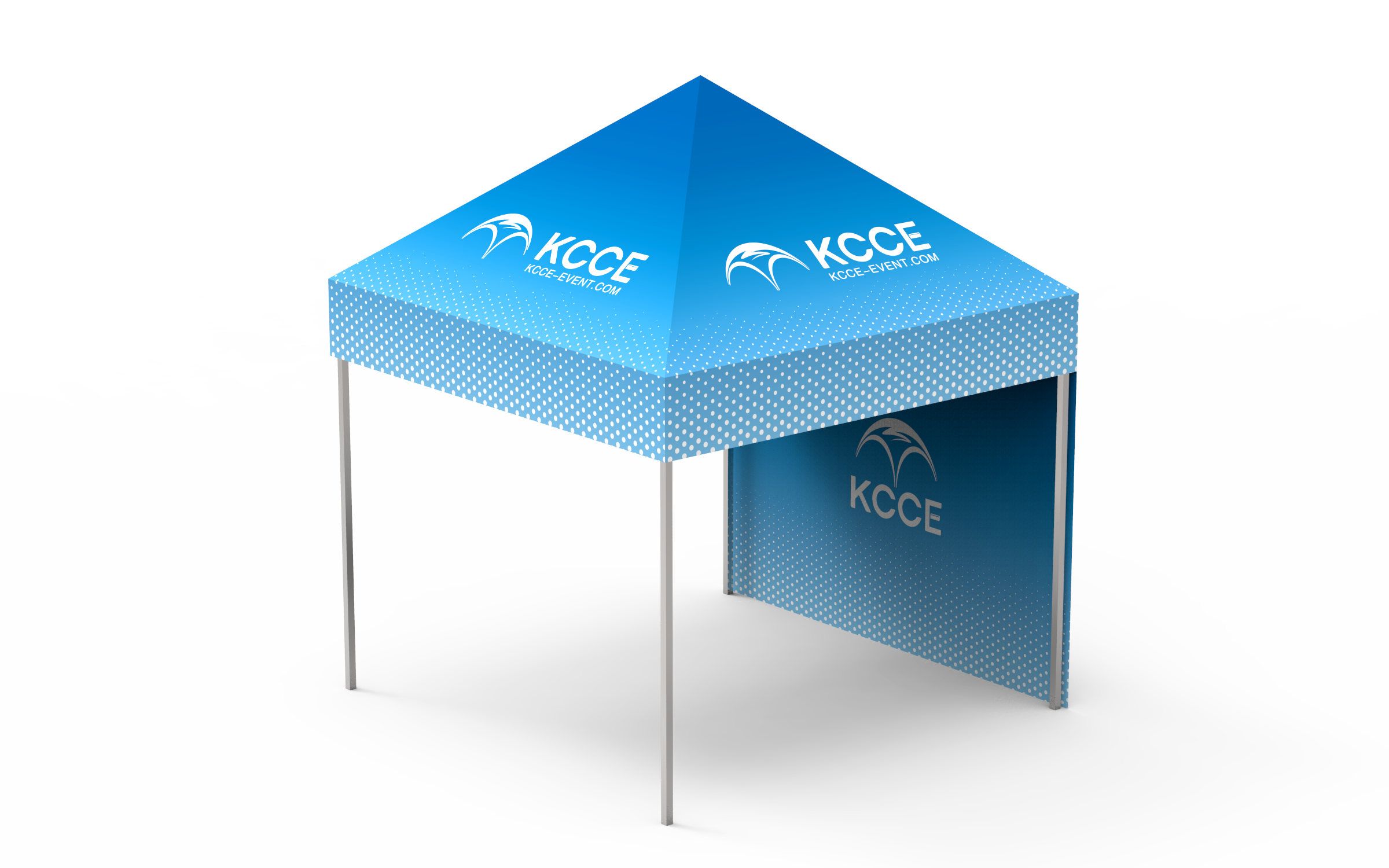
A frame tent — the classic pop-up or pole tent — needs a crew. You’re unfolding poles, locking joints, stretching fabric, and usually two to three people are involved. Add wind and it gets annoying fast. An X-shaped inflatable, on the other hand, gets staked down, hooked to a blower, and inflated. Two people can manage it. Sometimes one, if they know what they’re doing.
Here’s the time math that changed my mind. Say a frame tent costs you 45–60 minutes of two people’s time per setup. Across a 20-event season, that’s a real chunk of labor hours you’re paying for — plus the wear-and-tear of repeated assembly. An inflatable that goes up in a fraction of that time, and packs down just as fast, changes your per-event cost structure. You’re not just saving minutes; you’re saving crew shifts.
Transport and storage matter too. Deflated, an inflatable folds into a bag you can throw in a van or even check as luggage. No long pole bundles. No dedicated trailer. For brands doing a multi-city tour, that’s a genuine logistics win.
Branding and Visibility Advantages
Let’s talk about why this actually moves the needle on marketing, not just operations.
The 360° coverage is the headline. With a maßgeschneidertes aufblasbares Zelt, you’re not limited to one logo strip. You can print full-color graphics on the legs, the roof, the interior walls — anywhere. Brands use this for product imagery, campaign slogans, even QR codes that people scan from their seats.
Then there’s the aerial and photo angle. Event photography is dominated by overhead and wide shots. An X-shaped structure photographs beautifully from above because the geometry reads clearly. That means your spider tent branding shows up in attendee photos, press coverage, and social posts — the kind of organic reach you can’t buy.
Compare that to a single-face canopy. From behind, it’s a blank wall. From above, it’s a rectangle. The inflatable wins the visibility contest almost by default.
And here’s a phrase worth remembering: Inflatable Tents Are Revolutionizing Outdoor Brand experiences precisely because the structure itself becomes the advertisement. You’re not renting space and hanging a banner. The tent is the banner.
X-Shaped Inflatable vs. Traditional Frame Tents
I promised a straight comparison, so here it is. No spin.
| Faktor | X-Shaped Inflatable | Traditional Frame Tent |
|---|---|---|
| Einrichtungszeit | Minutes (blower-assisted) | Often 45–60 min with a crew |
| Crew needed | 1–2 people | 2–3 people |
| Branding surface | 360° printable | Mainly front valance |
| Windverhalten | Flexible, needs proper anchoring | Rigid frame, can bend or fail |
| Lagerung | Folds into a bag | Pole bundles, bulkier |
| Reparatur | Patchable air beams | Frame parts, fabric tears |
| Am besten geeignet für | High-visibility brand activations | Budget shelter, simple cover |
Wenn die Leute also fragen Inflatable Tents vs. Traditional Frame Tents: Which One is right for them, my honest answer is: it depends on your goal. If you just need shade and a table, a frame tent is fine and cheaper up front. If your goal is brand exposure at an Outdoor Event oder Trade Shows, the inflatable earns its keep.
The frame tent’s advantage is rigidity and lower entry price. The inflatable’s advantage is speed, visibility, and repeat-use value. Neither is “better” in a vacuum — it’s about what you’re optimizing for.
Addressing Buyer Concerns
This is the part I care most about, because the questions people ask me are real and reasonable. Let’s go through them.
Windstabilität. Yes, inflatables can handle wind — if they’re anchored properly. That means ground stakes, sandbags, or ballast weights, and guy lines where appropriate. The flexible air beams actually absorb gusts rather than fighting them, which is a plus. But skip the anchoring and any tent, inflatable or frame, becomes a kite. This is a wind-resistant structure only when you treat anchoring as non-negotiable.
How long does setup take? For a typical event-size unit, inflation is a matter of minutes once it’s staked and connected to the blower. The full process — positioning, anchoring, inflating, dressing — is where the time adds up, but it’s still well under a frame tent’s assembly.
Deflation and storage. Deflating is fast: disconnect the blower, let it breathe, fold it. Store it dry and clean to protect the material. That’s it.
Repair. Air beams are patchable. A puncture isn’t a death sentence — most manufacturers supply repair kits, and a patch on an air beam is a straightforward job. Compare that to a bent frame section or a torn canopy, which can be harder to field-fix.
Reliability and durability. This is the honest pain point the community raises — people want real-world proof before they commit. The answer is material quality and construction. Look for reinforced fabrics, sealed seams, and a manufacturer with a track record. Same logic as buying any durable good: cheap ones fail, good ones last seasons.
Cost, Customization, and ROI
Let’s be upfront about money, because that’s what decision-makers actually need.
What drives the price of custom inflatable advertising tents cost? A few things:
- Größe. Bigger footprint, more material, higher price.
- Material. Standard PVC versus heavier-duty or flame-retardant options.
- Printing. Full-color, all-over graphics cost more than a single logo.
- Blower and accessories. You need a properly sized blower, plus anchoring hardware.
- Custom shapes. A fully bespoke design runs higher than a stock X-shape.
The ROI argument is where it gets interesting. A frame tent is a one-time-ish purchase too, but it’s a shelter. An inflatable is a marketing asset — it generates photos, draws foot traffic, and reinforces brand identity at every event. If you’re doing a full season of activations, you’re amortizing that cost across dozens of appearances.
Speaking of which — a quick note on the supplier side. Manufacturers like Dacheng outdoor products LTD. (KCCE), established in 2006, specialize in exactly this category: inflatable advertising products engineered for events, exhibitions, and promotional campaigns where visual impact is the priority. Their range includes inflatable tents, inflatable furniture, and custom shapes built around brand logos. They operate a facility with multiple production machines and skilled staff, and they hold CE and RoHS compliance — with products shipped to numerous countries and primary markets in Europe and the US. That kind of footprint is worth checking when you’re vetting a supplier for a multi-event campaign.
Durability and Weather Adaptability:Handling Various Outdoor Conditions
The honest truth about inflatable tents is that durability lives or dies by two things: the base fabric and the blower. Most commercial-grade X-tents use Oxford polyester with a PVC or TPU coating on both sides. That double-coating is what makes them waterproof rather than just water-resistant. Cheaper 210D single-coated versions will bead light rain for a season, then start wicking at the seams.
Wind is the real test. A properly anchored X-tent using steel stakes at every leg plus guy lines holds steady in sustained wind. Past that, you deflate and pack up — no structure beats physics. I’ve ridden out a surprise 35 km/h gust front at an outdoor festival with a 3×3 m inflatable while a nearby frame canopy flipped. The difference was anchoring, not the tent.
For UV, look for UV-stabilized coatings rated for extended hours of direct sun. Without it, printed graphics fade in one summer season. Rain pooling on the roof panels is normal — the X geometry sheds water toward the leg junctions, so make sure your blower stays running or the beams soften and sag.
Applications of Inflatable Tents in Different Activity Types(Festivals, Trade Shows, Pop-up Stores)
The application set is wider than most people assume, and each venue stresses different features.
Festivals are the brute-force test: mud, wind, thousands of people, no power nearby. Here the sealed interior and rapid setup win. A 5×5 m X-tent becomes a shaded brand lounge or a merch point in under 20 minutes — critical when your load-in window is tight. Battery-powered blowers (1,500 W inverters or gas generators) keep it inflated off-grid.
Trade shows are the opposite — indoor, regulated, and image-driven. Fire marshal rules matter here (more below), and the 360° print surface pays off because attendees approach from every aisle. I’ve seen brands use a 3×3 m unit as a meeting pod and a 6×6 m as a full booth, both with the same graphic template.
Pop-up shops lean on the “asset” angle. A single inflatable can rotate through five mall courtyards or street corners in a month, branding each location identically. Deflated footprint is roughly the size of a golf bag, so a two-person team moves it in a hatchback.
Maintenance and Care Guide
Inflatables are low-maintenance but not zero-maintenance, and skipping the basics is how a three-season asset becomes a one-season write-off.
After every event: fully dry the fabric before folding. Moisture trapped in a folded PVC coating grows mildew that stains prints permanently. Wipe down with fresh water — never solvents, which strip the coating. Check every seam and the blower intake for grit.
Storage matters as much as cleaning. Fold loosely, store in a cool dry space, and never compress the blower tube under heavy gear. Run the blower for 5 minutes every few months during off-season to keep the motor from seizing.
Repairs are DIY-friendly. Most kits ship with PVC patch material and contact adhesive. A puncture under 5 cm patches in 15 minutes and holds full pressure. Keep a patch kit in the carry bag — I’ve never regretted it.
Safety Considerations and Certifications
This is where people get sloppy, so let me be blunt about the rules.
In the US, inflatable structures over a certain size fall under NFPA 701 for flame resistance of the fabric, and many jurisdictions require California Title 19 compliance for flame-retardant textiles. For indoor use, the local fire marshal typically wants a flame certificate on file plus proof of anchoring.
In the EU, the governing standard is EN 14960 for inflatable play equipment (relevant if children are involved) and EN 13501-1 for reaction-to-fire classification of the fabric. Commercial tents generally need a B1 or B-s1,d0 rating. Practical safety rules I follow every time: never operate without full anchoring, keep the blower running continuously (loss of pressure is the #1 failure mode), post a max-occupancy sign, and never block the emergency exit path. For anything over 20 m², I bring a second blower as backup. Ask your supplier for the test reports — if they can’t produce them, walk away.
Sustainability and Eco-friendly Materials
The sustainability story has improved a lot in the last few years, and it’s worth understanding because it affects both your carbon math and your brand narrative.
Traditional PVC-coated Oxford is durable but not recyclable and releases chlorine when incinerated. The shift is toward TPU (thermoplastic polyurethane) coatings, which are chlorine-free, recyclable through specialized streams, and increasingly cost-competitive. Some manufacturers now offer recycled PET (rPET) base fabric — A 5×5 m tent made from rPET can divert plastic bottles from landfill.
Two caveats I’d flag honestly. First, TPU currently costs more than PVC. so it’s a margin call. Second, “recyclable” only means something if a take-back program exists — ask your supplier whether they reclaim end-of-life units. A few European brands now run return-and-recycle schemes where the fabric goes back into new tent production. Without that loop, the green claim is mostly marketing.
For brands whose audience cares about this, the printed surface becomes a talking point, not just a logo.
Long-term Return on Investment Analysis
Let me put actual numbers on this, because “it pays for itself” gets thrown around too loosely.
Take a mid-range 3×3 m X-tent with full-color custom printing. A comparable printed frame tent typically costs less but usually lasts fewer seasons before the fabric and joints degrade. A well-maintained inflatable with UV-stabilized coating and TPU/PVC build lasts longer.
Now the labor line. If an inflatable saves setup time per event, and loaded crew time runs at typical rates, that can result in savings per event. Across multiple events a season, that can add up annually. — often more than the tent’s original purchase price in a single year.
Add the branding angle: a 360° surface means one asset covers what two single-face canopies would. Over a 5-year horizon, Total cost of ownership for the inflatable typically lands below the frame-tent alternative. when you factor in replacement cycles and labor. The break-even point usually arrives during the second season. The math only breaks if you store it wet or skip the anchoring — which, again, is the whole game.
Häufig gestellte Fragen
F: Wer stellt die besten aufblasbaren Zelte her?
A: There’s no single “best” — it depends on your spec. What I’d look for: a manufacturer with real production scale, relevant certifications, and a track record in event marketing. KCCE (Dacheng outdoor products LTD.), for example, has been making inflatable advertising products since 2006, holds CE and RoHS compliance, and exports to 75 countries. Match the supplier’s strengths to your size, printing, and volume needs rather than chasing a brand name.
Q: What are the common problems with air tents?
A: The honest list: punctures if you’re careless with stakes or sharp ground, and wind issues if you skip proper anchoring. Blower failures happen occasionally, so bring a backup for critical events. Some buyers also underestimate setup — it’s fast, but it’s not zero-effort. Most of these are preventable with good material, correct anchoring, and a spare blower. None of them are dealbreakers if you plan ahead.
Q: Are inflatable tents worth the hype?
A: For brand-focused events, yes — in my experience. The 360° branding, the distinctive silhouette, and the fast setup genuinely deliver. For a one-off backyard event where you just need shade, a frame tent is more cost-effective. The hype is real for the right use case: high-visibility activations, trade shows, and multi-event tours where the tent doubles as a billboard.
Q: What are the downsides of using an inflatable tent?
A: Higher upfront cost than a basic frame tent. They need a power source for the blower (or a generator). They demand disciplined anchoring. And they’re bulkier to store than a folded canopy, even though they pack smaller than poles. Weigh those against the speed and branding gains — for most brand marketers, the trade-offs are worth it.
Q: Are Inflatable Tents Good for Events? A Brand Guide — what’s the short version?
A: Short version: they’re excellent for events where visibility and speed matter, and overkill for casual setups. Consider one if you’re doing trade shows, product launches, or outdoor activations where being noticed is the point. Skip it if you just need basic cover on a tight budget.
Q: How a Portable Inflatable Air Tent is Changing Outdoor Event marketing?
A: It’s shifting the tent from “shelter” to “media.” Because the whole structure is printable, brands now treat the tent as a campaign asset rather than equipment. That reframes the buying decision — you’re not comparing tent prices, you’re comparing advertising reach per event. That’s a meaningful change in how marketers budget.
Q: How Inflatable Spider Tents Transform Trade Shows
A: At trade shows, floor space is expensive and competition for attention is brutal. A spider tent’s height and angular silhouette break the visual monotony of rows of square booths. Attendees spot it from across the hall. Combined with full-color graphics, it turns your booth into a landmark rather than just another stall.
Q: Spider Tent X1 Options for Inflatable Event Tents — how do I choose?
A: Think about three things: footprint (match it to your booth or activation space), printing (single logo vs. full-wrap graphics), and blower spec (must match the tent’s volume). Then confirm anchoring hardware and a repair kit. If you’re touring, prioritize pack-down size. If you’re doing one big show, prioritize print quality and height.
Fazit
Here’s the one insight I’d leave you with: in event marketing, silhouette drives recall, not just the logo. People remember shapes before they remember slogans. That’s the real reason brands are switching to X-shaped inflatable advertising tents — the structure itself does the advertising.
So before your next event, ask yourself a blunt question: is your current tent actually earning attention, or just providing shade? If it’s the latter, it might be time to look at a custom inflatable tent quote or a spec sheet. You might be surprised how quickly the math works out.
Quellen
1. Maximize Your Brand’s Impact with Custom Canopy Tents – itsupplychain.com
2. How are event tents changing the way of innovative advertising? – quora.com