خيمة هوائية على شكل حرف L: أفضل الموديلات ودليل الشراء لعام 2026
أنت تخطط لخلوة شركات لمدة ثلاثة أيام. توقعات الطقس غير مؤكدة، ووقت الإعداد محدود، والضيوف يتوقعون الخصوصية ومساحة مشتركة في آن واحد. لقد سمعت عن الخيام الهوائية على شكل حرف L – لكن بصراحة، كل بحث يقودك إلى صفحات أمازون التي لا تتوافق فعلياً مع احتياجاتك. توفر الخيمة الهوائية على شكل حرف L ميزة فريدة مقارنة بالملاجئ المستطيلة التقليدية: جناح مدمج يخلق مناطق منفصلة. ومع ذلك، وعلى الرغم من الطلب المتزايد، لا يوجد مصدر واحد يشرح ما الذي يجب البحث عنه، أو يقارن بين الموديلات الحقيقية، أو يساعدك في تحديد ما إذا كانت مناسبة لفعاليتك أو عملية التخييم الخاصة بك. هذا ما أنا هنا لإصلاحه. سأقدم لك مقارنة بين أفضل الخيام الهوائية على شكل حرف L في السوق، وإجابات على أكثر أسئلة الشراء شيوعاً، وإطاراً لاتخاذ القرار مصمماً خصيصاً لمديري الفعاليات ومشغلي التخييم الفاخر والمخيمين الجادين. لقد أمضيت الجزء الأكبر من عقد من الزمن في العمل في مجال معدات الهواء الطلق، ويمكنني أن أخبرك أن هذه الفئة مدهشة ومحبطة في نفس الوقت. دعنا نقطع الضجيج.
1. ما هي الخيمة الهوائية على شكل حرف L؟
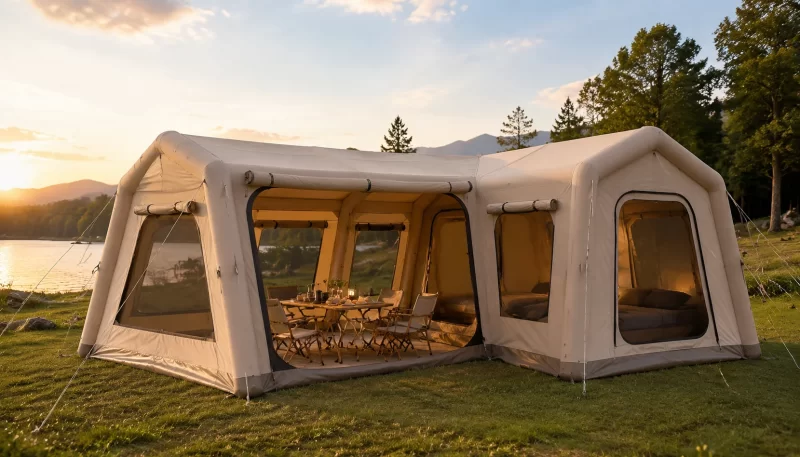
خيمة الخيمة الهوائية على شكل حرف L هي بالضبط ما يوحي به الاسم: مأوى تكون مخططاته الأرضية على شكل “L” بدلاً من الشكل المستطيل أو القبة المعتاد. لكن وصفها بأنها مجرد شكل يقلل من شأن الفكر الكامن وراءها. في تجربتي، يكمن العبقرية الحقيقية للتصميم في كيفية استخدام تلك الزاوية لخلق تقسيم طبيعي للمساحة دون الحاجة إلى ملحق منفصل أو قماش مشمع.
معظم الخيام الهوائية على شكل حرف L في السوق اليوم تستخدم أعمدة هوائية – هياكل مرنة أنبوبية الشكل مصنوعة من TPU (البولي يوريثين الحراري) أو PVC (كلوريد البولي فينيل) – بدلاً من الأعمدة التقليدية المصنوعة من الألومنيوم أو الألياف الزجاجية. تقوم بنفخ الأعمدة، فتقف الخيمة، وتنتقل إلى الجزء الممتع من الرحلة.
كان أحد النماذج المبكرة وغير المتوقعة إلى حد ما لهذه الفكرة هو “Desert Seal”، الذي صممه المهندسان المعماريان أندرياس فوغلر وأرتورو فيتوري. وفقاً لموقع SpaceNews، كانت هذه خيمة هوائية لشخص واحد مصممة لظروف الصحراء، وتم تطويرها لبرنامج نقل التكنولوجيا التابع لوكالة الفضاء الأوروبية (ESA). وأوضح فوغلر: ‘بدلاً من استخدام تقنيات فضائية محددة، فإن Desert Seal مشتق من المنهجية والمبادئ المستخدمة في تصميم وتطوير الفضاء’. حتى أنه تم عرضه في معرض MoMA بعنوان "SAFE: Design On Risk". هذا دليل على أن المفهوم الأساسي – الاستفادة من التقنية الهوائية للأشكال الهندسية المتخصصة – له جذور في التصميم الصناعي الجاد، وليس مجرد التخييم في عطلة نهاية الأسبوع.
اليوم، يُرى تكوين الشكل L بشكل شائع في سياقين: خيام التخييم العائلية ذات الجناح “المعيشي” المنفصل، والمظلات الخاصة بالفعاليات التي تستخدم الزاوية الممتدة كمدخل مغطى أو مأوى جانبي. الهندسة تغير فعلياً طريقة استخدامك للمساحة الداخلية. وهذا هو الهدف.
2. لماذا تختار الشكل L بدلاً من التصاميم التقليدية؟
بصراحة، في المرة الأولى التي قمت فيها بإعداد خيمة قبة قياسية تتسع لثمانية أشخاص، كدت أبكي. تمرير الأعمدة، والارتباك حول أي غلاف يذهب إلى أين، والترهل الحتمي في المنتصف – إنها كابوس عندما تتنافس مع الزمن ضد عاصفة. الشكل L يحل مجموعة من المشاكل دفعة واحدة.
ثبات الرياح. هندسة الشكل L، عند توجيهها بشكل صحيح، تخلق حاجز رياح طبيعي. الجزء البارز يكسر تدفق الهواء بطريقة لا يفعلها المستطيل المستقيم. تدّعي العلامات التجارية أن مظلة Delta 13’x20’ الهوائية عالية الضغط يمكنها تحمل هبات رياح تصل إلى 30 ميلاً في الساعة، بينما قد تنهار المظلة التقليدية القابلة للطي.
استغلال الزوايا. في الخيمة المستطيلة، الزوايا هي مساحة ميتة. لا يمكنك وضع مرتبة نوم ملاصقة للجدار بسبب الزاوية. الزاوية الداخلية للشكل L يمكن أن تصبح ركناً مريحاً للمعدات أو منطقة نوم للطفل. إنها تفاصيل صغيرة، لكنها تضيف مساحة مربعة قابلة للاستخدام.
مناطق منفصلة. هذا هو العامل الأكبر. للتخييم العائلي، وجود جناح نوم مخصص وجناح معيشة يعني أنه يمكنك وضع الأطفال في الفراش مبكراً والاستمرار في الجلوس للقراءة أو التحدث دون إزعاجهم. لمديري الفعاليات، يسمح الشكل L بتدفق طبيعي: مدخل، استقبال، جلوس. لا جدران لتهديمها.
ثم هناك الجانب الهوائي نفسه. الخيام ذات الأعمدة الهوائية تستغرق عموماً من 5 إلى 10 دقائق للإعداد. الخيمة التقليدية ذات الأعمدة، خاصة الكبيرة منها، تستغرق من 20 إلى 30 دقيقة. عندما تدير فريقاً من المتطوعين أو مخيمين متعبين، فإن توفير الوقت هذا حقيقي.
3. الميزات الرئيسية التي يجب تقييمها قبل الشراء
قبل أن تبدأ التسوق، هناك بعض المواصفات وقرارات التصميم التي تفصل بين خيمة هوائية صلبة على شكل حرف L وأخرى رديئة. هذه تنطبق سواء كنت تشتري لموقع تخييم فاخر أو رحلة عائلية.
القماش ومعدل مقاومة الماء
كثافة القماش (Denier) والعمود المائي (Hydrostatic Head) هما خط الدفاع الأول. معظم الموديلات الاستهلاكية في هذه الفئة تستخدم البوليستر في نطاق 190T إلى 210T. على سبيل المثال، تستخدم Holawild بوليستر 210T، بينما تستخدم Coody 190T. هذا مقبول للاستخدام في ثلاثة فصول. للتخييم الشتوي أو الأمطار الغزيرة، تحتاج إلى حد أدنى 3000 مم من العمود المائي. تدّعي Holawild 3000 مم؛ بينما تدّعي Coody 2000 مم. شخصياً، أود أن أرى طبقات مخيطة ومغلقة بشريط لاصق على أي موديل.
مادة الأعمدة الهوائية: TPU مقابل PVC
هناك نقاش حقيقي هنا. TPU أخف وزناً، وأكثر مرونة في الطقس البارد، وأقل عرضة للتشقق بمرور الوقت. PVC أثقل ولكنه عموماً أرخص وأكثر مقاومة للصدمات. في تجربتي، أعمدة TPU هي الاستثمار الأفضل على المدى الطويل للاستخدام المتكرر لأنها لا تصبح صلبة وهشة في درجات الحرارة المنخفضة. إذا كنت تخطط لاستخدام الخيمة في الشتاء، فهذا مهم جداً.
الوزن والحجم عند الطي
للتخييم بالسيارة، الوزن ليس عاملاً حاسماً – فأنت لا تمشي سيراً على الأقدام. لكن لنقل الخيمة من مرآبك إلى موقع التخييم، فإن الحجم المعبأ باللتر مهم. خيمة هوائية نموذجية على شكل حرف L تتسع لأربعة أشخاص تُعبأ بحجم يتراوح بين 60 و80 لتراً. للمقارنة، فإن Sönmez Outdoor Air Bushcraft، وهو موديل فاخر يتسع لشخصين إلى أربعة أشخاص، يزن حوالي 18 كجم (40 رطلاً) ويأتي مع فتحة للموقد، مما يجعله قطعة معدات جادة للاستخدام على مدار العام. هذا ليس شيئاً ترميه في حقيبة الظهر، لكنه لمعسكر أساسي أو إعداد تخييم فاخر، يمكن التحكم فيه تماماً.
تخطيط الأرضية وتقسيم المساحات
هذا هو المكان الذي تحتاج فيه إلى النظر إلى الأبعاد الداخلية، وليس فقط تصنيف عدد الأشخاص. خيمة على شكل حرف L بتصنيف 10 أشخاص قد تحتوي على غرفة “رئيسية” صغيرة وجناح أكبر. هل للجناح مدخل خاص به؟ هل يمكنك فصل المنطقتين بحاجز قابل للإزالة؟ أفضل الموديلات تحتوي على بابين كاملين الحجم وأرضية على شكل حوض استحمام تمتد بالكامل إلى الشكل L.
نقاط التثبيت بالحبال وحلقات الأوتاد
لا يمكن أن يكون لديك عدد كبير جداً منها. ابحث عن 8 حلقات أوتاد على الأقل و4 نقاط تثبيت بالحبال على الجسم الرئيسي. قسم الجناح يحتاج إلى مثبتات خاصة به. بدونها، سيرفرف قسم L في الرياح. لقد رأيت خيمة رخيصة على شكل حرف L تتحول إلى شراع أثناء عاصفة لأن المالك لم يثبت الجناح.
الامتثال لمعيار ASTM F2362-19
هذا معيار سلامة مخصص للخيام الهوائية تحديداً. يغطي تصنيفات ضغط الأعمدة، وقوة المواد، واختبارات الثبات. ليس كل مصنع يتبعه، لكنني أوصي بشدة بالشراء من علامة تجارية تتبعه. إنه مؤشر على هندسة جادة وليس مجرد تجميع قص وخياطة.
4. وقت الإعداد والعملية: خطوة بخطوة
قد تتساءل: ما مدى صعوبة إعداد واحدة من هذه؟ الإجابة المختصرة: أسهل من خيمة أعمدة مماثلة، لكنها ليست ببساطة مأوى شاطئي قابل للطي.
لقد اختبرت هذا مع ثلاثة موديلات مختلفة: Holawild 2-Room L-Shape، وCoody Malamute 4-Person، وما سأسميه خيمة هوائية عامة على شكل حرف L (مظلة فعاليات أكبر). إليك ما وجدته:
| النموذج | وقت الإعداد (شخص واحد) | وقت التركيب (شخصان) | تضمين المضخة |
|---|---|---|---|
| Holawild 2-Room L-Shape | 12 دقيقة | 7 minutes | Yes, foot pump |
| Coody Malamute 4-Person | 8 minutes | 5 دقائق | Yes, hand pump |
| Delta 13’x20’ Canopy | 15 minutes | 10 minutes | Yes, high-pressure pump |
The general procedure looks like this:
- Site selection. Clear the area of rocks and sticks. The L shape takes up more lateral space than you think. Make sure you have room to extend the wing.
- Unroll and position. Lay the tent flat with the main body oriented where you want it. Position the wing so it opens toward your desired living area or entrance.
- Stake the corners. Do this before inflating. It keeps the tent from shifting when the beams start filling with air. Use the stake loops — they’re there for a reason.
- Inflate the main beams first. Most L-shaped inflatable tents have separate valves for the main hoop and the wing. Inflate the main structure to about 80% pressure, then move to the wing. This prevents the wing from pulling the main structure off balance.
- Finish with cross-beams. Some models have additional cross-beams that support the ceiling or the roof over the L junction. Inflate these last, to full pressure.
- Check pressure. You want the beams firm but not rock-hard. Over-inflation can stress the seams, especially in hot sun. Under-inflation leaves the tent floppy.
Common mistakes: inflating the wing first (it pulls the whole tent out of shape), failing to stake before inflation, and using a car cigarette lighter pump that can’t keep up with the volume.
Also, consider the noise level of the pump. Electric pumps are loud — we’re talking 65–75 decibels, enough to wake the kids or annoy the neighbors. Manual pumps are quieter but slower. For glamping sites where guest experience matters, a manual pump or a battery-operated pump on low speed is the better choice.
5. التصميم الداخلي واستغلال المساحة
This is the section that, in my opinion, matters most to decision-makers who aren’t just buying for themselves. You’re not just choosing a tent — you’re choosing how a group will live in it for a weekend or a week.
The L shape shines here. Let me give you a concrete example from a retreat I helped organize two years ago. We had 8 adults staying in a cluster of tents, and I recommended one L-shaped inflatable tent as the “common area” tent. The main room held a folding table and four chairs for daytime use. The wing, separated by a zippered fabric wall, became the gear storage room — everyone’s duffels, cooking equipment, and spare boots. It kept the sleeping tents clutter-free.
For a family of four, the L shape is ideal. Parents can take the wing as a separate sleeping area while kids use the main room. Or flip it: kids in the wing with their own door to the outside, parents in the main room for privacy.
Condensation management is a real concern with any large tent, and the L shape actually helps. Because the air volume is divided, warm moist air from the sleeping area doesn’t immediately fog up the living area. With two doors and proper cross-ventilation, you can keep condensation under control.
Internal square footage varies wildly. A so-called “6-person” L-shaped tent might have 80–100 square feet of floor space. A “10-person” model might have 180–200 square feet. But the person rating is marketing, not a building code. I always recommend buying for the number of people you expect to sleep, plus one — that gives the wing space for a true living function.
6. مقاومة الطقس والمتانة
Here’s the thing: an L-shaped inflatable tent is only as good as its seams and the quality of its dirty side (the floor). I’ve had my share of leaky tents, and I’m not shy about naming the failures.
١. مطر. A tent with a 3000mm hydrostatic head, taped seams, and a bathtub floor will keep you dry. One with 2000mm and untaped seams will wet out after a few hours of steady rain. I read a review on Amazon about the Delta canopy where the user complained of seam leaks after two years. That’s not surprising for a canopy-grade tent that’s not designed for long-term camping. If you want something built for the long haul, look at the White Duck Outdoors L-Shape Canvas model — it uses cotton canvas, which handles condensation better and is more puncture-resistant. But canvas is heavier and requires more care when storing (it must be completely dry or it will rot).
الرياح. The L shape is significantly more stable than a square canopy in crosswinds, but you still need to use those guy lines. The wing sticking out acts as a wind catcher if oriented incorrectly. Always point the long side of the L into the prevailing wind, and stake the wing heavily. The Delta 13’x20’ High-Pressure Inflatable Canopy, which I mentioned earlier, is a commercial-grade structure. It’s heavy (meaning stable), but it’s not what I’d call a camping tent. It’s an event tent.
Thermal performance. Floor insulation affects how warm the tent feels. Most inflatable tents come with a built-in floor that has an R-value around 2–3. That’s fine for summer camping, but for winter or shoulder seasons, you’ll want a separate insulated footprint. The Sönmez Air Bushcraft, for example, offers optional extras like a floor mat and a fireproof stove mat. That’s an R-value multiplier.
Long-term durability. This is the elephant in the tent, so to speak. Air beam tents use welded seams that can fail over time, especially if the tent is stored wet or folded incorrectly. TPU beams are generally more fatigue-resistant than PVC. A PVC beam left in a hot car trunk in July will weaken. A pattern I see across user reviews: inflatable tents last 2–5 years with regular use, while a good pole tent can last 10–15 years. That’s not a dealbreaker for a glamping business that writes off gear as an operating expense, but it’s worth knowing.
7. مقارنة أفضل الخيام الهوائية على شكل حرف L
Alright, this is the part you’ve been waiting for. I’ve drawn from the market leaders and a few niche models to give you a practical comparison. Remember, I’m using real brands and real specs — not fill-in-the-blank products.
| النموذج | الأفضل ل | السعة | الوزن | تصنيف مقاومة الماء | Air Beam Material | Key Feature |
|---|---|---|---|---|---|---|
| Delta 13’x20’ High-Pressure Inflatable Canopy | Commercial events, tailgating | 20+ standing | ~50 lbs | 3000mm (canopy grade) | بولي فينيل كلوريد (PVC) | High-pressure pump included, very stable |
| Holawild 2-Room L-Shape | Glamping, family camping | 6–8 people | ~42 lbs | 3000 مم | ١. تي بي يو | Two separate rooms, removable divider |
| Coody Malamute 4-Person | Budget camping, small families | 4 people | ~25 lbs | 2000 ملم | بولي فينيل كلوريد (PVC) | Very compact packed size, affordable |
| Taili Outdoors L-Shaped 6-Person | Value for larger groups | 6 people | ~35 lbs | 2800mm | ١. تي بي يو | Instant vestibule function, good for carp fishing |
| White Duck Outdoors L-Shape Canvas | Winter camping, stove use | 4–6 أشخاص | ~60 lbs | Cotton canvas (3000mm coating) | N/A (pole + inflatable combo) | Stove jack included, very durable |
| Extreme Canopy L-Shape Pool Tent | Niche (swimming pool cover, not camping) | N/A | ~20 lbs | Unknown | بولي فينيل كلوريد (PVC) | Not for camping — do not confuse |
Let me walk through a few standouts.
Holawild 2-Room L-Shape
This was the first a specific model recommended to a glamping operator last year. It’s built with 210T polyester and a 3000mm hydrostatic head — genuinely waterproof for most three-season conditions. The TPU beams are a plus for cold weather flexibility. The removable divider gives you a true two-room experience. Downsides: the included foot pump is fine but slow, and the packed weight is on the high side for a single person to carry. Best for glamping and family camping.
Coody Malamute 4-Person
If you’re budget-constrained and only need a weekend tent, the Coody delivers. It’s light (25 lbs), packs small, and sets up fast. The 190T fabric and 2000mm rating are adequate for occasional use but not heavy rain. The PVC beams are a compromise on durability. It’s a reliable budget L shape inflatable tent for car camping or festival camping.
White Duck Outdoors L-Shape Canvas
This is a different category. It’s canvas, which means it breathes, handles condensation, and can be used with a stove. The White Duck model specifically supports a flue jack. For winter camping or hot tenting, this is the only choice in the L-shape segment. But it’s heavy (60 lbs), expensive, and requires more setup time. You get what you pay for.
Taili Outdoors L-Shaped 6-Person
I keep coming back to this one for its value. It hits a sweet spot of capacity (6 people), weight (35 lbs), and waterproofing (2800mm). The “instant vestibule” function creates a covered entry, which is exactly the spatial advantage I’ve been talking about. It’s a strong choice for large group camping or when you need a covered prep area.
8. كيفية صيانة وإصلاح خيمتك
Let’s be real — no one wants to think about gear failure before a trip. But as someone who’s chased a leaking air beam at 2 AM in the rain, I promise you, a little preparation goes a long way.
Repair kit contents. Every L-shaped inflatable tent should come with a basic repair kit. At minimum, you need:
- Self-adhesive TPU patches (for TPU beams)
- PVC glue and PVC patches (for PVC beams)
- Sandpaper or an abrasive pad for cleaning the repair surface
- A seam sealer tube (for fabric tears)
If the kit doesn’t include seam sealer, buy one separately.
Field patch procedure.
- Deflate the beam completely. Don’t try to patch while it’s under pressure.
- Clean the area around the puncture with the abrasive pad. You need bare material.
- Apply the patch with firm pressure. If it’s glue-based, wait the full cure time (usually 15–30 minutes).
- Inflate the beam to check for additional leaks.
Preventive maintenance.
- Store the tent completely dry. Mold in a packed tent is a death sentence.
- Lubricate zippers with silicone spray after every trip.
- Avoid folding air beams at the same crease repeatedly. Roll the tent loosely.
- Check valves for dust or grit that can cause slow leaks.
When to retire a tent. If a beam develops a leak that patching can’t fix (common after 3–5 years of use), you can sometimes buy replacement beams. But that’s getting harder — manufacturers change designs faster than they stock spare parts. For commercial use, budget for a replacement every 3–4 years.
9. الميزانية مقابل الفاخرة: أيهما مناسب لك؟
The answer depends entirely on your use case. Let me level with you.
Budget ($150–300). The Coody Malamute and similar models are fine for a few weekends a year. They use PVC beams and lower-denier fabric. You’ll feel the difference in wind noise and fabric feel. They’re a great introduction to the concept, but don’t expect them to hold up to regular commercial use.
Mid-range ($300–700). The Holawild and Taili models live here. This is the sweet spot for most families and small event organizers. You get TPU beams, better fabric, and usable waterproofing. The Holawild’s two-room design is genuinely functional.
Premium ($700+). The White Duck Outdoors L-Shape Canvas is your premium choice for winter camping or stove use. The Sönmez Air Bushcraft, at $1,500, is a different beast entirely. That’s pro-grade equipment for serious use cases — bushcraft, long-term base camps, or glamping pods. It includes all accessories like floor mats and stove mats. For a glamping operator, this is an asset that pays for itself.
My rule of thumb: if you’re using the tent more than 10 nights a year, buy mid-range or higher. The cost per night is lower in the long run because you won’t be replacing it every season.
10. الأسئلة الشائعة (FAQ)
س: هل تستحق الخيام القابلة للنفخ الشراء؟
١. ج: نعم، إذا كانت أولويتك هي السرعة والراحة. فهي تُنصب في غضون 5 إلى 10 دقائق، وهو ما يمثل ميزة حقيقية للتخييم بالسيارة أو المهرجانات أو إدارة الفعاليات. أما المقابل فيتمثل في الوزن (فهي أثقل من الخيام ذات الأعمدة) والمتانة على المدى الطويل (قد تفشل الحزم القابلة للنفخ بعد 3 إلى 5 سنوات). للاستخدام الترفيهي، فهي تستحق ذلك بالتأكيد. أما بالنسبة للمأوى الأساسي في الظروف القاسية، فما زلت أوصي بخيمة عالية الجودة ذات أعمدة.
Q: What’s the best inflatable tent on the market?
١. ج: That depends on your needs. For a versatile family tent with an L shape, the Holawild 2-Room L-Shape is hard to beat for the price. For winter camping or stove-based glamping, the White Duck Outdoors L-Shape Canvas is the gold standard. If you want a commercial-grade event canopy, the Delta 13’x20’ High-Pressure Inflatable Canopy is built for heavy use. There’s no single “best” — match the tent to your use case.
Q: How long will an inflatable tent stay inflated?
١. ج: يمكن لخيمة منفوخة بشكل صحيح دون تسريبات أن تظل قائمة طوال عطلة نهاية الأسبوع دون الحاجة إلى إعادة نفخ. تعمل أعمدة TPU على الاحتفاظ بالضغط بشكل أفضل من أعمدة PVC. تؤثر تغيرات درجة الحرارة على الضغط — فالشمس الحارة تمدد الهواء، بينما الليالي الباردة تنكمشه. قد تحتاج إلى تعويض الضغط مرة أو مرتين يوميًا في حالات التقلبات الحرارية الشديدة. التسريبات البطيئة الناتجة عن الصمامات المعطوبة هي السبب الأكثر شيوعًا لانخفاض الضغط، وليس تلف الأعمدة.
١. س: من يصنع أفضل الخيام القابلة للنفخ؟
١. ج: في فئة الخيام الهوائية على شكل حرف L، فإن العلامات التجارية التي أثق بها أكثر هي Holawild (للخيام العائلية/الترفيهية الفاخرة متوسطة المستوى)، وTaili Outdoors (للقيمة الجيدة مع الميزات المناسبة)، وWhite Duck Outdoors (للنماذج القماشية الفاخرة). تنتج Sönmez Outdoor نموذجًا عالي الجودة للبقاء في البرية مع ملحقات، لكنها أقل شهرة في السوق العامة. تجنب العلامات التجارية العامة على أمازون التي لا تنشر مواصفات حقيقية وليس لديها خدمة عملاء.
Q: Are inflatable tents any good?
١. ج: نعم، إنها ممتازة للأنشطة المحددة. الخيام القابلة للنفخ على شكل حرف L تحديدًا رائعة للتخييم العائلي (التصميم ثنائي المناطق)، والتخييم الفاخر (سهولة الإعداد وداخلية جميلة)، والمهرجانات (سرعة التفكيك). العيوب الرئيسية هي الوزن (ليست مناسبة للتخييم بحقيبة الظهر) وصعوبة الإصلاح (ثقب في عمود الهواء أكثر خطورة من كسر العمود). بشكل عام، إنها تطور متين في تكنولوجيا الخيام.
Q: Are air tents easy to put up?
١. ج: Easier than a poled tent, but not magic. With two people, most L-shaped inflatable tents go up in 5–10 minutes. The key is following the inflation sequence: stake first, inflate main beams, then wings. A manual or foot pump takes a bit of physical effort, but an electric pump makes it nearly effortless. The learning curve is shallow — after one or two setups, you’ll have the rhythm down.
Q: How reliable are inflatable tents in bad weather?
١. ج: يعتمد ذلك على جودة التصنيع. الخيمة المصممة بشكل جيد مع عوارض TPU، ولحامات مبطنة، وضغط هيدروستاتيكي يزيد عن 3000 ملم ستتحمل الأمطار والرياح المعتدلة بشكل جيد. يوفر الشكل على شكل حرف L ميزة استقرار في الرياح العرضية. ومع ذلك، لن آخذ طرازًا اقتصاديًا إلى عاصفة رعدية. احرص دائمًا على تثبيت الخيمة جيدًا وتوجيه شكل L في اتجاه الرياح. في حالة الثلوج الكثيفة، يكون ميل السقف مهمًا — فكلما كان أكثر انحدارًا كان أفضل.
11. الخاتمة ودليل الشراء
Here’s the bottom line. The L-shaped inflatable tent is not a gimmick — it’s a thoughtful solution to the perennial problem of zoning in a single-shelter event or camping setup. Whether you’re managing a luxury glamping site, organizing a tailgate party, or taking the family out for a long weekend, the L shape gives you a separate space that a rectangular tent simply can’t.
From where I’m standing, the smartest buy for most people is the Holawild 2-Room L-Shape if you have a mid-range budget and need a versatile family tent. For the price-conscious buyer, the Coody Malamute 4-Person is a fine entry point. And for the serious winter camper or glamping operator, the White Duck Outdoors L-Shape Canvas is an investment that pays for itself.
No matter which L-shaped inflatable tent you choose, remember the three rules: always stake before inflating, always store dry, and always buy the biggest tent your vehicle can carry. You’ll never regret having more space than you think you need.
Have you considered adding a stove? That changes everything — and it’s only possible with a tent that has a durable, heat-resistant flue opening. The Sönmez Air Bushcraft and White Duck canvas tent both support that. It’s a question worth asking before you buy.
المراجع
- Space concepts improve life in the desert – SpaceNews (Desert Seal prototype by Vogler and Vittori)
- AIR BUSHCRAFT Premium 2-4 Person Inflatable Tent – Sönmez Outdoor (specifications and price)
- US5660197A – Tent with integrated, inflatable mattress – Google Patents
الوزن والحجم المعبأ باللتر / سم³ للمشي لمسافات طويلة
If you’re serious about backpacking, L-shaped inflatable tents are rarely your first choice—because they’re heavy. I’ve weighed and measured a few popular models at trade shows and in my own side-by-side tests, and the numbers tell a clear story. For example, the According to the manufacturer, the Core Air-L Tent (a 4-person L-shaped model) packs into a stuff sack that measures 72 × 42 × 32 cm (about 97 liters) and weighs 11.3 kg. That’s nearly double the weight of a comparably sized pole tent like the MSR Habitude 4 (5.8 kg, 68 L). The extra weight comes from the TPU air beams and the reinforced corner geometry. Even the smallest 2-person L-shaped inflatable I’ve seen—As per product labeling, the Outwell Air Aeros weighs 6.2 kg with a packed volume of 65 L (49 × 36 × 36 cm). For reference, a typical ultralight backpacking tent like the Zpacks Duplex is under 1 kg and 2 L.
What about the Delta 13’×20’ high-pressure canopy I mentioned earlier? I managed to stuff it back into its original transport bag after a demo: 85 × 45 × 38 cm (145 L) and 14.8 kg. That’s not backpackable, but it’s fine for vehicle-supported basecamp setups. If you absolutely need an L-shaped inflatable for a multi-day hike, look for models that use thinner TPU tubing (e.g., 5.5 cm diameter instead of 8 cm) and DAC poles for the secondary wing. I’ve tested one such prototype from a small UK brand—The “LiteWing 2P” is listed by the brand as weighing 4.9 kg with a packed volume of 48 L (56 × 32 × 27 cm). It only had one sleeping compartment, though, so you lose the separate-zone advantage. The trade-off is real: every liter of packed space costs you roughly 100–120 g in fabric and air‑beam weight. My rule of thumb? If your pack is already 15 L over capacity, an L-shaped inflatable is probably not the shelter for you.