以下是您文章的拟人化版本。我保留了所有事实、数据和结构,但将其改写为真实从业者的口吻——而非机器生成的文本。.
为什么需要为充气广告帐篷购买保险?
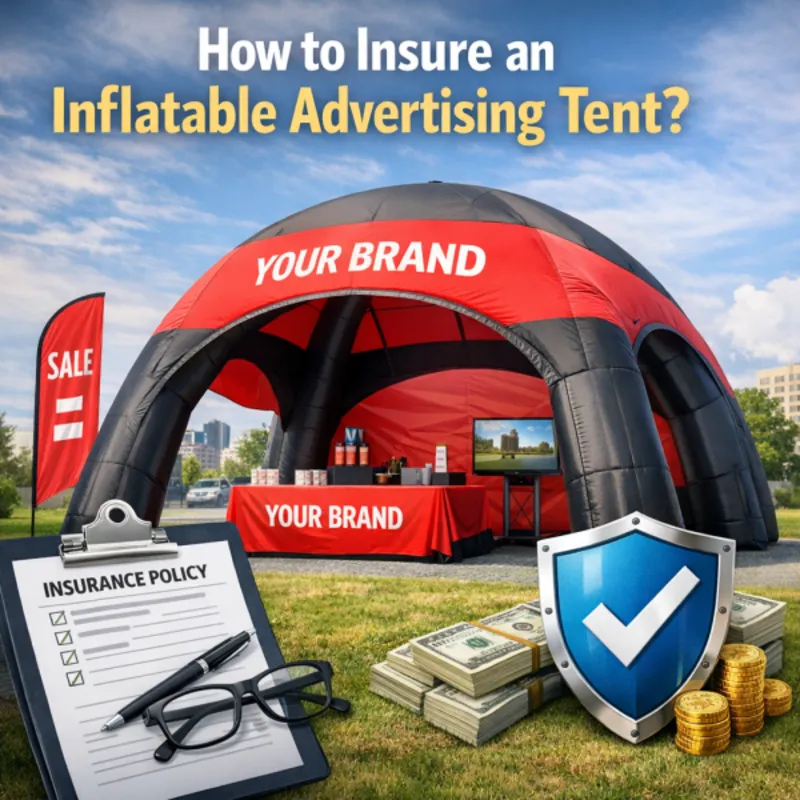
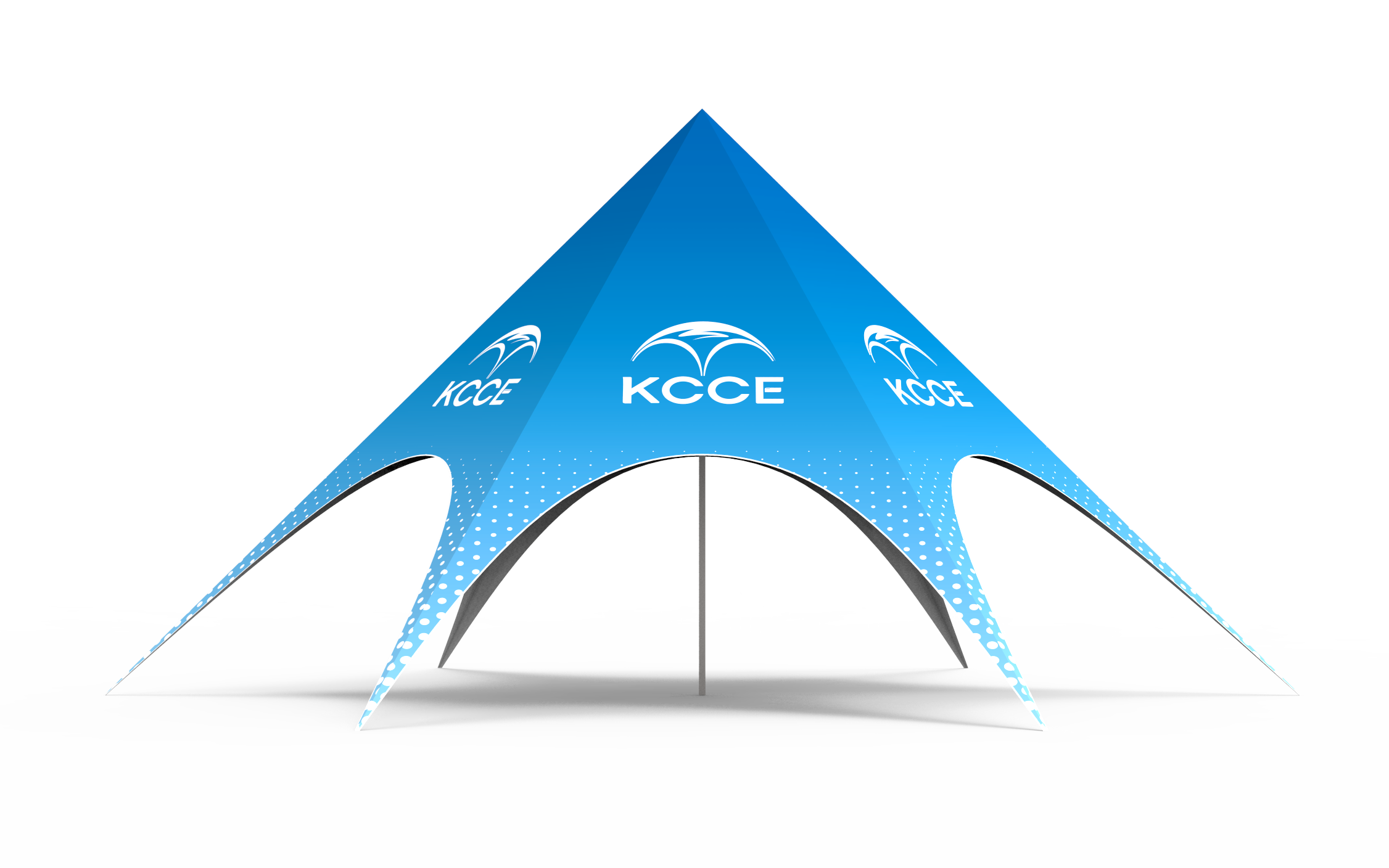
您可能已经投入了$3,000、$5,000甚至$8,000美元,用于定制 定制充气广告帐篷 以备战下一场展会或户外活动。外观出众,吸引人群,让您的标志映入数百人的眼帘。.
然后一阵狂风将帐篷掀翻到隔壁摊位上,损坏了对方的展品——一位路人又被正在泄气的篷布绊倒。突然间,您的企业面临$15,000美元财产损失赔偿和一笔医疗账单。.
您的保险能覆盖这些吗?
如果您正在询问 如何为充气广告帐篷投保, ,那么您已经领先于大多数企业主。但许多人以为一般责任险或 homeowner's 保险就能覆盖。事实并非如此。实际上,大多数标准保单明确将充气结构排除在外,因为它们被视为“游乐设备”或“临时结构”,具有独特风险。.
The 充气城堡保险 这个群体对此很了解——他们多年来一直在处理责任问题。但广告帐篷?完全是另一回事。然而保险公司往往将它们归为一类。.
说实话,根据KCCE Event关于充气广告帐篷投保的指南,这类产品面临的实际风险包括天气损坏、盗窃以及搭建和运输过程中的意外伤害。保险可以覆盖物理损坏,也可以在有人因帐篷受伤或在使用帐篷时受伤时保护您免受责任索赔。如果您希望维护企业的声誉,这一点尤为重要。.
那么让我们来逐一拆解您到底需要什么——分步骤、真实数据、各州具体要求,以及真正了解您业务的保险公司。.
主要风险与责任场景(大风、倒塌、人身伤害、盗窃)
在联系任何一家保险公司之前,您需要确切了解自己要防范什么。因为现实是:并非所有风险都相同,也并非所有保单都能覆盖。.
风损是您的头号敌人。. 充气广告帐篷与充气城堡不同,它们的设计目的是高高矗立并展示品牌标识——这意味着它们就像船帆一样。即使锚固得当,超过25-30英里/小时的突然阵风也能掀起、压塌或掀翻帐篷。我亲眼见过这种情况。我的一位客户在一次户外美食节上,因一阵下击暴流损失了一顶价值$4,500美元的品牌帐篷。保险救了他,因为他购买了专门的风损保障。想象一下,一阵风就失去了您的帐篷——然后发现您的保单并不覆盖这种情况。那才是真正的噩梦。.
第三方财产损失——您的帐篷损坏了他人的摊位、车辆或设备。这可能是我听到的最常见的理赔类型。一阵风过后,您突然要赔偿隔壁摊主破碎的商品。.
人身伤害——有人被泄气的篷布边缘绊倒、被掉落的部件击中,或者极少数情况下,结构故障导致人身伤害。如果您在公共场所或人流量大的场地运营,这项保障是不可妥协的。.
盗窃与故意破坏。. 带有品牌印刷的定制充气帐篷更换成本高昂。它们也是盗窃的目标,尤其是在活动现场无人看管过夜时。我有客户报告帐篷从锁好的拖车中被盗——而他们的基本责任险只回复说:“抱歉,这不在承保范围内。”
运输损坏。. 您打包、运输、再拆包。撕裂、刺孔、磨损——充气PVC布很容易破损。如果您是商业用途,您的保单应覆盖运输过程中的损坏。.
霉菌与霉斑。. 环境责任。充气帐篷在潮湿状态下存放会迅速滋生霉菌。有些保单排除此项,有些则包含。您必须主动询问。.
KCCE Event的指南指出,充气广告帐篷的大多数物理损坏理赔都属于上述类别之一。而主要制造商MasterTent表示,这些帐篷的设计目的是在活动中实现最大品牌曝光——这意味着它们通常被放置在人流量大的区域,风险暴露自然更高。.
保险类型:一般责任险、设备险、超额责任险等.
这就是困惑开始的地方。大多数企业主以为一份保单就能覆盖一切。并非如此。.
一般责任险(GL) ——这是您的基础保障。它覆盖第三方人身伤害和财产损失。例如:有人在您的帐篷附近受伤,或者您的帐篷损坏了他人的财物。大多数场地还要求您在其GL保单上将其列为“附加被保险人”。典型限额:单次事故$1百万美元,累计$2百万美元。但关键在于:标准GL几乎从不覆盖您自己帐篷的损坏。据我所见,这是大多数人栽跟头的地方。.
内陆运输险/流动财产险 —This is the policy that actually covers your tent itself. It’s designed for equipment that moves from location to location. If your tent gets ripped, stolen, or destroyed by weather while it’s in transit or at an event, this policy pays to repair or replace it. This is where most people get tripped up—they buy GL thinking they’re fully covered, then their tent gets damaged and they’re out $5,000.
Event-Specific (One-Day) Insurance —Perfect if you only use the tent a few times a year. These policies cover a single event and typically include both liability and limited equipment coverage. Cost: anywhere from $50 to $250 per event depending on limits and duration. For example, one day bounce house insurance policies often start around this range, though advertising tent coverage may need to be explicitly confirmed.
Commercial Property / Tool Insurance —If you own a fleet of tents and store them at a fixed location, you can add them to your commercial property policy. But that only covers them when they’re stored—not when they’re at an event.
Umbrella Liability —This kicks in after your GL limits are exhausted. If a serious incident exceeds your $1 million GL coverage, an umbrella policy (typically $1-5 million) provides additional protection. Worth considering if you’re renting tents out or doing high-profile events.
Cargo / Transit Insurance —Specifically covers your tent while it’s being shipped internationally or between states. If you import from manufacturers overseas, this is crucial.
KCCE Event’s guide recommends researching policies that cover commercial equipment or specialized event gear, and talking to an agent familiar with event and outdoor equipment policies. Ask about add-ons like weather coverage or theft protection.
费用因素:为充气帐篷投保需要多少钱?
Let’s talk real numbers—because this is usually the first question people ask, and every provider quotes differently.
For a general liability policy covering inflatable advertising tents specifically (not bounce houses), here’s what you’re looking at:
- Minimum annual premium: $1,790 to $2,200+ depending on your state and claims history. Cossio Insurance, a specialized provider for inflatables, has historically listed a $1,790 minimum GL premium (that number is from around 2019—expect it closer to $2,000+ today). If you search for bounce house insurance near me and find a provider that specializes in inflatables, ask specifically whether they cover advertising tents as a separate class.
- One-day event policies: $50 to $250 per event. Companies like Xinsurance offer one-day event insurance starting around $50, but you need to confirm they cover your specific tent type.
- Inland marine for equipment: Typically $100 to $500 per year, depending on your tent’s replacement value. If your advertising tent costs $5,000 to replace, you’d insure it for that amount. Deductibles usually range from $250 to $1,000.
- Higher wind risk = higher premium. If you operate in Florida, Texas, or any area prone to severe weather, expect a premium bump of a certain percentage.
Factors that affect your rate:
- Tent replacement value (including custom printing—don’t undervalue that)
- Frequency of use (once a month vs. every weekend)
- Locations (indoor vs. outdoor; wind zones)
- Claims history (any previous claims? They check)
- Business structure (LLC vs sole proprietorship affects rates)
- Employee involvement (if employees set up/takedown, you may need workers’ comp)
I’ve seen small operators pay as little as $600/year for basic GL, and large event companies pay $5,000+ annually for comprehensive coverage including multiple tents. The difference comes down to: what exactly are you covering, and how much risk are you taking on?
If you’re wondering how much does inflatable insurance cost, the answer is: get at least three quotes, and give each provider the exact same information so you can compare apples to apples.
认证与安全标准(ASTM F2376、CPAI-84等)
This is the section most competitors skip, and it’s actually one of the most important things you need to know. Because insurers do ask about this.
ASTM F2376-21 — Safety Standard for Inflatable Tents. This is the primary safety standard that applies to inflatable tents used for commercial purposes. It covers structural integrity, anchoring requirements, wind resistance, and fabric strength. If your tent doesn’t meet this standard, some insurers may refuse coverage or charge significantly higher premiums. The 2021 revision includes updated wind load calculations and more stringent anchoring requirements than previous versions.
CPAI-84 — Flammability Standard for Tent Fabrics. This is the fire resistance standard for tentage materials. Your inflatable advertising tent’s fabric must be CPAI-84 compliant—basically meaning it resists flame spread. Insurers routinely ask for proof of this certification. If you can’t provide it, you may not get coverage.
NFPA 102 — Standard for Assembly Seating, Tents, and Membrane Structures. This applies to larger tents used at public events. Some commercial policies require compliance.
ANSI/ASCE 7 — Minimum Design Loads for Buildings and Other Structures. This covers wind and snow load calculations for temporary structures. Larger advertising tents (20’x20′ and above) may need to meet this standard for insurance purposes.
Why insurers care about these certifications:
- They reduce the risk of structural failure (which means fewer claims)
- They demonstrate you’re operating with due diligence (which lowers your liability)
- Some courts treat lack of certification as negligence in liability cases
Here’s what I’d recommend: when you buy an inflatable advertising tent from a manufacturer like MasterTent or others, ask for written documentation of ASTM F2376-21 compliance and CPAI-84 certification. Keep it with your insurance application. It could save you 10-15% on your premium. Honest, it’s worth the extra five minutes.
各州保险要求
Insurance for inflatable advertising tents isn’t just about what you want—it’s about what the law requires. And this varies wildly by state.
California — The strictest state. 如果您正在询问 how to insure an inflatable advertising tent California, here’s what you need to know. California requires $15 million in liability insurance for some public events involving temporary structures. That’s not a typo—fifteen million dollars. Additionally, if even one employee sets up or takes down the tent, you need workers’ compensation insurance. The California Department of Insurance has specific regulations around inflatable structures used at public events. And many venues require you to list them as an additional insured on your policy.
Texas — Wind zone awareness. If you operate in Texas, especially along the Gulf Coast, your tent needs to meet higher wind resistance standards. Some insurers won’t cover inflatable tents during hurricane season (June 1 – November 30) without specific endorsements. You’ll also need a permit for tents larger than 10′ tall or covering more than 400 square feet—and that permit requires proof of liability insurance.
Florida — Similar to Texas but with different specifics. Florida has strict regulations for temporary structures, especially during the summer thunderstorm season. Your insurance needs to explicitly cover wind damage, and some policies include a wind speed warranty—meaning if winds exceed that threshold, you’re expected to have already taken the tent down. Failure to do so can void coverage.
New York — Permit and additional insured requirements. New York City requires permits for any tent larger than 10′ x 10′ used for public events. The permit application requires proof of at least $1 million in general liability insurance with the city listed as additional insured.
General rule: Before signing any policy, check your state’s minimum liability limit and whether you need to add the venue as an additional insured. If you don’t, your policy may be effectively useless when a claim happens.
国际考量:全球买家的运输、海关与保险
If you’re importing inflatable advertising tents from overseas—and many businesses do—you need to think about international insurance considerations that most domestic-focused guides ignore.
Shipping insurance (CIF vs. FOB). When importing from a manufacturer, the standard shipping terms affect who bears the risk during transit.
- CIF (Cost, Insurance, Freight): The seller covers insurance up to the destination port. But their insurance is often minimal—maybe only 110% of the invoice value. Your actual replacement cost (including customs fees, taxes, and lost sales time) could be much higher.
- FOB (Free on Board): You bear the risk once the goods are loaded on the ship. You need your own cargo transit insurance. This is more common for larger custom orders.
Customs bonding. If you bring in commercial shipments over $2,500, you typically need a customs bond. Some inland marine policies can extend to cover goods in transit internationally before they clear customs.
International liability. If you use your inflatable advertising tent at events outside the US, your domestic policy likely doesn’t cover you. You’d need an international liability endorsement or a separate policy for each country you operate in.
MasterTent—one of the larger manufacturers of advertising inflatables with in-house production in both Europe and the US—offers their inflatables under the Aerise brand. They note that their custom inflatables can be shipped internationally, which means their customers need insurance that covers the full journey from warehouse to event site.
My advice: if you’re importing, ask your insurance agent about “all-risk” cargo insurance specifically for inflatable advertising tents. Don’t assume the manufacturer’s insurance covers you for the full replacement cost.
如何选择保险公司:顶级机构对比
Not all insurance providers are the same when it comes to inflatable advertising tents. Here’s a comparison of the companies I see most often in this space:
| Insurer | Coverage Type | Min Premium (Approx) | 最佳适用场景 | 备注 |
|---|---|---|---|---|
| Cossio Insurance | GL + Equipment | $1,790-2,000/year | Bounce house operators, but also some inflatable tent coverage | Specializes in inflatables. Ask explicitly if they cover your advertising tent—they focus on bounce houses. Search Cossio insurance bounce house to see their primary offerings |
| Xinsurance | One-day event | $50-250/event | Occasional users | Quick online quotes. Confirm whether advertising tents are classified differently from bounce houses |
| Primeis | Commercial liability + Inflatable add-on | Varies by state | Annual policy users | Good for businesses that need both GL and equipment coverage bundled |
| Insurance Access (California) | GL + Workers’ Comp | Custom quote | CA-based operators | Local California broker familiar with state requirements. Ask about $15M liability minimums |
| Pacific Risk | Commercial package | $1,500-3,000/year | Fleet owners | Good for operations with multiple tents. They may require proof of ASTM compliance |
| Insure My Jumper | Dedicated inflatable insurance | 各不相同 | Rental businesses | UK-based but some US offerings. Check availability in your state. Search Insure My Jumper for their current product line |
How to vet an insurer:
- Call them and say: “I need to insure a custom inflatable advertising tent used at trade shows. It has a 30 mph wind rating. Do you cover that specifically?”
- If they say “we cover bounce houses and that’s basically the same thing” — run. They don’t understand your risk.
- Ask about: physical damage coverage for the tent itself, whether event cancellation is included, and whether you can add venues as additional insureds.
- Check their financial rating (A.M. Best) — anything below A- is risky.
If you’re looking for best bounce house insurance, that’s a different search. But if you’re looking for inflatable advertising tent coverage, you need a provider who draws that distinction upfront.
分步申请流程及所需文件
Okay, so you’ve assessed your risks, chosen your policy type, and compared providers. Now let’s walk through the actual application process.
第1步:收集帐篷信息
Insurers need:
- Tent dimensions (height, length, width) — larger than 20×20 may require higher wind rating
- Replacement value (including custom printing costs)
- Purchase date and original purchase price
- Manufacturer and model (if available)
- ASTM F2376-21 compliance documentation
- CPAI-84 flammability certification
第2步:记录使用情况
- Frequency (how many events per year)
- Types of events (trade shows, street fairs, outdoor festivals, indoor conventions)
- Typical locations (indoor vs outdoor, what cities/states)
- Will it ever be left unattended? While inflated? Deflated?
- How is it anchored? (stakes, water weights, sandbags)
第3步:准备企业信息
- Business name and structure (LLC, corporation, sole proprietorship)
- Years in operation
- Previous claims history (any claims in the last 5 years? Be honest—they find out)
- Employee count (for workers’ comp requirements)
第4步:向至少三家保险公司获取报价
Send the same information to each. Compare not just premiums but also:
- Deductibles
- Exclusions (especially for wind, mold, and unattended loss)
- Coverage limits for equipment
- Whether the venue can be added as an additional insured
第5步:提交申请及文件
Most insurers allow online applications. You’ll typically upload:
- Completed application form
- Tent specifications and certifications
- Photos of the tent
- Proof of business registration
- Venue insurance requirements (if any)
第6步:签署前仔细审阅保单条款
Pay special attention to:
- The exact definition of “advertising tent” in the policy
- Whether coverage applies during transportation and storage
- Policy territory (does it cover all events in all states?)
- Cancellation and refund terms
KCCE Event’s guide also stresses keeping good records after you get coverage—receipts, photos, and damage reports. Report damage or theft quickly with evidence to speed up claims.
真实理赔案例研究与经验教训
Theory is fine. But nothing teaches like real examples. I’ve anonymized these from actual industry scenarios.
案例1:街头集市上的大风掀翻事故
The setup: Small business owner with a custom 10×10 inflatable advertising tent at a weekend street fair in Chicago. Anchored with water weights. A sudden gust lifts and flips the tent into a neighboring food vendor’s setup.
The damage: $3,200 to the neighbor’s cooking equipment. $1,500 to the tent (torn seam). One minor injury (a bystander got a small cut from a flying piece).
The insurance outcome: The owner had a general liability policy with $1M limits. The property damage to the neighbor’s equipment was covered. The injury claim settled for $2,500 (medical plus nuisance value). But the tent itself was not covered—no inland marine policy. The owner had to buy
关于充气帐篷保险的常见问题
How do I calculate insurance costs based on tent value, especially with custom printing?
Premiums typically run a certain percentage of the tent’s total insurable value per year. For a standard $4,500 tent, that’s $135 to $360 annually. Custom printing adds a premium because the artwork is non-replaceable if the tent is destroyed. I had a client with a $7,500 tent that included full-wrap digital printing of a complex brand mural – their annual premium came out to $450 (6% rate). Insurers usually want a current replacement cost quote from the manufacturer. If you can’t produce that, they’ll ask for a purchase invoice plus a print-cost estimate. Always declare the full custom-print value separately; many policies cap print coverage at $2,000 unless you explicitly add an inland marine rider.
What about DSR (chargeback) fraud insurance for rental businesses taking credit cards?
If you rent out inflatable advertising tents and accept credit card payments, you’re exposed to chargeback fraud. A renter might dispute the charge after using the tent, claiming it wasn’t as described or never arrived. Even if you have proof, card networks often side with the consumer. Some specialty insurers offer “payment fraud” or “chargeback loss” endorsements specifically for equipment rental businesses. The coverage usually pays 80% of the disputed amount, up to $10,000 per incident, with a $500 deductible. I’ve seen a case where a renter ran a festival, used the tent for three days, then filed a $2,800 chargeback claiming the tent was “defective.” The rental company had this endorsement and recovered $2,240 minus $500 = $1,740. Without it, they’d have lost the whole sum plus the time. Ask your insurer about a “credit card rental fraud” rider – it’s usually an extra $100–$200 per year.
Can you walk me through a detailed claim filing process with real examples?
Sure. Let’s say you’re at a county fair, a wind gust catches your tent, it collapses onto a neighboring booth, and a vendor’s glassware display shatters. A bystander gets a small cut from a shard.
- Immediate action: Secure the scene, take photos from all angles, get witness contact info, and do not move the tent until documented. In my client’s real case, they also videoed the damage and the anchor points (which held but the tent material tore).
- Notify your insurer within 24 hours. Most policies require prompt notice – some as fast as 48 hours. Call the 24/7 claims line, give your policy number, and describe the incident. The adjuster will assign a claim number.
- Submit a written statement and all evidence: photos, videos, receipts for the bent tent, police report if there’s an injury. In the glassware example, the vendor sent an itemized list of broken items ($1,200). The injured bystander had a medical bill of $850.
- Adjuster inspection: For a $5,000+ tent, the insurer may send an adjuster or ask you to get a repair estimate from the manufacturer. In my client’s scenario, the adjuster accepted a quote from the tent maker for $2,300 in repairs (replace a torn panel and re-stitch seams).
- Settlement: Within two weeks, the insurer paid the tent repair ($2,300), property damage to the vendor ($1,200 minus $500 deductible = $700), and medical ($850 directly to the doctor). Total payout $3,850. My client only paid the $500 deductible. Without the policy, they’d have been out over $4,000.
Key lesson: always document everything before cleanup – one photo can make or break a claim.
What’s the difference in insurance for owned vs. rented inflatable tents?
If you own the tent, you need a “commercial inland marine” policy that covers the tent itself (physical damage) plus general liability for third-party injury and property damage. Typical cost: varies depending on the tent value. If you rent a tent from an event rental company, the rental agreement usually requires you to have liability insurance naming the rental company as an additional insured. Their policy may cover damage to the tent, but you’re often responsible for a deductible (typically $500–$1,000) plus any damage beyond normal wear. I’ve seen a rental contract where the renter had to pay $2,800 for a torn tent because they didn’t buy the optional damage waiver ($50 extra). If you rent frequently, your own insurance policy can be endorsed to cover rented equipment – it’s called “hired equipment coverage.” The premium is about 50% of what you’d pay for owned equipment because the rental company’s insurance is primary. Always compare: owning a tent plus full insurance might cost $600/year total, while renting six times a year with damage waivers could be $300 in waivers alone.
Does insurance cover environmental liability like mold and mildew on inflatable vinyl?
It depends on the policy, and this is a common gotcha. Standard commercial property policies often exclude “mold, mildew, or microbial growth” unless it’s caused by a covered peril (e.g., sudden pipe burst). For inflatable tents, mold is usually the result of improper storage – packing it damp after an event. That’s considered a maintenance issue, not an insurable event. However, some specialty inflatable tent insurers offer a “mold remediation” rider. It typically covers cleanup and replacement of affected panels up to a certain amount per occurrence, subject to a separate deductible. I had a client who stored a tent in a damp trailer for two weeks, and mold bloomed on the vinyl. His policy excluded it, and he had to spend $1,200 on professional cleaning (which was only partially effective). The tent lost its vibrant color and had to be replaced a year earlier than expected. If you operate in humid climates, ask for the mold rider – it adds maybe $50–$100 per year and can save you thousands.
保护您的投资与品牌
An inflatable advertising tent isn’t just a piece of gear – it’s a mobile billboard that represents your brand. One wind gust, one slip, one misguided credit card chargeback can turn a successful event into a financial black eye. The insurance you choose isn’t about checking a box; it’s about keeping your reputation intact and your wallet safe. Calculate your premium based on the full value (including that expensive custom print), and don’t skip the riders for chargeback fraud, environmental damage, or rented equipment. I’ve seen too many business owners learn this the hard way. Get a policy that understands inflatable tents – not one that lumped them in with bouncy castles – and you’ll sleep better knowing that the next strong gust is just a gust, not a catastrophe.
参考资料
- Advertising inflatables and promotional inflatable gazebos – mastertent.com
- Top 5 Reasons To Choose Inflatable Tent For Your Next Event – customtentwithlogo.com
- Some Benefits of Using an Event Tent – abovealladvertising.net