Most buyers get this wrong the first time. They see a cheaper quote for a nylon tent, order it, and eighteen months later they’re ordering again — same tent, same money, except now they’ve paid twice. I’ve watched procurement managers make this exact mistake more times than I can count. So let’s talk about choosing between PVC and nylon for inflatable advertising tents, and why the answer is almost never “whichever is cheaper.”
Here’s the thing: this isn’t really a fabric debate. It’s a risk decision about how long your brand sits outside in the weather, and who eats the cost when the material fails.
Quick Answer
For inflatable advertising tents, PVC-coated fabric is the B2B default — it lasts multiple outdoor seasons, takes dye-sublimation branding well, and holds up to wind and UV. Nylon is lighter, packs smaller, and costs less upfront, but it degrades faster outdoors and is best reserved for short indoor events or frequent travel.
PVC vs Nylon at a Glance
Let me put the head-to-head where you can actually use it.
| 因素 | PVC-Coated Fabric | 尼龙 |
|---|---|---|
| 耐用性 | 500–800D, multi-season outdoor life | Lighter denier, UV degradation faster |
| 重量 | Heavier, bulkier packed | Light, compact |
| Waterproofing | Coated, fully waterproof | Coated or silicone-treated, depends on spec |
| Fire rating | Can meet NFPA 701, EN 13501, CPAI-84 | Rating depends on coating and treatment |
| Upfront cost | Higher per unit | Lower per unit |
| Printability | Dye-sublimation, Pantone matching, full-wrap | Dye-sub possible but color shift risk |
Bottom line: PVC is the workhorse for commercial inflatable PVC applications — outdoor installs, long event runs, anything where the tent is the ad. Nylon is the niche pick — travel-heavy crews, indoor booths, short deployments where pack size matters more than lifespan.
If you’re a decision-maker signing off on a six-figure brand activation, this table is your first filter. Everything below is the reasoning behind it.
Durability and Lifespan: Which Material Lasts?
This is where the two materials stop being comparable.
PVC inflatable tents are typically built from 500–800D coated fabric. That denier range is what gives them their multi-year outdoor lifespan — the fabric resists abrasion, holds air pressure, and doesn’t thin out after a season of sun. In my experience, a well-made PVC tent that’s stored and cleaned properly will keep going for several outdoor seasons before you even think about replacement.
Nylon inflatable tents use lighter denier fabric. That’s the whole point — it’s lighter. But lighter also means it breaks down faster under UV. Sun exposure is the quiet killer here. A nylon tent that looks fine after three months can show fading and weakened seams by month twelve, especially if it’s left up continuously.
You might be wondering: doesn’t coating solve that? Partly. A coated nylon is better than bare nylon, but the base fabric still degrades. PVC’s advantage is that the coating and the base are working together, not fighting each other.
One more thing — repair. PVC patches are straightforward. Nylon repairs on a coated surface are fussier, and a bad patch on a lightweight fabric is a weak point you’ll keep finding.
Weather Resistance and Fire Safety Standards
Waterproofing first, because it’s the question everyone asks.
PVC-coated fabric is fully waterproof by construction — the coating is the barrier. Nylon needs a coating or silicone treatment to get there, and the quality of that treatment varies wildly between suppliers. That’s not a knock on nylon as a material; it’s a warning about spec sheets. If a nylon tent quote doesn’t tell you exactly what the coating is, you don’t actually know what you’re buying.
Fire safety is where procurement teams need to slow down. The standards that matter for advertising inflatables are NFPA 701, EN 13501, and CPAI-84. Which one applies depends on where the tent is deployed — US venues, EU venues, and camping-adjacent applications tend to pull different certificates. A fireproof inflating tent isn’t a marketing phrase; it’s a document. Ask for it.
Wind and UV performance split along the same line as everything else. PVC’s weight and rigidity handle wind loading better — it doesn’t flutter and fatigue the way lighter fabric can. UV resistance favors PVC for long outdoor exposure, full stop.
If you want the deeper material breakdown, our guide to PVC inflatable fabric: what to know about its construction and coatings is worth a read before you finalize a spec.
Branding and Printability for Advertising Use
Here’s the part that actually drives ROI, and it’s the part people underweight.
A branded inflatable tent is a billboard. If the logo looks washed out, you’ve spent money to make your brand look cheap. That risk is real with nylon.
PVC takes dye-sublimation beautifully. You get Pantone matching, full-wrap logos, gradients, photographic imagery — the kind of print quality that reads as premium from fifty feet away. Nylon can be printed too, but dye-sub on nylon carries a color shift risk. What looked like your brand’s exact blue on the proof can come back a shade off, and on a large tent that’s not a small problem.
For a step-by-step walkthrough of the design side, see Step-by-Step: How to Design Your Own Branded Inflatable — the print method you choose has to be locked in before artwork is finalized.
My take: if the tent is the primary brand asset at the event, printability alone can justify PVC. You’re not buying fabric. You’re buying how your logo looks in every photo attendees post.
Weight, Portability, and Setup Logistics
Nylon wins this section, and it’s not close.
Nylon is lighter and packs smaller. For a crew doing back-to-back events, flying gear between cities, or setting up indoors with limited space, that matters. Faster deploy, less labor, smaller vehicle.
PVC is heavier. It needs a blower or proper rigging, and setup takes more hands. But — and this is the trade — it’s sturdier once it’s up. A PVC tent doesn’t need to be babied in a breeze.
So the logistics question isn’t “which is easier.” It’s “easier for what?”
- Indoor trade show, 3 days, one city: nylon’s pack size wins.
- Outdoor install, 6 months, exposed site: PVC’s sturdiness wins, and it isn’t a close call.
- Touring crew, 20 events a year: this is genuinely a judgment call — and honestly, most operations in this situation end up with both.
Match the material to the venue and the event length, not to the warehouse shelf.
Cost and ROI: Total Cost of Ownership
The upfront gap is real: nylon costs less per unit. That’s the number that shows up in the quote, and it’s why nylon keeps winning contracts it shouldn’t.
Run the math further out. If a nylon tent needs replacing in a year or two of outdoor use and a PVC tent runs several seasons, the per-year cost flips. Then add reprint costs — every replacement means new branding, new proofing, new color-matching risk. Then add the labor of swapping tents mid-campaign.
Cost-per-use framing is how procurement should be evaluating this:
- Upfront unit cost — nylon lower.
- 寿命 — PVC significantly longer outdoors.
- Reprint/re-brand cost per replacement — hits nylon harder because replacements come sooner.
- Downtime and labor — favors PVC on long installs.
I’ll be blunt: for a one-off indoor weekend, nylon’s TCO can genuinely be lower. For anything that lives outside for months, PVC’s total cost of ownership usually wins even though it loses on the sticker price. That’s the whole trap.
Decision Framework: Choose PVC If. / Choose Nylon If.
Stop asking which material is better. Ask which one fits your deployment.
Choose PVC if:
- The tent is outdoors for weeks or months at a time
- The tent is the brand asset — print quality is non-negotiable
- You need documented fire ratings for venue compliance
- Wind exposure is a real factor at the site
- You’d rather buy once and maintain than buy twice
Choose nylon if:
- It’s an indoor event, short duration
- Your crew travels constantly and pack size is the constraint
- Budget is hard-capped and the deployment is genuinely short-term
- You’re testing a concept before committing to a permanent asset
For stakeholders who need a scoring matrix: weight your criteria by event duration, weather exposure, branding importance, and compliance requirements. Score each material 1–5 on those four. In most outdoor advertising scenarios, PVC pulls ahead on three of the four. The exception is portability — and that’s usually a logistics preference, not a business requirement.
Speaking of which — if you’re still mapping out what you even need, start with the different types of advertising inflatables before you get into fabric specs. Material choice comes after you know what you’re building.
Where KCCE Fits Into This
Full disclosure: I’ve worked with KCCE (Dacheng outdoor products LTD.), established in 2006, and they’re a useful reference point for what a real spec looks like. Their 2,800-square-meter facility runs over 70 production machines with roughly 40 skilled staff, and they hold CE and RoHS compliance with products shipped to 75 countries — primary markets being Europe and the United States.
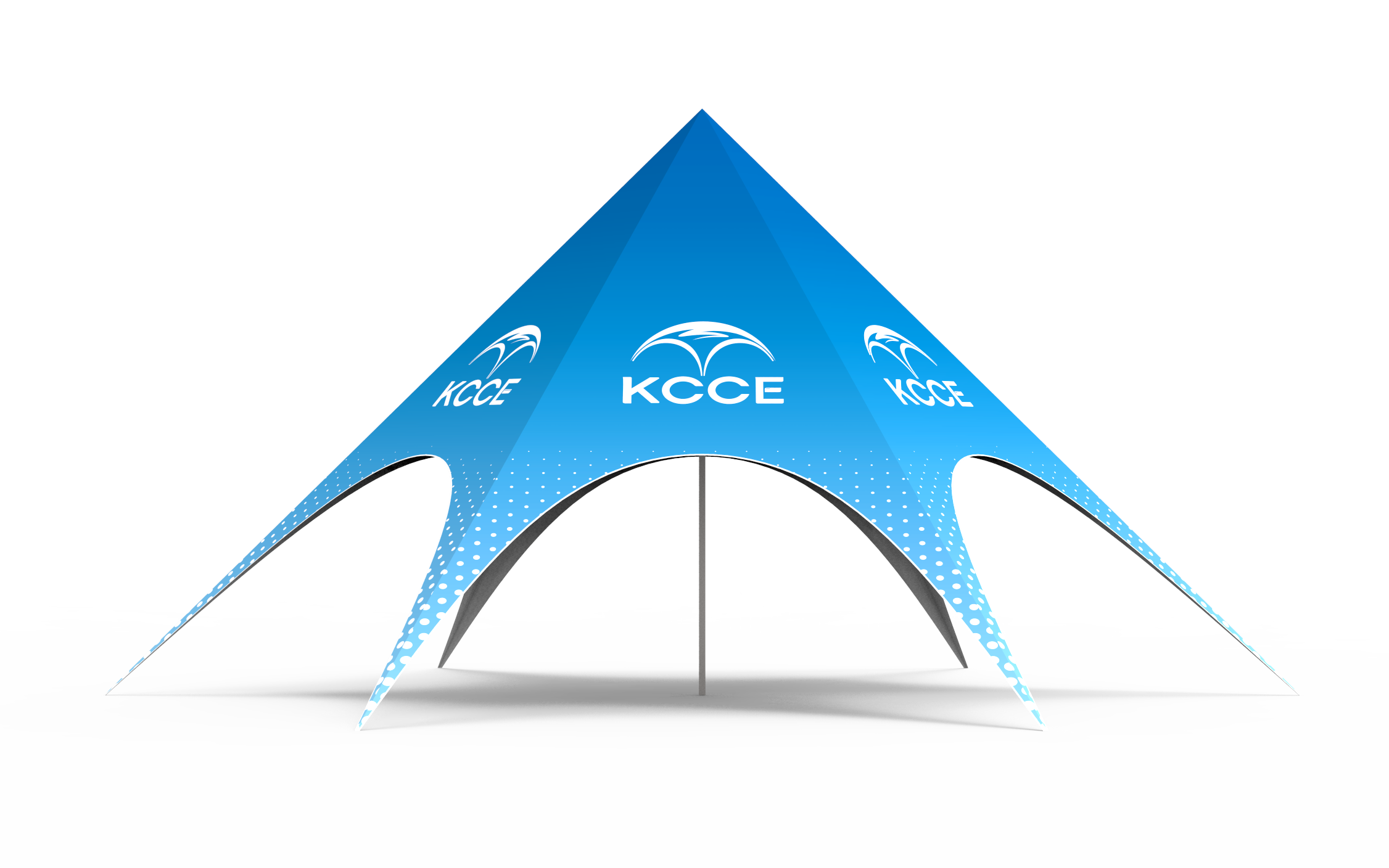
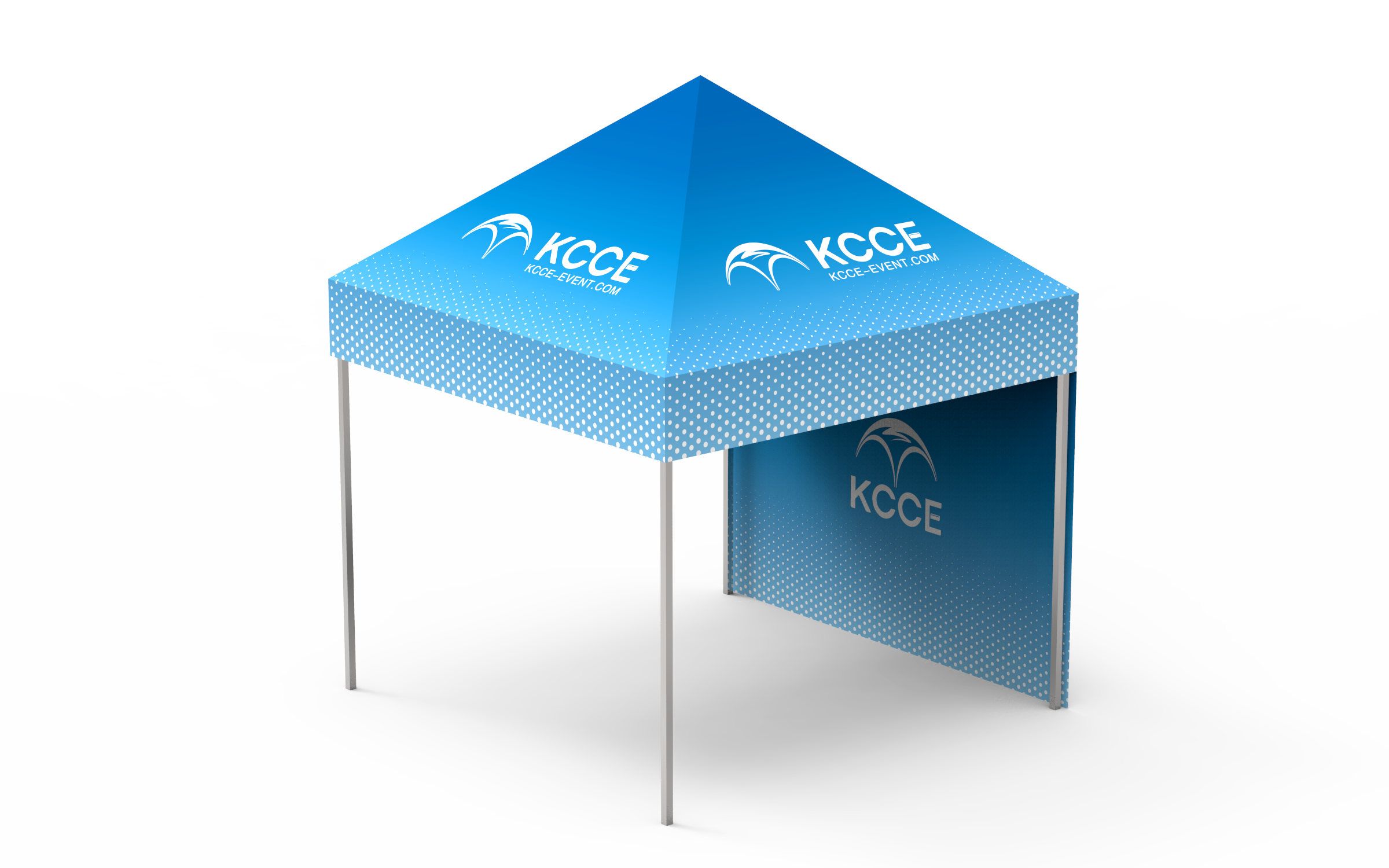
Their inflatable tent range covers air-sealed and pump-up models across multiple series, all custom-manufacturable with OEM/ODM, custom size, custom color, and custom logo printing. When you’re evaluating how to choose commercial inflatable PVC for a B2B deployment, that’s the kind of supplier profile to benchmark against — certifications you can verify, not just a fabric grade on a spec sheet.
常见问题解答
Q: Is PVC or nylon better for inflatable tents?
答: For outdoor advertising use, PVC is generally better — it lasts multiple seasons, handles UV and wind, and prints cleanly with dye-sublimation. Nylon is better when weight and pack size matter most, like indoor events or touring crews. If your inflatable advertising tent lives outside for months, PVC is the safer pick.
Q: Are PVC inflatable tents waterproof?
答: Yes. PVC-coated fabric is waterproof by construction — the coating itself is the barrier, so there’s no separate treatment to wear off. Nylon needs a coating or silicone treatment to reach the same level, and the quality varies by supplier. Always confirm the coating spec in writing before ordering.
Q: How long do PVC inflatable tents last?
答: In my experience, a properly stored and maintained PVC tent built from 500–800D fabric will run several outdoor seasons before replacement is a real conversation. Lifespan depends heavily on sun exposure, wind, and how it’s cleaned and packed. Nylon tents tend to show UV degradation and fading sooner under continuous outdoor use.
Q: Is PVC stronger than nylon?
答: Yes, for this application. PVC-coated fabric is heavier and more rigid, which helps it resist wind loading and abrasion. Nylon’s advantage is weight, not strength. If strength and durability are your priority, PVC wins — that’s why it’s the B2B default for commercial inflatable PVC products.
Q: What is the best material for advertising inflatables?
答: It depends on deployment, but PVC is the default for outdoor branding. It holds print quality, meets fire standards like NFPA 701, EN 13501, and CPAI-84 when specified, and survives weather. Nylon earns its place for short indoor runs and travel-heavy setups. Match material to event duration and exposure.
Q: Which is better for inflatable boats, Hypalon or PVC?
答: That’s a different application, but the logic rhymes. Hypalon resists UV and abrasion better over long term, while PVC is cheaper and easier to repair. For tents, the parallel holds: the material that survives sun exposure longest usually wins the total-cost argument, even at a higher upfront price.
Q: What is the best inflatable tent to buy?
答: The one that matches your deployment. For outdoor advertising, look for 500–800D PVC, verifiable fire certification, dye-sublimation print capability, and a supplier with real compliance documentation. For indoor or travel use, a lighter coated nylon can be the smarter buy. There’s no universal best — only best-fit.
Q: What are the downsides of using an inflatable tent?
答: Weight and setup for PVC; UV degradation and color-shift risk for nylon. Inflatable tents also need continuous air management — blowers for pump-up models or proper sealing for air-tight ones — and they require correct storage to hit their lifespan. Wind exposure demands proper anchoring regardless of fabric.
Q: How to tell if inflatable is PVC or Hypalon?
答: Feel and flex are your first clues — PVC tends to be stiffer and heavier, Hypalon more supple. Check the manufacturer’s spec sheet for the coating type and denier. For tents specifically, the same principle applies: ask for the fabric spec and fire certificate rather than guessing from touch alone.
Conclusion
Choosing between PVC and nylon for inflatable advertising tents isn’t a fabric preference — it’s a procurement risk decision. Audit your event duration, weather exposure, and branding requirements first, then request material samples and fire certificates before you sign. Buy once, and buy for the deployment you actually have.
参考资料
1. kcceinflatable.en.made-in-china.com – kcceinflatable.en.made-in-china.com
2. kcce-event.com – kcce-event.com