Booth too big? Too small? A 10×10 tent hits the sweet spot. I’ve spent years in the outdoor events industry, and I can tell you this: the 10×10 tent is arguably the most popular and appropriate size of canopy tent on the market. It’s the size that trade show organizers expect, the size that fits a standard booth space, and the size that one person can realistically handle. This article isn’t just a list of features—it’s a practical breakdown of why 100 square feet wins, backed by real data and years of industry experience. By the end, you’ll have an actionable validation checklist to run before you spend a dime.
Quick Answer
A 10×10 tent is the industry standard because it offers the perfect blend of size, portability, and promotion, giving you 100 square feet of protected space that fits standard event layouts, sets up quickly, and maximizes your branding visibility per square foot.
Why 100 Sq Ft Is the Industry Standard
Let’s talk about the math first. A 10×10 footprint gives you a specific square footage of coverage. That might not sound massive, but it’s the exact dimension that most trade shows, farmers markets, and outdoor festivals are built around. Event organizers have standardized on this size for decades, which means when you book a booth, you’re almost always getting a 10×10 space.
The ergonomics work out beautifully. Here’s the layout math that every vendor learns quickly: you place a standard 6-foot table along the back or side, and you still have room for a walkway in front. That’s the magic. A 6ft table takes up roughly 6 feet by 2.5 feet, leaving you with about 4 feet of walkway space—enough for two people to pass comfortably, or for a customer to browse without feeling cramped.
You might be wondering about traffic flow. In my experience, a 10×10 canopy tent with sides creates a natural “storefront” feel. You can open the front completely for a welcoming entrance, or zip up the sides for a more controlled, private space. The dimensions are human-scale. Unlike a massive 20×20 setup, a 10×10 doesn’t swallow your products or make you shout across the space to talk to a customer.
There’s also the practical matter of weight and handling. Most quality 10×10 pop-up canopies weigh a moderate amount, making them portable yet stable. That’s manageable for one person to lift into a car trunk, though you’ll want a second pair of hands for the final setup. Larger sizes? Forget it. A 10×20 or bigger typically requires two people just to carry the frame, let alone erect it.
Benefit 1: Setup Speed & Portability
Here’s where the pop-up canopy really shines. The whole point of a 10×10 pop-up canopy is that it’s designed for speed. The best models on the market use a scissor-action frame that expands in seconds. I’ve timed myself—With practice, you can go from carrying bag to fully erected canopy in a short time. That’s the difference between a 30-second pop-up frame and the older 5-minute frame types that require you to assemble poles one by one.
Let me break down the two main frame types you’ll encounter. The first is the classic push-up or scissor frame. You unlock the central mechanism, push upward, and the whole thing expands. These are the ones that hit the 30-second mark. The second type is the modular frame, where you’re connecting individual trusses and legs. These are sturdier in high winds but take closer to 5 minutes to assemble. Neither is wrong—it depends on whether you value speed or maximum stability.
Portability is the other half of this equation. A good 10×10 tent comes with a wheeled carry bag that fits in the trunk of a standard sedan. I’ve seen vendors at farmers markets haul these things on public transit, which tells you something about the weight distribution. The frame and canopy top typically separate, so you’re carrying two manageable pieces rather than one unwieldy bundle.
Storage is easier too. The folded footprint of most 10×10 canopies is compact, making them easy to transport. That tucks into a garage corner, a closet, or under a bed. Compare that to a 10×20, which folds down to roughly twice the length and often requires a dedicated storage space.
Benefit 2: Branding & Customization Visibility
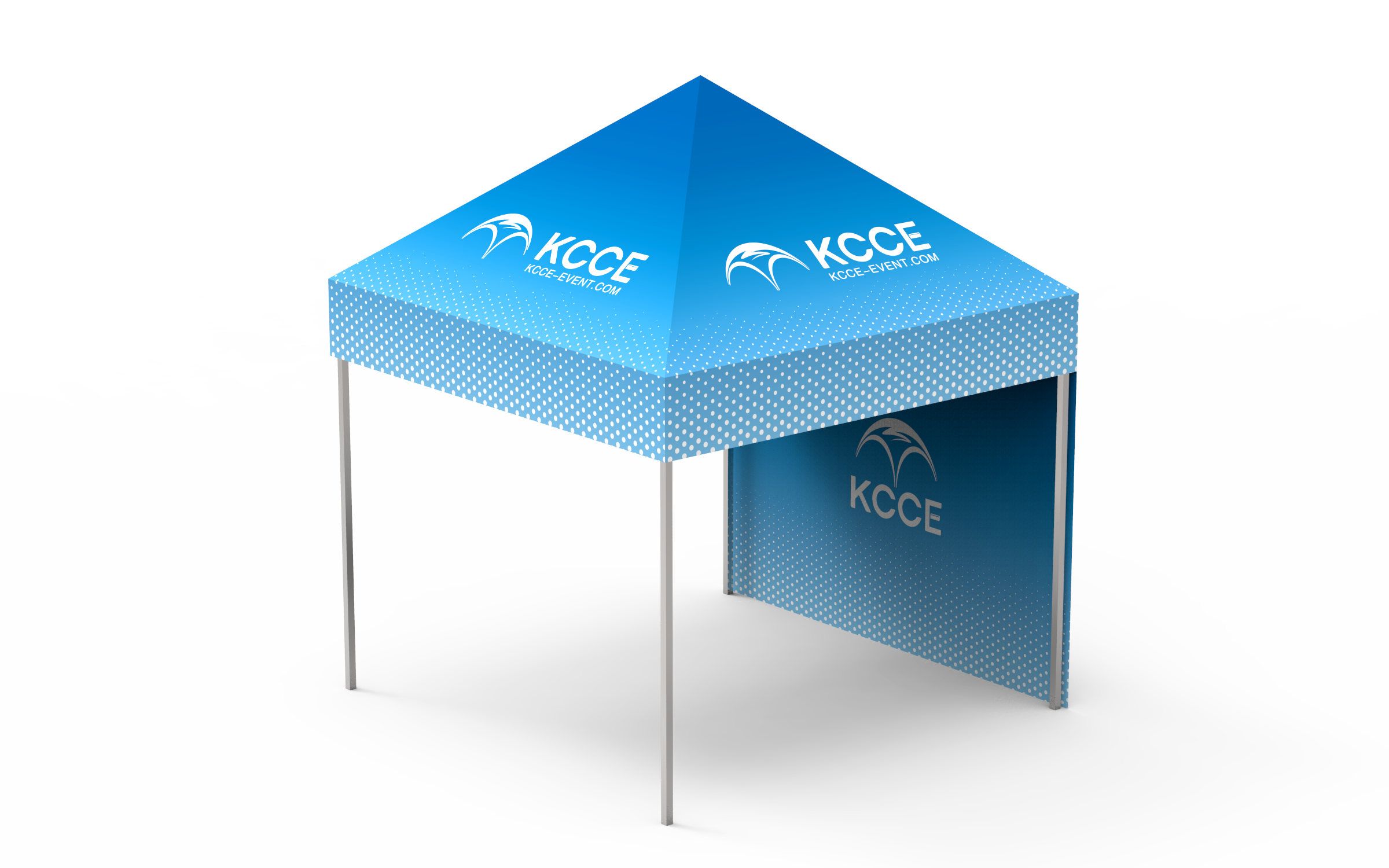
Now we’re getting to the fun part. A custom canopy tent is essentially a mobile billboard for your brand, and the 10×10 size is the perfect canvas. Here’s the numbers game: You have three full sides available for printing, plus the top, which provides a large printable area if you use all three sides. Compare that to a 6-foot table display, and you’re looking at exponentially more visual real estate.
The printing technology matters more than you might think. Full-color dye sublimation is the gold standard for canopy tents. The ink is infused into the fabric itself, which means the colors won’t crack, peel, or fade after a few uses. Vinyl printing is cheaper, but in my experience, it looks plasticky and starts to peel after a season of outdoor events. If you’re investing in a custom 10×10 canopy tent for business use, spring for the dye sublimation. Your brand will thank you.
Color contrast is another factor that gets overlooked. The best canopy designs use high-contrast color schemes that are visible from across a parking lot. Think about it: you’re competing with dozens of other vendors at a festival. A canopy with bold, saturated colors and large text will draw eyes from 50 feet away. A pastel canopy with small text? You’ll be invisible.
The advantages of designing custom 10×10 canopy tents for your business go beyond just looks. A branded canopy signals professionalism. When a customer sees a clean, well-printed canopy, they assume your products and services are equally polished. It’s a trust signal that’s hard to quantify but impossible to ignore.
Benefit 3: The “With Sides” Decision
Here’s a question I get all the time: should I get a 10×10 canopy with sides? The answer depends entirely on where you’ll be using it. Let me lay out the trade-offs.
Mesh sides are the middle ground. They block wind and offer some privacy while still letting air flow through. On a hot summer day, mesh sides keep your booth from becoming a greenhouse. They also cut down on the “fishbowl” effect where everyone can see in from all angles.
Solid walls are the heavy-duty option. A 10×10 canopy with sides made of solid fabric gives you full privacy and maximum weather protection, as it is designed to shield against rain and wind. The downside is airflow—on a 90-degree day, a fully enclosed canopy can feel like an oven. Some vendors solve this by only putting up two or three walls, leaving the front open.
The Versatile Power of a 10×10 Canopy with Sides really shows in weather protection. Most quality canopies have a waterproof rating measured in millimeters. You’ll want a certain level of water resistance for light rain, but look for higher ratings if you’re in a rainy climate. UV protection is measured by UPF rating. A UPF 50+ fabric blocks a high percentage of UV rays., which is crucial if you’re spending 8 hours under the sun at a summer festival.
Wind is the real enemy. A 10×10 canopy with sides acts like a sail, and in a gust, it can take off. That’s why anchor kits are non-negotiable. Most canopies come with stakes, but I strongly recommend upgrading to screw-in anchors or weighted bags. A 10×10 frame with a solid canopy top can generate significant lift in a strong gust.—you need to secure it properly.
Niche Section: The 20×20 Car Camping Setup
Now for something a little different. What if I told you that two 10×10 canopies could create a 20×20 car tent space? This is a setup I’ve seen become increasingly popular among car campers and overlanders.
The concept is simple: set up two 10×10 canopies side by side, creating a 20×20 footprint. One canopy covers your vehicle, the other covers your living space. This gives you a combined shelter that protects both your car and your campsite.
Is a 10×10 canopy worth it for a 20×20 car tent space? Absolutely, and here’s why: using two 10x10s instead of one massive 20×20 gives you flexibility. You can set up only one canopy if you’re just doing a day trip. You can adjust the gap between them to fit your specific vehicle dimensions. And if one canopy gets damaged, you only need to replace that one, not the entire setup.
The challenges are real, though. Uneven terrain is the biggest issue. A 10×10 canopy needs a relatively flat surface to pitch properly. If you’re camping on a slope, you’ll need to use adjustable leg extensions or dig level platforms. Tie-downs become critical in this setup—you’re covering a lot of surface area, and wind can get underneath and lift the whole thing.
Anchor kits are your best friend here. I recommend a combination of screw-in stakes for soft ground and weighted sandbags for hard surfaces like concrete or gravel. The key is to anchor every corner, not just two. A 20×20 car tent setup has eight corners total (four per canopy), and each one needs to be secured.
Benefit 4: Cost Efficiency vs. Larger Sizes
Let’s talk money, because that’s usually what it comes down to. The cost efficiency of a 10×10 tent versus larger sizes is one of the strongest arguments in its favor.
The price per square foot is the metric that matters. A quality 10×10 canopy might cost several hundred dollars for a commercial-grade model, with a 10×20 canopy costing more.—roughly the same price per square foot, but you’re committing to double the space, double the weight, and double the setup time.
The 10×10 vs 10×20 comparison gets even more interesting when you factor in replacement parts. Canopy tops wear out after a few seasons of sun exposure. A replacement top for a 10×10 costs a certain amount, with a 10×20 costing more. Replacement frames are similarly proportional. If you’re on a budget, the 10×10 is the more manageable investment.
Frame gauge is the spec to check. Most commercial-grade canopies use steel or aluminum for the frame, while cheaper models might use lighter-gauge materials., which is thinner and more prone to bending. The trade-off is weight: 18-gauge is stronger but heavier. For a 10×10, the weight difference is manageable. For a 10×20, it becomes a real burden.
Longevity is where the 10×10 really wins. In my experience, A well-maintained 10×10 canopy with a good frame can last for several years of regular use. The key is replacing the canopy top when it starts to fade or thin, rather than replacing the whole unit. That’s a much cheaper proposition at 10×10 scale than at larger sizes.
Buyer’s Checklist: What to Verify Before Purchase
Before you pull the trigger on any purchase, run through this checklist. I’ve compiled this from years of seeing vendors make the same mistakes.
面料丹尼尔数: Look for a durable polyester fabric with a high denier rating. This is the thickness of the fabric threads. Higher denier means more durable fabric that resists tearing and UV degradation. Anything below 300 denier is likely to fail within a season.
Frame Thickness: Check the frame gauge and diameter. Commercial-grade frames are typically made of steel with sturdy legs. Thinner frames flex and bend under wind load. Push on the frame in the store—if it flexes easily, it’s too thin.
保修条款: Most quality brands offer at least a 1-year warranty on the frame and fabric, with some offering longer coverage. Read the fine print—some warranties exclude damage from wind, which is the most common cause of canopy failure.
Waterproof Rating: Look for at least 300mm, preferably 500mm or higher. This number tells you how much water pressure the fabric can withstand before leaking.
UV Protection: Check for a UPF rating. UPF 50+ blocks 98% of UV rays. This is critical for protecting both your products and your skin during long outdoor events.
Carry Bag Quality: A good carry bag has wheels, reinforced handles, and a wide opening. Cheap bags rip at the seams after a few uses. This is a small detail that makes a huge difference in portability.
Anchoring System: Does it come with stakes? Are they decent quality or flimsy wire? Factor in the cost of upgrading to screw-in anchors or weighted bags.
Why the 10×10 Fits Business and Events
Doing outdoor events? Why a 10×10 canopy tent is essential isn’t just about shelter—it’s about creating a professional presence. I’ve seen startup vendors with zero branding outshine established companies simply because their canopy setup was clean, branded, and inviting.
The Benefits of Using Pop Up Canopies for Business and branding are well-documented. A pop-up canopy serves as a mobile billboard for your brand. Every event you attend is an opportunity to reinforce your visual identity. The 10×10 size is perfect because it’s large enough to make an impact but small enough to fit in tight spaces.
Custom Canopy Tent 10×10 Explained: Uses go beyond just trade shows. I’ve seen these used for:
- Farmers markets and craft fairs
- Corporate events and company picnics
- Sporting events and team sidelines
- Emergency response stations
- Wedding ceremonies and receptions
- Political campaigns and voter outreach
The versatility is the point. A 10×10 tent is the minimum viable booth—the smallest footprint that still gives you room to operate a business, display products, and engage with customers. Anything smaller and you’re just standing behind a table. Anything larger and you’re paying for space you might not use.
Comparing 10×10, 10×15, and 10×20 Canopies: Which Is Best?
This is the question I get asked most often, and the answer depends on your specific needs. Let me break down the trade-offs.
10×10 Canopy: The sweet spot. 100 square feet, fits standard booth spaces, one-person setup, easy transport. Best for solo vendors, small teams, and businesses just starting with outdoor events.
10×15 Canopy: A middle ground that’s less common in the industry. 150 square feet gives you more room for product displays or a seating area. The downside is that 10×15 doesn’t match standard event booth dimensions, so you might have trouble fitting into pre-marked spaces. Setup is still manageable by one person, but it’s heavier than a 10×10.
10×20 Canopy: The double-wide. 200 square feet is a serious amount of space. This is what you need for large product displays, multiple tables, or a team of staff. The trade-offs are significant: heavier, harder to transport, requires two people to set up, and doesn’t fit standard booth spaces. You’ll need to check with event organizers about larger booth rentals.
My honest take? Unless you have a specific need for extra space, the 10×10 is the best choice. It’s the most versatile, the most compatible with existing event infrastructure, and the easiest to manage. You can always add a second 10×10 later if you need more space, which brings us back to that 20×20 car tent setup we discussed earlier.
The Bottom Line on 10×10 Tents
The 10×10 tent is the minimum viable booth—the smallest footprint that still gives you a real presence. It’s the industry standard for a reason: 100 square feet is enough space to operate, enough surface area to brand, and small enough to manage solo.
Can your current setup survive wind and rain? That’s the question I’d ask if you’re reading this with an older canopy or a cheap inflatable alternative. A quality 10×10 tent with proper anchoring will handle conditions that would destroy a flimsy frame.
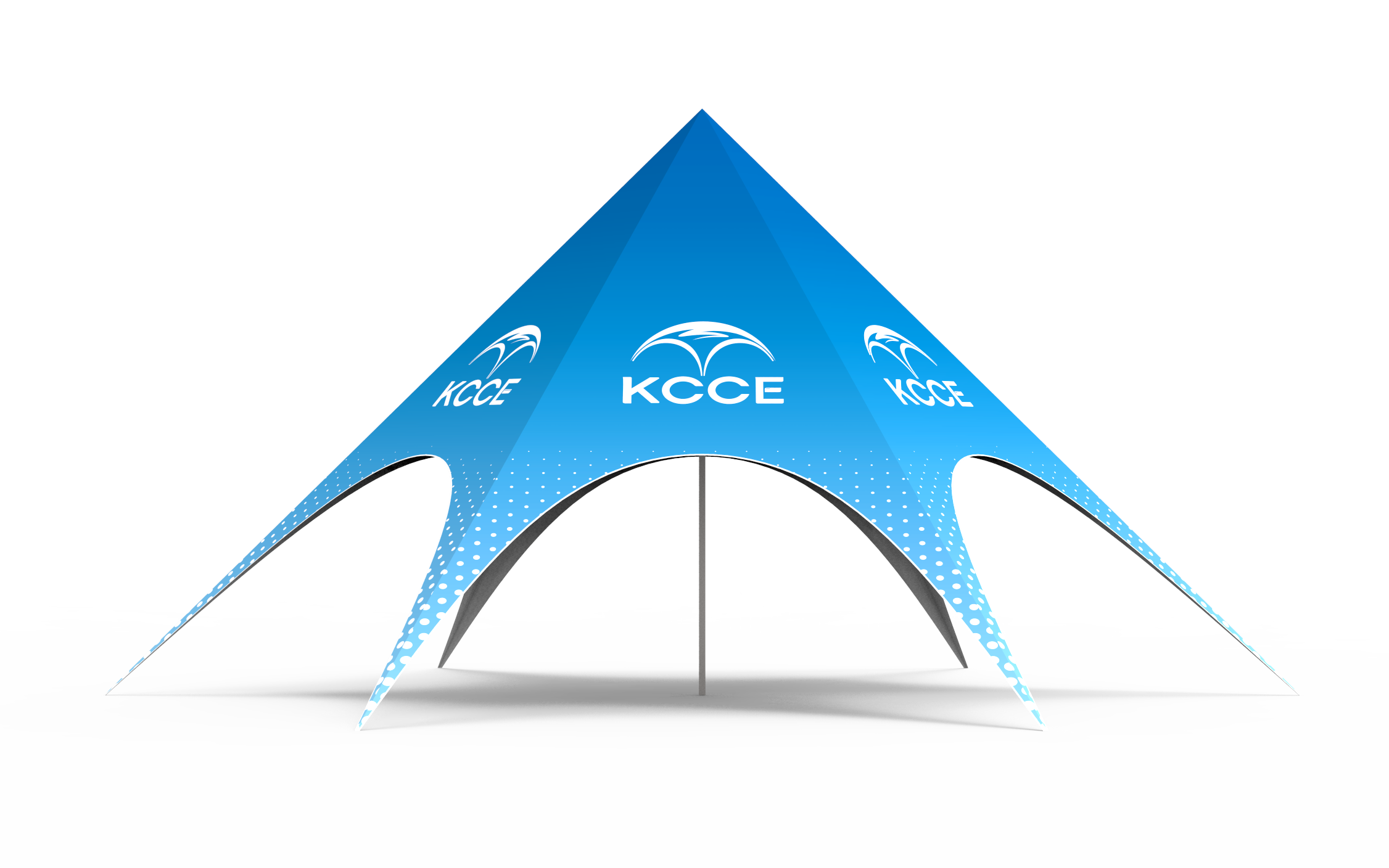
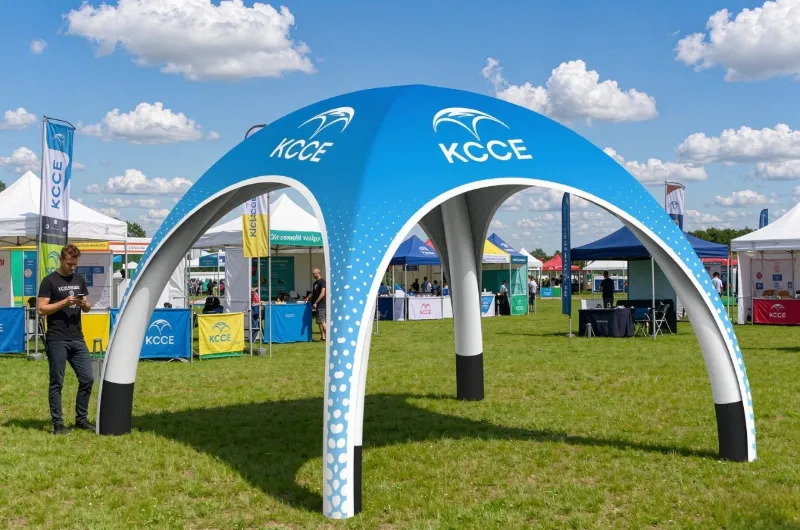
Here’s your next step: don’t just buy the first canopy you see. Compare 3 shortlisted models side-by-side. Put them through the buyer’s checklist I gave you earlier. Check the fabric denier, the frame gauge, the warranty terms. And if you’re exploring alternatives, consider what a quality inflatable option might offer—some of the inflatable tents from KCCE provide quick setup without the metal frame, which is worth a look if you’re tired of wrestling with poles.
The 10×10 tent is an investment in your business’s professional presence. Get it right, and you’ll have a reliable shelter for years of events. Get it wrong, and you’ll be shopping for a replacement next season.
常见问题解答
Q: How many people will fit in a 10×10 tent?
答: A 10×10 tent can comfortably accommodate a small group for a working booth, or a larger group standing for a casual gathering. For a vendor setup, you’ll typically have 1 to 2 staff members behind a table with room for 2 to 3 customers browsing at the front.
Q: What are the downsides of using a roof tent?
答: The main downsides are weight and vehicle compatibility. Roof tents add significant weight to your vehicle’s roof, reducing fuel efficiency and affecting handling. They also require a roof rack system and can be difficult to set up and take down, especially for shorter users.
Q: How much weight does a 10×10 tent need?
答: A 10×10 tent typically requires a certain amount of weight per leg for stability in moderate wind, with less weight needed for light wind conditions. This is usually achieved with sandbags, water weights, or weighted plates attached to each corner.
Q: Which 10×10 tent is the strongest?
答: The strongest 10×10 tents use steel frames with reinforced truss joints. Look for models with a higher waterproof rating (500mm or more) and a UPF 50+ canopy fabric rating. Commercial-grade models from established brands typically outperform budget options.
Q: How much weight do I need for a 10×10 canopy?
A: As a general rule, use at least 40–50 lbs of weight per leg (160–200 lbs total) for stable use in mild wind. For windy conditions or long-term setups, increase to 75–100 lbs per leg and use additional tie-downs or auger anchors.
Q: Can I leave my 10×10 canopy up overnight?
A: Yes, but only if it’s properly secured with adequate weights, stakes, and tie-downs. Always lower or remove the canopy top during high winds or storms, and check the manufacturer’s wind rating. Many vendors recommend taking it down if winds exceed 25–30 mph.
Q: What’s the difference between a pop-up canopy and an instant shelter?
A: They’re essentially the same product—both refer to collapsible, portable frame tents that “pop up” quickly. “Instant shelter” is often used by brands like Coleman, while “pop-up canopy” is the more generic industry term. Both operate on the same scissor-frame mechanism.
Q: Are custom printed canopies worth the extra cost?
A: For businesses and frequent exhibitors, yes. Custom branding on a canopy can pay for itself within a few events by increasing visibility and foot traffic. For occasional personal use, a plain canopy is more cost-effective.
Q: How long does a 10×10 canopy last?
A: With proper care, a quality canopy can last 5–10 years. The frame typically outlasts the canopy top, so many manufacturers sell replacement tops separately. Store it dry and clean, and avoid leaving it up in severe weather to maximize lifespan.
Q: Can I use a 10×10 canopy in the rain?
A: Yes, most commercial-grade canopies are water-resistant or waterproof. However, pooling water on the roof can cause damage—ensure the top is taut and slightly pitched so water runs off. Avoid touching the fabric from underneath when wet, as it may leak at contact points.
参考资料
1. Here’s What You Need To Know Before Purchase A 10×10 … – quictents.com
2. The Benefits of Using Pop Up Canopies for Business and … – abccanopy.com
3. Custom Canopy Tent 10×10 Explained: Uses, Benefits, and … – thesignshark.com
4. Best Canopy Tents for 2026 | 10×10 Reviews – canopytentreviews.com