Have you ever set up an Inflatable Tent for an event and then found yourself wondering just how long it’ll hold up with regular use? If you’re in event planning or run a rental business, I bet this question sneaks into your mind more times than you care to admit. From what I’ve seen over the years, there’s no one-size-fits-all answer. It really depends on several things. and that’s the thing. Basically. Let’s dig into how long commercial inflatable tents tend to last when used regularly, what can wear them down faster, and how to keep yours in the best shape possible (no surprise there). By the time you’re done reading. You should have a much clearer idea about whether one of these tents fits your needs and budget.
Realistically, what Are Commercial Inflatable Tents and How Long Do They Usually Last?
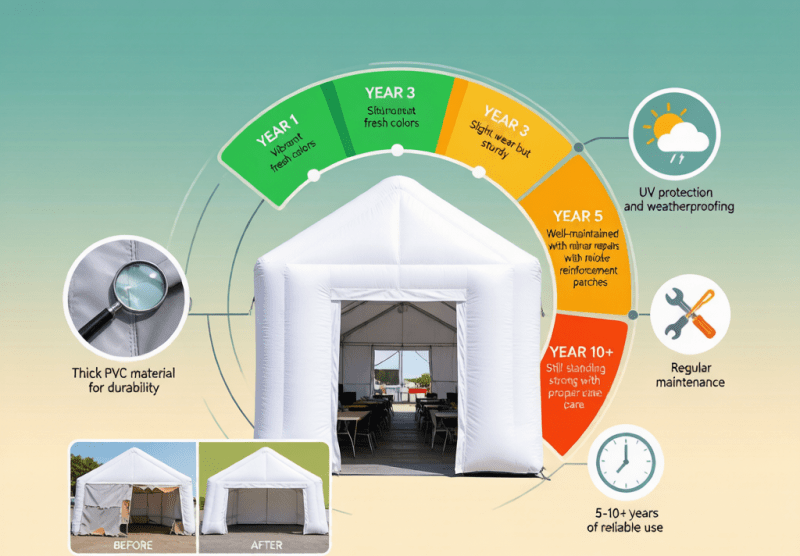
First off. What exactly is a commercial inflatable tent? Simply put, these tents are crafted from tough materials like PVC or Oxford cloth, built to stand up against weather. While being a breeze to set up. Typically, you can expect them to last anywhere from 3 to 10 years. But that’s a pretty broad range that hinges a lot on how often and how well they’re taken care of. Sure, there are pricier models that push beyond the 10-year mark. But not everyone wants to open their wallet that wide.
Most manufacturers back their tents with warranties that hint at their expected lifespan. You’ll often see coverage between 1 and 5 years. Simple as that (totally understandable). But here’s the catch: those warranties usually cover factory defects, not the everyday wear and tear you’ll be putting your tent through.
Honestly, from my experience, I’ve known tents to serve a good 7+ years when they were pampered properly. That’s the thing. While others fell apart barely making it past two years. That begs the question: what makes such a big difference?
What Factors Determine How Long Your Inflatable Tent Will Last?
You might be asking yourself, “Okay, so what actually affects how long these tents stick around?” Let me break it down:
- Material Quality: The sturdier the fabric, the better it holds up and thicker PVC tends to outlast lighter fabrics by miles.
- How Often You Use It: A tent that’s popped up every weekend obviously won’t last as long as one reserved for the occasional family get-together.
- The Weather It Faces: Sun, rain, wind and constant exposure to harsh conditions can weaken tents fast. And it shows. I once had a client’s tent that pretty much gave up after months baking in the sun without any cover.
- How You Maintain It: Honestly, this is huge. To be fair, regular cleaning, proper storage, and keeping an eye out for small issues can dramatically stretch your tent’s life. And it shows.
- Where You Store It: Tossing your tent into a damp basement or somewhere that swings between freezing cold and hot quickly invites problems.
- Fixing Problems Early: I can’t stress enough how important quick repairs are. Small tears or leaks, when left alone, turn into big headaches down the line — which that matters.
Look, after seeing countless tents in all sorts of conditions, I can tell you this: a little effort goes a long way.
How to Keep Your Inflatable Tent in Great Shape
Honestly, if you want your inflatable tent to stick around, you have to treat it right — which here’s a practical checklist I recommend:
- Clean it Right Away: Use mild soap and water after every use. Skip the harsh chemicals. Simple as that, also they do more harm than decent.
- Dry Thoroughly: Make sure it’s 100% dry before you fold it up. No surprise there. Or something like that. To be fair, otherwise mold and mildew could set in and start eating away at the fabric.
- Store Properly: Find a cool, dry area. Preferably out of the sun and away from moisture. By the way. A breathable storage bag is the best way to go (fair enough).
- Check Regularly for Damage: Leaks, rips, general wear. Pretty much.patch them early and avoid costly fixes later. Worth saying — true story.
- PatchSmall Issues Promptly: Keep a repair kit handy for minor holes or seam problems. Fixing them fast keeps the tent stronger longer.
From what I’ve seen, those who follow these simple steps often stretch their tent’s life well beyond the typical few seasons. While folks who skip maintenance end up replacing tents way more often.
Inflatable vs. Traditional Pole Tents: Which Lasts Longer?
Here’s a question I’m asked a lot: “Which lasts longer. Worth saying — and it shows. An inflatable tent or a traditional pole tent.?” The answer isn’t cut and dry.
Tents with poles usually stick around between 5 and 12 years. They take longer to set up and usually need more hands on deck. But when cared for properly, they stand the test of time. (go figure).
Inflatable tents, But shine for their portability and speedy tent setup instructions. The trade-off? They can be prone to punctures or leaks that you wouldn’t worry about as much with a solid pole tent.
If you’re thinking about an inflatable for long-term use. Like backyard parties over several years, keep in mind the lifespan varies based on how rough you get with it. And how much you care for it.
Typical Problems and How to Tackle Them
Speaking of issues, also what problems crop up most with inflatable tents.?
- Leaks: These are the usual suspects. The easiest way to find leaks is by inflating the tent and watching for bubbles or using soapy water to sniff out escaping air. No surprise there (which makes sense).
- Punctures: Small holes are fixable with a useful repair kit, which you really should keep close by.
- Seam Splits: Overinflating or just poor folding and storage can cause seams to pull apart. Sometimes adhesive tape is a solid quick fix.
- Sun Damage: UV rays aren’t kind over time. A UV protectant spray can really help slow down the damage.
Too many people struggle with these stuff because they just don’t know how to look after their tents properly. If you arm yourself with the right info, you can dodge most headaches — which here’s why.
Real Life Lifespans: What’s Normal?
Let me share some real examples. Realistically, fair enough, also one event company I know rents out inflatable tents at music inflatable festival shelters (go figure). After serious seasonal use and decent upkeep, their tents last around 3 to 5 years before it’s time for new ones.
Contrast that with a friend who splurged on a top-quality inflatable tent for family events. He takes exceptional care of it. Come to think of it. Keeps it spotless and dry — not to mention carefully stored. — which it’s hitting year 8 and still going strong.
So what’s the takeaway here? You really do get what you pay for, for sure. Simple as that. But equally true is that by investing time and care, you can stretch your tent well beyond what you might expect.
A Few FAQs That Come Up Often
Q: How long do inflatable tents last if I use them regularly?
A: Generally between 3 and 10 years, though factors like material quality, usage, and upkeep can shift that number.
Q: Are outdoor inflatable tents durable?
A: They can be, but it depends a lot on how well you maintain them. Some folks get many years out of theirs. Others, not so much. (fair enough).
Q: What’s the average lifespan of a tent overall?
A: Inflatable tents tend to last 3 to 10 years, — which that matters. While traditional pole tents are usually solid for 5 to 12 years, given proper care.
Realistically, q: How do inflatable tents compare durability-wise with traditional tents?
A: Inflatable tents are easier and faster to set up and move around — and but may need more attention for punctures and leaks. Or something like that. Honestly, traditional tents often last longer but require more effort to handle.
Q: What are the best maintenance tips?
A: Clean regularly, make sure the tent is dry before storage, inspect for damage, and fix small issues fast.
in the end,ultimately,when it comes down to it, whether you’re gearing up for big events or casual backyard hangouts, knowing these factors can save you money and frustration. Investing in the right tent — and looking after it. Can really pay off with years of reliable use. (no surprise there). Basically. That matters.