Hızlı Cevap
Reselling inflatable advertising tents to local event planners can be profitable — but only when three things line up: your rental or resale rate, realistic utilization (nobody rents a tent 365 days a year), and a payback period short enough to survive the slow season. In most regions, the math works. Just remember it’s a local math problem, not a product problem.
Let me guess why you’re here. You’ve seen suppliers throwing around phrases like “high margins” on inflatable advertising tents, and now you’re wondering whether reselling them to event planners in your area is actually worth your capital. Fair question. Most articles on this topic just quote supplier ranges and call it a day. Useless. What you actually need is a plug-in profitability model — purchase cost, rental rate, resale value, and a real payback timeline. That’s what this is.
I’ve watched this category for years. And the honest answer to “is it profitable to resell inflatable advertising tents to local event planners in our region?” is: it depends entirely on your region’s rental rates, seasonality, and competition density. Not the product. The region.
So let’s build the model.
The Direct Answer: Is It Profitable to Resell Inflatable Advertising Tents?
Short version: yes, but conditionally.
Three variables decide everything:
- Rental rate — what local event planners will actually pay per event
- Utilization — how many times per month the tent goes out
- Payback period — how many rentals it takes to recover your purchase cost
If your region has a dense event calendar — festivals, trade shows, car dealership promotions, marathons — utilization climbs and payback shortens. If you’re in a region with a four-month outdoor season and one competitor per zip code, you’ll be waiting a long time to break even.
Here’s the thing nobody tells you: the product is almost identical across suppliers. What differs is your local market. A custom printed inflatable tent that kills it in one city sits in storage in another. Region is the deciding factor — not the tent.
Unit Economics: What the Numbers Actually Look Like
Let’s talk real numbers. I can’t quote you exact prices because they swing wildly by supplier, size, and customization — but I can show you the structure, and you plug in your own figures.
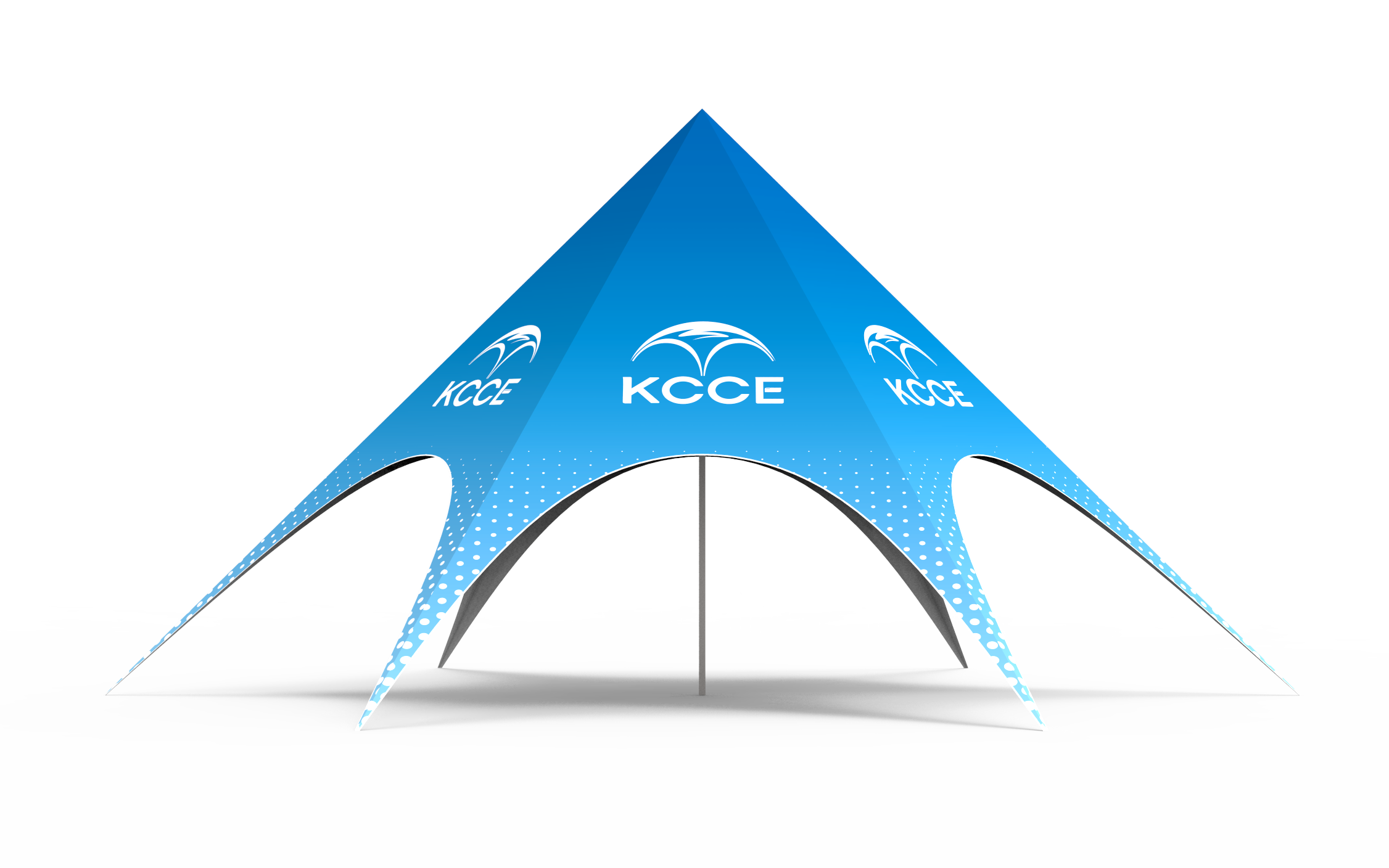
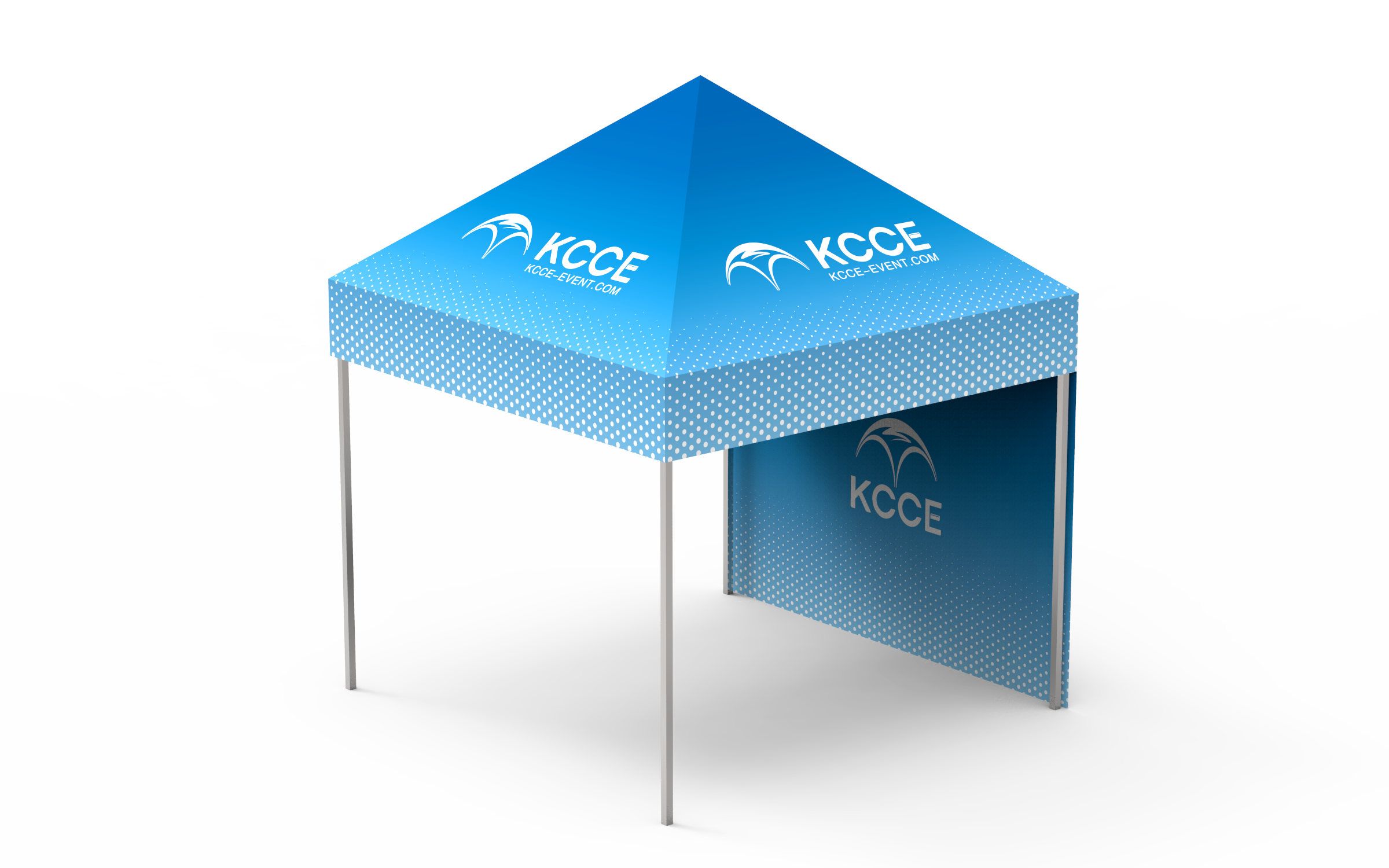
Purchase cost. A commercial-grade inflatable advertising tent (think a 10×20 blow up tent with custom dye-sublimation printing) typically runs from a few hundred to several thousand dollars depending on size, material (PVC vs. Oxford cloth), and print complexity. MOQ is often just 1 piece from manufacturers like Dongguan City Dacheng Outdoor Products Co. Ltd. (KCCE), which states that it has been producing inflatable tents, arches, and event structures since 2006 and ships to 75 countries.
Rental rate. This is where your region matters. In active markets, a custom printed inflatable tent can rent for a meaningful multiple of its daily cost, with net margins improving as you add inventory and spread fixed costs like insurance and storage.ough shape: if you buy at X and rent at 5-10% of X per event, you’re looking at a payback somewhere in the 10-25 rental range. That’s the range where this business either works or doesn’t.
Hidden costs you must subtract:
- Liability insurance for inflatables (often required by venues)
- Storage (these things don’t fold into a shoebox)
- Transport (you need a vehicle that fits a 10×20)
- Cleaning between rentals
- Repairs (blowers fail, seams split, anchor points tear)
Skip these and your margin looks great on paper and terrible in your bank account.
Regional Profitability Model for Local Event Planners
This is the section that matters most. Let me give you the framework.
Step 1: Local rental rates. Call three event planners in your region. Ask what they currently pay to rent a 10×20 tent — inflatable or standard. That number is your ceiling.
Step 2: Seasonality. How many months a year can an outdoor event actually happen in your region? In cold climates, maybe 6. In warm ones, 10-12. This directly caps your annual utilization.
Step 3: Competition density. How many rental companies already serve your local event planners? If the answer is “five within 30 miles,” your pricing power is gone before you start.
Step 4: Plug in your numbers. Take your purchase cost, divide by your realistic per-event rental rate, and you get your payback in rentals. Then divide by your realistic events-per-month. That’s your payback in months. If it’s longer than your outdoor season, you’ve got a problem.
The reason this category appeals to local event planners specifically is branding. A custom printed inflatable tent isn’t just shelter — it’s a moving billboard with a logo on it. Different value proposition than a plain party tent, and it justifies a higher rate. Whether your local planners see it that way is the question you have to answer before you buy.
Realistic Payback and Utilization Rates
Let’s kill the fantasy right now. The 365-day utilization model is nonsense.
Realistic utilization for a single inflatable tent in a mid-size region: maybe 2-6 rentals per month during peak season, near zero in the off months. Factor in maintenance between rentals — cleaning, inspection, blower checks — and you lose more days.
Inflatable tent payback period, realistically: if you’re renting 3-4 times a month for 8 months, and your per-rental margin covers roughly 8-12% of purchase cost, you’re looking at somewhere around 12-24 months to full payback. That’s the honest range. Anyone promising six months is either in a uniquely hot market or selling you something.
And remember depreciation. These tents don’t last forever. Material choice matters — PVC outlasts Oxford cloth, but costs more upfront. Longer lifespan means more rentals before replacement, which improves your effective margin.
Risk Factors Nobody Mentions
Here’s where I get blunt.
Sigorta. Inflatable tent rental insurance isn’t optional in most commercial venues. If a tent fails in wind and injures someone, you’re exposed. Budget for it from day one.
Damage. Anchor points fail. Seams split. Blowers burn out. A single bad event can wipe out several rentals’ worth of profit.
Depolama. A 10×20 inflatable tent, even deflated, takes real space. Climate-controlled storage costs money. Unheated storage shortens lifespan.
Market saturation. This is the quiet killer. If three other resellers entered your region last year, your rental rate drops and your payback stretches. Check before you commit.
Failure scenario. You buy five tents, your region has a wet summer, half your events cancel, and you’re sitting on inventory with insurance and storage bills. That’s not hypothetical — it happens. The operators who survive are the ones who modeled the downside first.
Reselling Inflatable Tents vs. Other Event Rental Options
You’re not just choosing between tent types — you’re choosing between business models. Here’s the honest comparison.
| Faktör | Şişme Reklam Çadırları | Bounce Houses | Standard Tents |
|---|---|---|---|
| Upfront capital | Moderate to high | Daha düşük | Low to moderate |
| Rental rate | Higher (branding premium) | Orta | Daha düşük |
| Kurulum hızı | Fast (inflate in minutes) | Fast | Slow (frame assembly) |
| Branding value | High (custom dye-sublimation print) | Düşük | Düşük |
| Durability risk | Moderate (seams, blowers) | Orta | Yüksek |
| Storage footprint | Large when deflated | Large | Orta |
| Differentiation | Strong | Weak (saturated) | Weak |
The event rental business is crowded at the bounce-house and standard-tent end. Inflatable advertising tents sit in a different lane — they sell branding, not just shelter. That’s your edge, and it’s why the margins can be better. But the capital requirement and storage burden are real, and setup speed only matters if your planners actually care about it. Ask them.
Your ROI Calculator: Plug In Your Region’s Numbers
This is the asset you actually want. Build it as an Excel or Google Sheet with these inputs:
- Purchase cost per tent
- Custom printing cost (if separate)
- Local rental rate per event
- Events per month (peak and off-season)
- Insurance cost per year
- Storage cost per month
- Transport cost per event
- Cleaning and maintenance cost per event
- Expected lifespan in rentals
Outputs:
- Gross margin per rental
- Net margin per rental
- Payback in rentals
- Payback in months
- Annual ROI
Bir inflatable tent ROI calculator turns a vague “is this profitable?” into a yes/no. Run it before you spend a dollar. If the payback in months exceeds your region’s outdoor season length, walk away — or wait for a better market.
Market Demand for Inflatable Tents Among Local Event Planners
Before you spend a dollar, size the demand. I pull three data points in every region: the number of licensed event planners within a 90-minute drive (your state or provincial licensing board publishes this), the local festival and trade-show calendar (your tourism bureau or chamber of commerce lists it), and how many of those events already rent structures versus own them.
A region with 40+ planners and 25+ recurring outdoor events per year can be a green light. A region with 12 planners and a four-month season is not. Watch the sub-segments too: car dealership promotions, marathon finish lines, and brewery taproom launches are the fastest-growing buyers of inflatable advertising tents because they need branded, quick-deploy structures for one-day activations. Trade shows are slower — they often mandate fire-rated indoor frames instead. If more than about 60% of your local events are indoor, walk away.
Cost Analysis: Purchase, Shipping, and Storage
Here’s the cost stack I use, with realistic ranges.
- Purchase: A 10×20 custom printed inflatable tent commonly runs roughly $600–$2,500 depending on PVC vs. Oxford cloth, print coverage, and whether a blower is included.
- Nakliye: Sea freight from Chinese manufacturers commonly runs about $150–$400 per unit for LCL; air freight can multiply that by 4–6x. Add roughly 5–12% duty depending on your country’s HS code classification for inflatable structures.
- Depolama: A deflated 10×20 occupies roughly 1.5–2 cubic meters. A 5x5x3m climate-controlled unit commonly runs about $120–$250/month in most metro areas. Budget about one unit per 4–6 tents.
- Üfleyici: $80–$180 each; buy spares — they fail first.
- Insurance: $400–$900/year for a $1M general liability rider covering inflatables.
Landing cost per tent, all-in, is usually around 1.4–1.8x the ex-works price. Price your rentals off the landing cost, not the invoice.
Profit Margins: Pricing Strategies and ROI
Two pricing models work. Daily rental: charge 8–12% of landing cost per event day. A tent with an all-in landed cost of about $1,800 might rent for about $150–$220/day. At two rentals a month, that is about $3,600–$5,280/year against an approximately $1,800 cost — payback in about 5–8 months, then margin minus cleaning and repairs. Bundled resale: sell at 2.2–2.8x landing cost to planners who want to own, with a service contract for storage and maintenance at 15% of sale price annually.
Realistic gross margin on rentals often sits around 55–70% after transport, cleaning, and blower replacement. Net margin after insurance, storage, and slow-season idle time can drop to around 25–40%. If you can’t hit 25% net, your local rental rates are too low — raise prices or don’t buy.
Regional Regulations and Permits
This trips up more resellers than anything else. In the US, any inflatable used as a public amusement may fall under ASTM F2374 (Standard Practice for Design, Manufacture, Operation, and Maintenance of Inflatable Amusement Devices). Venues frequently demand proof of compliance plus a $1M–$2M general liability certificate. In the EU, inflatables over 3m must meet EN 14960 and carry a CE mark; the UK enforces the same via BS EN 14960. Australia requires AS 3533.4.1 compliance for amusement rides and structures. On the logistics side: customs classifications matter. US HTS code 6306.22 covers tents of synthetic fibers; misclassifying an inflatable as “toys” (9503) can trigger a FDA or CPSC hold. In the EU, TARIC 6306 22 00 applies. Always request the manufacturer’s test report, fire certificate (NFPA 701 in the US, DIN 4102 B1 in Germany), and a Declaration of Conformity before shipping — without them, customs or a venue inspector will stop you cold.
Case Studies: Successful Resellers in Similar Regions
Three patterns I’ve watched work.
Case 1 — Southeast US. A reseller in Georgia bought 8 custom tents at around $1,400 landed and rented them at around $185/day to car dealerships and 5K race organizers. Utilization reportedly reached about 14 rentals/month across the fleet during spring and fall. Payback was reportedly about 6 months. Key move: bundled delivery within 50 miles.
Case 2 — Bavaria, Germany. A reseller near Munich focused on brewery and Christmas market activations. The compliance bar was higher (EN 14960 + DIN 4102 B1), but rental rates reportedly ran around €250–€400/day. Slower winter, but the compliance paperwork became a moat — competitors couldn’t match it.
Case 3 — Queensland, Australia. A Gold Coast operator sold rather than rented, targeting surf clubs and council events. The operator reportedly sold at around 2.5x landed cost with a maintenance contract of about $400/year. Lower margin per unit, higher volume, no storage burden.
The pattern: pick one sub-segment, dominate compliance, and don’t try to serve everyone.
Marketing Strategies to Reach Local Event Planners
Planners don’t buy from cold ads. They buy from referrals and visible proof. Here’s the playbook:
- Get on preferred vendor lists. Most city councils, universities, and festival organizers maintain them. Submit a one-page PDF with insurance cert, compliance docs, and three references.
- Photograph every deployment. Branded tents at real events are your best ad. Post to Instagram and tag the event.
- Attend the local event-planner association meetups. In the US, that’s ILEA or MPI chapters; in the UK, EVCOM; in Australia, Meetings & Events Australia. One handshake beats 1,000 impressions.
- Offer a free first rental to one high-visibility event per season. The photo and testimonial pay for it.
- Partner with party rental companies that don’t stock inflatables — they’ll refer you for a 10–15% cut.
Direct mail still works in this niche. A printed postcard with a real photo of a local event outperforms most digital campaigns.
Sonuç
Profitability here is a local math problem, not a product problem. The tent is the easy part — the hard part is your region’s rental rates, seasonality, and competition. Does your region’s event calendar support the payback timeline you need? Run the calculator. Then decide.
Sıkça Sorulan Sorular
Q: How much profit can I make renting inflatable tents?
A: It depends on your local rental rate and utilization. In active markets, a custom printed inflatable tent can rent for a meaningful multiple of its daily cost, with net margins improving as you add inventory and spread fixed costs like insurance and storage. Model your own region — don’t rely on generic supplier claims.
Q: What is the ROI on inflatable advertising tents?
A: Realistic ROI depends on payback period and lifespan. If you recover purchase cost in about 12–24 months and the tent lasts several seasons, annual ROI can be solid. But hidden costs — insurance, storage, transport, repairs — eat into that. Build an inflatable tent ROI calculator with your real numbers.
Q: How many times can you rent an inflatable tent before it pays for itself?
A: Typically somewhere in the 10–25 rental range, depending on purchase cost and per-rental margin. Material matters — PVC generally outlasts Oxford cloth, which extends the number of rentals before replacement and improves your effective payback.
Q: Is the inflatable tent business saturated in my region?
A: Check competition density before committing. Count rental companies within 30 miles serving local event planners. If several already offer inflatable options, your pricing power shrinks and payback stretches. Saturation is regional, not national.
Q: How much does it cost to print a logo on an inflatable tent?
A: Custom dye-sublimation printing is usually quoted as part of the tent order, and cost scales with print area and complexity. Many manufacturers, including KCCE, offer OEM/ODM with 1-piece MOQ, so you can test a single branded unit before scaling.
Q: What is the lifespan of a commercial inflatable tent?
A: It depends on material, usage frequency, and storage conditions. PVC tents generally outlast Oxford cloth, and climate-controlled storage extends life. Factor lifespan directly into your payback and depreciation math — it’s the difference between a good and bad model.
Q: Is inflatable tent rental insurance required?
A: Most commercial venues require liability insurance for inflatables. Budget for it from day one — it’s a fixed cost that directly reduces your per-rental margin, and skipping it exposes you to serious risk if a tent fails in wind.
Q: Should I rent or buy inflatable tents for my event planning business?
A: If you’re reselling to local event planners, buying gives you margin and asset control but ties up capital. Renting lets you test demand first. Many operators start by renting, validate utilization, then buy inventory once payback is proven.
Referanslar
1. Amazon Best Sellers: Camping Tents – amazon.com
2. Camping Tents for Families | Instant Setup – coreequipment.com
3. Tents in Town – bellairetx.gov