Hızlı Cevap
Commercial tents for sale run from about $300 for a light-duty pop-up up to $1,500+ for a heavy-duty frame tent. What separates “commercial grade” from consumer grade comes down to three things: fabric weight (500D+), frame gauge (aluminum or galvanized steel), and a documented fire rating. Buy by use case first, budget second.
You’ve seen the listings. A 10×10 pop-up for $300. A frame tent for $1,500. Both stamped with the word “commercial,” both showing a photo of smiling people under a white canopy. So what’s the actual difference?
Here’s the thing — most product pages won’t tell you. You get a canopy size, a color, maybe a “heavy duty” badge, and a checkout button. Nobody explains what “commercial grade” means in measurable terms, and that’s exactly why so many buyers end up with a tent that tears at its second market season or bends a leg in the first real gust.
I’ve spent years sourcing and specifying tents for events, vendor booths, and rental fleets, and the pricing opacity in this industry still drives me up the wall. So this is the version I wish someone had handed me on day one: commercial tents for sale, sorted by what you’re actually going to do with them.
Commercial vs. Standard Tents: What “Commercial Grade” Really Means
Let’s get concrete. In practitioners’ experience, the gap between a consumer canopy and a genuinely commercial one shows up in three places — and none of them are the canopy color.
| Spec | Standard / Consumer Tent | Commercial Grade Tent |
|---|---|---|
| Çerçeve | Thin-wall steel or light aluminum, often round tube | 40mm hex aluminum or galvanized steel, thicker wall |
| Canopy fabric | 200D–300D polyester, often unrated | 500D–900D polyester or vinyl, UV-treated |
| Fire rating | Usually none documented | Documented fire rating (certificate on request) |
| Rüzgar derecesi | Rarely stated | Stated, with anchoring requirements |
| Garanti | 30–90 days typical | Multi-year frame coverage on better lines |
| Price (10×10) | ~$150–$300 | ~$300–$1,500+ depending on tier |
The 40mm hex aluminum frame paired with 900D fabric is the benchmark cited by specialist canopy retailers like TheCanopyTents.com in their 2026 heavy-duty buyer’s guide — that’s the spec level where a tent stops being a weekend accessory and starts being daily-use equipment.
Three specs to verify before you buy anything labeled commercial:
- Frame wall thickness and tube profile — ask for the millimeter number, not “heavy duty.”
- Fabric denier — 500D minimum for regular commercial use; 900D for daily setups.
- Fire rating documentation — if the seller can’t produce a certificate, treat the “commercial” label as marketing.
You might be wondering whether all this matters for a flea market booth. It does — but the tier you need depends on frequency, not ambition. More on that below.
Commercial Tent Price Bands: Budget, Heavy-Duty, Frame
Speaking of which, let’s talk money. From what I’ve seen across suppliers, commercial tents for sale cluster into three rough bands. These aren’t manufacturer list prices — they’re the ranges you’ll encounter shopping around, and they line up with the tiers described in sourcing guides like KCCE-Event’s commercial tent supply breakdown.
Band 1: ~$300 — light commercial pop-up.
This is the entry point. You get a steel or light aluminum frame, fabric in the 300D–500D range, and a basic carry bag. Fine for a vendor doing two or three markets a month. Not fine for daily setup and teardown — the joints are the first thing to go.
Band 2: ~$800 — heavy-duty pop-up.
The price jump buys you a thicker frame, 500D+ fabric, better UV treatment, and usually a stated wind rating with proper anchoring hardware. This is where most full-time market vendors should be shopping.
Band 3: $1,500+ — frame tent.
Pole-and-frame construction, larger footprints, and the durability that rental fleets and wedding operations need. Setup takes two people and real time, but the lifespan is measured in years of repeated installs, not seasons.
On commercial canopy tent prices generally: the supply guide from KCCE-Event puts pop-ups in the roughly $400–$700 range and steps up from there for heavier construction — which tells you the $300 listings are usually the bottom of the commercial spectrum, not the middle. If a price looks too good for the spec sheet, one of the specs is wrong.
Pop-Up vs. Frame vs. Inflatable: Which Format Fits
Three formats dominate the market, and they solve different problems.
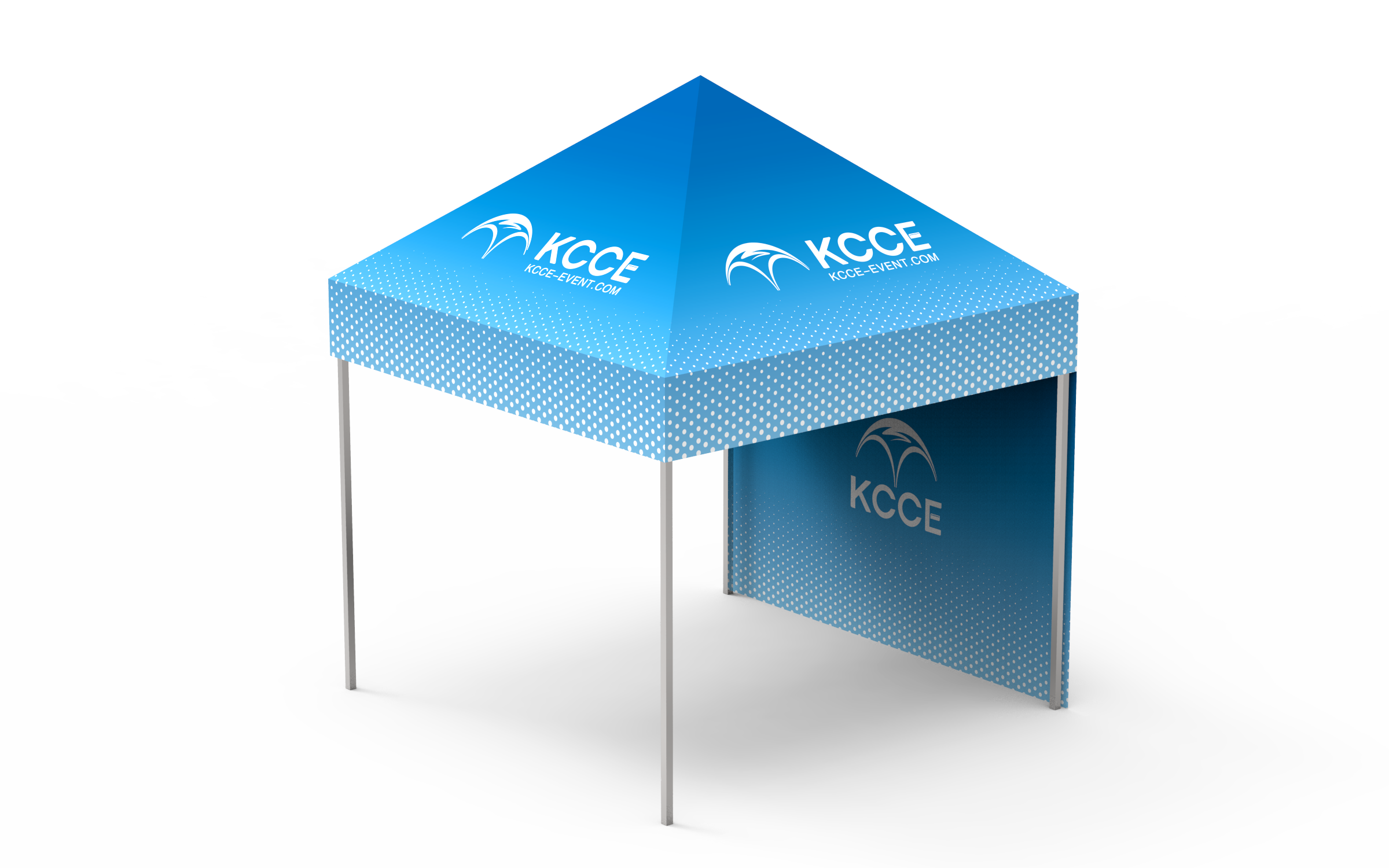
Pop-up (instant shelter). Sets up in minutes, one or two people, fits in a car trunk. Trade-off: smaller footprints and lower wind tolerance. This is the default for vendors, flea markets, and anyone who sets up and strikes the same day.
Frame tent. Pole-and-frame assembly, much larger spans, far better wind performance when properly anchored. Setup is a project — think 30–60 minutes with help. This is rental-fleet and event territory.
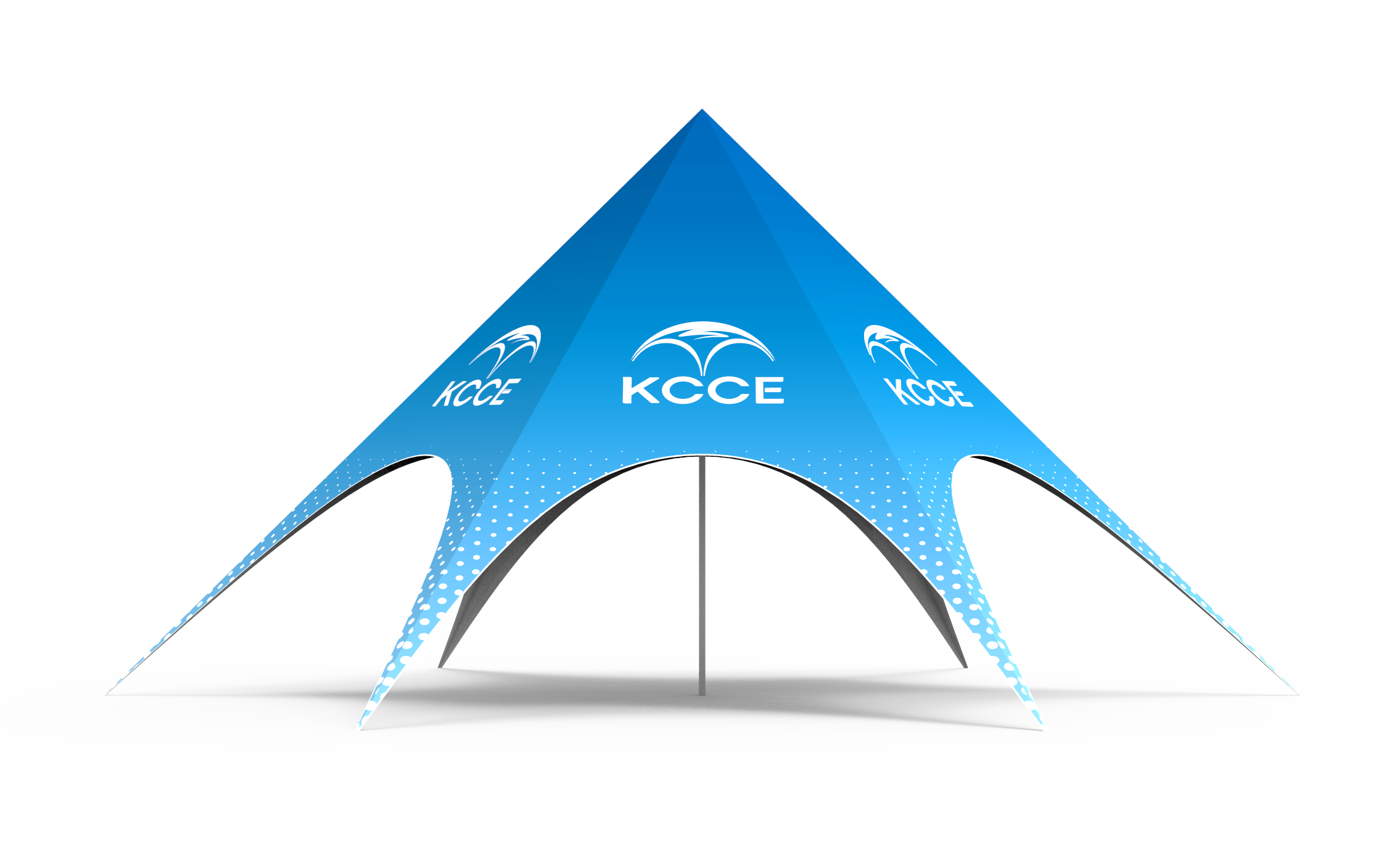
Inflatable. Blows up fast, looks distinctive, and works well for exhibitions and brand activations where visual impact is the point. KCCE, a Dongguan-based inflatable manufacturer, lists 10×10 blow-up marquee tents and modular inflatable gazebos among its event products with a one-piece minimum order — which tells you inflatables are increasingly viable for single-unit buyers, not just bulk orders. The catch: they need a blower running, and they’re not the format for a wind-exposed open lot.
Quick decision rule:
- Selling at markets weekly, need car transport → pop-up
- Renting to clients or hosting weddings → frame
- Exhibition booth or branded activation → inflatable
Best Commercial Tents by Use Case
“Best” is a useless word without a use case attached. Here’s how I’d segment it.
Vendor / flea market. You want a commercial pop-up in Band 2 — heavy-duty frame, 500D+ fabric, a wheeled bag, and sidewalls you can add. Buy commercial tent 10×10 in this configuration and you’ll get years of service. Brands like ABC Canopy, Eurmax, and EZ-UP dominate this segment according to use-case breakdowns from KCCE-Event’s 2025 brand guide — and notably, ABC Canopy’s commercial line has a reputation among craft-fair vendors for lasting several years with care. which is the kind of durability timeline you rarely see published.
Catering. You need sidewalls, a solid anchoring plan, and fabric that handles steam and grease. Frame tents win here because of the footprint and the ability to close up.
Rental / events. Frame tents, full stop. Buy for repeated install-and-strike cycles and keep a parts inventory — replacement legs and fittings are what keep a rental fleet alive.
Outdoor business (pop-up retail, sampling). Either format works; inflatables win on visual impact if branding is the goal.
The best commercial tent is the one whose format matches your setup frequency. Everything else is secondary.
Sizing: What Fits in a 10×10 Space
Here’s where people get burned. A 10×10 commercial tent does not give you 100 square feet of usable space.
The canopy is 10×10. The legs sit inboard of the canopy edge, and you lose a strip along each side to leg placement and sidewall clearance. In practice, a 10×10 commercial tent gives you something closer to a 9×9 working area once you account for legs and the space you can’t block with product.
What is a commercial tent 10×10 used for? Standard vendor booth (most markets allocate 10×10 plots), small catering stations, sampling setups, and photo booths. It’s the single most common commercial footprint for a reason — it matches booth allocations.
What size commercial tent do I need for a 10×10 space? A 10×10. Don’t buy a 12×12 hoping to squeeze it in; markets measure plots and you’ll be the vendor blocking the aisle.
Takeaway: measure usable area, not canopy size. Lay out your table, your product, and your standing room on the ground with tape before you buy.
Waterproofing, Wind, and Weights: Setup Realities
Are commercial tents waterproof? Mostly — with caveats. Commercial canopies are typically water-resistant rather than fully waterproof at the seams, and the fabric rating matters. A 500D+ polyester with a waterproof coating handles rain; a cheap 200D canopy will soak through at the seams within an hour.
Wind is the bigger issue. A canopy is a sail. The wind rating on the spec sheet is meaningless without the anchoring to match it. Minimum weighting practice in the industry: stake every leg on grass, and Use ballast weights on hard surfaces, sized according to the manufacturer’s anchoring guidance. — more in exposed locations. If the forecast is calling for gusts above the tent’s stated rating, don’t set up. No warranty covers a tent that went airborne.
And check the fire rating documentation before your first event. Venues increasingly ask for it, and a tent without a certificate can get you turned away at the gate.
Sourcing Local vs. Online: Vetting Suppliers
Searching commercial tents for sale near me gets you local dealers with fast replacement parts and the ability to inspect fabric in person. That’s worth real money for rental fleets. Searching online gets you wider selection and factory-direct wholesale pricing, but you’re buying on spec sheets alone.
Four questions to ask any supplier, local or online:
- What’s the frame wall thickness in millimeters? Vague answers = walk away.
- Can you send the fire rating certificate? If not, it’s not commercial grade.
- What’s the warranty, and does it cover the frame? Frame coverage is the real test.
- What are the return terms, and who pays shipping? Freight on a tent is not cheap — a “returns accepted” policy with buyer-paid freight is nearly worthless.
On wholesale: if you’re buying multiple units, factory-direct suppliers give the best value, and minimum order quantities as low as one piece are now common on B2B marketplaces — KCCE’s listings show single-piece MOQs on inflatable event tents, for example. That removes the old barrier where you had to commit to a container to get wholesale pricing.
What Are Commercial Tents for Sale?
Strip away the marketing and a commercial tent is a portable, engineered shelter rated for repeated commercial deployment — not a one-season backyard canopy. The definition hinges on three measurable attributes: a frame rated for recurring setup/teardown (typically 40mm hex aluminum or 1.5mm-wall galvanized steel), a canopy fabric of 500D–900D polyester or 13–18oz vinyl that carries documented UV treatment, and a fire rating certificate you can hand to a fire marshal. The core value isn’t the tent itself — it’s risk transfer. A documented commercial tent lets you pass a venue inspection, survive a 25–30 mph gust with proper ballast (typically 40–50 lb per leg), and amortize cost across hundreds of events instead of one. Consumer canopies fail on all three counts, usually silently, which is why the “commercial” label is worth nothing without the paperwork behind it.
Commercial Tents by Function: Sports, Food Vendor, Farmers Market, Café, Restaurant, Beer, School, Church, Medical, Event
Function drives spec more than size does. Here’s how I’d match tent type to use:
- Sports — 10×10 or 10×20 pop-ups for team shade and scorer tables; prioritize wind rating and weighted feet on turf.
- Food vendor — 10×10 with sidewalls and a vented peak; grease and steam demand vinyl over polyester, and most health departments want smooth, cleanable surfaces.
- Farmers market — 10×10 heavy-duty pop-up, 500D+; the weekly setup cycle is the real durability test.
- Café / restaurant — frame tents (20×20+) for extended outdoor seating; fire rating and egress clearance are non-negotiable.
- Beer / bar service — 10×20 with counter-height sidewalls and branded valances; vinyl for spill resistance.
- School / church — 20×40 frame tents for fairs and services; ADA-compliant sidewall openings and anchoring plans for open fields.
- Medical / first-aid — enclosed frame tent with solid sidewalls, climate control provisions, and privacy partitions.
- Event — clearspan or West Coast frame for weddings and galas; appearance and wind certification lead.
Commercial Event Tents & Heavy Duty Canopies
Event tents and heavy-duty canopies split along a simple line: how much wind and weather the structure is engineered to take, and whether it needs a permit. Commercial event tents (frame or clearspan) are commonly rated to high wind speeds when engineered and anchored per manufacturer specs. and Many jurisdictions require stamped engineering for larger occupancies. Heavy-duty canopies are the pop-up end of the same spectrum — 500D+ fabric, hex aluminum frames, rated to 25–35 mph with ballast. The practical rule I use: if guests will be seated and served under it, buy the engineered frame tent and get the anchor plan in writing; if it’s staff shade or a vendor booth, a heavy-duty canopy with documented wind rating is sufficient. Never deploy either without the anchoring hardware the rating assumes.
Frame Tents: Standard vs. Premium West Coast Frame Tents
Two frame-tent families dominate commercial sales, and the difference is structural, not cosmetic. Standard frame tents use 1.5″–2″ round or hex aluminum tubing with a peaked, valance-hung top — fine for 10×10 to 20×20 footprints, two-person setup, and moderate wind exposure. West Coast frame tents use heavier gauge tubing, cross-bracing, and a higher peak with full-length valances; they scale to 20×40 and beyond, handle higher snow and wind loads, and are the workhorse of rental fleets. The tradeoff is weight and setup labor — a 20×40 West Coast frame is a crew job, not a solo one. There is typically a meaningful price gap at equivalent footprint, with the exact difference depending on specifications and supplier. If you’re setting up weekly at one site, standard frame is adequate; if you’re moving it, renting it out, or facing real weather, pay for the West Coast build.
Heavy Duty Party Tents for Sale
“Heavy duty party tent” is the most abused phrase in the category, so here’s what I actually check. A genuinely heavy-duty party tent carries a stated wind rating (look for 50–80 mph engineered ratings on frame models, 25–35 mph on pop-ups), a fabric spec of at least 500D polyester or 14oz vinyl, and frame tubing you can measure — 40mm hex aluminum or 1.5mm-wall steel minimum. Party tents in the 20×40 class typically need a small crew and under an hour to pitch. Watch for the tell: listings that quote square footage but no wind rating, no fabric weight, and no fire certificate are consumer tents with a party label. For anything serving alcohol or a ticketed crowd, your insurer and the fire marshal will ask for exactly those three numbers.
Tent Sidewalls & Accessories
Sidewalls and accessories are where a tent becomes a room — and where budgets quietly blow past the canopy price. Standard sidewall options are solid vinyl (privacy, weather), mesh (ventilation, vendor visibility), and cathedral window (appearance). Sidewall panel pricing varies by material and size; check with suppliers for current rates. The accessories that actually matter operationally: weighted ballast (40–50 lb per leg minimum for open sites), ground stakes and ratchet straps for turf, leg weights for hardscape, lighting (LED string or bar clamps rated for damp locations), and flooring for medical or dining use. One spec to verify: sidewall fire rating should match the canopy’s — a fire-rated top with unrated sidewalls fails inspection. Buy sidewalls with the tent, not after; color and attachment hardware rarely match across years.
Commercial Tent Buying Decision Guide: Sizing, Materials, Load Ratings, Fire Compliance
Sizing math first: A common planning guideline is to allow roughly 8–10 sq ft per seated guest at banquet rounds, about 6 sq ft standing, and around 100 sq ft per vendor booth including aisle. A 20×40 (800 sq ft) tent seats approximately 80 at tables under these guidelines. Malzemeler: 500D polyester for regular use, 900D or 14–18oz vinyl for daily or food service; vinyl wins on cleanability, polyester on weight and cost. Wind/snow: demand a stated rating — Engineered frame tents commonly carry wind and snow ratings when installed per spec.; pop-ups 25–35 mph. Fire compliance: in the US, look for NFPA 701 compliance (test method for flame propagation of textiles) and, for occupied structures, compliance with the ICC 300 / IBC membrane-structure provisions your local fire marshal enforces — get the certificate before the event, not the day of.
Commercial Tent Total Cost of Ownership & ROI
Run the numbers and the buy-vs-rent call usually makes itself. A heavy-duty frame tent, maintained with an annual maintenance budget, can amortize to a lower per-event cost over a multi-year service life — versus renting a comparable tent, which costs more per event. Break-even against rental depends on purchase price, maintenance, and frequency of use.nt. Break-even against rental lands around 8–12 uses. Pop-ups are cheaper upfront but shorter-lived, especially with frequent use. so cost-per-event is similar; the real saving is logistics. The hidden TCO lines are storage (a 20×40 needs real space), labor (crew time per setup), and replacement parts. Buy when you’ll deploy 10+ times a year at a site you control; rent when you need scale you can’t store or a one-off footprint.
Sıkça Sorulan Sorular
Q: How much does a commercial tent 10×10 cost?
A: Roughly $300 for a light commercial pop-up, around $800 for a heavy-duty pop-up with a 500D+ canopy and thicker frame, and $1,500+ for a frame tent. The commercial tent 10×10 price tracks frame gauge and fabric denier more than brand name — verify both before comparing quotes.
Q: Are commercial tents 10×10 waterproof?
A: Water-resistant, usually. Commercial-grade fabric with a proper coating sheds rain well, but seams can seep in sustained downpours. Check the fabric rating and seam treatment, and never assume “commercial” means fully waterproof — it doesn’t.
Q: What is the difference between commercial and standard tent 10×10?
A: Frame gauge, fabric denier, and fire certification. Commercial tents use 40mm hex aluminum or galvanized steel frames and 500D–900D fabric with documented fire ratings. Standard tents use thinner frames and lighter fabric, usually with no rating documentation at all.
Q: What is the largest tent on the market?
A: For commercial event use, pole-and-frame structures scale far beyond pop-up sizes — large span frame tents and marquee structures are the practical ceiling for portable setups. If you need something bigger than a standard frame tent, you’re into engineered structure territory, not off-the-shelf canopies.
Q: Who sells cheap tents?
A: Big-box retailers and online marketplaces carry low-cost canopies, but most of those are consumer grade. If you need cheap and commercial, look at entry-level pop-ups in the $300 band from specialist suppliers rather than general retailers — you’ll get better spec transparency for similar money.
Q: Do they sell tents at Tractor Supply?
A: Tractor Supply carries canopy and shelter products in its outdoor lineup, but these lean toward consumer and farm-use canopies rather than commercial event tents. For daily commercial use, a specialist supplier with documented specs is the safer buy.
Q: Where can I find commercial tents for sale near me?
A: Start with local event rental companies — many sell off fleet units — and regional tent dealers who stock replacement parts. For a commercial tent 10×10 local supplier, ask to inspect the frame and fabric in person before committing.
Q: Is it worth buying commercial tent 10×10 wholesale?
A: If you’re outfitting a rental fleet or multiple booths, yes. Factory-direct wholesale pricing and single-piece minimums now make bulk buying viable for small operators too — just confirm warranty terms apply to wholesale orders before you commit.
Alt Satır
Price tier should follow use case, not budget alone — a $300 pop-up that dies in one season costs more than an $800 heavy-duty tent that runs for five. Verify the three specs (frame gauge, fabric denier, fire certificate), then pick your format. That’s the whole buying checklist.
Referanslar
1. Best Commercial Tent Brand: Picks by Use Case (2025) – kcce-event.com
2. Commercial Tent Supply: Real Pricing, MOQs & Buyer’s Guide – kcce-event.com
3. Best Commercial Canopy Tent for 2026 (Heavy-Duty Buyer’s Guide) – thecanopytents.com
4. Inflatable Tent Manufacturer, Inflatable Arch, Inflatable Column Supplier – kcceinflatable.en.made-in-china.com
5. Camping Tent Market Analysis, Size, and Forecast 2026-2030 – technavio.com