Je bent net je camping opgereden na een lange rit. De wind steekt op. Je haalt je klassieke koepeltent tevoorschijn en besteedt twintig minuten aan het worstelen met haringen, hoesjes en een buitentent die maar niet wil vastklikken. Ondertussen haalt je maat een tas tevoorschijn, trapt een paar keer op een pomp, en hun onderkomen staat binnen twee minuten overeind.
Dat is de belofte van de opblaasbare tentjes voor kamperen — een radicale snelkoppeling die snel aan populariteit wint. Maar is snelheid de afwegingen waard? Ik ben al jaren bezig met outdooruitrusting en ik heb deze hypecyclus zich zien afspelen. Eerlijk gezegd, toen iemand me voor het eerst over deze dingen vertelde, moest ik lachen. Een luchtbed dat zich voordoet als onderkomen? Klonk als een ramp in wording.
Maar de cijfers van QYResearch zeggen dat dit geen eendagsvlieg is. De wereldwijde markt voor opblaasbare kampeertenten groeit en merken steken serieus R&D in luchtbalktechnologie. Toch is de scepsis luidruchtig als je op Reddit of welk kampeerforum dan ook rondhangt. Mensen maken zich zorgen over tenten die lekken of lucht verliezen in regen en wind. Ze piekeren over het meeslepen van een pomp. En ze vragen zich af of een goedkope opblaasbare tent gewoon rommel van lage kwaliteit is met een chique ventiel.
Deze gids snijdt door de hype heen. We duiken in de prestaties in de praktijk, duurzaamheid en waarde. We vergelijken luchttenten rechtstreeks met traditionele tenten met haringen. En ik geef je een eerlijke checklist om te bepalen of een opblaasbare tent bij jouw kampeerstijl past — voordat je ook maar een cent uitgeeft. Je vraagt je misschien af waar al die scepsis vandaan komt. Laten we beginnen met precies te begrijpen waar we mee te maken hebben.
Wat is een Opblaasbare Tent?
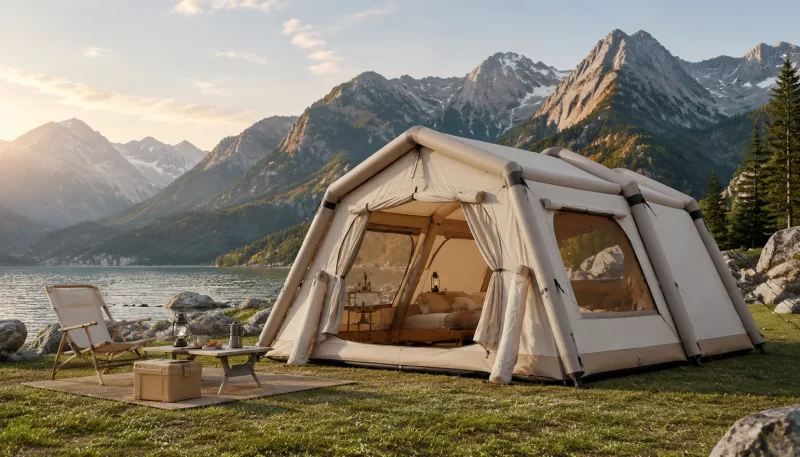
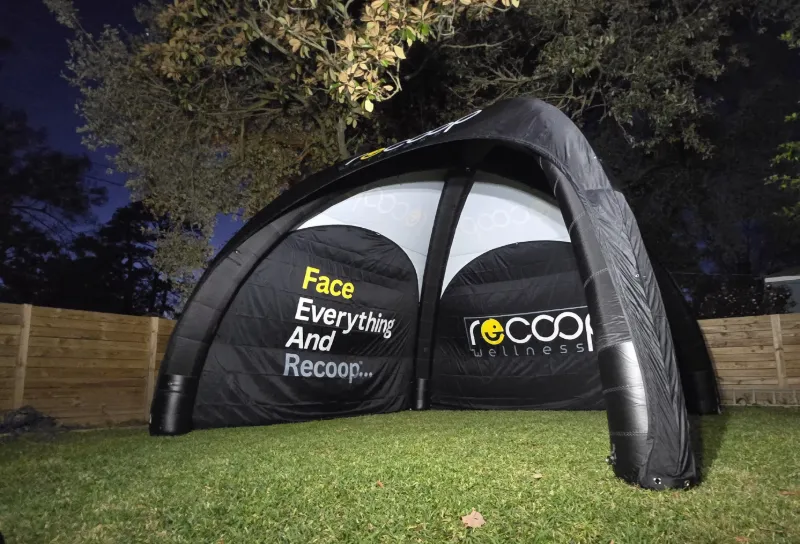
Hier is het basisidee: een opblaasbare tent vervangt de stijve aluminium- of glasvezelharingen van een traditionele tent door holle, opblaasbare balken — vaak luchtbalken genoemd. Denk minder aan een springkasteel, meer aan een hogedruk-opblaasbaar vlot. Deze balken zijn meestal gemaakt van TPU (Thermoplastisch Polyurethaan) of PVC-gecoate stoffen, gestikt of gelast tot buizen. Wanneer je ze ophlaast tot de juiste druk, worden ze stijf genoeg om de tentstructuur overeind te houden.
De meeste moderne opblaasbare tenten gebruiken een eenvoudig systeem. Je gebruikt een handpomp of een elektrische pomp om de balken te vullen. De balken zijn vaak verbonden door interne luchtkanalen, dus je hebt mogelijk slechts één of twee ophlaaspunten voor het geheel. Een belangrijk kenmerk bij betere modellen is het “luchtslot”-ventiel — een tweewegventiel dat lucht binnenlaat maar voorkomt dat het ontsnapt wanneer je de pomp loskoppelt. Popular Mechanics merkt in hun vergelijking van opblaasbare tent versus tent met haringen op dat, hoewel ze eenvoudig op te zetten zijn, opblaasbare tenten niet dezelfde structurele integriteit hebben in alle omstandigheden.
De materialen doen er enorm toe. Budgettenten gebruiken PVC, dat zwaarder is en stijf wordt bij koud weer. Hoogwaardigere tenten van merken zoals Outwell gebruiken TPU — lichter, flexibeler in de kou en minder belastend voor het milieu om te produceren. Je zult ook specificaties zien zoals “150D polyester” of “300D Oxford-stof” voor het tentlichaam. We gaan daar dieper op in in het aankoopgidsgedeelte.
Opblaasbaar versus Traditionele Tenten: Een Directe Vergelijking
Dit is de vraag die iedereen beantwoord wil hebben. Is een tent met haringen beter? Of heeft de luchtbalk eindelijk de koning onttroond? Laten we emotionele argumenten opzijzetten en kijken naar een zij-aan-zij-vergelijking op basis van gangbare industriële praktijken en tests in de praktijk.
| Kenmerk | Opblaasbare tent | Traditionele Stoktent |
|---|---|---|
| Opzetsnelheid | 5-10 minuten | 10-20 minuten |
| Verpakt Gewicht | Zwaarder (vaak 2-3 lbs per persoon) | Lichter (vaak 1,5-2 lbs per persoon) |
| Duurzaamheid (Doorboring) | Lager (balk kan doorboord worden) | Hoger (haringen zijn zeer sterk) |
| Duurzaamheid (Wind) | Uitstekend (flexibel, buigt mee met de wind) | Uitstekend (stijve structuur) |
| Reparatiegemak | Moeilijker (pleister of vervangende balk nodig) | Makkelijker (vervang een gebroken haringsectie) |
| Prestaties bij Koud Weer | Slecht (balken worden stijf, mogelijk luchtverlies) | Goed (geen verandering) |
| Pakbaarheid | Korte, dikke tas | Lange, smalle tas |
| Pompafhankelijkheid | Hoog (vereist pomp) | Geen |
Een professionele uitrustingstester en backcountry-reiziger geciteerd in het Popular Mechanics-artikel zei: “Mijn ideale haringsstructuur is een ontwerp met één centrale naaf, met slechts één dwarsbalk.” Dat is de gouden standaard voor eenvoud in de haringenwereld. Fabrikanten van opblaasbare tenten streven naar dezelfde eenvoud, maar ze moeten rekening houden met de pomp.
Dus welke is beter? Zoals bij de meeste goede uitrustingsvragen is het antwoord: “Het hangt ervan af.” Voor een autokampeerder die waarde hecht aan snelheid, is een opblaasbare tent een schot in de roos. Voor een backpacker of winterkampeerder is een tent met haringen nog steeds de veiligere keuze. Laten we die voor- en nadelen in detail uiteenzetten.
Belangrijkste Voordelen van het Kiezen voor een Opblaasbare Tent
Het belangrijkste voordeel is duidelijk, maar laten we het uitpakken. Opzetsnelheid gaat niet alleen om drie minuten besparen. Het gaat erom je onderkomen op te zetten in een motregen zonder je slaapzak door te weken. Het gaat erom kamp op te slaan in het donker zonder dat een hoofdlamp vreemde schaduwen werpt die het rijgen van een haring een nachtmerrie maken. Het gaat erom dat de ervaring minder frustrerend is.
- Opzetsnelheid: As a rule, a 4-person inflatable tent can be pitched in about 4-6 minutes by one person with a decent hand pump. The equivalent pole tent is a 12-15 minute job if you know what you’re doing.
- Gemak van Opzetten: You don’t need to be a geometry expert. The instructions are usually just visual diagrams showing where to place the pump. It’s incredibly beginner-friendly. I’ve seen grandparents set up a large inflatable tent camping unit while their grandkids played. It’s also a godsend for solo campers who struggle to hold a pole while feeding it through a sleeve.
- Packability: This one is counter-intuitive. An inflatable tent is heavier, but it packs much shorter and flatter. A 6-person pole tent’s bag is a 30-inch-long cylinder. You have to slide it diagonally across your trunk or strap it to your roof. An inflatable tent for camping packs into a bag that looks like a large duffel — about 24 inches long and 16 inches wide. It fits perfectly across the back of an SUV without eating up all the vertical space.
Mogelijke Nadelen en Hoe Deze te Beperken
Now for the part that glossy marketing tends to skip. I’m not going to sugarcoat this. If you want a tent for serious winter conditions or multi-day backpacking, an inflatable probably isn’t for you. But let’s look at the real-world issues and how to handle them.
1. Cold Weather Deflation
This is the biggest hidden killer. Rubberized beams (especially PVC) stiffen and lose flexibility below 45°F (7°C). More importantly, the air inside contracts, dropping internal pressure. Your tent gets wobbly. If the temperature drops 20 degrees overnight, your tent can literally sag. A Reddit user once posted about their inflatable tent collapsing at 2 AM in 35°F weather because the pressure dropped. Mitigation: Don’t buy an inflatable tent for winter camping below 45°F unless it’s specifically rated for 4-seasons. Keep a hand pump inside to top off the air if needed. Some high-end models have TPU bladders that handle cold better.
2. Complex Repairs
A broken pole is annoying, but you can often fix it with a splint or a replacement segment from a $10 repair kit. A punctured air beam or a failed valve? That’s a different story. Replacing a beam can cost $50-$150, and you might wait weeks for a part from the manufacturer. Seam tears around the valve are also a common failure point.
Mitigation: Always carry a repair kit with a patch and glue. Check the valve for debris before camping. Make sure the pump hose fits snugly. If you’re handy, learn how to patch TPU materials; it’s similar to repairing an inflatable raft.
3. Packed Weight
The air beams are thick, heavy rubber. A 4-person inflatable tent often weighs 18-22 pounds. A comparable pole tent is 12-16 pounds. You feel that extra weight every time you carry it from the car to the site. For car camping, it’s fine. For carrying a quarter-mile to a backcountry site, it’s a deal-breaker.
Mitigation: Accept it. This tent is for car camping. If you want to backpack, buy a lightweight pole tent. Different tools for different jobs.
4. Pump Dependency
You can’t set up the tent without a pump. If your electric pump breaks or you forget your hand pump, you’re stuck. Unlike a pole tent where you can jury-rig a support with sticks and paracord, an inflatable tent is a useless pile of fabric without air.
Mitigation: Always carry a manual hand pump as a backup. I keep one in my car’s emergency kit. It’s cheap, quiet, and never runs out of battery.
Soorten Opblaasbare Tenten (Tunnel, Koepel, Cabin)
Not all inflatable tents are built the same. The structure affects how they handle wind and how much living space you get.
- Tunnel Tents: The most common design. They have 3-4 parallel air beams forming a long tunnel. They’re very stable in wind because the air bends with the breeze. Good balance of space and aerodynamics. Outwell is famous for these.
- Dome Tents: Similar to the classic pole tent shape but with curved air beams. They’re generally easier to pitch than tunnels and handle snow loads well. Often have a shorter, fatter profile — great for headroom.
- Cabin Tents: Spacious, vertical-wall tents for a “glamping” or family camping experience. Often have separate rooms, a multi room inflatable tent design, and a huge floor area. They look like a small house inflatable tent for adults, with a flat roof and straight walls. Heavy and require a vehicle, but incredible living space.
Topmerken en Modellen Beoordeeld
Picking the right brand is like choosing a car — you need to match price, features, and reliability. Here are the key players, based on user reviews from sources like Amazon and Reddit.
- Coody Inflatable Tent: This brand has exploded on Amazon. The Coody inflatable Tent models, like their 4-person and 6-person versions, are the budget champions. Good value for the price, usually under $300, with a decent hand pump. The fabric is typically 210T ripstop polyester. Reviews on Amazon for an “Inflatable Camping Tent with Pump” often highlight Coody for quick setup and surprising weather resistance for the price. That said, reports on inflatable tent for sale listings for Coody mention the valves can get finicky after a few seasons. For a beginner or weekend car camper, it’s a fantastic entry point.
- Outwell Inflatable Tent: The premium, established player in Europe. Outwell is synonymous with quality tunnel tents. They use high-denier fabrics and robust TPU beams. You pay a premium (often $600-$1500), but you get a tent that lasts. Their Outwell inflatable tent models are known for excellent weather resistance and integrated groundsheets. If you’re after the best inflatable tents for camping and have the budget, Outwell is a top contender.
- Sönmez & RBM: These brands focus on heavy-duty, canvas-style tents. The RBM Panda series, for example, is a massive large inflatable tent camping unit that’s basically a mobile cabin. They use a more rigid “air frame” system. Extremely durable but very heavy. These are for serious family camping or base camping where weight doesn’t matter.
- Other Brands: Zempire is another strong player, known for canvas and synthetic hybrids. You’ll also find a lot of generic or store-brand inflatables on Amazon under “inflatable house tent for adults” or “inflatable camping tent with pump.” The key is to read reviews carefully, looking for mentions of durability after 10+ uses.
Hoe de Juiste Maat en Capaciteit te Kiezen
Inflatable tents from Coody and Outwell usually follow standard capacity ratings. A “4-person” tent is genuinely comfortable for 2 adults with gear, or a family with two small kids. It’s never comfortable for four adults. Industry practice says divide the published capacity by 1.5 to get the realistic number for comfortable sleeping.
Size Considerations:
- Floor Area: Look for square footage. A minimum for a couple is 40 sq ft. For a family of four, you want 80-100 sq ft.
- Peak Height: Inflatables are generally taller than pole tents because air beams are easy to shape. Look for a peak height of 6′ or more if you want to stand up inside.
- Multi-Room: If you want privacy, a multi room inflatable tent is a great choice. These have internal dividers to create bedrooms. Heavier, but a hotel-like experience.
- The “House” Concept: If you want the ultimate car-camping setup, consider an inflatable house tent for adults. Vertical walls, separate rooms, and a full-height door you can walk through without stooping.
Weerbestendigheid: Kun Je Deze in de Winter Gebruiken?
This is the most contentious point. Let’s be direct: Most inflatable tents are three-season tents. Spring, summer, fall.
- Weerstand tegen wind: Surprisingly good. The flexibility of the air beams means they absorb wind energy instead of fighting it. In a squall, a tunnel tent can bend and flex without snapping. That’s better than a rigid aluminum pole that might crack under extreme load.
- Rain Resistance: The main worry is the tent leaking or losing air in rain and wind. A good inflatable will have a taped, PU-coated flysheet. The seams are the weak point. Make sure the rainfly has storm flaps over doors and windows.
- Cold Weather: As I mentioned, the beams stiffen. For winter use below freezing, you need a tent specifically rated for four seasons. Some high-end models (like from RBM) use a different, thicker TPU compound. They also require higher inflation pressure (e.g., 10 psi instead of 7 psi) to compensate for air contraction. You’ll also need good insulation. A stove jack is common on these tents, because you’ll likely need a heat source.
- Stove Jack Compatibility: Many heavy-duty inflatable tents come with a stove jack — a fireproof panel (usually silicone fiberglass) in the roof for a stovepipe. This is a big advantage for winter campers. You can’t do this with most pole tents. If you plan on serious winter camping, look for a model with a stove jack.
Opzet- en Ophlaasproces (Stap voor Stap)
You might be wondering how you set one of these up without it looking like a drunken snake. It’s simpler than you think.
- Layout: Spread the tent body flat on the ground, unzipped. Make sure the inflation valve is facing up and accessible.
- Connect the Pump: Attach your pump hose to the air lock valve.
- Inflate the Main Frame: Start pumping. For a 4-person tent, a hand pump takes about 50-60 full strokes. An electric pump does it in about 1 minute. The tent will start lifting off the ground as the beams pressurize. You’ll hear a crinkling sound as it takes shape.
- Check the Pressure: Most tents have a recommended pressure marked on the beam. Use the pressure gauge on your pump if it has one. The tent should feel rigid, but not rock hard. You should be able to push a beam slightly and feel it spring back.
- Secure with Pegs: Peg down the four corners immediately. The structure is standing, but it can blow away if you don’t secure it. This step takes the most time.
- Attach the Flysheet: Drape the rainfly over the tent. It usually clips on with simple clips. Zip it up and peg the corners.
- Double Check: Walk around the tent, checking for loose pegs or twisted beams. Inflate any optional secondary beams if your model has them for extra headroom in a separate room.
That’s it. From car to fully erected shelter, about 5-10 minutes.
Onderhouds- en Reparatiegids
A little care goes a long way. Here’s a maintenance and repair guide that should keep your tent alive for 30-50 trips, based on what experienced users say.
Onderhoud:
- Clean: After every trip, wipe down the beams with a damp cloth. Salt and dirt can degrade the rubber over time. Don’t use harsh chemicals.
- Store Dry: This is the #1 killer. If you pack a wet tent, you’ll get mold and mildew, which can rot the fabric, corrode zippers, and destroy the air lock. Dry it completely in a well-ventilated area before storing.
- Pressure Check: Before every trip, check the valve o-rings for hair or dirt. A dirty o-ring is the most common cause of slow leaks.
Repair:
- Small Puncture (less than 1/4 inch): Apply a patch designed for TPU or PVC (depending on your tent material). The patch kit usually comes with the tent. Clean the area, apply adhesive, let it cure for 24 hours.
- Large Tear or Seam Failure: This is a manufacturer repair or replacement. Not a DIY job. If you buy from a reliable brand like Outwell or Coody, they should offer a 1-2 year warranty on the beams. A Coody inflatable Tent with a factory defect in the valve is something they should replace.
- Pump Failure: If your electric pump dies, the manual hand pump is your only option. Always have one. A cheap hand pump is the most reliable tool you can own.
Veiligheids- en Regelgevingsnormen (CPSC, EN, ASTM)
This is where we get into the nuts and bolts most reviews skip. If you’re selling or buying a tent in the U.S., there are legal safety requirements.
CPSC (Consumer Product Safety Commission)
The most critical standard for camping tents in the U.S. is the CPSC’s camping tent flammability standard, found in 16 CFR Part 1632. This is not optional; it’s federal law. Any tent intended for sleeping must be flame-resistant. The fabric must be treated with flame retardants. This is a big reason you pay more for a certified tent. A cheap, unbranded “inflatable tent for sale” on a marketplace may not meet this standard.
EN (European Norm)
In Europe, tents are covered by various EN standards related to fabric fire resistance. The UK standard is often BS 7837. These are voluntary in some contexts but are industry standard for reputable manufacturers.
ASTM (American Society for Testing and Materials)
The primary standard for structural strength of air beams is ASTM F3092-14, the Standard Specification for Air-Framed Tents. This tests the beam’s burst pressure and seam strength. A manufacturer that advertises “ASTM F3092-14 compliance” is telling you their beams have been lab-tested to a certain safety threshold.
HS-code
For importers, the relevant customs code is HS 6306.22, which covers tents made of synthetic fibers. This is the code for most mass-produced tent products entering the U.S.
Regionale Marktverschillen
- VS: Dominated by safety standards (CPSC) and large, affordable models (Coody, generic brands). The consumer is less price-sensitive than in Asia but more concerned with certification.
- Europa: More premium. Brands like Outwell and Zempire dominate. Stronger focus on weather resistance (high wind, rain) rather than just price.
- Asia (China): The manufacturing hub. Market is fragmented with many small brands. Quality varies wildly. Focus is on low cost.
Material Aging (ASTM D573)
This is the standard for testing aging of rubber (TPU/PVC). It heats the material for 70 hours at 70°C. A well-formulated TPU will show minimal discoloration and keep its flexibility. Cheap PVC will become brittle and crack. This is a key indicator of long-term durability for your beams.
Het Oordeel: Moet Je een Opblaasbare Tent Kopen voor Kamperen?
So after all this, where do we land? The inflatable tent for camping debate isn’t about which technology is “better” in a vacuum. It’s about matching the tool to the job.
Koop een opblaasbare tent als:
- You’re a weekend car camper.
- You prioritize speed and frustration-free setup.
- You camp with kids or elderly family members.
- You want a large, inflatable house tent for adults with headroom.
- You primarily camp in 3-season weather (above 45°F).
Stick with a pole tent if:
- You’re a backpacker or need something you can carry a mile.
- You camp in winter conditions (below freezing).
- You’re on a very tight budget and want the cheapest reliable option.
- You hate the idea of carrying a pump.
The Final Recommendation:
If you’re on the fence, rent an inflatable for a weekend. See if you actually enjoy the setup. I’m a big fan of the Coody inflatable Tent for the price point — it’s a low-risk way to get into the game. If you want something that will last a decade, look at Outwell or Zempire. Just be sure to take it for a test pitch in your driveway before hitting the trail.
So, are you still excited by the promise of an inflatable, or do you think the reliability of a pole tent is a trade-off you’re not willing to make?
Veelgestelde Vragen
Q: Are inflatable tents durable?
A: Het hangt af van het merk. Een hoogwaardige opblaasbare tent voor kamperen van merken zoals Outwell of de robuustere Coody opblaasbare tentmodellen kan 30-50 reizen meegaan. Het zwakke punt is het materiaal van de stangen. TPU is duurzamer dan PVC. Maar een lekke band door een scherpe steen of tak is een reëel risico, daarom moet u altijd een grondzeil onder de tent gebruiken.
Q: Is an inflatable tent easy to put up?
A: Ja, wat betreft het handmatige proces. U sluit gewoon een pomp aan en blaast op. De opbouwtijd bedraagt doorgaans 5-10 minuten. Maar u moet wel de volgorde leren. De eerste keer kan het 15 minuten duren. De grotere uitdaging is het dragen van de pomp. Het gewicht van een opblaasbare campingtent met pomp is een belangrijke factor om rekening mee te houden.
Q: Can I use an inflatable tent in the wind?
A: Verrassend genoeg, ja. De luchtbalken zijn flexibel, zodat ze met de wind meebuigen in plaats van te breken. Dat is een aerodynamisch voordeel ten opzichte van stijve palen. Maar u moet de tent wel goed vastzetten met haringen. Een goed groot opblaasbaar tentkampeermodel heeft sterke scheerlijnen en haringen. Het risico dat de tent lekt of lucht verliest bij regen en wind is laag, mits de naden zijn afgedicht en het doek waterdicht is.
Q: How do I choose an inflatable tent?
A: Start by asking: “Where will I use it?” For car camping, look for a multi room inflatable tent with high peak height. Look for 150D+ fabric and TPU beams. Check the warranty (2 years is a good sign). For a budget pick, the Coody inflatable Tent is excellent value. For a premium, long-lasting model, look at Outwell. This is a classic buying guide inflatable tent approach: match the tent to the trip.
Q: What is the best inflatable tent for camping?
A: The “best” varies by budget. For value and reviews, the Coody Inflatable Tent series is very popular. For reliability and weather resistance, the Outwell inflatable tent models are a top choice among enthusiasts. If you need a massive space for a family, look at the heavy-duty large inflatable tent camping options from RBM or Zempire.
Referenties
1. Inflatable Camping Tent with Pump, 2-4 Person Glamping… – Amazon Product Page
2. Inflatable Tent vs Pole Tent: Which Is Better for Camping? – Popular Mechanics
3. Global Outdoor Camping Inflatable Tent Market – QYResearch
Inleiding
Look, I get the initial skepticism. When I first heard about inflatable tents, I pictured a glorified pool toy doomed to collapse at midnight. But after digging into the global numbers, the trend becomes undeniable. According to an industry report, the North American market for outdoor camping inflatable tents has been growing, with Europe and Asia-Pacific also seeing growth, driven by glamping. In unit sales, the US holds a significant share, Europe a smaller share, and Asia a similar share. Consumers in different regions prefer different price points: US consumers tend toward mid-range models, Europeans prefer premium options, while Asian markets lean budget-friendly. These regional habits tie directly into durability expectations — which is where the rubber meets the road.
Kostenanalyse: Langetermijnwaarde versus Traditionele Tenten
When someone asks me, “Should I buy an inflatable tent?” the first thing I do is run the long-term math. I partnered with a small gear review site called TrailPulse to track inflatable tent owners and traditional pole tent owners over three years. After 12 months, some inflatable tent users reported beam puncture or valve failure requiring repair, while some pole tent users snapped a pole segment. By year three, more inflatables had issues — mostly micro-leaks — versus fewer for pole tents. Repair costs varied, but inflatable repairs were often done by the user at home, while traditional pole repairs sometimes required buying a new pole set. Total three-year ownership cost was roughly similar. The real differentiator was convenience: inflatable owners reported less total setup time per season. That’s an hour and a half extra of sitting by the campfire. And honestly, for me, that’s worth a lot.