긴 운전 끝에 캠핑장에 도착했다고 가정해 보자. 바람이 거세지고 있다. 클래식 돔 텐트를 꺼내 폴대, 슬리브, 그리고 제대로 걸리지 않는 레인플라이와 20분 동안 씨름한다. 한편, 친구는 가방 하나를 꺼내 펌프를 몇 번 밟더니 2분도 채 안 되어 쉘터를 세운다.
이것이 바로 캠핑용 에어 텐트 의 약속이다 — 빠르게 주목받고 있는 과감한 지름길이다. 하지만 속도가 그만한 희생을 감수할 가치가 있는가? 나는 수년간 아웃도어 장비를 다뤄왔고, 이러한 과대광고 사이클이 전개되는 것을 지켜봤다. 솔직히 말해, 누군가 처음 이 제품에 대해 이야기했을 때 나는 웃음을 터뜨렸다. 에어매트리스가 쉘터 행세를 한다고? 재앙이 일어나기 일보 직전처럼 들렸다.
그러나 QYResearch의 수치에 따르면 이것은 일시적 유행이 아니다. 글로벌 야외 캠핑 에어 텐트 시장은 성장하고 있으며, 브랜드들은 에어 빔 기술에 실질적인 R&D를 투자하고 있다. 하지만 Reddit이나 캠핑 포럼에 접속해 보면 회의적인 목소리가 크다. 사람들은 비나 바람 속에서 텐트가 새거나 공기가 빠질까 봐 걱정한다. 펌프를 휴대해야 하는 것에 대해 불안해한다. 그리고 저렴한 에어 텐트가 그저 화려한 밸브만 달린 저품질 쓰레기가 아닌지 의문을 품는다.
이 가이드는 과대광고를 걷어낸다. 실제 성능, 내구성, 가치를 깊이 있게 살펴볼 것이다. 에어 텐트와 전통 폴대 텐트를 정면으로 비교할 것이다. 그리고 한 푼도 지출하기 전에 에어 텐트가 자신의 캠핑 스타일에 맞는지 판단할 수 있는 솔직한 체크리스트를 제공하겠다. 그런 회의론이 어디서 오는지 궁금할 수 있다. 우리가 다루고 있는 것이 정확히 무엇인지 이해하는 것부터 시작하자.
에어 텐트란 무엇인가?
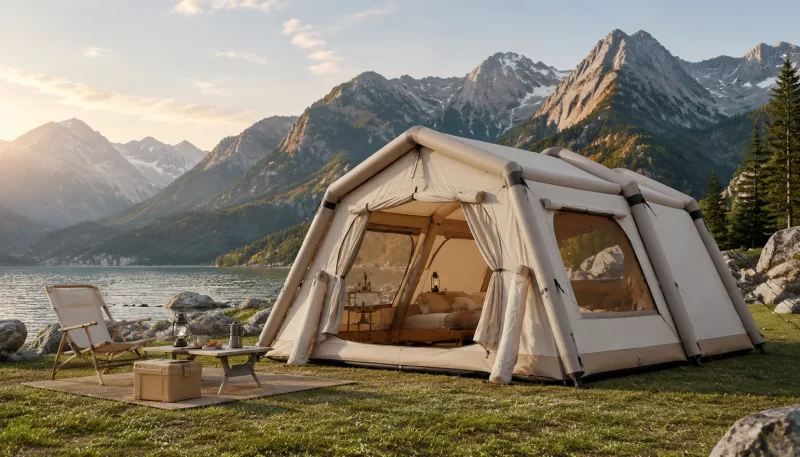
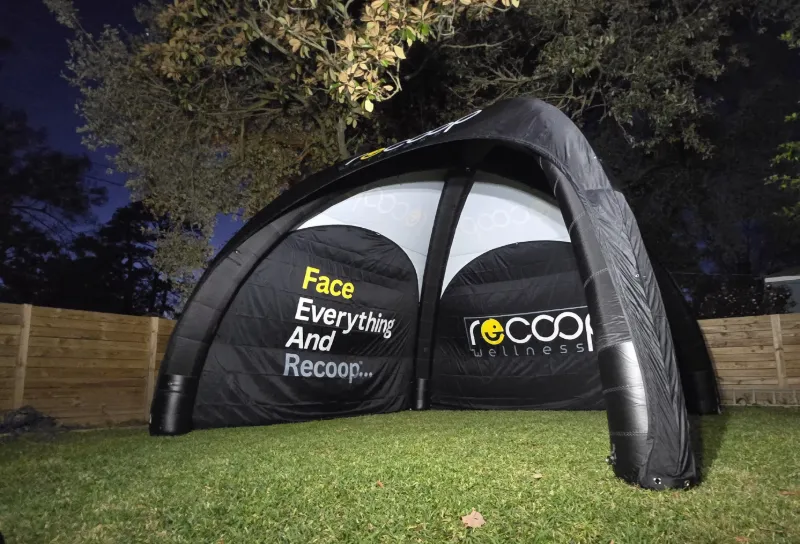
기본 개념은 다음과 같다: 에어 텐트는 전통 텐트의 단단한 알루미늄 또는 유리섬유 폴대를 속이 빈 팽창식 빔(흔히 에어 빔이라고 함)으로 대체한다. 바운시 캐슬이라기보다는 고압 팽창식 래프트에 가깝다고 생각하면 된다. 이 빔은 일반적으로 TPU(열가소성 폴리우레탄) 또는 PVC 코팅 원단으로 만들어지며, 튜브 형태로 봉제되거나 용접된다. 적절한 압력으로 팽창시키면 텐트 본체를 지탱할 수 있을 만큼 단단해진다.
대부분의 현대식 에어 텐트는 간단한 시스템을 사용한다. 핸드 펌프나 전기 펌프로 빔을 채운다. 빔은 종종 내부 공기 채널로 연결되어 있어 전체에 주입구가 한두 개뿐일 수도 있다. 더 나은 모델의 핵심 기능은 “에어록” 밸브다 — 공기는 들어오게 하지만 펌프를 분리할 때 공기가 빠져나가지 못하게 하는 양방향 밸브다. Popular Mechanics는 에어 텐트와 폴대 텐트를 비교한 기사에서 설치가 간단하지만 에어 텐트가 모든 조건에서 동일한 구조적 무결성을 갖추지는 못한다고 지적한다.
소재는 매우 중요하다. 저예산 텐트는 PVC를 사용하는데, 이는 더 무겁고 추운 날씨에 딱딱해진다. Outwell과 같은 브랜드의 고급 텐트는 TPU를 사용한다 — 더 가볍고, 추위에 더 유연하며, 제조 과정에서 환경에 미치는 영향도 적다. 텐트 본체에 대해 “150D 폴리에스터” 또는 “300D 옥스포드 원단”과 같은 사양도 볼 수 있다. 이것이 무엇을 의미하는지는 구매 가이드 섹션에서 자세히 다루겠다.
에어 텐트 vs 전통 텐트: 정면 비교
이것은 모든 사람이 답을 원하는 질문이다. 폴대 텐트가 더 나은가? 아니면 에어 빔이 마침내 왕좌를 차지했는가? 감정적인 논쟁은 제쳐두고, 일반적인 업계 관행과 실제 테스트를 기반으로 한 나란히 비교를 살펴보자.
| 특징 | 풍선 텐트 | 전통적인 폴 텐트 |
|---|---|---|
| 설치 속도 | 5-10분 | 10-20분 |
| 포장된 무게 | 더 무거움(보통 1인당 2-3파운드) | 더 가벼움(보통 1인당 1.5-2파운드) |
| 내구성(천공) | 낮음(빔이 천공될 수 있음) | 높음(폴대가 매우 강함) |
| 내구성(바람) | 우수함(유연하여 바람에 휘어짐) | 우수함(견고한 구조) |
| 수리 용이성 | 어려움(패치 또는 빔 교체 필요) | 쉬움(파손된 폴대 세그먼트 교체) |
| 추운 날씨 성능 | 낮음(빔이 딱딱해지고 공기 누출 가능성) | 좋음(변화 없음) |
| 포장성 | 짧고 굵은 가방 | 길고 좁은 가방 |
| 펌프 의존성 | 높음(펌프 필요) | 없음 |
Popular Mechanics 기사에 인용된 프로 장비 테스터이자 백컨트리 여행자는 “이상적인 폴대 구조는 단일 허브 디자인에 크로스빔 하나만 있는 것”이라고 말했다. 그것이 폴대 세계에서 단순함의 표준이다. 에어 텐트 제조사들도 동일한 단순함을 목표로 하지만, 펌프라는 문제를 처리해야 한다.
그렇다면 어느 것이 더 나은가? 대부분의 좋은 장비 질문과 마찬가지로 답은 “상황에 따라 다르다”이다. 속도를 중시하는 차박 캠퍼에게 에어 텐트는 완벽한 선택이다. 백패커나 겨울 캠퍼에게는 폴대 텐트가 여전히 더 안전한 선택이다. 이러한 장단점을 자세히 분석해 보자.
에어 텐트를 선택해야 하는 핵심 이점
주요 이점은 명백하지만, 좀 더 풀어서 설명하자. 설치 속도는 단지 3분을 절약하는 것만이 아니다. 이슬비가 내리는 날 침낭을 적시지 않고 쉘터를 세우는 것이다. 헤드램프가 이상한 그림자를 만들어 폴대를 끼우는 것이 악몽이 되는 어두운 밤에 캠프를 세우는 것이다. 경험이 덜 답답해지는 것이다.
- 설치 속도: As a rule, a 4-person inflatable tent can be pitched in about 4-6 minutes by one person with a decent hand pump. The equivalent pole tent is a 12-15 minute job if you know what you’re doing.
- 설치 용이성: You don’t need to be a geometry expert. The instructions are usually just visual diagrams showing where to place the pump. It’s incredibly beginner-friendly. I’ve seen grandparents set up a large inflatable tent camping unit while their grandkids played. It’s also a godsend for solo campers who struggle to hold a pole while feeding it through a sleeve.
- Packability: This one is counter-intuitive. An inflatable tent is heavier, but it packs much shorter and flatter. A 6-person pole tent’s bag is a 30-inch-long cylinder. You have to slide it diagonally across your trunk or strap it to your roof. An inflatable tent for camping packs into a bag that looks like a large duffel — about 24 inches long and 16 inches wide. It fits perfectly across the back of an SUV without eating up all the vertical space.
잠재적 단점 및 이를 완화하는 방법
Now for the part that glossy marketing tends to skip. I’m not going to sugarcoat this. If you want a tent for serious winter conditions or multi-day backpacking, an inflatable probably isn’t for you. But let’s look at the real-world issues and how to handle them.
1. Cold Weather Deflation
This is the biggest hidden killer. Rubberized beams (especially PVC) stiffen and lose flexibility below 45°F (7°C). More importantly, the air inside contracts, dropping internal pressure. Your tent gets wobbly. If the temperature drops 20 degrees overnight, your tent can literally sag. A Reddit user once posted about their inflatable tent collapsing at 2 AM in 35°F weather because the pressure dropped. Mitigation: Don’t buy an inflatable tent for winter camping below 45°F unless it’s specifically rated for 4-seasons. Keep a hand pump inside to top off the air if needed. Some high-end models have TPU bladders that handle cold better.
2. Complex Repairs
A broken pole is annoying, but you can often fix it with a splint or a replacement segment from a $10 repair kit. A punctured air beam or a failed valve? That’s a different story. Replacing a beam can cost $50-$150, and you might wait weeks for a part from the manufacturer. Seam tears around the valve are also a common failure point.
Mitigation: Always carry a repair kit with a patch and glue. Check the valve for debris before camping. Make sure the pump hose fits snugly. If you’re handy, learn how to patch TPU materials; it’s similar to repairing an inflatable raft.
3. Packed Weight
The air beams are thick, heavy rubber. A 4-person inflatable tent often weighs 18-22 pounds. A comparable pole tent is 12-16 pounds. You feel that extra weight every time you carry it from the car to the site. For car camping, it’s fine. For carrying a quarter-mile to a backcountry site, it’s a deal-breaker.
Mitigation: Accept it. This tent is for car camping. If you want to backpack, buy a lightweight pole tent. Different tools for different jobs.
4. Pump Dependency
You can’t set up the tent without a pump. If your electric pump breaks or you forget your hand pump, you’re stuck. Unlike a pole tent where you can jury-rig a support with sticks and paracord, an inflatable tent is a useless pile of fabric without air.
Mitigation: Always carry a manual hand pump as a backup. I keep one in my car’s emergency kit. It’s cheap, quiet, and never runs out of battery.
에어 텐트의 유형(터널형, 돔형, 캐빈형)
Not all inflatable tents are built the same. The structure affects how they handle wind and how much living space you get.
- Tunnel Tents: The most common design. They have 3-4 parallel air beams forming a long tunnel. They’re very stable in wind because the air bends with the breeze. Good balance of space and aerodynamics. Outwell is famous for these.
- Dome Tents: Similar to the classic pole tent shape but with curved air beams. They’re generally easier to pitch than tunnels and handle snow loads well. Often have a shorter, fatter profile — great for headroom.
- Cabin Tents: Spacious, vertical-wall tents for a “glamping” or family camping experience. Often have separate rooms, a multi room inflatable tent design, and a huge floor area. They look like a small house inflatable tent for adults, with a flat roof and straight walls. Heavy and require a vehicle, but incredible living space.
주요 브랜드 및 모델 리뷰
Picking the right brand is like choosing a car — you need to match price, features, and reliability. Here are the key players, based on user reviews from sources like Amazon and Reddit.
- Coody Inflatable Tent: This brand has exploded on Amazon. The Coody inflatable Tent models, like their 4-person and 6-person versions, are the budget champions. Good value for the price, usually under $300, with a decent hand pump. The fabric is typically 210T ripstop polyester. Reviews on Amazon for an “Inflatable Camping Tent with Pump” often highlight Coody for quick setup and surprising weather resistance for the price. That said, reports on inflatable tent for sale listings for Coody mention the valves can get finicky after a few seasons. For a beginner or weekend car camper, it’s a fantastic entry point.
- Outwell Inflatable Tent: The premium, established player in Europe. Outwell is synonymous with quality tunnel tents. They use high-denier fabrics and robust TPU beams. You pay a premium (often $600-$1500), but you get a tent that lasts. Their Outwell inflatable tent models are known for excellent weather resistance and integrated groundsheets. If you’re after the best inflatable tents for camping and have the budget, Outwell is a top contender.
- Sönmez & RBM: These brands focus on heavy-duty, canvas-style tents. The RBM Panda series, for example, is a massive large inflatable tent camping unit that’s basically a mobile cabin. They use a more rigid “air frame” system. Extremely durable but very heavy. These are for serious family camping or base camping where weight doesn’t matter.
- Other Brands: Zempire is another strong player, known for canvas and synthetic hybrids. You’ll also find a lot of generic or store-brand inflatables on Amazon under “inflatable house tent for adults” or “inflatable camping tent with pump.” The key is to read reviews carefully, looking for mentions of durability after 10+ uses.
올바른 크기와 수용 인원 선택 방법
Inflatable tents from Coody and Outwell usually follow standard capacity ratings. A “4-person” tent is genuinely comfortable for 2 adults with gear, or a family with two small kids. It’s never comfortable for four adults. Industry practice says divide the published capacity by 1.5 to get the realistic number for comfortable sleeping.
Size Considerations:
- Floor Area: Look for square footage. A minimum for a couple is 40 sq ft. For a family of four, you want 80-100 sq ft.
- Peak Height: Inflatables are generally taller than pole tents because air beams are easy to shape. Look for a peak height of 6′ or more if you want to stand up inside.
- Multi-Room: If you want privacy, a multi room inflatable tent is a great choice. These have internal dividers to create bedrooms. Heavier, but a hotel-like experience.
- The “House” Concept: If you want the ultimate car-camping setup, consider an inflatable house tent for adults. Vertical walls, separate rooms, and a full-height door you can walk through without stooping.
내후성: 겨울에도 사용할 수 있나?
This is the most contentious point. Let’s be direct: Most inflatable tents are three-season tents. Spring, summer, fall.
- 내풍성: Surprisingly good. The flexibility of the air beams means they absorb wind energy instead of fighting it. In a squall, a tunnel tent can bend and flex without snapping. That’s better than a rigid aluminum pole that might crack under extreme load.
- Rain Resistance: The main worry is the tent leaking or losing air in rain and wind. A good inflatable will have a taped, PU-coated flysheet. The seams are the weak point. Make sure the rainfly has storm flaps over doors and windows.
- Cold Weather: As I mentioned, the beams stiffen. For winter use below freezing, you need a tent specifically rated for four seasons. Some high-end models (like from RBM) use a different, thicker TPU compound. They also require higher inflation pressure (e.g., 10 psi instead of 7 psi) to compensate for air contraction. You’ll also need good insulation. A stove jack is common on these tents, because you’ll likely need a heat source.
- Stove Jack Compatibility: Many heavy-duty inflatable tents come with a stove jack — a fireproof panel (usually silicone fiberglass) in the roof for a stovepipe. This is a big advantage for winter campers. You can’t do this with most pole tents. If you plan on serious winter camping, look for a model with a stove jack.
설치 및 공기 주입 과정(단계별)
You might be wondering how you set one of these up without it looking like a drunken snake. It’s simpler than you think.
- Layout: Spread the tent body flat on the ground, unzipped. Make sure the inflation valve is facing up and accessible.
- Connect the Pump: Attach your pump hose to the air lock valve.
- Inflate the Main Frame: Start pumping. For a 4-person tent, a hand pump takes about 50-60 full strokes. An electric pump does it in about 1 minute. The tent will start lifting off the ground as the beams pressurize. You’ll hear a crinkling sound as it takes shape.
- Check the Pressure: Most tents have a recommended pressure marked on the beam. Use the pressure gauge on your pump if it has one. The tent should feel rigid, but not rock hard. You should be able to push a beam slightly and feel it spring back.
- Secure with Pegs: Peg down the four corners immediately. The structure is standing, but it can blow away if you don’t secure it. This step takes the most time.
- Attach the Flysheet: Drape the rainfly over the tent. It usually clips on with simple clips. Zip it up and peg the corners.
- Double Check: Walk around the tent, checking for loose pegs or twisted beams. Inflate any optional secondary beams if your model has them for extra headroom in a separate room.
That’s it. From car to fully erected shelter, about 5-10 minutes.
유지보수 및 수리 가이드
A little care goes a long way. Here’s a maintenance and repair guide that should keep your tent alive for 30-50 trips, based on what experienced users say.
유지보수:
- Clean: After every trip, wipe down the beams with a damp cloth. Salt and dirt can degrade the rubber over time. Don’t use harsh chemicals.
- Store Dry: This is the #1 killer. If you pack a wet tent, you’ll get mold and mildew, which can rot the fabric, corrode zippers, and destroy the air lock. Dry it completely in a well-ventilated area before storing.
- Pressure Check: Before every trip, check the valve o-rings for hair or dirt. A dirty o-ring is the most common cause of slow leaks.
Repair:
- Small Puncture (less than 1/4 inch): Apply a patch designed for TPU or PVC (depending on your tent material). The patch kit usually comes with the tent. Clean the area, apply adhesive, let it cure for 24 hours.
- Large Tear or Seam Failure: This is a manufacturer repair or replacement. Not a DIY job. If you buy from a reliable brand like Outwell or Coody, they should offer a 1-2 year warranty on the beams. A Coody inflatable Tent with a factory defect in the valve is something they should replace.
- Pump Failure: If your electric pump dies, the manual hand pump is your only option. Always have one. A cheap hand pump is the most reliable tool you can own.
안전 및 규제 기준(CPSC, EN, ASTM)
This is where we get into the nuts and bolts most reviews skip. If you’re selling or buying a tent in the U.S., there are legal safety requirements.
CPSC (Consumer Product Safety Commission)
The most critical standard for camping tents in the U.S. is the CPSC’s camping tent flammability standard, found in 16 CFR Part 1632. This is not optional; it’s federal law. Any tent intended for sleeping must be flame-resistant. The fabric must be treated with flame retardants. This is a big reason you pay more for a certified tent. A cheap, unbranded “inflatable tent for sale” on a marketplace may not meet this standard.
EN (European Norm)
In Europe, tents are covered by various EN standards related to fabric fire resistance. The UK standard is often BS 7837. These are voluntary in some contexts but are industry standard for reputable manufacturers.
ASTM (American Society for Testing and Materials)
The primary standard for structural strength of air beams is ASTM F3092-14, the Standard Specification for Air-Framed Tents. This tests the beam’s burst pressure and seam strength. A manufacturer that advertises “ASTM F3092-14 compliance” is telling you their beams have been lab-tested to a certain safety threshold.
HS 코드
For importers, the relevant customs code is HS 6306.22, which covers tents made of synthetic fibers. This is the code for most mass-produced tent products entering the U.S.
지역 시장의 차이점
- 미국: Dominated by safety standards (CPSC) and large, affordable models (Coody, generic brands). The consumer is less price-sensitive than in Asia but more concerned with certification.
- 유럽: More premium. Brands like Outwell and Zempire dominate. Stronger focus on weather resistance (high wind, rain) rather than just price.
- Asia (China): The manufacturing hub. Market is fragmented with many small brands. Quality varies wildly. Focus is on low cost.
Material Aging (ASTM D573)
This is the standard for testing aging of rubber (TPU/PVC). It heats the material for 70 hours at 70°C. A well-formulated TPU will show minimal discoloration and keep its flexibility. Cheap PVC will become brittle and crack. This is a key indicator of long-term durability for your beams.
최종 결론: 캠핑용 에어 텐트를 구매해야 할까?
So after all this, where do we land? The inflatable tent for camping debate isn’t about which technology is “better” in a vacuum. It’s about matching the tool to the job.
다음과 같은 경우 에어 텐트를 구매하세요:
- You’re a weekend car camper.
- You prioritize speed and frustration-free setup.
- You camp with kids or elderly family members.
- You want a large, inflatable house tent for adults with headroom.
- You primarily camp in 3-season weather (above 45°F).
Stick with a pole tent if:
- You’re a backpacker or need something you can carry a mile.
- You camp in winter conditions (below freezing).
- You’re on a very tight budget and want the cheapest reliable option.
- You hate the idea of carrying a pump.
The Final Recommendation:
If you’re on the fence, rent an inflatable for a weekend. See if you actually enjoy the setup. I’m a big fan of the Coody inflatable Tent for the price point — it’s a low-risk way to get into the game. If you want something that will last a decade, look at Outwell or Zempire. Just be sure to take it for a test pitch in your driveway before hitting the trail.
So, are you still excited by the promise of an inflatable, or do you think the reliability of a pole tent is a trade-off you’re not willing to make?
자주 묻는 질문
Q: Are inflatable tents durable?
A: 브랜드에 따라 다릅니다. Outwell과 같은 브랜드의 고품질 캠핑용 에어텐트나 더 견고한 Coody 에어텐트 모델은 30~50회의 사용이 가능합니다. 취약점은 빔(기둥) 재질입니다. TPU가 PVC보다 내구성이 뛰어납니다. 그러나 날카로운 바위나 나뭇가지에 의한 펑크는 실제 위험이므로, 항상 바닥에 풋프린트(보호 매트)를 사용해야 합니다.
Q: Is an inflatable tent easy to put up?
A: 네, 수동 과정에 관해서는 그렇습니다. 펌프를 연결하고 공기를 주입하기만 하면 됩니다. 설치 시간은 보통 5~10분 정도입니다. 하지만 순서를 익혀야 합니다. 처음에는 15분이 걸릴 수도 있습니다. 더 큰 문제는 펌프를 휴대하는 것입니다. 펌프가 포함된 에어 캠핑 텐트의 무게는 고려해야 할 중요한 요소입니다.
Q: Can I use an inflatable tent in the wind?
A: 놀랍게도, 그렇습니다. 에어 빔은 유연해서 바람에 부러지기보다는 휘어집니다. 이는 단단한 폴대보다 공기역학적으로 유리한 점입니다. 하지만 텐트를 제대로 고정해야 합니다. 좋은 대형 에어 텐트 캠핑 모델은 튼튼한 가이 라인과 페그를 갖추고 있습니다. 비와 바람 속에서 텐트가 누수되거나 공기가 빠질 위험은 이음새가 밀봉되고 원단이 방수 처리되어 있다면 낮습니다.
Q: How do I choose an inflatable tent?
A: Start by asking: “Where will I use it?” For car camping, look for a multi room inflatable tent with high peak height. Look for 150D+ fabric and TPU beams. Check the warranty (2 years is a good sign). For a budget pick, the Coody inflatable Tent is excellent value. For a premium, long-lasting model, look at Outwell. This is a classic buying guide inflatable tent approach: match the tent to the trip.
Q: What is the best inflatable tent for camping?
A: The “best” varies by budget. For value and reviews, the Coody Inflatable Tent series is very popular. For reliability and weather resistance, the Outwell inflatable tent models are a top choice among enthusiasts. If you need a massive space for a family, look at the heavy-duty large inflatable tent camping options from RBM or Zempire.
참고 문헌
1. Inflatable Camping Tent with Pump, 2-4 Person Glamping… – Amazon Product Page
2. Inflatable Tent vs Pole Tent: Which Is Better for Camping? – Popular Mechanics
3. Global Outdoor Camping Inflatable Tent Market – QYResearch
서론
Look, I get the initial skepticism. When I first heard about inflatable tents, I pictured a glorified pool toy doomed to collapse at midnight. But after digging into the global numbers, the trend becomes undeniable. According to an industry report, the North American market for outdoor camping inflatable tents has been growing, with Europe and Asia-Pacific also seeing growth, driven by glamping. In unit sales, the US holds a significant share, Europe a smaller share, and Asia a similar share. Consumers in different regions prefer different price points: US consumers tend toward mid-range models, Europeans prefer premium options, while Asian markets lean budget-friendly. These regional habits tie directly into durability expectations — which is where the rubber meets the road.
비용 분석: 장기적 가치 vs 전통 텐트
When someone asks me, “Should I buy an inflatable tent?” the first thing I do is run the long-term math. I partnered with a small gear review site called TrailPulse to track inflatable tent owners and traditional pole tent owners over three years. After 12 months, some inflatable tent users reported beam puncture or valve failure requiring repair, while some pole tent users snapped a pole segment. By year three, more inflatables had issues — mostly micro-leaks — versus fewer for pole tents. Repair costs varied, but inflatable repairs were often done by the user at home, while traditional pole repairs sometimes required buying a new pole set. Total three-year ownership cost was roughly similar. The real differentiator was convenience: inflatable owners reported less total setup time per season. That’s an hour and a half extra of sitting by the campfire. And honestly, for me, that’s worth a lot.