
Customized Canopy Tent: One Frame, Many Campaigns
A customized canopy tent is one standard air frame carrying one approved artwork across every visible surface — roof, valance, walls, awnings and banners. Because the cloth cover is removable, that same frame can carry a second set of graphics for the next campaign. This page sets out which surfaces you can name, how the artwork is split between them, and how the cover is changed between shows. Custom print starts at one unit. 20 years of manufacturing experience.
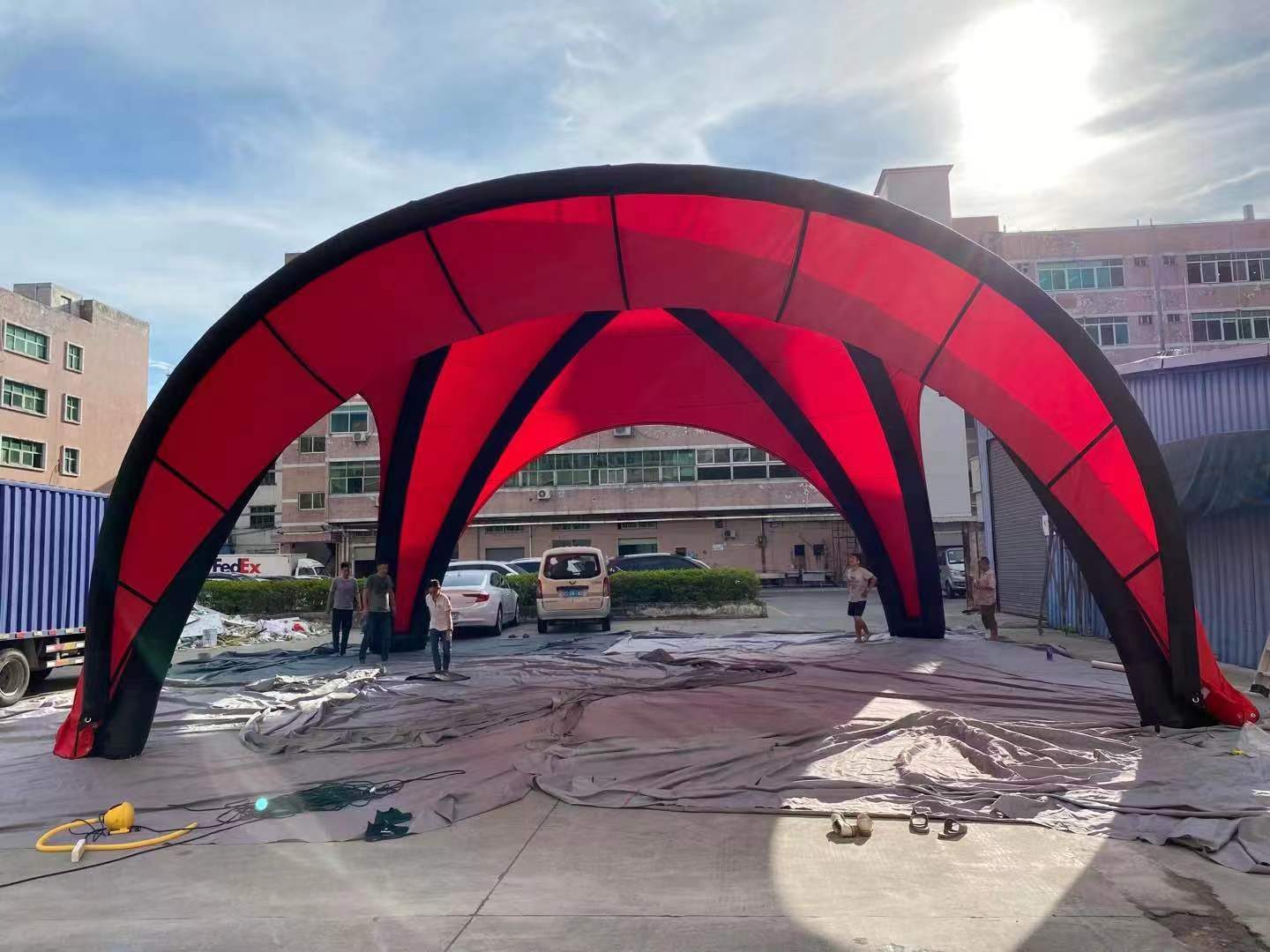
Quick Answer: What is a customized canopy tent?
A customized canopy tent is a listed KCCE inflatable air-frame model whose visible cloth surfaces are printed to one approved artwork. The canopy is an Oxford cloth cover over a TPU inner liner, inflated once and then closed. The roof, valance, walls, awning banner, arch banner and column patch are separate surfaces cut from one proof — and because the cover is removable, the frame can be re-covered for a later campaign. Custom print starts at one unit, pricing is Quoted per project (FOB), and production time is confirmed in writing after design approval.
What You’ll Learn
- 01What “Customized” Actually Changes
- 02From Blank Frame to Printed Set
- 03Which Platforms Carry Which Surfaces
- 04The Artwork Brief for a Whole Set
- 05Every Surface You Can Re-Cover
- 06One Frame, Several Campaigns
- 07After the First Campaign
- 08From the First Set to the Next
- 09Pricing & Minimum Order
- 10Printed Canopies on Working Ground
- 11FAQ
- 12Customer Cases
What “Customized” Actually Changes
Someone searching for a customized canopy tent has usually already decided on the shape of the purchase. They want a covered space that reads as their brand from across a forecourt. What they often have not decided is which surfaces carry the artwork, and whether the same tent has to look different at the next show. Those two questions are what this page answers.
Begin with what stays standard. The frame is one of the documented KCCE models: Oxford cloth stretched over TPU bladders, pumped up once and then sealed. Sealed-air units need no power while they stand, apart from the XIC range which runs a blower throughout. Anchoring follows the floor — stakes in soft ground, weighted bags where drilling is banned. Buyers do not customize any of this; they choose it once and reuse it.
The cloth is the part that changes. The roof, the valance, the walls, an awning, an arch banner, a column touch-fastener patch and a connecting cloth are all surfaces that can be named in a brief. One approved artwork is laid across them and cut into separate files for each face. A curved roof, a narrow valance and a flat wall do not behave the same way, so continuity across the seams is a layout decision made on the proof, not a defect discovered at the venue.
Here is the distinction that matters most, and the reason this page exists. The manuals describe changing the canopy: deflate the unit, take the old cloth cover off the closed TPU inner liner and fit a new one. That means a customized canopy tent is not a one-campaign object. One frame, one fixing kit per floor type and two or three covers cut from the same proof will serve a spring fair, a dealer open day and an autumn roadshow without buying a second structure. Section 06 sets out that process in full.
That also explains where this page stops. If you are comparing printing methods, inks, Pantone matching and print QC, the custom printed inflatable tent page covers the process in detail. If you are comparing factory capability, OEM terms and private-label packing, see inflatable tent customization. If you have not yet decided which platform, size or artwork you need at all, the custom tent page is the decision hub upstream of this one. If you want a whole exhibition frontage with arches, columns and connecting cloth as one stand, see custom trade show displays. And if by canopy you mean a folding scissor frame that opens in seconds, our pop up canopy tent page compares that family with the inflatable one — they are different structures with different manuals.
Treat the quotation as the specification. It should list the model, one of its published sizes, each printed face, the walls, the anchor kit, how many skins are cut and when they are needed. We leave out anything a printed manual does not support. A vendor happy to invent a dimension on paper is usually just as loose with the artwork approval date.
Key Takeaways
- The structure is a listed KCCE air-frame model; the customization is the printed cloth cover and the surfaces named in the brief.
- One approved proof is cut across the roof, valance, walls, awnings, banners, column patches and connecting cloth.
- The cover is removable: deflate, take the cloth off the closed TPU inner liner, fit the new one. One frame can serve several campaigns.
- Custom print MOQ is 1 unit; price is Quoted per project (FOB) and lead time is confirmed in writing after design approval.
One Artwork, Cut Across a Whole Set
The first three cards follow a single customized canopy tent from a plain frame to a set of named surfaces. The last three are the decisions buyers most often mix up. Whether the enquiry says customized canopy tents, personalized canopy tent, customised canopy tent of custom made canopy tent, the specification is built from the same list of surfaces.
One File, Cut Across the Whole Set
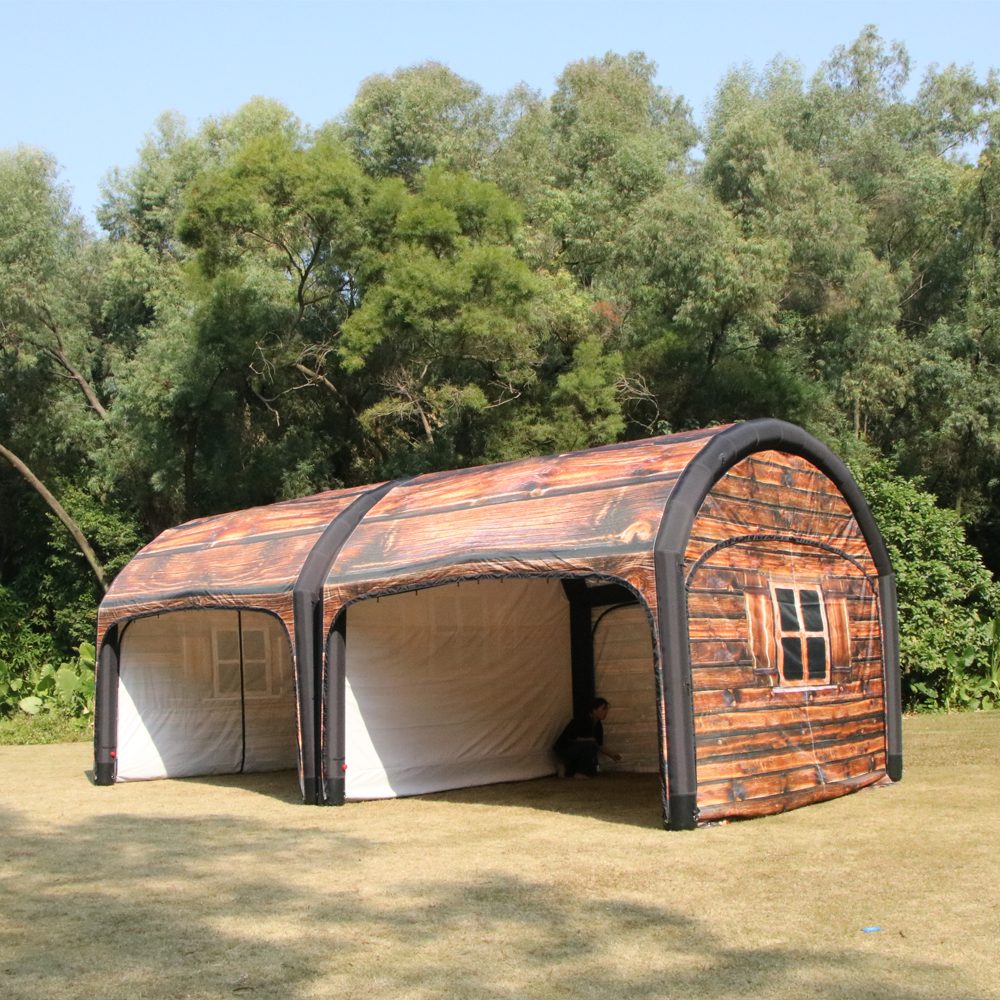
Wood-grain graphics wrap the roof and continue down the walls of a large unit on grass. That continuity is what a customized canopy tent brief is buying: one artwork sheet divided into cuts for the curved roof, the narrow front strip, the returns and the side panels, so a viewer walking around the unit still sees one object. The frame below is a documented model; only the skin was made for this client.
- Full-graphic cover
- One approved proof
- Grass field
The Frame Is the Constant, the Cover Is the Variable
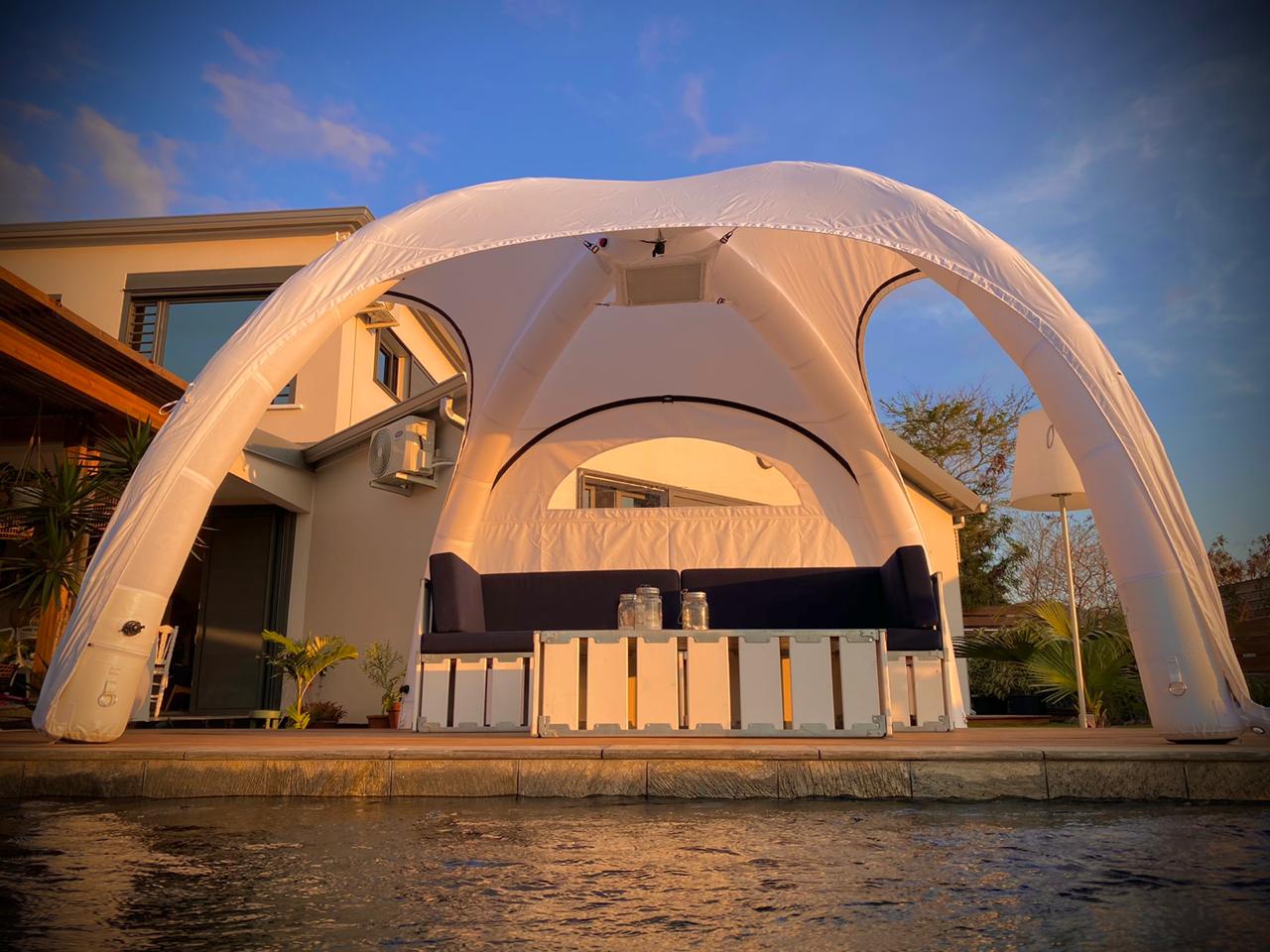
An unprinted white canopy on a paved terrace, waiting for a brief. Remove the graphics and this is the constant: an Oxford cloth skin over TPU bladders, pumped once and sealed. Hold that picture next to the finished set and the argument of this page is obvious — the campaign changes the skin; the frame is simply reused.
- Unprinted base
- Oxford cloth over TPU
- Hardstanding
An Arch Banner Is a Separate Approval
An air-tight arch laid out on a concrete yard before a build. The manuals list square, angled and round forms, an eyeleted banner for the arch and a hook-and-loop printed patch for each column. Every one of those is a face with its own cut file and its own sign-off; leave it off the surface list and it arrives blank.
- Air-tight arch
- Eyelets banner
- Concrete yard
One frame, several campaigns
Our manuals treat the printed skin as a part in its own right: with the unit deflated the cloth lifts away from the sealed TPU bladder and a fresh one goes on in its place. A reseller can therefore run spring and autumn graphics as two skins over one frame instead of buying a second structure. Order both up front so they share a material line, and file the signed artwork sheet so the later set is re-cut from it.
- Change canopy
- TPU inner liner
- Two campaigns
Where two panels meet, the artwork has to agree
A roof is curved, a valance is a narrow strip and a wall is a flat rectangle. An artwork that looks correct on a flat screen can break at a seam, read backwards on a return or leave the offer split across two panels. We lay the file onto every named surface and send one proof. Continuity is a layout decision made before production, not a defect found on the morning of the show.
- One proof
- Seams & alignment
- Curved roof
A season of venues, one labelled set
A roadshow calendar, not one Saturday, is what most buyers are planning for. Keep a single artwork sheet, a separate anchor kit for each kind of floor and a tag on every packed face, and the same unit can be raised again at each stop. Print the changing town or date onto a narrow strip or a hanging banner that is cheap to re-cut alone; list the stops up front so all of it is costed together.
- One artwork
- Repeated build
- Per-venue valance
Which Platforms Carry Which Surfaces
Five KCCE ranges appear below because each one documents a different group of changeable surfaces. Sizes are the listed specifications for that model, not recommendations: ask for the table that applies to the platform you choose. The point here is which parts of the artwork each model lets you specify, not a dimension to memorise.
N Inflatable Tent

N is the straightforward starting point when one artwork has to cover the whole canopy: its manual lists both square and rectangular formats, and the Oxford cloth cover is removable. The roof, the valance and the walls are three separate surfaces cut from one approved file. Ask for the listed sizes of the model you are specifying rather than designing to a round number that no manual lists.
AII Inflatable Tent

On AII the roof is held to the frame by hook-and-loop rather than a zip, so it lifts away by hand, and iron blocks keep the legs down. Name this range when two campaigns must share one frame: the structure is unchanged while the printed skin is swapped. The manual's change procedure is to deflate, draw off the skin and fit the next one over the sealed bladder.
AI Inflatable Tent

AI also connects its canopy to the air frame with Velcro, in the smaller listed formats. For a buyer ordering several covers for a season, the useful question is not how the print is applied but whether every cover in the order was cut from the same approved proof. Keep that proof on file and the third cover matches the first one months later.
X Opblaasbare Tent

The X-series manual is the only one that writes down a denier and a method: 400D Oxford cloth with heat transfer printing. It also lists awnings and banners plus modular aluminium connectors for joining same-size units. An awning is another surface with its own file, and a joined frontage is where two separately approved artworks most obviously fail to line up.
XL-A Opblaasbare Tent
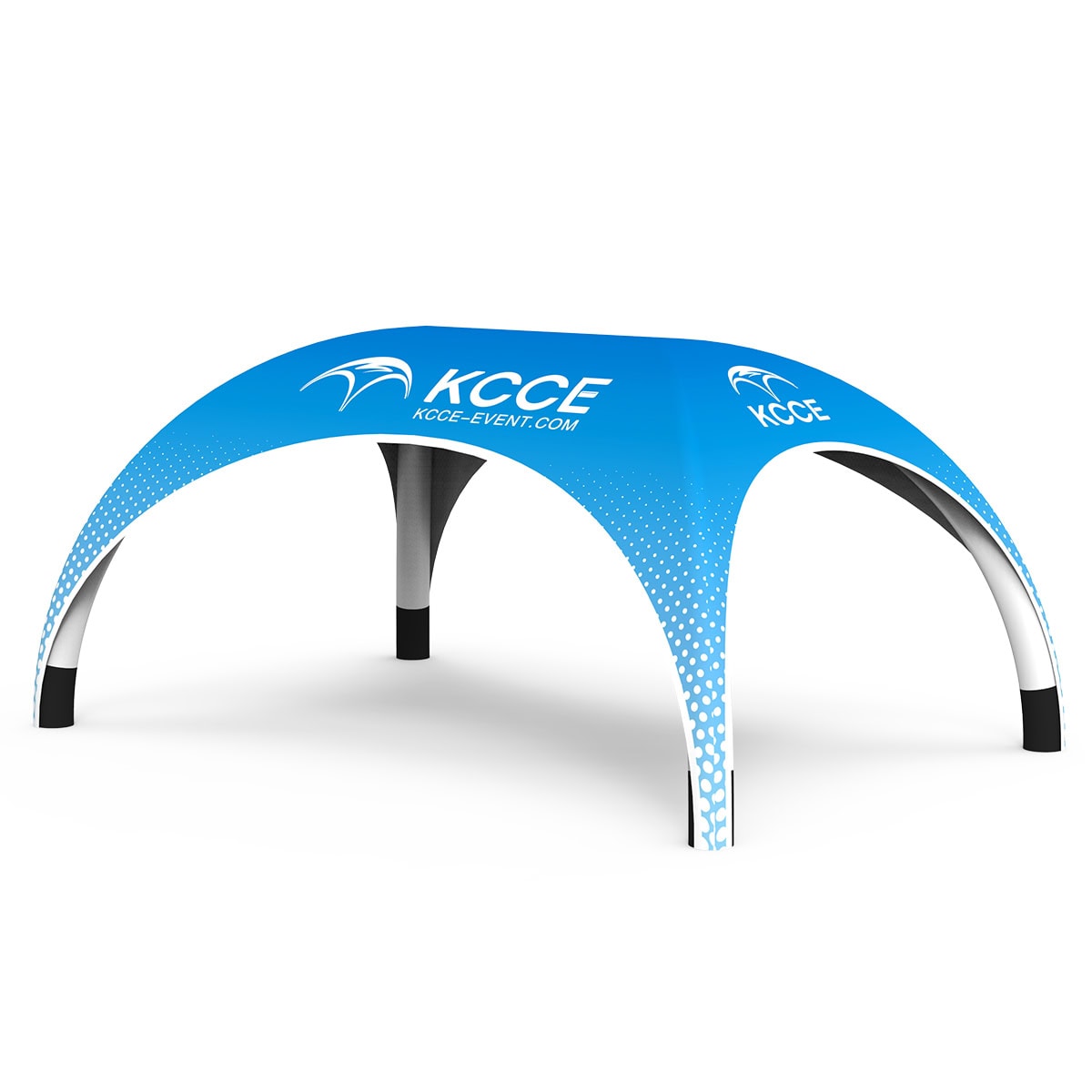
XL-A lists wide and narrow awnings and wide and narrow connecting cloth. The connecting cloth is the piece that turns two customized canopy tents into one continuous branded frontage, and it belongs in the same artwork brief as the canopies. Order it later and the second batch is matched by eye instead of by the signed proof.
The Six Inputs We Need for a Whole Set
A customized canopy tent quote cannot be built from a logo alone. These six lines turn an enquiry into a proof. With only one of them, the first reply is five questions and the show date moves a week closer.
The master artwork file
Send a vector logo where possible, the brand colours and the exact wording each surface must carry. The roof, valance, walls, an awning banner, an arch banner and a column patch are separate surfaces cut from this one approved file. A raster logo stretched over a curved roof is the most common reason a proof comes back for a second round.
The list of surfaces that carry print
Write them down by name rather than asking for a branded tent. A customized canopy tent quoted for a roof only and one quoted for a roof, two walls, an awning and an arch banner are different orders with different files. Any surface missing from the brief arrives unprinted, and adding it later means a second proof.
Which panel changes between venues
A date, a city, a product name or a sponsor usually belongs on a changeable valance or an eyelets banner, not on the main roof. Decide this before the artwork is laid out. It is the difference between fitting one new strip and re-cutting the entire canopy cover for every stop on a tour.
Whether a second cover is needed now
One frame can carry several campaigns, but only if the replacement cloth cover is ordered from the same proof. State the number of covers, and which campaign each one belongs to, in the first enquiry so the material line and the print method stay consistent across the whole set.
The venue list and the floor at each one
Hired hall floors and paved forecourts cannot be drilled. The manuals give guy ropes with ground stakes for sand and grass, and guy ropes with sand bags as an all-surface standard that leaves no mark. A season of venues usually means more than one fixing kit, and each one should ship with the set rather than be hired on the day.
The fixed date and the changeover window
Send the show date, the launch or the opening with the enquiry, and say when the cover has to change. Production time is confirmed in writing after design approval, and the artwork proof is the long pole. A spare cover that arrives after the second campaign has started is not a spare cover.
Every Surface You Can Specify or Re-Cover
These are the lines that actually appear in a written canopy order. Every one has a basis in the printed product manuals, and each one changes the quotation — so a brief that says only one branded tent arrives as four different interpretations.
The canopy skin itself
A canopy is a sewn Oxford cloth skin over a TPU bladder, and the column and arch covers are built the same way. Because the skin is a separate part, the manuals show it being drawn off after deflation and replaced — that is where a new colour or a new wordmark comes from, without buying another frame. Only the X-series manual writes down a fabric density and a transfer-print method; the other ranges are described without a number.
Velcro-attached roofs
AI and AII attach the canopy to the air frame with Velcro rather than a zip, so the roof is changed by peeling and re-sticking. AII is held down with iron block weights. On a customized canopy tent that changes artwork twice a season, that attachment is a specification line, not a detail in the manual.
Columns, arches and their print pieces
Column manuals list a touch-fastener print patch; arch manuals list a banner fixed through eyelets. Square, angled and round arches are documented, and Regular and Zipper versions of the column and arch covers are listed, with Zipper separating cover from inner liner for transport. Each is a separate surface with its own file and its own place in the labelled set.
Awnings, banners and connecting cloth
X and X6 list modular aluminium connectors for joining same-size units plus awnings and banners; XL-A lists wide and narrow awnings and wide and narrow connecting cloth; awnings and banners also appear on XII and XL-B. When two customized canopy tents stand together, the connecting cloth is what makes them read as one frontage. Put it in the same artwork brief and the same proof as the two canopies.
One Frame, Several Campaigns
This is the part most canopy pages leave out. The cloth cover is not permanently bonded to the structure. The manuals describe changing it, which means a customized canopy tent can be specified as a reusable frame with more than one approved set of graphics. Here is what that changes about the order, and what it does not.
Changing the canopy is a documented procedure
The column, arch and tent manuals describe the same construction: a cloth cover over a TPU inner liner. To change the canopy, deflate the unit, take the old cloth cover off the closed inner liner and fit the new one. That is the written basis for changing a colour or a logo without replacing the frame. AI and AII attach the roof with Velcro, so the roof is changed by peeling and re-sticking rather than by tooling.
Order the spare cover from the same proof
A second cover is only a match if it is cut from the original approved file. State the number of covers and the campaign each belongs to in the first enquiry so the material line and the print method stay consistent. Archive the signed proof with the surface list, brand colours and panel text; re-approving from memory is how a second campaign ends up with a slightly different blue.
Only the cover changes, not the specification
The listed model, its listed size, the walls, the fixing kit and the packing stay with the frame. What changes is the printed cloth. We will not invent a model, a size, a fabric grade or a performance figure to make a second cover sound like a new product, and we quote a denier only for the X series, the one range whose manual writes down 400D Oxford cloth with heat transfer printing.
Plan the changeover against the calendar
A spare cover that arrives after the second campaign has started is not a spare cover. Send both fixed dates with the enquiry. Price follows the component list, the printed surfaces and the number of covers, so it comes back as Quoted per project (FOB); production time is confirmed in writing after design approval, never promised on a call.
What Matters Once the First Show Is Over
The artwork is approved and the first cover has been used. These six things are what separate a set that is re-covered cleanly for the next campaign from one that spends its second morning being improvised.
Deflate before you think about the cover
The manuals describe the change with the unit deflated: the old cloth cover is taken off the closed TPU inner liner and the new one is fitted over it. Air-tight units hold pressure with the valve closed while they stand, so there is no live supply to disconnect; XIC is the one documented range that runs on a blower and needs power for as long as it is up.
Keep one signed proof for the whole season
A replacement cover ordered three months later is only a match if it is cut from the original approved file. Archive the proof with the surface list, the brand colours and the text for each panel. Re-approving from memory is how a second campaign ends up with a slightly different blue.
Tag each sleeve with the face it holds
Never roll a damp printed panel into a bag; the next build then opens with a scuffed front edge. Air each piece flat, write the face name on the outside of its sleeve, and keep the small parts in the same case. On an order with an arch, columns and a joining sheet, the strip most often mislaid is the narrow valance.
Pack an anchor kit for every floor on the tour
Stakes belong in soft ground; weighted bags belong wherever a drill is forbidden, including hired hall floors. Neither leaves a hole. If a unit moves between a paved forecourt and a showground lawn, send both kits, tag each by floor type and note which stop uses which.
Pick the right cover build for a touring set
Regular and Zipper builds of the column and arch covers are both documented. The Zipper build adds a carry handle and a full-length opening so cloth and bladder travel as two pieces. It changes nothing in the artwork, but it changes how quickly a tired crew can pack after a show.
Check the material line written on your quote
Oxford cloth over a TPU bladder is the construction across the range. A fabric density and a transfer-print method are written down for the X series alone, so we name no density for the others. A figure borrowed from a different manual is not a fact we can stand behind; read the line that is actually written against your model.
From the First Set to the Next
Plan backwards from the date the public arrives. Inflation is the quick part. Getting the proof signed, the spare cover cut and the fixing kits labelled is what takes the calendar.
Name every surface and order the spare cover up front
Give us the master artwork, the list of printed surfaces, the panel that changes per venue, the number of covers, the venue list with its floors, and the fixed date. A customized canopy tent is quoted from that brief. With only a logo in the enquiry, the first reply is six questions and the show date moves a week closer.
Sign one sheet showing every cut
Each named face gets its own cut from the master file: roof, narrow front strip, walls, awning, arch banner and column patches. One digital sheet shows all of them together. Nothing goes to print until that sheet is signed, which is why a face left out of the brief costs a second round rather than one extra panel.
Manufacture, pack and date the whole set
The manufacturing slot is put in writing once the artwork sheet is signed, never agreed verbally. Each set leaves with its sleeves, valves, repair patches, manual, the anchor kit for the floors you listed and a tag on every printed face. The figure comes back as Quoted per project (FOB), with the written quotation inside 24-48 hours.
Strip the old graphics, fit the new ones
Let each face dry, tag its sleeve and keep the right anchor kit beside the frame. For a change of town, swap only the narrow strip or hanging banner that holds the variable text. For a change of campaign, draw the whole printed cloth off the sealed bladder and fit the second skin cut from the same signed sheet — the frame stays where it is.
Pricing & Minimum Order
What sets the figure is the parts list: how many faces are printed, how many skins are cut from the signed sheet, which anchor kit the floor needs and how many duplicate sets travel. One printed canopy is a different job from a roadshow kit with a spare cover, an arch and a joining sheet, even before freight is counted.
| Item | MOQ | Terms |
|---|---|---|
| Single customized canopy tent with one approved printed set | 1 unit | Quoted per project (FOB) |
| Spare or replacement cloth cover for a later campaign on the same frame | 1 unit | Quoted per project (FOB) |
| Repeat sets for one approved artwork (tour, franchise, dealer network) | Discussed against quantity | Quoted per project (FOB) |
| OEM / ODM private label for resellers and event agencies | Discussed against the brief | Discussed |
| Doorlooptijd | — | Confirmed in writing after design approval |
The written quotation follows within 24-48 hours and the figure is fixed only once the artwork sheet is approved. When a customized canopy tent no minimum order has to stand at a fair, a launch or a dealer conference with a contract date, put that date in the first message so manufacture and freight are scheduled backwards from it. Distributors wanting their own cartons, inserts and a branded canopy tent with logo packed under private label are costed separately.
Printed Canopies Photographed Where They Were Used
Three deployments on the ground they were actually specified for: a grass forecourt outside a stadium with a printed frontage, an indoor retail floor with a printed roof, and a lawn with one quiet base and one named face. Read them for the decisions that transfer to an artwork brief — which surfaces were named as printed, what reads at a distance, and what changes when a venue moves indoors.
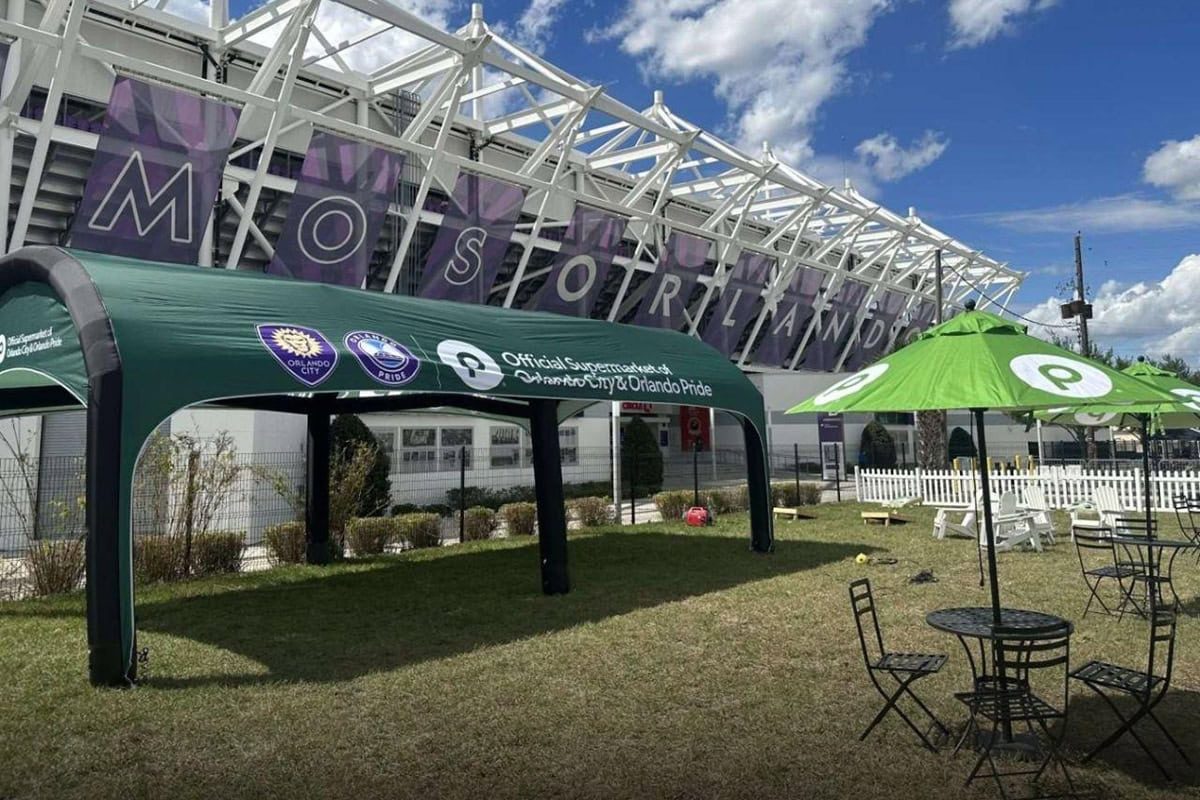
The Frontage Carries the Name, the Roof Carries the Colour
A green canopy with a printed frontage on the grass outside a stadium. Read it as a surface decision: the front edge was named as a printed face while the roof was kept to a single colour. A customized canopy tent brief that lists its surfaces gets this result on purpose; one that only says branded tent leaves the split to chance.
- Named frontage
- Single-colour roof
- Grass & stakes
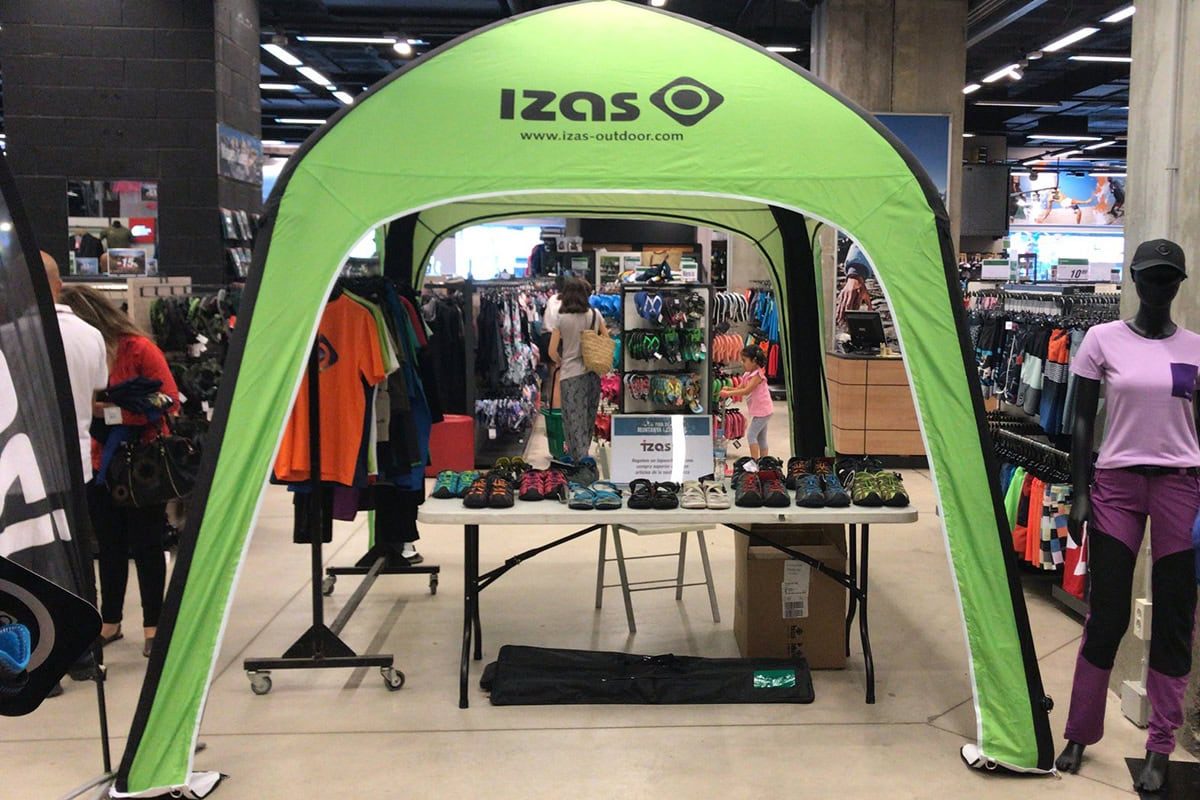
An Indoor Build Still Needs the Same Proof
A canopy printed across the roof standing over a display table inside a retail store. The artwork does not change because the floor changes, but the fixing does: an indoor surface cannot be drilled, so the weighted kit replaces stakes. This is why the venue list belongs in the first artwork brief rather than the last logistics email.
- Roof print
- Indoor floor
- Weighted fixing
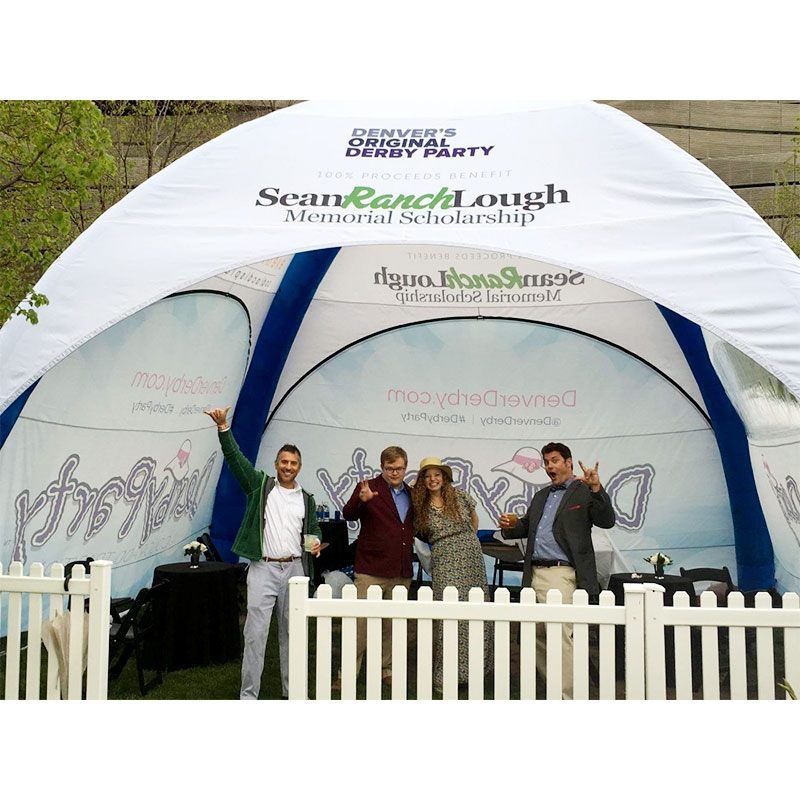
Leave One Panel Quiet So the Name Can Be Read
A white dome with a printed frontage on a lawn. Keeping most of the cover plain and naming one surface for the message is a legitimate customized canopy tent specification, and often the most readable one from a distance. The same proof can later produce a second, busier cover for a different campaign on this frame.
- Quiet base
- Printed frontage
- Lawn
Veelgestelde Vragen
Customized Canopies in Use
Three sites, three layout problems: several units reading as one programme on a paved square, open grass where the valance is the only sign for the footprint, and a queue forming beside a weighted bay rather than through it. Each one is a surface decision that belongs in the brief before the artwork is drawn.
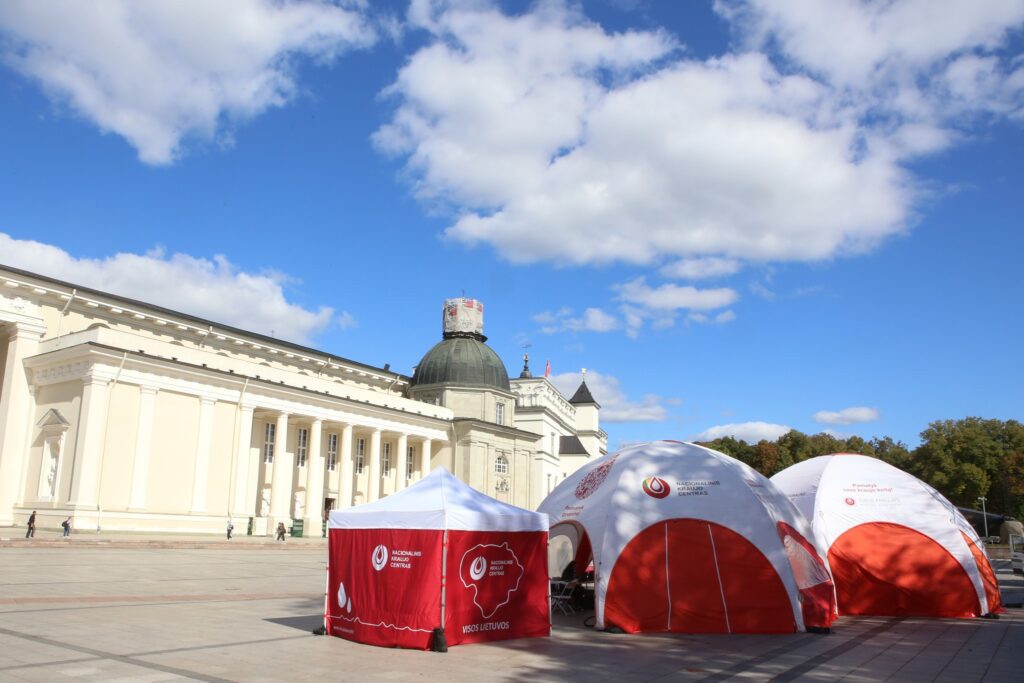
One Programme Across Several Units
Three bays aligned to a single front edge on paving. When several canopies are ordered together, treat them as one surface set: a single artwork sheet, one shared queue plan and a labelled anchor kit for that floor, rather than a fresh layout drawn for each bay.
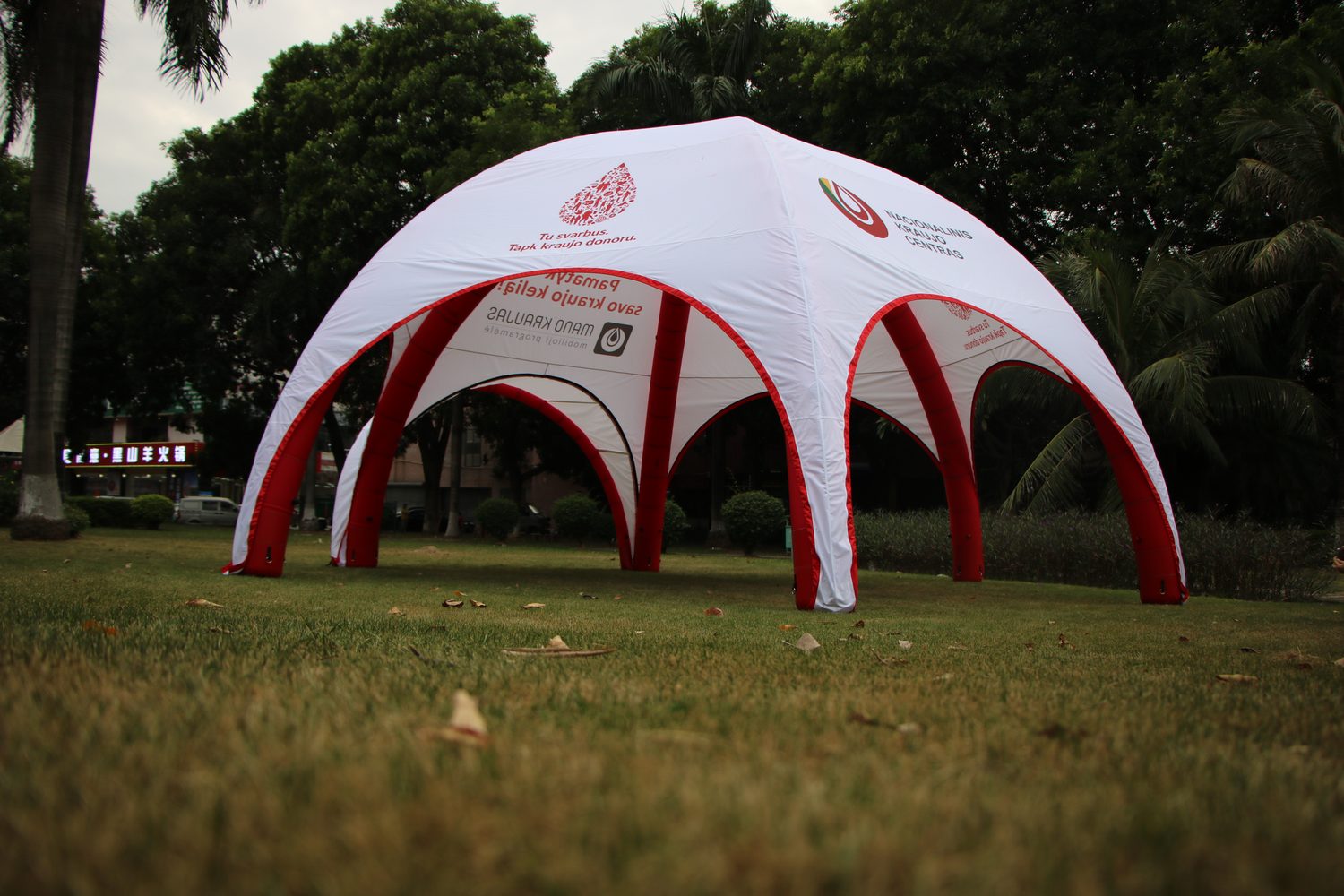
Open Ground, One Sign for the Whole Footprint
A stand on mown grass with no building behind it. The fixing changes to stakes and the printed valance becomes the only sign for the whole footprint. On a reusable set the valance is also the cheapest surface to re-cut per venue, which is exactly why it should be named as a changeable panel in the original proof.
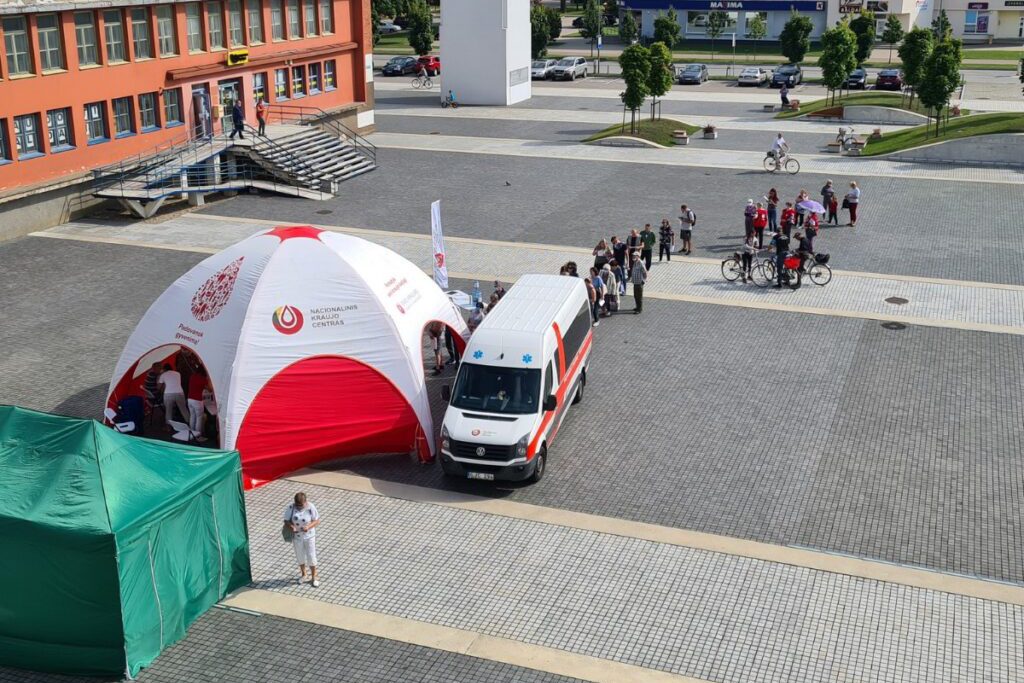
Weighted Legs, a Queue Beside the Bay
Weighted legs on paving with the queue forming alongside the unit rather than through it. A surface list is also a layout input: a canopy specified for a queue needs a different opening and a different wall from one specified for a seated conversation, and that decision has to be in the brief before the artwork.


