
Custom Trade Show Displays: One Branded Stand, Built to Travel
Most trade show displays are specified as a shopping list and arrive as a mismatch. KCCE builds the inflatable part of a custom display as one system: a printed canopy, matching arches and columns, and the awnings or connecting cloth that turn several bays into a single frontage. One approved artwork runs across every surface, the cloth covers can be changed without replacing the frame, and air-tight units hold pressure with no live supply. 20 years of manufacturing experience.
Quick Answer: What are custom trade show displays?
A custom trade show display is the set of branded, printed components a company takes to an exhibition — a canopy, an entrance arch, printed columns, banners and the connecting pieces that make them read as one stand — produced from a single approved artwork. KCCE builds the inflatable components on Oxford cloth covers over TPU inner liners: they inflate once, hold pressure with the valve closed, and leave a hired floor undamaged. Custom print starts at one unit, so a single stand and a touring set are quoted on the same line.
What You’ll Learn
A Stand System, Not a Single Tent
A buyer searching for custom trade show displays is usually not buying a tent. They are buying the thing a visitor sees from the aisle, walks into, and photographs: one frontage, one name, several surfaces. This page is about planning that whole object — which components it needs, how one artwork covers them, and how the same set gets rebuilt at the next venue.
A custom trade show display stand built around inflatable components is a set of self-standing parts: an Oxford cloth canopy over a TPU air frame, air-tight arches and columns, and the awnings or connecting cloth that join bays. Inflate them and they hold their own shape. There are no frame sections to bolt together, no rigging crew and nothing drilled into a hired hall floor — the legs are weighted on paving or staked on grass.
Against a hired truss booth, the difference is the morning. A truss system arrives as a kit, needs ballast and a build crew, and usually goes back to the hire company on the last day. A portable custom trade show display arrives as storage bags, stands for the show and stays with you for the next one. Against a single printed gazebo, the difference is scope: custom trade show booth displays have to carry the brand across an entrance, a frontage and a meeting face at once.
Wording changes by channel more than the hardware does. An exhibition contractor writing custom trade show exhibit displays, a brand manager asking for branded trade show displays, an agency pricing custom exhibition displays and a distributor ordering custom trade show display stands are describing the same procurement job. What differs is the component list: one bay with a printed roof, or a frontage with an arch, columns and a second bay joined under one artwork.
The reason operators standardise one system is the calendar. A spring trade fair, a dealer open day, a product launch and an outdoor roadshow each need a covered, signed space on ground that belongs to somebody else. The same set of custom inflatable trade show displays is a launch stand in one city and a registration frontage in the next, because what changes is the valance and the floor fixing, not the structure.
When a buyer compares a custom trade show display manufacturer the questions are narrow and written down: which components are actually in the quote, whether every printed surface comes from one approved proof, whether the cover can be changed for a later campaign, and whether a delivery date is confirmed in writing rather than promised on a call. A first-time buyer and an agency ordering its sixth set ask the same four.
Key Takeaways
- It is a set of printed components — canopy, arch, columns, banners, awnings and connecting cloth — briefed as one display, not a single tent.
- One approved artwork runs across every surface; the roof reads from the aisle and a quiet return works up close.
- Oxford cloth covers over TPU inner liners inflate once and hold pressure; nothing is drilled into a hired floor.
- Custom print MOQ is 1 unit; the cloth cover can be changed without replacing the frame.
What Goes Into a Custom Display
Each of these starts from a surface or a join, not from a tent size. The first three carry a photograph of the decision they describe; the last three are the briefs buyers ask about most. Whether the order is called a custom trade show display, a branded pavilion, a touring stand or one of the modular trade show displays that grow a bay at a time, the quote is built from the same component list.
One Artwork, Every Visible Panel
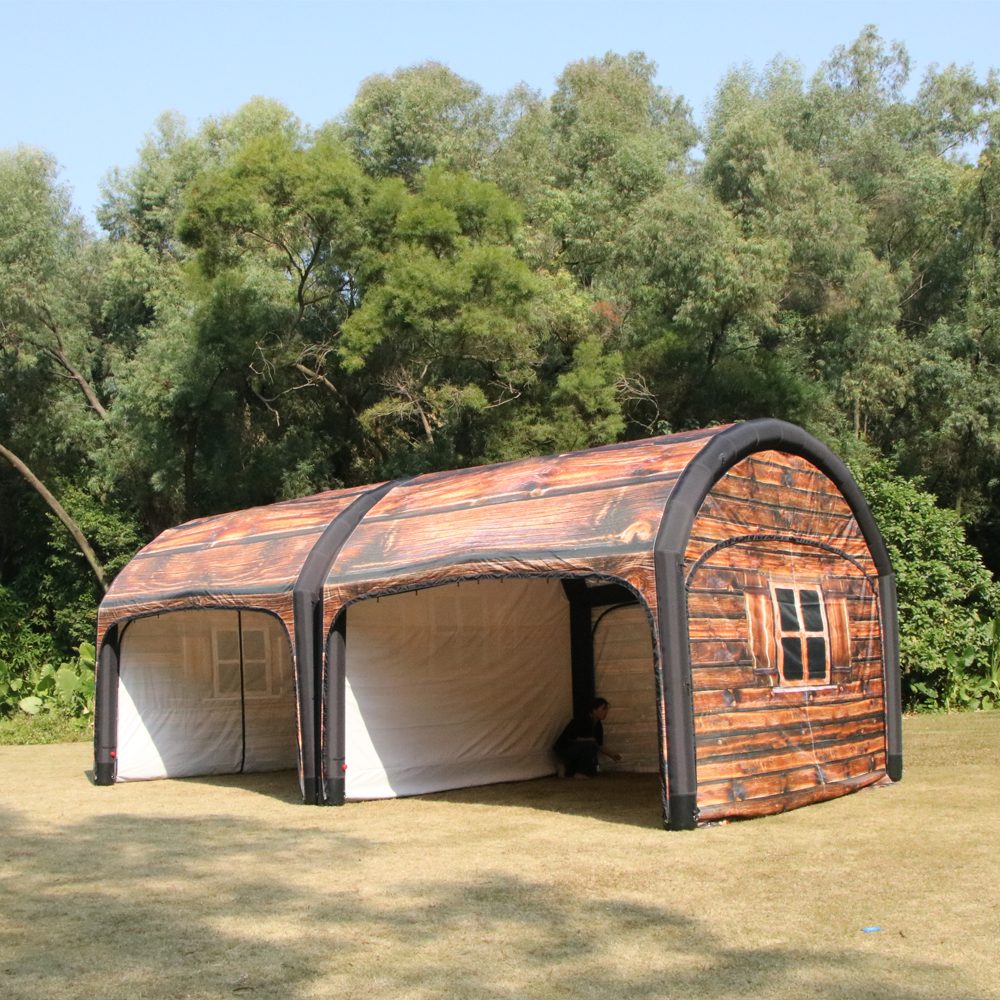
A full-graphic print running over the roof and the walls of a large structure on grass. This is what custom trade show displays are specified for: the name, the colour and the offer are set once and carried across the canopy, the valance and the returns, so the stand reads as one object from three sides of a hall instead of a logo stuck on one front panel.
- Full-graphic print
- One artwork
- Roof to wall
The Arch Is the First Thing a Visitor Reads
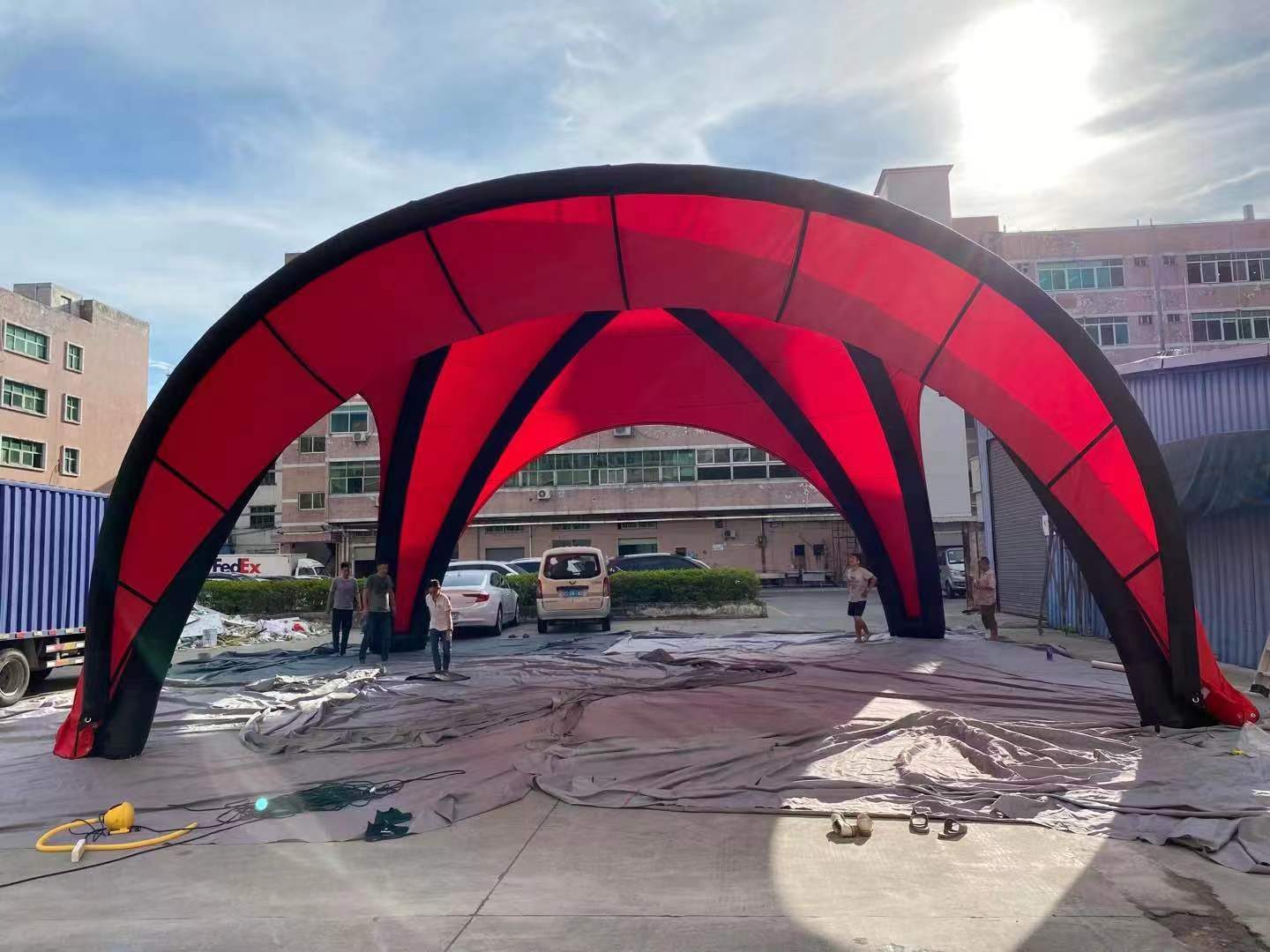
A large air-tight arch part-unpacked on a concrete yard. Square, angled and round arches are listed in the manuals, and the optional banner fixes through eyelets. On a custom exhibition display the arch is a separate print surface from the canopy: it marks the entrance from down the aisle while the back wall does its work up close, so both need to be in the same artwork brief.
- Air-tight arch
- Banner with eyelets
- Entrance signage
Leave One Face Calm for the Conversation
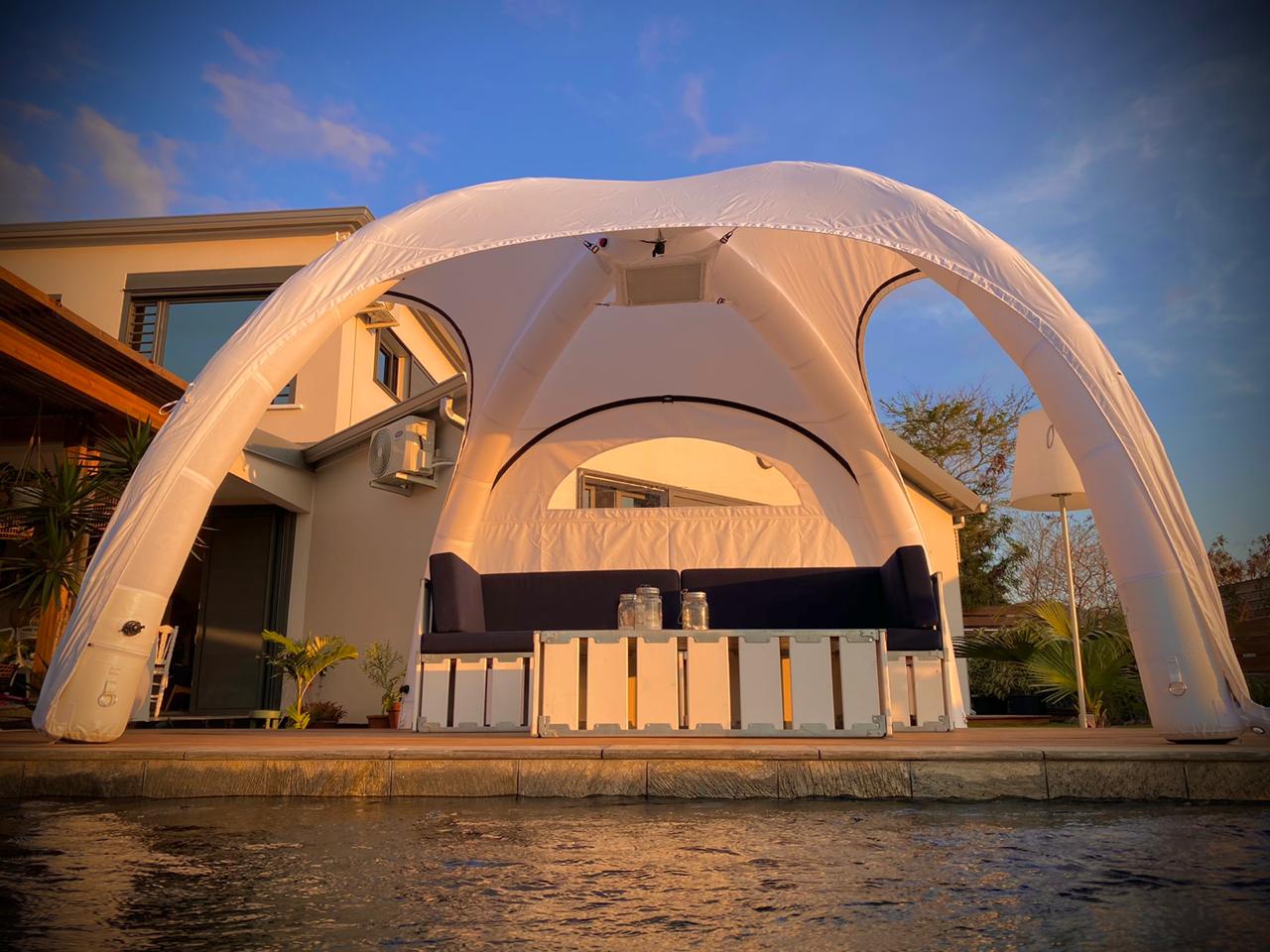
A plain canopy on a paved terrace with room for a table and chairs. Not every panel of a branded trade show display should shout. Keeping one return plain gives the seated conversation a backdrop that does not compete with the product shot, and it means a later campaign can change the loud panels without reprinting the whole stand.
- Plain return
- Meeting zone
- Hardstanding
The same stand at every stop on a tour
A field-marketing team rarely books one show. One set of printed components, one approved artwork and one fixing kit per floor type let a custom trade show display stand be rebuilt identically at each venue, with the city or the date dropping onto a valance or a banner rather than a whole new structure being designed for each date. Send the venue list with the enquiry so the kit is quoted once for the tour.
- One artwork
- Repeated build
- Per-venue valance
Change the cover, not the structure
The manuals describe changing the canopy: deflate the unit, take the cloth cover off the closed TPU inner liner and fit a new one. That is the real basis for a reseller, an agency or a brand running two campaigns on one frame. It is also why the artwork is worth approving carefully — the expensive part is the sign-off, not the repeat print.
- Change canopy
- TPU inner liner
- Two campaigns
A frontage built from several bays
X-series manuals specify modular aluminium connectors for joining same-size units, along with awnings and banners; XL-A lists wide and narrow connecting cloth. A modular trade show display can therefore be quoted as a frontage rather than a single tent. Decide the number of bays before the artwork is laid out, because the name has to survive the joins.
- Modular connectors
- Connecting cloth
- Continuous frontage
The Components Behind the Frontage
Five KCCE ranges appear below because each answers a different question in a display brief: which unit carries the name, which one joins the bays, which one sits off the main frontage. Sizes are the manufacturer's listed specifications for that model; the point here is the role each part plays in one stand, not a size to memorise.
N Inflatable Tent

In a custom trade show display the main canopy is the panel that carries the brand name at aisle distance. N is listed here because its size table covers square and rectangular formats, so a stand planner can hold the frontage constant while the depth changes between venues. The Oxford cloth cover takes print on the roof, the valance and the walls, and it is removable.
XL-A Opblaasbare Tent
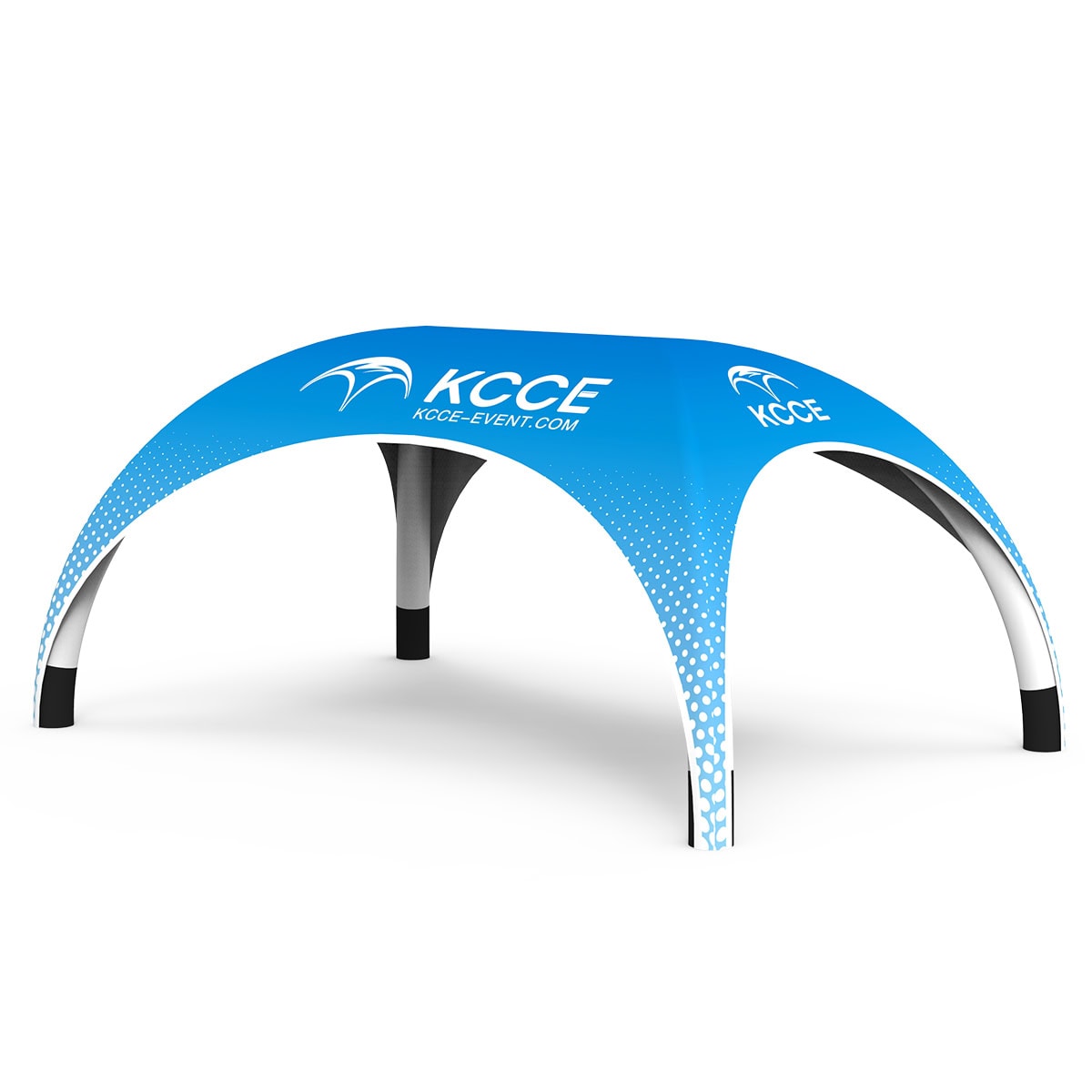
The XL-A manual lists wide and narrow awnings plus wide and narrow connecting cloth. That is the part a display brief usually forgets: several bays can be brought under one continuous printed frontage instead of reading as separate tents with a gap between them. Put the connecting cloth in the same artwork brief as the canopy, not in a second order.
U Inflatable Tent

Bar-bag fixing is standard on U and it goes up with one to two people. In a large stand it is the unit that sits off the main frontage: a registration point, a sampling counter or a queue desk that carries the same artwork but not the same job. Decide its role before the print is laid out.
AII Inflatable Tent

AII is held down by iron block weights and its roof is attached with Velcro, so the cover comes off without tools and one installer can put the frame up. It suits a hard floor where nothing may be drilled and a stand that has to be re-dressed between two shows on the same trip.
F Inflatable Tent

F is the square frame supplied with two manuals covering the same structure, and its manual calls for two to three installers. It is the right base when the display is one bay with one job to do. If the brief asks for a connected frontage or a separate entrance arch, plan those as components rather than assuming a bigger version of the same bay.
Plan the Stand Before the Artwork
Start from the organiser's bay, then the component list, then the artwork. A custom display is easy to move and hard to re-approve: custom trade show booth displays cut to the wrong frontage cannot be trimmed on the morning of the show.
Start with the organiser's bay, not with a catalogue size
The hall gives you a footprint, a clear height, a maximum build height and a rule about what may touch the floor. Write those down first. A portable custom trade show display is easy to move and hard to re-approve; if the frontage has to shrink on the morning, the artwork has already been cut to the wrong width.
List the components before you list the graphics
Write down the main canopy, how many bays, whether there is an entrance arch, whether columns carry a printed patch, and which panels are awnings or connecting cloth. Each is a separate print surface with its own file and its own lead time. A brief that says only 'one branded booth' arrives as four different interpretations.
Decide what repeats and what changes per venue
The brand name repeats; the city, the date, the product being launched and sometimes the language do not. Put the fixed elements on the canopy and the changeable ones on a valance or an eyelet banner. That single decision is what makes a custom trade show display reusable across a season instead of a one-show purchase.
Keep one brand rule across every panel
A minimum logo size, a clear space and a colour rule apply to an arch banner as much as to a roof. When six surfaces are printed by one supplier from one approved file, the stand reads as one brand; when each panel is briefed separately, it reads as six tents parked together.
When a single printed tent is the right answer
If the brief is one bay, one counter and one show, a full display system is more kit than the job needs. Our trade show inflatable tent page covers that purchase. Move to a full custom display when there is a second bay, an entrance marker, a tour of venues or an agency delivering a client's branded environment.
One Artwork, Every Surface
Display print is not free-form design. A brand has a minimum logo size, a clear space and a colour rule; a campaign has an offer and a date; and the two have to sit together on a roof, a valance, an arch banner and a column patch without fighting. The artwork brief starts there, not at the colour wheel — and for custom printed trade show displays it is settled before the proof, not after.
One approved file for canopy, arch, columns and banners
Custom printed trade show displays fail at the joins, not at the printer. The roof, the valance, the walls, the arch banner and the column patch are separate surfaces cut from the same artwork. The X-series manuals list awnings and banners; the column manual lists a touch-fastener print patch and the arch manual a banner with eyelets. Approve one file that names every surface before production starts.
Heat transfer print on Oxford cloth — and the one written denier
KCCE canopies are Oxford cloth over TPU inner liners. The X-series manual is the only one that specifies a denier and a method: 400D Oxford cloth with heat transfer printing. We do not quote a denier for the other ranges, because the manuals do not give one. Ask for the material line that applies to the model you are ordering rather than a generic fabric claim.
The roof reads from the aisle, the back wall reads in photographs
Put the name high and large enough to be read over a crowd; keep the panel behind the product or the meeting table quiet. Every photograph taken on the stand uses that panel as a backdrop. Branded trade show displays that print the same busy pattern on all six faces give the visitor nothing to look at up close.
A new campaign without a new structure
Because the cloth cover can be taken off the closed inner liner and replaced, a change of logo, colour or sponsor does not mean buying a second frame. Agencies and resellers use that to run one set of hardware across several clients. The replacement cover is quoted against the artwork and the component list, and the original proof stays on file so the next run matches the first.
The Part of the Order That Isn't About the Tent
Most first-time display orders are delayed by four things that have nothing to do with fabric: the artwork, the proof, the packing requirement and the delivery date. A custom trade show display is evaluated in the inbox before it is ever on the pitch, so the artwork brief is the product as far as the order is concerned.
Artwork is approved before anything is printed
Send the logo as a vector file where possible, the brand colours, and the text each surface must carry. We lay it onto the canopy, the valance, the arch banner and the column patches, send one digital proof, and production starts only after you sign it off — so the name reads the same on every component rather than as six slightly different banners.
MOQ is one unit, not a container
A single printed display is one unit, so a brand running one activation and a distributor buying repeat sets order on the same line. Repeat runs of the same artwork, replacement covers for a later campaign, and private-label packing for resellers and agencies are each quoted against quantity, the artwork and the packaging brief rather than a published minimum.
Lead time and delivery date are written down
Production time is confirmed in writing after design approval, not promised on a call. Tell us the show date with the enquiry and production and freight are planned against it, because a display that lands the week after the fair is the wrong frontage regardless of the print.
Resellers and event agencies buy differently
An agency delivering a client's stand, or a reseller buying repeat stock, orders on a separate line: OEM/ODM with its own packing and insert card, or a private-label run under its own brand. Send the packaging requirement with the enquiry so it is in the quote rather than discovered at the warehouse.
What Goes Wrong on Show Day
Almost every problem here shows up after the frontage is up and the counters are carried in, and all six are cheaper to settle before the order. A display that closes the aisle people already use will be moved by the organiser on day one regardless of how good the print is.
Weights on paving, stakes on grass, nothing drilled
Hired hall floors and paved forecourts cannot be drilled. The manuals give guy ropes with ground stakes for sand and grass, and guy ropes with sand bags as an all-surface standard that leaves no mark. State the floor with the enquiry so the fixing kit is in the quote, and say if the stand is indoors, where the fixing changes again.
Sealed air needs no cable across the aisle
Air-tight arches and columns are inflated once and hold pressure with the valve closed, so there is nothing running all day and no cable taped across a walkway. XIC is the one range that uses a blower and needs a live supply for as long as it stands. If the display includes a continuously inflated unit, mark the power and the cable route on the stand plan.
Zipper versions pack down smaller for a touring set
The column and arch manuals list Regular and Zipper versions; Zipper adds a portable packaging zipper and a handle so the cloth cover and the inner liner separate for transport. For a display that moves between cities, that difference shows up in the van, not on the stand.
Keep the aisle and the sightline clear
A connected frontage closes walkways faster than one bay does. Keep the canopy edge out of the pedestrian flow, put the queue inside the stand, and check that the arch does not sit below a hall sign or a sprinkler line. The organiser measures the aisle, not the artwork.
Allow a crew for the number of bays
A single sealed unit goes up with one or two people; a frontage of several bays, an arch and printed columns is a different morning. Inflate and fix each unit before anything is carried in, and write the crew into the schedule rather than borrowing people from a neighbouring stand.
Pack the covers dry and labelled by surface
A printed cover packed wet after a rainy outdoor show is the reason the next venue opens with mildew instead of a clean frontage. Let the cloth dry, then bag each surface with the component name on the outside. On a multi-bay stand the second-biggest delay after the artwork is a valance nobody can find.
From the First Brief to the Next Venue
Plan backwards from the time the public is due, not forwards from the time the van arrives. Inflation is the quick part. Clearing the bay, getting the delivery off the aisle and being ready before the first visitor reaches the arch is what takes the morning.
Lock the stand dimensions, the floor and the organiser's rules
Before any artwork is drawn, get the bay dimensions, the clear height, the floor type, the delivery window and the rules on fixings and power in writing. A custom trade show display manufacturer can only quote the right component list once those five facts are fixed.
Approve one artwork covering every printed surface
Send the logo as a vector file where possible, the brand colours, and the exact text each panel must carry. We lay it onto the canopy, valance, arch banner and column patches, send a digital proof, and production starts only after sign-off. This is the step that decides the delivery date.
Inflate, fix, then dress the stand
On site the order is fixed: mark the leg positions, inflate with the full crew, weight or stake every unit, then bring in the counters, the product and the signage. An inflated frontage with nothing on its legs is the one thing that goes wrong on a busy build morning.
Rebuild the same display at the next venue
Deflate, dry and bag each surface by component name, keep the fixing kit for the next floor type with the set, and check the valance or banner that changes per city. A touring stand is only cheaper than a hired one if the second build is a repeat of the first.
Pricing & Minimum Order
A quote is built from four things: the component list, how many surfaces are printed, the fixing kit for the floor, and the number of repeat sets. That is why a custom trade show displays price comes back as a project quote rather than a catalogue figure — a single bay with one printed roof and a touring frontage with an arch and columns are different jobs even before freight.
| Item | MOQ | Terms |
|---|---|---|
| Single printed stand, brand name and offer | 1 unit | Quoted per project (FOB) |
| Repeat sets for the same artwork (tour, franchise, dealer network) | Discussed against quantity | Quoted per project (FOB) |
| Replacement cloth cover for a later campaign | 1 unit | Quoted per project (FOB) |
| OEM / ODM private label for resellers and event agencies | Discussed against the brief | Discussed |
| Doorlooptijd | — | Confirmed in writing after design approval |
Final pricing is confirmed in writing after design approval, and quote requests are answered within 24-48 hours. If the display is tied to a fixed date — a fair, a launch tour, a dealer conference that opens on a contract date — send the date with the enquiry so production and freight are planned against it. Resellers and event agencies asking about white label inflatable tent stock are quoted on a separate line, against packaging and insert cards.
Printed Units Photographed on Working Ground
Three deployments photographed on the ground they were actually used on: a lawn and paved path with several units in a row, a paved promotional stand with two matched printed canopies, and an indoor product table under a printed roof. Read them for the things that transfer to a custom display — one programme across several frontages, print lining up across a join, and one face that works at arm's length.
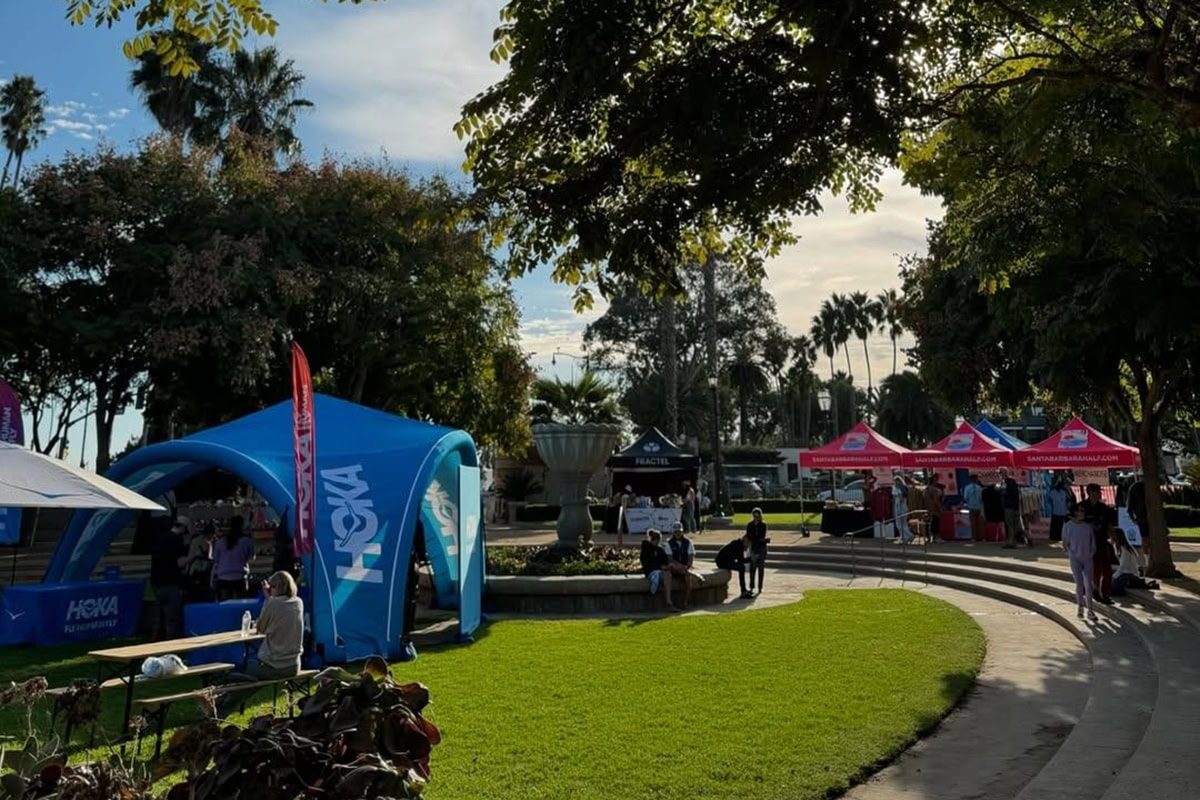
One Programme Across Several Frontages
A canopy alongside a row of smaller units on a lawn and paved path. Read it as a plan for custom exhibition displays: several structures have to look like one programme, which is decided by a shared height, a shared front edge and one artwork, not by buying the same tent twice.
- Multi-unit
- Shared front edge
- Grass & paving
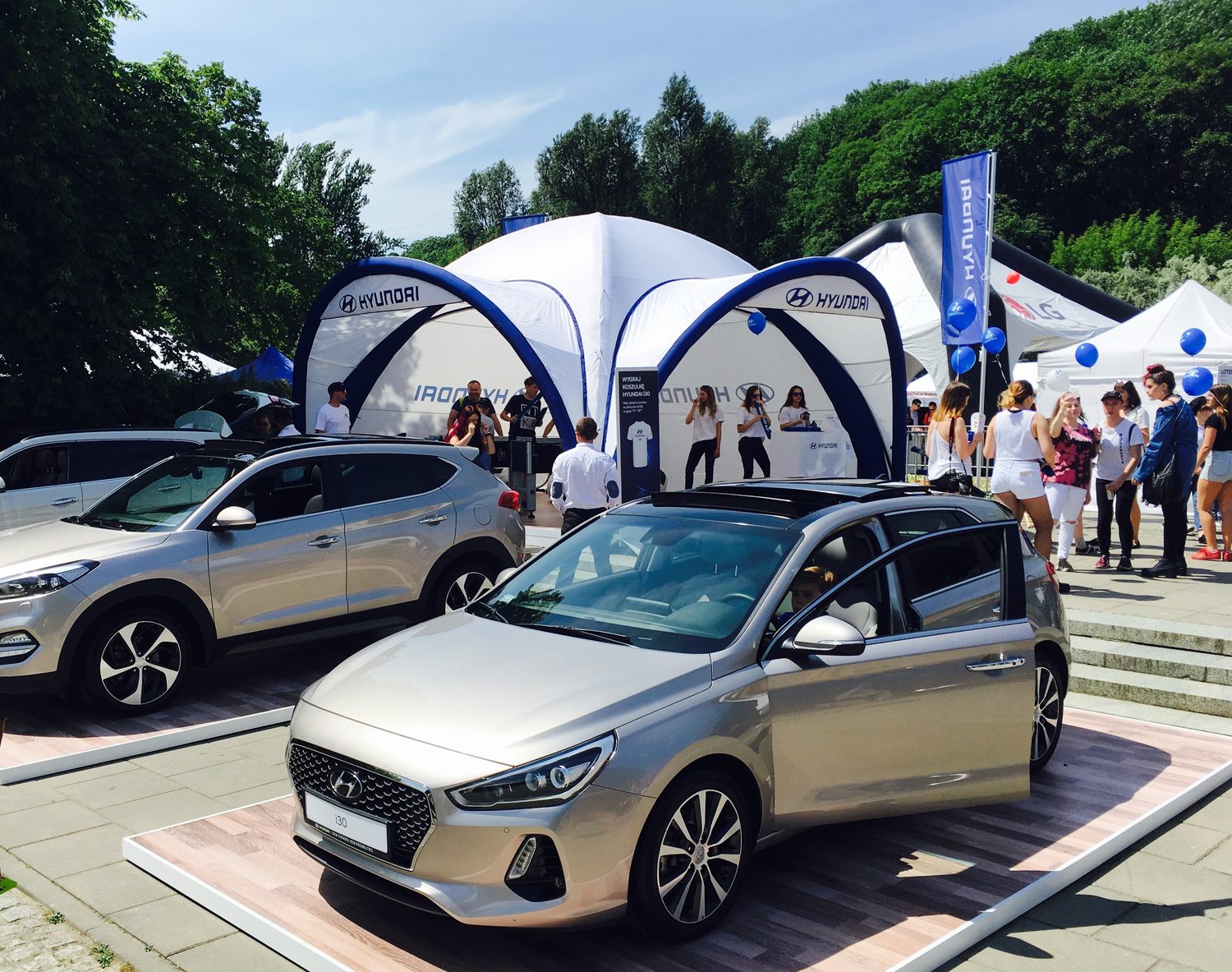
Two Bays, One Printed Message
Two printed canopies standing together at a promotional stand with vehicles behind them. This is the closest working example of a custom trade show booth display built from matched bays: the print has to line up across the join, and the gap between the units has to be planned as part of the frontage rather than left over.
- Matched pair
- Print across the join
- Paved stand
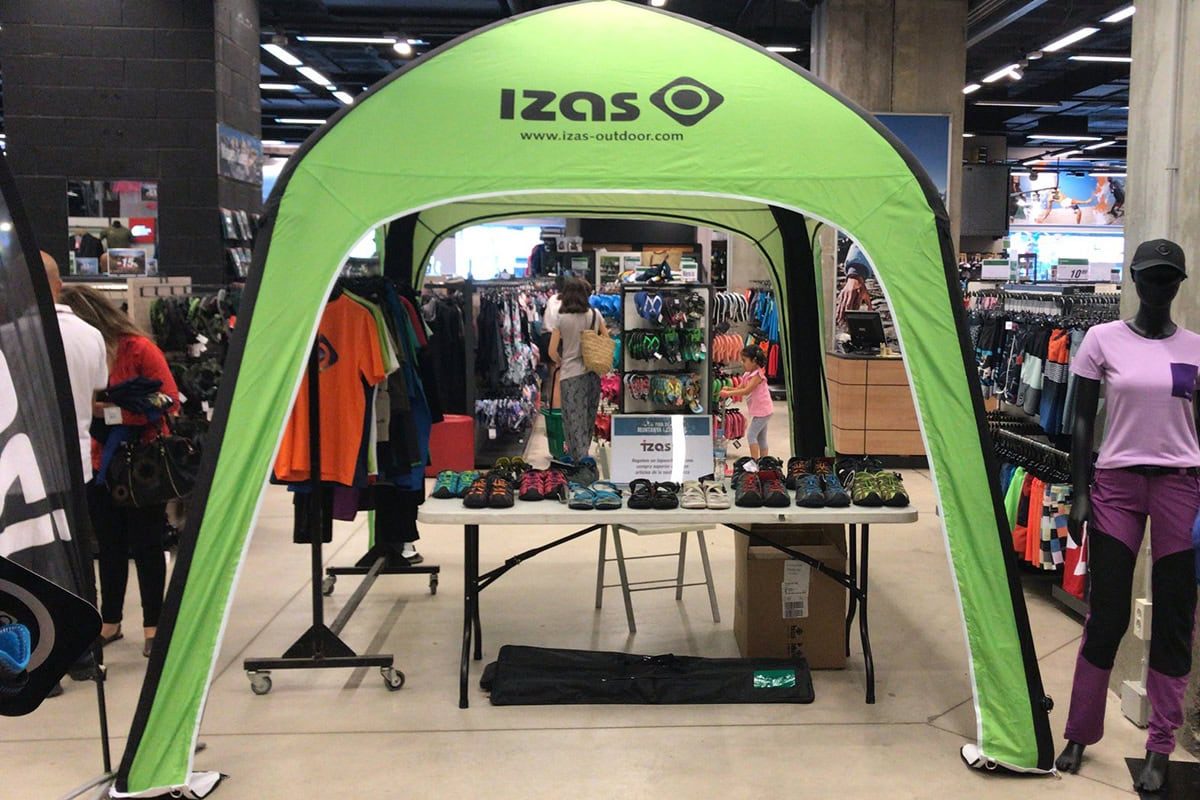
A Display That Has to Work at Arm's Length
A canopy printed across the roof over a product table inside a retail store. Indoors the visitor is already close, so the roof carries the name and the table carries the product. It is the same rule as a custom trade show display stand in a hall: one face works at distance, one works up close.
- Indoor floor
- Printed roof
- Product table
Veelgestelde Vragen
Displays We Have Delivered
Three deployments, three different crowd problems. A paved square where the queue forms beside the bay rather than through it, several units at one height reading as a single programme, and an open lawn where the valance is the only sign for the whole site. Read them in that order: flow, repeat, reach — which is the order an exhibition contractor works through when specifying more than one unit.
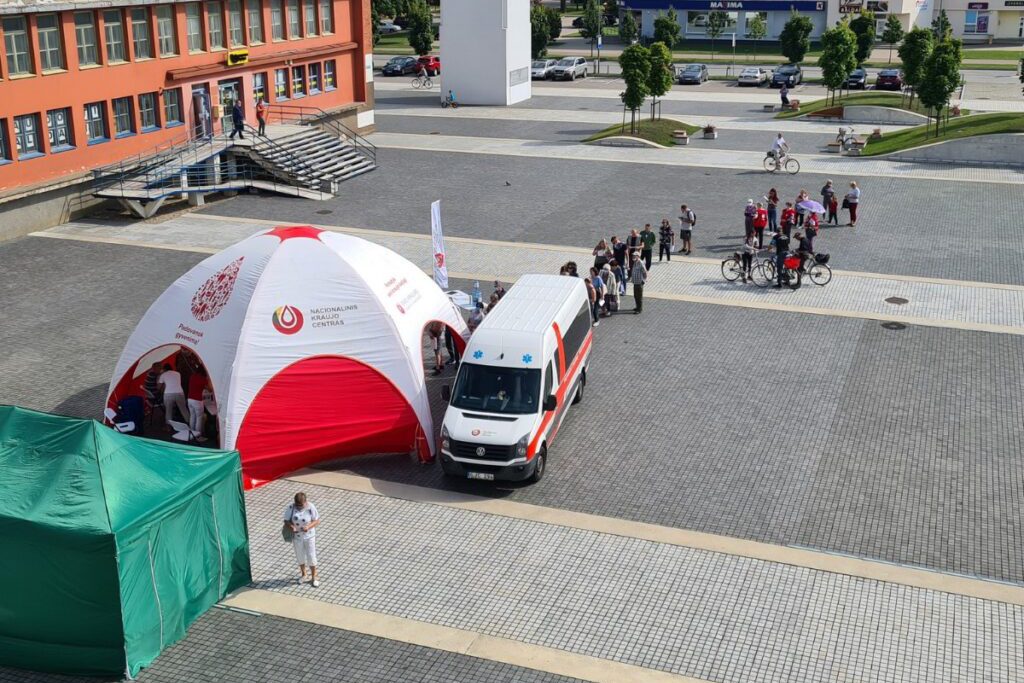
The Queue Forms Beside the Bay
Weighted legs on paving with the queue forming alongside the unit instead of through it. For a custom display with an entrance arch and a product table, that decision is worth more than another printed panel: the entrance stays open and the stand keeps its own route.
Several Units, One Working Programme
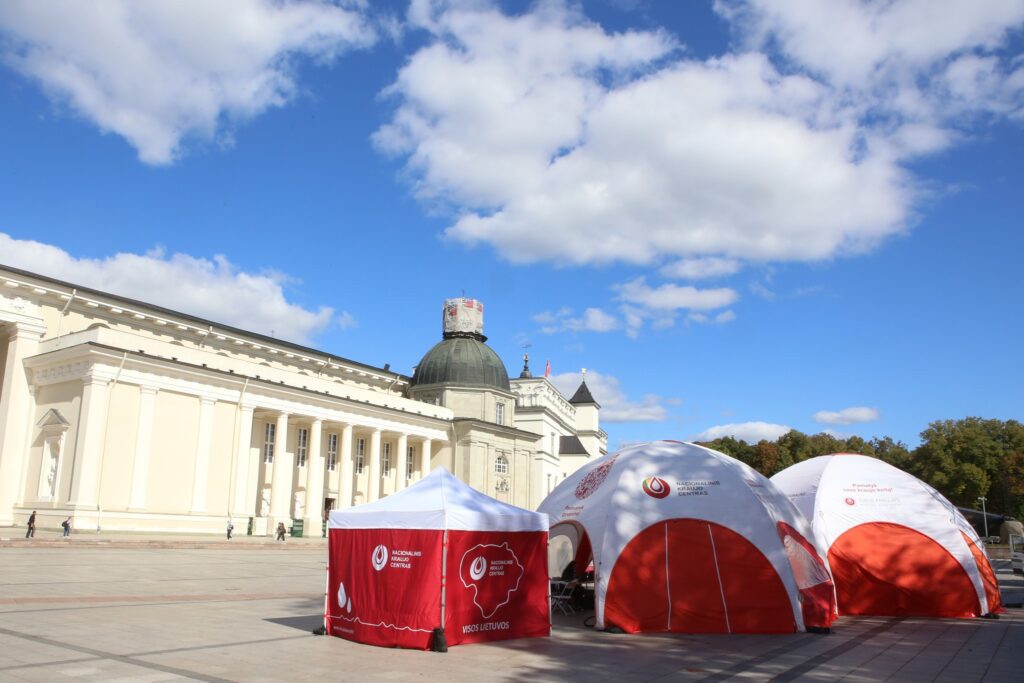
Several units at one height and one front edge on a paved square. For modular trade show displays the point is the same: one artwork, one queue plan and one crew brief repeated across the whole site, rather than a separate design for each bay.
Open Ground, One Sign for the Whole Site
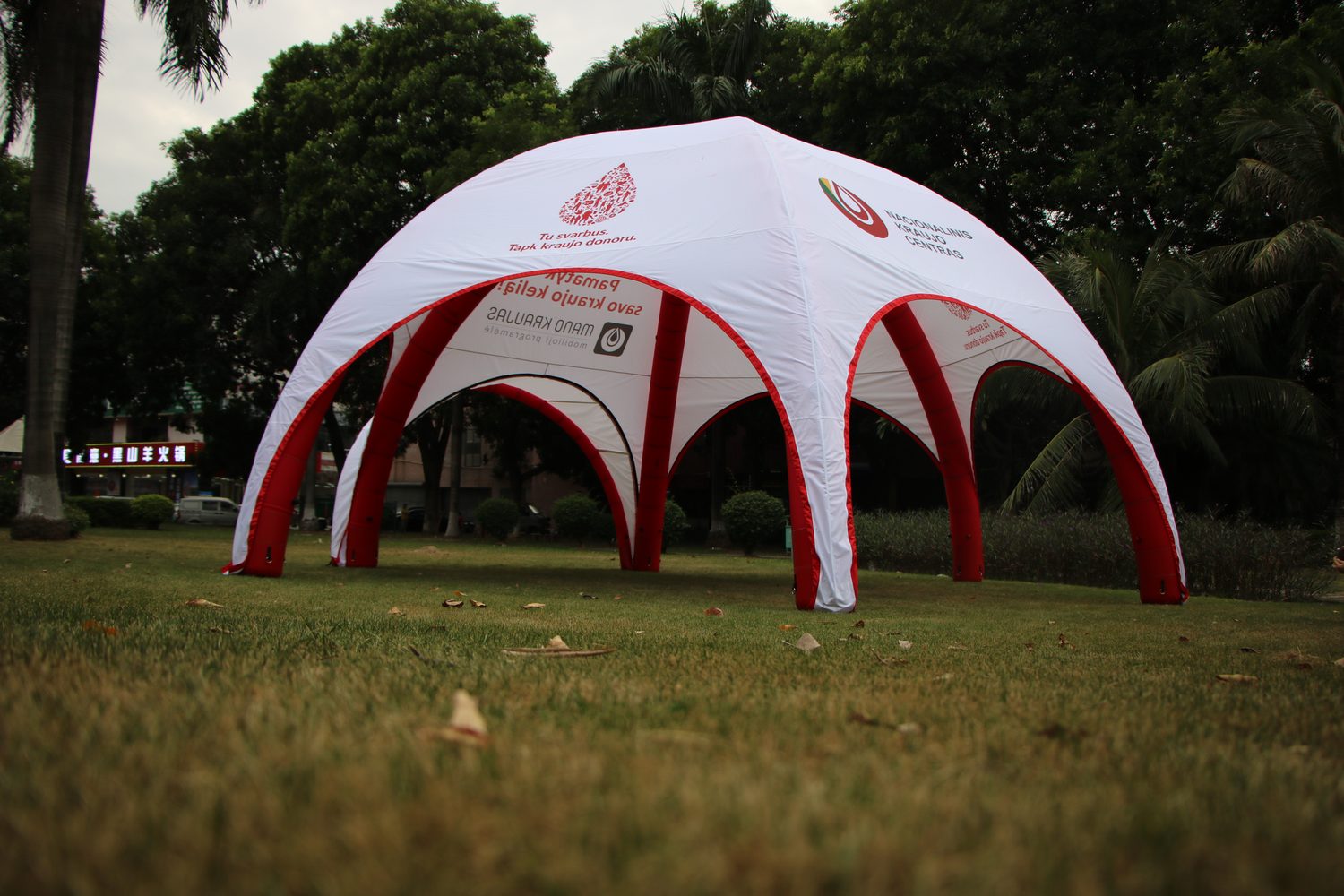
A stand on mown grass with no building behind it. The fixing changes to stakes and the printed valance becomes the only sign for the whole footprint — the reason a portable display keeps the name at eye level on every visible face.


