
10x10 Inflatable Tent: The 3×3M Booth That Sets Up in Minutes
A market stall is a fixed spot that has to appear by nine and disappear before close: a table, a canopy, a queue, and a name people can read from the aisle. A 10x10 inflatable tent is the 3x3M air-frame booth that does that on a paved pitch, a grass field or an exhibition hall — one person inflates it, the whole canopy takes print, and the legs are weighted or staked with nothing drilled into the ground. 20 years of manufacturing experience.
Quick Answer: What is a 10x10 inflatable tent?
A 10x10 inflatable tent is the 3x3 metre (about 10 feet by 10 feet) air-frame booth KCCE builds for markets, trade shows and outdoor retail. It stands on a welded TPU air tube inside an Oxford cloth cover, so there is no frame to assemble, no rigging crew and nothing fixed into the ground: the legs are weighted on paving or staked on grass, and a single person can inflate it between the delivery van and the first customer. Because the whole canopy takes print, the stall name, logo and offer sit at reading distance while the roof carries the rest of the brand, and a fresh valance changes the message without reprinting the structure.
A 3×3M Booth That Appears by Nine and Leaves Before Close
A stall is not a building. It is a fixed spot that has to exist for a few hours — a table, a canopy, a queue, and a name people can read from the aisle — then disappear again. That is exactly the job a 10x10 inflatable tent does.
Un inflatable tent for a market stall or trade-show booth is a self-standing structure on a welded TPU air tube inside an Oxford cloth cover: inflate it and it holds its own shape, with no frame sections to bolt together and nothing fixed into the ground. On a pitch that is the point that decides most — a paved market bay, a festival field and an exhibition hall are all surfaces you cannot drill, and the structure has to arrive, stand for the day and leave the ground exactly as it was found.
Against a pop-up gazebo, the difference is print and scale. A gazebo shades a clipboard and carries one printed front panel; an inflatable canopy covers the counter, the queue and the person serving, and the whole roof and valance take print. Against a hired marquee, the difference is the booking: no frame sections, no ballast negotiation with a hire firm, no crew arriving at seven to build something that comes down at six. That is why an inflatable booth for retail gets specified for the single-day activations a marquee could never be justified for.
Wording changes by channel more than the product does. A market trader, a brand doing sampling at a show, an events agency and a festival organiser all describe the same requirement, and a brief written as a 10x10 trade show booth is the same document another buyer would call a market stall tent, a pop-up retail canopy, a vendor booth or a sampling bar. A single custom inflatable booth and a framework order for an tenda gonfiabile per eventi across ten sites differ in quantity, not in structure.
The other reason operators keep one is the calendar. A Saturday market, a seasonal fair, a product launch, a sampling tour and a weekend festival each need a covered, signed space at short notice on ground that belongs to somebody else. The same unit is a market stall in the morning and a brand activation in the afternoon, because what changes is the printed valance, not the frame.
When a buyer compares suppliers the questions are narrow and written down: whether the factory will print one unit with the brand, what the fixing does on paving as opposed to grass, how much of the canopy is printed, and whether a delivery date is confirmed in writing rather than promised on a call. A buyer specifying a custom printed inflatable tent for the first time asks exactly the same four as an agency reordering its fourth — which is why the artwork, once set, tends to be reused for a whole season.
Key Takeaways
- It is a printed 3x3M (10x10 ft) air-frame booth — a stall, not a building — that stands for a few hours and leaves.
- Legs are weighted on paving and staked on grass; nothing is drilled, and the surface is handed back unchanged.
- The whole canopy takes print; the brand reads from the aisle and a fresh valance changes the message without reprinting the structure.
- KCCE builds the AII, U, F, N and XL-A ranges to order, one unit minimum, with the dimensions a stall plan needs.
Stalls and Booths a 10x10 Tent Becomes
Each of these shows the print and the pitch a 10x10 booth is built for — on a market square, at a promotional stand, or across a larger structure — in front of people who came for the product, not the tent. The first three carry a photograph of the layout they describe; the last three share the same structure and are listed because they are the ones buyers ask about most. Whether the brief calls it a market stall tent, a trade-show inflatable booth, a pop-up retail canopy, a vendor tent for a festival, a sampling bar tenda gonfiabile pubblicitaria community info point, it is the same structure brought out of a store and put on the ground for a day or a season.
A Printed Booth in Minutes
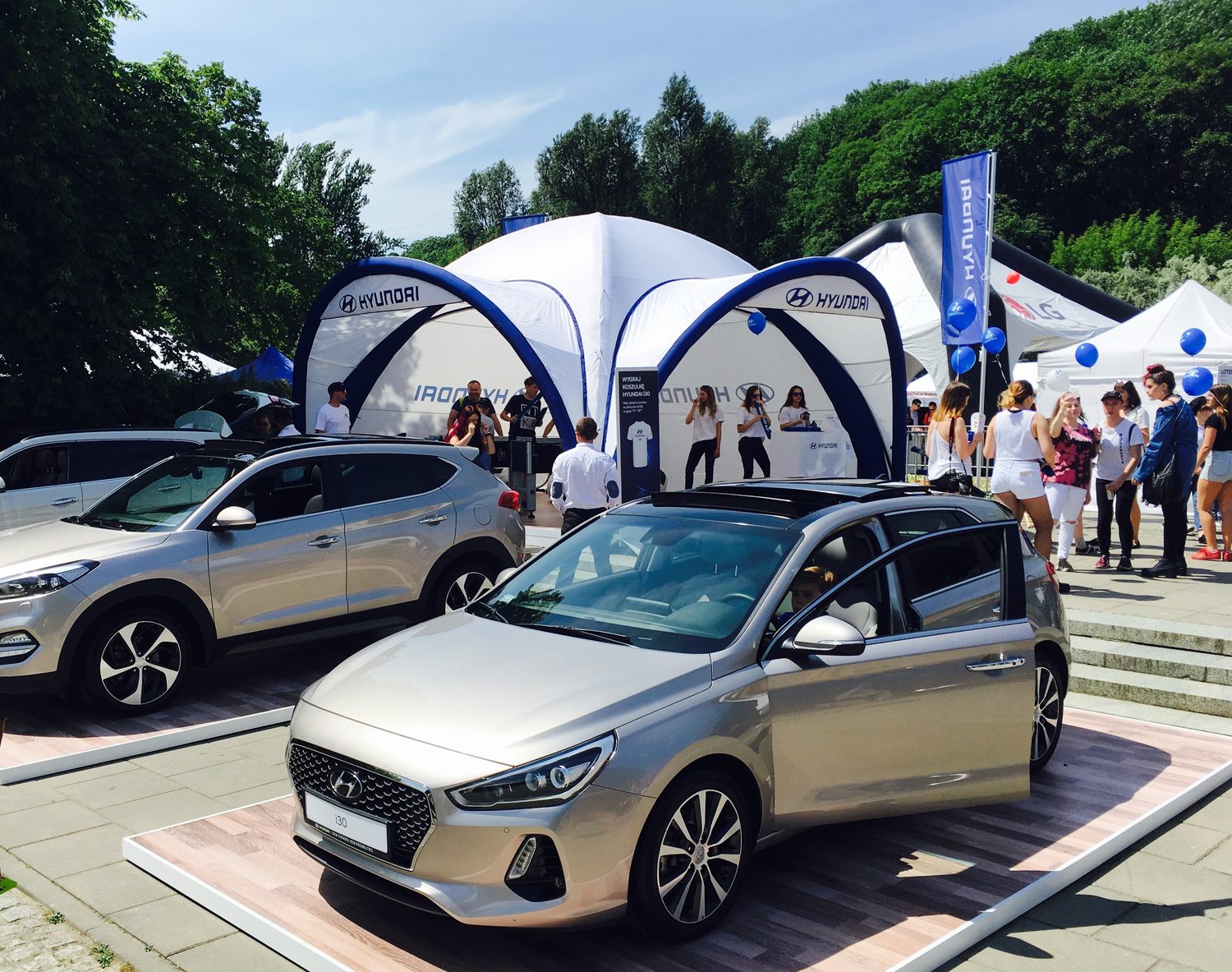
Two printed canopies at a promotional stand: one counter, one queue, and a brand name at reading distance. This is the 10x10 use case most buyers picture first — a stall that arrives in bags and stands printed before the first customer.
- Printed canopy
- Promo stand
- Quick setup
Print That Covers Every Panel
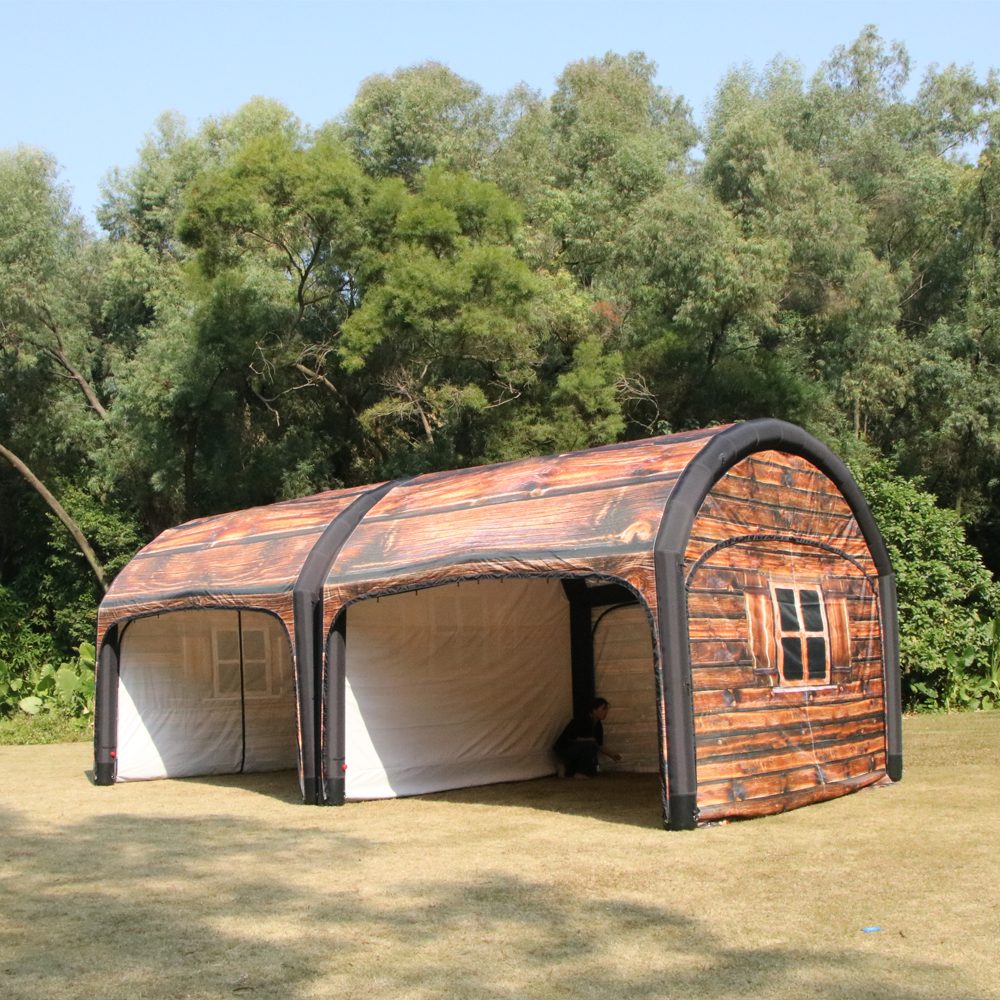
A full-graphic print runs across the roof, the walls and the valance, so the structure itself becomes the artwork rather than a panel on it. The same dye-sublimation process covers a 3x3M booth and a larger structure alike, which is what makes a printed stall readable from the aisle and the sides at once.
- Full-graphic print
- Every panel
- Scales to any size
A Market-Stall Frontage
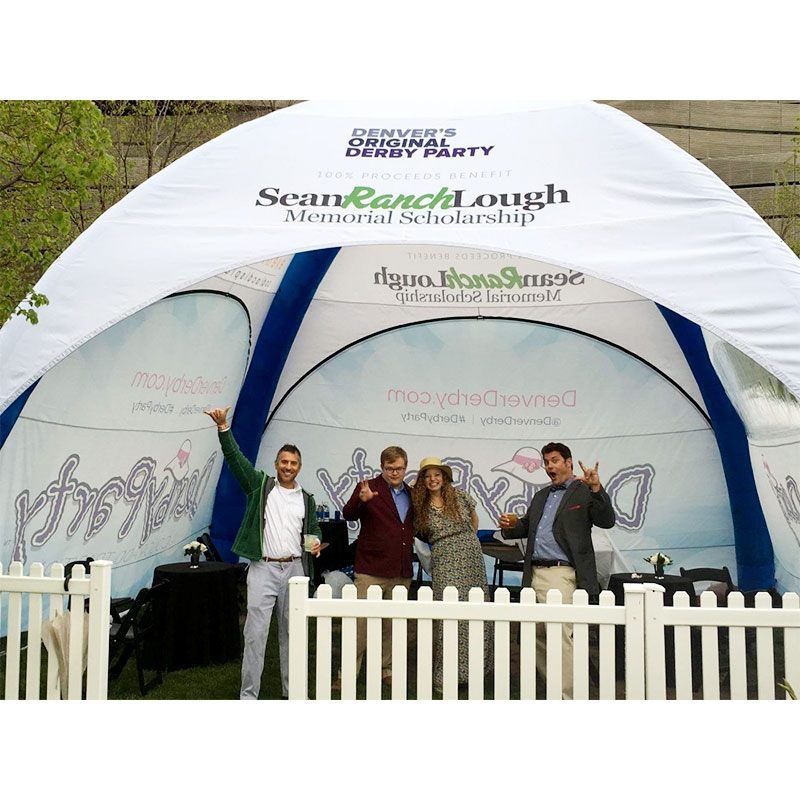
A dome tent with a printed frontage on a lawn. For a market stall the message sits at eye level and the roof stays plain, which keeps the interior bright for the person serving and the name legible from the aisle.
- Printed frontage
- Bright interior
- Lawn or paved
Vendor booth at a market
A 3x3M (10x10 ft) footprint is the standard market stall: one table, one canopy, one queue. The legs are weighted on paving or staked on grass, so the same unit works on a high-street pitch and a grass field, and one person can put it up between the delivery van and the first customer.
- One table
- Weighted legs
- Grass or paved
Trade-show sampling bar
Brands sampling at a show need a recognisable frontage and a counter. A 3x3M unit takes full-colour print on every panel and leaves room for a sampling bar and a queued customer, with a second bay behind for prep in a larger size.
- Full print
- Sampling counter
- Brand frontage
Community & info point
A library reading day, a consultation desk, a charity stall — any fixed spot that needs a name above it for a few hours. One unit, one valance with the date, gone before close. The same frame serves a Saturday and a weekday with only the print changed.
- Temporary
- Replaceable valance
- Any ground
Models & Sizes for a 3×3M Stall
Five KCCE models cover the footprints a stall operator actually needs: a single 3x3M pitch, a 3x3M with depth for a counter, a square 3x3M that lines up with neighbours, a range that scales from 3x3M to a walk-through, and a rectangular frame whose 3-metre frontage comes with real depth. Every size below is the manufacturer specification for that model — nothing is rounded up, because a stall plan is drawn against it.
AII Inflatable Tent

The compact option for a single 3x3M (10x10 ft) stall: one counter, one queue, one member of staff. Sizes are 3M and 4M, the roof joins the legs by Velcro so a spare panel swaps without tools, and the legs are held by iron block weights rather than loose ballast bags.
U Inflatable Tent

Three sizes from 3M to 5M, with the bar bag (sand-filled tube) as the standard fixing, so a market trader can weight the legs without loose sand. The 3x3M size is the one that drops into a standard market pitch without a closure notice.
F Inflatable Tent

The square-footprint range built for the 3x3M stall: 3x3M and 4x4M, two manuals covering the same structure at two depths. A square 3x3M canopy lines up with neighbouring stalls on a grid, which is why it is the commonest market and trade-show size.
N Inflatable Tent

The broadest small-footprint range KCCE makes: 3x3M, 4x4M, 5x5M, 4x6M and 5x10M, so a buyer can start at a 10x10 stall and scale to a walk-through without changing supplier. Two valves, two to four people depending on size.
Tenda Gonfiabile XL-A
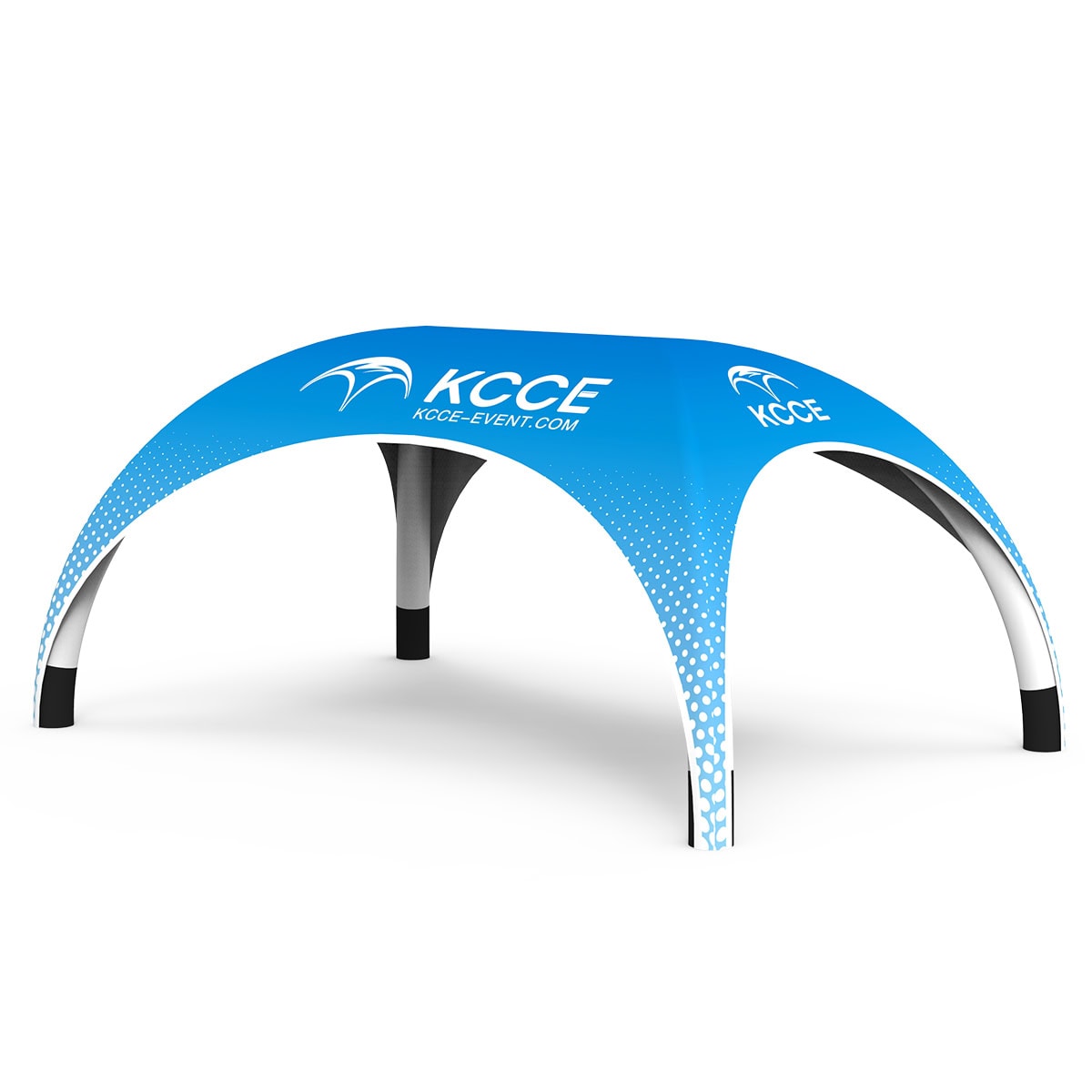
A rectangular frame from 4.5x3M up to 7.5x4.8M, so the 3-metre frontage comes with real depth for a counter and a prep bay behind it. Wide and narrow awnings plus connecting cloth let several stalls join into one frontage.
Sizing a Pitch the Crowd Already Walks Past
Start from the queue, not the desk. At a market or a show the constraint is rarely the canopy's footprint — it is the aisle the canopy must not close, and the distance eight people stand back when it rains. A 10x10 trade-show booth that is technically the right size and sits on the through-route is the one that gets moved by the organiser on day one.
One table, one queue, one person
A 3x3M (10x10 ft) footprint is the standard stall: one table, one counter, one person serving, and a queue that forms in front rather than beside. It drops into a market pitch, a trade-show bay or a high-street sampling spot without a closure notice, and one person can put it up between the delivery van and the first customer.
Plan the queue, not just the desk
The canopy has to be longer than the queue, not just wider than the table. Measure how far eight people stand back on a busy Saturday; if the answer is six metres, a 3x3M unit at the front does the job and the queue stays in the shade rather than spilling into the aisle.
Two functions under one roof
A counter at the front and a prep or storage bay at the back is the commonest pairing. That is a 4x4M or 5x5M with a partition, not two separate structures with a gap the customer has to walk between.
A row of matched stalls
Several vendors on one row want the same height and the same front edge so the line reads as one market. A 3x3M unit repeated at the same pitch keeps neighbouring canopies level, which is why the square footprint is the default for organised markets.
Indoor halls and tight pitches
Inside an exhibition hall the legs sit on a weighted base, not stakes, and the footprint is set by the booth number rather than the ground. A 3x3M unit fits a standard shell-scheme bay; go to 4x4M or 5x5M when the bay is open-plan or the brand needs depth for a counter.
Print, Brand & the Whole Canopy
Stall print is not free-form design. A brand has a minimum logo size, a clear space and a colour rule; a campaign has an offer and a date; and the two have to sit together on one canopy without fighting. The artwork brief starts there, not at the colour wheel — and for a custom printed inflatable tent order it is settled before the proof, not after.
Print the whole canopy, not one panel
An Oxford cloth canopy takes full-colour dye-sublimation print on every panel, so the stall name, the logo and the offer can sit on the roof, the valance and the back wall at once. For a 10x10 stall that means the brand is read from the aisle, not just by the person already at the counter.
Keep the roof plain, the message at eye level
Most stalls work best with a printed valance and a plain roof: the name reads from a distance, the interior stays bright for the person serving, and a fresh valance changes the message without reprinting the whole structure.
One print across several units
A chain, a franchise or an event with many stalls can run the same artwork across every unit so ten sites look like one brand. The artwork is set once and the site name drops onto a valance per location, which keeps the units interchangeable.
White label for resellers and agencies
A company buying stock to resell, or an events agency delivering a client's stand, can order a white label run with its own packing and insert card. The private-label minimum is 100 units, discussed against the artwork.
The Part of the Order That Isn't About the Tent
Most first-time stall orders are delayed by four things that have nothing to do with fabric: the artwork, the proof, the payment terms and the delivery date. A custom printed inflatable tent is evaluated in the inbox before it is ever on the pitch, so the artwork brief is the product as far as the order is concerned.
Artwork is approved before anything is printed
Send the logo as a vector file where possible, the brand colours, and the text the canopy must carry. We lay it onto the panels, send a digital proof, and production starts only after you sign it off — so the printed name reads exactly as the brand guide says, not as a photograph of last year's banner.
MOQ is one unit, not a container
A single printed stall is one unit, so a market trader and a brand running one activation buy on the same line. Repeat orders for the same artwork, and private-label runs for resellers and agencies, are quoted separately against quantity — the minimum for a white-label run is 100 units.
Lead time and delivery date are written down
Production time is confirmed in writing after design approval, not promised on a call. Tell us the event date with the enquiry and production and freight are planned against it, because a stall that lands the week after the show is the wrong size regardless of the print.
Resellers and event agencies buy differently
An agency delivering a client's stand, or a reseller buying repeat stock, orders on a separate line: OEM/ODM with its own packing and insert card, or a white-label run under its own brand. Send the packaging requirement with the enquiry so it is in the quote rather than discovered at the warehouse.
What Goes Wrong at a Busy Stall
Almost every problem here shows up after the canopy is up and the queue forms, and all six are cheaper to settle before the order. A 10x10 booth that closes the aisle people already use will be moved by the organiser on day one regardless of how good the print is.
Weighted legs on paving, stakes on grass
Paved ground does not take stakes and nothing is drilled into it — the legs are weighted with sand bags or water weights. Open grass or a showground takes stakes. Say which surface the pitch is on when you ask for a quote, and the fixing kit is quoted with the unit instead of being improvised on the morning.
Sealed air needs no cable, blower units need power
Sealed models are inflated once and hold, so there is nothing running and no cable across an aisle. Blower-driven models need a live supply for the whole day, which at an outdoor show means a generator or a hall socket with a safe cable route.
Know the pitch size before you order
A market pitch, a trade-show booth number and a festival slot are all fixed sizes. Give the pitch dimensions with the enquiry, not after — a 3x3M unit is the safe default for a standard stall, and going larger only makes sense once the pitch is confirmed.
Leave the aisle clear
The mistake at a busy show is closing the walkway people already use. Keep the canopy edge out of the pedestrian flow and put the queue where it does not back into the aisle. If a wheelchair user cannot pass the counter, the layout is wrong — check it with a tape measure.
Pack it away dry
Packed down it is bags, not a building, and it has to go away dry. A canopy packed wet after a rainy market day is the reason the next event finds mildew instead of a clean frontage, so dry it before it goes back in the bag.
Who looks after it between events
Decide where it lives between dates: a dry store with room for the blower or pump, and a named person who checks it each season. A stall with no owner is a stall nobody reorders.
Set-Up on the Day of the Market or Show
Plan backwards from the time the public is due, not forwards from the time the van arrives. Inflation is the quick part. Clearing the pitch, getting the vehicle off the aisle and being ready before the first customer joins the queue is what takes the morning.
Confirm the pitch and the delivery window
Lock the stall location and the delivery time before anything else. At a market or show the pitch is usually assigned by the organiser, and their schedule — not yours — decides when the van can stop at the door.
Mark the footprint before inflation
Marking the leg positions on the ground settles the argument with neighbours before it starts. On paving, mark where the legs go rather than the outline: the legs are what has to sit flat.
Inflate, then fix, then dress
Inflate first, weight or stake the legs immediately, and only then bring out the table, the stock and the signage. An inflated canopy with nothing on the legs is the one thing that goes wrong on a windy morning, and it goes wrong in the ten minutes everyone is carrying furniture.
Leave time for the take-down
Plan the take-down before the event, not during it. Deflating, drying and bagging a printed canopy takes longer than inflating it, and on a shared pitch it has to be gone before the aisle reopens — so the last half hour is the buffer, not the queue.
Pricing & Minimum Order
A quote is built from four things: the model, the footprint, how much of the canopy is printed, and the fixing for the surface. That is why a 10x10 inflatable tent price comes back as a project quote rather than a catalogue figure — the same model is a different job on a weighted market pitch than on staked showground grass, and a repeat-unit order is a different job again.
| Articolo | MOQ | Terms |
|---|---|---|
| Single printed stall, brand name and offer | 1 unit | Quoted per project (FOB) |
| Repeat units for the same artwork (chain, franchise, tour) | Discussed against quantity | Quoted per project (FOB) |
| OEM / ODM private label for resellers and event agencies | 100 units | Discussed |
| Tempo di consegna | — | Confirmed in writing after design approval |
Final pricing is confirmed in writing after design approval, and quote requests are answered within 24-48 hours. If the stall is tied to a fixed date — a market season, a trade-show, a launch tour, a festival that opens on a contract date — send the date with the enquiry so production and freight are planned against it. Resellers and event agencies asking about white label inflatable tent stock are quoted on a separate line, against packaging and insert cards.
Canopies Photographed on Working Ground
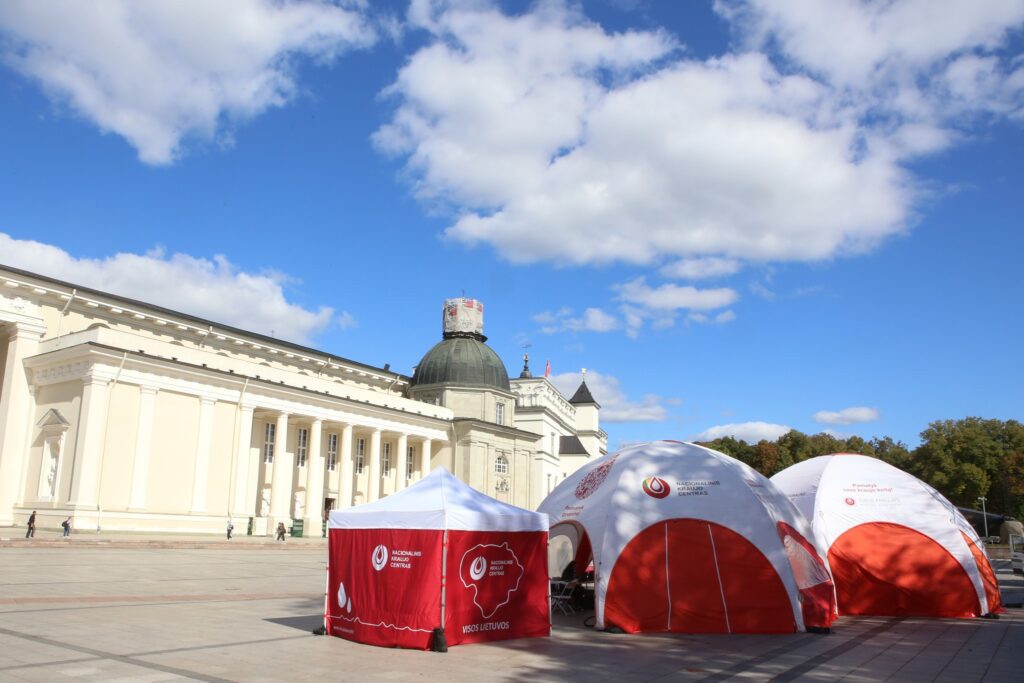
Three units photographed on the ground they were actually used on: a paved square with a row of stalls, a public square with an ambulance and a queue, and a grass field. Read them for the things that transfer to a stall pitch anyway — how a print reads across an open space, how a plain roof keeps the interior bright, and what the surface underneath decides about fixing.
A Row of Matched Stalls
Photographed on a paved square rather than styled for a brochure. A row of printed stalls at the same height and the same front edge reads as one market — which is why the square footprint is the default when several vendors share one pitch and want the line to look level.
- Paved ground
- Matched print
- Row of stalls
One Printed Stall on Paving
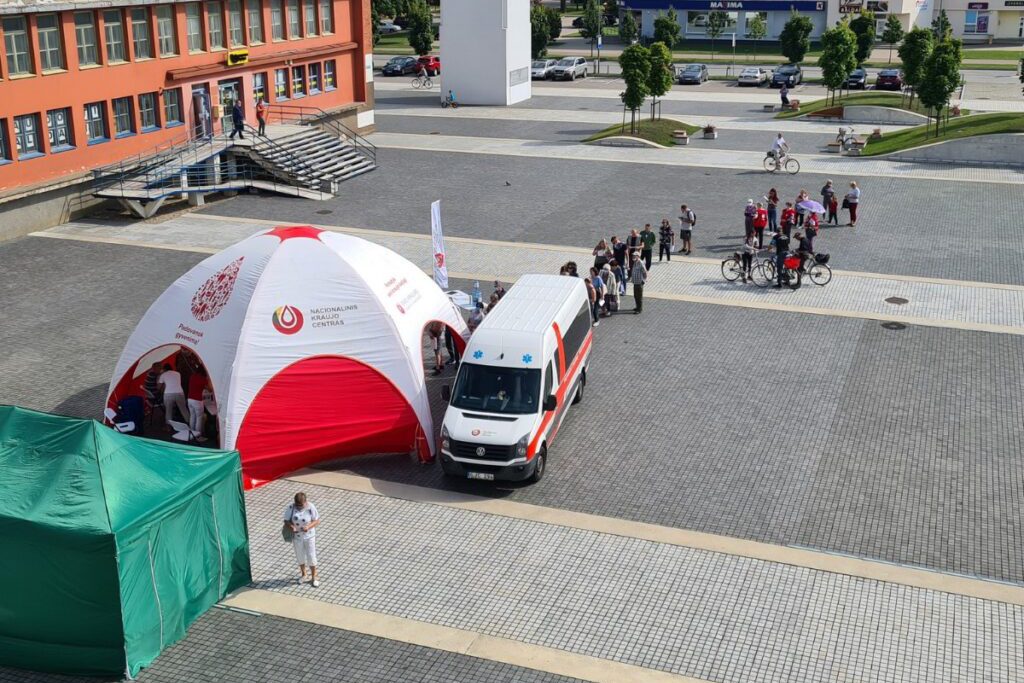
Weighted legs, nothing drilled: the standard fix for a paved pitch where stakes are not allowed. The message sits at eye level on the valance and the roof stays plain, so the person serving works in the light while the name reads from across the square.
- Weighted legs
- Paved ground
- Printed valance
A Stall on Grass
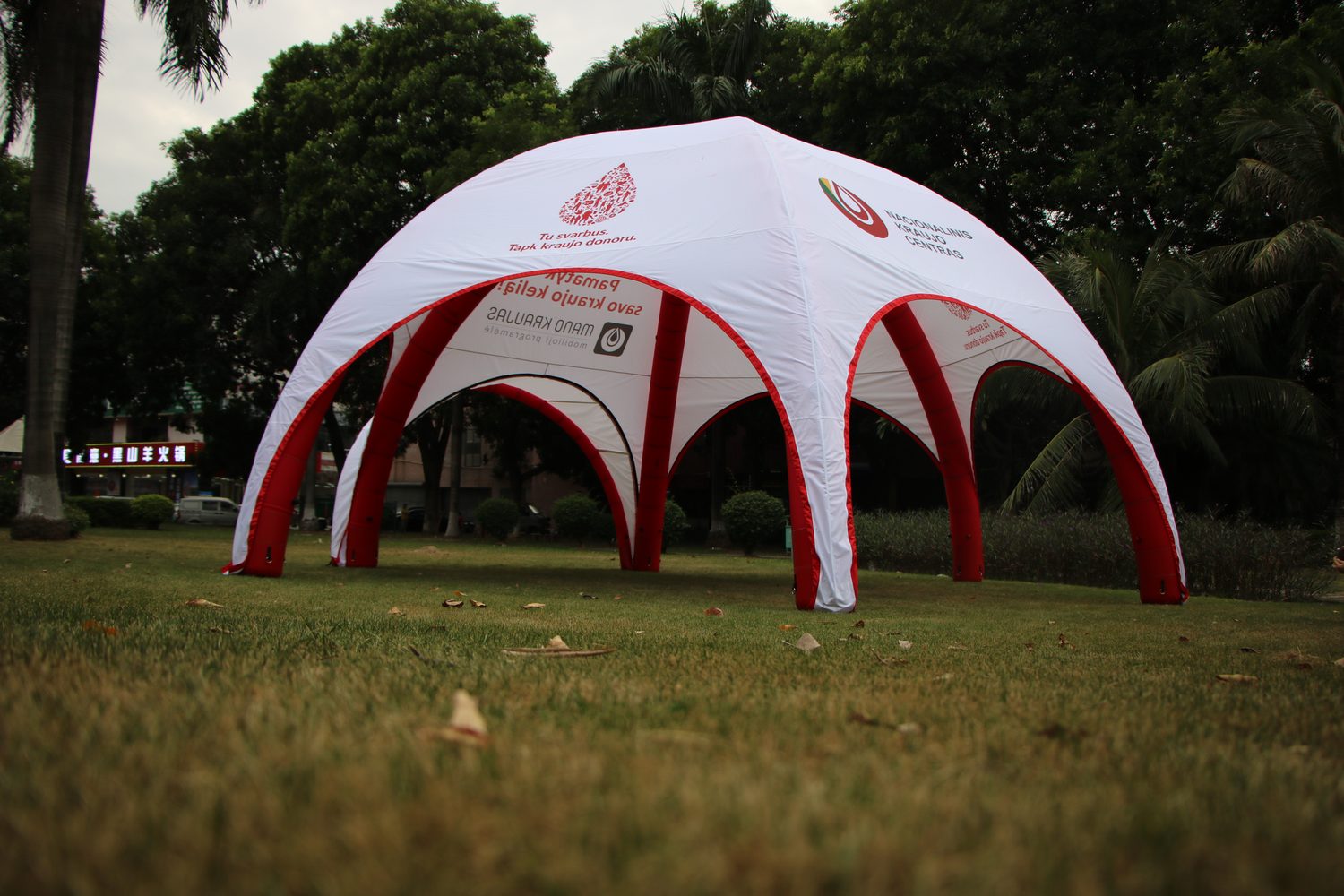
Staked into mown grass instead of weighted. The same 3x3M structure that holds a paved square drops onto a field for a weekend market, with the only change being the fixing kit in the bag.
- Staked grass
- Open front
- Weekend market
Domande Frequenti
Canopies We Have Delivered
Three deployments, three different site problems. A stall standing through a cold snap where the weather turned, a row of matched stalls reading as one operator, and a single canopy on open ground where there is no shop to use at all. Read them in that order: weather, repeat, reach — which is the order most operators work through when they specify more than one.
A Stall That Stands Through a Cold Snap
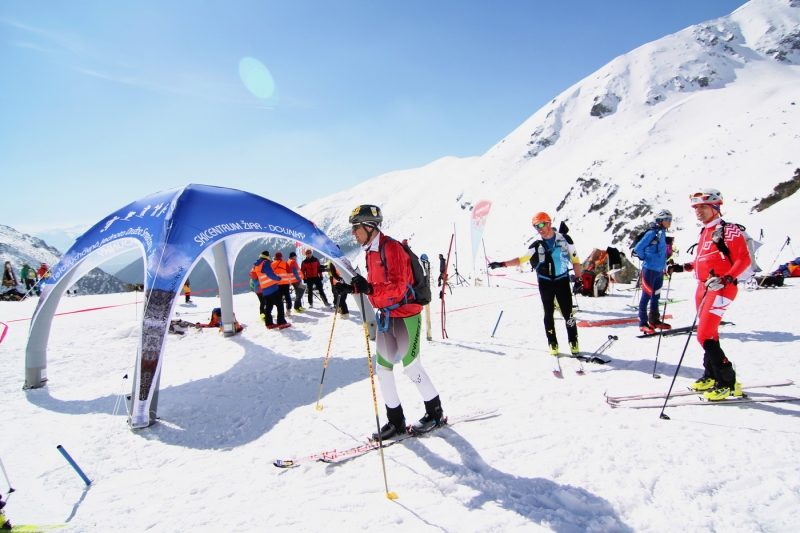
Snow, a mountain slope and a crowd that arrived on skis. Cold ground is still ground: the legs are staked or ballasted the same way, and what changes is who reads the forecast and when the call to deflate gets made.
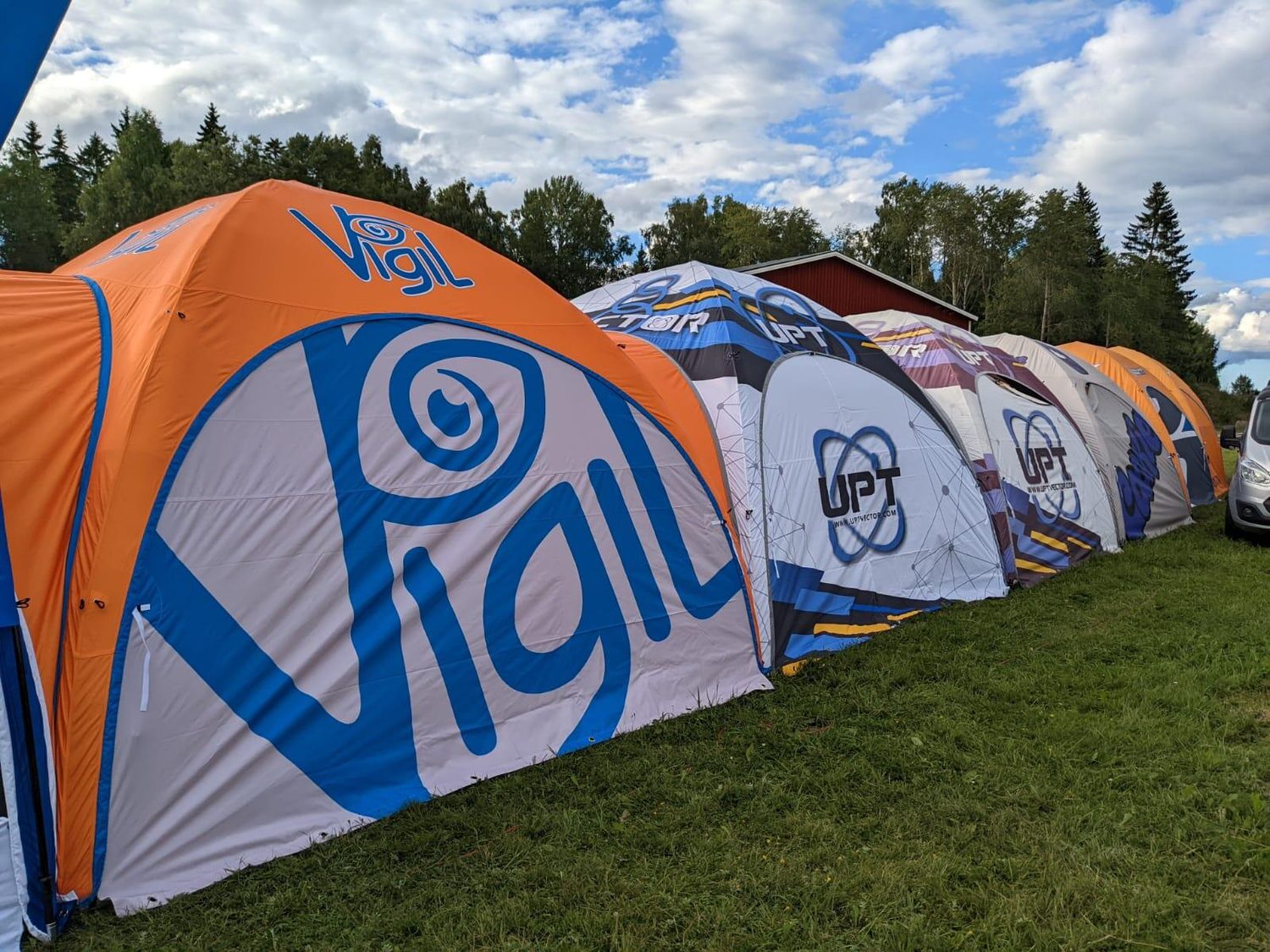
One Print Across a Row of Stalls
Several units in a line, same print, same height. For a market or an event brand running more than one stall, matched units are what make five pitches look like one operator rather than five separate bookings.
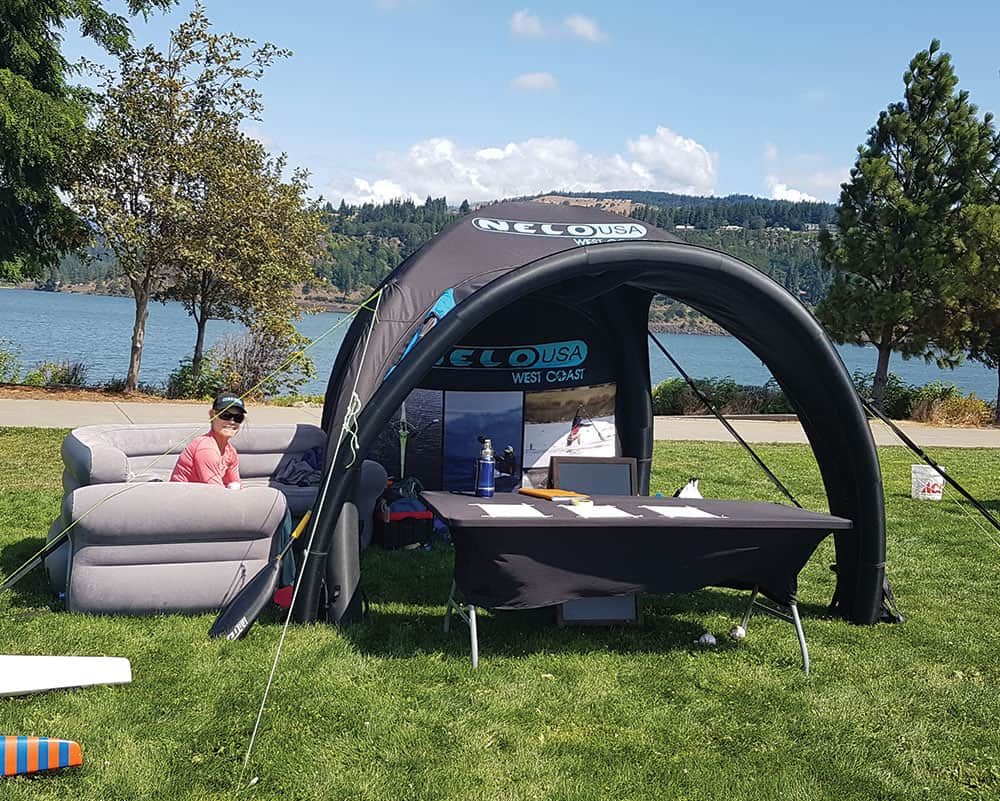
Where There Is No Building to Use
A single unit on open ground away from any structure. Sampling days, launch events and pop-up retail all start from the same problem: there is no shop, so the stall has to arrive with the stock and the staff.


