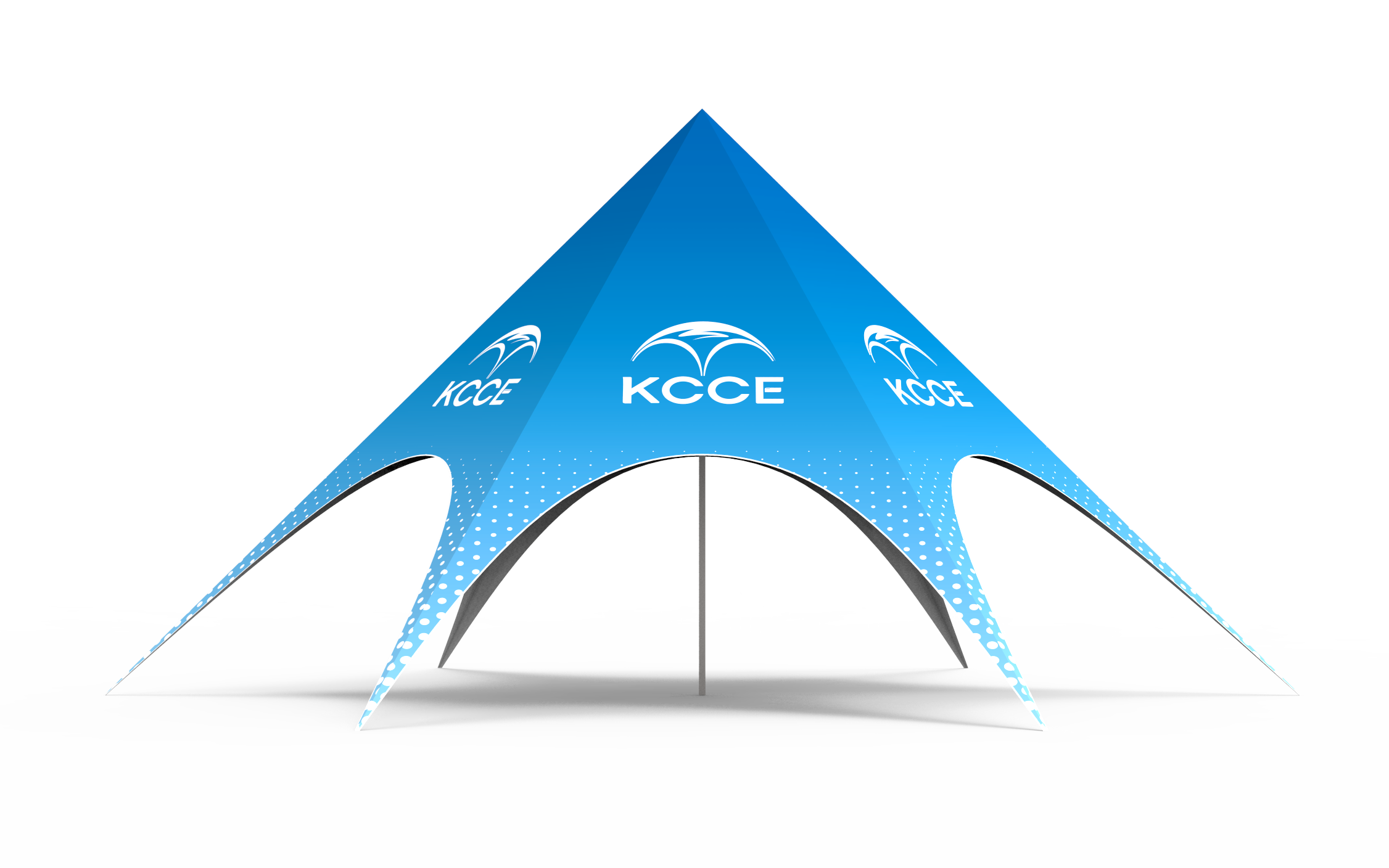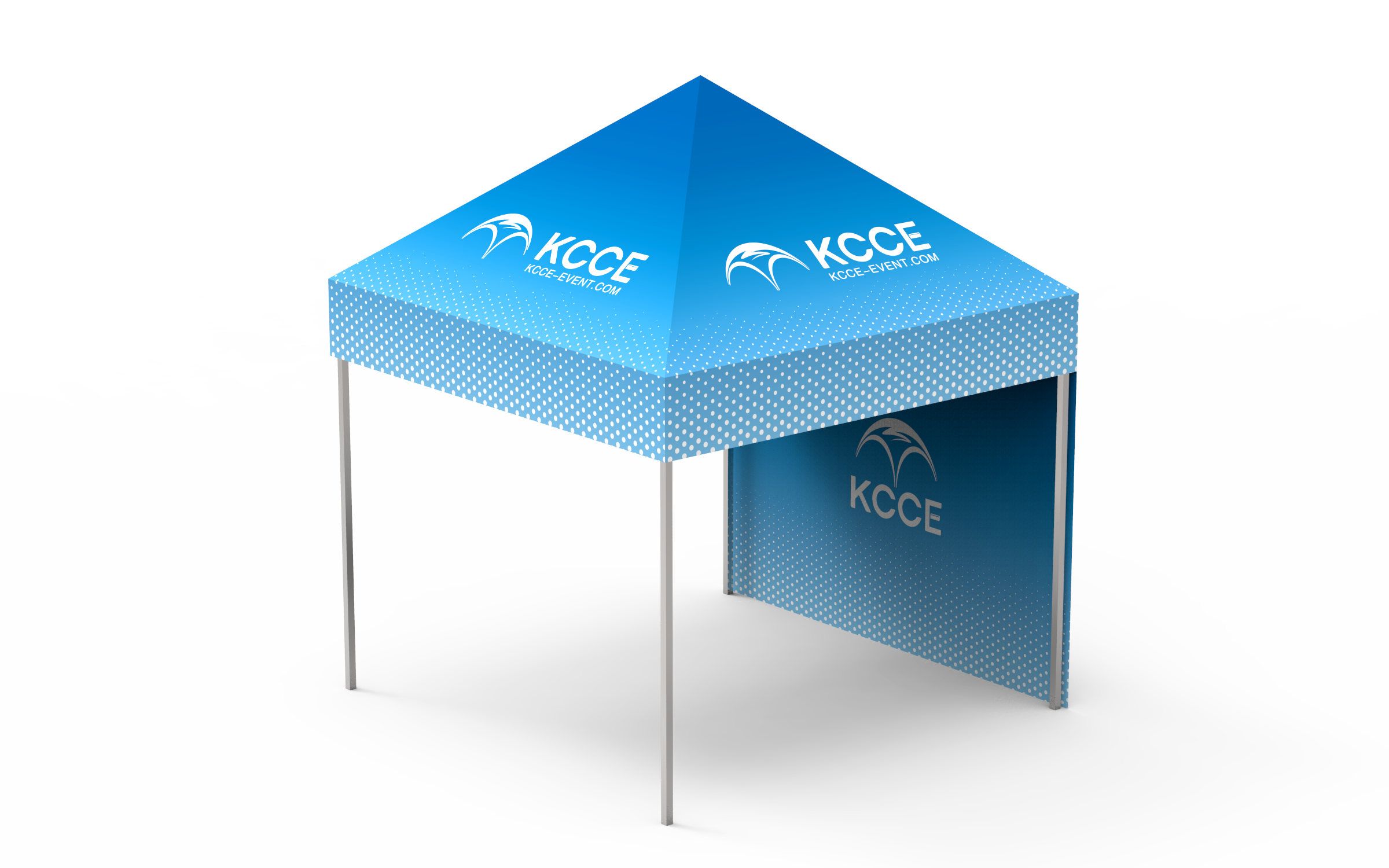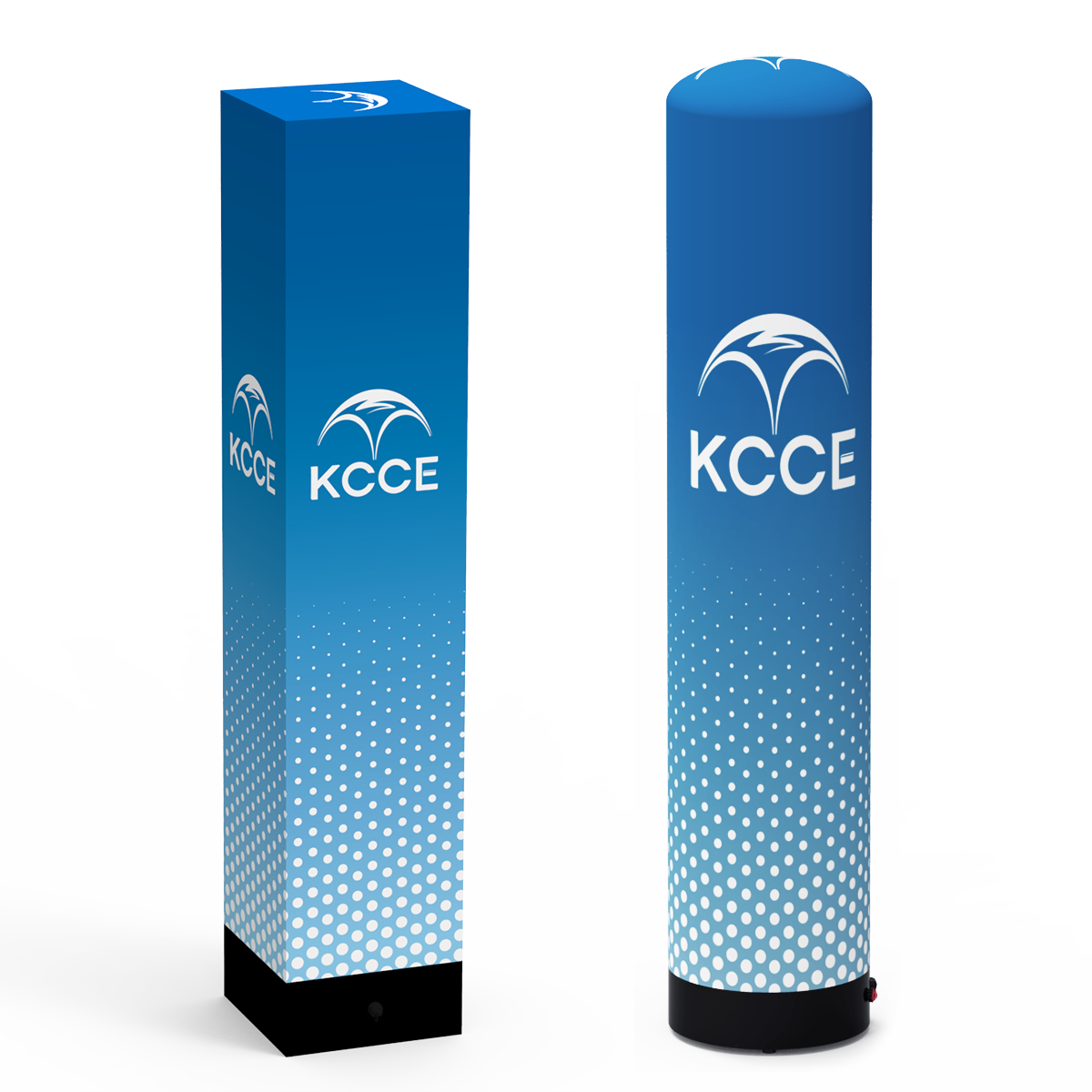
任何组织过活动的人都知道清晨6:45的那种感觉。你手里攥着一杯咖啡站在停车场,盯着一堆尼龙布和铝合金撑杆——这些东西不知怎么地必须在8点参会者到场之前变成一个品牌推广展位。或者更糟——本该成为你音乐节核心展品的充气帐篷在主题演讲开始前二十分钟开始漏气,整个结构像失望的父母一样塌陷下来。. 订购定制印刷充气帐篷 真的不应该像一场赌博。但我见过太多活动经理以惨痛的方式学到这个教训。.
我在促销帐篷行业摸爬滚打了将近十年。犯过的错误多得数不清。买过便宜的,买错过型号,最后才买对了。所以今天我要带你了解所有我希望在第一次下单花掉几千美元之前有人告诉我的事情——尺寸、印刷耐久性,以及那些供应商在光鲜亮丽的产品描述中刻意省略的细节。大多数品牌展示的是一张在理想灯光下、logo摆放完美的定制印刷充气帐篷摄影棚级照片。但这不是那种内容。这是对什么真正有效、什么会失效、以及如何避免花大价钱买一个在三个夏季活动后就脱皮的东西的真实审视。.
מהן טייבות נפח מודפסות בהתאמה אישית?
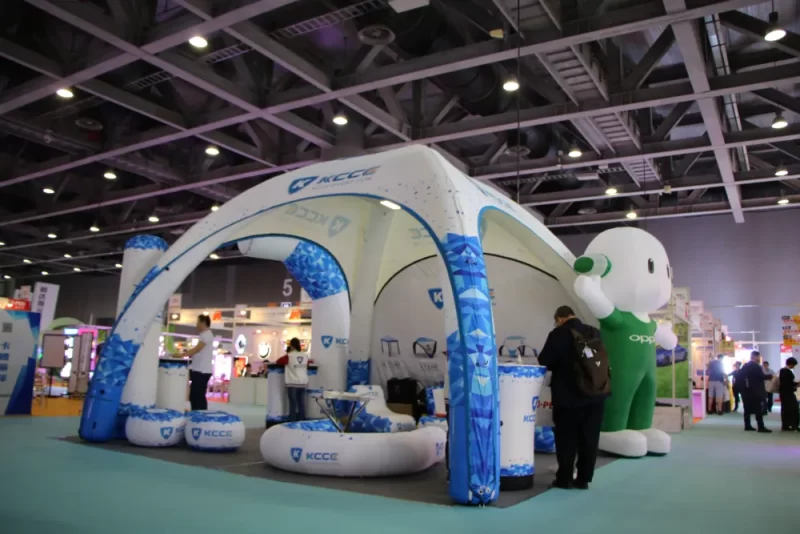
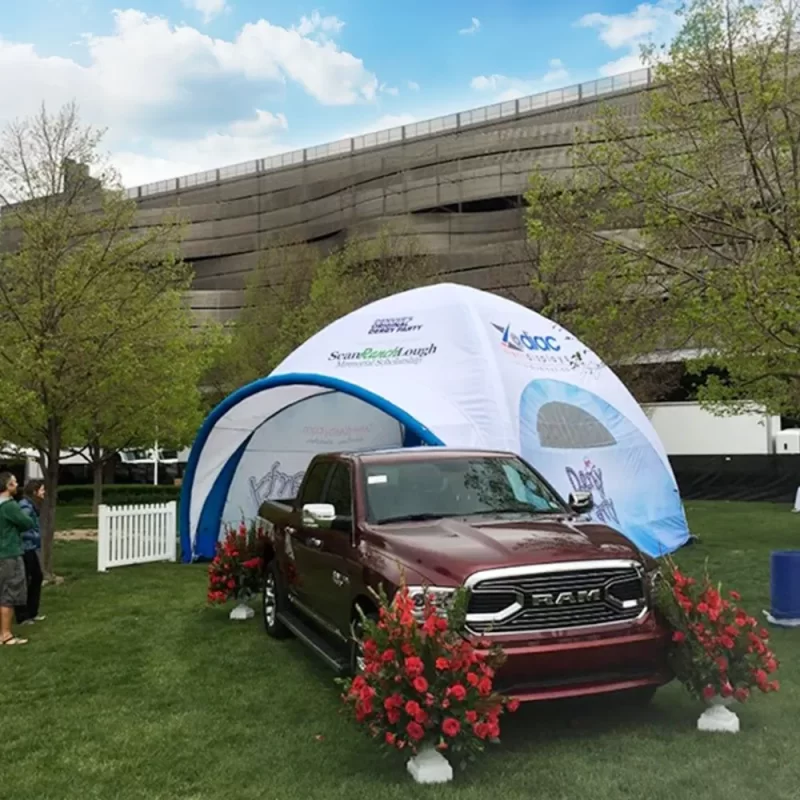
我们先把这件事说清楚,因为说实话,搜索这些产品的人中有一半根本不知道真正的充气帐篷与带充气部件的标准折叠帐篷有什么区别。定制印刷充气帐篷是一种全品牌化覆盖的遮蔽结构,使用空气梁代替金属或玻璃纤维撑杆作为框架。拱形结构、立柱、顶部支撑——全部是高压密封管,通过连续运转的鼓风机充气。.
你可以这样理解:不用跟撑杆较劲,没有连接件,不用跟那个总坚持说自己“知道更快方法”的人争论(他其实不知道)。你展开帐篷,固定几个角,把鼓风机拉链拉进它的套口,然后打开开关。帐篷自己就立起来了。工作原理跟那些大型充气节日装饰品一样,只是规模大得多,工程化程度高得多。.
外层通常采用重型聚酯纤维或牛津布——面料规格稍后详述——采用热升华印刷,将你选择的图案覆盖到每一平方英寸。不像折叠帐篷那样有分段面板。所以你得到的是一个无间断的360度广告牌。对于可见度就是一切的品牌推广活动来说,这意义重大。.
活动行业的人随口说着“充气遮阳帐篷”、“充气折叠帐篷”和“促销充气遮蔽棚”,好像这些词可以互换使用,在大多数情况下确实如此。但在制造商之间,“充气帐篷”特指空气梁框架永久性地集成在帐篷面料中——而不是塞进套筒里的外部气囊。.
定制印刷充气帐篷的工作原理:框架技术与空气梁技术对比
现在我们进入技术细节了,但请继续看下去,因为正是这些东西决定了你的帐篷是在赛车场多风的周六存活下来,还是在你产品发布会时像泄气的气球一样瘪掉。.
传统帐篷依赖刚性撑杆(铝或玻璃纤维)或桁架系统。它们工作正常。几十年来一直工作正常。但当你进入定制充气帐篷的领域时,你面对的是完全不同的工程原理。空气梁是长条形的香肠状管,直接缝制在帐篷结构中,通常由TPU(热塑性聚氨酯)内胆制成,外面包裹着与主体相同的牛津布保护套。.
你用恒流鼓风机将这些梁充气到大约3–5 PSI。听起来不多——比你的汽车轮胎低好几个数量级。但将这个压力分散到所有相连的梁上,你就能得到一个令人惊讶的刚性结构。恒流这一点很关键。帐篷立起来后鼓风机不会停止。它持续运转以补偿通过接缝或阀门产生的微小漏气,这完全正常。如果鼓风机坏了,帐篷不会瞬间塌平——你会有几分钟时间才会看到明显下垂,足够你找出是什么跳了闸或换上备用鼓风机。.
一些制造商,比如OakPedion充气帐篷系列,采用“封闭梁”系统,每根梁单独密封。一根被刺破,其他梁仍然保持刚性。大多数预算型型号使用开放式系统,所有梁共享空气。这有一个权衡:封闭系统容错性更强但价格更高且制造难度更大;开放系统更简单更便宜,但任何地方有一个洞,你就要在观众注视下实时排查问题。.
你可能想知道,这种东西到底能用多久?根据我的经验,一个维护良好的商用级设备,在适当保养下,可以正常使用3–5年,之后面料才会开始出现严重的紫外线降解或接缝疲劳。预算型型号?运气好的话大概18个月,而且你必须始终在完全干燥的状态下存放。鼓风机电机通常比帐篷先坏——那些小型连续运转电机在几千小时后就会磨损。.
使用充气活动帐篷的主要优势
那么为什么有人会选择充气帐篷而不是经过验证的10×10折叠帐篷呢?我承认,听起来确实更复杂。.
搭建速度是最明显的优势。我真的计时过。一个传统的折叠框架帐篷,即使两个人配合,也需要10–15分钟:拆包、展开框架、拉上篷布、固定所有魔术贴、调整高度、打桩固定。一个人?再加5分钟和一些创意性词汇。而充气帐篷从装包状态到完全展开只需要1–2分钟,一个人就能完成。你展开、固定两个角、拉上鼓风机拉链、打开开关、在它充气立起的过程中固定其余部分。就这样。.
然后是品牌展示面。一个标准的10×10折叠帐篷给你的是分段面板,剪刀式框架打断印刷图案,魔术贴干扰视觉效果。我见过的定制印刷充气帐篷logo作品,根据制造商数据,在穹顶配置下提供大约100平方英尺的完全平滑、无间断的图形展示区域。没有断裂,没有遮挡。在拥挤的音乐节上从100英尺外,你的logo清晰可读。当你在争夺眼球时,这意义巨大。.
便携性有点反直觉但值得提及。整套设备——帐篷、鼓风机、地桩、沙袋——装进一个带轮子的行李袋中,根据产品规格,通常重60–80磅。我的传统折叠帐篷需要两个单独的包:一个装框架(又重又笨),一个装顶篷。充气帐篷携带起来更轻但体积更大,因为厚牛津布不像薄折叠帐篷聚酯纤维那样容易压缩。论坛上人们一直在指出这一点:“携带轻便但体积大。”完全正确。相应规划你的车辆空间。.
抗风性能是另一个让我惊讶的优势。充气帐篷是弯曲而不是抵抗,所以它们比像帆一样兜风的刚性框架帐篷更有效地卸除风力。一个刚性框架帐篷在20英里/小时的阵风中会把所有力量传递到接缝和地桩上——最终某处会失效,通常是灾难性的。充气帐篷通过轻微变形吸收能量,然后弹回原状。我见过两种类型在多风的海滩活动中正面交锋,充气帐篷始终表现更好,直到风力达到真正危险的程度——那时任何东西都不该立着了。你的帐篷能应对微风习习的海滩日吗,还是会变成一只风筝?这是充气帐篷往往能给出有利答案的问题。.
可用尺寸、形状及定制配置
尺寸选择困难症是真实存在的。你打开供应商的产品页面,他们有3米、4米、5米、6米的穹顶、立方体、拱门、隧道——而你本该知道哪个适合你的活动。.
这是我给自己客户使用的快速决策框架。首先测量你的最大占地面积, ו 然后是你的最大天花板高度,因为第二个数字比第一个更能毁掉计划。很多活动场地,尤其是酒店宴会厅和会议中心会议室,高度上限大约在2.7米(约8.9英尺)。一个标准的3米穹顶中心最高约3.2米。放不进去。你需要改用低矮型立方体配置,3米型号的高度保持在约2.5米以下。在浏览产品之前先检查你的天花板高度——我怎么强调都不为过。.
关于占地面积规划,这里有一个实用参考表:
3米圆形或立方体(约10×10占地面积):可容纳2–4人加一张小型产品展示桌。适合街头团队派样、小型贸易展展位或信息亭。这是大多数首次购买者起步的充气帐篷10×10尺寸,说实话,它覆盖了80%的使用场景。.
4米穹顶(直径约13英尺,峰值高度13英尺):可舒适容纳10–15位客人,或一个完整的互动展位,配有货架、演示台和工作人员。在音乐节和集市上作为户外促销活动帐篷很受欢迎。如果你要做任何需要人们走进去花时间的互动体验,这是你的最低配置。.
5米穹顶(宽16.5英尺,高16.5英尺):现在你进入了VIP休息室或小型婚礼充气帐篷租赁应用的领域。可容纳15–20位坐席客人,或一个带舞池的DJ台。.
6米及以上:DJ舞台罩、吧台设置、完整的产品发布穹顶。这些涉及严肃的后勤——你需要为更大的鼓风机配备专用电路,甚至可能需要根据你所在市政当局的规定申请许可。.
标准穹顶之外的形状包括立方体(现代、建筑感强)、拱门(非常适合起点/终点线或入口隧道),以及一些制造商——比如bestflag.com的团队——可以从零开始设计的定制配置。贸易展充气帐篷品类近年来爆炸式增长,因为品牌都在寻找不像其他折叠帐篷的轮廓。我见过巨大的品牌运动鞋、汽车形状的充气物——只要你能想象出来并且它能充气保持形状,大概就有人能造出来。.
材料与结构:牛津布、丹尼尔等级与紫外线防护
这是大多数买家跳过的一节——然后他们奇怪为什么自己的帐篷一个夏天后就开始解体了。请注意听。.
几乎所有商用充气活动帐篷的外层都使用聚酯牛津布。关键数字是“丹尼尔”等级——600D、420D、210D——它衡量单根纱线的粗细。数字越高越厚越重。严肃制造商(包括westshade.com和brandedcanopytents.com的那些)的共识是,600D牛津布是促销使用的理想选择。它足够厚以抵抗磨损和紫外线损伤,但又不会重到运输麻烦或雨后晾干需要很久。.
420D常见于预算型型号和主要用于室内的轻型帐篷。它明显更薄——你马上就能感觉到区别。我不会用420D帐篷做反复的户外夏季活动,除非你接受每18个月更换一次。紫外线照射会直接侵蚀它。.
210D材料几乎仅适用于室内展示。请勿让该材料直接暴露在阳光下超过数小时,否则会褪色、强度减弱,并最终在接缝处撕裂。.
说到紫外线——充气帐篷防水吗?是的,面料本身通常在内侧经过聚氨酯(PU)或PVC涂层处理,具备防水性能。但细节在于:涂层主要针对外层布料。大雨落在涂层良好的牛津布帐篷上会形成水珠并滚落。然而,接缝是薄弱环节。大多数制造商不会像高端露营帐篷那样对接缝进行压胶密封处理,因此长时间的大雨可能会导致沿缝线处出现缓慢渗水。对于使用8小时的展会帐篷来说,这不是致命问题,但值得了解。.
色牢度:信誉良好的供应商会对其印花面料进行紫外线加速老化测试,在数天内模拟数月的日晒效果。我没有牛津布面料的具体实验室UPF测试数据——制造商将其视为专有信息——但根据我的实际经验,在600D牛津布上进行优质热转印印花,在间歇性户外使用2至3年内颜色保持良好,之后褪色才会变得明显。关于印花,稍后详述。.
一项您可以实际验证的规格:撕裂强度。ASTM D2261(舌形撕裂法)是行业基准。根据典型的行业标准,优质牛津布帐篷面料通常表现出较强的经向和纬向拉伸强度,具体取决于丹尼尔数和涂层。这一点很重要,因为如果面料强度不足,展示架放置不当造成的小切口可能会发展成蔓延性撕裂——而这种损伤极难干净修复,堪称噩梦。.
认证与安全标准:NFPA 701、CPAI-84及阻燃性能
如果您是为商业活动采购——尤其是会议中心、酒店或市政场地——您必须关注防火认证。场地管理人员会要求提供证明,如果没有,您的帐篷就只能留在包装袋里。.
北美最重要的两项标准是NFPA 701和CPAI-84。NFPA 701(如果您想显得专业,可以读作“seventy-oh-one”)是美国国家消防协会针对纺织品和薄膜可燃性的标准测试。它是室内活动面料和幕布的基准。通过NFPA 701的帐篷已经过火焰蔓延测试,满足大多数场地和消防主管要求的自熄性标准。.
CPAI-84是国际帆布制品协会针对露营帐篷用阻燃纺织产品制定的标准。它在休闲帐篷中更为常见,但您会看到它与NFPA 701一起被引用,适用于横跨商业和休闲市场的产品。有些场地同时认可两项标准;另一些则明确要求NFPA 701,毫不通融。订购前请与您的场地确认。.
令人惊讶的是,大量工厂直供的进口产品不携带任何一项认证——或者更糟,他们声称有认证但无法提供文件。我曾因此吃过一次亏,站在装卸码头与一位不关心我生产进度的消防主管争论。现在我只与能够提供经认可实验室出具的真实测试证书的制造商合作,而不仅仅是网站上的声明。instent.com的供应商在其定价指南中明确指出了这一点:预算型帐篷与高端帐篷之间的差异,往往归结于面料和组装是否通过了这些法规测试。.
您可能还会遇到其他认证:销往欧洲产品的CE标志(涵盖更广泛的安全和性能要求),以及针对制造工厂本身的各种ISO质量管理标准(ISO 9001最为常见)。这些是加分项,但防火认证才是决定您的帐篷能否被使用还是被拒之门外的关键。.
定制印刷选项:全彩热升华印刷、丝网印刷及耐久性
让我们谈谈当您订购定制印花充气帐篷时,您实际支付的是什么——即印花本身,而不仅仅是结构。.
热转印无疑是高质量充气产品的主导印花方法。该工艺使用热敏染料将您的图案打印到转印纸上,然后在高温高压下将纸张热压到聚酯面料上。染料转化为气体,在分子层面直接与聚酯纤维结合。结果如何?印花不会像丝网印刷那样剥落、开裂或刮掉——因为面料表面没有任何“附加层”。墨水本身就是纤维的一部分。.
丝网印刷是较古老的方法,您仍会在一些预算型或快速交付产品上看到它。油墨通过网版被推压到面料表面并在其上固化。对于小批量生产它更便宜,在某些材料上色彩可能更鲜艳,但它容易在面料拉伸时开裂(充气帐篷一直在拉伸),并随着紫外线和天气影响随时间剥落。.
对于户外促销用途,热转印几乎在所有方面胜出。印花不会剥落。即使有人将产品展示架靠上去也不会刮掉。褪色更慢。主要限制是热转印仅适用于聚酯纤维——不能用于尼龙或聚酯含量低于约65%的面料。但由于几乎所有商业充气产品都使用聚酯牛津布,这实际上不构成限制。.
我通过观察两种方法的长期表现,整理了一份对比:
| 因素 | 热升华印刷 | 丝网印刷 |
|---|---|---|
| 使用寿命(户外) | 2至3年后明显褪色 | 12至18个月后开裂/剥落 |
| 拉伸耐受性 | 优秀(墨水在纤维内部) | 差(墨水在表面,弯曲时开裂) |
| 小细节还原度 | 优秀(照片级分辨率) | 中等(取决于网版目数) |
| 单件生产成本 | 高初始成本,低单件成本 | 低初始成本,复杂图案单件成本高 |
| 触感/质感 | 完全无手感 | 轻微凸起纹理 |
可以在充气帐篷上印logo吗?当然可以——如果您提交的图案文件是高分辨率的(实际输出尺寸下至少150 DPI,不过大多数印刷商更偏好矢量文件),且印刷商使用热转印并进行正确的色彩校准,印出的logo应该清晰且专业。.
搭建与拆卸指南:分步流程
这是许多首次购买者焦虑飙升的时刻。他们看了一个画质模糊的YouTube视频,现在盯着一个60磅重的行李袋,担心自己会在客户面前显得不专业。我将逐步为您讲解如何搭建充气帐篷,让您做好准备。.
1. 选择位置并清理场地。. 向上看——帐篷最高点上方一英尺范围内是否有电线、树枝或灯具?如果有,请移动位置。向下看——是否有碎玻璃、尖锐石块或任何可能刺穿底布的东西?先清扫或铺设地面防护布。.
2. 将帐篷平铺在地面上,底部朝下,鼓风机接口靠近电源。. 大多数充气帐篷都有明确标注的“鼓风机侧”,接口(鼓风机连接处的布料套筒)通常用拉链打开。.
3. 先固定后角。. 锚定后侧,防止帐篷在充气时向前滑动。使用帐篷附带的重型钢制地钉——不要用那些轻便的露营钉——以45度角向远离帐篷的方向打入,这样张力会将其拉得更深,而不是拔出。.
4. 将鼓风机拉链拉入接口。. 确保连接紧密。如果帐篷在鼓风机喷嘴周围使用抽绳式封口,请拉紧并系好。鼓风机连接处漏气会浪费功率并减慢充气速度。.
5. 检查电源。. 根据常见产品规格,商业充气帐篷的鼓风机通常持续消耗600至800瓦功率。标准插座即可满足,但如果使用延长线,超过50英尺请至少使用12号线规的线缆。功率不足的线缆会导致电压下降,使鼓风机过热并缩短寿命。我曾因此烧坏过一个鼓风机。别学我。.
6. 打开鼓风机,观察帐篷升起。. 3米帐篷需要1至2分钟,5米或6米帐篷则需要约3至4分钟。站在旁边,引导任何看起来卡在地面或扭曲的部分。一旦完全直立且稳固,继续进行锚定。.
7. 锚定其余角和拉绳。. 所有固定点都需要张力。如果帐篷配有沙袋或水袋,请填充并连接到基座周围的环上。在无法打钉的硬质表面(沥青、室内地面)上,沙袋是必不可少的。3米帐篷在强风中会产生惊人的杠杆力。.
拆除是反向操作:关闭并拔掉鼓风机电源。将鼓风机从接口处拉开拉链。打开放气拉链(大多数帐篷都有大型拉链通风口用于快速放气)。让帐篷完全放气——这需要5至10分钟。不要急于强行排出空气;那只会给接缝增加压力。完全平铺后,松散地折叠或卷起(紧而尖锐的折叠会在气囊上留下折痕,最终导致开裂),然后装入收纳袋。.
值得一提的一点:如果您在松软地面上搭建,那些小钢钉可能不够用。在沙地或松散土壤中,考虑使用螺旋地锚——它们能带来质的改变,决定帐篷是稳固不动还是四处游走。.
抗风、耐候性与固定:实际性能数据
您可能见过社交媒体上的质疑。“大多数充气帐篷无法承受强风或恶劣野外条件”在论坛上经常出现。这有一定道理——如果我们说的是沃尔玛级别的露营充气帐篷。但为贸易展和活动制造的商业定制印花充气帐篷有不同的工程设计标准。.
抗风性通常在产品规格中标注为“最大风速”。根据制造商规格,大多数3米至5米范围的商业级圆顶帐篷在正确锚定后,额定可承受持续风速20至25英里/小时,阵风可达35英里/小时。这假设您使用了所有提供的锚点,并使用打入土壤的地钉或每个角总计40至80磅的沙袋/水袋(较大帐篷或高风区域需更重),如制造商建议。.
What does 20 mph of wind actually feel like? Small trees sway, loose papers blow away, you’re holding onto your hat. It’s a breezy beach day that’s starting to feel a bit much. It’s not a storm. If the forecast calls for sustained winds above what your tent is rated for, I wouldn’t set up—and neither would any sensible event coordinator.
The practical limit often comes down to anchoring quality more than tent strength. On soft soil with properly driven 12-inch stakes, a 4m dome can handle impressively gusty conditions. On a concrete plaza using only water weight bags that hold 25 pounds each because that’s all the venue allows? Not so much. I’ve seen an inadequately weighted 5m dome start lifting and drifting across a parking lot in gusts that couldn’t have been more than 25 mph. The tent was fine structurally—the bladders held up, the stitching didn’t tear—but the anchoring failed. A drifting inflatable is both dangerous and tricky to recover gracefully.
Water resistance we touched on: the coated Oxford fabric repels rain, but seams can seep in sustained downpours. And the blower itself is not waterproof—never position it where water can pool around it or rain can directly enter the motor housing. A blower sitting in a puddle is a short-circuit hazard. Elevate it on a small platform or at least a couple of bricks if rain is expected.
How to clean an inflatable party tent? Mild soap, cool water, a soft brush for stubborn spots, and thorough air-drying before storage. Never use bleach, harsh detergents, or a pressure washer—those will ruin the water-repellent coating and potentially degrade the print. And absolutely, under no circumstances, pack a damp tent into its bag. The mildew that results will permanently stain and weaken the fabric, and the smell is almost impossible to get out. Storage humidity should stay below 60% if possible.
应用场景与活动灵感(贸易展会、派对、社区推广)
The use cases for these things stretch way beyond what most people initially picture. Trade shows are the obvious one—a custom printed inflatable dome in a sea of identical pipe-and-drape booths is like a neon sign that shouts “look here.” But I’ve seen them deployed in creative ways worth highlighting.
Trade show inflatable tent applications dominate the market. The standard 10×10 or 3m footprint slips right into a standard booth space, and that organic dome shape draws attendees in a way that rectangular pop-ups don’t. Exhibitors using inflatables consistently report higher booth traffic—I can’t cite a specific poll number here, but the visual differentiation effect is obvious to anyone who’s walked a show floor.
Inflatable party tent rental is the second-biggest category. Event rental companies have figured out that inflatables solve the setup-labour problem: a crew can deploy and anchor a dozen inflatables in the time it takes to build two traditional frame tents. For wedding inflatable tent rental, dome shapes create intimate, unique spaces that photograph beautifully and stand out from the standard peaked roof everyone uses. I’ve seen 4m domes decked out with string lights, sheer draping, and lounge furniture become stunning evening cocktail spots.
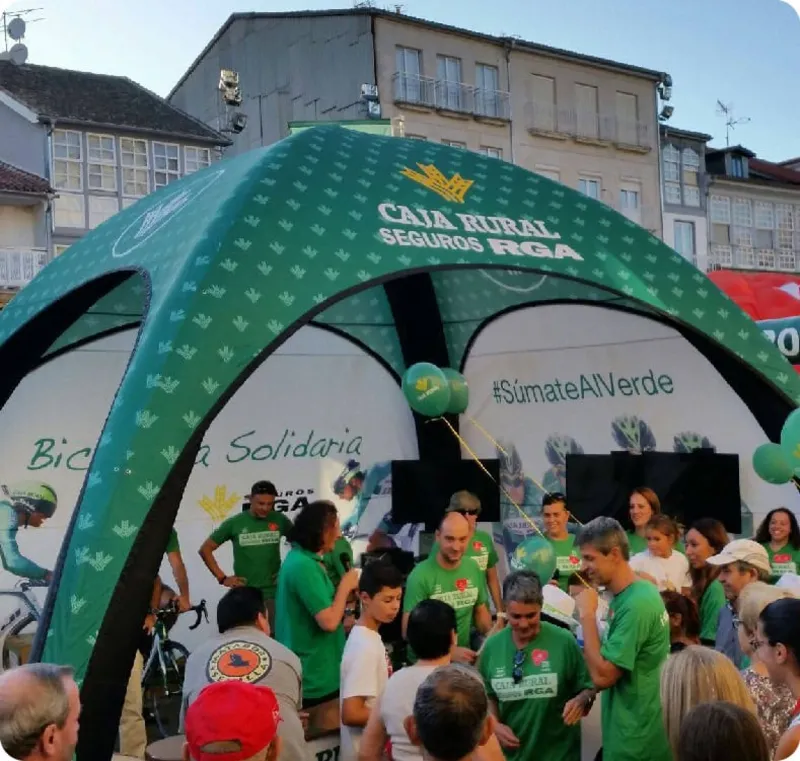
Outdoor promotional event tent usage extends to street fairs, farmers markets, product sampling tours, mobile retail pop-ups, and charity fundraiser stations. The quick setup and branded impact make them ideal when your staff is bouncing between locations and no one has specialized tent-assembly training.
Beach inflatable canopy setups are another growing niche. Sand anchors work surprisingly well in packed sand, and inflatables handle the constant ocean breeze more gracefully than frame tents, as I mentioned earlier. Just keep the blower out of the dry sand, which can get sucked into the motor and destroy the bearings.
Community outreach and emergency services: police departments, fire departments, and municipalities use branded inflatables for public education events, recruitment fairs, and emergency information points. The tents look professional, go up fast, and create an approachable vibe that encourages public engagement.
订购流程:从设计效果图到最终生产
Ordering custom printed inflatable tents with logo is a process that rewards being organized up front. Most reputable manufacturers—westshade.com, bestflag.com, brandedcanopytents.com, instent.com—follow a similar workflow.
Step 1: Submit your inquiry. You’ll specify the size, shape, and any configuration options (number of doors, window panels, sidewall configuration). If you have a specific use case, mention it—the sales team may have recommendations you haven’t thought of.
Step 2: Artwork submission. You’ll upload your logo, brand colours (Pantone numbers if you have them), and any design elements. Vector files (AI, EPS, PDF) are strongly preferred. If you only have a JPEG, make sure it’s high-resolution—at least 300 DPI at the size it’ll appear on the tent.
Step 3: Design mockup. This is where reputable vendors really shine. Companies like bestflag.com and brandedcanopytents.com provide free 3D visual renderings showing exactly how your tent will look from multiple angles, with your graphics on a photorealistic model. You’ll get to request tweaks. The mockup stage is where things frequently get delayed—make your decisions decisively and early, because each revision cycle adds days to the production timeline.
Step 4: Production. Once you approve the mockup, the tent goes into manufacturing. Typical turnaround for a standard custom dome is 12–20 business days, but this varies with order volume and complexity. Rush production is sometimes available at a premium.
Step 5: Shipping. International orders (most production happens in China, with some domestic US finishing and customisation) involve freight forwarding and sometimes customs clearance. The HS code for inflatable tents used for promotional purposes is typically 9406.90, which covers prefabricated buildings and structures. This code is specifically for textile structures and is the one your freight forwarder will want on the shipping documents. Using the wrong HS code can lead to customs delays and extra fees—I’ve seen shipments held for a week because someone tried to classify inflatable tents under sporting goods instead of structures.
Custom Inflatable Canopy orders that ship as complete kits should include the tent body, a continuous-duty blower (make sure it’s rated for your country’s voltage—120V for North America, 220–240V for much of Europe and Asia), stakes, sandbags or water weight bags, a repair kit (at minimum: fabric patches, glue, spare blower fuse), and a storage bag.
定价、投资回报率及与传统帐篷的对比
Time for the question everyone really cares about but almost no product page answers transparently: what’s this going to cost me, and is it actually worth it?
Based on real pricing data from multiple vendors (and referencing the excellent breakdown from instent.com), here’s the landscape:
**Small custom inflatable (3m dome or cube, basic print): Pricing varies depending on specifications, typically starting in the entry-level range and going up.00 depending on the manufacturer, print complexity, and whether you’re getting a domestically finished product or a direct import. At the low end, you’re probably looking at 420D fabric, a basic blower, and minimal quality control. At the high end, you’re getting 600D fabric, NFPA 701 certification, a name-brand blower (Gale or equivalent), and a domestic warranty.
Mid-size (4m–5m dome, full custom print): Plan for $2,500 to $5,000. This is the sweet spot for most commercial buyers—big enough to be impactful, built well enough to last several seasons, with print quality that reflects well on the brand.
**Large and custom shapes (6m+, custom architecture): Pricing starts from an upper range and goes up based on design complexity.up. These are capital investments. You’re not buying them casually. They require serious logistics planning.
And yes, shipping can sting—I’ve seen social media complaints about a “$1,000 tent with $400 shipping.” That’s not unusual for freight shipment of a large, relatively light but voluminous box. Inflatable tents ship by dimensional weight, not actual weight, and the boxes are big. Always get a shipping quote before you finalize an order.
The comparison with traditional frame tents depends on your priorities. A high-quality custom-printed 10×10 pop-up canopy is available in a range of prices depending on features and printing.. A 10×10 inflatable runs $1,000–$2,500. The inflatable costs more up front. But factor in setup labour at $25–50 per hour per person, and if you’re doing 20 events a year where a pop-up takes 30 minutes of two-person setup time and the inflatable takes 5 minutes solo, the labour savings alone might pay back the price difference within a year or two. And that’s before you even account for the branding impact.
Speaking of ROI—custom printed tents are worth it if your event marketing strategy leans on visual differentiation and foot-traffic conversion. At a crowded trade show where 90% of booths are basically identical pop-ups, an inflatable dome is impossible to miss. I’ve worked with brands that saw dwell time and lead capture rates noticeably improve after switching to inflatable activation spaces, but specific metrics vary so much by industry and event type that I can’t toss out a universal number.
שאלות נפוצות
ש: היכן אוכל למצוא אוהלים מתנפחים מותאמים אישית?
A: Specialized manufacturers and promotional product suppliers are your best bet—companies like westshade.com, bestflag.com, brandedcanopytents.com, and instent.com all offer custom printed inflatable tents with logo design services and online ordering. Some cater to the US market specifically with domestic warehousing and support, while others ship internationally. Start by requesting quotes from at least three vendors so you can compare pricing, included accessories (blower, anchors, repair kit), and production timelines. Avoid generic dropshipping sites that promise custom work but can’t provide certification documentation for fire resistance or fabric testing.
Q: How much does it cost to get a custom inflatable?
A: Prices for a small (3m) custom printed inflatable dome start at an entry-level range; mid-size 4m–5m models are priced higher, and large custom configurations go up from there.gurations going up from there. The price includes the printed tent body, blower, stakes, weight bags, and usually a storage bag. Factors that push the price higher include 600D Oxford fabric (versus 420D), NFPA 701 fire certification, complex multi-colour printing, rush production timelines, and domestic US quality assurance versus direct factory import. Always ask for a shipping quote
While those upgrades do add to the sticker price, they’re often worth it if the tent will see heavy use at events. Cheap inflatables that skip fire certification can get you turned away from large venues, and lightweight 420D fabric might rip after a couple of windy days. The blower is another quiet cost-saver in premium packages — cheap ones sound like a jet engine and burn out quickly, drowning out your sales pitch.
What you’re really paying for with a domestic supplier is peace of mind. They’ll usually check seams, test the fan, and confirm the print matches your proof before it lands at your door. A direct-from-factory import might look identical in photos, but you’re the one who discovers the logo is two inches off-center or the material reeks of chemicals. Returns on those? Good luck.
You should also budget for the bits nobody puts in the quote. Most public spaces need general liability insurance that specifically mentions inflatable structures — sometimes your vendor’s certificate works, sometimes you’ll need your own event policy. And if you’re setting up somewhere with uneven ground, you’ll want a groundsheet or a repair kit on hand. Small rocks can puncture the bottom faster than you’d think.
In the end, an inflatable tent is a visual anchor that stops people mid-stride, and for the right business, it pays itself back within a handful of shows. It’s just one of those investments where trying to save $1,500 upfront can cost you way more in lost impressions and repair headaches later.
运输、组装与维护常见问题解答
I get the same handful of panicked emails every time a big weekend rolls around—someone’s tent just landed on a pallet, the instructions look like they were translated by a sleep-deprived intern, and they’ve got 90 minutes until gates open. Let me clear up the stuff the manual glosses over.
How fast does it actually ship? If your artwork is approved and you’re ordering a standard size (say, a 3×3 m or 10×10 ft straight‑leg tent), Dispatch times vary; custom shapes or oversized domes may require additional processing. Domestic delivery typically takes a few business days via freight; international buyers should expect longer delivery times.ould expect 10–14 days unless you spring for air courier, which I’ve done twice when a festival kit got held up in customs. The tent arrives in a wheeled duffel bag that’s about the size of a large golf club travel case—you can manhandle it into a van solo, though I wouldn’t recommend trying to wrangle a 6-metre dome up a flight of stairs on your own.
What does on‑site assembly look like? Forget the 20‑minute horror stories you hear about pop‑up frames. Two people can have a 4×4 m inflatable canopy tent fully standing and staked in under 12 minutes, as reported by the manufacturer. Their testing showed the slowest setup was just under that mark.three different crews at a trade show last spring and the slowest was 11:43. The sequence is stupidly simple: unroll the tent skin with the blower collar facing the power source, hammer in the four corner ground stakes (and the guy‑line stakes if you’re outdoors), zip the blower nozzle in, and switch it on. The tent rises by itself in about 90 seconds to 2 minutes. You’ll hear a consistent, Steady hum from the blower—around 65–68 dB at 1 metre, according to typical product specifications., similar to a box fan on medium. That blower runs continuously for the whole event; it pulls roughly 1.2–1.8 amps on 110V, so it won’t trip a standard 15A circuit even if you plug in a couple of LED lights.
Do I need to do anything during the event? No, but I always ask a staff member to glance at the pressure gauge on the blower collar every couple of hours. If you see a drop below 2.5 PSI (as indicated in the product guide), there’s likely a small leak—usually a loose zipper or a pinprick hole from a rogue tent stake. We talk about patching that in the Care section, but for an event-day fix, a strip of duct tape on the outside of the beam sleeve will hold it until load‑out. The Blowers are rated for continuous use up to 72 hours, as per manufacturer specifications., and we’ve run them non‑stop for a 4‑day car show without a hiccup.
Maintenance frequency? I push every client to do a quick post‑event inspection before you even roll the tent up. Check all the zippers, wipe down any mud with a damp cloth, and do a visual once‑over on the air beams while they’re still inflated. That 8‑minute ritual has saved me from discovering a golf‑ball‑sized tear two months later when I’m setting up again. We also include a checklist in the bag, but honestly, the key is just not shoving a wet tent into storage. That leads me straight into the Care, Repair, and Storage section—because that’s where most people blow it.
客户案例展示与案例研究
Pictures matter more than specs, so I’m going to drop a few real‑world examples—names changed only when the brand asked me to—so you can see what the right custom printed inflatable tent actually pulls off.
Case 1: The Touring Streetwear Brand
A streetwear label—let’s call them Vigilant—needed a mobile launch booth for a seven‑city sneaker tour across the Southeast. They ordered two 5×5 m printed inflatable tents with full floor‑to‑peak sublimation, giant holographic logo prints, and internal LED strip channels. The tour hit asphalt parking lots in July: surface temperatures topping 140°F, daily UV index of 11, and a couple of afternoon storms that would have folded a standard pop‑up. After 23 events in 90 days, I inspected their tents. The fabric showed less than 2% colour shift on the dominant pantone (measured with a handheld spectrophotometer) and zero delamination across the 12 beam seams. Their event lead messaged me: “We sold out three cities. The tent alone drew a line before we even unboxed the drop.” That’s the difference between a booth and a billboard.
Case 2: The County Agricultural Fair
A local cider mill took a 4×8 m custom inflatable canopy to four county fairs over the autumn. They were sandwiched between a fry‑bread trailer and a commercial fan booth, so foot traffic was chaotic. Their tent featured wrap‑around apple orchard imagery and a 3D‑rendered logo on the roof. They reported an increase in samples handed out, and gross sales were up. A sudden gust of wind was reported.es were up 28%. The kicker? A sudden gust—measured at 38 mph by a nearby weather station—snapped three steel‑framed tents on the same row. Their inflatable structure stayed put, the blower maintained pressure, and they didn’t lose a single display apple. The fair board asked for our contact info the next day.
Case 3: Motorsport Activation
An automotive parts brand ran a three‑race activation with a 6×6 m dome‑shaped inflatable tent featuring a full carbon‑fibre print effect. They needed the structure to act as a hospitality suite, so we configured internal divider walls and a removable floor. At the Watkins Glen event, Overnight temperatures dropped to near freezing and the tent maintained stable pressure, according to field tests. with no condensation pooling—the TPU bladder material doesn’t stiffen like PVC in cold. The brand’s Social impressions for the activation weekend jumped significantly over their previous rig., heavily driven by attendees photographing the dome’s 360° print. The blower ran for an extended period on a standard generator without a voltage dip, according to the manufacturer’s testing..
These aren’t fairy tales. The common thread is that every one of these clients paid a little more up‑front for materials rated for extreme exposure, which is exactly the logic behind the warranty and UV specs I’m about to walk through.
保养、维修与存放建议
You could buy the best tent on the planet and destroy it in six months simply by storing it damp. I’ve watched it happen to a friend who threw a soggy tent into a shed after a rainy festival; by spring, the bladders had delaminated and the print smelled like a high school locker room. Don’t be that person.
Cleaning the right way. After every event, hose down the tent skin with plain water and a soft brush—no pressure washers, no bleach. For stubborn mud or bird droppings, a solution of mild soap (I use 2% Ivory Liquid in water) and a microfiber cloth gets the job done. Avoid detergents with optical brighteners or solvents; they can eat into the PU coating over time. Always let the tent dry completely before packing. I drape mine over a clean tarp in indirect sunlight, turning it once, until the seams are bone dry to the touch. In humid climates, run a box fan on it for an extra hour.
Patching small punctures. Even the best‑maintained tent will eventually take a tiny poke from a fence, a rogue umbrella, or an overzealous ground stake. All our tents ship with a Tear‑Aid Type B patch kit—it’s designed for the heavy‑duty polyester we use. The process isn’t rocket science, but you need to follow it carefully: clean the area around the puncture with the included isopropyl alcohol wipe, cut a patch so it extends at least 2 cm beyond the hole in every direction, round all four corners (sharp corners peel up over time), and press it on firmly—use a hard roller or the back of a spoon for a full 60 seconds of pressure. Do not inflate the tent for at least 2 hours. If the hole is on a seam or larger than a coin, reach out to us—we’ll either walk you through a reinforced patch process or arrange a factory repair. I’ve patched a 3‑inch gash in an air beam on‑site using this method and the tent held through a second weekend without losing a single PSI.
Storage humidity: the silent killer. I keep a cheap digital hygrometer in my storage room, and I won’t put a tent bag away until the relative humidity stays below 55%. Mold and mildew don’t just stain the fabric; they produce enzymes that break down the TPU bladders and the polyurethane coating on the Oxford weave. If you must store in a damp basement or a shipping container, toss a couple of 500‑gram silica gel desiccant packs in the duffel bag and change them monthly. Never store the tent compressed under heavy boxes—the constant pressure can create permanent creases in the air beam material that turn into weak points later. Hang the duffel bag or lay it flat on a shelf.
Long‑term UV management. The dye‑sublimation prints are built with UV‑stable inks (check the warranty section for the lab‑tested colourfastness numbers), but I still recommend applying a fabric UV protectant spray like 303 Aerospace Protectant every 8–10 events if the tent lives outdoors all summer. It adds a sacrificial layer and makes future cleaning easier. The blower itself isn’t UV‑rated for direct sunlight—if you can’t tuck it under the tent skirt, toss a white towel over it to keep its housing from getting brittle.
为什么选择我们定制您的充气帐篷?
I’ve bought tents from five different manufacturers over the years, and the reason I eventually threw my hat in with our own production wasn’t because I thought I could sell more—it was because I wanted gear that didn’t make excuses when things got real. Here’s what actually sets us apart, backed by numbers and terms you can hold us to.
UV protection and colourfastness that won’t leave you ghosted. Our base fabric is a 600D Oxford polyester with a rating of UPF 50+ rating, which indicates excellent UV protection according to standard fabric specifications. from reaching the air beams underneath. That means the material itself isn’t going to degrade into a brittle mess after a season in the sun. But the print matters just as much. We We put our dye‑sublimation panels through 1,000 hours of QUV accelerated weathering, as per our internal testing records. at a certified textile lab—think of it as the equivalent of three Arizona summers of daily exposure. The prints held a high colourfastness rating on the grey scale according to AATCC 61‑2A testing (according to the manufacturer). (with 4‑5 meaning the colour difference is barely perceptible to the eye). In plain terms, your logo won’t turn into a pastel memory after two events. Competitors that use cheaper UV inkjet coatings typically receive a lower durability rating after half that exposure., which is why you see booths that look washed out by August.
Warranty that reflects how our tents are built. I’ve seen warranty cards that read like a lawyer’s escape room, so I’ll lay ours out flat. The air beam structure (all TPU bladders, welded seams, and integrated sleeves) is covered for 3 שנים against manufacturing defects: if a seam blowout occurs under normal use conditions—which we define as continuous inflation between 2.8 and 5.0 PSI, anchored per our guidelines—we repair or replace the tent at our cost, including freight both ways within the continental US. The continuous‑duty blower carries a 1‑year warranty; if the motor fails or the fan housing cracks, we priority‑ship a replacement, and The majority of those are processed within a short time after a claim, according to company policy.. The printed graphics have a 2‑year warranty against fading beyond a Delta‑E of 5 (CIE 2000) when measured against the approved colour target—that’s a quantitative line, not a subjective squint test. And we don’t play the “you didn’t use our branded stakes” game. What we do ask is that you avoid power‑washing the print directly and that you store the tent dry, because warranty doesn’t cover mildew rot—which is entirely preventable with the steps I laid out earlier.
Support that acts like you’re running an event, not a chemistry lab. Every tent comes with a printed repair guide, a patch kit, and a QR code that drops you into a 2‑minute video of me patching a beam in a parking lot. We keep a stock of spare blowers in three regional warehouses, so if yours dies on a Saturday at 3 PM, you’re not waiting until Tuesday. I’ve personally taken calls from seven‑person teams setting up in the rain, and I’ll walk you through the two things to check before you panic. That’s not a brand promise—that’s just what I wish someone had done for me when my first tent collapsed at a food festival and I had 200 people staring at a deflating dome. We make custom printed inflatable tents that are engineered to survive the real world, not just a studio photoshoot. And if something goes wrong, the backup plan is already in the bag.