Promotional Tents: What $600 vs $1,400 Actually Buys You
Two promotional tents can look identical in a catalog photo and still be priced at $622 and $1,404. Same footprint, same white top, same blurry logo mockup. So what’s the difference? In my experience, it’s everything you can’t see in that photo — frame wall thickness, fabric denier, print method, and whether the warranty survives contact with a windy Saturday. This guide breaks down real all-in costs, promotional tent sizes by venue, and the buyer traps that separate a five-year asset from a one-season regret.
Respuesta rápida
Promotional tents typically run from about $600 for a budget 10×10 with basic single-sided print up to roughly $1,400 for a commercial-grade custom canopy with a heavier frame, 600D fabric, full-dye printing, and a real warranty. The price gap buys frame engineering, fabric weight, print durability, and warranty coverage — not just a logo.
What Do Promotional Tents Actually Cost? (Full Breakdown)
Here’s the thing most suppliers won’t put on the product page: the tent isn’t the cost. The tent plus print plus walls plus shipping plus setup is the cost.
A realistic all-in budget for promotional tents breaks into three tiers:
- Budget tier (around $600–$750): A 10×10 steel-frame canopy, 300D-ish fabric, single-sided screen print on the valance or one panel. Fine for a handful of farmers markets a year. This is where most “promotional tents for sale” listings sit.
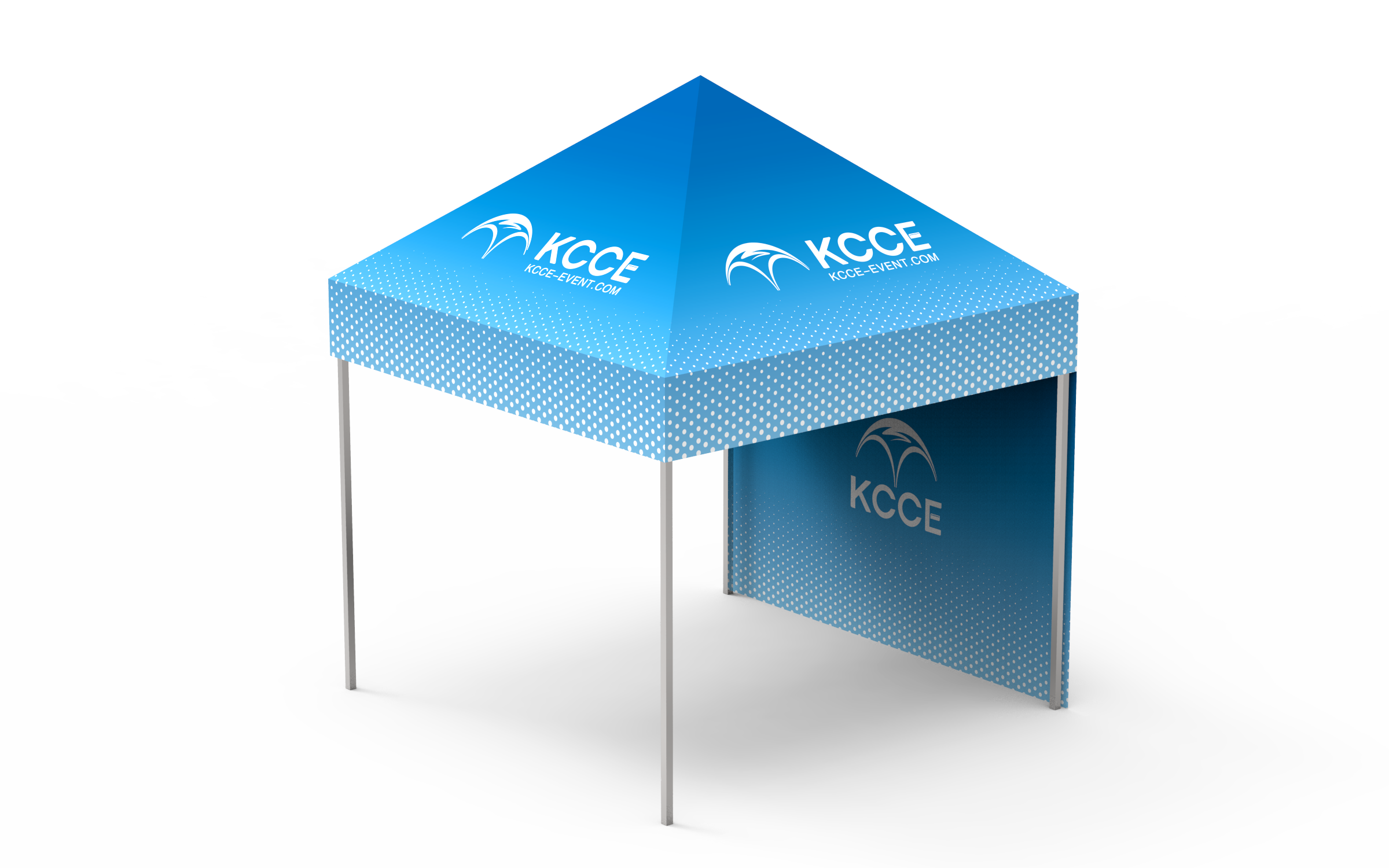
- Mid tier (around $900–$1,100): Aluminum frame, heavier canopy fabric, printed valance plus one full wall. This is the sweet spot for regular trade show and festival use.
- Pro tier (around $1,300–$1,400+): Commercial-grade aluminum frame, 600D canopy, full-dye sublimation print covering the whole top, and a multi-year warranty. The kind of custom printed canopy a brand uses every weekend for years.
And the hidden fees? They’re real. Full-print custom canopy work can push total project cost higher once you go full-wrap with multiple walls and premium print — a cost jump that small vendors on forums frequently flag as a budget shock. Shipping on a 10×20 is its own line item. Setup labor, if you’re paying someone, adds more. Ask for the all-in quote, not the base price. Every time.
Promotional Tent Sizes: Match the Tent to the Venue
You might be wondering: what size promotional tent do I need? The honest answer depends entirely on where you’re standing.
| Tamaño | Mejor para | Real-world note |
|---|---|---|
| 10×10 | Farmers markets, single-vendor booths, food trucks | The workhorse. A custom canopy tent 10×10 fits most market stalls and one person comfortably. |
| 10×15 | Trade shows, business expos | Room for a table plus standing space plus a browsing customer or two. |
| 10×20 | Festivals, double-booth setups, activations | Needs two people to set up and a vehicle that actually fits it. |
For promotional tents for farmers markets, a 10×10 is almost always enough — you’re selling from a table, not hosting a meeting. Promotional tents for trade shows usually want the 10×15 so visitors can step in without crowding your neighbor. And promotional tents for festivals? Go 10×20 if you’re running an activation, because foot traffic at festivals doesn’t queue politely.
One more thing: measure your booth allocation before you buy. Show organizers hand out 10×10 and 10×20 slots, and an oversized tent that spills into the aisle gets you a friendly visit from the floor manager.
Frame & Canopy Quality: Why One Tent Is $622 and Another Is $1,404
This is the section that answers the headline question, so let’s get into it.
The canopy tent frame is where cheap tents hide their shortcuts. Budget frames use thinner steel legs and lighter connectors; commercial frames use thicker aluminum that resists bending and doesn’t rust after a season of rain. As the team at TheCanopyTents.com puts it in their cheap-vs-premium comparison, the gap between budget and premium custom canopy tents comes down to frame engineering, fabric weight, print method, certification, and warranty — not price alone.
Fabric weight matters just as much. A 300D canopy is lighter and cheaper; a 600D canopy is denser, more tear-resistant, and holds print better. Neither is “bad” — but a 300D top on a tent you set up 30 weekends a year will show wear faster than a 600D one.
| Spec | Budget ($622-ish) | Premium ($1,404-ish) |
|---|---|---|
| Marco | Thin steel, lighter connectors | Thicker aluminum, reinforced joints |
| Canopy fabric | ~300D | ~600D |
| Screen print, valance or one panel | Full-dye sublimation, full top | |
| Garantía | Short, often limited | Multi-year, covers frame and fabric |
| Mejor para | Occasional use | Weekly commercial use |
Warranty gaps are the quiet killer. A one-year warranty on a tent you use twice a month tells you what the maker thinks of its own product. Ask what’s actually covered — frame bending, fabric tearing, print fading — because “warranty” means different things to different suppliers.
Logo Printing Options for Promotional Tents
If you want promotional tents with logo coverage that actually reads from 20 feet away, the print method is the whole ballgame.
- Screen printing: Cheapest, best for simple one- or two-color logos on a valance or single panel. Great for a small run.
- Impresión digital: Good for complex, multi-color artwork, but durability varies by supplier and ink system.
- Full-dye sublimation: The premium option. The print becomes part of the fabric rather than sitting on top of it, so it resists cracking and peeling. This is what a serious custom printed canopy uses.
Artwork realities: you’ll need vector files, and lead times on full-dye jobs typically run longer than a screen-printed valance — often a couple of weeks versus days. Ask for a physical or digital proof before production. And ask suppliers these three questions: What print method are you using? What’s the turnaround in business days? What happens if the color comes back wrong?
QuokkaPrints makes a fair point in their plain-vs-printed breakdown: a printed canopy isn’t just shelter, it’s a marketing strategy — the print is doing the brand visibility work, so it’s worth getting right.
Are Promotional Tents Worth It? ROI Reality Check
Are promotional tents worth it? Let’s do the math instead of the vibes.
Cost-per-impression is the number that matters. Take a $1,400 custom canopy used across, say, 25 event days a year for three years. That’s 75 event days. If a few hundred people walk past your booth each day, you’re paying pennies per eyeball — and the tent is working every hour the event is open, not just when someone stops to talk.
When they pay off: recurring events, markets, festivals, expos where you’re visible from a distance. Custom-printed canopy tents are highly visible and readable from a distance, which is exactly why nonprofits use them for awareness and fundraising — the tent itself attracts attention before anyone’s close enough to read a flyer.
When they don’t: one-off events, indoor shows where a tent is decorative rather than functional, or cases where a plain canopy would do the same job for a fraction of the cost. QuokkaPrints notes plain tents are cheap, versatile, and practical for startups or short community events — that’s honest, and I’d say the same.
Now, the “promotional tents reviews” gap nobody owns: most reviews online are about the buying experience, not the three-year durability. The useful question isn’t “did it arrive on time” — it’s “does the frame still hold after 50 setups?” Ask suppliers for references from customers who’ve owned the tent for two-plus years. If they can’t produce one, that tells you something.
Promotional Tent vs Regular Canopy: What’s the Difference?
A promotional canopy tent and a regular retail canopy are cousins, not twins. Three differences matter:
- Certification and grade. Commercial event canopies are built to withstand repeated setup and outdoor weather; retail canopies are built for the backyard. The materials and joints reflect that.
- Print durability. A branded pop-up tent is designed so the print survives folding, unfolding, sun, and rain. A retail canopy with an afterthought logo won’t.
- Warranty. Commercial suppliers back their frames and fabric with real coverage. Retail canopies usually come with whatever the box says.
Why do retail canopies fail at events? Because they weren’t designed for the load — repeated assembly, wind gusts, and constant UV exposure are a different job than occasional shade. If your tent is your storefront, buy the storefront-grade version.
How to Choose a Promotional Tent Supplier
Vetting a promotional tent supplier comes down to a short checklist. Run every quote through it.
- Warranty in writing. What’s covered, for how long, and who pays shipping on a claim?
- Turnaround time. Get a promised date, not a range. Full-dye jobs take longer than screen print.
- Print proof before production. No proof, no order.
- All-in pricing. Print, walls, shipping, setup — ask for the total.
- References from long-term customers. Two-year owners, not two-week ones.
Red flags in catalog pages: a price with no fabric weight listed, a warranty described only as “limited,” stock photos with no real install shots, and no way to request a physical sample.
On sourcing locally — if you’re searching “promotional tents near me” or “promotional tent suppliers near me,” there’s a real advantage: you can inspect the frame in person and save on freight. For custom promotional tents in the USA, domestic suppliers often mean faster replacement parts. But don’t limit yourself — many buyers source branded canopy tents from overseas manufacturers like Dongguan City Dacheng Outdoor Products Co. Ltd. a Made-in-China supplier whose catalog includes trade show tents, aluminum tents, and custom canopy inflatable gazebo options with a one-piece minimum order. Just factor in shipping time and duties when comparing quotes.
Side Walls, Accessories, and Add-Ons (Flags, Table Covers, Banner Stands)
The tent gets the attention; the accessories close the sale. A bare 10×10 reads as “vendor with a table.” The same tent with a printed back wall, a branded table throw, and a feather flag reads as “brand.” Budget for accessories as a percentage of tent cost, not an afterthought.
What actually moves the needle:
- Side walls: Half walls ($60–$120) keep browsers from drifting past; full walls ($90–$180) create a backdrop for photos and hide inventory. Zip-through walls with a window are worth the extra $20 for cash handling at markets.
- Table covers: A fitted 6-ft throw with full-dye print is the cheapest branding per square foot you’ll buy. Loose draping looks amateur in photos.
- Feather flags: 10–15 ft flags (priced per flag) are your sightline play — they’re visible from 100+ feet where a tent logo isn’t. Budget two per activation corner.
- Banner stands: A retractable 33×80″ stand handles the “here’s our pricing” job the tent can’t.
The trap: buying accessories from a different supplier than the tent. Color whites drift between vendors, and a “white” table cover next to a “white” canopy top shows the mismatch in every photo. Order together, or request swatches first.
Color, Stripe, and Custom Size Options
Color is where budgets quietly blow up. Standard stock colors — white, black, red, royal blue, navy — carry no upcharge and ship in days. Anything else is a custom run.
What to know before you pick:
- Stock vs. PMS matching: Standard colors are free. True PMS color-matching typically involves a setup fee and adds extra lead time. Only worth it if your brand color is non-negotiable (think a specific orange).
- Stripes and two-tone: A striped valance or two-color top typically adds a modest premium to canopy cost. Full multi-panel stripes cost more in print setup than the fabric itself.
- Custom sizing: 10×10, 10×15, and 10×20 are stock. Odd footprints (8×8, 13×13, 10×20 with a 3-ft extension) are typically custom builds at a premium and with longer lead times.
- Print coverage: One-panel screen print vs. full-dye sublimation wrap is the single biggest color cost driver — full-wrap can triple the print line.
My rule: lock your brand color to a stock match whenever possible, and spend the PMS budget on a second flag instead. Nobody at a festival can tell your blue is two shades off — they can tell you only had one flag.
Free Design Proofs and the Ordering Process
The proof is where money gets saved or lost. A reputable supplier sends a digital mockup — usually free, sometimes a refundable art fee — showing your logo on the actual canopy color and panel layout before anything prints.
A sane ordering sequence looks like this:
- Quote with all-in pricing: tent, print, walls, shipping, and any setup labor in one number.
- Art submission: vector files (AI, EPS, PDF) preferred; a raster logo under 150 dpi will look fuzzy at 6 ft wide.
- Digital proof: check logo scale, panel bleed, and color against a physical swatch — screens lie.
- Physical proof or pre-production sample: for orders over ~$2,000, ask for a printed fabric swatch. It typically involves a modest fee and catches color disasters before a full run.
- Production: 5–10 business days standard; 2–3 weeks for custom colors or full-dye.
- Shipping and inspection: open the box and set the tent up antes the event, not at 6 a.m. in a parking lot.
Red flag: any supplier who won’t send a proof, or who quotes a price “before art review.” That quote changes.
Fast Setup, Portability, and Reuse
Setup time is the hidden labor cost. A budget steel 10×10 with pin connectors takes two people 20–30 minutes and a lot of swearing. A commercial aluminum frame with a push-button or slider hub goes up solo in 5–10 minutes.
What drives speed and portability:
- Frame type: Pop-up/push-button frames are fastest; truss frames are sturdier but slower. For weekend warriors, pop-up wins.
- Peso: A 10×10 steel frame is commonly in the range of roughly 40–60 lbs; aluminum commercial frames are commonly in the range of roughly 30–45 lbs. On a 10×20, that difference is whether one person can move it.
- Carry bags: A wheeled bag is not optional on a 10×20 — it’s the difference between a manageable load and a two-person haul.
- Reuse: 600D fabric with full-dye print is generally described as holding color through many setups and washings, while 300D screen print is described as fading and cracking sooner. If you set up weekly, the pro tier pays for itself in year two.
Store the canopy dry and folded — mildew from a damp pack-in is the #1 killer of otherwise-fine tents.
Multi-Scene Use: Events, Promotions, Trade Shows, and Retail
The same tent earns its keep across very different jobs, but the setup changes:
- Farmers markets: 10×10, half walls, table throw, one flag. Priority is quick setup and a clean backdrop for produce.
- Street-team promotions: 10×10 with full printed walls for a photo moment; weight it hard, because sidewalk wind tunnels are unforgiving.
- Trade shows: 10×15, back wall with shelving, retractable banner out front. Indoor floors mean no wind stakes needed — but check venue rules on hanging signage.
- Festivals/activations: 10×20, full wrap, two flags, and a dedicated person for setup. Foot traffic doesn’t queue politely, so open the front entirely.
- Retail pop-ups: 10×10 with a zip-window wall for transactions and a branded table throw. Looks intentional, not improvised.
The through-line: buy the frame and canopy once at commercial grade, then swap walls, flags, and table covers per event. One $1,400 tent plus $300 of swappable accessories beats three $600 tents that each look slightly wrong.
Customer Reviews, Trust Signals, and Bulk-Order Value
Reviews are only useful if you know what to filter for. “Looks great!” tells you nothing. The reviews worth reading mention wind, rain, and repeat setups — those are the stress tests.
Trust signals that actually mean something:
- Warranty terms in writing: a real multi-year frame warranty (2–5 years) vs. a vague “satisfaction guarantee.”
- Stated fabric spec: 600D with a denier and a UV rating beats “heavy-duty fabric” every time.
- Fire certificate on request: a supplier who can produce a test report on demand is a supplier who tests.
- Photo reviews from repeat buyers: someone on their third season is the best proof you’ll get.
Bulk ordering is where the math flips. Ordering 5–10 tents is often described as unlocking tiered volume discounts… which can mean a meaningfully lower per-unit price at volume.tup is charged once, not per tent. For a franchise or multi-location brand, that’s the difference between $1,400 and roughly $1,100–$1,200 per unit at volume. Ask for the tier table before you commit to a single unit.
Safety and Regulatory Compliance (Fire Ratings, Wind Ratings, Weighting)
This is the section that keeps your tent out of the impound lot — and off a headline.
- Fire ratings: Many U.S. venues require canopies and sidewalls to meet NFPA 701 (Standard Methods of Fire Tests for Flame Propagation of Text iles and Films). In the EU, look for EN 13501-1 classification and DIN 4102 B1 on the fabric label. Ask for the test certificate antes you buy — a tent without documentation can be refused entry at a show, and event insurers increasingly ask for it.
- Wind ratings: Most commercial pop-up canopies are commonly described as suited to moderate breezes (roughly Beaufort 4–5, about 13–24 mph)… Above ~25 mph, take it down. No pop-up canopy is rated for sustained 40 mph winds. No pop-up canopy is rated for sustained 40 mph winds, regardless of what a listing claims.
- Weighting and anchoring: The frame alone won’t hold. Plan on 40 lbs per leg minimum in calm conditions — sandbags, water barrels, or ground stakes. On hard surfaces (asphalt, concrete), use weighted base plates; on grass, 12-inch stakes plus guy lines. Never leave a canopy up overnight unattended.
- Case example: A vendor at an outdoor market learned this the expensive way — an unweighted 10×10 caught a gust, flipped, and damaged two neighboring stalls. Insurance covered the neighbors’ goods, not the embarrassment.
Treat the wind rating as a “pack it up” signal, not a challenge.
Preguntas Frecuentes
Q: How much do custom promotional tents cost?
R: Expect roughly $600–$750 for a budget 10×10 with basic print, $900–$1,100 for a mid-tier aluminum frame with a printed wall, and $1,300–$1,400+ for commercial-grade tents with 600D fabric and full-dye printing. Full-wrap projects with multiple walls can run considerably higher — some vendors quote around $3,100 for full-print setups.
Q: What size promotional tent do I need?
R: A 10×10 suits farmers markets and single-vendor booths. A 10×15 fits trade shows and business expos with room for a table plus visitors. A 10×20 works for festivals and double-booth activations. Measure your assigned booth space before ordering.
Q: Are promotional tents worth it?
R: For recurring events, yes — the cost-per-impression math works out over years of use. For one-off events or indoor shows, a plain canopy may do the same job for less. It depends on how often the tent works for you.
Q: What’s the best material for a custom printed canopy?
R: A 600D canopy fabric paired with full-dye sublimation printing gives the best durability — the print becomes part of the fabric and resists cracking. A 300D canopy is lighter and cheaper but shows wear faster with heavy use.
Q: How long does logo printing take on promotional tents?
R: Screen-printed valances are typically the fastest, often days. Full-dye sublimation jobs usually take longer, often a couple of weeks. Always get a promised production date and a proof before the run starts.
Q: What’s the difference between a promotional tent and a regular canopy?
R: Commercial promotional canopy tents are built for repeated setup and outdoor weather, with heavier frames, denser fabric, durable print, and real warranties. Retail canopies are built for occasional backyard shade and tend to fail under event-level use.
Q: Where can I buy promotional tents near me?
R: Search “promotional tents in my area” or “branded canopy tents local” to find suppliers you can visit in person — you can inspect the frame and save on freight. For custom work, compare domestic quotes against verified overseas manufacturers, factoring in shipping and duties.
Conclusión
Here’s the one action I’d ask of you: when you request quotes for promotional tents, ask for the all-in number — print, walls, shipping, setup, warranty — not the base price. That single habit kills most of the buyer traps above. And before you sign, answer one question for yourself: what’s your cost-per-impression target? If you know that number, the $622 tent and the $1,404 tent stop being a guess and start being a calculation.
Referencias
1. Cheap vs Premium Custom Canopy Tents (2026 Comparison) – thecanopytents.com
2. Plain vs Printed Canopy Tents: Which One Is Right for You? – quokkaprints.com
3. Custom Printed Canopy Tents for Non-Profit Organizations – thesignshark.com
4. Everything You Need to Know About Custom Canopy Tents and Printing – deluxecanopy.com
5. Transforming Open Spaces: Using Tents and Canopies for Outdoor Corporate Events – curatedevents.com