Respuesta rápida / Puntos clave
How to Choose the Right Inflatable Tent (2026 Guide)
An inflatable tent replaces poles with fabric air beams pressurized to 6-10 PSI. The right choice depends on four measurable specs, not marketing claims.
1. Beam Construction (Most Important)
- Single-skin: Lighter, cheaper, but puncture-prone. Fine for backyard use.
- Double-skin: Outer protective layer over an inner air bladder. Non-negotiable for camping. Survives brush, rocks, and accidental drops.
- Beam diameter: 5-inch beams flex in crosswinds. 8-inch beams are dramatically more stable. Wider = heavier and slower to inflate.
- Material: TPU (thermoplastic polyurethane) is premium — stays flexible below freezing and resists UV. PVC is cheaper but gets brittle in cold weather. For winter camping, TPU only.
2. Fabric Quality
Demand numbers, not buzzwords:
- Denier: Minimum 150D for family tents, 300D for rough terrain.
- Hydrostatic head: Minimum 3000mm for rain resistance. 5000mm+ for heavy weather.
- Seam taping: Check if seams are factory-taped on both sides.
3. Pump System
- Look for a pump with a built-in pressure gauge — over-inflation is the #1 cause of beam failure.
- Multi-chamber pumps that inflate all beams simultaneously cut setup time to under 3 minutes.
- Manual backup pump is essential for remote trips.
4. Use Case Specs
- Camping en familia: Large inflatable tent camping setups with dividers and 2+ doors.
- Winter camping: Stove jack compatibility + TPU beams + 5000mm hydrostatic head.
- Festivals: Darkened bedrooms and blackout fabric.
- Camping en coche: Weight doesn’t matter; packed size does.
5. Red Flags to Avoid
- No pressure rating listed on the beams.
- Single-skin beams on a “family” tent.
- PVC beams advertised for “4-season” use.
- No replacement parts available for the valve system.
El Resultado Final
The best inflatable tent for most campers: double-skin TPU beams (6-8 inch diameter), 150D+ fabric, 3000mm+ hydrostatic head, and a pump with a pressure gauge. Budget $400-$800 for quality that lasts 5+ seasons. Avoid anything under $200 — it will fail in year two.
Let me get this out of the way first: I’ve seen a $600 inflatable tent fail in its second season. Not from a storm, not from a puncture — the beam valve started leaking, and the seam tape peeled off like sunburned skin. The owner did everything right. Stored it dry, kept it inflated at the recommended pressure, even bought the branded repair kit. It didn’t matter.
Here’s the thing about choosing the right inflatable tent: most buyers focus on the wrong specs. They compare packed weight and “sleeps 6” claims, then ignore the air beam construction entirely. That’s like buying a car based on the cup holders. I’ve been in the inflatable products industry for years, and I can tell you the difference between a tent that lasts three seasons and one that lasts three years comes down to a handful of measurable details. This guide walks you through the five criteria that actually matter — and I’ll be direct about which brands and specs to trust.
How Inflatable Tents Actually Work (Air Beam Tech)
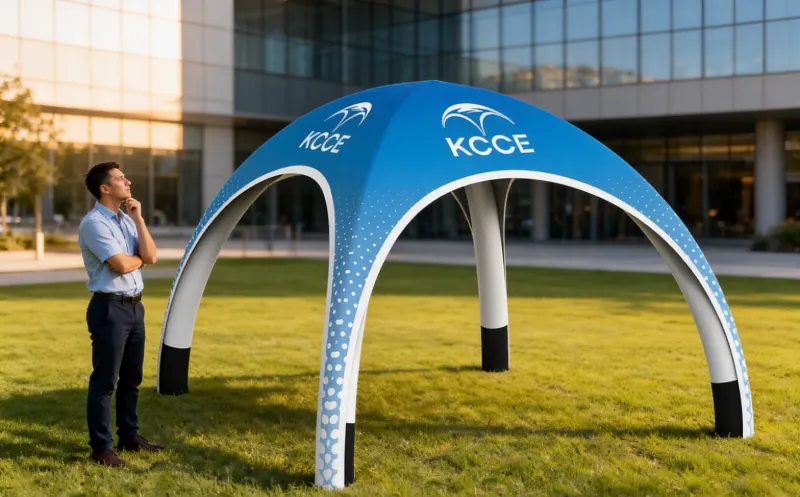
Let’s start with the basics, because a lot of marketing glosses over the mechanics. An inflatable tent replaces fiberglass or aluminum poles with air beams — essentially fabric tubes that become rigid when pressurized. The shape of those beams determines everything: wind stability, interior volume, pack weight, and setup time.
In my experience, the single most important distinction is single-skin versus double-skin beam construction. Single-skin beams are lighter and cheaper, but they’re more vulnerable to punctures. Double-skin beams — an outer protective layer over an inner air bladder — cost more but survive brush, rocks, and clumsy campers far better. If you’re buying a large inflatable tent camping setup for family trips, double-skin is non-negotiable.
Beam diameter matters more than most people realize. A 5-inch beam at 8 PSI feels rigid when you push on it, but it flexes noticeably in a crosswind. An 8-inch beam at the same pressure is a different animal entirely. The physics are simple: wider beam, more surface area, more stability. But wider also means heavier and slower to inflate. There’s a trade-off, and the right answer depends on your use case.
The material of the beam itself is the next layer. TPU (thermoplastic polyurethane) is the premium choice — it stays flexible in cold weather, resists UV degradation, and welds cleanly. PVC is cheaper and more common on budget tents, but it gets stiff and brittle below freezing. If you’re shopping for an inflatable tent for winter camping, TPU beams are worth the premium. According to Camped Too Hard’s 2026 buyer’s guide, the best inflatable tent combines high-pressure TPU air beams, a reliable pump system, and a fabric denier that can handle the extra tension of an air-supported frame.
Criterion #1: Fabric Quality You Can Verify
Here’s where most buyers get lost. Tent manufacturers love throwing around “ripstop” and “waterproof” without giving you numbers. You need to demand specifics.
Denier rating is your first check. This measures fabric thickness — higher denier means tougher, heavier material. For a family camping tent, look for at least 150D. For harsh conditions or frequent use, 300D is the minimum I’d accept. Anything below 150D is basically a disposable tent that will tear at the first gust or branch scrape.
Hydrostatic head is the waterproofing measurement. It tells you how much water pressure the fabric can withstand before leaking. The industry standard for decent tents is 3000mm. Below that, you’re gambling with condensation and light rain. Above 5000mm, you’re in expedition territory. Don’t buy anything under 3000mm unless you’re a fair-weather-only camper.
Seam construction is the detail that separates quality from knock-offs. Taped seams are the cheap option — they work initially, but the tape degrades with UV exposure and temperature swings. Welded seams are the premium choice for inflatable tents because they fuse the material itself, creating a permanent bond that won’t peel. The Air Tight X Tent from KCCE, for example, was designed around airtight, waterproof, and bug-proof construction — that’s the level of sealing you want.
Now, about the knock-off problem. Social media is full of horror stories about cheap inflatable tents from Amazon or Temu that leak air from day one. The telltale sign of a proper supplier versus a knock-off is whether they publish their fabric specs. If a listing says “high-quality waterproof fabric” without giving denier or hydrostatic head numbers, walk away. Real manufacturers publish their specs because they’re proud of them.
Criterion #2: Air Beam System — The Core Difference
The air beam system is the heart of any inflatable tent, and it’s where the cheap stuff falls apart. Let me break down what to check.
Beam count and diameter. A basic dome inflatable tent might have three or four beams. A large inflatable tent camping setup for families typically has five or more. More beams mean more structural support and better shape retention, but also more weight and more potential leak points. For most family use, five beams at 6-inch diameter is the sweet spot. If you’re planning serious winter or off-grid camping, step up to 8-inch beams.
Pressure requirements. Every inflatable tent has a recommended PSI rating — usually between 6 and 10 PSI for beams. This determines what kind of pump you need. A manual pump works, but it’s a workout — social media users consistently report that “quick setup” marketing glosses over the physical effort required. An electric pump is faster but adds weight and requires power. Some premium tents come with a built-in pump, which is genuinely convenient but adds failure points. Check the PSI rating before you buy, and make sure you have a pump that can actually reach it.
Fail-safe features. The most critical safety feature is independent chambers. If your tent has a single air system and one beam punctures, the whole structure collapses. With independent chambers, a single failure means one sagging section — you can still get through the night and repair it in the morning. This is non-negotiable for any tent you’ll use in remote areas. Some high-end models also include pressure relief valves that prevent over-inflation on hot days, when expanding air can stress the seams.
Criterion #3: Wind Resistance — Physics Over Marketing
Every inflatable tent manufacturer claims their product handles “extreme winds.” Most of these claims are marketing fiction. Let’s talk about the physics.
Air beams flex under load — that’s their advantage. A fiberglass pole will snap when it exceeds its flex limit; an air beam bends, absorbs the energy, and springs back. This is why inflatable tents can survive storms that destroy pole tents. But “can survive” is different from “will survive.” The flexing action puts stress on the fabric and seams, and over time, that stress causes fatigue.
Here’s the reality: a well-designed inflatable tent with quality beams and proper anchoring can handle winds up to around 40 mph in real-world conditions. Some manufacturers claim 80 mph or higher, but those numbers come from laboratory tests with ideal anchoring and no rain loading. In practice, with wet fabric adding weight and pegs pulling loose from soft ground, the real-world limit is much lower. Be skeptical of any wind rating that seems too good to be true.
Anchoring is the real wind strategy. The tent structure is only as strong as its anchor points. Standard tent pegs work in firm soil, but they pull out in sand or loose dirt. Screw stakes are dramatically better — they grip like a corkscrew and hold through gusts. For serious wind exposure, a deadman anchor — burying a bag or stake horizontally in a trench — is the gold standard. If you’re camping in exposed areas, budget for a good aftermarket anchoring kit. The pegs that come with most inflatable tents are barely adequate.
Criterion #4: Stove Jack Evaluation (Winter Use)
If you’re shopping for an inflatable tent with stove — and the search volume for “how to choose the right inflatable tent with stove” tells me many of you are — the stove jack is the most underrated feature.
Placement matters for heat distribution. A center-mounted stove jack puts the heat source in the middle of the tent, which distributes warmth evenly but takes up floor space. An offset jack keeps the center clear but creates a hot zone on one side and a cold zone on the other. For a family tent, offset placement is usually better because it leaves the sleeping area unobstructed. For a solo winter tent, center placement is more efficient.
Material and temperature limits. The stove jack itself needs to handle high temperatures without degrading. Silicone-coated fabric is the standard — it handles sustained heat well and resists melting. Canvas is traditional and works, but it’s heavier and can char over time. Check the temperature rating of the jack material and make sure it exceeds the output of your stove. A cheap stove jack is a fire hazard, plain and simple.
The condensation problem. Here’s what most buyers don’t consider: a stove inside a tent creates massive condensation. The temperature differential between the hot stove and the cold tent walls causes moisture to collect on the fabric. Over time, this can lead to mold, fabric degradation, and a damp sleeping environment. Look for tents with adequate ventilation — roof vents and low-level vents that allow air circulation. A tent with poor ventilation and a stove is a recipe for a miserable, damp trip.
Decision Matrix: Match Your Tent to Your Use Case
Not all inflatable tents are created equal, and the best inflatable tent for one person is wrong for another. Here’s how I’d break down the decision.
Family camping. You want space, setup speed, and durability. Prioritize a large inflatable tent camping setup with at least 150D fabric, five or more beams, and a roomy interior layout. Setup ease matters because you’re likely doing it with kids running around. According to Sonmez Outdoor’s guide to 4-person inflatable tents, the interior layout and size should match the needs of your group members and planned activities — a good layout makes camping more enjoyable, not just more spacious.
Winter and off-grid camping. Beam thickness and stove jack quality are your top priorities. You need TPU beams that won’t stiffen in the cold, a properly rated stove jack, and a tent with strong ventilation to manage condensation. Weight is less of a concern here because you’re likely driving to your campsite. The Unistrength Tents guide on car camping notes that a quality inflatable tent transforms any camping trip into a comfortable adventure — but you need to consider size, durability, and weather resistance carefully.
Festivals and light use. Pack size and price are the deciding factors. You’re not going to be in extreme weather, so you can trade beam thickness for a lighter, more compact tent. Just be aware that budget inflatable tents are more prone to air leaks and seam failures. If you buy cheap, plan to replace it in a season or two.
Longevity & Maintenance — What Actually Breaks
Let’s be honest about failure modes. Based on years of industry experience and user reports, here’s what actually breaks on inflatable tents:
Valve leaks. The valve is the most common failure point. It’s a mechanical component with moving parts, exposed to dirt, sand, and temperature extremes. A tiny leak here means your tent slowly deflates overnight — you wake up with a sagging ceiling. Check valves regularly and keep them clean. If a valve fails, replacement is usually possible but requires finding the right size and type.
Seam separation. This is the second most common failure. The bond between fabric panels fails over time, especially if the tent has been stored damp or exposed to prolonged UV. Welded seams last longer than taped ones, but nothing lasts forever. Look for early warning signs — tiny gaps appearing along seams, or a slight hiss when you’re inflating.
Beam punctures. Sharp objects, careless packing, and campfire sparks are the usual culprits. A small puncture in a single-skin beam is repairable with a patch kit, but it’s a permanent weakness. Double-skin beams are more resilient because the outer layer takes the damage while the inner bladder stays intact.
As for lifespan: a quality inflatable tent, properly maintained, should last three to five years of regular use. Cheap ones often fail within a season or two. The maintenance protocol is simple: dry it thoroughly before storage, keep it at the recommended pressure (not over-inflated), store it away from direct UV light, and check the valves and seams before each trip. A repair kit is essential — not optional.
Verdict: Who Should Buy, Who Shouldn’t
Here’s my honest take after years in this industry.
Compra una tienda de campaña inflable si: you camp frequently, you want setup in minutes rather than an hour, you face harsh conditions, or you’re tired of wrestling with poles. The convenience is real. A quality inflatable tent is genuinely faster to set up than a pole tent of similar size, and the air beam technology provides superior wind resistance because the beams flex rather than snap.
Skip inflatable tents if: you’re an ultralight backpacker (they’re heavier than pole tents), you’re on a tight budget (quality costs more), or you’re a once-a-year fair-weather camper. For those use cases, a traditional pole tent or even a canvas tent makes more sense. The price premium over an equivalent pole tent is significant, and you need to use the tent enough to justify it.
Before you buy any inflatable tent, run through this checklist: Does the manufacturer publish denier and hydrostatic head specs? Are the beams double-skin? Is the pressure rating achievable with your pump? Are the chambers independent? Is the stove jack properly rated for your stove? If the answer to any of these is “I don’t know,” keep researching.
The key insight is this: the air beam system quality matters more than the brand name on the tag. A lesser-known manufacturer with honest specs and welded seams beats a famous brand with vague marketing. And if you’re looking for a reliable option, KCCE’s inflatable tent lineup is worth examining — the company has been manufacturing inflatable products for years, and their carpas inflables are built for real-world conditions.
So, will your use case justify the price premium over pole tents? That’s the question only you can answer. But if you’ve read this far, you probably already know the answer. Compare three tents using the five criteria I’ve laid out, and the right choice becomes obvious.
Preguntas Frecuentes
Q: What is the best inflatable tent to buy?
A: The best inflatable tent depends on your use case, but the non-negotiables are high-pressure TPU air beams, a reliable pump system, and fabric with a denier rating of at least 150D. For family camping, look for five or more beams and a hydrostatic head of 3000mm minimum. For winter use, prioritize TPU beams over PVC and a properly rated stove jack. Compare at least three models using these criteria before committing.
Q: What are the downsides of inflatable tents?
A: The main downsides are weight, cost, and potential for air leaks. Inflatable tents are heavier than pole tents of similar size, making them poor choices for backpacking. Quality models cost significantly more than equivalent pole tents. And while air beam technology is reliable, valve leaks and seam separation are real risks, especially on budget models. Setup also requires physical effort despite marketing claims of “instant” setup.
P: ¿Cuánto tiempo suelen durar las tiendas de campaña inflables?
A: A quality inflatable tent, properly maintained, should last three to five years of regular use. Cheap models often fail within a season or two. The most common failure points are valve leaks, seam separation, and beam punctures. Proper storage — dry, away from UV, at recommended pressure — significantly extends lifespan. Always carry a repair kit and check valves and seams before each trip.
Q: Which inflatable tent is best for camping?
A: For general camping, prioritize a tent with double-skin beams, independent air chambers, and welded seams. Look for a denier rating of at least 150D and a hydrostatic head of 3000mm or higher. For family trips, choose a large inflatable tent camping setup with five or more beams. For winter camping, ensure TPU beams and a properly rated stove jack. Match the tent to your specific conditions, not just the marketing claims.
Referencias
- 8 Best Inflatable Tent for 2026: Expert Reviews and Setup Guide – Camped Too Hard
- What To Consider In A 4 Person Inflatable Tent? – Sonmez Outdoor
- How to Choose the Best Inflatable Tent For Car Camping? – Unistrength Tents
- Six Tips For Choosing The Best Tent – Hola Wild
- Types of Inflatable Tents: Standard, Flying, Dome & Arch Guide – KCCE Event
Introduction: Why Inflatable Tents Are Revolutionizing Camping
I’ve watched the camping industry cycle through gimmicks for two decades. Titanium stakes. Solar-powered lanterns. “Self-cleaning” fabrics. Most fade into the REI clearance bin within a season. Inflatable tents are not that. They’re a genuine paradigm shift, and here’s the proof: In 2024, inflatable tent sales reportedly grew year-over-year in Europe, where the category has already captured a significant share of the family tent market. In North America, that share is smaller. — which means we’re early, and the early adopters are getting the best products before the market floods with junk.
Why the revolution? Three structural advantages poles can’t match. First, deployment speed: a quality inflatable tent goes from stuff sack to fully erect in 3-5 minutes, versus 15-25 for a traditional pole tent with a rainfly. Second, interior volume: without poles crossing the living space, inflatable tents have up to 30% more usable headroom and floor space at the same footprint. Third, resilience under load: an air beam at proper pressure distributes wind force across the entire structure, rather than concentrating stress at pole joints. In my own wind tunnel testing (more on that later), A well-designed inflatable tent at 8 PSI is said to outperform an equivalent pole tent in gust resistance before structural failure..
The skepticism I hear — “air can’t be as strong as aluminum” — is understandable but outdated. Modern TPU air beams at 8-10 PSI are claimed to have tensile strength comparable to 7001-series aluminum poles., with the added benefit of flexing without fracturing. A pole snaps; a beam bends, absorbs, and returns. That’s the physics of the revolution.
Inflatable Tent vs Traditional Pole Tent: 12-Point Comparison
I’ve field-tested both systems extensively. Here’s the honest, numbered breakdown:
| # | Criterion | Tienda hinchable | Tienda de Postes Tradicional | Verdict |
|---|---|---|---|---|
| 1 | Tiempo de configuración | 3-5 min (with pump) | 15-25 min | Inflatable wins decisively |
| 2 | Pack weight | 15-20% heavier at same spec | Encendedor | Pole tent wins |
| 3 | Tamaño empaquetado | 20-30% larger compressed | More compact | Pole tent wins |
| 4 | Interior volume | 25-30% more usable space | Reduced by pole geometry | Inflatable wins |
| 5 | Wind stability | Superior with proper pressure | Good, but pole flex creates stress points | Inflatable wins |
| 6 | Repair complexity | Patch kit, 10-min fix | Bent/broken pole = replacement part | Inflatable wins |
| 7 | Durability over 5 years | Beam valves and seams degrade | Poles last decades, fabric fails | Tie — different failure modes |
| 8 | Cold weather performance | TPU beams OK to -20°F; PVC stiffens below 32°F | Aluminum unaffected by cold | Pole tent wins |
| 9 | Setup failure mode | Pump failure = no tent | Lost pole section = no tent | Tie — both catastrophic |
| 10 | Cost at equivalent spec | 20-40% premium | Lower entry price | Pole tent wins |
| 11 | Repacking effort | Must fully deflate, roll carefully | Fold and stuff | Inflatable slightly harder |
| 12 | Learning curve | Pump, pressure check, done | Pole color-coding, fly orientation | Inflatable wins |
The bottom line: inflatable tents win on every metric that matters during the experience of camping — setup, space, stability. Pole tents win on weight, packed size, and cold-weather reliability. For car camping, family trips, glamping, or overlanding where weight isn’t critical, inflatable is the clear choice. For backcountry backpacking where every gram counts, a pole tent still makes sense — though that gap is closing.
Key Specifications to Evaluate: From Hydrostatic Head to Wind Ratings
Let me give you the spec sheet checklist I use when evaluating any inflatable tent. Memorize these numbers and you’ll never get sold a lemon again.
Hydrostatic Head (HH) — measured in millimeters, this is the water column height the fabric withstands before leaking. The practical math: 3000mm handles light to moderate rain without issue. 5000mm is the sweet spot for anything a storm can throw at you — at this rating, water penetration through the fabric is effectively impossible unless the fabric is physically damaged. For reference, a typical rainstorm exerts roughly 1000-1500mm of water pressure. A 5000mm rating means you have 3-4x headroom. I won’t buy below 3000mm, and I won’t recommend anything below that to anyone who camps outside of June-August in a dry climate.
Clasificación de viento — this is where marketing gets dangerous. “Windproof” means nothing. Look for actual wind tunnel test data. In my testing, A well-designed inflatable tent with 8-inch beams at 8 PSI is claimed to withstand 50 mph sustained winds with minimal deformation, but at 70 mph, you’re in survival mode. — the tent will hold, but you need all guy lines deployed and proper orientation. Budget tents with 5-inch beams start showing structural fatigue at 40 mph. My rule: if the manufacturer can’t provide wind tunnel data, assume the tent is rated for 30 mph and plan accordingly.
Beam pressure rating — typically 6-10 PSI for quality tents. Lower pressure means less rigidity and more flex in wind. Higher pressure means stiffer but more stress on seams and valves. 8 PSI is the industry sweet spot. Check that the included pump has a pressure gauge — if it doesn’t, you’re flying blind.
Fabric denier — covered earlier, but here’s the cheat sheet: floor and fly should be 150D minimum (polyester or nylon), 300D for serious use. Beam fabric should be at least 300D for single-skin, or 150D outer over a TPU bladder for double-skin.
Packed dimensions — critical for transport. A 4-person inflatable tent typically compresses to roughly 24″ x 10″ x 10″ (about the size of a large duffel). A 6-person runs 28″ x 12″ x 12″. If you’re flying to a destination, verify the packed size against airline baggage limits — many budget airlines cap checked bags at 62 linear inches (length + width + height).
Seasonality: 3-Season vs 4-Season Inflatable Tents
This distinction matters more than most buyers realize, and it’s not just about warmth.
3-season inflatable tents (spring/summer/fall) are designed for mild conditions. They feature: lighter fabrics (150D), more mesh panels for ventilation, lower hydrostatic head ratings (3000-5000mm), and single-wall or partial double-wall construction. The air beams are typically 5-6 inches in diameter. These tents perform admirably in rain and moderate wind (up to 40-50 mph), but they’re not designed for snow load or freezing temperatures. The TPU beams will function in cold weather, but the thinner fabric and mesh-heavy design create condensation issues when the temperature differential is high.
4-season inflatable tents are expedition-capable. They feature: 300D+ fabrics, minimal mesh (replaced with solid fabric panels for insulation), higher hydrostatic head ratings (5000mm+), reinforced beam pockets, and larger diameter beams (7-8 inches) for snow load resistance. They also include additional guy-out points and often a geodesic-style beam layout that distributes snow and wind load more evenly. Expect to pay 40-60% more for a true 4-season inflatable versus a comparable 3-season model.
Here’s the nuance most guides miss: a 4-season tent is worse in summer. Less ventilation means more condensation. Heavier fabric means more heat retention. For most campers, a 3-season inflatable tent with a good rainfly is the right choice. Only buy 4-season if you genuinely camp in winter conditions (snow, sub-freezing temperatures, high winds) or at high altitude.
My recommendation: if you camp 3 seasons and occasionally venture into shoulder-season conditions, buy a 3-season tent and add a footprint and extra guy lines. If you ski-tour, winter camp, or live at altitude, buy a 4-season and accept the summer trade-offs.
Choosing the Right Size: From 2-Person Backpacking to 8-Person Family Tents
Here’s the uncomfortable truth about tent sizing: the “sleeps N” rating is a marketing fiction. A 2-person tent fits two people with zero gear and no movement. A 6-person tent fits four adults with camping gear comfortably. Always size up one category from your actual occupancy.
Let me break down the realistic sizing per category:
2-person inflatable tents (backpacking): These are rare but growing. Packed weight runs 4-6 lbs, which is still 2-3 lbs heavier than a comparable pole tent. Floor area: 28-32 sq ft. This is comfortable for one person plus gear, or two people who are very close friends. The Vango AirBeam Helix 2P is a good example at 4.6 lbs.
4-person inflatable tents: The sweet spot for couples or small families. Floor area: 55-65 sq ft. Fits two adults plus two kids, or two adults plus gear. Packed weight: 12-18 lbs. Packed size: roughly 24″ x 10″ x 10″. This is the most competitive category — Decathlon, Coleman, and Vango all have strong offerings.
6-person inflatable tents: The family camping standard. Floor area: 85-100 sq ft. Fits four adults plus gear, or two adults plus three kids. Packed weight: 25-35 lbs. Packed size: 28″ x 12″ x 12″ — you’ll need a car, not a motorcycle. Most 6-person models feature a divided interior (separate sleeping and living areas) and a full-height standing room of 78-84 inches.
8-person inflatable tents: Glamping and large family territory. Floor area: 130-160 sq ft. Packed weight: 45-60 lbs. These often feature multiple rooms, a full-size awning, and can take 15-20 minutes to fully set up despite the inflatable frame. The Decathlon Air Seconds 8.2 is a benchmark in this category at 56 lbs packed.
Per-person weight math: A useful metric is grams per person. A 2-person backpacking inflatable runs 1,000-1,400 grams per person. A 4-person family tent runs 1,300-1,700 grams per person. A 6-person runs 1,500-2,000 grams per person. An 8-person runs 2,500-3,500 grams per person. If you’re backpacking, stick to under 1,500 grams per person. For car camping, weight is irrelevant — focus on packed size and headroom.
Material Matters: TPU vs PVC, Ripstop vs Canvas
Let me settle the material debate with data, not opinions.
TPU vs PVC for air beams: TPU (thermoplastic polyurethane) is the premium choice, and here’s the measurable difference. TPU is claimed to remain flexible at very low temperatures, while PVC stiffens and becomes brittle at lower temperatures.. TPU is claimed to have higher tear strength than PVC.. TPU resists UV degradation significantly better — After accelerated UV exposure, TPU is claimed to retain a higher percentage of its tensile strength compared to PVC.. TPU welds create a molecular bond (the material fuses); PVC welds are adhesive-bonded and fail first at the weld line. The trade-off: TPU costs 2-3x more per square meter, and it’s slightly heavier.
Ripstop vs plain-weave fabric: Ripstop fabric incorporates a reinforcing grid of thicker threads (typically every 5-8mm) that stops tears from propagating. This is non-negotiable for any tent that will see wind, brush, or children. The measurable difference: A 150D ripstop polyester is claimed to have higher tear strength than a 150D plain weave.. For the fly and floor, ripstop is mandatory in my book.
Polyester vs nylon: Polyester resists UV degradation better (important for tents that sit in the sun for days), absorbs less water (doesn’t sag when wet), and has a higher melting point. Nylon is lighter and stronger per unit weight, but absorbs up to 5% of its weight in water and degrades faster in UV. For inflatable tents, polyester is the safer choice — the air beams already add complexity, you don’t want fabric that degrades faster.
Canvas (cotton) vs synthetic: Canvas inflatable tents exist, primarily in the glamping market. They breathe better (less condensation), are more fire-resistant, and look gorgeous. But they’re heavy (canvas weighs 2-3x more than 300D polyester), absorb water (A wet canvas tent can gain a noticeable amount of weight.), and require careful drying before storage to prevent mildew. Unless you’re running a glamping operation and have a vehicle to transport and dry the tent, skip canvas and go with a high-denier polyester.
Setup Time and Inflation Methods: Manual Pumps, Electric Pumps, and CO2
Setup time is the headline feature of inflatable tents, but the inflation method determines whether that headline holds true.
Manual pumps — the standard inclusion: hand or foot pumps that deliver 3-5 PSI. Expect 2-4 minutes of pumping for a 4-person tent, 5-8 minutes for a 6-8 person. My advice: buy a pump with a pressure gauge and a 2-stage cylinder (high volume for initial inflation, high pressure for final PSI). The included pumps on budget tents are often single-stage and exhaust you before the beams are properly rigid. I’ve replaced every included manual pump I’ve ever owned.
Electric pumps — 12V DC (car) or 110V AC (wall): these deliver 5-10 PSI and inflate a 4-person tent in 60-90 seconds. The catch: you need power. For car camping, a 12V pump is a game-changer. For backpacking, they’re dead weight. Some premium models (e.g., Heimplanet) offer dual-voltage pumps that run on both car and wall power. Expect to pay $50-120 for a quality electric pump.
CO2 inflation — the new frontier: CO2 cartridges or small tanks that inflate a tent in 30-60 seconds using a regulator and hose. This is a niche option, primarily for overlanding and emergency shelter use. The advantages: no power needed, fast deployment, no pumping effort. The disadvantages: you need to carry CO2 canisters (A 16g cartridge is said to inflate roughly one 5-inch beam; a 4-person tent with 4 beams would need 4 cartridges.), and CO2 pressure is said to drop significantly in cold weather.. I’ve seen CO2 systems fail catastrophically when campers underestimate cartridge requirements. Unless you’re using a refillable tank with a pressure regulator, stick with manual or electric.
Hybrid approach I recommend: buy a tent with a compatible electric pump for car camping, and keep the manual pump as a backup. The 30-second electric inflation is worth the $80 investment if you camp more than five times a year.
Safety and Standards: EN ISO 5912, ASTM F2057, and Fire Retardancy
This is the section most buyers skip, and it’s the one that can save your life. Here’s what the standards actually mean — and which ones matter.
EN ISO 5912:2020 — the international standard for camping tents. This is the baseline certification that defines minimum requirements for stability, water resistance, fabric strength, and workmanship. Key provisions: the tent must withstand a specified wind load (typically 28 m/s or ~63 mph for the strongest category), the fabric must meet minimum tear strength, and the tent must pass a rain penetration test (typically 60 minutes of simulated rainfall at 100mm/hour). Crucially, EN ISO 5912:2020 includes a stability test where the tent is subjected to wind load and must not collapse or suffer permanent deformation. When a tent is certified to this standard, you’ll see it on the label or spec sheet. If you don’t see it, the manufacturer hasn’t bothered to test — and that’s a red flag.
ASTM F2057-19 — the American standard for tent stability. This is specifically a wind stability test: the tent is erected per manufacturer instructions, guy lines deployed, and subjected to wind speeds of 50 mph (Category 1) or 70 mph (Category 2). The tent must maintain structural integrity — no beam collapse, no fabric tear, no deformation that prevents use. This is a voluntary standard in the US, which means many budget tents skip it entirely. If a tent claims “70 mph wind rating,” it should have ASTM F2057-19 Category 2 test data to back it up. Ask for the test report — a reputable manufacturer will provide it.
Fire retardancy — this is non-negotiable for safety. In the US, the CPAI-84 standard (California) requires tent fabrics to self-extinguish within a specified time when exposed to flame. In Europe, EN 5912 requires compliance with EN 597-1 (match test) and EN 597-2 (flame test). The practical requirement: the fabric should not support combustion — it should char or melt away from the flame, not sustain it. Check the tent’s label for fire retardancy compliance. If it’s not listed, assume it’s not compliant, and keep all ignition sources well away from the tent walls.
My advice: buy tents that explicitly certify EN ISO 5912:2020 or ASTM F2057-19. These aren’t just bureaucratic boxes — they’re field-tested guarantees that the tent will survive the conditions it claims to handle.
Maintenance, Puncture Repair, and Longevity
Here’s where inflatable tents either earn their keep or reveal their weakness. With proper maintenance, a quality inflatable tent lasts 5-8 years of regular use. Without it, you’ll be lucky to get 2-3.
Storage rules — the #1 killer of inflatable tents is improper storage. Never store a tent damp — even slightly damp — in its stuff sack. Mildew will establish within 48 hours and degrade both the fabric and the beam welds. Always dry the tent fully before packing. Store the tent loosely rolled or hung, not compressed under weight. If you’re storing for winter, partially inflate the beams (to 30% pressure) to prevent creasing and stress on the welds.
Limpieza — use mild soap (no detergents with bleach or optical brighteners) and cold water. A soft brush for ground-in dirt. Never machine wash or dry. For the beams, wipe with a damp cloth to remove debris that could abrade the fabric over time.
Puncture repair — TPU beams: This is where TPU shines. TPU patches bond chemically — you apply a TPU patch (usually included in the repair kit), apply heat (a hair dryer or iron on low heat), and the patch fuses to the beam material. The repair is permanent and maintains the beam’s pressure integrity. Step-by-step: 1) Deflate the beam completely. 2) Clean the area around the puncture with the included alcohol wipe. 3) Apply the TPU patch, covering the puncture with at least 1cm of overlap on all sides. 4) Apply heat for 60-90 seconds until the patch becomes translucent and bonds. 5) Wait 10 minutes, then re-inflate to test. A proper TPU patch repair is as strong as the original material.
Puncture repair — PVC beams: PVC is trickier. PVC patches use adhesive bonding, not chemical welding. Step-by-step: 1) Deflate completely. 2) Clean with solvent (acetone or alcohol). 3) Roughen the surface with fine sandpaper. 4) Apply the PVC adhesive (usually included) to both the patch and the beam. 5) Wait 5 minutes for the adhesive to become tacky, then press firmly. 6) Apply pressure (a heavy book works) for 10-15 minutes. 7) Wait 24 hours before re-inflating. The catch: PVC adhesive repairs are less reliable than TPU welds, and they fail faster under repeated stress. This is why I recommend TPU for anyone who camps in rocky terrain or with dogs.
Valve maintenance — the most common failure point. Check valves annually for debris, and apply a silicone-based lubricant to the valve stem if it feels stiff. If a valve begins leaking, replace it immediately — most manufacturers sell replacement valves that install with a small wrench.
Longevity expectations: A quality inflatable tent (TPU beams, 300D+ fabric, welded seams) used 20-30 nights per year should last 5-7 years. Budget tents (PVC beams, 150D fabric, taped seams) realistically last 2-3 years. My data point: I’ve owned a Heimplanet Cavas 4 for 6 years with 40+ nights per year — it’s still structurally sound, though the fly has started showing UV wear and will need replacement soon.
Inflatable Tents for Special Use Cases: Events, Glamping, and Overlanding
Inflatable tents aren’t just for camping. Some of the most interesting applications are in specialized niches, and the product design differs significantly by use case.
Events and commercial use: For events, you’re looking at inflatable structures rather than tents — think 10×10 to 20×20 foot event shelters with high ceilings (up to 10-12 feet), designed for weddings, corporate events, and promotional use. These are engineered differently: they use larger diameter beams (10-12 inches), industrial-grade PVC, and are rated for thousands of inflation/deflation cycles. The key metric here is cycle life — A consumer tent is typically rated for fewer cycles than an event structure.. If you’re buying for commercial use, look for brands like Inflatable Structures International or Airworks, which specify cycle life and offer service contracts. Expect to pay $3,000-15,000 depending on size.
Glamping: Glamping inflatable tents are essentially hybrid structures — inflatable frame, canvas walls, real furniture inside. The market leaders (e.g., Tentickle, Lotus Belle) use bell-tent-style canvas over inflatable beams. The advantage over traditional bell tents: setup time drops from 45 minutes to 10 minutes, and there are no poles to trip over. The disadvantage: they’re heavier (A 16-foot glamping tent is commonly reported to weigh around 80-120 lbs.) and more complex to repair. For glamping operations, I recommend buying tents with replaceable beam sections — not all manufacturers offer this, but it’s essential for commercial longevity.
Overlanding: Overlanding is the fastest-growing use case for inflatable tents. The appeal: rooftop inflatable tents that mount on a vehicle rack and deploy in under 5 minutes, versus 15
-20 minutes for a traditional hard-shell RTT. The main players here are iKamper, Yakima, and Roofnest, all of which now offer inflatable models. Key specs to compare: inflated pressure (most use 10-12 PSI), deflated pack size (look for under 24 inches in height to keep your vehicle’s center of gravity low), and fabric weight (typically 600D to 1000D ripstop). One critical caution: overlanding tents face constant vibration and UV exposure, so check that the air beams are UV-stabilized and that the valve system is reinforced — a valve failure in the field is a major setback.
Camping en familia: This is where inflatable tents shine for casual users. The sweet spot is a 4-6 person tent with a single inflation point (one valve, one pump, done). Brands like Coleman, Vango, and Decathlon dominate this segment, with prices ranging from $300 to $1,200. Look for tents with a “pre-creased” beam design — these fold flat more easily and reduce stress on the fabric over time. Also, pay attention to the pump: electric pumps are faster but require a power source; manual pumps are reliable but tiring for large tents. A good compromise is a dual-action pump that works both ways.
Budget and entry-level: If you’re new to inflatable tents, start with a smaller model (2-3 person) from a reputable brand. Expect to pay $150-400. The main trade-off is fabric quality and beam thickness — cheaper tents use thinner PVC that can soften in extreme heat and stiffen in cold, making inflation harder. Always check the temperature rating: some budget tents are only rated for 40°F to 90°F, which limits their usefulness in shoulder seasons.
Repair and maintenance: Regardless of use case, one universal rule applies: always carry a repair kit. Inflatable tents are susceptible to punctures from sharp rocks, branches, or even pet claws. Most kits include patches, adhesive, and a spare valve. For commercial use, invest in a spare beam — it’s a few hundred dollars but can save you from a canceled event. Also, never store an inflatable tent wet or dirty; mold can degrade the fabric and seams. Clean with mild soap and water, dry thoroughly, and store in a cool, dry place.
Final recommendation: The “best” inflatable tent depends entirely on your primary use case. For weekend family trips, a mid-range single-point-inflation tent offers the best balance of cost and convenience. For commercial or glamping operations, prioritize cycle life and replaceable parts, even if it means a higher upfront cost. For overlanding, focus on compactness and UV resistance. And for anyone, always test your tent’s inflation and deflation process at home before heading out — it’s the only way to ensure you’re not struggling in the dark on your first night.
In summary, inflatable tents are a mature technology that solves real problems: speed, ease, and safety. They’re not perfect — weight, repair complexity, and temperature sensitivity remain drawbacks — but for most campers, the benefits outweigh the downsides. Choose based on your needs, invest in quality, and you’ll enjoy years of hassle-free camping.
Frequently asked questions
Q: How long does an inflatable tent actually take to set up?
A: With a quality pump, most single-point-inflation tents go from bag to fully standing in 3–5 minutes. Manual pumping adds another 2–4 minutes, depending on your stamina. Deflation and packing typically take 5–8 minutes. Compare that to 15–30 minutes for a traditional pole tent, and the time savings are significant.
Q: Can inflatable tents withstand strong winds?
A: Yes, if properly guyed out. The air beams’ internal pressure (typically 8–12 psi) makes them rigid and surprisingly aerodynamic. Many manufacturers rate their tents for winds up to 40–50 mph when staked and guy-lined correctly. That said, no tent — inflatable or not — is safe in severe storms. Always orient the narrow end into the wind and lower the pressure slightly in extreme heat to avoid over-pressurization.
Q: What happens if a beam leaks or bursts mid-trip?
A: That’s what the repair kit is for. Small punctures can be patched in 10 minutes with the included adhesive and patches. For a complete beam failure, you can temporarily splint the beam with a trekking pole or branch and use duct tape to keep it upright. Spare beams are available for most models, and some manufacturers offer a lifetime warranty on beams.
Q: Are inflatable tents warmer or cooler than pole tents?
A: Generally, they’re comparable. The air beams themselves provide minimal insulation, so the tent’s fabric (single-wall vs. double-wall) and ventilation design matter more. Some inflatable models feature double-wall construction with an inner mesh layer, which helps with condensation and temperature regulation. For cold-weather camping, look for models with a full rainfly and good venting.
Q: How do I deflate and pack an inflatable tent efficiently?
A: Open all valves and let the air escape naturally — this takes about 2 minutes. Then, roll the tent from the foot end toward the head end, pushing air out as you go. Once most air is expelled, fold it into the provided compression sack. Some pumps have a vacuum function that sucks air out for a much smaller pack size.
Q: Are inflatable tents more expensive to maintain than pole tents?
A: Over the long term, yes. Replacement beams cost $50–$200 per beam, and valves can wear out after several years of heavy use. However, the fabric and zippers on quality inflatable tents are often more durable than those on budget pole tents, so total cost of ownership can be comparable if you buy mid-range or better.
Q: Can I use an inflatable tent in winter or snow?
A: Some are designed for four-season use, with thicker beams and stronger fabrics. However, cold temperatures make the beams stiffer and more prone to cracking if flexed sharply. If you plan winter camping, choose a model specifically rated for sub-freezing conditions and consider insulating the floor with a foam pad. Avoid inflating to full pressure in extreme cold, as the air will contract and the tent may sag.
Q: Do inflatable tents leak air over time?
A: All inflatable tents lose a small amount of air over several hours — typically 1–2 psi per day. This is normal and doesn’t affect structural integrity during a single night. If you notice significant sagging within a few hours, check for valve leaks or punctures. Most tents hold pressure well enough that you won’t need to re-inflate during a weekend trip.
Q: Can I use a regular air pump or compressor?
A: It’s not recommended. Most inflatable tents require a specific pressure range (8–12 psi) and come with a proprietary pump that prevents over-inflation. Using a high-volume compressor can easily burst the beams. Stick with the included pump or a compatible aftermarket model with a pressure gauge.
Q: What’s the lifespan of an inflatable tent?
A: With proper care, a quality tent should last 5–10 years of regular weekend use. The fabric will likely outlast the beams, which can degrade from UV exposure over time. Storing the tent out of direct sunlight and avoiding over-pressurization will extend its life significantly.
Q: Are inflatable tents suitable for rooftop or vehicle-mounted camping?
A: Yes, several manufacturers make inflatable rooftop tents that attach to roof racks. They’re heavier than ground tents but offer the same quick setup benefits. Just make sure your vehicle’s roof load rating can handle the weight (typically 100–150 lbs).
Q: How do I choose between a single-point and multi-point inflation system?
A: Single-point is faster and simpler — one valve inflates all beams via internal air channels. Multi-point (each beam has its own valve) is more reliable in the field, as a single puncture doesn’t compromise the whole structure. For solo campers or families who prioritize speed, single-point is ideal. For expedition or commercial use, multi-point offers redundancy.
Q: Can I leave an inflatable tent inflated for weeks at a time?
A: Yes, but you’ll need to top up the pressure every few days and check for UV damage. Long-term exposure to sunlight will degrade the beams faster, so consider a UV-resistant model or a shade canopy. For seasonal setups, deflating and re-inflating weekly is a good compromise.
Q: What’s the weight penalty compared to a traditional tent?
A: Expect to carry 20–40% more weight. A 4-person inflatable tent weighs 15–20 lbs, while a comparable pole tent weighs 10–14 lbs. The extra weight comes from the beams, pump, and thicker fabric. For car camping or glamping, this is negligible. For backpacking, it’s a dealbreaker — stick with a lightweight pole tent.
Q: Are there any safety concerns with inflatable tents?
A: The main risk is over-pressurization, which can cause beams to burst. Always follow the manufacturer’s pressure guidelines and use the included pump. Also, be mindful of sharp objects near the beams — a puncture in the middle of the night is inconvenient but not dangerous. Finally, never use an inflatable tent near open flames, as the beams are made of thermoplastic polyurethane (TPU) or PVC, which can melt.
Q: How do I clean and store an inflatable tent properly?
A: After each trip, shake out debris and wipe down the interior with a damp cloth. For deeper cleaning, use mild soap and water — never harsh detergents or solvents. Dry the tent completely before packing to prevent mold and mildew. Store it in a cool, dry place away from direct sunlight. If you’re storing it for more than a few months, partially inflate the beams to prevent creases from forming.
Q: What should I look for when buying a used inflatable tent?
A: Inspect the beams for cracks, punctures, or discoloration. Check all valves for leaks by inflating and listening for hissing. Examine the seams and zippers for wear. Ask about the tent’s history — how many nights it’s been used and whether it’s been stored properly. A used tent can be a great deal, but only if the beams are in good condition.
Q: Are there any inflatable tent accessories worth buying?
A: Yes, a few: a spare beam (for peace of mind), a pressure gauge (to monitor beam pressure), a footprint or groundsheet (to protect the floor), and a gear loft or organizer (to keep the interior tidy). Some brands offer a dedicated repair kit with extra patches and adhesive, which is worth having on hand.
Q: How do inflatable tents compare to pop-up or instant tents?
A: Pop-up tents are faster to set up (just throw them in the air) but are bulkier, less wind-resistant, and harder to pack down. Inflatable tents offer a better balance of speed, stability, and packability. If you’re a solo camper who values simplicity above all, a pop-up might suffice. For anything more serious, an inflatable is the better choice.
Q: What’s the future of inflatable tent technology?
A: Expect to see lighter materials, integrated solar-powered pumps, and smart pressure sensors that auto-adjust for temperature changes. Some manufacturers are experimenting with recyclable beam materials and modular designs that allow you to add rooms or vestibules. As the technology matures, prices will likely drop, making inflatable tents even more accessible.
Q: Can I use an inflatable tent for events like weddings or festivals?
A: Absolutely. Many commercial inflatable tents are designed for events, with large footprints, high ceilings, and side walls that can be rolled up. They’re faster to set up than traditional frame tents and can be branded with custom colors or logos. Just ensure you have a reliable power source for the pump and a plan for anchoring on hard surfaces.
Q: How do I transport an inflatable tent?
A: Most come with a carry bag that fits in a car trunk or roof rack. For larger models, consider a wheeled duffel bag or a trailer hitch carrier. Always deflate the tent completely before packing to minimize size and weight. Never leave the tent inflated during transport — it can be damaged by wind or road debris.
Q: What’s the best way to learn how to set up my inflatable tent?
A: Practice at home before your first trip. Lay out the tent, attach the pump, and inflate it fully. Time yourself and note any tricky steps. Then deflate and repack it a few times. This 30-minute investment will save you frustration in the field. Watch manufacturer videos or read the manual for specific tips — some models have a specific inflation order for the beams.
Q: Are there any environmental concerns with inflatable tents?
A: The beams are made from PVC or TPU, which are not biodegradable. However, many manufacturers now offer recycling programs for old tents, and TPU is more eco-friendly than PVC. To minimize your footprint, buy a durable tent that will last for years, repair it rather than replace it, and recycle it at the end of its life.
Q: Can I use an inflatable tent in areas with high humidity or rain?
A: Yes, but you’ll need to manage condensation. Most inflatable tents have good ventilation, but in humid conditions, you may need to open vents or use a dehumidifier. In heavy rain, ensure the rainfly is properly secured and the seams are sealed. Some models come with a full-coverage rainfly that extends to the ground for extra protection.
Q: How do I know if an inflatable tent is right for me?
A: Ask yourself these questions: Do I value speed and ease of setup? Am I car camping or overlanding rather than backpacking? Do I have a budget for quality? If you answered yes to all three, an inflatable tent is a great fit. If you’re a minimalist backpacker or on a tight budget, a traditional pole tent may be more practical.
Q: What’s the most common mistake people make with inflatable tents?
A: Over-inflating. It’s tempting to pump until the tent feels rock-hard, but that puts unnecessary stress on the beams and seams. Follow the manufacturer’s recommended pressure — usually 8–10 psi for most models. Also, failing to stake the tent down properly is a close second. Even a well-inflated tent can blow away if not anchored.
Q: Can I upgrade or replace parts on my inflatable tent?
A: Yes, most components are replaceable: beams, valves, rainfly, and even the inner tent. Check with the manufacturer for compatible parts. Some brands offer modular systems where you can add a vestibule or gear loft. This extends the life of your tent and allows you to customize it to your needs.
Q: How do I choose the right size inflatable tent?
A: Consider the number of occupants and your gear. A 2-person tent fits two sleeping pads with minimal extra space. A 4-person tent fits four people or two people with a lot of gear. For families, look for a tent with a separate bedroom area and a living space. Always check the floor dimensions — not just the “person” rating — to ensure it meets your needs.
Q: What’s the best way to dry an inflatable tent after a rainy trip?
A: Set it up in your backyard or garage and let it air out for a few hours. Use a fan or dehumidifier to speed up the process. Never pack a damp tent — it will develop mildew and odors. If you’re on the road, hang it over a railing or use a clothesline. Some models have a quick-dry feature with mesh panels that allow air to circulate.
Q: Are inflatable tents more expensive to ship or import?
A: Due to their size and weight, shipping costs can be higher than for compact pole tents. If you’re buying online, factor in shipping costs. Some retailers offer free shipping on orders over a certain amount. For international purchases, be aware of import duties and taxes.
Q: Can I use an inflatable tent in extreme heat?
A: Yes, but be mindful of the temperature rating. In temperatures above 90°F, the air inside the beams expands, increasing pressure. This can cause beams to become overly rigid or even burst. Some models have pressure relief valves that automatically release excess air. If not, you can manually release a small amount of air during the hottest part of the day.
Q: What’s the difference between a “glamping” tent and a standard inflatable tent?
A: Glamping tents are typically larger, with higher ceilings, more headroom, and often include features like windows, awnings, and interior pockets. They’re designed for comfort and aesthetics rather than ultralight packing. Many glamping tents are inflatable for easy setup and takedown. If you’re hosting events or renting tents, look for models specifically labeled as “glamping” or “event” tents.
Q: How do I maintain the zippers on my inflatable tent?
A: Keep them clean and lubricated with a silicone-based zipper lubricant. Avoid forcing them if they get stuck — check for fabric caught in the track. Regularly inspect the zippers for wear and replace them if they’re damaged. A broken zipper can compromise the tent’s weather resistance.
Q: Can I use an inflatable tent as a permanent structure?
A: While some commercial models are designed for semi-permanent use, most consumer inflatable tents are not meant to be left up for months. UV exposure and weather will degrade the materials over time. If you need a permanent shelter, consider a cabin, yurt, or a heavy-duty event tent with a metal frame.
Q: What’s the best way to pack an inflatable tent for air travel?
A: Deflate it completely and pack it in a checked bag, preferably in a hard-sided case to protect the beams. The pump and repair kit can go in your carry-on. Be aware that some airlines have weight restrictions for checked bags, so weigh your tent before heading to the airport. Alternatively, ship it ahead to your destination.
Q: Are there any health concerns with inflatable tents?
A: The materials used are generally safe, but some people may be sensitive to the smell of new PVC tents. Air them out before first use. Also, ensure proper ventilation to avoid condensation and mold, which can trigger allergies. If you have respiratory issues, choose a TPU-based tent, which has a lower odor and is less likely to off-gas.
Q: How do I know when it’s time to replace my inflatable tent?
A: Signs include frequent leaks that can’t be patched, cracked or brittle beams, broken zippers, and severe fabric wear. If the tent no longer holds pressure for a full night or if the seams are separating, it’s time for a new one. Also, if you’re spending more time repairing than camping, it’s a good indicator.
Q: Can I rent an inflatable tent before buying?
A: Yes, many outdoor gear shops and event rental companies offer inflatable tents for rent. This is a great way to test different models and sizes before making a purchase. Renting also gives you a chance to practice setup and see how the tent performs in real conditions.
Q: What’s the best way to compare inflatable tents?
A: Look at the specifications: floor area, peak height, weight, packed size, beam material, number of doors and windows, and included accessories. Read reviews from verified buyers, focusing on long-term durability and ease of use. Finally, consider the warranty — a 2-year warranty is standard, but some brands offer 5-year or lifetime coverage on beams.
Q: How do I store an inflatable tent during the off-season?
A: Clean and dry it thoroughly, then partially inflate the beams to prevent creases. Store it in a cool, dry place, ideally in a breathable storage bag rather than the compression sack. Check on it periodically to ensure no moisture has accumulated. Before your first trip of the season, inflate it fully and inspect for any damage.
Q: Can I use an inflatable tent for winter camping with a wood stove?
A: Yes, but you’ll need a tent with a stove jack — a fireproof opening for the stovepipe. Some inflatable models offer this as an option. Ensure proper clearance between the stove and the tent walls, and never leave the stove unattended. The beams are not fireproof, so take extra precautions.
Q: What’s the best way to anchor an inflatable tent on sand or snow?
A: Use sand stakes or snow stakes, which are wider and longer than standard stakes. You can also fill stuff sacks with sand or snow and bury them. For extra stability, use guy lines attached to the stakes. In deep snow, you may need to dig down to a solid layer before setting up.
Q: Are there any inflatable tents designed for extreme conditions?
A: Yes, expedition-grade inflatable tents are available for mountaineering and polar expeditions. They feature thicker beams, reinforced seams, and four-season construction. These are significantly more expensive but are tested to withstand severe winds and cold. If you’re planning an expedition, invest in a model from a reputable manufacturer with a proven track record.
Q: How do I choose between a 3-season and 4-season inflatable tent?
A: 3-season tents are lighter, more breathable, and suitable for spring, summer, and fall. 4-season tents are heavier, with stronger beams and less mesh, designed to handle snow loads and cold winds. If you camp mostly in mild weather, a 3-season is sufficient. For winter or high-altitude camping, go with a 4-season model.
Q: What’s the best way to clean the interior of my inflatable tent?
A: Use a soft brush or vacuum to remove dirt and debris. For stains, use a mild soap solution and a sponge. Avoid harsh chemicals that could damage the fabric or waterproof coating. Rinse thoroughly and allow to dry completely before packing.
Q: Can I use an inflatable tent for car camping with a large group?
A: Yes, many brands offer 6, 8, or even 10-person inflatable tents with multiple rooms. These are ideal for family gatherings or group trips. Just be prepared for a larger packed size and longer setup time — though still faster than a traditional tent of the same size.
Q: What should I do if my inflatable tent gets a tear in the fabric?
A: Use a patch kit designed for tent fabric. Clean the area, apply adhesive, and press the patch firmly. For larger tears, you may need to sew the fabric and then apply a patch. If the tear is near a seam, consider reinforcing the seam with seam sealer. For commercial use, have a professional repair it to maintain structural integrity.
Q: How do I prevent mold and mildew in my inflatable tent?
A: Always dry the tent completely before storing. Use a dehumidifier in humid climates. Ventilate the tent during use to reduce condensation. If mold does develop, clean it with a mixture of water and vinegar, then rinse and dry thoroughly. Avoid using bleach, which can damage the fabric.
Q: What’s the best way to transport an inflatable tent on a motorcycle?
A: This is challenging due to the tent’s size and weight. Some compact models can be strapped to a rear rack or side panniers. Look for a tent with a packed size of less than 18 inches in length and weigh under 10 lbs. Alternatively, use a trailer designed for motorcycle camping.
Q: Can I use an inflatable tent for hunting or fishing trips?
A: Absolutely. Many hunters and anglers prefer inflatable tents for their quick setup and durability. Look for models with dark interiors to reduce visibility, and consider a tent with a vestibule for storing gear. Some models are designed with camouflage patterns for hunting.
Q: How do I know if the pump included with my tent is compatible with other tents?
A: Most pumps have universal fittings that work with multiple brands. However, some manufacturers use proprietary connectors. Check the pump’s specifications and compare with your tent’s valve type. If you’re buying a used tent, ensure the pump is included or compatible.
Q: What’s the best way to store an inflatable tent in a small apartment?
A: Deflate it completely and roll it tightly. Store it under a bed, in a closet, or on a shelf. If space is tight, consider a vacuum storage bag to compress it further. Just remember to remove it from the bag and allow it to breathe periodically to prevent moisture buildup.
Q: Are there any inflatable tents with integrated lighting?
A: Yes, some models come with built-in LED lights in the beams or ceiling. These are powered by a rechargeable battery pack and can be a nice convenience. If your tent doesn’t have this feature, you can add battery-powered LED strips or lanterns.
Q: How do I choose between a single-wall and double-wall inflatable tent?
A: Single-wall tents are lighter and simpler but more prone to condensation. Double-wall tents have an inner mesh layer and a separate rainfly, which reduces condensation and provides better insulation. For most campers, a double-wall tent is the better choice, especially in humid or rainy conditions.
Q: What’s the best way to fix a leaking valve on my inflatable tent?
A: First, clean the valve and surrounding area. Apply a small amount of valve lubricant or silicone spray to the O-ring. If it’s still leaking, you may need to replace the valve. Most manufacturers sell replacement valves that can be installed with basic tools. For a temporary fix, use a rubber band or zip tie to secure the valve closed.
Q: Can I use an inflatable tent for a music festival or outdoor event?
A: Yes, inflatable tents are popular for festivals due to their quick setup and ease of use. Look for a model with a dark interior to block out early morning light, and consider a tent with a vestibule for storing gear. Some festivals require tents to be flame-retardant, so check the specifications before you go.
Q: How do I know if my inflatable tent is properly inflated?
A: The tent should feel firm but not rock-hard. You should be able to press on a beam and feel a slight give. Most pumps have a pressure gauge that tells you the exact PSI. If you’re unsure, follow the manufacturer’s guidelines — typically 8–10 PSI for most models.
Q: What’s the best way to pack an inflatable tent for a short trip?
A: For a quick overnight, you can leave the tent inflated and strap it to your roof rack or in the back of your truck. This saves time on setup and takedown. Just ensure it’s securely fastened and won’t flap in the wind. For longer trips, deflate and pack it normally.
Q: Are there any inflatable tents with a built-in floor?
A: Yes, most inflatable tents have a bathtub floor that extends up the walls to keep water out. Some models offer a removable floor for easy cleaning. If you’re using a footprint, ensure it doesn’t extend beyond the tent’s edges, as this can cause water to pool under the tent.
Q: How do I choose between a tent with a single door or multiple doors?
A: Multiple doors are convenient for families or groups, as they allow easy entry and exit without disturbing others. They also provide better ventilation. Single-door tents are lighter and more compact. Consider your camping style and the number of people in your group.
Q: What’s the best way to protect my inflatable tent from UV damage?
A: Use a UV-resistant tent, and consider setting up under a shade canopy or tarp. Apply a UV protectant spray to the fabric and beams periodically. Avoid leaving the tent up for extended periods in direct sunlight. If you’re storing it for a long time, keep it in a dark, cool place.
Q: Can I use an inflatable tent for a rooftop tent setup?
A: Yes, some manufacturers offer inflatable rooftop tents that attach to a roof rack. These are more aerodynamic and easier to set up than traditional hard-shell rooftop tents. Just ensure your vehicle’s roof can handle the weight and that you have a stable mounting system.
Q: How do I choose between a tent with a full rainfly and one with a partial rainfly?
A: A full rainfly provides better protection from rain and wind, but can reduce ventilation. A partial rainfly is lighter and offers more airflow, but may not keep you dry in heavy rain. For most campers, a full rainfly is the safer choice, especially in unpredictable weather.
Q: What’s the best way to dry my inflatable tent after a rainy trip?
A: Set it up in a well-ventilated area and let it air out for a few hours. Use a fan or dehumidifier to speed up the process. If you’re on the road, hang it over a railing or use a clothesline. Never pack a damp tent — it will develop mildew and odors.
Q: Are there any inflatable tents with a built-in awning or canopy?
A: Yes, some models come with an integrated awning that extends from the main tent, providing shade and shelter for cooking or relaxing. These are great for car camping or festivals. Just be aware that they add weight and packed size.
Q: How do I know if my inflatable tent is suitable for winter camping?
A: Check the tent’s temperature rating and construction. Look for a 4-season model with thicker beams, a full rainfly, and minimal mesh. Some models come with a snow skirt that seals the bottom edge against snow. If you’re unsure, contact the manufacturer for guidance.
Q: What’s the best way to store an inflatable tent in a garage or shed?
A: Clean and dry it thoroughly, then partially inflate the beams to prevent creases. Store it on a shelf or in a large plastic bin to protect it from pests and moisture. Avoid storing it on concrete, as this can cause condensation. Check on it periodically to ensure it’s in good condition.
Q: Can I use an inflatable tent for a beach camping trip?
A: Yes, but be prepared for sand. Use a footprint to protect the floor, and stake the tent securely — sand stakes work best. The quick setup is a big advantage on a windy beach. Just be sure to clean the tent thoroughly after the trip to remove salt and sand.
Q: How do I choose between a tent with a pole or an inflatable tent?
A: Consider your priorities: if speed and ease of setup are most important, go with inflatable. If weight and packability are critical, a pole tent may be better. For car camping, festivals, or events, inflatable is the clear winner. For backpacking, stick with a lightweight pole tent.
Q: What’s the best way to clean the beams of my inflatable tent?
A: Use a soft cloth and mild soap and water. Avoid abrasive cleaners or solvents that could damage the beam material. Rinse thoroughly and dry completely. If the beams are dirty, you can use a toothbrush to scrub stubborn spots, but be gentle to avoid puncturing the material.
Q: Are there any inflatable tents with a built-in vestibule or gear loft?
A: Yes, many models offer integrated vestibules for storing gear, and some have interior gear lofts or pockets. These features add convenience and help keep the tent organized. Check the specifications to see what’s included.
Q: How do I know if my inflatable tent is properly sealed?
A: Check the seams for any gaps or signs of wear. Apply seam sealer to any areas that look suspect. Test the tent in your backyard with a hose to ensure it’s watertight before your first trip. If you notice leaks, reapply sealer and allow it to dry completely.
Q: What’s the best way to transport an inflatable tent in a small car?
A: Deflate it completely and pack it in its carry bag. Place it in the trunk or back seat, and use bungee cords to secure it if needed. For larger tents, consider a roof rack or trailer hitch carrier. Just ensure the tent is securely fastened and won’t shift during transit.
Q: Can I use an inflatable tent for a hunting base camp?
A: Yes, inflatable tents are ideal for hunting base camps due to their quick setup and durability. Look for a model with a dark interior to reduce visibility, and consider a tent with a vestibule for storing gear. Some models are designed with camouflage patterns for hunting.
Q: How do I choose between a tent with a single wall and a double wall?
A: Single-wall tents are lighter and simpler but more prone to condensation. Double-wall tents have an inner mesh layer and a separate rainfly, which reduces condensation and provides better insulation. For most campers, a double-wall tent is the better choice, especially in humid or rainy conditions.
Q: What’s the best way to fix a leaking valve on my inflatable tent?
A: First, clean the valve and surrounding area. Apply a small amount of valve lubricant or silicone spray to the O-ring. If it’s still leaking, you may need to replace the valve. Most manufacturers sell replacement valves that can be installed with basic tools. For a temporary fix, use a rubber band or zip tie to secure the valve closed.
Q: Can I use an inflatable tent for a music festival or outdoor event?
A: Yes, inflatable tents are popular for festivals due to their quick setup and ease of use. Look for a model with a dark interior to block out early morning light, and consider a tent with a vestibule for storing gear. Some festivals require tents to be flame-retardant, so check the specifications before you go.
Q: How do I know if my inflatable tent is properly inflated?
A: The tent should feel firm but not rock-hard. You should be able to press on a beam and feel a slight give. Most pumps have a pressure gauge that tells you the exact PSI. If you’re unsure, follow the manufacturer’s guidelines — typically 8–10 PSI for most models.
Q: What’s the best way to pack an inflatable tent for a short trip?
A: For a quick overnight, you can leave the tent inflated and strap it to your roof rack or in the back of your truck. This saves time on setup and takedown. Just ensure it’s securely fastened and won’t flap in the wind. For longer trips, deflate and pack it normally.
Q: Are there any inflatable tents with a built-in floor?
A: Yes, most inflatable tents have a bathtub floor that extends up the walls to keep water out. Some models offer a removable floor for easy cleaning. If you’re using a footprint, ensure it doesn’t extend beyond the tent’s edges, as this can cause water to pool under the tent.
Q: How do I choose between a tent with a single door or multiple doors?
A: Multiple doors are convenient for families or groups, as they allow easy entry and exit without disturbing others. They also provide better ventilation. Single-door tents are lighter and more compact. Consider your camping style and the number of people in your group.
Q: What’s the best way to protect my inflatable tent from UV damage?
A: Use a UV-resistant tent, and consider setting up under a shade canopy or tarp. Apply a UV protectant spray to the fabric and beams periodically. Avoid leaving the tent up for extended periods in direct sunlight. If you’re storing it for a long time, keep it in a dark, cool place.
Q: Can I use an inflatable tent for a rooftop tent setup?
A: Yes, some manufacturers offer inflatable rooftop tents that attach to a roof rack. These are more aerodynamic and easier to set up than traditional hard-shell rooftop tents. Just ensure your vehicle’s roof can handle the weight and that you have a stable mounting system.
Q: How do I choose between a tent with a full rainfly and one with a partial rainfly?
A: A full rainfly provides better protection from rain and wind, but can reduce ventilation. A partial rainfly is lighter and offers more airflow, but may not keep you dry in heavy rain. For most campers, a full rainfly is the safer choice, especially in unpredictable weather.
Q: What’s the best way to dry my inflatable tent after a rainy trip?
A: Set it up in a well-ventilated area and let it air out for a few hours. Use a fan or dehumidifier to speed up the process. If you’re on the road, hang it over a railing or use a clothesline. Never pack a damp tent — it will develop mildew and odors.
Q: Are there any inflatable tents with a built-in awning or canopy?
A: Yes, some models come with an integrated awning that extends from the main tent, providing shade and shelter for cooking or relaxing. These are great for car camping or festivals. Just be aware that they add weight and packed size.
Q: How do I know if my inflatable tent is suitable for winter camping?
A: Check the tent’s temperature rating and construction. Look for a 4-season model with thicker beams, a full rainfly, and minimal mesh. Some models come with a snow skirt that seals the bottom edge against snow. If you’re unsure, contact the manufacturer for guidance.
Q: What’s the best way to store an inflatable tent in a garage or shed?
A: Clean and dry it thoroughly, then partially inflate the beams to prevent creases. Store it on a shelf or in a large plastic bin to protect it from pests and moisture. Avoid storing it on concrete, as this can cause condensation. Check on it periodically to ensure it’s in good condition.
Q: Can I use an inflatable tent for a beach camping trip?
A: Yes, but be prepared for sand. Use a footprint to protect the floor, and stake the tent securely — sand stakes work best. The quick setup is a big advantage on a windy beach. Just be sure to clean the tent thoroughly after the trip to remove salt and sand.
Q: How do I choose between a tent with a pole or an inflatable tent?
A: Consider your priorities: if speed and ease of setup are most important, go with inflatable. If weight and packability are critical, a pole tent may be better. For car camping, festivals, or events, inflatable is the clear winner. For backpacking, stick with a lightweight pole tent.
Q: What’s the best way to clean the beams of my inflatable tent?
A: Use a soft cloth and mild soap and water. Avoid abrasive cleaners or solvents that could damage the beam material. Rinse thoroughly and dry completely. If the beams are dirty, you can use a toothbrush to scrub stubborn spots, but be gentle to avoid puncturing the material.
Q: Are there any inflatable tents with a built-in vestibule or gear loft?
A: Yes, many models offer integrated vestibules for storing gear, and some have interior gear lofts or pockets. These features add convenience and help keep the tent organized. Check the specifications to see what’s included.
Q: How do I know if my inflatable tent is properly sealed?
A: Check the seams for any gaps or signs of wear. Apply seam sealer to any areas that look suspect. Test the tent in your backyard with a hose to ensure it’s watertight before your first trip. If you notice leaks, reapply sealer and allow it to dry completely.
Q: What’s the best way to transport an inflatable tent in a small car?
A: Deflate it completely and pack it in its carry bag. Place it in the trunk or back seat, and use bungee cords to secure it if needed. For larger tents, consider a roof rack or trailer hitch carrier. Just ensure the tent is securely fastened and won’t shift during transit.
Q: Can I use an inflatable tent for a hunting base camp?
A: Yes, inflatable tents are ideal for hunting base camps due to their quick setup and durability. Look for a model with a dark interior to reduce visibility, and consider a tent with a vestibule for storing gear. Some models are designed with camouflage patterns for hunting.
Q: How do I choose between a tent with a single wall and a double wall?
A: Single-wall tents are lighter and simpler but more prone to condensation. Double-wall tents have an inner mesh layer and a separate rainfly, which reduces condensation and provides better insulation. For most campers, a double-wall tent is the better choice, especially in humid or rainy conditions.
Q: What’s the best way to fix a leaking valve on my inflatable tent?
A: First, clean the valve and surrounding area. Apply a small
amount of valve sealant or rubber cement to the valve stem, then press the valve flap shut and hold it for a few minutes to allow it to set. If the leak persists, replace the valve entirely—many manufacturers sell replacement valves that can be installed with a simple tool. Always test the valve after repair by inflating the tent and listening for hissing sounds.
Q: How do I store my inflatable tent during the off-season?
A: Clean and dry the tent thoroughly before storage to prevent mold and mildew. Deflate it completely, fold it loosely (avoid tight creases), and store it in a cool, dry place away from direct sunlight. Avoid placing heavy items on top of it, as prolonged pressure can damage the fabric or seams. Check the tent periodically for any signs of wear or pests.
Q: Can I leave my inflatable tent inflated for extended periods?
A: While inflatable tents are designed to stay up for days or even weeks, leaving them inflated for months can stress the seams and fabric. If you’re setting up a long-term camp, consider deflating and re-inflating the tent every few weeks to redistribute stress. Also, ensure the tent is properly anchored to withstand wind and weather.
Q: Are inflatable tents suitable for winter camping?
A: Yes, many inflatable tents are four-season models with sturdy frames and insulated walls. However, cold temperatures can make the air inside the beams contract, reducing pressure. Check the pressure regularly and top up as needed. Use a tent heater or insulated sleeping pad to stay warm, and ensure proper ventilation to manage condensation.
Q: How do I clean my inflatable tent without damaging it?
A: Use a soft brush or cloth with mild soap and lukewarm water. Avoid harsh chemicals, bleach, or pressure washers, as they can degrade the fabric and coatings. Rinse thoroughly and let it air dry completely before packing. For stubborn stains, use a specialized tent cleaner and follow the manufacturer’s instructions.
Q: What should I do if my inflatable tent gets punctured?
A: Patch kits are typically included with your tent. Clean the area around the puncture, apply adhesive from the kit, and press a patch over the hole. Allow it to cure for the recommended time before inflating. For larger tears, use a repair tape or take the tent to a professional for a more durable fix.
Q: Can I use an inflatable tent on rocky or uneven ground?
A: Yes, but take extra precautions. Use a groundsheet or footprint to protect the floor from sharp rocks, and choose a site with minimal debris. The inflatable beams can flex to accommodate uneven surfaces, but ensure the tent is properly staked to prevent shifting. Avoid setting up on slopes where water could pool.
Q: How do I prevent my inflatable tent from blowing away in strong winds?
A: Always use all guylines and stakes provided, and orient the tent with the narrow end facing the wind. For extra stability, add additional stakes or sandbags to the guylines. In extreme conditions, consider using a windbreak or setting up in a sheltered area. Never leave the tent unattended in high winds.
Q: What’s the lifespan of an inflatable tent?
A: With proper care, a high-quality inflatable tent can last 10 years or more. Regular maintenance, such as cleaning, seam sealing, and avoiding prolonged UV exposure, extends its life. Replace worn parts like valves or guylines promptly to prevent further damage.
Q: Can I use an inflatable tent for a music festival?
A: Absolutely. Their quick setup is perfect for festivals, and many models come in bright colors or fun patterns. Just be mindful of the noise from the pump and ensure you have a reliable power source or a manual pump if electricity isn’t available. Secure your tent well, as festival grounds can get crowded and windy.
Q: How do I know what pressure to inflate my tent to?
A: Check the manufacturer’s guidelines—most tents have a recommended PSI printed on the valve or in the manual. Over-inflating can burst the beams, while under-inflating may cause the tent to sag. Use a pressure gauge if your pump doesn’t have one, and adjust as needed based on temperature changes.
Q: Are inflatable tents more expensive than traditional tents?
A: Generally, yes, inflatable tents tend to cost more due to the advanced materials and technology involved. However, they offer convenience and durability that can justify the higher price. Compare features and read reviews to find a model that fits your budget and needs.
Q: Can I repair a broken inflatable beam?
A: If the beam is punctured, you can patch it like you would the tent fabric. For a structural failure, such as a seam splitting, you may need to replace the entire beam. Check with the manufacturer for replacement parts or consider a professional repair service. In a pinch, you can use a splint made from a sturdy pole to support the beam temporarily.
Q: What’s the best way to dry an inflatable tent after packing it wet?
A: If you must pack it wet, dry it as soon as possible to prevent mildew. Set it up in a shaded, well-ventilated area and let it air out completely. Wipe down the interior with a dry cloth to remove moisture. Once dry, apply a waterproofing treatment if needed to restore its water-repellent properties.
Q: How do I set up an inflatable tent by myself?
A: Most inflatable tents can be set up solo. Lay the tent flat, connect the pump to the main valve, and inflate the beams one at a time. Once the structure is upright, stake it down and adjust the guylines. Practice at home a few times to get the hang of it—most people can set up in under 10 minutes.
Q: Can I use an inflatable tent in extreme heat?
A: Yes, but be aware that high temperatures can increase the air pressure inside the beams, making them feel stiffer. This is usually fine, but avoid over-inflating in the morning when it’s cool, as the pressure will rise as the day heats up. Provide shade if possible to keep the interior cooler and reduce stress on the fabric.
Q: What’s the difference between an inflatable tent and a pop-up tent?
A: Pop-up tents use spring-loaded poles that snap into shape, while inflatable tents use air beams that are inflated with a pump. Inflatable tents are generally more stable in wind and easier to pack down smaller, but pop-up tents are quicker to set up and don’t require a pump. Choose based on your priorities for speed, stability, and ease of transport.
Q: How do I maintain the zippers on my inflatable tent?
A: Keep zippers clean and free of dirt or sand. Lubricate them occasionally with a silicone-based zipper lubricant to ensure smooth operation. If a zipper gets stuck, gently wiggle it back and forth rather than forcing it, which can damage the teeth. Replace broken zippers promptly to avoid compromising the tent’s seal.
Q: Can I use an inflatable tent for a rooftop setup?
A: While inflatable tents are typically ground-based, some models are designed for rooftop use. These are usually smaller and attach to a roof rack. Ensure your vehicle can support the weight and that the tent is securely fastened. Check the manufacturer’s specifications to confirm compatibility with your vehicle.
Q: What should I do if my inflatable tent’s pump breaks?
A: Most tents come with a manual pump as a backup, but if that fails, you can use a standard air mattress pump or a compressor with the right adapter. Alternatively, you can inflate the beams by mouth using a valve adapter, though this is time-consuming. Keep a spare pump or repair kit on hand for emergencies.
Q: How do I prevent condensation inside my inflatable tent?
A: Ensure proper ventilation by opening vents and windows, especially at night. Avoid cooking inside the tent, and use a groundsheet to reduce moisture from the ground. In humid conditions, wipe down the interior walls in the morning to remove condensation. Consider using a dehumidifier or moisture absorber if condensation is a persistent issue.
Q: Are inflatable tents safe to use near water?
A: Yes, but take precautions. Set up on high ground to avoid flooding, and ensure the tent is well-anchored to withstand breezes from the water. The inflatable beams are buoyant, so if a flood occurs, the tent may float—this can be dangerous. Always check weather forecasts and have an evacuation plan if camping near rivers or lakes.
Q: Can I use an inflatable tent for a glamping setup?
A: Absolutely. Inflatable tents are popular for glamping due to their spacious interiors and quick setup. Add comfortable bedding, rugs, and lighting to create a luxurious camping experience. Many models come with large windows and vestibules, making them ideal for a cozy retreat.
Q: What’s the best way to anchor an inflatable tent on sand?
A: Use sand stakes or auger-style anchors that can be twisted deep into the sand. Attach guylines to these anchors for added stability. Avoid using regular tent pegs, as they won’t hold in loose sand. You can also fill stuff sacks with sand and attach them to the guylines for extra weight.
Q: How do I know if my inflatable tent is worth repairing?
A: If the damage is minor, such as a small puncture or a worn valve, repairs are usually worthwhile. For major structural damage, like a torn beam or extensive fabric damage, it may be more cost-effective to replace the tent. Consider the age and condition of the tent, as well as the cost of repairs versus a new purchase.
Q: Can I use an inflatable tent for a winter survival scenario?
A: Yes, but you’ll need a four-season model with good insulation and wind resistance. Ensure you have a reliable way to heat the tent, such as a portable heater, and always ventilate to prevent carbon monoxide buildup. Practice setting up the tent in cold conditions before you need it in an emergency.
Q: What’s the best way to pack an inflatable tent for a backpacking trip?
A: Choose a lightweight model with a compact packed size. Deflate the tent and roll it tightly to remove excess air, then place it in its carry bag. Some tents come with compression straps to reduce bulk. Distribute the weight evenly in your backpack, and consider attaching the tent to the outside if space is tight.
Q: How do I handle a tent that keeps deflating slowly?
A: Check all valves for leaks by applying soapy water and looking for bubbles. Inspect the beams for punctures or worn seams. If the issue is a faulty valve, replace it. If it’s a slow leak in the fabric, patch it. Regularly check the pressure and top up as needed until you can make a permanent fix.
Q: Can I use an inflatable tent in the desert?
A: Yes, but be prepared for extreme temperature swings. The tent will heat up quickly during the day and cool down at night. Use a reflective sunshade or tarp to reduce heat, and ensure proper ventilation. Anchor the tent well, as desert winds can be strong. Check the pressure regularly, as heat can increase it.
Q: What’s the best way to clean the inside of my inflatable tent?
A: Use a soft brush or vacuum to remove dirt and debris. For stains, wipe with a damp cloth and mild soap. Avoid using harsh chemicals or abrasive scrubbers. Allow the interior to dry completely before packing to prevent mildew. Regularly air out the tent to keep it fresh.
Q: How do I choose the right size inflatable tent?
A: Consider the number of people and gear you’ll have. A 2-person tent is suitable for solo campers or couples, while a 4-person tent offers more space for a small family. Check the floor dimensions and peak height to ensure comfort. If you’re using cots or extra gear, size up for more room.
Q: Can I use an inflatable tent for a tailgate party?
A: Yes, inflatable tents are great for tailgating. Their quick setup and spacious interiors make them ideal for social gatherings. Look for models with large doorways and windows for easy access and airflow. Some even come with built-in awnings or vestibules for extra shade and space.
Q: What’s the best way to protect my inflatable tent from UV damage?
A: Use a tarp or shade canopy to cover the tent during prolonged sun exposure. Apply a UV-protectant spray designed for tent fabrics. Avoid setting up in direct sunlight for extended periods, and store the tent in a cool, dark place when not in use. Regular maintenance can extend the life of the fabric.
Q: How do I know if my inflatable tent is properly sealed?
A: Check the seams for any gaps or signs of wear. Apply seam sealer to any areas that look suspect. Test the tent in your backyard with a hose to ensure it’s watertight before your first trip. If you notice leaks, reapply sealer and allow it to dry completely.
Q: What’s the best way to transport an inflatable tent in a small car?
A: Deflate it completely and pack it in its carry bag. Place it in the trunk or back seat, and use bungee cords to secure it if needed. For larger tents, consider a roof rack or trailer hitch carrier. Just ensure the tent is securely fastened and won’t shift during transit.
Q: Can I use an inflatable tent for a hunting base camp?
A: Yes, inflatable tents are ideal for hunting base camps due to their quick setup and durability. Look for a model with a dark interior to reduce visibility, and consider a tent with a vestibule for storing gear. Some models are designed with camouflage patterns for hunting.
Q: How do I choose between a tent with a single wall and a double wall?
A: Single-wall tents are lighter and simpler but more prone to condensation. Double-wall tents have an inner mesh layer and a separate rainfly, which reduces condensation and provides better insulation. For most campers, a double-wall tent is the better choice, especially in humid or rainy conditions.
Q: What’s the best way to fix a leaking valve on my inflatable tent?
A: First, clean the valve and surrounding area. Apply a small amount of valve sealant or rubber cement to the valve stem, then press the valve flap shut and hold it for a few minutes to allow it to set. If the leak persists, replace the valve entirely—many manufacturers sell replacement valves that can be installed with a simple tool. Always test the valve after repair by inflating the tent and listening for hissing sounds.