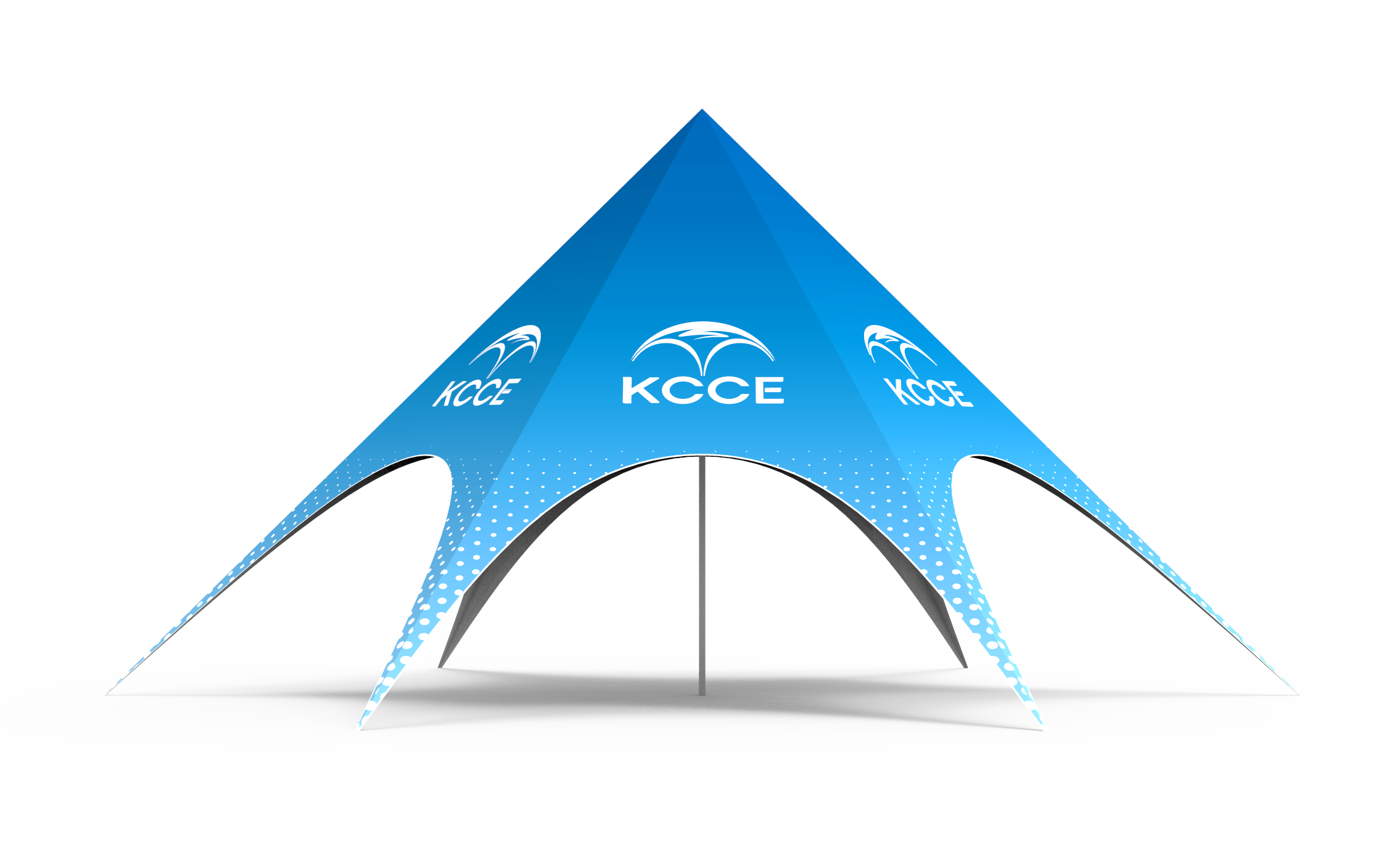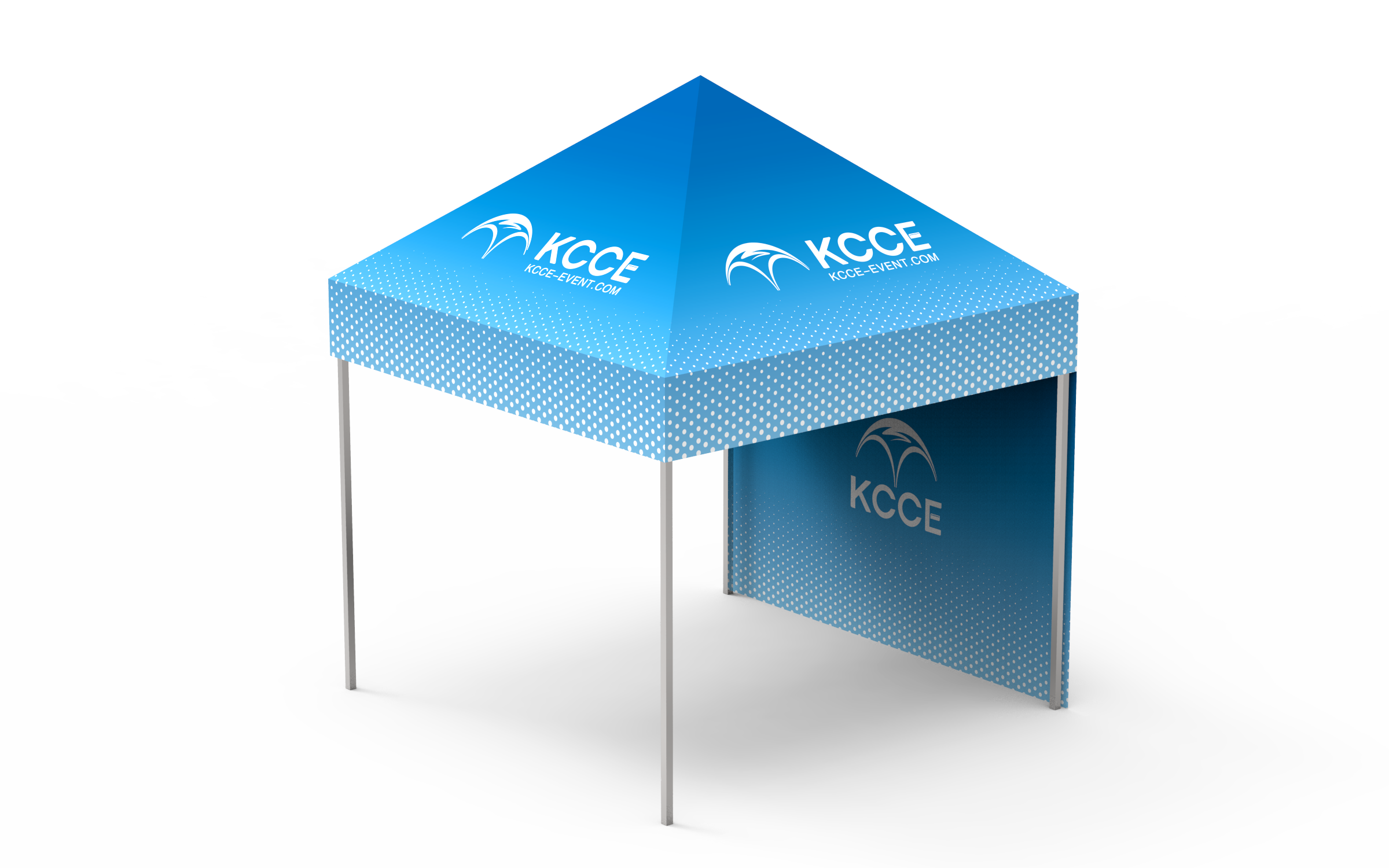
You’re comparing six vendors for a canopy tent and none of them make it easy. One quotes you a 10×10 pop-up at $400, another wants four figures for something that looks the same in the photo, and the spec sheets don’t line up. I’ve sat on both sides of that table — buying for events and selling into them — and the gap between a $400 tent and a $1,400 tent is rarely the logo on the valance. It’s the frame gauge, the top fabric, and whether the thing survives a 15mph gust at 3 PM. This guide is about how to purchase a canopy tent without guessing: size-to-price-to-use-case, what waterproofing with sides actually means, and when renting beats buying.
Quick Answer
To purchase a canopy tent, match the frame duty level and size to your use case first, then compare price. A 10×10 pop-up suits backyard and light vendor use, a 10×10 heavy-duty commercial frame suits recurring events, and a 20×20 handles larger crowds. Sides, waterproofing, and wind rating drive most of the cost jump.
What to Look for When You Purchase a Canopy Tent
Here’s the distinction that trips up most first-time buyers: pop-up and heavy-duty are not marketing labels, they’re different product categories. A pop-up canopy tent is an instant shelter — the frame unfolds in a minute, the top stays attached, and you’re done. A heavy-duty outdoor canopy tent is a commercial-grade structure, usually with a thicker frame, a heavier top, and a footprint that’s meant to be staked and weighted properly.
When you purchase a canopy tent, look at three things first:
- Frame gauge and material. Thinner legs flex under load. Thicker commercial frames hold their shape. This is the single biggest driver of the price jump between tiers, and it’s the part you can’t upgrade later.
- Top material. The canopy top is what fails first in sun and rain. A waterproof canopy tent cover with UV resistance is the baseline for anything used outdoors more than a few times a year.
- Warranty tier. Warranty length is the manufacturer telling you how long they expect the product to last. Compare it before you compare price.
The buyer’s guide published by KCCE Event makes the same point bluntly: a cheap tent that snaps a leg mid-event costs you product, customers, and a day of revenue. The failure, not the purchase, is the expensive part. Keep that framing in the back of your head for the rest of this article.
Canopy Tent Size, Price & Use-Case Comparison Table
This is the table the e-commerce pages won’t give you. Sizes, typical use cases, and what drives heavy duty canopy tent cost at each tier:
| Size / Type | Trường hợp sử dụng điển hình | What Drives the Price | Duty Level |
|---|---|---|---|
| 10×10 pop-up | Backyard party, camping and tailgating, light craft fairs | Frame gauge, top fabric weight, carry bag quality | Consumer / light commercial |
| 10×10 heavy-duty | Recurring vendor events, trade shows, commercial use | Thicker frame, commercial top, warranty length, branding options | Commercial |
| 20×20 | Weddings, large outdoor events, big vendor footprints | Frame steel weight, number of legs, sidewall count, anchoring system | Commercial / event grade |
| Custom / branded | Branded activations, roadshows, retail displays | Logo printing method, minimum order quantity, lead time | Depends on frame spec |
On the 20×20 question — “what size canopy tent do I need for a 20×20 space?” — the answer is a 20×20 tent, but plan the space around it, not just under it. You need clearance for stakes, weight bags, and sidewalls, so a large canopy tent 20×20 really wants a footprint closer to 24×24 once you’ve anchored it properly.
And yes, a 10×10 canopy tent fits in most backyards without drama. It’s roughly the footprint of a small dining set. If you’re hosting a canopy tent for backyard party duty a few times a year, a 10×10 pop-up is the sane choice. The heavy-duty frame is overkill unless you’re setting up weekly.
How Much Does a Heavy Duty Canopy Tent Cost?
How much does a heavy duty canopy tent cost? Expect a clear step up from pop-up pricing, and expect the jump to be justified by structure, not branding. Three things push the number up:
- Frame steel. Commercial frames use heavier gauge legs and thicker cross-bracing. That’s material cost you can feel when you lift it. And honestly, that weight is a real trade-off — social media buyers complain constantly about canopies that are too heavy to move. The honest answer is that durability and portability pull in opposite directions, and you pick your side based on how often you set up.
- Top fabric and coating. A waterproof, UV-resistant top costs more per square yard than a basic cover. This is where “cheap vs. heavy-duty” actually shows up in year two.
- Tùy chỉnh. For a custom canopy tent 10×10, the cost drivers are logo printing method, minimum order quantity, and lead time — not the tent itself. Custom work is a scheduling problem as much as a budget problem, so ask about lead times before you fall in love with a design.
One thing I’d flag: don’t buy on unit price alone. Cost comparison work from LP Outdoors (2025) frames the decision around total value across the tent’s life, not the sticker — which matches what I’ve seen. A tent you replace every season is the expensive option.
If you’re buying heavy duty online, ask for the frame gauge and top weight in writing before you order. Vendors who can’t answer that quickly are telling you something.
Are Canopy Tents With Sides Waterproof?
Short answer: the top usually is, the sides are where it gets murky. Canopy tents with sides are waterproof at the roof panel far more reliably than at the sidewalls, because sidewalls are often lighter fabric and attach at seams and zippers that are the first place water gets in. If rain protection is the point, ask specifically about the sidewall fabric and how the panels attach.
Wind is the bigger issue with sides on. A canopy with sidewalls is a sail — the panels catch wind that would otherwise pass through. That’s why canopy tent weight bags and stakes aren’t accessories, they’re part of the system. The KCCE buyer’s guide describes exactly this failure mode: a gust hitting a tent that wasn’t anchored for it, and a leg giving out. Sides make anchoring non-negotiable.
Setup difficulty goes up with sides too. Two people, twenty minutes, is a realistic expectation for a sided 20×20. If your staff are setting up alone, factor that in. An outdoor canopy tent with sides that takes one person an hour to pitch is a tent you’ll stop using.
So: are canopy tents with sides waterproof? The roof, generally yes if it’s a coated waterproof canopy tent cover. The walls, only as good as the seams and the fabric spec. Get it in writing.
Pop-Up vs. Heavy-Duty: Which to Purchase?
This is the decision that matters most, so let me make it concrete by use case.
- Weddings and outdoor ceremonies. You want the best canopy tent for outdoor events — which means event-grade frame, proper anchoring, and enough size that guests aren’t crowded. A 20×20 with sides is the realistic starting point. A pop-up will look undersized in photos and move in the wind.
- Camping and tailgating. Portability wins. A pop-up canopy tent that packs into a car and pitches in minutes beats a commercial frame you can’t lift alone. Prioritize the waterproof top and a decent carry bag.
- Backyard and family use. 10×10 pop-up, every time. You don’t need commercial-grade for four parties a year.
- Commercial vendor events. This is where the heavy-duty purchase canopy tent earns its money. Recurring setups, weather exposure, and brand visibility all push you toward commercial grade. A custom canopy tent 10×10 with your logo is a marketing asset, not just shelter.
My take: if you’ll set up more than a dozen times a year, buy heavy-duty. Below that, a good pop-up is the smarter purchase, and you can put the savings into a second unit.
Buy vs. Rent: Local & Custom Options
Searching “canopy tent 10×10 near me” or “heavy duty canopy tent 20×20 near me” usually surfaces two kinds of suppliers: rental houses and local dealers. Both are worth a call before you buy online.
Rent when it’s a one-off. A single wedding or a single trade show doesn’t justify owning a 20×20 — rental covers delivery, setup, and takedown, and you don’t store it afterward. Buy when the math flips: recurring events, or a tent that doubles as branding.
For custom work, the local supplier route has a real advantage — you can see the fabric and check the frame before committing. If you’re sourcing a custom canopy tent from a manufacturer instead, the questions are the same: minimum order quantity, logo method, and lead time. KCCE, the brand behind Dacheng Outdoor Products (established 2006), runs a custom-manufacturing model with OEM/ODM options, custom sizes, colors, and logo printing, and lists a one-piece minimum order on its custom canopy and gazebo tent lines, according to the brand. — which is worth knowing if you assumed custom always means a container load.
Whether you buy heavy duty canopy tent online or through a local dealer, the same rule applies: spec first, price second.
What Is a Canopy Tent and Who Needs One
A canopy tent is a freestanding, portable shelter built on a collapsible frame with a fabric top — distinct from a pole tent (staked, no frame) and a carport (permanent structure). The working definition matters because it determines what you’re actually buying: a self-supporting frame rated for temporary use, not a semi-permanent structure. Buyers I’ve worked with fall into five buckets: individual consumers (backyard, camping, tailgating, beach), recurring vendors (farmers markets, craft fairs, food booths), commercial operators (dealerships, job sites, pop-up retail), schools and municipalities (field days, registration tables, first-aid stations), and event/rental companies buying in volume. Each bucket has a different failure cost. A backyard host can tolerate a bent leg after three seasons; a vendor whose booth collapses at 9 AM on a Saturday has lost the day’s revenue and possibly a market slot. That asymmetry — not budget — is what should push you up a tier. If you set up more than roughly 20 times a year, or you’re sheltering people rather than boxes, you’re in commercial territory regardless of how small the footprint is.
Types of Canopy Tents: Pop-Up, Instant, Heavy-Duty, Beach, and Custom
The category names get used interchangeably on product pages, but they map to real spec differences. Pop-up (instant): frame pre-assembled with the top attached, unfolds in 60–120 seconds, typically 200D–300D polyester top, 25–30mm steel or aluminum legs. This is the consumer default. Heavy-duty commercial: 500D–600D ripstop top with PU coating, 30–40mm square steel or hex aluminum frame, truss-style cross bars, rated to 25–35mph when properly anchored. Beach/lightweight: aluminum frame, sub-25 lb carry weight, often with sandbag or auger anchors instead of stakes — built for wind off water and soft ground, not for daily commercial use. Custom branded: same frame tiers as above, but with dye-sublimation or screen-printed valances and full-wall graphics; MOQ usually starts at 1 for digital print and drops per-unit cost at 10–25 units. The trap is buying a “heavy-duty” listing that’s a pop-up frame with a heavier top. Check leg wall thickness (1.0mm vs. 1.5mm is the real dividing line) and whether the frame is truss-braced before you accept the label.
Canopy Tent Sizing Guide: 8×8, 10×10, 12×12, and Beyond
Sizing is where buyers most often under-buy. The 10×10 (100 sq ft) is the standard vendor booth — it fits most market stall allocations and holds a 6ft table plus two people comfortably. The 8×8 exists mainly for tight footprints and solo setups; it’s cramped for retail display. The 12×12 (144 sq ft) is the sweet spot for food vendors and anyone running two tables — it’s the size most county fair booths are drawn at. Beyond that, 10×15 and 10×20 are the common “double booth” sizes, and 20×20 (400 sq ft) is event-grade. Two practical rules from the field: first, your tent footprint is not your usable footprint — subtract 18–24 inches per side for stakes, weights, and sidewall hardware. Second, check your venue’s stall dimensions before ordering, because a 12×12 that doesn’t fit a 10×10 allocation gets you turned away at check-in. If you’re between sizes, size up on the frame and down on the top — a 10×15 frame with a 10×10 top is a legitimate config for uneven ground.
How to Choose the Right Canopy Tent for Your Use Case
Match on three axes and the decision makes itself: setup frequency, shelter purpose, and anchoring conditions. Setup frequency — under 10 times a year, pop-up; 10–30, heavy-duty pop-up; 30+, commercial truss frame. Shelter purpose — gear and shade only, consumer tier is fine; people, product, or electrical equipment underneath, go commercial and add a wind rating you can actually verify. Anchoring conditions — pavement means weight plates (40–50 lb per leg minimum), grass means auger stakes, sand means sandbags and a beach-frame. Then layer in the operational constraints: does it need to fit one person’s car (sub-50 lb total), does it need sidewalls for rain, does it need to survive being packed wet. My rule of thumb after watching tents fail: buy one tier above what your worst day requires, not what your average day requires. The price difference between tiers is typically significant, according to brand-provided information.; the cost of a mid-event failure is 100% of that day plus reputational damage with your market organizer.
Shop by Event & Activity: Markets & Booths, Commercial Operation, Schools & Community, Sports & Events
Markets & booths: 10×10 heavy-duty, white or branded top, at least one solid sidewall for wind, weight plates if on pavement. Vendors running 30+ markets a year should be on a truss frame — the folding-joint wear is the failure point on pop-ups. Commercial operation: 10×15 or 10×20, full sidewall sets, printed valance, and a frame rated for permanent-season outdoor exposure; job-site buyers should confirm the top is fire-retardant to NFPA 701, which many municipal and industrial sites require. Schools & community: 10×10 and 12×12 pop-ups in volume, prioritized for one-person setup and labeled weight bags — staff and volunteers are setting these up, not trained crews. Sports & events: 10×20 and 20×20 event-grade frames, staked and weighted in combination, with a documented wind rating; sidelines and finish lines need the truss frame because they’re up for 8–12 hours under load. Across all four, the accessory that gets skipped and shouldn’t is the weight system — a 10×10 with no weights is a kite above 15mph.
Custom Branded Canopy Tents and Accessories
Custom branding is priced by print method and MOQ, not by frame. Dye-sublimation on the canopy top adds a premium over the base tent price for a single unit and typically drops at higher quantities, according to brand-provided information.; screen-printed valances are cheaper per unit at volume but limited to spot colors. Full-wall graphics (back wall, two half-walls) typically add a notable percentage to the tent cost, according to brand-provided information. but convert a shelter into a booth. Lead time is the number buyers underestimate: Standard custom orders typically run several weeks, and rush production adds a premium, according to brand-provided information. Accessories worth budgeting at purchase rather than after: weight bags (empty, fill on site — 40 lb per leg), a wheeled storage bag if the packed weight exceeds 50 lb, sandbag anchors for beach use, and a replacement top priced at order time so you know the long-term cost. One spec note: confirm the print is on the outside of a coated fabric, not laminated under a clear layer — laminated prints delaminate within two seasons in UV-heavy climates.
Canopy Tent Spec Comparison: Wind Rating, Fabric Denier, and Frame Material
This is the horizontal table the spec sheets bury. Numbers are typical ranges across the tiers, not single-vendor claims:
| Spec | Pop-Up (consumer) | Heavy-Duty (commercial) | Event-Grade (20×20+) |
|---|---|---|---|
| Frame material | 25–30mm steel or aluminum | 30–40mm square steel / hex aluminum | 40mm+ truss steel or heavy aluminum |
| Leg wall thickness | 0.7–1.0mm | 1.0–1.5mm | 1.5mm+ |
| Top fabric | 200D–300D polyester | 500D–600D ripstop, PU-coated | 600D+ with reinforced stress points |
| Chỉ số chống nước | 800–1,500mm hydrostatic head | 2,000–3,000mm | 3,000mm+ |
| Wind rating (anchored) | 15–20mph | 25–35mph | 35–45mph, staked + weighted |
| Bảo hành | 1 年 | 3–5 years | 5–10 years |
| Fire rating | Rarely certified | Often NFPA 701 | NFPA 701 standard |
The wind rating is the column to read first, and it’s only valid with the anchoring system specified — an unanchored 35mph-rated frame is a 15mph frame. Fabric denier is a durability proxy, not a waterproofing one; the PU coating and seam sealing determine whether you stay dry.
Setup Time, Packed Weight & Storage Size: Real-World Comparison
Setup time and packed weight decide whether you actually use the tent, so here’s what the field looks like:
| Size / Type | Setup Time (1–2 people) | Trọng lượng đóng gói | Packed Dimensions |
|---|---|---|---|
| 8×8 pop-up | 2–3 min | 28–35 lb | ~48 x 9 x 9 in |
| 10×10 pop-up | 3–5 分钟 | 35–45 lb | ~52 x 10 x 10 in |
| 10×10 heavy-duty | 5–10 min | 55–75 lb | ~60 x 12 x 12 in |
| 12×12 heavy-duty | 8–15 min | 75–95 lb | ~64 x 14 x 14 in |
| 10×20 event-grade | 20–35 min (2–3 people) | 130–180 lb | ~70 x 18 x 18 in |
| 20×20 event-grade | 30–60 min (3–4 people) | 200–280 lb | Multiple cases |
Two things this table tells you that photos don’t. First, anything above 50 lb packed is a two-person lift — plan accordingly if you set up solo. Second, the heavy-duty tier roughly doubles setup time versus pop-up, but it’s the anchoring (stakes, weights, sidewalls) that eats the minutes, not the frame. Budget 10 extra minutes for weights on pavement and 15 for staking on grass.
Kết luận
Before you compare a single price, match size and duty level to your use case: 10×10 pop-up for backyard and camping, 10×10 heavy-duty for recurring vendor work, 20×20 for events and weddings. Then use the comparison table above to shortlist two tiers and get frame gauge, top spec, and sidewall waterproofing in writing from both. That’s how you purchase a canopy tent without overpaying for the wrong thing.
Các câu hỏi thường gặp
Q: What is the best pop-up beach tent?
Trả lời: For beach use, prioritize a pop-up canopy tent with a UV-resistant top, a compact carry bag, and included stakes or sand weights. Wind on open sand is the real test, not sun. A 10×10 pop-up is more shelter than most beach trips need; a smaller instant canopy shelter is easier to carry and anchor. Check the anchor system before anything else.
Q: What size canopy tents are there?
Trả lời: The common sizes are 10×10, 20×20, and larger custom footprints. A 10×10 handles backyard parties, camping, and single-vendor setups; a large canopy tent 20×20 suits weddings and bigger events. Custom sizes are available from manufacturers that offer OEM/ODM production, so size isn’t limited to stock options if you’re ordering direct.
Q: How much does a 40×60 tent cost?
Trả lời: A 40×60 is event-structure territory, not pop-up territory. Pricing depends on frame steel weight, top fabric, sidewall count, and anchoring system, and it’s quoted per project rather than off a price list. Get a written spec and quote from the supplier; at that size, delivery and installation are part of the cost, not extras.
Q: What is the best tent for rainy weather?
Trả lời: The best tent for rainy weather has a coated waterproof canopy tent cover, sealed seams, and sidewalls that attach without gaps — plus proper anchoring, because rain usually arrives with wind. Ask for the sidewall fabric spec specifically; roof waterproofing is more reliable than wall waterproofing across most canopy tents with sides.
Q: Is a cheap canopy worth buying, or should I spend more?
Trả lời: It depends on frequency. For a few backyard uses a year, a budget pop-up is fine. For recurring commercial vendor events, the heavy-duty purchase canopy tent pays for itself — the failure cost of a snapped frame mid-event is higher than the price gap. Buy for how often you’ll set up, not for the lowest number.
Q: Can I get a custom canopy tent in small quantities?
Trả lời: Often, yes. Some manufacturers list a one-piece minimum order on custom canopy and gazebo lines, with custom size, color, and logo printing available. The real constraints are lead time and logo method, not quantity — so ask about production scheduling early if you have an event date locked in.
Q: Where should I look for a canopy tent near me?
Trả lời: Search “outdoor canopy tent with sides near me” and “canopy tent rental nearby” separately. Rental houses and dealers show up in different results. Local dealers let you inspect fabric and frame in person, which is worth a trip before you buy heavy duty online. For one-off events, rental usually wins on total cost.
Q: Do I need weight bags and stakes with a canopy tent?
Trả lời: Yes, especially with sides attached. Sidewalls turn the canopy into a sail, and weight bags plus stakes are what keep it planted. The KCCE buyer’s guide describes exactly this failure — a gust hitting an unanchored tent and snapping a leg. Treat anchoring as part of the purchase, not an afterthought.
Tham Khảo
1. The Right Canopy Tent For Events: A Buyer’s Guide 2026 – kcce-event.com
2. Consumer vs Commercial Grade Canopy Tents: Who is the Winner? – instent.com
3. Features to Consider When Choosing a Canopy Tent – zahratents.com
4. The Benefits of Choosing the Right Canopy Material – westshade.com
5. Cost Comparison of Canopy Tents: Find the Best Deal in 2025 – lpoutdoors.com