Every vendor in this space hides pricing behind “Get a quote.” You fill out a form, wait two days, and get a PDF that says “contact us for details.” Annoying, right? I’ve been sourcing inflatable marketing tents for event activations for years, and I can tell you the real numbers are not that mysterious. So here’s the deal: I’m going to give you actual price ranges, sizing math, honest downsides, and the stuff suppliers won’t put in writing. If you’re a decision-maker comparing an inflatable marketing tent against a pop-up canopy, this is the version of the conversation you actually need.
Quick Answer
An inflatable marketing tent is a blower-inflated, custom-branded structure used as a booth, activation space, or outdoor advertising tent at events and trade shows. Ballpark pricing runs from roughly From around $800 for a small stock canopy to $10,000+ for a large fully printed custom build, depending on size, material, and graphics.
What Is an Inflatable Marketing Tent? (And Who It’s For)
Strip it down: an inflatable marketing tent is a structure made from airtight or constant-blower chambers, inflated with a blower, and covered in your branding. Two main material families dominate. PVC-coated fabric is the heavy-duty option — Future Market Insights projects PVC holding a 98.4% share of the leading material segment in 2026, which tells you where the commercial market sits. The lighter alternative is oxford cloth, cheaper and more packable but less durable under repeated commercial use.
There’s also a split in how they hold air. Air-sealed (airtight) tents inflate once, you pull the pump, and they hold pressure for hours or days with no power. Constant-blower tents need a blower running the whole time — quieter air pressure, but you need power at the booth.
Who buys these? Event marketing managers, trade show coordinators, activation leads, and sponsorship teams. TentCraft, which builds custom inflatable structures, notes that brands use them for sampling spaces, retail product displays, and outdoor event environments — and that the style and silhouette work especially well for high-energy athletic events, motorsport activations, and music festivals. That’s the real use case. A branded inflatable tent isn’t a camping product repurposed; it’s a marketing asset shaped like a tent.
How Much Does an Inflatable Marketing Tent Cost?
Here’s the part everyone dodges. Let me give you the ballpark ranges I’ve seen in actual quoting, then you can pressure-test your own quotes against them.
| Kích Thước | Stock / minimal branding | Custom printed (single-side) | Full custom + 3D shape |
|---|---|---|---|
| 10×10 (3x3m) | $800–$1,500 | $1,800–$3,500 | $3,500–$6,000 |
| 13×13 (4x4m) | $1,200–$2,200 | $2,800–$5,000 | $5,000–$8,500 |
| 20×20 (6x6m) | $2,500–$4,000 | $6,000–$10,000 | $10,000+ |
A few honest caveats. These are ballpark figures from my own sourcing experience and common industry practice — not a published price list, because nobody publishes one. The inflatable marketing tent price swings hard on three things: material (PVC vs. oxford), printing coverage (one wall vs. every surface), and whether you need a custom shape or a standard canopy.
Then there’s the hidden line items. Blower (around $80–$250 depending on size). Ground stakes and ballast. Shipping — and this is the one that bites people, because A 20×20 packed down still weighs a lot and ships as freight, not parcel. If you’re buying inflatable tent for sale listings online, check whether the blower is included. Half the cheap listings aren’t.
The reason competitors gate pricing is simple: once you see a number, you can comparison-shop. Which is exactly why you should get 2–3 quotes and make them compete.
Inflatable Tent vs. Pop-Up Canopy: Which Is Better?
You might be wondering whether the inflatable route is worth the premium over a Around $200 pop-up canopy from a big-box store. Fair question. Here’s the honest comparison.
| Yếu tố | Inflatable marketing tent | Pop-up canopy |
|---|---|---|
| 品牌展示面 | Full wrap, 3D shapes, all sides | Mostly the valance and top |
| Wind performance | Depends on anchoring; needs ballast | Frame can rack and bend |
| Setup | Blower or pump, often one person | Fast, but frame assembly needed |
| Chi phí | $800–$10,000+ | $150–$600 |
| Bảo quản | Bulky, needs dry storage | Nhỏ gọn |
| Power need | Blower models need constant power | Không có |
When does each win? Pop-up canopies win for quick, low-stakes appearances — a farmers market, a one-day street fair, a backup shade structure. They’re cheap and you can throw them in a trunk.
Inflatable wins when the tent is the marketing. If your goal is a booth people photograph and post, an inflatable canopy tent with full graphics does something a pop-up physically cannot — it becomes a landmark on the show floor. I’ve watched foot traffic route around a plain pop-up and stop dead at a sculpted inflatable. That’s not a small thing when you’ve paid for the booth space.
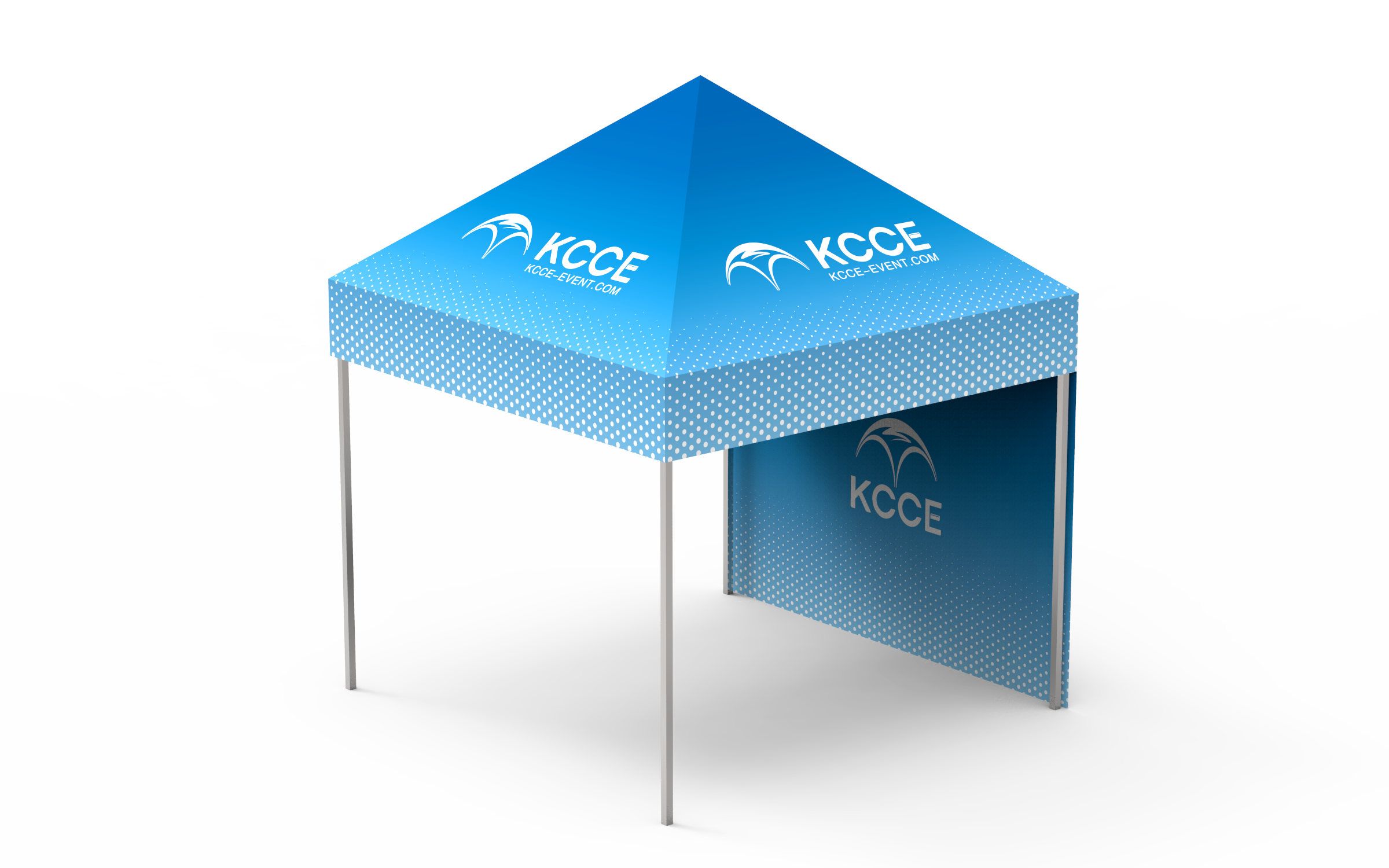
But let’s be real about the downsides, because the inflatable tent vs pop-up canopy debate usually skips them. Inflatables need anchoring — real anchoring, not four sandbags. Wind is the enemy of anything with surface area, and a big inflatable is basically a sail when the gusts hit. Blower models need a power drop at your booth, which means coordinating with the venue. And storage matters: you can’t fold a PVC inflatable into a closet shelf. It needs a dry, dark space or it mildews.
What Size Inflatable Marketing Tent Do You Need?
Size is where most first-time buyers overshoot or undershoot. Let me break it down by footprint.
10×10 inflatable tent. This is the workhorse. It fits a standard single booth space at most trade shows, holds two to three staff comfortably, and is the size I’d recommend for a first custom build. If you’re searching for an inflatable canopy 10×10, you’re in the right lane — it’s the most common commercial footprint for a reason. The KCCE catalog includes a 10×10 blow-up marquee tent built specifically for events, which tells you this size is the industry default.
13×13 (4x4m). Steps up to a proper activation space. Room for a demo table, a product display, and four staff without elbows touching. Good for sampling and hands-on demos.
20×20 (6x6m). This is a destination booth. You’re building a room, not a stall. Suits sponsorship activations, product launches, and anything where you want people to walk bên trong and stay.
How to match it to your show: check your booth’s allotted footprint first — don’t buy before you know it. Then think about traffic goals. If you want people to stop and grab a flyer, 10×10 is plenty. If you want them to linger for a five-minute demo, go bigger. A trade show tent size that’s too small chokes your own traffic; too big and you look empty.
Are Inflatable Marketing Tents Worth It?
Short answer: yes, if the tent is doing real marketing work. No, if you just need shade.
The pros, honestly:
- Branding ceiling is unmatched. Full-surface printing, 3D shapes, custom silhouettes. A pop-up can’t compete.
- Setup is genuinely fast once you’ve done it twice. Inflate, anchor, done.
- Repeat use. A well-made PVC tent lasts multiple seasons if you store it right.
The cons, and I won’t sugarcoat these:
- Storage is a real burden. Bulky, needs to stay dry.
- Power dependency on blower models.
- Wind risk if you cheap out on anchoring.
- Lead time. Custom builds are not overnight. Plan on weeks, not days, and longer if you’re ordering around peak event season.
- Minimum order. Many manufacturers run a 1-piece MOQ, which is friendly for small buyers — The KCCE listings show 1 Piece MOQ across their tent range — but fully custom tooling and one-off 3D shapes can still carry setup costs.
So are inflatable tents worth it? If your booth is a lead-generation or brand-awareness investment, the math usually works. If it’s a checkbox, buy a pop-up.
How to Choose a Custom Inflatable Tent Supplier
This is where most people get burned, and it’s usually not on price — it’s on specs nobody asks about.
Vet the materials. Ask for the actual fabric weight and coating, not “high quality PVC.” Ask whether it’s air-sealed or blower-dependent. For a custom inflatable tent you’ll use repeatedly, air-sealed chambers mean no constant power draw — KCCE’s portable waterproof quick-setup shelter line uses air-tight chambers, which is the direction I’d push any buyer who hates running cables.
Vet the blower. CFM rating, noise level, and whether it’s included. A weak blower on a big tent means sagging walls by hour three.
Vet the wind rating and anchoring plan. Ask what wind speed the structure is rated for and what ballast they recommend. If a supplier can’t answer this, walk.
Vet the warranty. Get it in writing. Ask what’s covered — seams, chambers, valves, printing.
Vet the logo and mockup process. Any serious custom inflatable tent supplier will send you a 3D mockup before production. Insist on it. You want to see the logo placement, the proportions, and the color match before anything gets cut. If they skip the mockup and jump to production, that’s a red flag.
Speaking of which — if you want a reference point for what a full custom build looks like, including modular canopy designs with customized graphics, it’s worth seeing how established manufacturers structure their product lines. A supplier that publishes its full range openly is usually a supplier that’s not hiding anything.
Complete Analysis of Inflatable Tent Types:Spider Tent、Custom Shapes
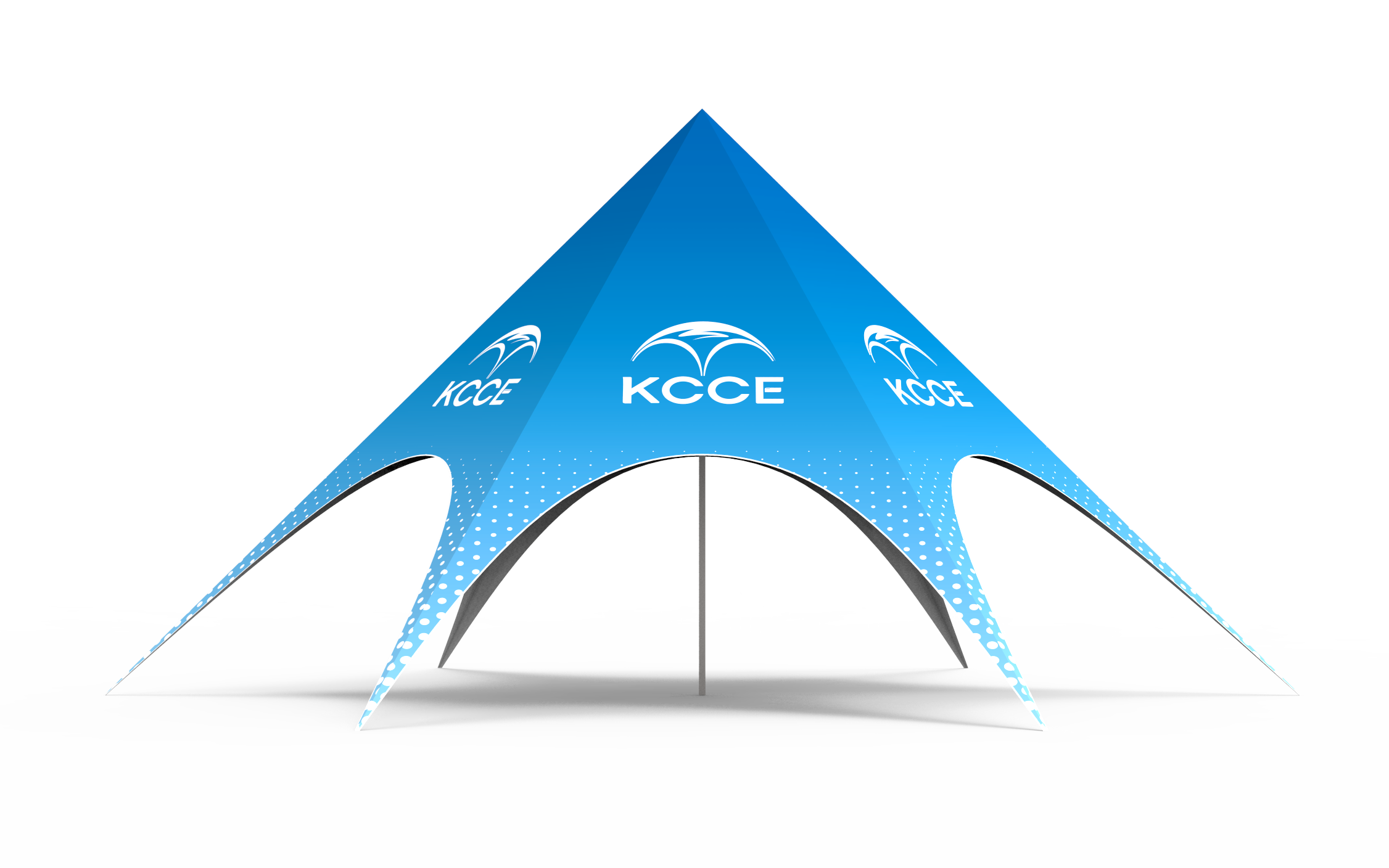
Spider tents, gazebos, canopies, and custom shapes behave so differently on site that treating them as one product category is how you end up with the wrong asset. A spider tent (also called a “legs” or “star” tent) uses multiple inflatable legs converging on a central hub, giving open sightlines on every side — ideal for product display islands and corner booths where you want traffic flowing through, not around. Standard footprints run 10×10 up to 20×20, and because the legs are separate chambers, a single punctured leg usually won’t drop the whole roof. Gazebos add printed walls and a peaked roof; they read as “premium lounge” and work for VIP hospitality, but the enclosed walls block sightlines, so you trade visibility for intimacy. Flat canopies are the lightest and cheapest silhouette — essentially an inflatable roof on straight legs — best for shade and signage rather than enclosure. Custom shapes (arches, domes, product replicas, branded characters) are where the real differentiation lives, but expect tooling and design fees on top of the build, and Lead times stretching around 4–8 weeks versus around 1–2 weeks for stock shapes. Match the silhouette to the activation goal before you match the print.
Setup of Inflatable Tents、Transportation and Maintenance Guide
Setup math matters more than people think. A 10×10 air-sealed tent inflates in about 5–10 minutes with one person and a 110V blower; A 20×20 constant-blower build realistically needs about 2–3 people and around 20–30 minutes, plus a power drop within cord reach — Bring a 100ft 12-gauge extension and a generator backup, because venue power fails more often than you’d expect. Ballast is non-negotiable: Plan on around 40–60 lbs per leg for a 10×10 in moderate wind, doubling for exposed outdoor sites. Most commercial tents carry a wind rating around 25–30 mph; above that, deflate. Transport is where the hidden cost lives — A 20×20 PVC build packs to roughly 150–250 lbs and ships as freight on a pallet, not parcel, so budget LTL freight and a loading dock or liftgate. Maintenance is simple but disciplined: clean PVC with mild soap and water (never solvent), fully dry before packing to prevent mildew, store in the supplied bag away from UV and rodents, and inspect seams and blower filters before every event. Patch kits handle pinholes; seam failures go back to the manufacturer.
Inflatable Marketing Tents’10High-Conversion Application Scenarios
- Trade show booths — a 10×10 or 13×13 inflatable stands out against rows of identical pipe-and-drape.
- Product sampling — enclosed gazebo with a serving counter drives dwell time and trial.
- Festival activations — spider tents handle high traffic flow and photo moments.
- Motorsport and athletic events — TentCraft specifically flags these as high-fit environments for branded inflatables.
- Retail pop-ups — a custom-shaped tent becomes the storefront.
- Sponsorship footprints — logo-dense canopies maximize brand impressions per square foot.
- Roadshows and mall tours — packable oxford builds move between venues fast.
- Beach and resort promotions — weighted ballast and UV-stable PVC required.
- Charity and community events — registration and donation tents with clear signage.
- Product launches — custom dome or replica shapes create the “what is that?” pull that stops foot traffic.
The pattern across all ten: the tent isn’t the marketing — the space under it is. Design the activation first, then spec the tent around it.
Inflatable Tent MarketingROI:How to Measure Event Effectiveness
Inflatable Tents’ROICalculation and Marketing Effectiveness Measurement Guide
Here’s the formula I actually use. ROI = (Attributable Revenue − Total Cost) ÷ Total Cost × 100. Total cost includes the tent, blower, ballast, freight, and — the line most people forget — labor and event fees. Worked example: A 13×13 custom-printed tent at around $4,500 all-in, used across 8 events in a year. If the activation generates 2,000 qualified leads at a 4% close rate on a $150 product, that’s 80 sales = $12,000 revenue. ROI = ($12,000 − $4,500) ÷ $4,500 = 167%. Now amortize: Using the same tent over 3 years and 24 events can drop cost-per-event to around $187, with ROI climbing past 500%. That’s the argument for buying over renting — Rental on the same build runs around $400–$900 per event.
Track three metrics that actually correlate with revenue: leads captured per event (scan or form, not business cards), dwell time (a tent that holds people 3+ minutes converts dramatically better than a drive-by), and brand impressions (foot traffic × estimated exposure). Compare against a pop-up canopy baseline — same event, same offer — and You’ll usually see inflatables pull around 20–40% more foot traffic purely on visual stop-power. If you can’t attribute revenue directly, use cost-per-lead: A $4,500 tent generating 2,000 leads is $2.25 CPL, which beats most paid digital channels at events.
A Comprehensive Analysis of Inflatable Tent Types:Spider Tent、Custom Shapes
Setting Up an Inflatable Tent、Transportation and Maintenance Guide
Inflatable Marketing Tents’10High-Conversion Application Scenarios
Inflatable Tent MarketingROI:How to Measure Event Effectiveness
Inflatable Tents’ROICalculation and Marketing Effectiveness Measurement Guide
Kết luận
Stop accepting “Get a quote” as an answer. Request 2–3 quotes with your exact size and logo file attached, and make them compete on specs — material, blower, anchoring, warranty — not just the bottom-line number. And before you sign anything, confirm the lead time against your event date. A perfect tent that arrives the day after your show is worth exactly nothing.
One thought to leave you with: what’s your booth’s real goal? If it’s foot traffic and photos, go inflatable and go bold. If it’s shade and a table, save your money.
Các câu hỏi thường gặp
Q: What is the best air tent on the market?
Trả lời: It depends entirely on your use case. For marketing and events, the best air tent is one with air-sealed chambers, PVC-coated fabric, full-surface custom printing, and a documented wind rating. There’s no single universal winner — a tent that’s perfect for a music festival activation is overkill for a one-day street fair. Match the build to the job.
Q: What’s the best inflatable tent on the market?
Trả lời: Same logic applies. For commercial use, prioritize material weight, chamber type, and anchoring over brand name. Future Market Insights projects the inflatable tent market growing at a 7.5% CAGR from 2026 to 2036, which means more suppliers are entering — and quality is spreading out, not concentrating in one brand. Vet the specs, not the logo.
Q: Are the inflatable tents any good?
Trả lời: Yes, for the right job. Well-made PVC inflatables hold up across multiple seasons of commercial use when stored and anchored properly. The reputation problem comes from cheap oxford-cloth imports sold as “inflatable tents” that sag, leak, and fade. Spend on materials and you’ll get years of use. Cheap out and you’ll get one event.
问:充气帐篷的缺点是什么?
Trả lời: Storage is bulky and must stay dry. Blower models need constant power at the booth. Wind is a genuine risk without proper ballast and stakes. Custom lead times run weeks, not days. And custom inflatable tent pricing carries setup costs on one-off shapes. None of these are dealbreakers — but go in knowing them.
Q: How much does an inflatable tent cost?
Trả lời: Ballpark: For a small stock 10×10, prices are commonly around $800–$1,500; for a custom-printed 10×10, around $1,800–$3,500; and for a large fully custom 20×20 with 3D shaping, $10,000+. Blower, ballast, and freight are often separate line items. Always confirm what’s included in the inflatable marketing tent price before comparing quotes.
Q: Can I buy just one inflatable marketing tent with sides?
Trả lời: Yes. Many manufacturers run a 1-piece minimum order, and the KCCE listings show 1 Piece MOQ across their trade show tent range. An inflatable marketing tent with sides gives you more branding surface and better weather protection. Just confirm the side walls are included in the quote, not an add-on.
Q: Where can I find an inflatable tent for events near me?
Trả lời: Search for inflatable tent suppliers near me or custom inflatable tent near me, but don’t limit yourself geographically — most commercial inflatables ship internationally, and freight is a line item regardless. What matters more is whether the supplier sends a 3D mockup and documents their wind rating. Distance is secondary to specs.
Q: Is an inflatable tent better than a pop-up canopy for trade shows?
Trả lời: For branding, yes — dramatically. An inflatable canopy tent for trade show use creates a visual landmark a pop-up can’t match. For pure logistics and budget, a pop-up wins. The deciding question is whether your booth needs to attract attention or just provide shelter. If it’s the former, inflatable every time.
Tham Khảo
1. Inflatable Tent Market Report – futuremarketinsights.com
2. Integral Inflatable Tent Market Report 2034 – growthmarketreports.com
3. 9 Branded Inflatable Tent Designs That Will Inspire Your Next Outdoor Event Activation – tentcraft.com
4. Inflatable Tents Market Size, Share, Industry Report, 2035 – businessresearchinsights.com
5. Lều bơm hơi – kcce-event.com