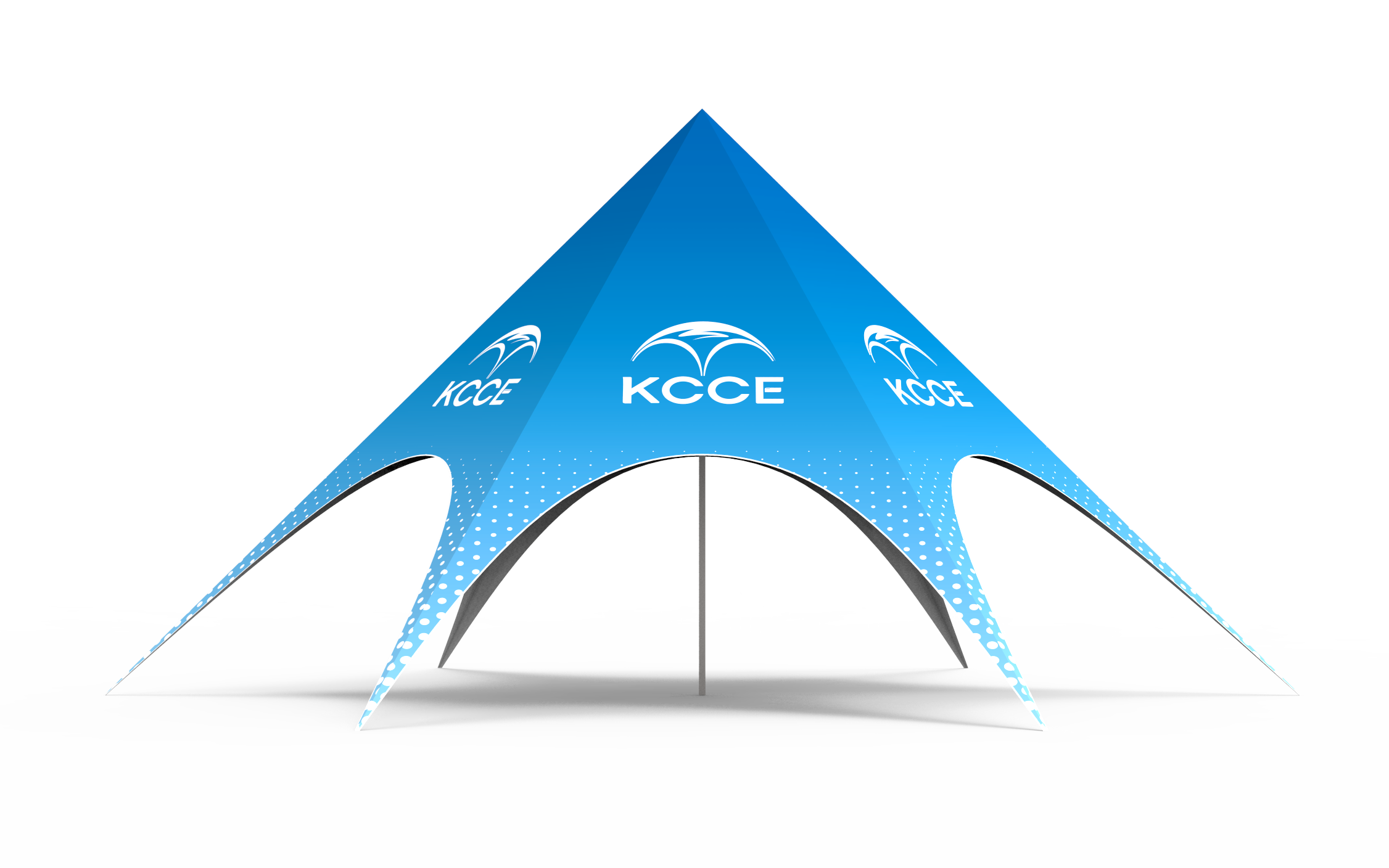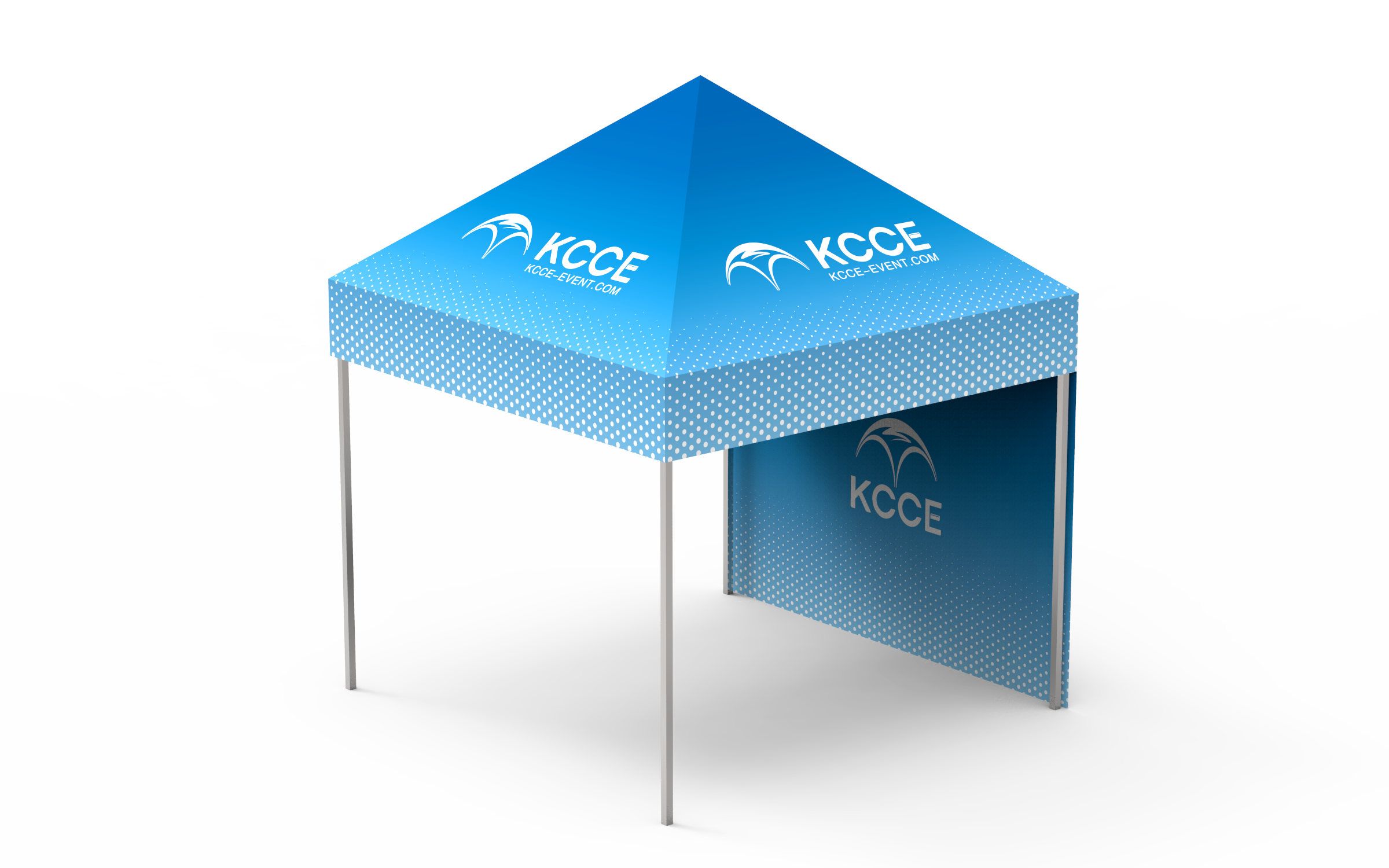
You’re planning something big. You typed two product names into Google. And now you’re stuck scrolling through the same photo over and over.
That’s where most of my clients end up. They’ve got a product launch, a festival activation, or a trade show on the calendar, and they need a branded structure that doesn’t fall apart in a light breeze—or drain their entire marketing budget before the event even starts. The images online all blur together: a canopy, some printed graphics, four corners anchored to the ground. But the real differences between a custom inflatable tent and a pop up tent are buried in setup logistics, long-term costs, and whether your structure survives a surprise thunderstorm.
I’ve spent years in the inflatable manufacturing space. I’ve watched brands make the wrong call and pay for it, and I’ve seen others get it right on the first try. This guide isn’t a sales pitch. It’s a decision framework built on real numbers, actual material specs, and the kind of field experience you only gain after watching a pop-up canopy cartwheel across a parking lot at 3 p.m. on a Saturday.
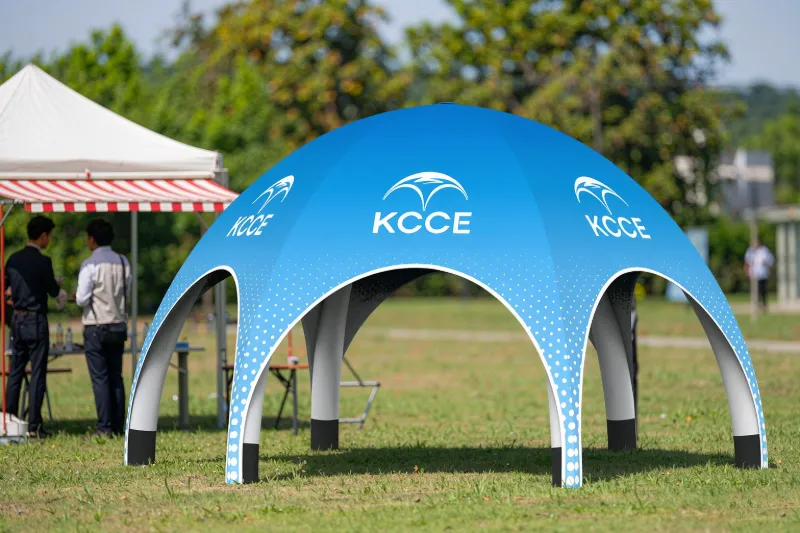
Quick Answer
Choose a custom inflatable tent & pop up tent based on your event frequency and wind exposure. Inflatable structures win for high-traffic, outdoor, multi-day brand activations where visual impact and 40–60 mph wind resistance matter. Pop-up canopies win for quick, low-budget, indoor or sheltered setups where speed and portability are the priority.
Why This Comparison Matters for Event Brands
Let me start with a story that still makes me wince. A few years back, a regional sports drink brand ordered a fleet of standard pop-up canopies for a summer activation tour. They looked sharp in the warehouse photos. Day one at a beach volleyball event, a gust came off the water, and three of their six canopies were twisted into scrap metal within twenty minutes. The branding was gone. The activation was dead. The replacement cost—plus the lost sponsor exposure—ran well into five figures.
That’s the reality of choosing between a custom inflatable tent and a pop up tent without doing your homework. The buying mistake isn’t just about wasted money; it’s about event failure. When your structure goes down, your brand doesn’t just lose a tent. It loses the moment. The product sampling that never happened. The social media content that never got filmed. The partnership meeting that happened under a sagging, sad-looking canopy instead of an impressive branded environment.
The deeper issue is that these two products serve fundamentally different use cases. There is no universal winner. A pop-up canopy is a tool. An inflatable tent is a statement. One gets you covered; the other gets you noticed. And until you understand which one your event actually needs, you’re guessing.
I see this confusion constantly in my line of work. Brands reach out asking for an inflatable canopy tent because they saw a competitor’s impressive 3D structure at a festival, but their actual budget and usage pattern point toward something simpler. Or they buy pop-ups because they’re cheap, then wonder why their activation looks like every other generic booth at the expo.
The cost of getting this wrong isn’t just the sticker price. It’s the opportunity cost of a blown brand moment, the labor hours fighting with unstable structures, and the reputational damage when your tent is the one that collapsed in a mild breeze. Let’s break down the real numbers so you can stop guessing.
Cost Breakdown: Custom Inflatable Tent vs. Pop Up Tent
Here’s where most comparison articles get vague, and I’m not going to do that to you. Let’s talk actual price ranges, because the gap between these two products is significant and it directly impacts your decision.
For a custom inflatable tent, you might pay roughly $1,500 to $15,000 depending on size, shape complexity, and print coverage. A basic 10×10 inflatable canopy with standard branding sits at the lower end. A massive 20×20 custom dome with full-bleed dye sublimation printing, multiple entry points, and reinforced anchoring systems pushes toward the top of that range. That’s a wide spread, but it reflects the reality that inflatable structures are highly customizable.
Pop-up canopies, by contrast, can range from about $300 to $3,000. The lower end gets you an off-the-shelf canopy with basic screen-printed graphics. The upper end buys you a larger footprint, better fabric, and more sophisticated print quality. But even at $3,000, you’re still fundamentally buying the same product category—a collapsible frame structure with a fabric roof.
Now, here’s what the sticker price doesn’t tell you. There are hidden costs that shift the total cost of ownership dramatically over time.
For inflatable tents, you need an air pump or blower. Most units come with one, but if you’re running multiple tents simultaneously or need a backup, that’s an additional expense. Repairs are another factor—punctures happen, seams wear, and while patch kits are inexpensive, professional repairs for significant damage can add up. Replacement parts for the air beams or valves need to be factored in as well. And shipping on a large inflatable structure is not cheap; these are bulky items even when deflated.
Pop-ups have their own hidden costs. The frame is the weak point. After a season of setup and takedown, the joints loosen, the legs bend, and the whole structure becomes unstable. Replacement parts are available, but at a certain point, you’re better off buying a new canopy entirely. The print on cheaper pop-ups also degrades quickly—fading, cracking, or peeling after just a few exposures to sun and rain.
Let’s talk three-year total cost of ownership, because that’s the timeframe that actually matters for event brands.
An inflatable tent at the $4,000 mid-range price point, with a blower, basic repair kit, and one professional repair over three years, might cost around $4,800 all-in, based on typical service fees. That same tent, properly maintained, will still look good and function well at the end of year three. The dye sublimation print is embedded in the fabric, not printed on top of it, so it resists fading.
A pop-up canopy at the $1,000 mid-range price point, with replacement parts and a full replacement in year two because the frame gave out, can cost around $2,200 over three years, according to some estimates. But here’s the catch—the pop-up at the end of year three looks tired. The print is faded, the fabric is stretched, and it doesn’t create the same brand impression it did on day one.
The real question isn’t which is cheaper. It’s which delivers better return on your marketing investment. A $4,800 inflatable that creates a memorable brand moment at every event might outperform a $2,200 pop-up that fades into the background. But if you’re doing one indoor trade show a year with minimal wind exposure, the pop-up is the smarter use of capital.
You might be wondering about the wholesale side of things. If you’re looking at custom inflatable tent & pop up tent wholesale options, the pricing dynamics shift again. Volume discounts apply to both categories, but the manufacturing lead times and minimum order quantities differ significantly. Inflatable structures require more production time per unit, so wholesale orders need longer planning horizons.
Setup Time and Labor: What Your Team Needs to Know
Setup time is where the practical realities of event day hit you in the face. And honestly, this is where I see the most surprises from first-time buyers.
An inflatable tent, properly deployed with a blower running, can be set up in roughly 5 to 15 minutes. You unfold the structure, connect the blower, and watch it rise. It’s genuinely impressive to see. The catch is that you need a power source on site. If you’re setting up in a field with no electricity, you need a generator, which adds weight, noise, and another point of failure to your setup logistics.
A pop-up canopy can be set up in about 2 to 5 minutes with two people. You extend the frame, lock the legs, and you’re done. No power source needed. No blower to haul around. It’s the definition of instant pop up shelter convenience. For quick deployments—a morning market stall, a one-hour activation, a temporary registration point—the pop-up is hard to beat.
But here’s where the labor cost analysis gets interesting. That 5 to 15 minute inflatable setup is a one-person job once the blower is connected. The pop-up, even at 2 to 5 minutes, realistically needs two people to avoid frame damage and ensure proper alignment. Over a season of events, the labor savings of the inflatable can offset some of its higher purchase price.
The bigger issue is what happens when things go wrong. Inflatable tents have a critical dependency on continuous air pressure. If the blower fails, the structure starts to sag within minutes. You need a backup blower on site, and you need someone trained to swap it out quickly. That’s a real operational consideration that many brands overlook when they’re dazzled by the inflatable’s visual appeal.
Pop-ups have their own failure mode. The frame components can bend or snap, especially in wind. A bent leg makes the whole canopy unstable, and you can’t just “patch” a frame. You need replacement parts, which means carrying spares or risking a compromised structure.
Training is another factor. Setting up an inflatable tent correctly involves understanding air pressure management, proper anchoring, and safe deflation procedures. It’s not complicated, but it’s not intuitive either. I’ve watched well-meaning staff members struggle with an inflatable because nobody walked them through the process. Pop-ups, by contrast, are nearly foolproof in their basic operation.
For event brands running multiple activations in a single day, this labor math matters. If you’re moving from venue to venue, the setup and takedown time directly impacts how many events you can cover. An inflatable that takes 15 minutes to set up and 10 minutes to take down might cost you an extra 15 minutes per event compared to a pop-up. Multiply that by 20 events in a season, and you’ve lost five hours of productive time.
Wind Resistance and Weather Performance
This is the section where I get the most pushback from pop-up canopy manufacturers, and I’m fine with that. The data doesn’t lie.
Inflatable tents are engineered to handle wind loads of roughly 40 to 60 miles per hour, depending on the specific design and anchoring system. The air beam structure distributes stress across the entire frame rather than concentrating it at discrete joints like a metal frame does. When wind hits an inflatable, the structure flexes and absorbs the energy. When wind hits a pop-up, the metal frame fights the wind until something bends or breaks.
Pop-up canopies, by contrast, are typically rated for 20 to 30 mph winds, according to product specs. And honestly, many of them don’t even provide official wind ratings. You’re lucky if the manufacturer includes any weather performance data at all. In my experience, a pop-up canopy starts getting dangerous around 20 mph—the canopy acts like a sail, the frame starts to flex, and if you haven’t anchored it properly, it’s going airborne.
Here’s the thing about wind resistance claims. Every manufacturer claims their product is wind resistant. Very few provide actual test data. When you’re evaluating a custom inflatable canopy, ask for wind tunnel test results or field test evidence. A reputable manufacturer should be able to show you third-party testing data or at minimum, documented field performance from real events.
Anchoring is the great equalizer. No tent—inflatable or pop-up—survives high winds without proper anchoring. Stakes work on grass. Sandbags work on hard surfaces. Ballast requirements vary based on tent size and expected wind conditions. I’ve seen inflatable tents fail because the event team skipped the sandbags on a concrete pad, and I’ve seen pop-ups survive surprisingly strong gusts because the team took anchoring seriously.
The practical advice here is straightforward. If your events are outdoors, in open areas, or in regions with unpredictable weather, the wind resistance of an inflatable structure is a genuine safety and reliability advantage. If you’re mostly indoors or in sheltered locations, the wind performance difference matters less.
One more consideration: rain and snow loads. Inflatable structures shed water well due to their curved surfaces, but they also collect water in low spots if not properly tensioned. Pop-up canopies with flat roofs can pool water, and the added weight can collapse the frame. Neither product is designed for heavy snow, but inflatables handle it better because the air pressure provides structural support that a metal frame lacks.
Customization and Branding: Print Quality and Shape Options
Now we’re getting to the fun part, and honestly, this is where inflatables dominate the conversation.
An inflatable tent offers 3D shapes that are physically impossible with a pop-up frame. We’re talking about domes, arches, tunnels, product replicas, animals, vehicles—anything you can imagine can be fabricated as an inflatable structure. The air beam structure allows for sweeping curves and dramatic silhouettes that make your brand impossible to miss.
The print quality on inflatables is also superior. Dye sublimation printing embeds the ink directly into the fabric, resulting in vibrant, full-bleed graphics that wrap around the entire structure. There are no seams interrupting your artwork, no panels that don’t align. The visual impact is massive, especially at scale.
Pop-up canopies, by contrast, are limited to four-sided canopy designs with standard sizes. You’re working within the constraints of a rectangular frame. You can print on each of the four sides, and you can print on the roof, but the overall shape is always going to be a canopy. The visual impact is limited by the geometry.
Print longevity is another differentiator. Inflatable graphics, thanks to the dye sublimation process, are often said to maintain their vibrancy for 3 to 5 years of regular use. The print doesn’t crack or peel because it’s part of the fabric itself. Pop-up graphics, especially screen-printed designs, are often reported to last 1 to 2 years before showing significant wear. Fading, cracking, and peeling are common issues.
Let me give you a concrete example from the field. One of my clients, a beverage brand, commissioned a custom inflatable shaped like their product bottle for a summer music festival tour. The structure was 16 feet tall, featured full-color branding on every surface, and drew crowds at every stop. At the end of the season, the print looked as good as day one. That same tour previously used pop-up canopies with screen-printed graphics, and by mid-season, the colors had noticeably faded.
For brands that rely on visual impact—and let’s be honest, that’s most brands doing event marketing—the customization capabilities of inflatables are a game-changer. You’re not just renting space; you’re creating an environment.
But I’ll be fair to the pop-up. If you need a clean, professional-looking canopy with your logo and basic contact information, a pop-up does the job perfectly well. The print quality on modern pop-ups has improved significantly, and for applications where the structure is secondary to the content inside, a pop-up is a perfectly reasonable choice.
Lifespan, Maintenance, and Repair Considerations
Let’s talk about what happens after the purchase, because this is where the real cost differences emerge.
Inflatable tents are commonly made from 600D to 900D PVC-coated polyester, as per manufacturer specifications. This is heavy-duty material designed for repeated use and outdoor exposure. The fabric resists UV degradation, handles temperature swings, and provides excellent waterproofing. Pop-up canopies, by contrast, use lighter polyester or polyethylene materials that prioritize weight savings over durability.
The repair process for inflatables is straightforward, which is good because you will eventually need repairs. Puncture repairs use patch kits—clean the area, apply adhesive, press the patch, let it cure. Seam sealing is a maintenance task that should be done periodically to prevent leaks. Zipper replacement is more involved but manageable with basic sewing skills or a professional repair service.
Pop-up repairs are more problematic. Frame components can be replaced if you can find the right parts, but the frame is the structural backbone of the product. Once it starts failing, it fails fast. Fabric repairs are possible but less common; more often, you’re replacing the entire canopy cover.
Warranty terms reflect these differences. Inflatable tents commonly come with 1 to 3 year warranties covering manufacturing defects in materials and workmanship, as stated by many manufacturers. Pop-up canopies often have 1 year warranties, and even then, they may exclude frame damage from wind exposure. Read the fine print carefully.
Here’s a practical tip from my experience. Buy a spare blower when you purchase your inflatable tent. Blowers are the most common failure point, and having a backup means you can keep your event running even if the primary unit dies. Also, keep a patch kit in the tent bag—you don’t want to be hunting for a patch kit at midnight before a morning event.
The lifespan difference is significant. A well-maintained inflatable tent can serve you for 5 to 7 years or more, depending on care and usage. The fabric eventually degrades from UV exposure, but with proper care and storage, you’ll get many seasons of use. Pop-up canopies often last 2 to 3 years before the frame or fabric gives out, depending on usage and conditions.
Decision Framework: Choose Inflatable If… Choose Pop-Up If…
Alright, let’s get practical. Here’s the decision framework I use with my clients, and it’s saved them from making expensive mistakes.
Choose an inflatable tent if:
- You’re running high-traffic outdoor events where visual impact matters
- You need 3D shapes or dramatic silhouettes for brand activations
- Your events are in open areas with potential wind exposure
- You’re planning multi-day activations where the structure needs to perform consistently
- You want graphics that last 3-5 years without significant fading
- You have access to power sources or are willing to invest in generators
- Your brand identity depends on creating memorable, Instagram-worthy moments
Choose a pop-up canopy if:
- You’re doing quick, simple setups with minimal labor
- Your budget is tight and you need maximum coverage per dollar
- You’re working indoors at trade shows or conventions
- Your events are in sheltered locations with minimal wind risk
- You need portability and the ability to move quickly between venues
- Your branding needs are simple—logo, contact info, basic messaging
- You’re okay with replacing the canopy every 2-3 years
Here’s a simple yes/no checklist for first-time buyers:
- Do you need the structure to survive 30+ mph winds? (Yes = inflatable)
- Do you need a 3D shape beyond a standard canopy? (Yes = inflatable)
- Is your event outdoors in an open area? (Yes = inflatable)
- Do you have power access on site? (Yes = inflatable, No = pop-up)
- Is your budget under $1,500? (Yes = pop-up)
- Do you need setup in under 5 minutes? (Yes = pop-up)
- Are you doing indoor events only? (Yes = pop-up)
- Will the structure be seen from a distance? (Yes = inflatable)
If you’re leaning toward inflatable, I’d recommend checking out KCCE’s inflatable tent collection to see what’s possible in terms of shapes and sizes. They also offer inflatable shapes for event branding if you want something beyond a standard tent configuration.
Supplier Evaluation Checklist Before You Order
Once you’ve decided which category fits your needs, the next step is finding a supplier you can trust. This is where I’ve seen brands make their biggest mistakes, so pay attention.
Ask for wind test data. Any inflatable tent manufacturer worth their salt should be able to provide wind tunnel test results or documented field performance. If they can’t, that’s a red flag. The same applies to pop-up manufacturers, though honestly, most can’t provide this data.
Request material samples. Don’t rely on photos. Ask for fabric swatches so you can feel the material weight and quality. A 600D fabric feels substantially different from a 300D fabric, and you should know what you’re paying for.
Get a print proof before production. For custom inflatable tents with dye sublimation printing, the print proof ensures your colors are accurate and your artwork is positioned correctly. This is your chance to catch mistakes before they’re baked into the fabric.
Request references and case studies. A reputable manufacturer should have a portfolio of past projects. Ask for contact information for previous clients, especially those in your industry. Real event numbers—attendance, engagement, durability—are more valuable than marketing claims.
Clarify turnaround times. Inflatable tents typically require 2 to 4 weeks from design approval to delivery, according to industry norms. Pop-up canopies are faster, usually 1 to 2 weeks for delivery. If you’re on a tight timeline, this difference matters significantly.
Understand the shipping logistics. Large inflatable tents are bulky even when deflated. Shipping costs can be substantial, and delivery times vary based on your location. Get a shipping quote before you commit to a purchase.
Check the warranty terms. What’s covered? What’s excluded? How long is the warranty period? A 3-year warranty on an inflatable tent suggests the manufacturer has confidence in their product. A 1-year warranty with lots of exclusions should make you cautious.
One more thing: if you’re sourcing from overseas manufacturers, factor in communication time, potential language barriers, and the complexity of resolving issues across time zones. Sản phẩm Ngoài Trời Dongguan Kaicheng, for example, has a track record in the inflatable industry, but you should still do your due diligence.
Các câu hỏi thường gặp
Q: How much does a custom pop-up tent cost?
Trả lời: A custom pop-up tent can range from $300 to $3,000 depending on size, print quality, and frame construction. Entry-level units with basic screen printing may start around $300, while larger canopies with full-color dye sublimation printing and reinforced frames can approach the $3,000 mark, depending on options. Always factor in replacement costs, as pop-up frames may last only 2-3 years in typical use.
Q: Tôi có thể tìm lều bơm hơi tùy chỉnh ở đâu?
Trả lời: Custom inflatable tents are available from specialized event structure manufacturers, both domestic and overseas. Look for suppliers with demonstrated experience in dye sublimation printing, wind testing, and custom shape fabrication. Request material samples and print proofs before committing. Many manufacturers, including KCCE’s inflatable tent line, offer design consultation services.
问:充气帐篷的缺点是什么?
Trả lời: The main drawbacks are higher upfront cost, the need for continuous air pressure from a blower, and dependence on a power source. If the blower fails, the structure deflates. They’re also bulkier to transport when deflated. Repairs, while manageable, require specific patch kits and basic maintenance skills.
Q: Can I get a custom tent made?
Trả lời: Yes, both inflatable tents and pop-up canopies can be fully customized. Inflatable tents offer more flexibility in shape and size, including 3D structures that mimic products or brand elements. Pop-up canopies are limited to standard rectangular shapes but can be customized with full-color printing on all sides. Lead times range from 1-4 weeks depending on complexity.
Tham Khảo
1. Custom Inflatable Tent & Pop Up Tent – brandedcanopytents.com
2. Custom Inflatable Tents with Logo for Events & Branding – westshade.com
3. 9 Branded Inflatable Tent Designs That Will Inspire Your … – tentcraft.com
4. Dome Custom Inflatable Tents – bestflag.com