Quick Answer
A 10×20 blow up tent is an inflatable-frame commercial shelter — about 200 square feet — that runs on a constant-air blower. Depending on fabric and branding, you’re looking at a wide price range, with premium options costing significantly more. and two people can get one standing in roughly 15 to 30 minutes.
You know what drives me nuts about this category? You land on a supplier page, you see a beautiful 10×20 blow up tent, and then — “Request a Quote.” That’s it. No price. No wind rating. No blower spec. Just a form and a prayer.
I’ve been sourcing and spec’ing inflatable structures for event work for years now, and I can tell you the buyers who get burned are almost never the ones who paid too much. They’re the ones who didn’t know what to ask. So let’s fix that.
What a 10×20 Blow Up Tent Actually Is (and Isn’t)
First, kill the confusion. A 10×20 blow up tent is not a bounce house. It’s not a party balloon. It’s a lều bơm hơi thương mại — a structure with air-beam or air-chamber legs and a sealed or constant-air canopy, sized 10 feet by 20 feet. That’s 200 square feet of usable footprint.
Two different animals live under this name, and mixing them up costs people real money:
- Constant-air (open system): A blower runs the entire time. Air escapes through seams and gets pushed back in. Cheaper, lighter, but if the blower dies, the tent sags. This is the standard for rental and event use.
- Air-tight (sealed system): Inflate once, close the valves, walk away. No continuous power needed. Heavier, more expensive, and what you want for emergency shelter or multi-day deployments where power is unreliable.
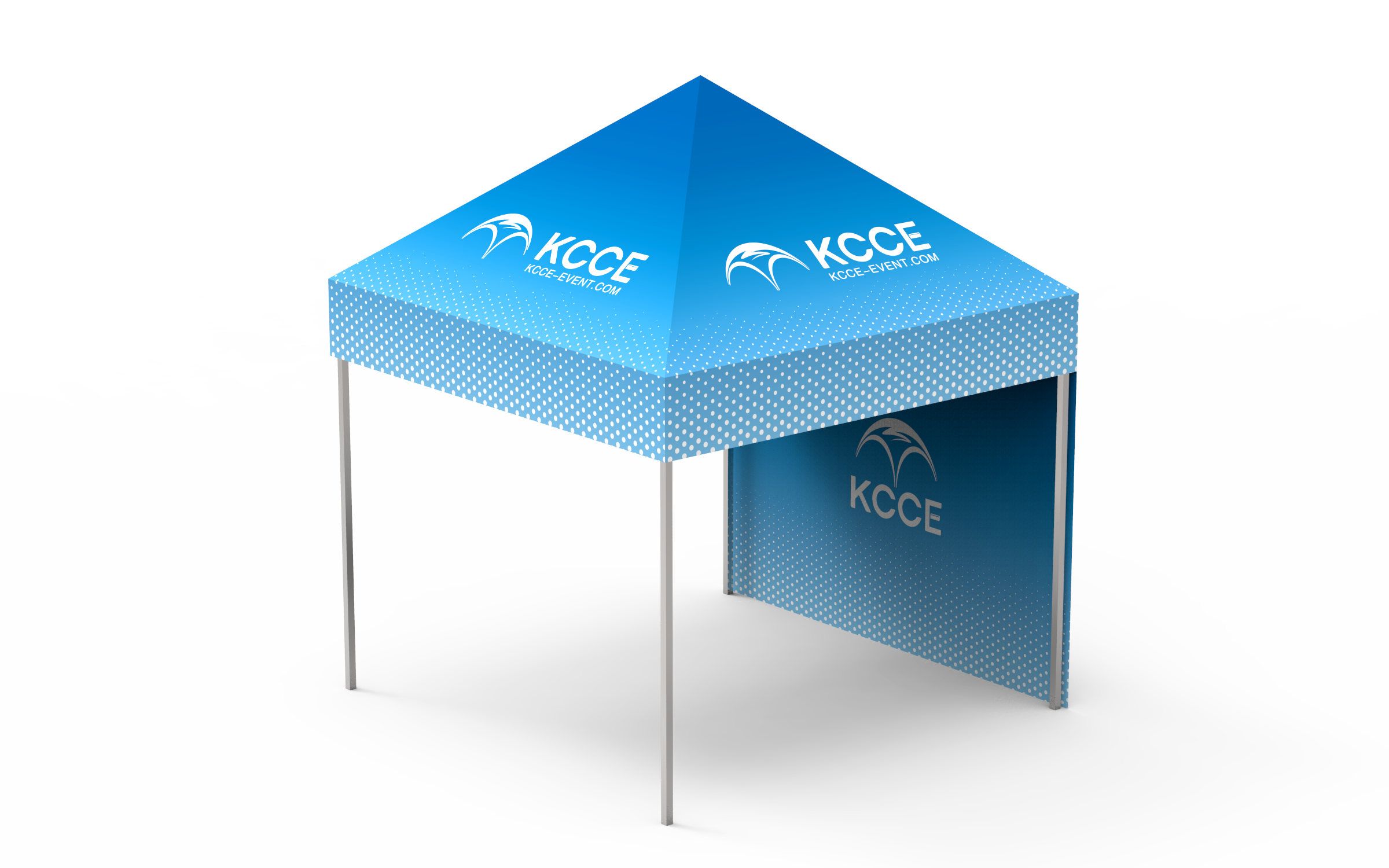
And to be clear about what it isn’t: it’s not a pop-up canopy. A pop-up canopy is an aluminum or steel frame with a fabric top — you unfold it and you’re done. No blower, no power cord, no CFM math. Different tool, different job.
Legit use cases I’ve seen work well: festival vendor booths, church events and revivals, school sports concessions, trade show booths, car dealership promotions, and — this one matters — medical triage and emergency response where you need a clean, covered space fast.
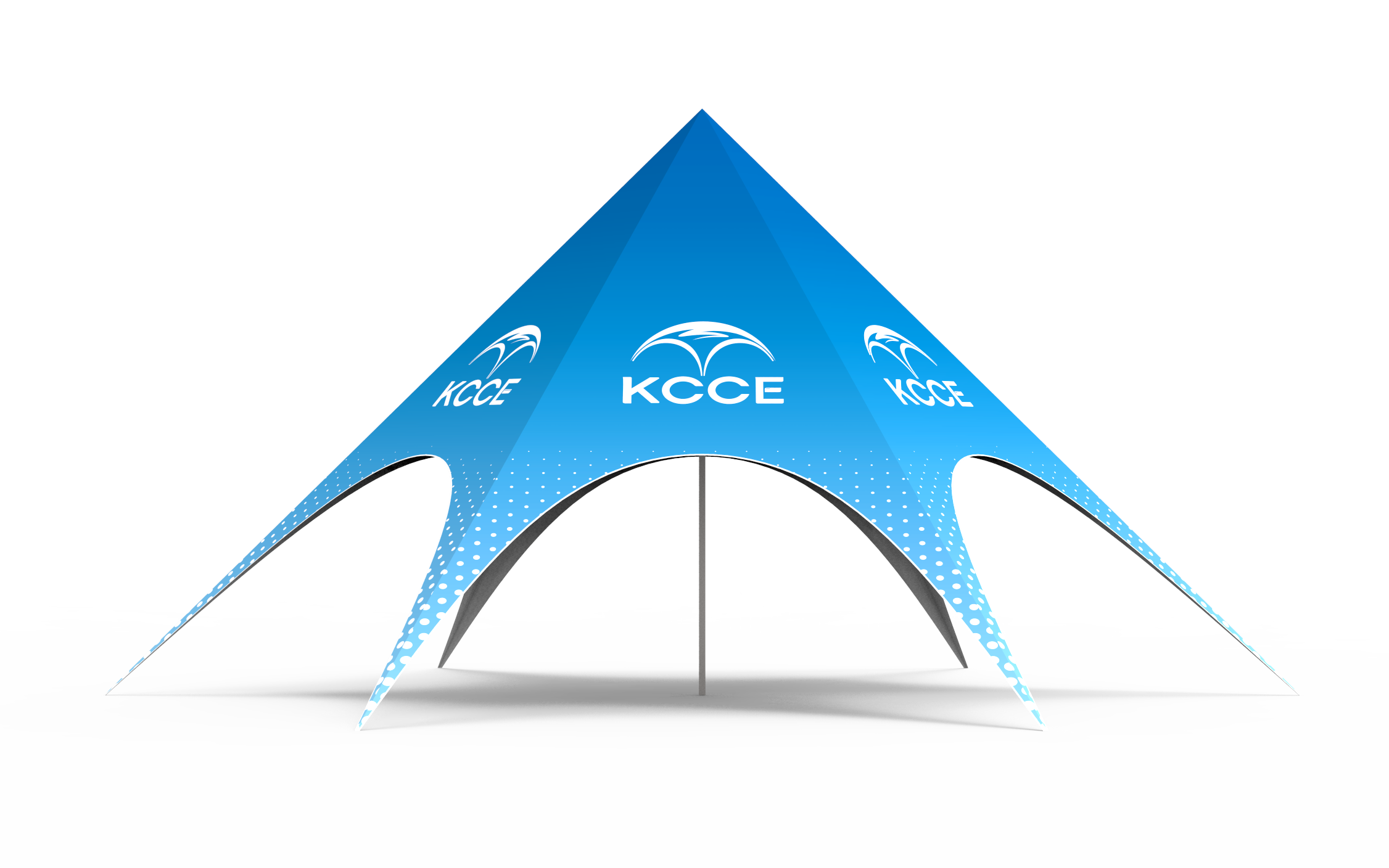
If you’re outfitting a full event footprint, it’s worth looking at KCCE’s inflatable tent range alongside your canopy inventory, because the two solve different problems.
PVC vs Oxford: Which Fabric Survives Your Event?
This is where cheap tents go to die. Two fabric families dominate:
PVC-coated (often 500D–1000D polyester base with PVC laminate): Heavy, extremely waterproof, UV-stable, weldable. Great for long-term outdoor exposure. Downside — it’s heavy, it packs bulky, and cold weather makes it stiff.
Oxford (usually 210D–600D with a PU or PVC coating): Lighter, packs smaller, cheaper to ship. A 500D Oxford with a proper PU coating and UV treatment is genuinely solid for event use. The nuance people miss: denier (D) is thread thickness, GSM is fabric weight, and neither alone tells you if the coating is any good. A 600D Oxford with a garbage coating loses to a 500D with a real PU laminate every time.
My rule of thumb: for a 10×20 that gets set up and torn down weekly, 500D+ Oxford with PU coating and UV resistance is the sweet spot. For something that lives outside for months, go PVC.
One more thing — UV. A tent without UV-resistant coating will fade and weaken. If your activation runs all summer, this isn’t optional.
Blower Specs: CFM, Power, and Backup Plans
Here’s the part nobody puts on the spec sheet, and it’s the part that ruins events.
A constant-air 10×20 needs a blower matched to its internal volume. Undersize it and the structure never fully pressurizes — it looks deflated, wrinkles, and behaves badly in wind. Oversize it and you’re burning power and noise for nothing. Blower CFM is the number you need, and you should get it in writing from the supplier, matched to your specific tent.
Power matters just as much. Most commercial blowers run on standard 110V/120V in the US, but you need a continuous, dedicated circuit — not a daisy-chained extension cord shared with a fryer and a string of lights. I’ve watched a vendor’s tent slowly collapse mid-afternoon because someone plugged a second appliance into the same circuit and tripped it.
Now the uncomfortable question: what happens if the blower fails?
For a constant-air tent, the answer is “it deflates.” Slowly, but it deflates. So:
- Carry a spare blower. Non-negotiable for paid events.
- Know your manual inflation options — a hand pump or foot pump won’t hold a constant-air tent up, but it will keep an air-tight model going.
- For air-tight models, a slow leak in an air beam is the failure mode. Patch kits exist; learn to use them before you need to.
This is exactly the kind of thing event planners ask about on forums — “what do you do when the pump fails?” — and the honest answer is: you plan for it, or you eat the failure in front of your client.
Wind Ratings and Anchoring: The Liability Question
If you take nothing else from this article, take this: wind is the number one reason inflatable tents fail, and anchoring is the number one thing buyers skimp on.
Ask any serious supplier how their tent handles heavy wind and rain and you’ll get a real answer — that’s the first question professionals ask. TentCraft, a US canopy manufacturer, notes that this is the recurring question from buyers investing thousands into a tent: how well does it stand up to heavy winds? Fair question. And for inflatables, the answer depends almost entirely on how you anchor it.
What you need to know:
- Get the wind rating in writing. Reputable suppliers rate their structures for specific wind speeds. Don’t accept “very sturdy.”
- Anchoring is surface-dependent:
- Grass/dirt → ground stakes, driven deep, angled
- Pavement/concrete → ballast weights or water barrels
- Sand → sandbags, and lots of them
- Ballast math matters. Lighter tents need less ballast; a 10×20 with a full canopy catches serious wind load. Under-ballasting is how tents end up on the evening news.
- A 25 mph gust is not a gentle breeze for a 200 sq ft sail. Know your limits and have a shutdown plan.
Honestly, the liability exposure here is bigger than the tent cost. If your tent injures someone because you under-anchored it, the tent price is the least of your problems.
What 10×20 Blow Up Tents Cost (Real Ranges)
Let’s answer the question everyone actually has: how much does a 10×20 inflatable tent cost?
Real ballpark tiers, based on what I’ve seen in the market:
- Budget/consumer-grade: roughly $800–$1,500. Thinner Oxford, basic blower, limited UV treatment. Fine for occasional backyard or low-stakes use.
- Commercial-grade: roughly $1,500–$3,000. 500D+ Oxford or PVC, matched blower, proper UV coating, real wind rating. This is the event-work tier.
- Custom-branded / premium: roughly $3,000–$5,000+. Full dye-sublimation printing, custom shapes, heavier fabric, air-tight chambers. This is where brand activations live.
Now the part quotes hide: total cost of ownership.
| Line item | What to budget for |
|---|---|
| Lều | Base price above |
| Quạt gió | Often bundled, sometimes separate — ask |
| Spare blower | Add one; treat it as insurance |
| Ballast/stakes | Surface-dependent, with costs that can add up depending on the setup. |
| Replacement parts | Valves, blower, patches |
| Labor | 2 people × 15–30 min setup + teardown, every event |
Why do quotes hide pricing? Because custom branding and volume change everything, and suppliers don’t want to anchor you low. That’s legitimate. But a supplier who won’t give you any range for a standard unit is wasting your time.
For a sense of what custom-branded inflatable work looks like, the Dongguan Dacheng Outdoor Products product line is a useful reference point — they run everything from 10×10 marquee tents to arches and furniture, all MOQ 1 piece.
Setup Time: Honest Numbers, Not Marketing
“Sets up in 5 minutes!” — no it doesn’t. Not for a 10×20.
Real numbers, based on actual deployments:
- Two experienced people, ideal conditions: 15–20 minutes
- Two people, first time or windy day: 25–30 minutes
- One person: possible but miserable, and you’ll want help for the canopy
What eats the time: unrolling and positioning the footprint, staking or ballasting trước full inflation, connecting the blower, letting it fully pressurize, then final anchoring. Teardown runs similar — sometimes faster, sometimes slower if the tent’s wet.
Conditions change everything. Wind adds time. Rain adds time. Cold makes fabric stiff and adds time. Budget 30 minutes and be pleasantly surprised, not the other way around.
Compliance Checklist for Public Events
For a public event, the tent itself is the easy part. The paperwork is where events get shut down.
Fire ratings:
- NFPA 701 — the US standard for flame propagation of textiles and films. Your tent fabric and any printed banners should meet it. Ask for the test documentation, not just a claim.
- CPAI-84 — a camping/outdoor fabric flammability spec that also shows up in tent compliance conversations.
- Your local fire marshal may have additional requirements for occupancy and egress.
ADA: If your event is public, accessible routes and entry matter. A 10×20 with a raised floor or narrow entry can create ADA issues. Plan the entry width.
Insurance: Get a Certificate of Insurance (COI) from your supplier if you’re renting, and make sure your own general liability rider names the venue as additional insured. This is the stuff that separates professionals from hobbyists.
Questions to ask your fire marshal before the event: What flame standard do you require? Do you need documentation on file? Any occupancy or egress rules for temporary structures?
10×20 Inflatable Tent vs Pop-Up Canopy
Decision time. Inflatable tent vs pop-up canopy — which one?
Go inflatable if:
- You need branding across the entire structure (walls, roof, everything)
- You want a distinctive, non-rectangular shape
- You’re doing a multi-day activation where the setup time amortizes
- You have reliable power and a spare blower
Go pop-up canopy if:
- You need speed and simplicity above all
- You’re setting up and tearing down daily at different sites
- Power is unreliable or unavailable
- You want the lowest possible cost and hassle
Honestly? Most event operations should own both. The canopy is your daily driver. The inflatable is your statement piece. They’re not competitors — they’re a toolkit.
Kết luận
If you’re buying 10×20 blow up tents, don’t ask “what’s the price?” Ask for the fabric spec (denier + GSM + coating), the wind rating, the blower CFM, the fire rating documentation, and the anchoring plan. A supplier who can answer all five is a supplier worth your PO.
And here’s the thought I’ll leave you with: the cheapest tent you can buy is often the most expensive thing at your event. Not because of the purchase price — because of what happens when it fails in front of a client, a crowd, or a fire marshal.
Build your compliance and TCO checklist first. Then buy.
Các câu hỏi thường gặp
Q: How much does a 10×20 inflatable tent cost?
Trả lời: Budget models run roughly $800–$1,500, commercial-grade 10×20 blow up tents sit around $1,500–$3,000, and custom-branded premium units go $3,000–$5,000+. Always factor in the blower, ballast, spare parts, and labor — the tent price alone is never the full cost.
Q: How long does it take to set up a 10×20 blow up tent?
Trả lời: With two experienced people in good conditions, plan on 15–20 minutes. First-timers or windy days push it to 25–30 minutes. Ignore “5 minute” marketing claims — they don’t account for anchoring, positioning, or full pressurization.
Q: Are 10×20 inflatable tents wind rated and waterproof?
Trả lời: Reputable commercial inflatable tents carry a stated wind rating and are waterproof when properly coated and seam-sealed. Always get the wind rating in writing and anchor according to your surface — stakes for grass, ballast for pavement, sandbags for sand.
Q: What’s the difference between an inflatable tent and a pop-up canopy?
Trả lời: An inflatable tent uses air beams and a blower; a pop-up canopy uses a metal frame with no power requirement. Inflatables offer better branding and shape; pop-ups win on speed, simplicity, and cost. Many operations own both.
Q: Do 10×20 inflatable tents need a blower running the whole time?
Trả lời: Constant-air models do — cut the power and the tent deflates. Air-tight (sealed chamber) models inflate once and hold without continuous power. For paid events with constant-air tents, always carry a spare blower.
Q: Can a 10×20 inflatable tent be used indoors?
Trả lời: Yes, provided you have adequate ceiling clearance, ventilation for the blower, and permission from the venue. Check fire code requirements for indoor temporary structures — NFPA 701 compliance on the fabric is typically required.
Q: Are inflatable tents fire rated for public events?
Trả lời: Commercial-grade inflatable tents should meet NFPA 701, and some fabrics also carry CPAI-84 compliance. Ask your supplier for test documentation and confirm with your local fire marshal before the event.
Q: How many people fit under a 10×20 tent?
Trả lời: At 200 square feet, a 10×20 comfortably hosts a vendor booth, a service counter, or standing-room for roughly 20–30 people depending on layout. For seated configurations, plan on far fewer once tables and chairs are in.
Tham Khảo
1. 5 Best Pop Up Canopy Tents for Heavy Winds & Rain – tentcraft.com
2. GENERIC 8-10 Person Inflatable Camping Tent – Review – youtube.com
3. Custom Inflatable Tents for Events, Advertising & Branding – westshade.com
4. Dongguan City Dacheng Outdoor Products Co. Ltd. — Inflatable Tent Manufacturer – kcceinflatable.en.made-in-china.com