充气广告帐篷:耐用性与使用寿命——您需要了解的事项
充气广告帐篷既可能成为您活动的亮点,也可能成为您最大的麻烦来源。无论是周末快闪店、社区活动,还是万众瞩目的拥挤展会,有一点是确定的:您的帐篷必须经得起考验。我从事户外广告行业多年,可以直截了当地告诉您——没有什么比雨天下垂的帐篷或被风撕裂的接缝更能破坏气氛了。让我们深入分析这些帐篷的工作原理,帮助您做出明智的选择,避免代价高昂的遗憾。.
为何耐用性与使用寿命对广告帐篷至关重要
请扪心自问:如果一顶帐篷无法在活动期间保障您的品牌、团队和产品安全,那它还有什么意义?问题不仅仅在于帐篷能使用多少年,而在于它能否在关键时刻应对不可预测的天气或粗暴的操作。 在最关键的时刻. 。想象一下:您的布置精美绝伦,顾客络绎不绝,突然一阵狂风撕裂了您的帐篷或将其掀翻。您不仅损失了帐篷,您的业务也会显得……不够专业。.
廉价帐篷的隐性成本
根据我的经验,太多人会被“廉价”选项所吸引——那顶刚到货时看起来不错的500美元帐篷。六个月后,他们已经在寻找替代品了。关键在于:耐用性直接关系到 总拥有成本. 。当然,一顶高质量的充气帐篷前期可能需要2,000美元,但只要妥善维护,它可以使用5年以上。而那个廉价选择呢?一两个季度后您就得扔掉它。.
以下是我在评估耐用性时始终坚持的检查清单:
- วัสดุ: 选择加固PVC或重型聚酯纤维。稍后我会详细说明。.
- 接缝与缝线: 双线缝制接缝或热封边缘是您的最佳选择。.
- 防风雨性能: 寻找防紫外线涂层、防水规格和抗风等级。如果没有任何标注,您就是在碰运气。.
选择合适的面料:耐用帐篷的基石
直接切入正题:面料是决定帐篷使用寿命的最关键因素。如果材料在几次使用后就褪色、撕裂或塌陷,再巧妙的设计也毫无意义。.
PVC与聚酯纤维:有何区别?
这是大多数买家最容易困惑的地方,但别担心——我会为您一一解答。.
- PVC(聚氯乙烯)
- ข้อดี: 超耐用、防水,且经得起粗暴使用。适合可能遭遇突发降雨或大风的户外活动。我亲眼见过PVC帐篷在超过40英里/小时的风速下依然稳固——毫无压力。.
- ข้อเสีย 它们很重。如果不习惯,搬运这种帐篷就像跟熊搏斗一样费力。此外,在潮湿环境中它们表现不佳,因为容易积聚冷凝水。.
- 聚酯纤维
- ข้อดี: 轻便、易于携带,且通常更经济实惠。对于周末集市或展览等短期活动,它们堪称理想之选。.
- ข้อเสีย 但它们远不如PVC坚固。如果没有适当的防紫外线或防水层,聚酯纤维在暴露于自然环境中时会迅速老化。.
混合面料又如何?
最近,一些品牌开始尝试PVC与聚酯纤维的混合面料,试图兼顾耐用性与便携性。据我所见,如果您两者都需要一些,它们是不错的选择——但务必仔细核对规格。有些混合面料为了节省成本而缩减防风雨性能,最终反而失去了意义。.
快速提示
追求顶级耐用性,请选择500D密度的聚酯纤维或厚度至少0.5mm的PVC。如果销售人员无法提供材料详细信息?转身走人。.
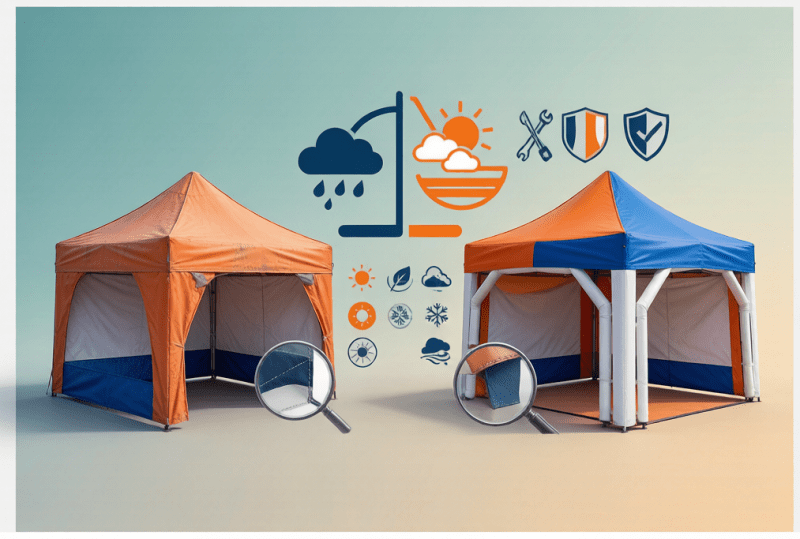
充气帐篷与弹出式遮阳篷:哪种更耐用?
这是我经常听到的一个问题: 既然弹出式遮阳篷便宜得多,为什么还要选择充气帐篷? 有道理。那些带金属框架和织物顶棚的弹出式遮阳篷随处可见,但它们并不总是经久耐用。让我们来比较一下:
| คุณสมบัติ | เต็นท์เป่าลม | 弹出式遮阳篷 |
|---|---|---|
| ความทนทาน | 高(PVC版本可使用5年以上) | 中等(框架经常弯曲或生锈) |
| ความต้านทานต่อสภาพอากาศ | 优秀(密封设计可防止进水) | 一般(大雨时容易漏水) |
| เวลาติดตั้ง | 中等(需要充气) | 快速(手动搭建) |
| ความสามารถในการเคลื่อนย้าย | 笨重但轻便 | 更易于携带 |
| ราคา | 1,000–5,000美元以上 | $150–$1,500 |
If you’re planning for multiple events over the years, inflatables come out on top. Yes, they take more money and effort upfront, but the durability is hard to beat. Pop-ups might save you a few bucks now, but their frames can warp after heavy use.
抵御恶劣天气:充气帐篷的天气应对技巧
Not all inflatable tents are created equal when it comes to weather. But the good ones? They’re practically Fort Knox.
ความต้านทานลม
I’ve seen quality inflatables survive 30–40 mph gusts in storm-prone areas like Florida. The secret? Weighted anchors and proper inflation. Slack in the structure catches wind like an open sail, so inflate it tight for the best stability.
防水性能
Nobody wants a soggy ad campaign. High-end inflatables seal out water with tough, waterproof materials and heat-welded seams. Cheaper tents, though? They’ll leak faster than you can say “refund.” Look for ones rated IP67 or above for solid rain defense.
防紫外线
Sunlight is the silent killer. Without UV-resistant coatings, fabrics fade and wear down fast. Always check for SPF 50+ protection if your tent will be baking in the sun all day.
根据活动选择合适的帐篷
Different events call for different tents—no getting around it. Here’s what to consider:
- Long-Term Outdoor Use
Opt for a rugged PVC tent that can handle rain, snow, or wind without batting an eye. Farmers’ markets and seasonal festivals? This is your guy.
- Indoor or Short-Term Events
Go lightweight with polyester. It’s easy to set up, tear down, and stash away without breaking a sweat.
- Big Statement Marketing
Splash out on a customized inflatable. These tents are designed to grab attention—and hold it. Perfect for brand activations or product launches.
延长使用寿命:广告帐篷的维护技巧
Even the toughest tent will fail if you don’t take care of it. A little effort goes a long way:
- Clean It Up: Rinse dirt and grime after every use. For PVC, a mild soap and water mix works great.
- Dry It Out: Never store your tent damp. Trust me, mold is not your friend.
- Inspect Often: Inflate it occasionally to check for leaks or weak spots. A patch kit is a lifesaver—keep one handy.
- Store Smart: Keep it in a cool, dry spot. Extreme heat or cold can mess with the material over time.
关于充气广告帐篷的常见问题
ถาม: เต็นท์ลมโดยทั่วไปมีอายุการใช้งานนานเท่าไร?
答: 只要妥善维护,高品质模型可使用3至5年,而重型PVC材质有时可超过七年。.
Q: Are inflatable tents prone to leaking?
答: 好的可不会这样!顶级型号采用坚固材质和密封接缝,但廉价仿冒品呢?它们会像筛子一样漏水。.
Q: Can they handle heavy rain?
答: 当然可以,只要您选用防水材料并使用适当的地面锚固装置。.
Q: What’s the most durable material for these tents?
答: PVC是黄金标准,不过经过适当涂层的聚酯纤维也可满足较轻度的使用需求。.
Q: How do I repair a puncture?
答: 乙烯基修复套件效果显著。只需清洁区域、涂抹粘合剂,然后贴上补丁即可。搞定。.
Here’s the bottom line: inflatable advertising tents aren’t all created equal. If you know the ins and outs of materials, weatherproofing, and maintenance, you can invest in one that won’t let you down when it counts. So, are you going to roll the dice on the cheap option, or go for a tent that earns its keep? The choice is yours.