Picture this: it’s 6 AM, two hours before gates open for a major corporate festival, and the sky has decided to open up. The crew is scrambling, the tent poles are half-assembled, and the ground beneath the marquee is turning into a mud pit. You’ve been there. I’ve been there. It’s the exact moment event planners start asking serious questions about their infrastructure choices.
That panic scenario is why I’ve spent the last several years watching the rise of a different kind of structure—one that doesn’t require a crane, a foundation crew, or a weather forecast that cooperates. I’m talking about the benefits of using inflatable domes for events, and honestly, the shift in the industry has been remarkable to witness. What used to be a niche product for sports facilities has become a mainstream solution for weddings, trade shows, and even emergency shelters.
If you’re a decision-maker trying to justify a budget line item to a skeptical finance team, you need more than just “it looks cool.” You need data. You need comparisons. You need to know exactly what happens when the wind picks up or the temperature drops. That’s what this guide is for. We’re going to break down the real, quantifiable advantages—speed, cost, weather resilience, energy efficiency—so you can walk into that boardroom with confidence.
快速解答
Inflatable domes for events offer a unique combination of rapid installation (hours, not days), lower costs than permanent structures, and high weather resilience, making them a superior alternative to traditional tents for most event types. They are air-supported membrane structures that provide clear-span space, branding opportunities, and year-round usability with proper climate control.
What Are Inflatable Domes for Events?
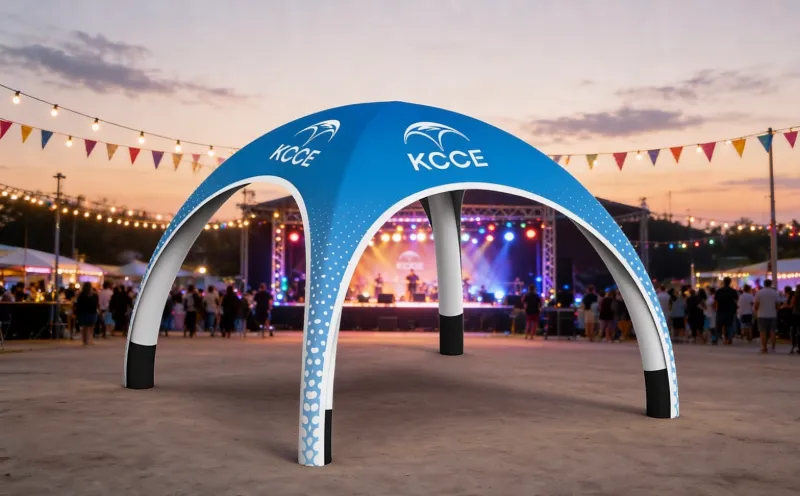
Let’s get the basics down before we dive into the numbers. An inflatable dome—sometimes called an air-supported structure or air dome—is essentially a large membrane envelope that’s held up by internal air pressure. There’s no rigid frame in the traditional sense. Instead, a continuous blower system maintains a slight positive pressure inside, which keeps the fabric taut and the structure standing.
The materials are usually PVC (Polyvinyl Chloride) or TPU (Thermoplastic Polyurethane), sometimes Oxford cloth or vinyl-coated fabric, depending on the manufacturer and the intended use. The Future Market Report categorizes the market by these exact materials, along with installation types (permanent vs. temporary) and applications ranging from recreational use to military and emergency shelter. That gives you a sense of how versatile this product category has become.
You might be wondering about the air-lock system. That’s the double-door entryway that prevents air from escaping when people enter or exit. Without it, the pressure would drop and the structure would sag. With it, you can have a steady flow of foot traffic without compromising structural integrity.
The history here is interesting. Air-supported structures actually got their start in sports—think tennis courts and indoor soccer facilities. But over the past decade, the adoption has spread. DataIntelo’s market research report segments the industry by product type into event domes, planetarium domes, sports domes, and exhibition domes, with applications spanning entertainment, education, sports, and corporate events. That’s a far cry from the early days when these were mostly utilitarian sports bubbles.
For event planners, the key takeaway is the clear-span interior. There are no support poles getting in the way of your layout. You can fit a stage, seating, a dance floor, or a row of exhibition booths without working around structural columns. It’s a blank canvas, essentially.
Speed of Installation: Hours, Not Days
Here’s where inflatable domes absolutely crush the competition. If you’ve ever managed a tent installation for a large event, you know the drill: trucks arrive, poles get laid out, teams of workers spend the better part of a day (or two) wrestling with fabric and steel. It’s a logistical headache that eats into your setup window and your labor budget.
With an inflatable dome, the story is completely different. The structure arrives deflated, is rolled out on the ground, connected to the blower system, and inflated. We’re talking about a process that takes hours, not days. For a large inflatable dome, a crew of just a few people—often four to six—can handle the setup. There’s no crane required, no concrete foundation, no heavy machinery.
The quick installation aspect is a game-changer for events that happen on a schedule. Festival organizers can have the structure up the night before, use it for the weekend, and have it packed away by Monday morning. Corporate event planners can book a venue space, set up the dome, and break it down in the same week without disrupting the venue’s normal operations.
I’ve seen it happen in practice. A trade show exhibition that would normally require two full days of tent setup was ready in under four hours with an air dome. The crew wasn’t even tired. They were hanging interior lighting while the tent crew next door was still wrestling with a bent pole.
And here’s the thing—this isn’t just about labor costs. It’s about reducing your event setup time to the point where you can be more responsive. If a client calls on Monday and needs a venue by Friday, a traditional tent might be cutting it close. An inflatable dome makes that timeline completely feasible.
Cost Efficiency Compared to Traditional Structures
Let’s talk money, because that’s usually what gets the finance team’s attention. The cost efficiency of inflatable domes is one of their strongest selling points, and it holds up whether you’re renting or buying.
On the rental side, inflatable domes are generally priced competitively with high-end tents, but you’re getting a more robust structure for the same money. On the purchase side, the math gets even more interesting. A permanent building with the same clear-span footprint would cost significantly more per square foot—and take months to construct. A large inflatable dome, by contrast, can be purchased for a fraction of that cost and delivered in weeks.
The cost-effective event venue angle comes from multiple places. First, the foundation requirements are minimal. You don’t need to pour concrete or lay a permanent foundation slab. The dome anchoring system typically uses ballast weights, ground stakes, or a simple anchor track. That saves a fortune in site preparation.
Second, the energy costs are lower than you might expect. The translucent membrane allows natural daylight to flood the interior during the day, reducing the need for artificial lighting. And with proper insulation and the right HVAC setup, heating and cooling costs are manageable—even in extreme weather.
Third, there’s the maintenance angle. Air-supported structures have fewer mechanical parts than traditional buildings. The blower system is the main component that needs attention, and those are relatively inexpensive to replace or service. The membrane itself, depending on the material quality, can last for years with proper care.
Let me put it this way: if you’re comparing a temporary inflatable structure to a permanent build for a multi-year venue need, the dome wins on payback period almost every time. You could buy a dome, use it for five years, and still come out ahead of the cost of constructing a permanent facility.
Weather Resilience and Year-Round Usability
This is where the skeptics usually start asking tough questions. “What happens when the wind picks up?” “Can it handle snow?” “Won’t it be freezing inside in January?”
Let’s address the wind question head-on. Modern inflatable domes are engineered to handle serious weather. Because they’re air-supported, they actually respond to wind loads differently than rigid structures. The membrane flexes and distributes pressure rather than fighting it. High-quality domes are rated for substantial wind speeds, and the anchoring systems are designed to keep everything secure.
The snow load is another consideration. In regions that get heavy snowfall, the dome’s shape works in its favor. The curved surface doesn’t allow snow to accumulate in the same way a flat-roofed tent does. Snow slides off, reducing the risk of collapse. And the internal air pressure helps the membrane maintain its shape even under significant weight.
Temperature insulation is where the weatherproof event dome really shines. The double-layer or triple-layer options provide excellent thermal performance. Air trapped between layers acts as insulation, keeping the interior warmer in winter and cooler in summer. This is why you see inflatable domes used for winter events—they create a cozy, indoor-style space while still feeling like you’re outdoors.
The Optix Inflatable Structures blog has a great piece on winter party domes, highlighting how these structures bring warmth and energy to cold-weather events. They note that with music, lighting, and insulation combined, a party dome transforms any location into an immersive experience. From winter birthdays to seasonal promotions, these domes suit every private event.
For summer events, the translucent membrane can be paired with interior blackout options to manage heat gain. Add some ventilation or air conditioning, and you’ve got a comfortable space even in the peak of summer. The year-round usability is a huge advantage over traditional tents, which often become unusable in extreme conditions.
Design Flexibility and Branding Opportunities
Here’s the part that gets creative directors excited. An inflatable dome is essentially a 360-degree branding canvas. The exterior membrane can be printed with custom graphics, logos, and messaging. Imagine walking into a festival and seeing a massive, branded dome that’s impossible to miss. That’s the kind of visual impact you can’t get with a standard white tent.
The customizable event dome aspect extends to the interior as well. The smooth, curved surface is perfect for projection mapping. You can transform the entire interior into an immersive visual experience—projecting starfields, corporate branding, or ambient patterns that change throughout the event.
Lighting options are virtually unlimited. The translucent membrane diffuses light beautifully, creating a soft, even glow. You can use uplighting, string lights, or even LED panels to create the exact atmosphere you’re going for. The inflatable LED party dome concept is becoming increasingly popular for night events.
Custom sizes are another major advantage. Manufacturers can produce domes in a wide range of dimensions to fit your specific needs. Whether you need a small intimate dome for a VIP lounge or a massive structure for a concert or sports training facility, there’s a size that works.
The clear-span design also means your interior layout is completely flexible. You can arrange seating, stages, and exhibits however you want without working around support poles. This design flexibility makes inflatable domes ideal for a wide range of event types—weddings, outdoor festivals, trade show exhibitions, and corporate launches.
For wedding planners, a large inflatable dome for weddings offers something truly special. The soft, curved lines create a romantic atmosphere that’s hard to replicate with a standard marquee. And because the structure is completely weatherproof, you can plan an outdoor wedding with confidence, knowing that rain or shine, the celebration will go on.
Energy Efficiency and Sustainability Benefits
Sustainability is no longer a nice-to-have—it’s a requirement for many organizations. And here’s where inflatable domes have a compelling story to tell.
The energy-efficient dome structure starts with the membrane itself. The translucent material allows natural daylight to illuminate the interior, reducing your reliance on artificial lighting during daytime events. This can translate into significant energy savings over the course of a multi-day festival or a permanent installation.
The insulation properties of multi-layer membranes also contribute to HVAC savings. Maintaining a comfortable temperature inside the dome requires less energy than you might think, especially when compared to a traditional tent with thin walls and no insulation. In winter, the trapped air layers keep heat in. In summer, they keep heat out.
From a material standpoint, the PVC and TPU membranes used in inflatable domes are often recyclable. When the structure reaches the end of its lifespan, the material can be repurposed rather than sent to a landfill. This reduced carbon footprint is a selling point for organizations with sustainability commitments.
There’s also the transportation angle. Because inflatable domes collapse into relatively compact packages, they can be transported efficiently. A single truck can carry a dome that would require multiple trucks if it were a rigid structure. That means fewer emissions getting the structure to your event site.
The Future Market Report’s analysis of the inflatable dome market highlights the growing demand from end users like event organizers, educational institutions, and sports facilities—all sectors that are increasingly prioritizing sustainability in their procurement decisions.
If you’re putting together a sustainability report or an ESG (Environmental, Social, and Governance) submission, the energy efficiency and recyclability of an inflatable dome gives you concrete talking points.
Inflatable Domes vs. Tents vs. Permanent Structures
Let’s get into the head-to-head comparison. This is the table that decision-makers love, and it’s where the dome vs tent for events debate gets settled.
| 因素 | Inflatable Dome | เต็นท์แบบดั้งเดิม | Permanent Structure |
|---|---|---|---|
| เวลาติดตั้ง | Hours | 1-2 Days | Months |
| Cost per sq ft | ปานกลาง | Lower (but weaker) | Highest |
| Wind Rating | High (flexes under load) | Varies, lower | สูงมาก |
| Snow Load | Good (curved surface sheds) | Poor to Moderate | 优秀 |
| Clear Span | Yes, no poles | Limited by poles | Yes, but costly |
| Mobility | High (deflate & move) | ปานกลาง | ไม่มี |
| อายุขัย | 5-10+ years (membrane) | 1-5 years | 30+ years |
| การสร้างแบรนด์ | 360-degree printing | Limited panels | Permanent signage |
| Insulation | Good (multi-layer) | Poor | 优秀 |
Now, some of you might push back on the tent comparison. Tents are cheaper to rent, that’s true. But you’re getting a less robust structure. The wind ratings are generally lower, the insulation is minimal, and the interior is interrupted by support poles.
For a summer garden party in perfect weather, a tent is fine. But for a serious event where weather is unpredictable, or where you need the space to function in winter, the dome wins.
The decision matrix really comes down to your event type:
- 婚礼: Dome wins for weatherproofing and aesthetics.
- Outdoor festivals: Dome wins for branding and durability over multi-day events.
- Trade show exhibitions: Dome wins for clear-span space and professional appearance.
- Sports training facilities: Dome wins for year-round usability and space.
- Emergency shelter: Dome wins for rapid deployment and reliability.
- Construction site shelter: Dome wins for quick installation and weather protection.
An inflatable dome for construction sites is actually a growing use case. They can be deployed quickly to cover work areas, protect materials, and provide shelter for workers. The same rapid installation that helps event planners is a huge advantage on a job site.
Rental vs. Purchase: Which Makes Sense for You?
This is the question I get asked most often, and there’s no one-size-fits-all answer. It depends on how often you’ll use the structure, your storage situation, and your budget.
If you’re organizing one event per year, renting an inflatable dome is probably the right call. You avoid the upfront capital expenditure, you don’t have to worry about storage, and you don’t need to invest in maintenance. The inflatable dome rental price is typically a fraction of the purchase cost, and the rental company handles the installation and breakdown.
But if you’re running events regularly—multiple times a year—the math starts to shift. Let’s do some rough break-even thinking. If you rent a dome for a single event and the rental cost is in the thousands, and you’re doing this, say, five or six times a year, those rental fees add up quickly. At some point, purchasing your own dome becomes the more cost-effective option.
The break-even calculation isn’t just about rental fees versus purchase price. You also need to factor in:
- การจัดเก็บ: Do you have space to store a deflated dome? It takes up less space than you might think, but it’s not nothing.
- การบำรุงรักษา: You’ll need to inspect the membrane, maintain the blower system, and repair any damage. This is manageable but requires attention.
- Crew: You’ll need trained personnel to handle installation and breakdown. With rental, the company provides the crew.
- Lifespan: A well-maintained membrane can last for years, spreading the purchase cost across many events.
For organizations that host events regularly—sports facilities, schools, churches, event companies—purchasing makes sense. You have the infrastructure to store and maintain the structure, and you’ll use it enough to justify the investment.
For one-off or occasional events, rent. It’s simpler, and you don’t tie up capital.
If you’re leaning toward purchase, it’s worth looking at a company like Dongguan Kaicheng Outdoor Products, which has been in the inflatable solutions business for years. They offer a range of เต็นท์เป่าลม and related products. Their founder’s story is actually pretty interesting—you can read about the journey of the KCCE founder and inflatable products designer if you’re curious about the industry’s evolution.
The key is to run the numbers for your specific situation. Calculate your event frequency, your rental costs, and your purchase costs, and the answer will reveal itself.
常见问题解答
Q: What are the downsides of using a dome tent?
答: The main downsides are the need for continuous power to run the blower system, potential vulnerability to punctures, and the “bubble” aesthetic that doesn’t suit every event theme. Also, you can’t just leave it partially open—the air pressure needs to be maintained. But these are manageable with proper planning and backup systems.
Q: How long do inflatable domes last?
答: With proper care, the membrane of a quality inflatable dome can last anywhere from 5 to 10 years or more. The blower system typically needs more frequent maintenance, but it’s an inexpensive component to replace. The lifespan depends heavily on material quality, UV exposure, and how well you store the structure when not in use.
Q: Do inflatable pool domes work?
答: Yes, they do. The same principle of air-supported structures applies to pool enclosures, creating a greenhouse effect that warms the water and extends the swimming season. They keep out debris and provide a comfortable environment even in cooler weather. They’re a popular option for residential and commercial pools.
Q: What are the downsides of a geodesic dome?
答: Geodesic domes, which use a rigid frame of struts, are different from inflatable domes. Their downsides include more complex assembly, potential for leaks at the joints, and the fact that the frame can obstruct interior space. They’re also heavier and harder to transport than inflatable alternatives.
อ้างอิง
- Inflatable Dome Market (2026 – 2033) – Future Market Report
- Inflatable Party Dome Ideas for Winter Events That Turn Cold Nights Warm Memories – Optix Inflatable Structures
- Inflatable Dome Market Research Report 2034 – DataIntelo
- Exploring the Versatility of Air-Supported Structures – Gaoshan Tent