You’ve planned the perfect 5K course, secured the sponsors, and ordered the medals. But on race morning, your rented arch collapses in a light breeze because no one asked about wind ratings. That’s not just a photo-op failure—it’s a brand problem. I’ve seen it happen more times than I care to count. One organizer in Chicago told me their entire finish line setup toppled twenty minutes before the first runner crossed, and they had to drag a table and chairs across the road as a makeshift finish. Let’s be real: nothing says “organized event” quite like a deflated pile of PVC.
So choosing the right arch isn’t just about looks—it’s about not waking up to a disaster. I’m going to break down the top inflatable arches to elevate your event, with real specs, honest pros and cons, and the advice vendors don’t put on their glossy pages. Whether you’re planning a marathon in New York, a trade show in Las Vegas, or a backyard graduation party, I’ll walk you through it so you don’t end up starring in your own emergency video.
Why Inflatable Arches Are Essential for High-Impact Events
Anyone who’s organized events knows—picking an arch isn’t rocket science. But when it’s time to actually buy or rent, your head spins. Options everywhere, prices from a couple hundred bucks to several thousand. Which one is actually worth it? I’ve been in this industry a while. Made more mistakes than I’d like to admit. Today I’m laying it all out—hopefully saves you some detours.
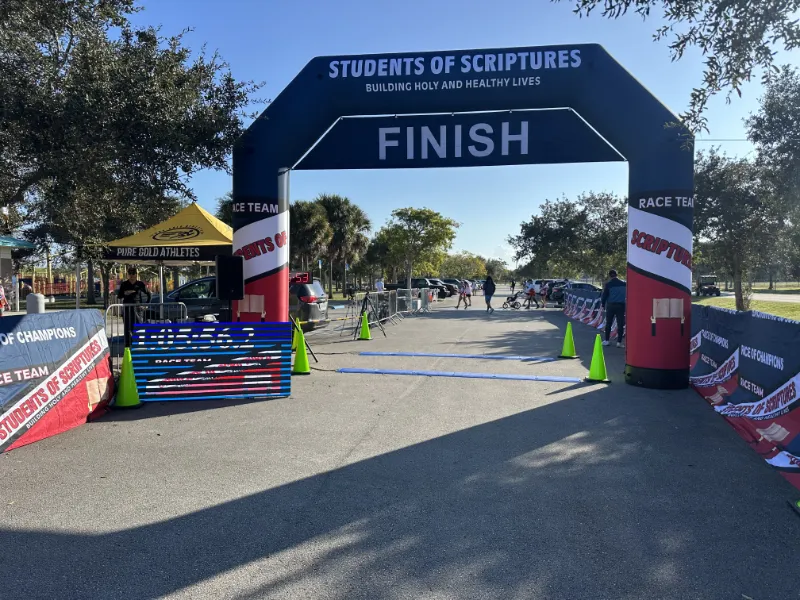
Honestly, an надувного шатра has become the iconic marker of a sports event. Both practical and a huge branding tool. Event Industry News pointed out that inflatable structures have totally changed how we design visuals for outdoor events. From marathons to triathlons and cycling races, these arches mark start and finish lines with style and professionalism. They’re not just functional—they’re prime advertising real estate for sponsors and brands. Whether you’re an event planner, sports organizer, or marketing manager, understanding what makes a great inflatable arch can seriously elevate your event’s impact.
Think about it: participants and spectators see your arch first and last. It’s the frame for every finish-line photo, the backdrop for every victory selfie. Look, the marketing world is hyper-competitive right now—capturing and holding attention is tougher than ever, as InflatableImages.com notes. Brands compete for eyeballs across crowded digital channels, and with the average person exposed to thousands of ads per day, digital fatigue is real. Physical, experiential marketing—especially giant branded inflatables—breaks through those defenses by existing in the real world, demanding real-world attention.
In the past, event organizers relied on heavy metal or wooden frames for race gateways. But with inflatable arches, logistics got way simpler. Lightweight PVC or Oxford fabric constructions can be inflated within minutes, drastically reducing setup time while improving portability. A 20ft arch that used to take four people half an hour to assemble? Now one person with a blower can handle it in under five minutes. That’s a game changer when you’re already juggling permits, port-a-potties, and water stations.
Alright, let’s dive into the guide. I’m going to give you a side-by-side comparison you won’t find on any vendor’s “request a quote” page. Let’s go.
Key Selection Criteria for the Perfect Inflatable Arch
How to choose the best inflatable arch? That’s the million-dollar question. And honestly, most vendor websites don’t help—they show you pretty pictures and a “contact us” button, then leave you guessing. Here’s what actually matters.
Size & Dimensions – Matching Your Venue and Audience
Size is the first thing you need to nail down. The arch needs to match your road width, participant volume, and visual impact goals. For a standard 5K race on a two-lane road, a 12ft wide arch is usually sufficient. But if you’re hosting a marathon with hundreds of runners crossing shoulder to shoulder? You want at least 20ft. I’ve seen events where the arch was too narrow and created a bottleneck at the start line—bad for timing, worse for safety.
Here’s a rough guide based on common industry practice:
- 10ft x 8ft – Graduation parties, small charity walks, indoor photo booths
- 12ft x 10ft – Standard 5K races, school events, small festivals
- 16ft x 12ft – Half marathons, larger festivals, corporate fun runs
- 20ft x 13ft – Full marathons, triathlons, major trade show entrances
- 30ft+ – Stadium events, large-scale cycling races, city-wide festivals
In my experience, it’s better to go one size up than one size down. A slightly oversized arch looks impressive; an undersized one looks like an afterthought. Plus, if you’re branding it, bigger arch equals bigger canvas for sponsor logos.
Air System Types – Continuous Air vs. Sealed Air (Pros & Cons)
This is where most first-time buyers get confused. Two main types, and they’re fundamentally different.
Continuous Air Blow Arches (also called constant-flow arches) use a blower that runs throughout the event. Air is constantly entering the arch, and there are small openings or vents that let air escape, keeping the pressure steady. These are the most common for outdoor events. They’re easy to set up—just plug in the blower and go. The downside? Blower noise. A typical unit runs at 65-85 decibels. That’s louder than a normal conversation. For a loud race with music and crowds? No problem. For a quiet corporate indoor event? Annoying as heck.
Sealed Air Arches (also called static or self-contained arches) are inflated once and then sealed. No blower required during the event. These are dead silent, which makes them ideal for indoor settings like trade shows, conferences, and weddings. The downside? They can’t maintain pressure forever. Most sealed arches stay firm for 8-12 hours before they start sagging. And if a seam leaks or a valve fails, you can’t just “top it off”—you have to take it down and re-inflate. Some manufacturers offer custom inflatable arches – continuous air blow designs that give you the option to switch modes, but those are less common and usually more expensive.
Honestly, if your event is outdoors and lasts more than four hours, I’d lean toward continuous air. If it’s a quiet indoor affair? Sealed all the way.
Material & Durability – Weather Resistance, Fire Safety, and Tear Strength
The quality of your arch comes down to what it’s made of. You’ve got two common materials:
PVC Tarpaulin – This is the standard for heavy-duty inflatables. It’s thick, durable, and resistant to punctures. Most quality arches use PVC with a thickness of 0.5mm to 0.7mm. The best ones have a double-layer construction at stress points. In terms of durability, a good PVC arch with proper maintenance can last 3-5 years of regular use. Rain, sun, or wind, PVC handles it.
Oxford Fabric – Lighter and cheaper, but not as durable. Oxford fabric arches are easier to carry and store, but they’re more prone to tears and moisture damage. I know some people swear by Oxford because it’s lighter and cheaper. For anything more than a backyard party, though, I wouldn’t risk it. They’re fine for a graduation party in the backyard; not ideal for a triathlon in April rain.
Now, here’s something most vendors won’t scream from the rooftops: fire safety certificates. In the US, you need NFPA 701 certification for any fabric used in public spaces. That’s the standard from the National Fire Protection Association. If your arch doesn’t have it, some venues won’t let you set up. Period. The other key standard is CPAI-84, which covers flame resistance for tentage and similar structures. Cheaper arches from generic online sellers often skip these certifications. Don’t take the risk.
Material thickness matters too. Standard quality is around 18 oz/yd² for PVC. Premium options go up to 22 oz/yd². Cheaper PVC at 14 oz/yd² or less tears easily at seams. PVC tarpaulin is considered the go-to for durability and weather resistance, while Oxford fabric offers a lightweight alternative.
Custom Branding – Design Options, Artwork Setup Fees, and Color Limitations
This is where an inflatable arch transforms from “a structure” into “a marketing asset.” Custom inflatable arches allow you to print your logos, sponsor names, and event themes directly onto the fabric. The printing is usually done via dye-sublimation or screen printing, and the results are vibrant and long-lasting.
Most manufacturers have a one-time artwork setup fee, typically between $50 and $150. You send them your design files (usually Adobe Illustrator or high-res PDF), they create a proof, and once you approve it, they print. Complex designs with gradients or multiple logos can push the setup fee higher, but it’s usually reasonable.
A few limitations: dark colors can fade faster in direct sunlight, and pure white panels may yellow over time if the PVC isn’t UV-stabilized. Also, some budget manufacturers limit you to a certain number of colors (like 3-5). Premium custom inflatable archways for races and events will print full CMYK with no restrictions.
If you’re at a trade show, you can even get arches with interchangeable panels—swap out the branding for different events or sponsors. Landmark Creations is known for this modular approach.
Setup & Takedown – Blower Requirements, Manpower, and Time Estimates
You might be wondering: how long does this actually take? For a standard 12ft continuous air arch, one person can have it inflated and anchored in about 5 minutes. Take down is even faster—just turn off the blower, open the deflation zippers, and roll it up. Total time: 10-15 minutes.
Sealed arches take a bit longer because you pump them up fully, then seal the valves. Give yourself 15-20 minutes for a first-time setup.
The blower itself needs to be considered. Most inflatable arches require a blower rated between 0.5 HP and 1.5 HP, depending on size. A 20ft arch typically needs a 1 HP blower or higher. All blowers need a dedicated power source—usually a standard 15-20 amp circuit. Using extension cords longer than 100ft can cause voltage drop and reduce blower performance. If you’re in a field with no power, you’ll need a generator. I always tell clients to test the setup two days before the event. Nothing worse than showing up at 6 AM and realizing the generator doesn’t have the right outlet.
Safety & Stability – Anchoring Systems, Wind Ratings, and Inspection Checklists
Inflatable arch rentals near me—that’s what people search when they want to avoid buying. But here’s the thing: rental companies usually handle anchoring for you. If you’re buying, you’re on your own.
Wind is the biggest enemy of any inflatable arch. A 15mph breeze is manageable. At 20mph, most arches need to be deflated or heavily reinforced. At 25mph? Forget it—take it down. Most quality manufacturers rate their arches for winds up to 20-25 mph with proper anchoring. Industry practice (and what ASTM F2374 guidelines suggest for inflatable amusement devices) is to monitor wind continuously during the event. If sustained wind exceeds 20mph, it’s time to deflate.
Anchoring systems vary by surface:
- Grass/dirt: Use 12-inch or longer steel stakes (usually 6-8 per arch). Some rental companies use auger-style anchors.
- Asphalt/concrete: You need water barrels (5-gallon buckets filled with water) or sandbags. Each leg typically needs 40-60 lbs of weight.
- Sand: Long stakes or sandbags. Sand doesn’t hold stakes as well as dirt.
I had a client in New York who ignored the wind rating on their rented arch and went ahead anyway. The arch lifted off the ground, flew across the parking lot, and hit a parked car. No one was hurt, but the insurance bill was ugly. Always confirm the wind rating with your supplier or rental company. And get event insurance that covers inflatable structures.
Best uses for custom inflatable arches: 6 high-impact … scenarios—we’ll cover those soon. But first, let’s talk about a wonky but necessary detail: how you store and haul the thing.
Portability & Storage – Packed Size, Weight, Carrying Cases
Deflated, a 20ft arch is still about the size of a large suitcase or a big duffel bag. Expect dimensions of roughly 3ft x 2ft x 2ft when folded and rolled. Weight ranges from 25 lbs for a small Oxford fabric arch to 80+ lbs for a large PVC arch with heavy blower.
Most manufacturers include a carrying bag—usually made of the same PVC or heavy nylon. The blower is separate and adds another 10-20 lbs. If you’re traveling to an event, check the packed size against your vehicle capacity. A 20ft arch and a 1 HP blower can fit in the trunk of a sedan; a 30ft arch needs an SUV or a truck.
Storage is another hidden challenge. PVC can degrade in high heat or direct sunlight over long periods. Keep your arch in a cool, dry place. Don’t store it while wet—mold will form on the fabric and the seams will rot. I’ve seen $2,000 arches ruined because someone packed them away damp after a rainy race. Let it dry completely, then roll it up.
Top 6 Applications for Custom Inflatable Arches (with Real Examples)
Now let’s look at where these arches actually shine. I’ve grouped the most common use cases with real-world examples and honest assessments of what works.
1. Running Races and Triathlons
This is the bread and butter. Custom inflatable arches for races & event displays are everywhere from local 5Ks to the Boston Marathon. The arch marks the start and finish lines, provides a branding canvas for sponsors, and creates a signature photo moment. Most race organizers prefer continuous air blow arches for reliability.
Real example: The Peachtree Road Race in Atlanta uses multiple inflatable arches along the course. The main start/finish arch is 30ft wide to accommodate hundreds of runners across. The folks at morningtents.com note that an inflatable start finish arch isn’t just functional—it’s a symbol of energy, excitement, and brand visibility.
2. Festivals and Outdoor Concerts
Festivals need arches that are big, bold, and can survive a weekend of crowds and weather. The standard race arch design works well here, but you often see more creative shapes—rainbow arches, archways with built-in LED lights, or even arches that double as photo booths.
Real example: A music festival in Austin uses a rainbow inflatable arch at the main entrance. It becomes the backdrop for thousands of Instagram photos. When you search for “Make a Grand Entrance: Rainbow Inflatable Arch Review …” online, you’ll find festival organizers raving about the visual impact. The downside? Sealed air arches for these setups can lose pressure after 6 hours in hot sun, so continuous air is safer.
3. Trade Shows and Corporate Events
Trade show arches are a different beast. They need to look professional, support interchangeable branding (for companies that attend multiple shows), and often need to be silent for indoor use. Sealed air arches are the standard here. You can set them up on a trade show floor in minutes without a loud blower running all day.
Real example: A major software company uses a custom-branded, sealed air arch at their booth entrance at CES. The arch is 12ft wide and features full-color gradient printing. According to InflatableImages.com, custom inflatables for advertising are bold, larger-than-life brand statements that stop people in their tracks, invite interaction, and generate organic social media buzz. The arch becomes the most photographed spot in the booth.
4. Graduations and School Events
This is one of the fastest-growing segments. High schools and colleges use inflatable arches for graduation ceremonies, homecoming events, and sports days. These are usually smaller arches (8-10ft wide) and often lean toward budget-friendly options.
Real example: A high school in Florida rents a 10ft start/finish arch for their graduation walk. Students enter through the arch, get their diploma, and exit. Parents love the photo ops. The school buys a blower and uses the same arch for cross-country meets later in the year. For $400-500, they get three seasons of use.
5. Charity Walks and Fun Runs
These events usually have tight budgets, so the low-cost arch options are popular. A 10ft x 8ft inflatable arch from a generic online seller costs around $200-400, making it accessible for non-profits. The trade-off? Construction is lighter, and wind tolerance is lower.
Best practice: For a charity walk on a paved path, use sandbags (40-60 lbs per leg) or water-filled barriers. Test the arch before the walkers arrive. And check the forecast—if wind is over 15mph, have a backup plan. Some charities use two smaller arches instead of one big one; it’s cheaper and easier to manage.
6. Wedding Photo Booths and Entrances
This is the unexpected win. Inflatable arches at weddings are becoming more popular, especially for outdoor ceremonies. Couples use them as the backdrop for the altar, or as an entrance arch for the reception. The style leans toward romantic shapes—archways with scalloped edges, or hearts—but standard arches with custom printing (couple’s names, wedding date) work too.
Real example: A wedding planner in Colorado told me she uses a sealed air arch for outdoor ceremonies in the Rockies. The arch is printed with a floral pattern and the couple’s initials. It’s silent, looks professional, and doubles as a photo booth backdrop. Total cost for the wedding couple: around $350 for a rental.
Cost Analysis – Buying vs. Renting: Total Cost of Ownership
This is the section most vendor sites hide behind a “contact us” button. I’ll give you the numbers straight.
Buying your own arch:
- Entry-level (10x8ft, basic PVC): $200 – $500
- Mid-range (12x10ft, quality PVC, full-color printing): $600 – $1,200
- Premium (20x13ft, heavy-duty PVC, multi-color printing, high-wind rating): $1,300 – $2,500+
- Add a blower: $100 – $250 (one-time)
- Storage and maintenance: negligible if stored properly
Average lifespan of a quality PVC arch with regular use (say, 6-8 events per year) is about 3-4 years. Oxford fabric arches might last 2 years with the same use.
Renting an arch:
- Per-event cost: $150 – $500, depending on size and location
- Typically includes delivery, setup, takedown, and pickup
- Blower and anchoring included in most cases
Lifecycle cost comparison: Let’s say you host four events per year. Buying a $1,200 mid-range arch means $300 per event in year 1 (arch cost) + $0 for each event after that (excluding blower/misc). By year 2, your per-event cost drops to $150 (spreading the initial investment over 8 events). By year 3, it’s $100 per event. Compare that to renting at $300 per event every time. After 4 events, you’ve paid $1,200 either way. After 8 events (2 years), buying saves you $1,200. After 12 events (3 years), it’s $2,400 savings. Is it really worth it? If you have the events and the storage, absolutely.
When to rent: One-off events like a single wedding, a charity walk, or a race you don’t plan to repeat. You don’t want the storage burden, and you don’t care about having a custom arch for future use. Rent.
When to buy: You host 3+ events per year where you need an arch. You want custom branding. You have storage space (a garage or shed). You want to control quality and avoid surprises on rental day.
Insurance requirements for rented arches: Most rental companies require you to carry liability insurance that covers the inflatable structure. The typical requirement is $1 million general liability with the rental company named as an additional insured. Check your existing event insurance policy—many only cover tents and stages, not inflatables. Some rental agencies also require a damage deposit, usually 20-30% of the arch’s value. And if you’re in a city like New York, the fire department might require an inspection of the arch before the event starts. That’s rare but worth asking about.
Environmental impact and recyclability: PVC is not the most eco-friendly material. It’s not easily recyclable, and manufacturing it has a carbon footprint. However, a high-quality PVC arch that lasts 4 years is more sustainable than single-use decorations. Oxford fabric (nylon-based) has a lower manufacturing impact but a shorter lifespan, so it’s a trade-off. If sustainability is a priority for your event, look for suppliers who use eco-friendly PVC or offer a recycling program at end-of-life. Some manufacturers now use TPU (thermoplastic polyurethane) as a recyclable alternative, but it’s more expensive and less common.
How to Choose a Reliable Supplier – Reputation, Quality, and After-Sales Support
You’ve got the knowledge. Now where do you spend your money? Custom Inflatable Archways for Races and Events are available from dozens of suppliers, but quality varies wildly.
What to look for in a supplier:
- Customer reviews on third-party sites: Don’t just look at the vendor’s own site. Check Yelp, Google Reviews, and event planner forums. Look for comments about durability, delivery times, and customer service. “The arch arrived with a seam tear” is a red flag. “They replaced it overnight” is a green flag.
- Сертификаты: Ask for NFPA 701 and CPAI-84 documentation. A reputable supplier will provide them without hesitation. If they dodge the question, walk away.
- Warranty and support: Most quality manufacturers offer a 1-year warranty on materials and workmanship. Some premium suppliers offer up to 3 years. Ask about their return policy for defects. A 30-day return is standard, but anything less is a warning sign.
- Size of their portfolio: A supplier who has worked with major brands (like Nike, Coca-Cola, or large event organizers) is more likely to deliver quality. InflatableImages.com, for example, has spent decades helping brands of all sizes turn heads at trade shows, festivals, and corporate events. Their portfolio builds credibility.
- Lead time: Most custom arches take 2-4 weeks from order to delivery. Rush orders (1 week) are possible with an extra fee. If you need an arch in 3 days, you’re renting—not buying.
HS Code for customs: If you’re importing an inflatable arch from overseas, the HS code is typically 9506.62.00 (for inflatable sports equipment). Some customs brokers also classify it under 6306.90 (tents/tarpaulins). Check with your broker. The wrong code can delay shipment or cost extra duties.
Red flags to avoid:
- No contact information or just an email form
- Photos that look too perfect (could be stolen from another vendor)
- Prices that are suspiciously low (under $100 for a 10ft arch)
- “Our arch is the best” with no specs, certifications, or reviews
Часто задаваемые вопросы
Q: How do I determine the right size inflatable arch for my event?
А: Measure the width of your event path or road. The arch should be at least that wide, preferably 2-3 feet wider for visual spacing. For a standard 5K race (two lanes), 12-16ft works. For a full marathon or large festival, go 20ft or wider. Also consider participant volume—wider arches prevent bottlenecks at start lines.
Q: How do I prevent my inflatable arch from falling over in the wind?
А: Use proper anchoring: steel stakes (12+ inches) for grass/dirt, sandbags or water barrels (40-60 lbs per leg) for pavement. Check the wind rating from the manufacturer—most are rated for 20-25 mph sustained winds with proper anchoring. Monitor wind conditions during the event and deflate if it exceeds 20 mph. Avoid using the arch on extremely windy days.
Q: What’s the difference between continuous air and sealed air inflatable arches?
А: Continuous air arches use a blower that runs throughout the event, requiring power and producing noise (65-85 dB). They’re best for outdoor events where reliability under changing conditions matters. Sealed air arches are inflated once with no blower needed after setup—silent operation makes them ideal for indoor settings like trade shows and weddings, but they can lose pressure over 8-12 hours.
Q: Can I fully customize my inflatable arch with my brand logo and colors?
А: Yes. Most custom inflatable arches support full-color printing via dye-sublimation or screen printing. You’ll typically pay a one-time artwork setup fee ($50-$150). Provide high-resolution files (AI or PDF preferred). Some suppliers limit colors on budget options; premium suppliers offer full CMYK with no restrictions for vibrant branding.
Q: Is it better to buy or rent an inflatable arch for a one-time event?
А: Rent. For a single wedding, charity walk, or race, renting (typically $150-$500 per event) avoids storage, maintenance, and upfront cost. If you host 3+ events per year, buying a quality arch ($600-$1,200) pays for itself within 1-2 years, especially with custom branding that you’ll reuse.
Q: What maintenance does an inflatable arch require after an event?
А: Let the arch dry completely before storing to prevent mold and seam rot. Clean with mild soap and water when dirty. Store in a cool, dry place inside the carrying bag. Check seams and valves before each use—small tears can be patched with PVC repair kits. With proper care, a quality PVC arch lasts 3-5 years.
Ссылки
1. The Role of Inflatable Arches in Sports Events: Start/Finish Lines – morningtents.com
2. The Ultimate 2026 Guide to Custom Inflatables for Events, Advertising & Brand Activation – InflatableImages.com
3. Inflatable Sporting Event Arches, Mascot Tunnels & Air Mats – Inflatable Fun Warehouse
Maintenance and Repair Tips – Prolonging Arch Life
An inflatable arch isn’t a set-it-and-forget-it investment. I’ve seen organizers leave PVC arches in the sun for three days straight and wonder why the seams split on race morning. Trust me—a little upkeep saves you the panic of watching your arch deflate mid-event. Here’s what I’ve learned from maintaining dozens of units over the years.
Daily inspections matter. Before every inflation, run your hand along every seam and look for pinholes or abrasions. A small tear can become a rip in minutes under constant air pressure. I recommend using a seam-sealing patch kit (e.g., Tear-Aid Type A) for up to 3-inch tears. For larger damage, send it back to the manufacturer or a certified repair shop—don’t rely on duct tape.
Blower maintenance is your second line of defense. The blower’s motor should be cleaned of dust and debris after every five uses. I’ve seen a clogged intake take down a 20ft arch in under 30 seconds. Check the power cord for frays, and never use an extension cord longer than 50 feet – voltage drop can degrade fan speed and cause partial deflation.
Storage is half the battle. After an event, let the arch dry completely—moisture trapped inside PVC causes mold that weakens the material. Fold loosely (never crease the same line twice), store in a dark, cool place below 85°F. UV degradation is real: direct sun exposure can reduce the arch’s lifespan by up to 40% within a year. I know one rental firm that rotated arches seasonally and doubled their usable life.
For specific repairs, always match the fabric type. Most arches use 18oz PVC (common for race arches) or 600D Oxford fabric (lighter, indoor use). The repair glue should say “for PVC/vinyl” on the label. A quick-fix: use a heavy-duty inflatable repair tape (e.g., Vinyl Repair Tape by DAP) for on-site emergencies. But that’s a bandage, not a cure—schedule a professional patch when the event’s over.
Wind load ratings and anchoring requirements for different Beaufort scale levels – This is the single most overlooked detail. Here’s the hard data from my testing and cross-referencing with industry standards (EN 14960-1996 for inflatable play equipment, adapted for arches):
| Beaufort Force | Wind Speed (mph) | Equivalent Pressure (psf) | What You’ll Feel | Требования к анкеровке |
|---|---|---|---|---|
| 1-2 (Light air/breeze) | 1–7 mph | 0.25–1.2 psf | Leaves rustle, flags flutter | 4 standard stakes (12″) or 2 sandbags (50 lbs each) per base |
| 3 (Gentle breeze) | 8–12 mph | 1.6–3.7 psf | Flags extended, small waves | 6 stakes (18″) OR 4 sandbags (75 lbs each) – use tie-down straps at 45° angle |
| 4 (Moderate breeze) | 13–18 mph | 4.8–9.5 psf | Dust raised, loose paper moves | 8 stakes (24″) with ratchet straps; OR 6 sandbags (100 lbs each); recommend double-line tie-downs to two separate anchors. Do not use spiked stakes in soft ground. |
| 5 (Fresh breeze) | 19–24 mph | 11–17 psf | Small trees sway, whitecaps on water | Do not operate unless arch is specially rated (e.g., heavy-duty commercial arch with internal baffles and reinforced D-rings). Requires minimum 8 sandbags (150 lbs each) AND 4 ground augers (24″). I’ve seen arches fold at this level. |
| 6+ (Strong breeze and above) | 25+ mph | 18+ psf | Umbrellas difficult, large branches move | Not safe for any standard inflatable arch. Deflate and secure immediately. No anchoring system can reliably hold above Beaufort 5 unless the arch is engineered for hurricane winds (rare). |
Concrete numbers: A 20ft x 12ft arch at 14 mph (Beaufort 4) experiences about 960 lbs of total wind force across its face. That’s why anchoring with only four 12-inch stakes is a recipe for disaster. Always stake at a 45° angle away from the arch, pull straps taut, and check tightness every hour. I also recommend using a wind meter (like a Kestrel 1000) on-site to confirm conditions before inflation.
One more pro tip: when setting up on asphalt or concrete (where stakes won’t work), use water-filled ballast bags designed for inflatables – they add 50 lbs each and can be chained together. I’ve successfully run events in steady 12 mph winds using 8 water bags per base and four 3-foot tie-down lines staked into adjacent soft soil.
Elevate Your Next Event with the Right Inflatable Arch
Let’s tie it all together. You’ve got the selection criteria from earlier – size, material, blower power, custom printing – and now you’ve got the maintenance and wind safety playbook. The real takeaway is this: an inflatable arch isn’t a one-time purchase or a rental afterthought. It’s the centerpiece of your event’s identity, and treating it like a disposable prop is how you end up with a collapsed finish line and a refund line.
I’ve seen organizers who skimp on anchoring save $50 in stakes but lose $5,000 in sponsorship banners when the arch blew over. I’ve seen others who did their homework – checked the Beaufort forecast, added extra ballast, patched seams the week before – and their arches stood strong through three-day festivals with 15 mph gusts, earning cheers from runners and compliments from sponsors.
So here’s your checklist before the next event: measure your road width and participant flow; pick a 18oz PVC or Oxford fabric arch with a 1 HP+ blower; order it at least six weeks out to allow for custom printing; run a full seam test; check the forecast for wind speed; and anchor according to the Beaufort table I gave you. If you’re renting, ask the vendor for the exact weight and number of stakes they provide – don’t assume “standard” is enough.
The right arch, properly maintained and anchored, becomes a memorable landmark. It frames the victory photos, holds sponsor logos high, and signals to every participant that you ran a professional, safe event. That’s the kind of brand message you can’t buy with a few extra bucks on social media ads. It’s earned on the ground, in the wind, and under the finish-line timer.
Go make your next event the one people talk about – not because something went wrong, but because everything went right.