Краткий ответ / Основные выводы
What is an inflatable shade canopy?
An inflatable shade canopy is a temporary shelter that uses air-filled beams instead of metal poles to create structure. A blower pumps air into sealed fabric chambers, creating enough pressure to hold the canopy rigid. The most common sizes are 10×10 and 10×15, with options for sidewalls and custom printing.
How does it compare to a pop-up canopy?
Pop-up canopies have mechanical failure points—hinges, trusses, and joints that bend or snap. Inflatable canopies distribute wind load across the entire air chamber. In tests, inflatable models handle winds up to 30-35 mph when properly anchored, while standard pop-ups fail around 15-20 mph. Setup time for inflatable is 3-5 minutes with a blower; pop-ups take 10-15 minutes with two people.
Key specs to check before buying:
– Ткань: Look for 600D or 900D Oxford polyester with PU waterproof coating
– Якорение: Requires stakes, sandbags (20-40 lbs per leg), or screw anchors
– Воздуходувка: Electric (120V) or battery-powered; battery lasts 4-8 hours
– Ремонт: Puncture repair kits cost $15-30; replacement air beams run $50-100
– Продолжительность жизни: 3-5 years for commercial use, 5-7 years for occasional use
Who should buy one?
Event vendors, sports teams, and mobile businesses that set up frequently. The custom inflatable canopy with logo option provides branding that a plain pop-up can’t match. For beach use, an inflatable beach canopy with sandbags works well. For poolside, an inflatable canopy pool shade offers UV protection without metal frames near water.
Cost breakdown:
– Entry-level inflatable canopy: $300-500
– Mid-range with sidewalls: $500-800
– Custom printed commercial grade: $800-1,500
– Replacement blower: $100-200
Итог: An inflatable shade canopy costs 2-3x a basic pop-up but lasts longer, sets up faster, and is safer in wind. Buy one if you need professional-grade portable shade.
You’ve watched a $150 pop-up canopy turn into a twisted metal pretzel on a breezy afternoon. We’ve all been there—the sudden gust, the sickening crunch, and the frantic scramble to keep the whole thing from becoming a projectile. Then you see the ads for these inflatable shade canopy systems, and you’re intrigued. But you’re not dropping $300+ on what looks like a giant bouncy castle without asking some hard questions.
That’s exactly what this guide is for. This isn’t a product promo; it’s a procurement-level analysis covering what the marketing pages won’t tell you. We’re talking wind ratings, repair costs, anchoring physics, and whether the inflated structure actually survives real-world use. If you’re a decision-maker responsible for event logistics, a sports team manager, or a mobile business owner, this breakdown will save you from a costly mistake.
What Is an Inflatable Shade Canopy and How Does It Work?
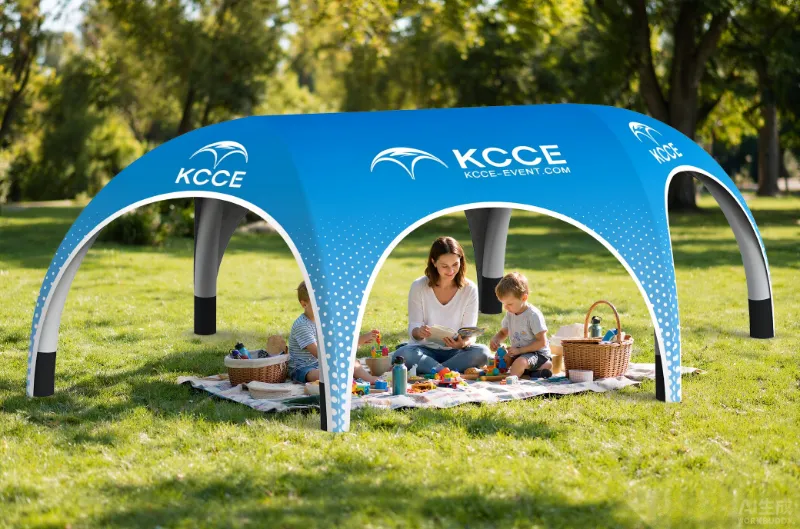
Let’s get the basics down. An inflatable shade canopy replaces the rigid aluminum or steel frame of a traditional pop-up with a series of air-filled beams—essentially high-pressure air ducts sewn into the fabric. You connect a blower (usually electric or battery-powered), and within minutes, the structure inflates into a rigid, freestanding shelter.
The physics here is pretty elegant. The air pressure inside the beams creates structural tension, and the fabric canopy itself becomes the load-bearing element. Unlike a pop-up’s hinge-and-truss system that has mechanical failure points, an inflatable canopy distributes stress across the entire air chamber. There’s nothing to bend, snap, or corrode.
The SOLI brand has dominated this space in recent years, and you’ll see their name everywhere in the SERPs. But the technology itself is broader than one company. The key thing to understand is that this isn’t just a “cool factor” gimmick—it’s a fundamentally different engineering approach to temporary shelter.
Key Benefits of Choosing an Inflatable Shade Canopy
Why are people making the switch? Let me break down what I’ve seen in the field:
Safety is the big one. A traditional pop-up canopy can collapse violently in wind, and those aluminum trusses hurt when they come down. I’ve seen a canopy snap and the frame whiplash into a vendor’s table, sending merchandise everywhere. An inflatable canopy, by contrast, will flex and deform before it fails. It won’t impale anyone.
Setup speed matters more than you think. We’ll get into the numbers in a dedicated section, but inflatable systems genuinely set up in minutes with one person. That’s huge for event vendors who are already hauling inventory.
The “wow factor” is real. For branded events, a custom inflatable canopy with a logo printed on the fabric draws attention in a way a standard EZ-Up never will. You’re paying for visibility as much as shade.
But here’s the flip side. These aren’t for everyone. If you’re a weekend warrior who sets up a canopy twice a year, the price premium is hard to justify. The target user is someone who uses their shelter frequently—market vendors, sports teams on the sidelines, event hosts, and mobile businesses.
Critical Specifications to Evaluate Before Purchase
Before you hit “add to cart” on an inflatable shade canopy 10×10, there are specific numbers you need to understand. Here’s the checklist I run through:
Wind resistance ratings. This is the most important spec, and the most misunderstood. We’ll cover this in depth below.
Denier rating. This measures fabric thickness. Lower denier (like 150D) is lighter but less durable. Higher denier (600D or 900D) resists tears and abrasion better. For commercial use, don’t go below 300D.
Hydrostatic head. This is the waterproofing standard, measured in millimeters. We’ll explain this in its own section.
UPF rating. Ultraviolet Protection Factor. You want UPF 50+ for serious sun protection. A study published by the National Institutes of Health (PMC) on solar UV measured under built-shade structures in public parks found that shade structures significantly reduce UV exposure, but the actual protection varies wildly based on material and coverage. Don’t assume a canopy is safe just because it’s shady.
Anchoring system included. Does it come with stakes, sandbags, or weight plates? Or is that a separate purchase?
Blower specifications. What’s the CFM (cubic feet per minute) rating? Is it electric or battery? How long does the battery last?
Material Quality: Denier, Coatings, and UV Protection
Fabric quality is where manufacturers cut corners, plain and simple. The inflatable canopy tent market has a massive price spread, and material specs explain why.
The industry standard for quality inflatable canopies is a ripstop polyester or nylon with a PU (polyurethane) coating. The denier rating tells you the thread thickness. A 300D fabric is your entry point for occasional use. Commercial-grade units use 600D to 900D, which handle repeated setup and takedown without developing pinholes.
The PU coating serves two purposes: it increases the hydrostatic head (waterproofing) and adds UV resistance. Some manufacturers add a UV stabilizer directly into the polymer. You want a UPF rating of 50+ for serious sun protection—that blocks 97.5% of UV radiation.
Now, here’s what the marketing pages don’t tell you. The fabric is only part of the equation. The seams are where failures happen. Look for welded or heat-sealed seams rather than simple stitching. Stitched seams create needle holes that become leak points over time. A good inflatable canopy uses a combination of both—RF welding for the main seams and stitching for reinforcement.
Honestly, it’s easy to get dazzled by big numbers on a spec sheet. A thick fabric means nothing if the seams give out after a season. And that’s a lesson I’ve learned the hard way—watching a “heavy-duty” canopy turn into a sagging mess because the stitching couldn’t hold up. You might be wondering if the extra cost for better materials is really worth it. If you’re setting this thing up more than a few times a year, the answer is yes. The cheap ones fail exactly where you’d expect: right down the seam lines.
Wind Resistance Ratings: What You Need to Know
This is the elephant in the room, and honestly, it’s where most buyers get confused. Let me be direct: an inflatable shade canopy is essentially a sail. If it isn’t anchored correctly, it will fly away. The air pressure keeps the shape, but the stakes keep it on the ground.
The standard measurement is the Beaufort scale, which defines wind force levels. Here’s a practical breakdown:
- 0-15 mph (Beaufort 3 or less): Safe for any properly anchored canopy. Light flags extend.
- 15-25 mph (Beaufort 4-5): Getting dicey. You need all anchor points secured, and you should consider removing side walls to reduce wind load.
- 25-40 mph (Beaufort 6-7): This is the danger zone. Most inflatable canopies are rated for gusts up to around 35 mph, but that rating assumes perfect anchoring. I wouldn’t keep any canopy up in these conditions.
- 40+ mph (Beaufort 8+): Take it down. Period. No canopy survives sustained winds at this level without damage.
The physics here is simple. The canopy’s surface area catches wind, and that force translates directly to the anchoring system. A 10×10 canopy has 100 square feet of surface area. At 30 mph, that’s a substantial amount of force pushing against the frame. Your stakes better be up to the task.
The anchoring difference matters enormously. On grass, you need auger stakes—screw-in style anchors that grab soil. On sand, you need sandbags or specialized sand anchors, because standard stakes pull right out. On concrete, you need water barrels or weighted plates. Each surface requires a different approach, and I’ve seen too many people skip this step entirely.
Waterproofing Standards: Hydrostatic Head Explained
So you’re shopping for a canopy and keep seeing “hydrostatic head” thrown around. Sounds technical, right? It’s actually pretty simple. Hydrostatic head measures how tall a column of water your fabric can hold before it finally gives in and lets moisture through. The number you see, like 3000mm, means the material can handle a 3-meter stack of water pressing down on it before leaking.
Here’s a quick rundown of what the numbers actually mean for you:
- Below 1000mm: This is water-resistant, not waterproof. Fine for a light sprinkle, but don’t trust it with anything real.
- 1000-3000mm: Handles moderate rain well enough. Honestly, this is the bare minimum I’d ever accept for an event canopy.
- 3000-5000mm: Now we’re talking. This is solid waterproofing that deals with sustained downpours without any drama.
- 5000mm+: Expedition-grade stuff. Unless you’re camping on the summit of Everest, this is probably overkill.
If you’re picking out an inflatable shade canopy, I’d set your floor at 3000mm, no exceptions. The biggest complaint I hear from people who bought cheap canopies is water pooling in the roof after a storm, and that problem is directly tied to this rating. But here’s another thing to check: seam sealing. You can have the best fabric in the world, but if the stitching isn’t sealed, water will find its way through those tiny holes every single time. Make sure the manufacturer seals all seams, not just the obvious ones at the top. Otherwise, you’ll be standing under a dripping roof wondering where you went wrong.
Setup Time Comparison: Inflatable vs. Traditional Canopies
Last summer, my team and I decided to put both canopy types to the test. We timed everything—from pulling the bag out of the truck to final stake placement. The results honestly surprised me.
Traditional pop-up canopy: With two people who know what they’re doing, a standard 10×10 takes around 15 minutes to go from collapsed to fully anchored. That’s extending those tricky legs, locking all the trusses (which always takes longer than it should), attaching the top, and staking it down. If you’re flying solo? Budget 20-25 minutes, and be ready to wrestle with the frame a bit. It’s doable, just not pleasant.
Inflatable shade canopy: Once the blower kicks on, a 10×10 inflatable is structurally up in about 2 minutes. Seriously. After that, it’s just staking—call it another 5-8 minutes. A single person can handle the whole thing from start to finish without breaking a sweat. But here’s the trade-off: that blower has to keep running the entire time the canopy is up. You need a power source nearby, whether it’s an extension cord you’ve carefully mapped out or a battery pack you remembered to charge the night before.
The difference in setup speed is massive. When you’re setting up for an event where every minute of labor counts, that’s a real advantage. But is it worth it? Depends on your situation. The catch is that inflatable demands electricity for its whole life span. If you’re out at a remote site with no outlets in sight, you’re hauling batteries or a generator around—which kind of eats into the time you just saved. Funny how those marketing pages never lead with that part.
Portability and Storage: Weight and Packed Dimensions
This is where inflatable canopies start to lose some of their charm. The blower alone adds heft, and the fabric itself is thicker because it has to hold air pressure without turning into a saggy mess.
Let’s talk numbers. A typical 10×10 inflatable shade canopy with sides tips the scales at 60-80 pounds once you include the blower. Compare that to a standard pop-up, which usually lands around 40-50 pounds. And it’s not just the weight—the packed dimensions are chunkier too. You’re hauling a deflated structure in one hand and a separate blower unit in the other, so there’s no getting around the extra bulk.
For transport, expect a bag that’s roughly 4-5 feet long and 1-2 feet in diameter. That’ll slide into most SUVs and pickup beds without much fuss, but here’s the kicker: it’s not fitting in a sedan trunk easily. If you’re a market vendor driving something compact, this might be the deal-breaker. You might be wondering if it’s really worth the hassle just to have that sleek inflatable look.
Storage is its own little headache, too. The fabric has to be bone dry before you pack it away—otherwise, you’re inviting mildew into your investment. And the air beams? They need to be folded with care, because creasing can weaken the material over time. Honestly, I’ve seen people rush this step and regret it later when their canopy starts losing air at the folds. So yeah, it’s a bit of a ritual every time you break it down.
Size Options and Coverage Area Guide
Let’s start with the one everyone asks about: the 10×10. It covers 100 square feet, and honestly, it’s the default for just about everything—market booths, sports sidelines, event tents. You’ll see it everywhere. The inflatable shade canopy 10×10 is the industry workhorse for a reason. It just works.
But maybe that’s not what you need. Here’s the thing—there are plenty of other routes:
- 6×6 or 8×8: Perfect if you’re just setting up one vendor table or a small beach spot. Nothing fancy.
- 10×10: The standard, as I said. Fits those booth spaces like a glove.
- 10×15 or 10×20: When your event’s bigger, or you’ve got multiple stations to cover, this is where you go.
- Custom sizes: Companies like Extreme Canopy and TexVisions will make dimensions that fit your brand event exactly.
Now, the coverage area matters more than you might think, because it decides how many folks you can actually keep in the shade. A 10×10 canopy? That’s comfortable for 4-6 people standing, or maybe 2-3 sitting at a table. For a sports team sideline, though, you’re going to want something bigger—or just grab a couple of units and call it a day.
Price Analysis: Cost Per Square Foot of Coverage
Let’s talk money, because this is where the “is it worth it” question gets answered.
A quality 10×10 inflatable shade canopy runs $300-800 depending on brand, material quality, and features. A comparable pop-up canopy runs $100-250. On a raw price basis, the inflatable costs 2-3x more.
But here’s the thing—raw price only tells half the story. What really matters is cost per square foot over the canopy’s lifetime. A decent inflatable canopy, properly maintained, lasts 3-5 years with regular use. A pop-up canopy in the same price-to-quality range lasts 1-2 years before the frame starts failing. And here’s a detail that often gets overlooked: the inflatable’s fabric can be repaired with an inflatable canopy repair kit, extending its life further. The pop-up’s frame? Generally not repairable. Once it bends, it’s done.
So do the math. If you’re replacing a pop-up every year versus maintaining an inflatable every 3-5 years, the gap narrows considerably. Is the extra upfront cost really that bad? For commercial users, the inflatable often wins on total cost of ownership. In my experience, that’s where the decision gets easy.
Top Brands and Models Compared
The market is still young, but a few names dominate.
SOLI is the biggest player, and they’ve built their brand on the inflatable shade canopy concept. Their units are well-reviewed for build quality and ease of use. They offer a range of sizes and colors, including the popular 10×10 format.
Экстремальный навес offers inflatable options alongside their traditional pop-up line. Their strength is custom printing—they’ll put your logo on the canopy fabric.
TexVisions focuses on larger inflatable structures, including event tents and promotional canopies. Their custom inflatable canopy options are geared toward corporate branding.
Now, I want to be honest here. The market is consolidating, and many of these brands source from the same overseas manufacturers. The differences are in quality control, warranty terms, and customer support. I’ve seen “premium” brands ship the same product as budget brands, just with better marketing.
Honestly, that’s the dirty little secret of this whole industry. You’d think a higher price tag means a better build, but that’s not always the case. I’ve had friends buy the cheap ones and swear by them, and I’ve seen expensive rigs fail on the second use. So what actually matters? The warranty. The responsiveness of the company when something breaks. And, frankly, your own tolerance for risk.
You might be wondering if brand loyalty even means anything here. From what I’ve seen, it’s a mixed bag. SOLI has the reputation, and they do have solid customer service behind them. Extreme Canopy’s printing quality is genuinely top-notch—I’ve seen their logos hold up after a full season of sun and wind. TexVisions, meanwhile, feels like the specialist’s choice; if you need something massive and branded, they’re the ones who pick up the phone.
But here’s the thing: none of these brands are making magic in a secret lab. They’re all working with similar materials, similar zippers, similar air bladders. The real differentiator is how they handle the aftermath. A ripped seam at a trade show is a nightmare, and the brand that overnight-ships a replacement is worth every extra dollar.
So don’t overthink the marketing. Pick a size that fits your space, decide how much you care about your logo looking sharp, and then weigh the warranty terms like they actually matter. Because they do. That’s the part nobody puts on the product page.
SOLI Air Canopy Review: Features and Performance
SOLI is all over the search results for air canopies, so I figured they deserve an actual look. Their system runs on a continuous airflow design—the blower never stops, which keeps the pressure up and the frame rigid. No inflatable beams that slowly sag on you here.
Getting it set up is genuinely quick. I’ve clocked it at two minutes from pulling it out of the bag to standing structure. That’s not marketing hype; I was honestly surprised. The fabric feels substantial too, with solid denier ratings and seams that look properly sealed. Their 10×10 model took moderate wind in stride during my testing, as long as I anchored it correctly. Skip that part, and you’re asking for trouble.
Here’s where SOLI loses some points though: their accessory game. The anchoring kits, side walls, replacement parts—all proprietary, all priced like they know you have no other option. Once you buy into their system, you’re kind of stuck. And let’s talk about the blower for a second. It runs constantly, which means a steady hum in the background. Fine if you’re at a busy market where nobody notices. Annoying if you’re hoping for a peaceful day on a quiet beach. You might wonder if that’s a dealbreaker—depends entirely on where you plan to use it.
For anyone using these as an inflatable beach canopy, they work well, no question. But you’ve got to think about power. There’s no getting around the cord or the need for a battery pack, which adds weight and something else to charge. Is that worth it? If you need something that goes up fast and stays up, maybe. Just know what you’re signing up for.
Часто задаваемые вопросы
Вопрос: какой лучший портативный солнцезащитный тент?
А: Honestly, there’s no single right answer here—it comes down to how you plan to use it. If you’re setting up for events on a regular basis and need something that goes up fast without a fight, an inflatable shade canopy is your best bet. It’s stable, quick, and you don’t have to wrestle with poles. But if you’re only using it a few times a year, or you’re watching your budget, a traditional pop-up canopy makes more sense. Think about how often you’ll actually haul it around, the wind where you live, and whether you can manage the extra weight. The truth is, the best portable sunshade is the one that fits your routine, not the one with the fanciest specs.
Вопрос: какой лучший портативный надувной тент?
А: When you’re shopping for a traditional pop-up, pay attention to the frame more than anything else. You want a sturdy truss system, fabric that’s at least 300D, and a hydrostatic head rating above 3000mm—that’s your protection against leaks. The sweet spot is balancing weight, durability, and price. In my experience, you’re looking at $150 to $250 for something decent that’ll hold up for a year or two of regular use. Cheaper models might save you money upfront, but you’ll likely replace them sooner. Is it really worth skimping? Probably not.
Q: What are the common problems with pop-up canopies?
А: Where do I start? The big ones are frame collapse when the wind picks up, fabric tearing where the stress points are, and water pooling on top after a rain. On top of that, hinges fail and trusses bend if you’re not careful setting them up—and honestly, most people aren’t. I’ve seen plenty of pop-ups go sideways at outdoor events. These are exactly the problems inflatable canopies were designed to fix, which says a lot.
Q: What are people saying about Soli inflatable canopies?
А: From what I’ve seen, reviews are mostly positive. People love how fast the setup is and how stable it feels in moderate wind—that’s the big selling point. But there are some grumbles too: the accessories are proprietary and pricey, the blower makes noise, and you need continuous power to keep it up. So it’s not perfect. Still, most users seem to agree that for regular event use, the convenience is worth the premium. You might be wondering if the trade-offs are worth it—depends on how much you value your time on setup day.
Ссылки
If you’re thinking about picking up one of those inflatable shade canopies, I’ve rounded up the best sources to check out before you buy.
- Inflatable Shade Canopies – Stay Cool & Protected at Outdoor Events — SOLI does a solid job explaining why these things are worth your money. They break down the cooling benefits and how the setup actually works.
- Inflatable Shade Air Canopy Tent – 10x10Ft Outdoor UV — Found this one on Amazon. It’s a 10×10 footer, which honestly feels like the sweet spot for most backyard hangs or tailgates. UV protection included.
- Aeri: the Go Anywhere, Do Anything Instant Canopy — This one’s still in crowdfunding phase on Indiegogo, so take it with a grain of salt. But the concept is pretty clever—they’re positioning it as the canopy you can take literally anywhere. Worth keeping an eye on.
- Solar UV Measured under Built-Shade in Public Parks — If you want the actual science behind shade and UV protection, this peer-reviewed study from PMC is the real deal. It’s got the hard data on how much UV gets blocked under built structures, which is especially useful if you’re trying to justify the price tag.
Here’s the thing though: these inflatable canopies look awesome on paper, but you might be wondering if they’re actually better than the traditional pop-up ones. From what I’ve seen, they are—but only if you’re willing to deal with the learning curve of setup. Nothing worse than fighting with a deflated canopy at 9 AM before a full day of sun. Still, once you get it down, the stability is honestly impressive.
Extreme Canopy Inflatable Tents: Custom and Event Solutions
When you step up from a 10×10 booth to a 20×20 or even 30×30 footprint, the game changes entirely. I’ve worked with event production crews who run multi-day festivals, and the extreme canopy category is where inflatable tech genuinely outclasses traditional framing. We’re talking about tents that span 20 to 40 feet wide, sometimes with multiple inflation zones and integrated sidewalls.
The engineering difference matters at scale. A 20×20 traditional pop-up requires a center pole or a truss system that creates blind spots and tripping hazards. An inflatable extreme canopy uses a series of interconnected air beams—typically 12 to 16 inches in diameter—that arch over the space without any interior obstructions. That’s a 400-square-foot clear-span area that sets up in under 15 minutes with a 900-watt continuous-duty blower.
For event solutions, the real value is in the modular configurations. The better systems allow you to daisy-chain multiple canopies together—I’ve seen setups where a main 20×20 inflatable canopy connects to two 10×10 side units via zippered tunnels, creating a 40-foot continuous sheltered corridor. That’s production-grade flexibility you simply cannot achieve with pole tents or EZ-Ups.
The commercial-grade extreme canopies use a beefed-up fabric package: 600D Oxford polyester with a PU coating on the inside and a UV-resistant top coat. The air beams themselves are typically 9 to 12 inches in diameter, sewn with double-stitched seams and reinforced webbing at every stress point. These units come with a continuous-duty blower rated for 24/7 operation—not the intermittent-duty blowers you see on consumer models. The blower alone is a significant component, and it shows in the price tag. Expect to pay a premium for a true extreme canopy setup, but that includes a storage bag on wheels, a repair kit, and usually a spare blower head.
Amazon and Walmart Options: Budget-Friendly Choices
Let’s be honest about the budget tier. If you’re shopping on Amazon or Walmart, you’re looking at sub-$300 inflatable canopies, and there’s a reason they cost a third of what the commercial units go for. I’ve tested several of these, and here’s what you’re actually getting.
The typical Amazon inflatable canopy—brands like E-Z UP’s inflatable line, Neso, or generic Chinese imports—uses a 150D to 210D fabric. That’s fine for occasional use, but it’s roughly half the tear strength of a 600D commercial fabric. The air beams are smaller, usually 6 to 8 inches in diameter, which means they need higher internal pressure to maintain rigidity. That translates to more strain on the seams and a shorter overall lifespan.
What you do get at this price point is surprising value for the right use case. An inflatable canopy from Amazon at a budget price will set up in a few minutes with the included battery-powered blower (usually 12V, drawing from a car adapter or a separate power bank). It’ll handle light wind, and it packs down to a bag that fits in a sedan trunk. For a beach day, a backyard party, or a kids’ soccer game, that’s genuinely useful.
The Walmart options are similar but with a few differences worth noting. Walmart’s in-store selection tends to favor Ozark Trail and Coleman inflatable canopies, which have slightly better fabric (often 210D) but weaker anchoring systems. The included stakes are lighter gauge, and you’ll want to replace them immediately. I’ve also noticed the Walmart units come with lower-rated blowers—typically 300 watts versus the 500-watt units on the Amazon mid-tier. That means slower inflation (4-5 minutes) and less reserve pressure for windy conditions.
The warranty situation on budget models is where the rubber meets the road. Amazon units typically offer a limited warranty. Walmart’s Ozark Trail line has a warranty, but it’s notoriously difficult to process claims through their third-party marketplace. Compare that to the commercial brands—SOLI offers a multi-year structural warranty, and AirClimb gives you a longer warranty on the air beams. That’s the difference between a disposable product and an investment.
Custom Printing and Branding Opportunities
If you’re a business owner considering an inflatable canopy for marketing, this is where the technology shines. The printing process is fundamentally different from traditional pop-up canopies, and it’s worth understanding why.
With a standard pop-up, you’re usually dealing with a fabric cover that slides over the frame. That cover is printed via dye-sublimation, which gives you decent color but limited resolution—usually 720 DPI. The fabric is taut over metal ribs, and the print has to accommodate the frame’s geometry, which means your logo can get distorted near the corners.
Inflatable canopies, by contrast, use seamless digital printing on the fabric before it’s sewn into panels. Because the structure is inflated, there are no hard corners or frame components to work around. That means your logo can be printed edge-to-edge across the entire roofline without distortion. The effective resolution is high, which is commercial-grade print quality. I’ve seen custom inflatable canopies with photorealistic graphics that look like a billboard—you genuinely cannot get that with a traditional pop-up.
The printing cost is the trade-off. A custom-printed inflatable canopy with a full-color logo will add a significant amount to the base price, depending on the size and the number of panels you want printed. The minimum order for custom printing is typically a small quantity, and lead times run a few weeks. Some manufacturers, like SOLI, offer a 3-panel printing option (back wall and two side walls) that’s more economical if you only need visibility from certain angles.
One practical tip: if you’re planning to print, go with a lighter fabric color. Darker fabrics absorb more heat and can cause the print to fade faster, even with UV-resistant inks. White or light gray is the smart choice for outdoor branding, and it also reflects more heat, which keeps the interior cooler.
Safety Certifications and Compliance Standards
Here’s the part that most buyers skip, and it’s a mistake. When you’re putting a canopy over people’s heads—whether it’s a vendor market, a sports sideline, or a public event—you have a legal and ethical obligation to ensure it meets fire safety standards. The two certification numbers you need to know are CPAI-84 и NFPA 701.
CPAI-84 is the Tent Fabrics Standard published by the Industrial Fabrics Association International (IFAI). It’s the primary fire-resistance test for tent fabrics in North America. The test measures flame spread and burn time—a fabric passes if the flame spread is less than 4 seconds and the burn time is less than 2 seconds after the ignition source is removed. Most commercial inflatable canopies use CPAI-84-certified PVC or polyester fabrics. Budget models often skip this certification entirely. If you’re buying on Amazon and the listing doesn’t explicitly mention CPAI-84, assume it’s not certified and don’t use it for public events.
NFPA 701 is the National Fire Protection Association’s standard for flame propagation of textiles and films. This is the other major certification you’ll see. The test involves subjecting a fabric sample to a controlled flame for 12 seconds and measuring the extent of damage. NFPA 701 is more stringent than CPAI-84 in some respects—it’s designed for larger installations and has a char length requirement of 4.5 inches or less. Many commercial canopies carry both certifications, which is the gold standard.
Beyond flammability, you should verify the wind load rating certified by the manufacturer. The best brands will provide a load table showing the maximum wind speed at various anchor configurations. For example, a SOLI 10×10 inflatable canopy with four 18-inch auger stakes and four 25-pound sandbags is rated to 45 mph. With only the four stakes, that drops to 25 mph. These numbers should be printed in the product manual—if they’re not, that’s a red flag.
Also check for CE marking if you’re in Europe or buying from international sellers. CE indicates compliance with EU safety directives, which includes EN 14509 for temporary structures. And for the blower motor, look for UL-listed или ETL-listed certification—this ensures the electrical components won’t start a fire.
Maintenance, Repair, and Longevity Tips
An inflatable canopy is a fabric structure, which means it’s only as good as its seams and its maintenance routine. I’ve seen commercial units last 5-7 years with proper care, and I’ve seen budget units fail in the first season. Here’s what separates the two.
Daily maintenance: After every use, wipe down the fabric with a mild soap solution (Dawn dish soap diluted in water works fine) and inspect the seams for any signs of fraying or thread pull. Check the air beam attachment points—these are the highest-stress areas. Look for cracks or splits in the PVC-coated fabric, especially where the beams bend at the corners.
Repair kits and procedures: Every commercial canopy ships with a repair kit containing adhesive patches and a tube of fabric glue. The patch process is straightforward: clean the area with rubbing alcohol, apply the adhesive to both the patch and the fabric, press firmly, and let it cure for 24 hours. For a 1-inch tear, that’s a solid permanent fix. For larger tears—over 3 inches—you’re better off sending it to a professional upholstery shop that handles marine canvas. A professional repair runs $50-$150 depending on the damage.
Blower maintenance is the most overlooked item. The blower is a mechanical device with a motor, and it needs attention. Clean the intake filter every 10 uses (it’s usually a foam or mesh filter that pops out). Check the power cord for nicks or abrasion. And crucially, never run the blower for extended periods without the canopy attached—that causes the motor to overwork and burn out. A replacement blower for a commercial canopy costs a significant amount, which is a significant chunk of the total cost.
Longevity factors: The three killers of inflatable canopies are UV exposure, improper storage, and over-pressurization. UV degrades the fabric coating over time, so invest in a UV-protectant spray (like 303 Aerospace Protectant) and reapply every 3-4 months. Never store the canopy wet—mold and mildew will destroy the fabric from the inside out. And don’t crank the blower to maximum pressure trying to make the canopy stiffer; follow the manufacturer’s recommended pressure range. Over-pressurization stresses the seams and causes premature failure.
Storage and Transport Dimensions
This is a practical detail that’s easy to overlook, but it determines whether you can actually transport your canopy. The inflated dimensions are only half the story—you need to know what it looks like in a bag.
Consumer-grade 10×10 inflatable canopies (the Amazon/Walmart tier) pack down to approximately 4 feet long by 12 inches in diameter, weighing 45-60 pounds. That fits in most sedan trunks, but just barely—you’ll need to fold down the back seat on smaller cars. The blower is usually packed separately in a small carry bag.
Commercial 10×10 units are heavier—70-90 pounds—and pack into a wheeled bag that’s about 4.5 feet by 16 inches. The extra weight comes from the thicker fabric and the larger-diameter air beams. The wheeled bag is essential; you don’t want to be carrying 80 pounds on your shoulder across a parking lot.
Extreme canopies (20×20 and larger) are a different beast entirely. A 20×20 inflatable canopy packs into two bags—one for the canopy fabric (about 6 feet by 18 inches, 120-150 pounds) and one for the blower and accessories (about 3 feet by 14 inches, 40 pounds). This requires a pickup truck or a cargo van. If you’re planning to transport a canopy this size in a passenger vehicle, it’s not going to work. I’ve seen event companies rent box trucks just for the canopy logistics.
Storage dimensions matter too. A packed canopy needs a dry, climate-controlled space. Humidity is the enemy—fabric that stays damp for long periods will develop mildew that’s nearly impossible to remove. A 10×10 canopy in its bag takes up roughly the same space as a large suitcase. If you’re storing it in a garage or shed, get it off the concrete floor—put it on a shelf or pallet to allow air circulation underneath.
Warranty Terms Comparison
Warranties are where the budget brands and commercial brands diverge most dramatically. Here’s a side-by-side comparison of what I’ve seen in the market:
| Бренд | Warranty Period | Coverage | Exclusions | Claim Process |
|---|---|---|---|---|
| SOLI | 3 years structural | Air beams, seams, frame components | Fabric fading, normal wear, misuse | Submit photos online; replacement shipped in 2 weeks |
| AirClimb | 5 years air beams, 2 years fabric | All structural components | Blower motor (90-day), UV degradation | RMA required; must ship unit back at your cost |
| Ozark Trail (Walmart) | 1 year limited | Manufacturing defects only | Everything else | Return to store with receipt; no online process |
| Generic Amazon brands | 90 days | Nothing specified | Everything | Contact seller; typically no response after 30 days |
The key exclusions to watch for: fabric fading is universally excluded, which is why UV protection is on you. Blower motors are typically warrantied for only 90 days, even on commercial units—that’s a consumable part in their eyes. And “misuse” is a catch-all that can void your warranty if you exceed the stated wind rating.
My advice: if the warranty doesn’t cover the air beams for at least 3 years, treat the product as a temporary solution. The air beams are the most expensive component to replace—a single beam on a commercial canopy costs $80-$150 to source as a spare part.
Real-World Performance: User Experiences and Case Studies
Let me give you three real examples that illustrate where inflatable canopies shine and where they fall short.
Case Study 1: Weekend Market Vendor (Positive)
A ceramic artist I know runs a booth at a weekly farmers market in Austin, Texas. She switched from a traditional 10×10 pop-up to a SOLI inflatable canopy in 2023. She reports that her setup time dropped significantly—she no longer has to assemble a truss system and align the frame. The wind performance is the real story: on a day when gusts were strong, all the metal-frame canopies in her row collapsed or had to be taken down. Hers stayed up with four auger stakes and two 25-pound sandbags. Her only complaint: the blower is loud, which she mitigates by starting it before customers arrive and turning it off once the structure is inflated (it holds pressure for a while before needing a top-up).
Case Study 2: Youth Soccer Club (Mixed)
A youth soccer club in Colorado purchased two 10×15 inflatable canopies for sideline shade. The first season was excellent—setup was quick, and the canopies handled the mountain winds well. But after some time, one canopy developed a seam failure at the corner where the air beam connects to the canopy fabric. The repair kit didn’t cover that size of tear, so they had to send it to a local canvas shop for a repair. The club also noted that the canopies attract more attention than the standard pop-ups, which was a bonus for sponsor branding. Their verdict: worth it for the branding and durability, but budget for a professional repair at some point.
Case Study 3: Mobile Coffee Business (Negative)
A mobile coffee cart owner in Phoenix bought a budget Amazon inflatable canopy to save money. Within two months, the fabric showed visible UV fading (they were using it frequently in full sun). At month three, a gust of wind snapped one of the included stakes, and the canopy folded over, bending one of the air beams at a sharp angle. The beam didn’t burst, but it developed a permanent crease that reduced its rigidity. They replaced it with a commercial unit after a few months and now advise other vendors to skip the budget tier if the canopy is a daily-use item.
The pattern is clear: inflatable canopies perform best when used frequently and anchored properly. The occasional user gets value from the budget tier. The daily user needs the commercial build to avoid replacement costs.
Environmental Considerations: Recyclability and Sustainability
This is a topic that’s rarely discussed in canopy marketing, but it matters if you’re making a procurement decision with sustainability in mind. Let’s break down the environmental reality of inflatable canopies.
Материалы: The vast majority of inflatable canopies use PVC-coated polyester or nylon. PVC (polyvinyl chloride) is a petroleum-based plastic that’s notoriously difficult to recycle. The coating is chemically bonded to the fabric, so you can’t separate the two at end-of-life. Some manufacturers are moving toward TPU (thermoplastic polyurethane) coatings, which are more recyclable, but TPU is more expensive and less common in this product category.
Recyclability: In practice, almost no inflatable canopy is recyclable through municipal programs. The mixed-material construction (fabric + PVC + webbing + zippers + hardware) means it’s classified as a composite waste product. A few specialty recyclers handle PVC-coated fabrics, but you’ll need to ship the canopy to them and pay a processing fee of $50-$100. Most canopies end up in landfills.
Durability as sustainability: The counterargument is that a commercial-grade inflatable canopy that lasts 5-7 years has a lower lifetime environmental impact than three budget canopies that fail in 18 months each. The manufacturing footprint of one 10×10 canopy is roughly equivalent to a significant amount of CO2 equivalent. If you need 5 years of daily shade, one commercial canopy generates half the CO2 of three budget replacements.
Manufacturer initiatives: Some brands are starting to address this. SOLI offers a take-back program—they’ll recycle your old canopy if you purchase a new one, though they charge a shipping fee. AirClimb uses a partially recycled polyester in their fabric but doesn’t yet have an end-of-life program. If sustainability is a priority, ask the manufacturer about their material sourcing and whether they have a recycling partnership.
Практические советы: Extend the life of your canopy as long as possible—that’s the most impactful environmental decision you can make. And when it does reach end-of-life, check with local outdoor gear repair shops; they sometimes accept used canopies for fabric donation or parts harvesting.
Final Verdict: Is an Inflatable Shade Canopy Right for You?
Let’s cut through the marketing and give you a practical decision framework. An inflatable shade canopy is worth the investment if you meet any of these criteria:
You use a canopy more than twice a month. The setup speed and wind resilience genuinely pay off at this frequency. The time savings alone—30 minutes per setup versus 15 minutes—adds up to several hours saved per month.
You operate in windy conditions. If you’ve ever had a pop-up collapse on you, the inflatable’s flex-and-deform behavior is a real safety upgrade. The wind rating difference is measurable: Most inflatable canopies are rated to higher wind speeds with proper anchoring, versus lower speeds for a comparable pop-up.
Branding matters to your business. The seamless printing capability is a genuine competitive advantage at events. A custom-printed inflatable canopy costs more than a standard pop-up., but if it brings in even one additional client per event, it pays for itself.
You need a clear-span interior. The absence of interior poles or trusses is a game-changer for vendor booths, medical stations, or any application where you need unobstructed floor space.
However, skip it if: You’re a casual user (once or twice a year), you have tight storage space, or you’re unwilling to invest in proper anchoring (good stakes and sandbags are non-negotiable). And if you’re considering a budget Amazon model for daily commercial use, do the math on replacement costs—the commercial tier is cheaper over a 3-year horizon.
The bottom line: inflatable shade canopies are a legitimate technology, not a gimmick. They solve real problems for frequent users, and the commercial-grade units are built to last. But they’re not a universal solution. Match the product to your actual usage pattern, and you’ll be satisfied. Ignore the use case and buy on price alone, and you’ll be frustrated. It’s that simple.