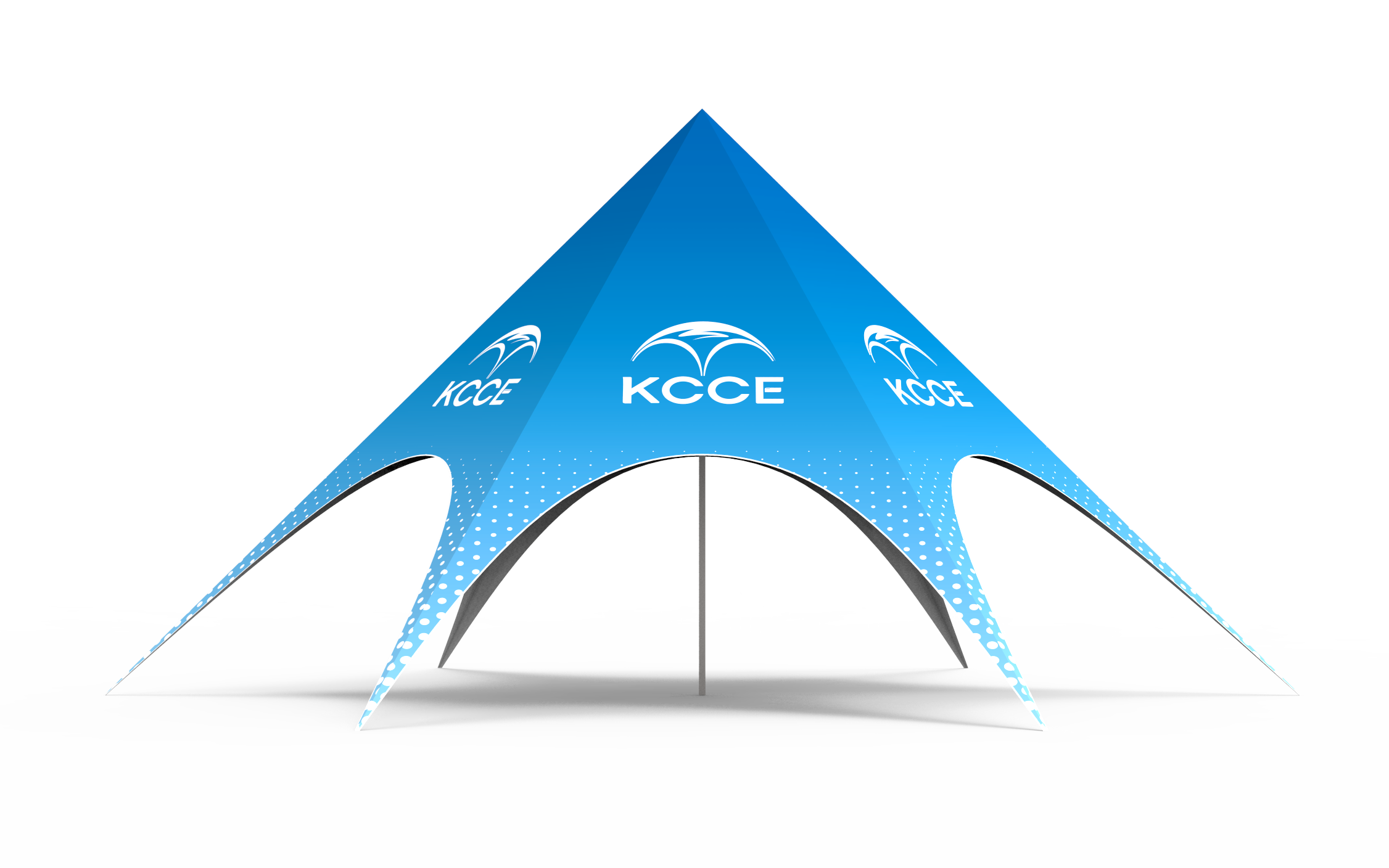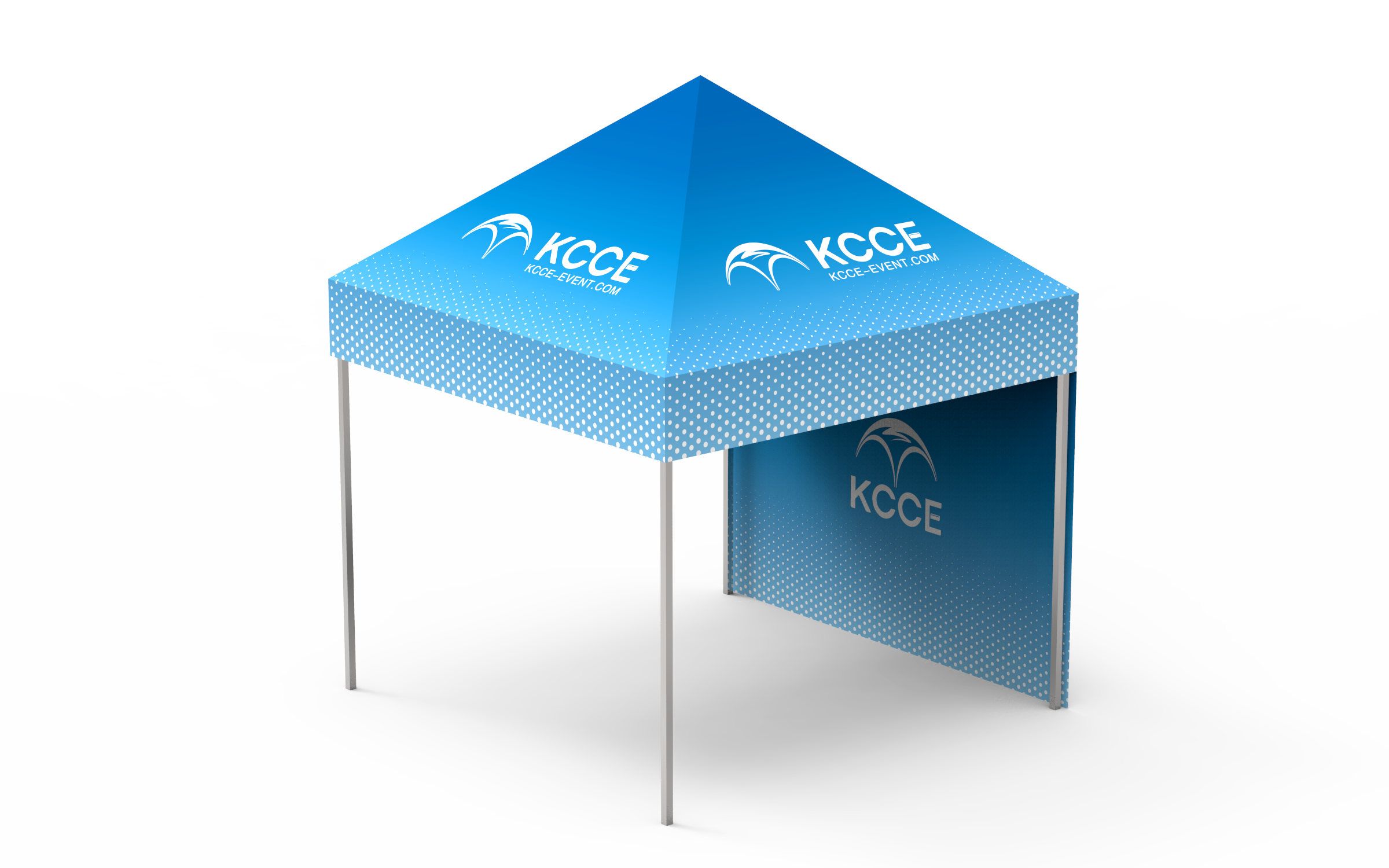
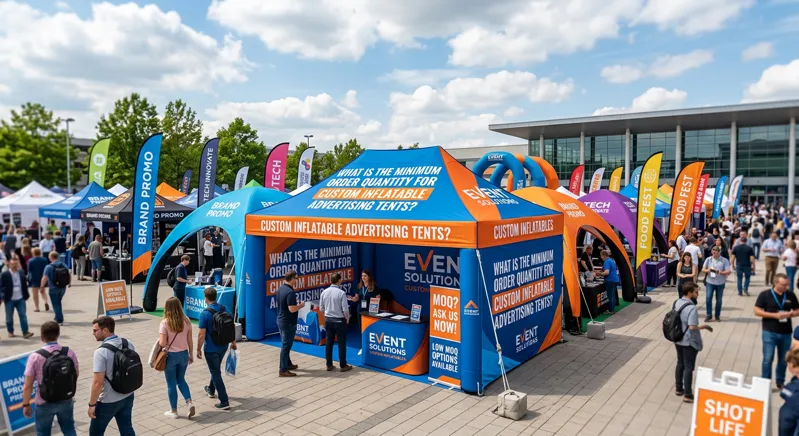
Most people figure an inflatable advertising tent bites the dust when the fabric rips. In my experience? That’s almost never what kills it in winter. The failures I’ve seen — and I’ve crawled around plenty of dead tents after a February storm — start at the seams, the valves, or the anchor points. The canopy itself is usually the last thing to go.
That matters if you’re the one signing the purchase order. An inflatable advertising tent in snowy conditions is a pressure vessel, not a pop-up canopy. It holds its shape because air inside the beams pushes outward against the fabric. Snow pushes back. Whoever wins that argument comes down to three things: how the load travels through the structure, how the material behaves when it’s cold, and how well you’ve pinned the whole thing to the ground.
Let me walk you through all three, plus the failure modes nobody warns you about.
Quick Answer
An inflatable advertising tent can handle snow only if its internal pressure, seam construction, and anchoring are all rated for the load. Most failures come from under-inflation, frozen valves, and stakes that pull out of powder — not from fabric tearing. Always ask for a PSI rating and a snow-load figure before you buy.
How Snow Load Actually Stresses an Inflatable Tent
Here’s the load path, and it’s worth understanding because it tells you where to inspect.
Snow lands on the canopy. The canopy transfers that weight to the seams where panels meet. The seams pull on the inflated beams. The beams resist by pushing outward with internal air pressure. If any link in that chain is weak, the whole thing folds.
Two kinds of loading matter, and they behave nothing alike:
- Uniform load — a flat, even layer of snow across the whole roof. Predictable. The structure distributes it reasonably well if pressure is right.
- Drift or point load — snow piling up on one side because of wind, or sliding off a nearby building onto one corner. This is what kills tents. A drift concentrates hundreds of pounds on a small area, and inflatable beams don’t redistribute point loads the way a rigid truss does.
You might be wondering why I keep saying “in my experience” instead of quoting a hard number. Here’s the honest answer: the industry doesn’t publish a universal snow-load standard for inflatable advertising tents the way it does for framed structures. So the spec you get is vendor-specific. That’s exactly why you have to ask.
For context on why cold-weather performance is getting more attention lately: a U.S. Senate Budget Committee hearing in 2024 examined the growing costs climate change imposes on outdoor recreation, which includes more erratic and heavier snowfall events in many regions. Planners are paying attention. You should too.
Material Durability: TPU vs PVC vs Coated Polyester in Cold
This is where cold-weather material behavior gets interesting, and where a lot of buyers get misled.
Plastics get brittle as they cool. The technical term is glass transition temperature — the point where a polymer shifts from flexible to glassy. Below that threshold, the material doesn’t stretch; it cracks. Every common tent material has a different threshold.
- PVC (polyvinyl chloride) — the traditional workhorse for inflatable tents. Cheap, weldable, widely available. But it stiffens noticeably in serious cold, and cold-crack risk rises the longer it sits below freezing. Fine for a mild winter day. I wouldn’t trust it through a hard freeze.
- TPU (thermoplastic polyurethane) — generally better cold flexibility than PVC and often used as an airtight bladder inside a heavier outer shell. That’s the construction you see in products like the airtight inflatable bar counter furniture with TPU bladder that KCCE builds for outdoor events — the TPU does the sealing, the outer layer takes the abuse.
- Coated polyester (often Oxford weave) — lighter, packs smaller, and the coating determines cold performance. A good coating stays flexible; a cheap one gets stiff and flaky.
Now the seam question, which is the real durability story.
Welded seams beat stitched seams in cold, full stop. Stitching punches thousands of tiny holes through the fabric. Each hole is a stress concentrator. In cold, where the material has less give, those holes tear. Welded (heat-fused) seams don’t puncture the material — they merge it. If a vendor can’t tell you whether their seams are welded or stitched, that’s your answer.
One more thing worth saying out loud: the general skepticism about inflatable durability you see in enthusiast communities — the kind of debate you find in threads like the inflatable jackets discussion on r/Ultralight, or the back-and-forth in THE INFLATE DEBATE: INFLATABLE PADS VS FOAM PADS — is real, but it’s mostly about puncture resistance in the backcountry. Commercial event tents face a different enemy: sustained structural load. Don’t let backpacking arguments talk you out of a technology that works fine for its actual use case.
PSI, Internal Pressure, and Snow Load Capacity
Let’s do the math, because this is the part that actually decides whether your tent survives.
Internal pressure is measured in PSI. Snow load is measured in kilograms per square meter (kg/m²) or pounds per square foot (psf). The relationship is roughly linear: more internal pressure means more resistance to downward load, up to the point where the fabric or seams fail.
The practical rule I use: under-inflation is far more dangerous than over-inflation, within limits. A floppy beam buckles under snow. A properly firm beam holds its shape and sheds load. But over-inflate and you stress the seams every second the tent stands, snow or no snow.
So how much snow load can an inflatable tent handle? Honestly, there’s no single answer — it depends on beam diameter, number of beams, seam quality, and pressure. What I can tell you is the procurement move: demand a PSI rating and a corresponding snow-load figure from your vendor, in writing. If they can’t produce both, you’re buying blind.
A word on the broader inflatable category, since buyers often cross-shop: the same pressure-and-material logic applies to the Elite 190 Inflatable PFD in cold water, or to CEFIL’AIR® Inflatable Seals in industrial settings. Different products, same physics. Pressure and material dictate performance.
Anchoring and Ballast for Snow-Covered Ground
Here’s the failure that catches everyone off guard the first time.
You drive stakes into snow. They hold for an hour. Then the wind picks up, the snow compacts or melts slightly, and every stake pulls straight out. Powder has almost no holding strength. This is why so many inflatable tents end up on their side after a storm — not because the structure failed, but because the ground let go.
How to anchor an inflatable tent in snow, practically:
- Snow anchors and deadmen — bury a wide plate or a stuff sack filled with snow, let it set, then attach your line. Snow anchors are designed for this; stakes are not.
- Ballast — sandbags, water bladders, or heavy weights around the perimeter. Works when you can’t dig.
- Combined wind + snow loading — and this is the part people miss. Wind doesn’t just push sideways. It drives snow into drifts, which creates the point loads I mentioned earlier. Wind and snow together are far worse than either alone. Anchor for the wind, and the snow drifts will follow.
If you’re setting up on a frozen lake or packed snow, treat every anchor as temporary and re-check it. I’ve watched a tent that was rock-solid at 9 a.m. start walking at 2 p.m. because the sun softened the surface.
Cold-Weather Failure Modes: Ice-Lock, Valves, Deflation
Do inflatable tents deflate in cold weather? Yes — and this is the question I get most from event managers.
The physics is simple. Cold air contracts. A tent inflated to a firm pressure in a warm staging area will be noticeably softer after a night at freezing temperatures. That’s not a leak. That’s gas law. Top it up in the cold, not before you leave the warehouse.
But there are harder failures too:
- Frozen valves — moisture in the valve freezes and the valve won’t seal or open. You can’t deflate, you can’t top up. Keep valves dry and capped.
- Ice-lock — water gets into seams or folds, freezes, and locks the structure into a shape you can’t correct. Worse, the expanding ice stresses the material from inside.
- Freeze-thaw cycling over seasons — this is the slow killer. Every freeze-thaw cycle works the material and the seams a little more. A tent that survives one winter may not survive its third. Inspect annually.
Inflatable vs Framed Tents: Snow Durability Comparison
| Фактор | Надувная палатка | Framed Tent |
|---|---|---|
| Время установки | Fast, often one person | Slower, usually two people |
| Snow rating | Vendor-specific, pressure-dependent | Usually published as a snow-load standard |
| Primary failure point | Seams, valves, anchors | Frame joints, bent poles |
| Cold behavior | Pressure drops; valves can freeze | Metal can become brittle; joints seize |
| Стоимость | Generally lower for large spans | Higher, especially for wide clear-span |
| Best use | Short-duration events, moderate snow | Long-duration, heavy sustained snow |
When does inflatable win? Short events, tight budgets, fast setup, and moderate snow where you control the anchoring. When does framed win? Permanent or long-duration installations under heavy, sustained snow load, where you need a published engineering rating.
You’ll see the same trade-off pattern across the inflatable world — the Inflatable SUP vs. Hard Paddle Board comparison is the classic version of it, and even a story like the man set to navigate the Congo Basin in an inflatable kayak is really a story about choosing inflatable for portability over rigidity. Different products, same decision logic.
And yes, inflatables show up in places you’d never expect — you’ll find them as novelty items like the Tito’s Inflatable Bottle Costume, as event gear from suppliers like EZ Inflatables: Waterslide – Games – Bouncers – Slides, and even in internet folklore like the Dumb inflatable guy thread on r/TinyBookshop. The category is broad. The engineering principles aren’t.
Spec Sheet Checklist for Winter Procurement
Before you sign anything, get these answers in writing. This is the winter inflatable tent specs list I hand to clients:
- PSI rating — and the corresponding snow-load figure in kg/m² or psf
- Материал — PVC, TPU, or coated polyester, and the cold-flex rating
- Seam type — welded or stitched. Welded is the answer you want.
- Valve type — and whether it’s rated for sub-freezing operation
- Anchor points — how many, and whether they accept snow anchors
- Гарантия — specifically what’s covered for cold-weather failure
- Replacement parts — can you buy a replacement valve or beam, or is the whole tent disposable?
For reference on what a serious manufacturer looks like: KCCE (Dacheng outdoor products LTD.) states that it has been building inflatable advertising products since 2006, operates a facility, uses multiple production machines, ships to many countries, and holds CE and RoHS compliance according to the company. That’s the kind of supplier you can actually hold to a spec. You can see their inflatable tent and gazebo lineup on their Made-in-China storefront.
Заключение
Durability in snowy conditions isn’t about the fabric. It’s about anchoring and pressure. Get those two right and a well-built inflatable advertising tent will handle more snow than most people expect. Get them wrong and the best fabric in the world won’t save you.
So here’s my ask: before your next winter purchase, request the PSI rating and the snow-load figure in writing. And figure out your local ground snow load first — that number should drive every other decision.
Часто задаваемые вопросы
Q: Can an inflatable advertising tent really hold snow?
А: Yes, if it’s properly inflated and anchored. The internal air pressure resists downward load. The catch is that performance depends on the PSI rating, seam construction, and anchoring — not on the fabric alone. Always get a written snow-load figure from your vendor before buying.
Q: Do inflatable tents deflate in cold weather?
А: They lose pressure because cold air contracts — that’s simple gas law, not a leak. A tent that’s firm in a warm warehouse will feel soft after a freezing night. Top up the pressure in the cold, and keep valves dry so they don’t freeze shut.
Q: How much snow load can an inflatable tent handle?
А: There’s no universal number. It depends on beam diameter, beam count, seam quality, and internal pressure. Ask your vendor for a PSI rating paired with a snow-load figure in kg/m² or psf. If they can’t provide both, don’t buy.
Q: How do I anchor an inflatable tent in snow?
А: Skip the stakes — they pull straight out of powder. Use snow anchors or deadmen buried in the snow, plus ballast like sandbags around the perimeter. Re-check anchors through the day, because sun and wind can loosen them fast.
Q: Why do inflatable tents fail at seams instead of the fabric?
А: Seams are where stress concentrates. Stitched seams punch holes that tear in cold, brittle material. Welded seams fuse the fabric instead of puncturing it, so they hold up far better in freezing conditions.
Q: Is TPU better than PVC for cold-weather tents?
А: Generally yes. TPU stays flexible at lower temperatures than PVC, which stiffens and faces higher cold-crack risk. Many quality tents use a TPU bladder inside a heavier outer shell — the TPU seals, the outer layer takes the wear.
Q: Inflatable or framed tent for a snowy event?
А: Inflatable wins for short events, fast setup, and moderate snow when you control anchoring. Framed wins for long-duration installations under heavy sustained snow, where you need a published engineering snow-load rating.
Q: What should I check on a winter inflatable tent spec sheet?
А: PSI rating, snow-load figure, material type with cold-flex rating, welded vs stitched seams, valve cold rating, anchor point count, warranty coverage for cold failure, and whether replacement parts are available.
Ссылки
1. Top 5 Best Inflatable Hot Tents in 2026 – hillzerogear.com
2. Recreation at Risk: The Nature of Climate Costs (Senate Hearing 118-258) – govinfo.gov
3. Chapter 1 – Parks and Outdoor Recreation Lands – sos.state.co.us
4. Land Use Items – Planning Commission – mesacounty.us