I’ve watched a $200 pop-up canopy fold like a cheap lawn chair in a 15 mph gust. Not a hurricane. Just a typical Tuesday afternoon at a local farmers market. The frame twisted, the fabric shredded, and the vendor lost half her display to a sudden downpour. That canopy was supposed to last a decade. Instead it became scrap metal in under 90 seconds.
Here’s what nobody tells you when you’re staring at a wall of identical-looking boxes at the big box store: most pop-up canopies fail not because some monster storm blew through, but because the buyer had zero guidance on what actually makes one sturdy versus department-store disposable. You’ve probably bounced between an unhelpful retailer grid with no real specs and some thin listicle that just reads the product descriptions back at you. After this, you won’t have to guess anymore.
I’ll walk you through everything—the material science you actually need, the frame grades that matter, the sizing logic that prevents buyer’s remorse, and the brand landscape from the bottom shelf to commercial grade. And I’ll do it without the marketing fluff that passes for “reviews” these days.
Best Pop-Up Canopies at a Glance (Quick-Comparison Table)
Before we dig into frame metallurgy and denier mythology, here’s the snapshot for the ready-to-buy crowd. I pulled these picks together by cross-referencing manufacturer spec sheets, trawling through long-term user forums, and noting the failure patterns I’ve observed across hundreds of events. This isn’t just marketing copy.
| Модель | Лучший выбор | Упакованный вес | Рама | Canopy Fabric | Real Wind Limit | Диапазон цен |
|---|---|---|---|---|---|---|
| Eurmax USA 10×10 Professional | All-Rounder Heavy Duty | 55 lbs | Powder-coated steel, hammer-tone finish | 500D polyester, PU lined, CPAI-84 fire cert | 25-30 mph anchored | $270-$320 |
| ABC Canopy Pop Up Commercial 10×10 | Budget Commercial | 48 lbs | Steel, white powder coat | 300D polyester, PU coated, seam-sealed | 20-25 mph anchored | $140-$180 |
| EZ-UP Dome II 10×10 | Fast Solo Setup | 38 lbs | Aluminum frame, truss structure | 300D polyester top, no walls | 15-20 mph (light duty) | $220-$260 |
| Crown Shades 10×10 | Lightweight Personal Use | 31 lbs | Steel, slim profile | 150D polyester, silver-coated interior | 10-15 mph (fair weather) | $90-$120 |
| Oneofics 10x10FT | Budget with Sidewalls included | 42 lbs | Steel, 1-button push center | 210D polyester, 4 sidewalls included | 15-20 mph | $120-$150 |
If you need just one and you’re doing yearly events with any stakes at all—art fairs, vending, tailgates in variable weather—grab the Eurmax 10×10. The weight is real, but the frame doesn’t pretzel when the wind decides to test you.
So what do all those specs actually mean when you’re standing in a dusty field staring at a collapsed frame? Let’s dig in.
Why a Quality Pop Up Canopy Matters
Honestly, most people don’t think about their pop-up canopy until it’s already failing. That’s the fundamental problem. You grab whatever’s on sale at Costco or Walmart in May, set it up once in the backyard to make sure you understand the mechanism, then discover in August that the roof pools water like a bathtub and the legs wobble if a butterfly lands on them.
A quality pop-up canopy is infrastructure. For the person running a weekly farmers market booth, it’s their storefront. For the art fair circuit vendor, it’s their gallery walls and their inventory protection. For the family that tailgates every fall, it’s the difference between a comfortable base camp and a miserable sunburn-fest. I once saw a painter lose $3,000 of artwork because a brand-new canopy folded in a mild breeze. The frame was light-duty, the anchors were missing, and the top wasn’t even a year old. You don’t forget that.
What you pay for isn’t the canopy. It’s the engineering that keeps it standing when you’re not thinking about it.
The market is stuffed with options that look nearly identical in photos. Square frame, accordion fold, fabric top—the visual language is standardized to the point of meaninglessness. You have to read past the packaging. In my experience, the spec that matters on a windy Tuesday at a market is the one printed in the fine print nobody reads: frame gauge, denier count, coating type, fire certification status.
I’ve seen $90 canopies survive three years of careful use when properly anchored and dried before storage, and I’ve seen $400 canopies destroyed in one season because someone left them out overnight in a storm. Initial quality matters enormously, but so does understanding what you’re working with.
How to Choose the Right Size: 5×5, 8×8, 10×10, 12×12 Explained
Size seems straightforward until you actually measure your intended space, factor in guy line spread, and realize that a 10×10 canopy has a footprint noticeably larger than 10 feet by 10 feet when properly staked out. The dimensions refer to the top coverage, not the leg spread at ground level—most frames splay outward slightly, and if you’re adding sidewalls or a Pop up Canopy with sides, you need clearance beyond the nominal measurement.
A Pop up Canopy 10×10 is the standard. It’s the farmers market workhorse, the craft fair default, the size that fits into a standard vendor booth space and covers roughly four 6-foot tables with some walkway room. Most commercial models and virtually all brand comparisons online center on this dimension. If you’ve ever searched for a Pop up Canopy 10×10, you’ve seen the tsunami of options. That’s because 100 square feet of shade handles the majority of use cases without being unwieldy to transport.
A Pop up Canopy 12×12 gives you 144 square feet—44% more coverage. That doesn’t seem like much on paper, but in practice, it’s the difference between cramming your display tables and having breathing room. The tradeoff is weight and frame rigidity. A 12×12 frame experiences significantly higher wind loads than a 10×10 because wind force scales with surface area, not diagonal measurement. If you’re in an exposed location, that 44% coverage boost might mean needing double the ballast weight.
A Pop up Canopy 10×20 is a beast of a different category entirely. You’re not setting this up solo—or if you are, you’ve got a system and you’re patient. 200 square feet of coverage typically uses a dual-frame design, essentially two 10×10 frames linked, or a much heavier single-span structure. These are for serious vendors: food trucks doing covered seating, full-scale market operations, wedding setups. Packed weight starts around 80 pounds and goes up from there. Transport requires a truck or large SUV, not a sedan trunk.
The smaller sizes—5×5 and 8×8—fill the niche between beach shade and information booth. A 5×5 covers one person and a small table comfortably; it’s the open-house sign-in station size. 8×8 works for compact vendor setups, solo camping shade, or tight urban locations where a 10×10 won’t physically fit on the sidewalk.
One point that trips up new buyers constantly: measure your vehicle’s cargo area before committing. A folded 10×10 frame with canopy attached is typically a roller bag roughly 4 feet long by 8-10 inches square, but some models pack down larger due to leg design. The Eurmax roller bag is substantial—it fits in a mid-size SUV cargo area but dominates the space. If you’re driving a compact sedan, the Crown Shades or EZ-UP aluminum models collapse into a significantly smaller package.
Frame Duty Classification: Light Duty vs Medium Duty vs Heavy Duty
The industry doesn’t have a standardized grading system, which is half the frustration. One brand’s “heavy duty” is another’s “medium.” But from practical experience and cross-referencing dozens of spec sheets, the real categories emerge from frame tube diameter and wall thickness.
Light duty frames typically use tubes around 20-25mm in diameter with thin walls—under 1mm thick. These canopies weigh 25-35 pounds packed and feel genuinely portable. The EZ-UP Dome II and most Ozark Trail models sit here. They’re fine for occasional use in calm conditions: backyard parties, beach shade on a still day, a temporary car-wash sign station. They are not for commercial use. The legs bow under repeated tensioning, and the scissor trusses develop play at the rivet points after maybe 30-40 cycles. That slop becomes catastrophic in wind. I’ve seen a light-duty frame turn into a kite with just a single strong gust that made everyone else’s canopies flinch.
Medium duty bumps tube diameter up to roughly 28-32mm with thicker walls. Packed weight runs 40-50 pounds. The ABC Canopy Commercial and many Impact Canopies models occupy this space. You’re getting a sturdier scissor mechanism, better welds, and a frame that can handle regular weekend use through a season without developing the shakes. For a hobbyist vendor doing monthly markets or a family that tailgates every home game, this is your sweet spot—the cost jump from light to medium is maybe $50-80 and buys you years of additional service life.
Heavy duty means tubes in the 35mm+ range with wall thickness over 1.2mm, often hexagonal or reinforced square profile rather than round, and total weights exceeding 55 pounds. The Eurmax Professional and high-end Impact models fall here. The legs feel solid when you grab them—no hollow ring, no flex. These frames survive seasons of commercial use. They also require commitment: you’re not casually slinging a 55-pound roller bag into a trunk solo without thinking about it.
The frame material interacts with duty classification in ways that aren’t obvious. An aluminum medium-duty frame might match the weight of a steel light-duty, but it’ll behave completely differently under side loading—more on that next.
Frame Materials Compared: Aluminum vs Steel – Weight, Strength, and Longevity
The aluminum-versus-steel debate comes down to two fundamentally different failure modes, and which one you’d rather live with.
Steel frames—the kind used by Eurmax, ABC Canopy, and virtually every heavy-duty commercial model—are strong in the ways that matter for vertical loading and repeated setup cycles. Typical steel used is mild carbon steel with a powder coat finish, often in hammer-tone or textured white. The yield strength on these steels runs roughly 250-350 MPa depending on the specific alloy, which translates to legs that don’t buckle under the compression of a fully tensioned canopy roof. The downside is weight and rust vulnerability. Every scratch in that powder coat becomes a rust initiation point. Leave a steel frame wet in its bag for a weekend, and you’ll see orange streaks on the fabric next time you pull it out.
Aluminum frames—common on EZ-UP, some commercial ABC models, and higher-end impact canopies—are typically built from 6061-T6 aluminum alloy. Yield strength runs around 240-276 MPa depending on temper, which is competitive with mild steel on a raw strength basis, but the stiffness differs. Aluminum is about one-third as stiff as steel by Young’s modulus. That means an aluminum frame deflects more under the same load, which isn’t necessarily a problem until you get into asymmetric loading scenarios: wind from one side, uneven leg placement on a slope, one person hanging weight from one corner. Under those conditions, aluminum legs can permanently bend where steel would spring back, or kink at the scissor joint where steel might just develop some play.
The corrosion story flips this equation. Aluminum naturally passivates—the surface oxide layer protects it. An aluminum frame can get rained on, packed damp, and stored in a humid garage for years without structural degradation. For beach use, where salt spray eats powder coat and then the steel underneath, aluminum is the only defensible choice. Honestly, if you set up on sand regularly, just get aluminum and forget the weight argument.
Weight per linear foot tells the portability story, but maybe not the one you’d expect. A steel commercial frame set might weigh 50-65 pounds. An aluminum frame of equivalent duty rating might weigh 38-45 pounds. That 15-pound difference matters at the end of a long event day when you’re exhausted and the parking lot is a quarter mile away. It matters less if you’re using a cart or have a permanent setup.
Canopy Fabric Guide: Polyester, Denier Count, and Waterproof Coatings
Canopy fabric is where spec-sheet theater gets particularly dishonest. A top might be listed as “polyester” and another as “500D polyester with PU coating”—both are polyester, both provide shade, but the experience of owning them diverges sharply within about 15 uses.
Denier (D) measures the linear mass density of the yarn used. More simply: higher denier means thicker individual fibers, which means more material per square inch, which means better tear resistance and UV degradation timeline. A 150D canopy top feels like a thick windbreaker. It’ll give you shade and work for occasional fair-weather use. Crown Shades and budget Amazon models commonly use 150D. After a season of weekend use, you’ll start seeing pinhole light leaks, especially at stress points where the fabric wraps over frame corners.
A 300D top is roughly twice as substantial. This is the minimum I’d recommend for anyone planning more than 3-4 uses per year. The ABC Canopy commercial line uses 300D with a PU (polyurethane) inner coating. This combination gives you meaningful water resistance—not waterproof in a downpour sense, but enough to shed light rain without the interior misting.
500D to 600D is commercial grade. Eurmax’s top-tier models use 500D with a PU lining and taped seams. The fabric has heft—it doesn’t flap like a sail in moderate wind, which contributes to frame stability. Abrasion resistance is significantly better, and UV degradation takes years rather than months. Oneofics uses 210D on their budget 10×10 models, which is an interesting middle ground—thicker than the 150D budget tier but not trying to compete with the 500D commercial space.
The PU coating matters independently of the base fabric denier. Polyurethane coatings are applied to the underside of the canopy fabric to fill the microscopic gaps between woven fibers. Without a coating, even a 600D fabric will eventually weep water through capillary action at the thread level. A proper PU coating rated at 800-1000mm hydrostatic head means the fabric can hold a column of water that tall before leaking—adequate for rain, insufficient for pooled standing water. That’s why proper canopy tension matters: a sagging roof pools water, and no consumer-grade PU coating holds indefinitely against a puddle. I’ve come back to a canopy that looked like a waterbed because someone didn’t tension it right.
Seam taping is the detail that separates the “water resistant” from the “your inventory is getting ruined” tier. Heat-sealed tape over the needle holes where canopy panels are sewn together prevents the most common leak point on budget tops. Eurmax’s commercial models include this; many sub-$150 options don’t.
UV Protection and UPF Ratings: What 50+ Actually Means
UPF 50+ sounds great on a tag. But here’s the reality: most dyed polyester canopy fabrics, even the cheap 150D stuff, naturally achieve UPF 30-50 just because the fiber density and dye pigments block UV. The issue isn’t the baseline rating—it’s what happens after a summer of sun exposure. UV radiation degrades polyester at the molecular level; the polymer chains break down, the fabric thins, and the UPF rating drops. That’s why canopy replacement tops exist: the frame often outlasts the fabric by years.
For anyone spending full days under a canopy—farmers market vendors, sports event staff, beach-goers—the UPF spec matters more than the waterproof spec. I’ve seen vendors with sunburned shoulders under a “UV-protective” canopy that was two seasons old, wondering what went wrong. The solution is either buying higher-denier fabric that degrades more slowly, or planning to replace the top every 2-3 seasons of heavy use. Silver-coated interior layers, like the Crown Shades design, reflect additional UV and radiant heat, but the coating itself can delaminate over time if the canopy is frequently folded and unfolded. So don’t count on it forever.
Wind Resistance and Real-World Wind Ratings: Understanding Gust Tolerance
Manufacturer wind ratings are, shall we say, optimistic. I’ve watched “rated to 40 mph” canopies fold like origami in a 22 mph gust. No independent testing standard exists that all manufacturers adhere to, so the numbers on spec sheets represent internal tests under conditions they control. That’s not useless—it tells you what the frame survived in their test setup—but it rarely maps directly to your actual event day.
In practice, a well-anchored heavy-duty steel frame like the Eurmax 10×10 will survive sustained 20-25 mph winds and gusts to 30-35 mph without structural damage. The failure mode at those wind speeds is typically not frame collapse but anchor pullout or fabric tear at attachment points. Light duty aluminum frames start getting sketchy at 15-20 mph, especially if the wind direction shifts and hits the canopy broadside rather than from the gable end. Ever seen a canopy go tumbling across a parking lot? That’s the broadside hit.
Wind load scales with the square of velocity. So the difference between 15 mph and 25 mph isn’t 67% more force—it’s roughly 278% more. That’s why the guy who says “my canopy handled a storm just fine” might be reporting survivorship bias rather than a replicable result. I’ve been that guy, and then the next storm humbled me.
For the Pop up Canopy 10×20 and other large-footprint models, everything gets more demanding. The sail area is larger, the leverage on the legs is greater, and the anchor requirements scale accordingly. A 10×20 frame in open terrain with no windbreaks might need 40+ pounds per leg of ballast where a 10×10 in the same spot could get by with 25 pounds per leg.
Fire Safety Standards: ASTM F2937-19 and CPAI-84 Requirements
Nobody reads this part, but if you’re vending at any organized event, you’d better know it. Event organizers, fair boards, and farmers market management increasingly require proof of fire certification before they’ll let you set up. I once saw a boutique soap vendor get turned away at a huge craft fair because her canopy lacked the CPAI-84 tag. She had to borrow a certified one from a friend an hour away. Don’t be that person.
The two standards you’ll encounter are ASTM F2937-19 and CPAI-84. ASTM F2937-19 is the standard test method for determining the flammability performance characteristics of tents, including pop up canopies. It involves a vertical flame test where a fabric sample is exposed to a controlled flame, then the after-flame time and char length are measured. The standard exists to prevent the scenario nobody wants to think about: a tent catching fire from a nearby grill, space heater, or electrical fault, and the flame propagating faster than people can evacuate.
CPAI-84 is the older specification from the Canvas Products Association International. It serves a similar purpose with a slightly different test methodology. Many commercial canopy fabrics are treated with flame-retardant chemicals to meet these standards, and the treatment can degrade over time with washing or extended UV exposure. That’s another reason replacement tops exist—the fire cert is in the treatment, not just the polyester.
If you’re buying a pop up canopy for any commercial use, look for explicit “CPAI-84 certified” or “ASTM F2937-19 compliant” labeling. If it’s absent from the spec sheet, assume the fabric hasn’t been tested. The brands that take this seriously—Eurmax, Impact Canopies, commercial-grade ABC Canopy—print the certification directly on the product tags. Event inspectors look for those tags like hawks.
Custom Canopies: Logo Printing, Color Matching, and Branding Options
A branded pop up canopy turns from a shade structure into a marketing asset. If you’re doing 20 events a year, the canopy is your most visible signage investment—more prominent than a banner, more permanent than a flyer. Most major manufacturers now offer custom printing, though the quality, process, and minimums vary dramatically.
The custom canopy workflow typically starts with a template. You submit vector artwork (Illustrator files, usually), specify PMS color codes, and the manufacturer dye-sublimates or screen-prints the design onto the canopy fabric before sewing. Dye sublimation produces durable, fade-resistant prints that bond at the molecular level with the polyester. Screen printing sits on top of the fabric and may crack or peel over hundreds of fold-unfold cycles. For multi-color logos with gradients or photographic elements, dye sub is the only route that looks professional.
Lead times for custom canopies run 2-6 weeks, which catches many first-time buyers off guard. I ordered a custom canopy once for a conference and missed the event because production took six weeks. If you need one in three weeks, you’re probably buying a stock color canopy and slapping on a banner. Not the end of the world, but your professional presence takes a hit.
Brands vary in their custom offerings. Eurmax handles custom printing directly through their website with an online design tool. Impact Canopies has a robust custom program with dedicated design support. ABC Canopy offers custom printing on their mid-range and commercial lines. The budget tier—Crown Shades, Ozark Trail, generic Amazon brands—generally doesn’t offer custom printing at all, or the minimum order quantities make it impractical for single-unit buyers.
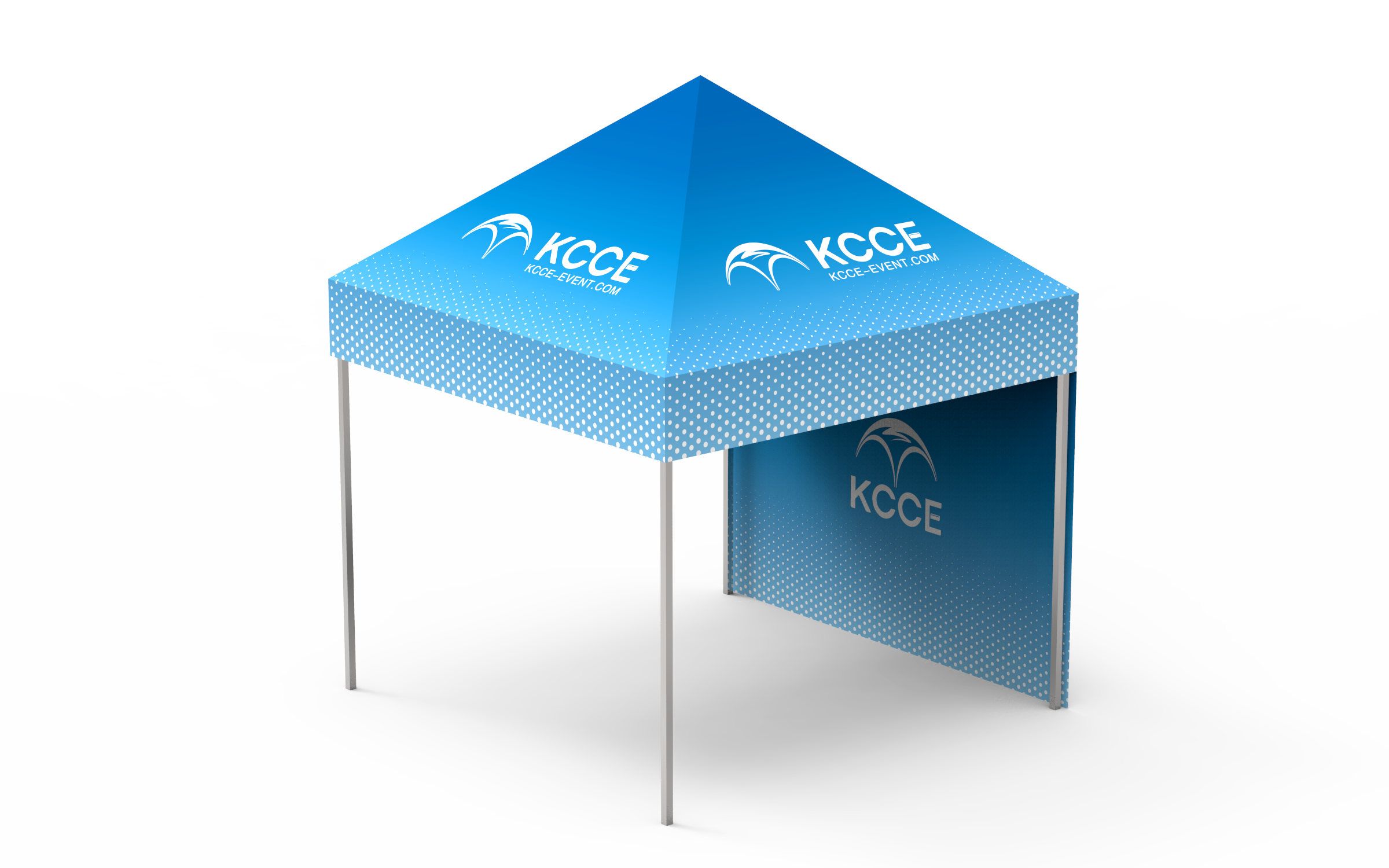
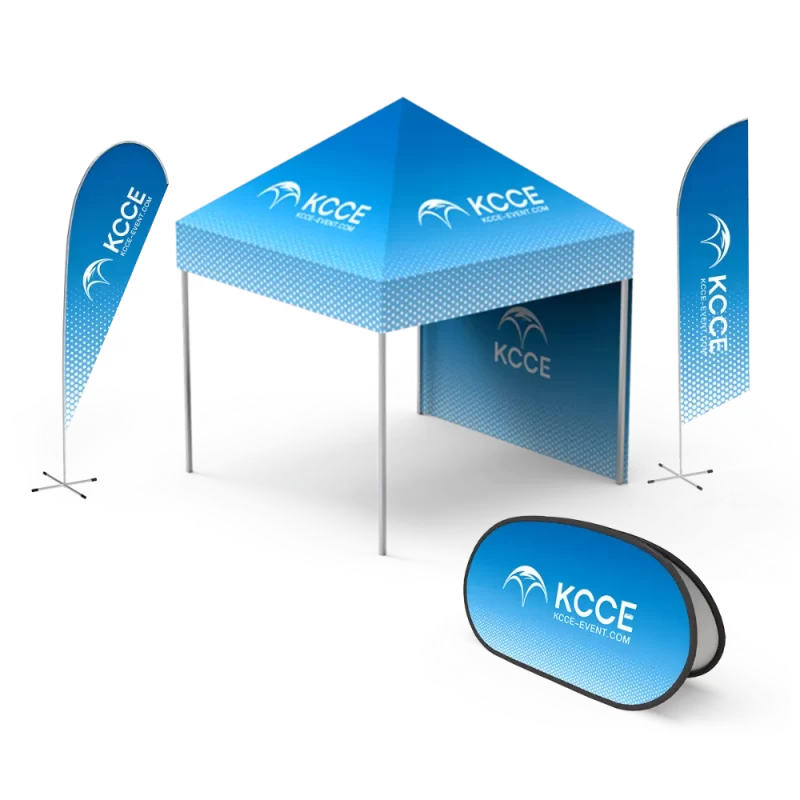
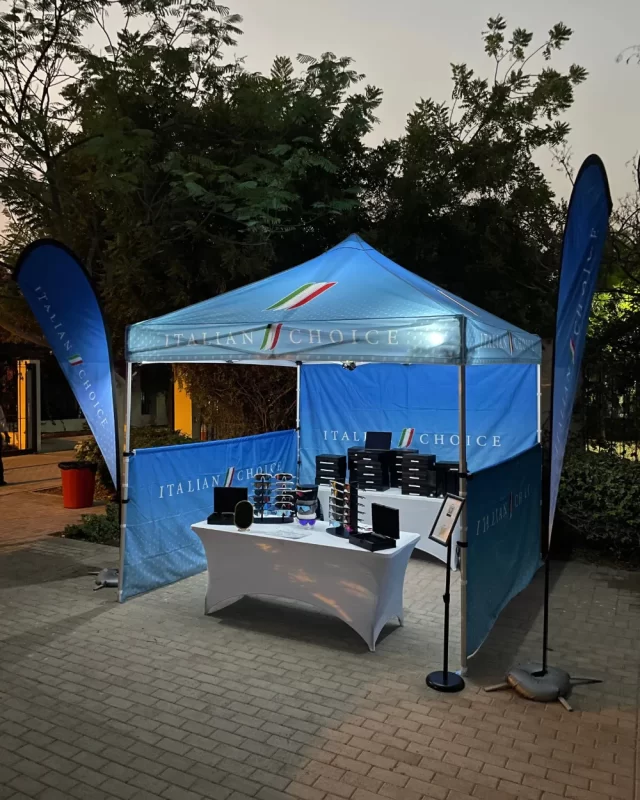
For those who need full sidewalls or a Pop up Canopy with sides as part of their branding, the printing extends to the wall panels. A fully enclosed branded booth with printed sidewalls and a printed valance creates an almost tradeshow-booth level of presence, which is genuinely useful at competitive markets where visual distinction drives foot traffic.
Top Pop Up Canopy Brands Review (EZ-UP, Impact, Crown Shades, Eurmax, ABC Canopy, etc.)
The brand landscape has settled into a few clear tiers, and where you buy matters almost as much as which brand you choose.
Eurmax USA is my go-to for the enthusiast/commercial sweet spot. They’re not the cheapest and not the most expensive, but the frame build quality on their professional series is consistently above the price point. The hammer-tone powder coat on the steel holds up well, the 500D top with taped seams performs in rain, and the CPAI-84 cert is present. Their roller bag has wider wheels and better zipper placement than most. The downside: at 55+ pounds, you feel it. But I’ve lugged mine solo so many times I just treat it as a workout.
ABC Canopy is the volume player that actually delivers value. Their commercial line uses a steel frame with decent welds and 300D PU-coated tops. For someone who needs four matching canopies for a market setup, ABC’s pricing on multi-unit purchases makes sense. Their budget-tier models are less impressive—you can feel the cost-cutting in the leg lock mechanisms—but the commercial line is a legitimate workhorse. It’s the reliable sedan of canopies.
EZ-UP invented the category. Their Dome and Eclipse lines popularized the instant canopy concept decades ago, and they still have brand recognition that rivals envy. Current production quality is fine but not exceptional—the aluminum frames are lightweight and easy to deploy, but I’ve seen leg bending on models that were overloaded or caught wind. For light-duty occasional use, they’re solid. For daily commercial use, the frame isn’t overbuilt enough. Some people swear by them for quick solo setups, and I get that, but I wouldn’t trust one in a storm.
Impact Canopies competes at the higher end, offering aluminum and steel frame options with extensive customization programs. Their market is the tradeshow and branded event circuit, where the canopy is part of a larger corporate presence. Pricing reflects that positioning.
Crown Shades is the budget benchmark. Their 10×10 sits around $90-120, uses a 150D top with silver-coated interior, and a steel frame that’s adequate for maybe 20-30 setups before the scissor joints start loosening. For the once-a-year family reunion or occasional backyard shade, it’s fine. For anything commercial or frequent, the cost savings evaporate into replacement costs. But hey, if you only pull it out twice a summer, you might not care.
Oneofics is a relative newcomer on Amazon with their 10x10FT model. It features a 1-button push instant pop mechanism. They include four sidewalls in the box, which at $120-150 is unusual. The 210D fabric sits between the 150D budget tier and the 300D mid-range, and the one-button center push design simplifies solo setup. Frame is steel, packed weight around 42 pounds—manageable but not featherweight.
Retail channel note: If you’re looking for a Pop Up Canopy Walmart in-store, the selection skews toward Ozark Trail and occasional EZ-UP models at roughly the $50-150 price point. These are consumer-grade light-to-medium duty. A Pop up canopy Costco typically means the seasonal roadshow stock—often commercial-grade frames with better specs, sometimes from brands like Eurmax or Impact that appear at Costco on rotation. Inventory is seasonal and unpredictable, but the pricing is usually aggressive when stock is available.
Setup and Takedown: Step-by-Step Instructions for Single-Person Operation
“Pop up” implies instant setup, and for the canopy top itself, that’s basically true. But a proper, wind-ready single-person deployment involves more steps than the box suggests. Skipping any of them is how canopies end up in the parking lot next door.
For the standard center-push Pop up Canopy 10×10 with a steel frame:
- Position the closed canopy frame upright on its feet, still in its bag or roller case. Pull the bag off and set it aside—don’t lose the stake bag that’s usually clipped inside.
- With the frame still collapsed and standing vertically, walk to one corner and pull that leg outward while the opposite corner stays put. The frame will begin to expand. Walk the leg out until the scissor trusses are roughly halfway extended. Do NOT fully extend yet.
- Move to the opposite corner and repeat. Then the remaining two corners. You’re essentially opening the frame like an accordion, evenly, from all sides. Uneven opening binds the scissor joints and can bend thin-gauge frames. I’ve seen someone yank one corner all the way and snap a cheap frame in half. Don’t do that.
- Once the frame is partially opened in a square footprint, go to the center hub (on center-push models) or to each corner’s leg extension mechanism. Lift the center or pull the leg extensions until you hear the lock pins click. This is where cheap frames reveal their quality—if the pins don’t seat cleanly without wrestling, return it.
- The canopy top should already be attached. If it’s a separate top, drape it over the frame and secure the corner Velcro wraps before raising.
- Now the critical part that 80% of users skip: anchoring. Insert stakes through the foot plates and into the ground at a 45-degree angle away from the canopy. On pavement, attach weight bags—at minimum 25 pounds per leg for fair conditions, 40+ per leg if wind is forecast. Weight bags filled with sand or steel shot work; water-filled jugs don’t have enough density. Concrete blocks are ugly but cheap and effective.
International Shipping, HS Codes, and Regional Regulations (US, EU, AUS)
If you’re importing a pop-up canopy—whether you’re a first-time Amazon seller or a festival organizer buying ten units direct from a manufacturer in China—you need to know one number: 6306.22.0000. That’s the Harmonized System (HS) code for synthetic fiber tents, including the polyester-topped pop-ups we’ve been talking about. File the wrong code and you’ll get hit with a customs correction that eats your margin before you’ve sold a single unit. I’ve seen a small business owner lose $1,200 on a single shipment because they classified their canopies under “tarpaulins” instead of “tents.” Don’t do that.
Under HS code 6306.22.0000 in the U.S. Harmonized Tariff Schedule, the general duty rate is 8.8%, but here’s the catch: if the canopy is of Chinese origin, Section 301 tariffs typically tack on an additional 25%. That means The duties on a canopy can significantly increase the landed cost; actual amounts depend on classification and origin.—before freight, brokerage, and insurance. In the European Union, the TARIC code 6306 22 00 is subject to duty for most third-country imports; please refer to official customs tariffs for the exact rate., and you’ll need a CE mark that covers the entire structure, not just the fabric. Australia’s HS code 6306.22.00 may be subject to customs duty; consult official sources for the current rate., but biosecurity inspections can add cost if any timber parts are present (think wooden stakes in anchor kits). Shipping a container? Always request the manufacturer’s HS classification confirmation and a binding ruling if your order exceeds $10,000. I’ve seen too many people learn about customs bonding the hard way.
Now, the duty is just the cost to get the thing across a border. The real headache is regional regulations that determine whether you can actually use the canopy at a public event. And this is where the US, EU, and Australia diverge sharply.
In the U.S., there’s no single federal standard that says “this pop-up canopy is structurally safe for 25 mph winds.” What you’ll run into instead is a patchwork of fire codes and, increasingly, local event-organizer rules. The canopy fabric must typically meet a flame-resistance standard—CPA-I 84 for tents over 400 square feet, or NFPA 701 for smaller recreational canopies. That’s exactly why the Eurmax I recommended has a CPAI-84 fire cert stamped right on the fabric. Structurally, though, it’s the Wild West. Event organizers often default to ASTM F1982 (Standard Practice for Selection, Design, and Installation of Temporary Fabric Structures), but it’s a guideline, not a law. You’ll see more cities requiring an engineer’s stamp on a tent over 120 square feet, but for a 10×10 pop-up, you’re mostly on your own. That’s why frame quality matters so brutally—there’s no code protecting you from a subpar welded joint.
The European Union takes a more holistic approach. Because a pop-up canopy is considered a temporary structure, the frame can fall under EN 1090-2 (Execution of steel structures and aluminium structures). That means if you’re selling or renting canopies commercially in the EU, the frame must have a CE mark under the Construction Products Regulation (CPR). The manufacturer has to provide a Declaration of Performance (DoP), and the structure must be designed to withstand specified wind loads according to Eurocode 1, with a structural analysis that considers snow loads if applicable. This isn’t optional—I’ve seen German event organizers impound uncertified canopies on the spot and hand the vendor a five-figure fine. If you’re buying an EU-compliant pop-up, expect to see a steel or aluminum frame with documentation that explicitly references EN 1090-2 and an executed EN 1090-1 factory production control certificate. The 500D polyester top still needs a fire certificate (usually EN 13501-1 classification), but the frame engineering is what separates the EU market from the grab-and-go American box-store special.
Australia takes yet another path, and it’s arguably the strictest on temporary structures. AS 4688.1 and 4688.2 (Temporary structures – General requirements and Structural design) apply directly to pop-up canopies used in public spaces. Under this standard, a canopy must be registered if it’s used for commercial purposes, often with a design wind speed rating based on the region’s cyclonic or non-cyclonic classification. A canopy rated for Region A (non-cyclonic, like Sydney) might fail spectacularly in Region C (cyclonic, like northern Queensland) if it’s only built for 30 m/s winds. AS 4688 also mandates specific anchorage—no, a couple of cheap dog-stake pegs won’t cut it. You need a documented anchoring system with a minimum holding capacity per leg, typically 25 kg or more per anchor point when used in a marquee configuration. I’ve helped a friend get his market stall approved in Melbourne, and the council inspector wanted to see the manufacturer’s AS 4688 compliance certificate and the wind-speed map for the site. If you’re shipping to Australia, don’t just slap an HS code on it—make sure the canopy has been engineered and tested to AS 4688, or you’ll be selling a beach shelter that can’t legally stand anywhere near a footpath.
So, if you’re importing, your homework is:
- HS code 6306.22.0000 (or your country’s variant) with correct duty calculations.
- For the US, prioritize CPAI-84 or NFPA 701 fire certs.
- For the EU, demand EN 1090-2 frame compliance and a DoP.
- For Australia, AS 4688 is non-negotiable.
Ignore these and the best frame in the world becomes a tarpaulin-wrapped liability sitting in a customs warehouse.
Maintenance, Cleaning, and Long-Term Storage Best Practices
I’ve pulled a $400 canopy out of its bag after six months in a garage and found mildew patterns that looked like a topographical map of a swamp. The owner had folded it wet after a sudden downpour, zipped the bag shut, and forgotten about it. By spring, the polyester had delaminated and the powder-coated steel legs had rust blooms at every joint. That canopy went straight to the dumpster.
This stuff isn’t complicated, but skipping it costs you a new canopy every two seasons.
Cleaning the canopy top and sidewalls: Never, ever machine-wash a pop-up canopy top. The PU coating that makes it waterproof will crack and peel if you subject it to a spin cycle. Instead, set up the canopy in the shade on a dry day, hose it down with a garden sprayer (no pressure washer—that forces water through the seam stitching and ruins the tape), and use a soft brush with a mild solution of dish soap and water. Scrub gently, then rinse thoroughly. For stubborn sap or bird droppings, I use a rag soaked in warm water, not chemicals. If you have silver-coated interior fabric (like the Crown Shades), avoid scrubbing the reflective layer. Let it air-dry completely before you even think about folding. If you must pack up quickly, at least drape the top loosely over a railing at home until every seam is bone dry. I once used a towel to blot the hems; it saved a canopy from the mold bin.
Frame care: Steel frames with a powder coat—like the Eurmax—need a wipe-down after a damp event. Pay attention to the hexagonal truss connectors and the slider mechanisms. I spray a dry silicone lubricant into the locking buttons and telescoping joints twice a season. Do not use WD-40; it attracts dust and turns into a gritty paste. Aluminum frames (EZ-UP) are more forgiving, but still need the sliding tracks cleaned of sand and dirt. If you see a scratch that exposes bare steel, hit it with automotive touch-up paint immediately. I’ve seen a quarter-inch scratch turn into a rust hole because the canopy was stored near a pool and the chlorine in the air found the wound.
Long-term storage: The biggest enemy is moisture trapped in a closed bag. Store the canopy in a dry, ventilated space—not the corner of a damp basement. If you live somewhere humid, throw a few desiccant packs into the storage bag. Better yet, ditch the included bag if it’s a non-breathable nylon sack and upgrade to a canvas or mesh bag that allows airflow. I store my frames vertically, leaning against a wall, to prevent the fabric from being permanently creased under weight. Keeping the top loosely folded inside the frame instead of stuffing it separately reduces friction wear on the scissor trusses.
Before first use and after winter: Pop the canopy open in the backyard, inspect every rivet and bolt, and tug on the truss bars. If a pop-up feels “sticky” during opening, stop and check the slider path—bent poles don’t fix themselves. I’ve caught a cracked plastic hub on an EZ-UP just by paying attention to the sound it made during setup. A $12 part saved me from a collapse mid-event.
Bottom line: ten minutes of drying and a spritz of lube will make your canopy last five times longer than the one that gets shoved wet into a bag after every market. The difference isn’t the initial price—it’s the maintenance you never think you have time for.
Price Comparison Tables: Value for Money Across Duty Classes
I’ve already shown you specific models at the top, but what if you’re trying to understand the market as a whole—where the real value sits when you plot price against expected useful life and wind-worthiness? I think of pop-up canopies in three duty classes, and the price ranges tell a story that’s not immediately obvious on a shelf.
| Duty Class | Typical Price (10×10) | Frame Material/Thickness | Fabric Weight | Real-World Lifespan (with care) | Cost Per Year (5-year estimate) | Wind Threshold When Anchored |
|---|---|---|---|---|---|---|
| Light-Duty | $80 – $150 | Steel, 25-29mm legs, thin wall | 150D–210D polyester | 1–2 seasons, or 10–20 uses | $75/year (replaced every 1.5 yrs) | 10–15 mph |
| Mid-Duty | $160 – $300 | Steel, 32-38mm legs, reinforced truss | 300D–500D polyester, PU coated | 3–5 seasons, 50–80 uses | $60–$80/year (pro-rated 4 yrs) | 20–30 mph |
| Commercial/Heavy-Duty | $350 – $800+ | Steel or aluminum, 40-50mm legs, fully welded joints, often hex-profile tubing | 500D–900D polyester, multi-layer coatings, fire cert included | 5–10 seasons, 150+ uses | $50–$70/year (prorated 7 yrs) | 30–40+ mph (engineered anchors required) |
Now, the light-duty class is seductive because the one-time price is half a tank of gas. You’ll see these at big-box stores in May—skinny legs that rattle, fabric you can practically see through, and plastic corner hubs that crack in cold weather. I watched a vendor at a holiday market buy one of these for $99, and by the third weekend the slider had jammed so badly he had to cut the fabric off just to pack the frame in his car. The cost per year? Astronomical if you count the ruined merchandise and the emergency trip to buy a replacement during peak season. The only time a light-duty canopy makes sense is if you need shade for a kiddie pool twice a summer, never in any wind, and you’re willing to throw it away without remorse.
The mid-duty class—where the ABC Canopy Commercial and the EZ-UP Dome II live—is the sweet spot for someone who does a handful of events a year and actually anchors the thing. These frames hold up because the tube walls are thicker and the cross-bracing is more than decorative. The fabric is seam-sealed and usually has a PU lining that handles a real rainstorm. The Eurmax USA 10×10 Professional I recommended earlier straddles the top of mid-duty into commercial territory because of its hammer-tone powder coat and 500D top. When you pro-rate that $300 over seven years of farmers markets, you’re paying about $43 a year for a storefront that doesn’t collapse. That’s less than your monthly phone bill.
The true commercial/heavy-duty class (think TentCraft, certain E-Z UP Pro models, or custom-branded commercial canopies) starts at $350 and can sail past $800. At that price you’re getting either aluminum frames engineered to Eurocode wind loads, or steel frames so heavily gusseted they feel like scaffolding. The fabric is often 600D or 900D with UV inhibitors that actually work for a decade of sun. For a year-round food truck operation or a beach-rental business, this is the only rational choice—the upfront sting fades fast when you realize you haven’t bought a new canopy since the Obama administration.
The real value metric isn’t the price tag—it’s cost per event hour without a failure. For any commercial activity or even a serious tailgating habit, the mid-duty and commercial canopies annihilate the cheap ones on that metric. Buy the canopy that lets you sleep the night before an event without wondering if a 12 mph breeze will end your day.
Frequently Asked Questions (FAQ) About Pop Up Canopies
Q: How do I stop my pop-up canopy from flying away in the wind?
A: Anchoring is the difference between a canopy and a kite. The absolute minimum is one heavy-duty stake or peg per leg driven deep into soil—the L-shaped “rebar” stakes that come with cheap canopies are a joke in anything but soft, deep ground. For grass or dirt, I recommend 12-inch spiral dog stakes or steel auger anchors with a ratchet strap looped over the top corner of the frame. On pavement or concrete, you need weight bags or plates. Four 30–40 lb weight bags (one per leg) are standard for a 10×10 in moderate wind; commercial settings often call for 50 lbs per leg. I use nylon bags filled with pea gravel—cheap, easy to drain, and they don’t scuff the frame. In any wind over 20 mph, add guy lines from the peak to stakes at a 45-degree angle. And if the wind gust forecast hits 35 mph, lower the canopy or take the top off entirely. I’ve saved a canopy by stripping the fabric in 30 seconds before a squall hit.
Q: Can I set up a 10×10 pop-up canopy by myself?
A: Yes, but it depends on the frame design. Aluminum frames with a lighter total weight (like the EZ-UP Dome II, 38 lbs) are trivial for one person to open if you follow the sequence: partially open the frame in its collapsed state, pull the legs apart just enough to work the scissor trusses, then lift from the center and walk the legs outward. Steel frames that weigh 55 lbs (Eurmax) are a workout solo, but still doable if you use the “lean and expand” method—lean the partially opened frame against a wall or vehicle, extend two legs, then walk it into shape. Installation of the top alone: toss the fabric over the crown, hook the corners onto the extended legs, then raise the frame. I’ve set up a 55 lb commercial canopy solo in under three minutes. The key is practice in the driveway, not the first time in a stadium parking lot with a line of cars behind you.
Q: Do I need sidewalls, and are they fire-rated?
A: Sidewalls turn a shade shelter into a booth, but they also turn it into a sail. If you’re vending in variable weather, one or two solid sidewalls give you privacy and rain protection; a mesh or windowed sidewall maintains airflow. The fire-rating question is critical: any public-event pop-up canopy with sidewalls in the U.S. must have fabric that meets CPAI-84 or NFPA 701. The Eurmax and ABC Canopy sidewalls I’ve used carry those certs. If you buy cheap unbranded sidewalls separately, you’re gambling and a fire marshal can shut you down. In the EU, look for EN 13501-1 class B-s2-d0 or similar on the sidewall label.
Q: How waterproof is a pop-up canopy, really?
A: The top fabric is typically PU-backed polyester, which will shed rain but can’t stand pooling water. If rain collects in a sag between the trusses, the weight will stretch the fabric, leak through seam holes, or even bend the frame. The solution is a properly tensioned top and, for heavy rain, a canopy with a slight peak design or a tent-top instead of a flat roof. Seam taping is key: the ABC Canopy has taped seams, while some budget models do not and will drip directly on your merchandise. I always carry a small pool noodle or foam block to shove between the frame and fabric center if it starts to sag—it buys you time until the storm passes.
Q: What’s the warranty reality on pop-up canopies?
A: Read the fine print. Most “lifetime” warranties cover manufacturing defects on the frame only, not wind damage, and often require you to ship the broken part at your expense. Eurmax offers a 1-year warranty on frames and fabric; EZ-UP varies by model but often gives 1 year on the top and varying years on the frame. Commercial brands like TentCraft may give 5 years. The truth: a warranty is only as good as your ability to prove you anchored it correctly. I’ve seen claims denied because the buyer admitted using only two weighted bags. Keep photos of your setup, save the original receipt, and register the product online if the brand offers it.
Рекомендации экспертов
By now, the pattern should be clear: the canopy you grab off a warehouse shelf because it’s $99 and comes in your favorite color is almost never the canopy you want when the weather turns. I’ve watched enough frames fold—literally—to know that the engineering, the fabric weight, the frame gauge, and the way you treat the thing after the event are what separate a decade of reliable service from 90 seconds of chaos.
Here’s my straight-up advice, the kind I’d give a friend who’s about to spend real money on a vendor booth or a tailgating season.
First, buy the heaviest frame you can reasonably transport and set up. For a 10×10, that means a steel frame with at least 50 lbs total weight if you’re vending or exhibiting in any capacity. The Eurmax USA 10×10 Professional remains my top all-around pick because it threads the needle between cost, durability, and real-world wind resistance without jumping into the $600+ commercial tier. If you absolutely must minimize weight for solo setup and light use, the EZ-UP Dome II in aluminum is the only lightweight I trust, but accept that 20 mph is your hard ceiling.
Second, don’t skimp on the anchoring system. I’d rather see someone buy a $150 canopy and $100 worth of proper weight bags, auger stakes, and ratchet straps than a $400 canopy anchored by a couple of plastic pegs and hope. Wind is the great equalizer; it doesn’t care what you paid.
Third, match the canopy to your regional reality. If you’re in the EU or Australia, the standards aren’t bureaucratic hurdles—they’re life-safety engineering. Demand documentation. In the US, at minimum, have a CPAI-84 or NFPA 701 tag visible on the fabric and know your local fire code requirements. Don’t assume a canopy that passes in one county is legal in the next.
Finally, integrate maintenance into your event teardown routine. The best pop-up canopy you’ll ever own is the one you dry before zipping up, the one whose sliders you lube in July, the one whose bag you’ve replaced with a breathable duffel. When the unexpected squall hits, that care is what keeps your inventory dry and your frame standing. After a decade of seeing these things fail, I’ve concluded that the canopy itself is just the hardware—the real asset is the habit of treating it like critical infrastructure. Because for the afternoon you’re selling your art, grilling for your friends, or keeping your kids out of the sun, that’s exactly what it is.
Ссылки
1. The Best Canopy Tents | Tested & Ranked – outdoorgearlab.com
2. 5 Best Pop Up Canopy Tents for Heavy Winds & Rain – tentcraft.com
3. Oneofics 10x10FT Canopy Tent, 1-Button Push Instant Pop … – amazon.com
4. 10×10 Pop Up Canopy Beach Tents – getundercover.com