Just think: you’re all set for a weekend escape, buzzing with excitement about using your inflatable tent, when — bam — a sudden hiss interrupts your plans, signaling that your tent is losing air faster than you can say “camping disaster.” Let me tell you, I’ve witnessed this happen countless times. Inflatable tents bring unmatched convenience and portability that traditional tents simply can’t compete with. But those thin materials and intricate air systems come with their own set of headaches. Whether you’re dealing with an annoying leak, a jagged tear, or even a broken support pole inside the tent, having some solid tips at your disposal for handling both minor and major inflatable tent issues can be the difference between a fun getaway and an utter disaster. And it shows.
In this guide, I’m excited to share some hands-on advice on assessing and repairing — not to mention maintaining your inflatable tent, ensuring it not only lasts longer. But stays reliable when you head out into the good outdoors. From spotting that sneaky leak to tackling big rips and structural problems. Realistically, true story. To be fair, come to think of it. Honestly, let’s dig into what actually works, what to steer clear of, and how to keep your gear in top shape for your next adventure.
Understanding Inflatable Tent Damage: Types and Causes

Before you reach for that trusty duct tape and slap on a patch, it’s essential to know what you’re dealing with. Most inflatable tent damage falls into a few main categories: leaks or punctures, rips or tears in the fabric, and broken poles or air beams that can’t hold pressure.
Leaks are probably the most common issue. They can sneak up on you, often from tiny pinholes caused by sharp objects, insect bites (yes, that can happen), or simply wear and tear as time goes by. I once helped a customer whose inflatable tent kept deflating every night, only to discover that a nearly invisible hole had been created by a nail hidden in the grass—so subtle that you’d never catch it without a thorough inspection.
Rips and tears generally pop up due to improper packing, rough handling, or accidental scrapes against rocks and branches. These range from small nicks to huge gashes that could compromise the integrity of your tent entirely.
Then, there are broken poles. Inflatable tents lack traditional poles, but their air beams serve a similar function. Damage here typically means a cracked or twisted air channel, which can leave your tent sagging and unstable.
So, how can you identify where your inflatable tent is leaking? Here’s a handy trick I’ve picked up: Inflate your tent fully, grab a spray bottle filled with soapy water, and lightly mist it over areas you suspect. Keep an eye out for bubbles forming—those little blisters will tell you where the air is escaping. It’s a bit like a science experiment, but one that can save you from a night spent in a saggy tent.
When it comes to rips, take a good look at the size and depth. A little nick that doesn’t go all the way through is a breeze to fix, while a sizable tear demands a more involved approach. Measuring the length of the rip will help inform you on how large your patch should be.
Lastly, for broken poles or air beams, things get a bit trickier. Check for areas of the tent that sag or lose shape even when fully inflated—this is usually a sign that the air channel inside is compromised.
From what I’ve seen, being systematic about these checks upfront can determine whether you’re looking at a quick fix or hours of frustration.
Essential Tools and Materials for Repairing Inflatable Tents
Now that you’ve got a grasp on the types of damage you might be facing, let’s chat about the tools you’ll need. You don’t require a fully stocked workshop, but having the right supplies on hand can make your repair work go a whole lot smoother. Honestly, there’s nothing worse than trying to fix a hole with subpar glue or a flimsy patch that’s just going to peel off in a day.
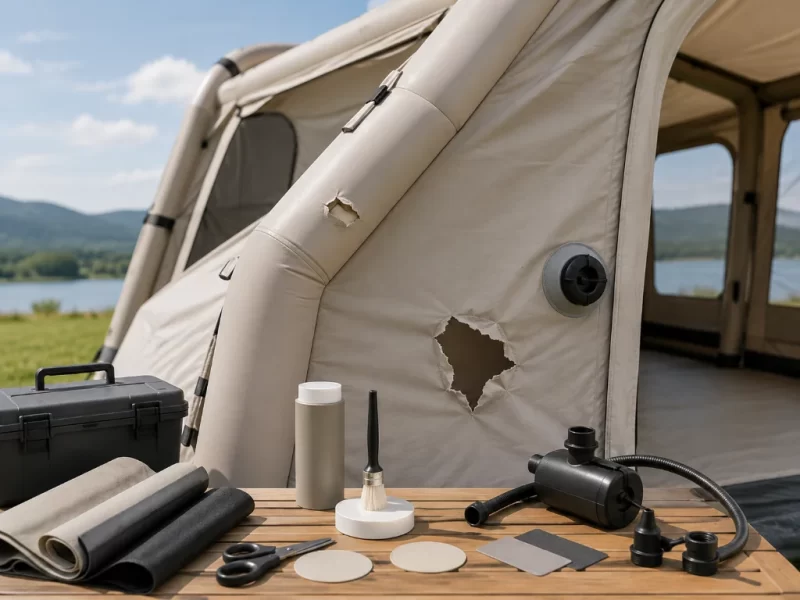
Typical repair kits for inflatable tents should include:
- Repair patch material: Look for PVC or TPU patches—both are commonly found in inflatable tent fabrics. PVC is a bit tougher but less flexible, while I personally prefer TPU for small leaks since it conforms better and stands the test of time.
- Adhesive glue: A flexible, waterproof contact cement specifically designed for inflatable products is essential. Some brands even make glue kits for tent repair. Just steer clear of generic glues like superglue—they tend to crack and fail at flex points.
- Waterproof duct tape: Okay, duct tape has earned its reputation, and while I’m not a fan for long-term fixes, it’s a lifesaver for emergency repairs. Use it to temporarily seal leaks until you can get a proper patch on.
- Sandpaper or abrasive pad: Lightly sanding the area around a hole helps the adhesive adhere better.
- Cleaning supplies: Isopropyl alcohol wipes or mild soapy water work well to clean the damaged area before applying glue.
- Inflator pump: This is a must for testing inflation after repairs without wrecking your lungs!
And don’t forget some scissors or a utility knife for precisely trimming patches.
Some repair kits, such as those from brands like HT QI or Oztent, come with pre-cut patches and glue that people rave about. I’ve tried several myself and found that kits featuring TPU patches and flexible glue usually outperform the rest.
Choosing the right patch size and material matters too. For small holes under a centimeter, a 3×3 cm patch usually does the trick. For larger rips, you might want to go with multi-layer patches that have reinforced edges.
Step-by-Step Guide to Fixing Minor Inflatable Tent Damage
Let’s roll up our sleeves and get into the hands-on stuff. For small holes or tiny leaks—like from a nail puncture or sharp stick nick—here’s a straightforward method I’ve successfully used many times.
- Locate the leak using the soapy water bubble test I mentioned. Mark the spot with a non-permanent marker.
- Deflate the tent fully so it lays flat and is easier to work on.
- Clean and dry the area thoroughly. This step is crucial because dirt or oils can disrupt patch adhesion. If you have isopropyl alcohol, use it; otherwise, mild soapy water with a clean cloth will do. Let it dry completely.
- Lightly sand the surface around the hole to roughen it up—this helps the glue grip better.
- Cut a patch that’s about 1 cm larger than the damaged area on all sides. If you’re lucky enough to have a pre-cut patch, great; just make sure it’s the right size.
- Apply a thin, even layer of adhesive on both the patch and the tent fabric. Follow the glue manufacturer’s instructions—some advise waiting a few minutes until tacky before pressing together.
- Press the patch firmly onto the hole—avoid wrinkling or bubbles if you can.
- Use a roller or your fingers to smooth out the edges of the patch.
- Allow the glue to cure fully—usually 12 to 24 hours. Don’t rush the inflation test!
- Once cured, inflate the tent and check for leaks again using the soapy water method.
If the patch seems to be holding, but there’s a tiny air escape? A bit more adhesive around the edges and a little patience can usually do the trick. Honestly, this process has saved me from losing tons of inflatable tents over minor punctures through the years.
How to Repair Major Damage in Inflatable Tents
Alright, so minor leaks are manageable, but what about when you’re faced with a serious rip, or worse, a broken air beam causing your inflatable tent to deflate? Now we’re diving into the real challenges.
Big rips (5 cm or larger) need a bit more than one patch layer. Here’s a technique I recommend: multi-layered patching—start with a base patch larger than the rip, then add a reinforcing patch overlapping the first by at least an inch on all sides. This layering helps distribute tension, enhances durability, and keeps your tent airtight.
For wide rips, sometimes stitching is necessary as a patch alone won’t cut it. If you’ve got the skills, use heavy-duty, waterproof thread and sew the edges first, then seal everything up with a patch and adhesive. That little extra reinforcement truly makes a difference.
Now, dealing with broken poles or air beams can get a bit complicated, as it’s an internal issue. Some inflatable tents come with replaceable air beams, but many don’t. If your air beam is cracked or damaged:
- Identify exactly where the air is escaping. This might mean inflating and listening closely, or spraying a soap solution along the seams.
- Patch the air beam itself using a TPU patch and high-strength glue. You might have to carefully open up the tent fabric to access the beam, although sometimes you can reach through existing valves or seams if the design allows.
- If the damage is too severe, you might need to seek out professional inflatable tent repairs. I’ve seen instances where users attempted DIY fixes on broken air beams and ended up further damaging their tents because the structural integrity compromised.
You could also look into “replacing the beam” if your manufacturer offers the necessary parts—but keep in mind that this can get pricey and sometimes, buying a new tent makes more sense.
By the way, if your inflatable tent is deflating unexpectedly, let me tell you, don’t just assume it’s a hole. Air valve problems, poor seals, or even seam stress can cause deflation, so inspect thoroughly before committing to patching or replacing.
Common Mistakes to Avoid When Repairing Inflatable Tents
Trust me, you don’t want to fall into rookie traps that turn a simple repair into a full-blown nightmare.
- Using duct tape as a permanent fix. Sure, duct tape can be a hero for quick, field repairs, but in the long run, it often peels off or traps moisture, leading to further issues. I’ve seen people put all their faith in duct tape only to regret it when the patch fails mid-trip.
- Skipping the cleaning step. Glue won’t stick to dirt, grease, or moisture, so patching on a grimy surface is a total waste of your time.
- Underestimating the size of damage. I’ve watched customers trying to fix a three-inch rip with a tiny one-inch patch—guess what? It didn’t hold. Always measure carefully and opt for bigger patches, especially in high-stress areas.
- Not allowing glue to cure completely. Impatience can be a trap—inflate your tent too soon, and your patch will be toast.
- Ignoring problems with air valves or seams, thinking it’s just a surface hole. Sometimes the issue isn’t a hole but a faulty valve. Regularly check valve seals to avoid overlooking this.
Você pode estar se perguntando: How do I find and fix a hole in my inflatable tent? My tip is to take your time with that bubble test to detect leaks rather than just taking a guess. It can prevent plenty of headaches down the line.
Tips to Prevent Inflatable Tent Damage and Prolong Lifespan
You might think inflatable tents are delicate, but if you show them a bit of care, they can last surprisingly long. While inflatable tents come with perks like easy setup and portability, maintaining them diligently will keep them in great shape. Here are some key maintenance tips to help prevent common issues:
- Watch out for sharp objects: Always scout your camping spot for any debris that could pierce the tent walls or floor. I’ve seen good tents ruined just because someone pitched their tent in a thorny area.
- Inflate properly: Don’t crank up the air pressure too much. Overinflating stresses seams and air beams. Stick to the manufacturer’s guidelines or use an inflator pump that has pressure control.
- Inspect regularly: Before and after each trip, do a quick visual and tactile inspection for leaks, rips, or soft spots. Catching things early makes repairs much simpler.
- Pack carefully: Avoid jamming your tent into a tiny bag or folding it in the same spot repeatedly. Vary your folding to reduce stress points.
- Store it dry and clean: Moisture and dirt can lead to mold and material weakening. Always dry your tent thoroughly before storing it in a cool, dry location.
- Protect it during transport: Utilize a padded carrying bag or cover your tent when transporting it in a vehicle or on a rack.
Many of the inflatable tent issues I’ve encountered trace back to neglecting these straightforward steps.
When to Call a Professional: Assessing Whether DIY Repair is Enough
Sometimes, no matter how handy you think you are, a repair might be beyond your capabilities. Let’s face it—major damage or structural failure might mean it’s time to seek help from the pros.
If you encounter:
- Large rips over 20 cm or multiple tears close to each other.
- Air beam ruptures that can’t be easily accessed or sealed.
- Persistent leaks after several failed DIY patch attempts.
- Damaged valve systems or broken inflator ports.
In these cases, professional inflatable tent repair shops can step in with expertise, specialized adhesives, and replacement parts. I’ve worked with a repair service that saved a $900 inflatable tent that its owner was ready to toss.
Cost-wise, minor repairs with a DIY kit usually cost less than $20, while professional repairs can run anywhere from $100 to $300, depending on the damage. Sometimes it’s cheaper to replace entirely, especially if your tent is a bit older or significantly dinged up.
You might be asking: Should I keep trying to fix this or just buy a new one? My advice would be, if it’s your favorite tent and repairs keep it mostly airtight with minor patches, stick with it. But if repair costs start piling up or you find yourself waiting for parts, it might be smarter to consider a replacement.
Inflatable tents offer a fantastic combination of portability and quick setup, but they have their quirks. Now that you’ve got these tips for managing both minor and major inflatable tent damage, you should feel more prepared for emergencies and maintenance alike. Honestly, letting a small leak turn into a significant problem is quite a gamble. Whether it’s a stitched rip or a sealed puncture, the comfort of your next camping trip hinges on how well you care for your gear today. So go ahead—inflate that tent, check for issues, and keep your repair kit handy. Adventure isn’t going to wait for a deflating tent!
Perguntas Frequentes
Q: How to find and repair a hole in an inflatable tent?
R: Inflate your tent fully, and then spray soapy water across the surface. Keep an eye out for bubbles—that’s where your leak is. Clean, dry, and sand the area, then apply a patch with flexible adhesive. Allow the glue to cure for 12-24 hours before reinflating.
Q: Can duct tape be used for permanent tent repair?
R: Duct tape is helpful for quick fixes but isn’t recommended as a permanent solution. It’s prone to peeling off and trapping moisture, worsening issues over time. Always follow up with a proper patch repair.
Q: What are some signs that my inflatable tent needs professional repair?
R: Look for large rips, damaged air beams that won’t seal after DIY attempts, valve malfunctions, or persistent leaks after multiple tries. These are times to seek professional help who can provide specialized materials and expertise.
Q: How can I prevent inflatable tent damage?
R: Steer clear of sharp objects, avoid overinflating, conduct regular inspections, store your tent dry and clean, and protect it during transport. Implementing these maintenance tips can greatly extend your tent’s lifespan.
Q: What tools are essential for inflatable tent repair?
R: You’ll want a solid repair kit comprising TPU or PVC patches, flexible waterproof glue, sandpaper for surface preparation, cleaning wipes, scissors, and optional duct tape for emergencies. These tools maximize your chances of a lasting repair.
Q: Are inflatable tents worth it compared to traditional ones despite repair issues?
R: Absolutely! Inflatable tents bring significant advantages in setup speed and portability. As long as you’ve got the knowledge for repairs and maintenance, they’re a fantastic choice for many outdoor enthusiasts.