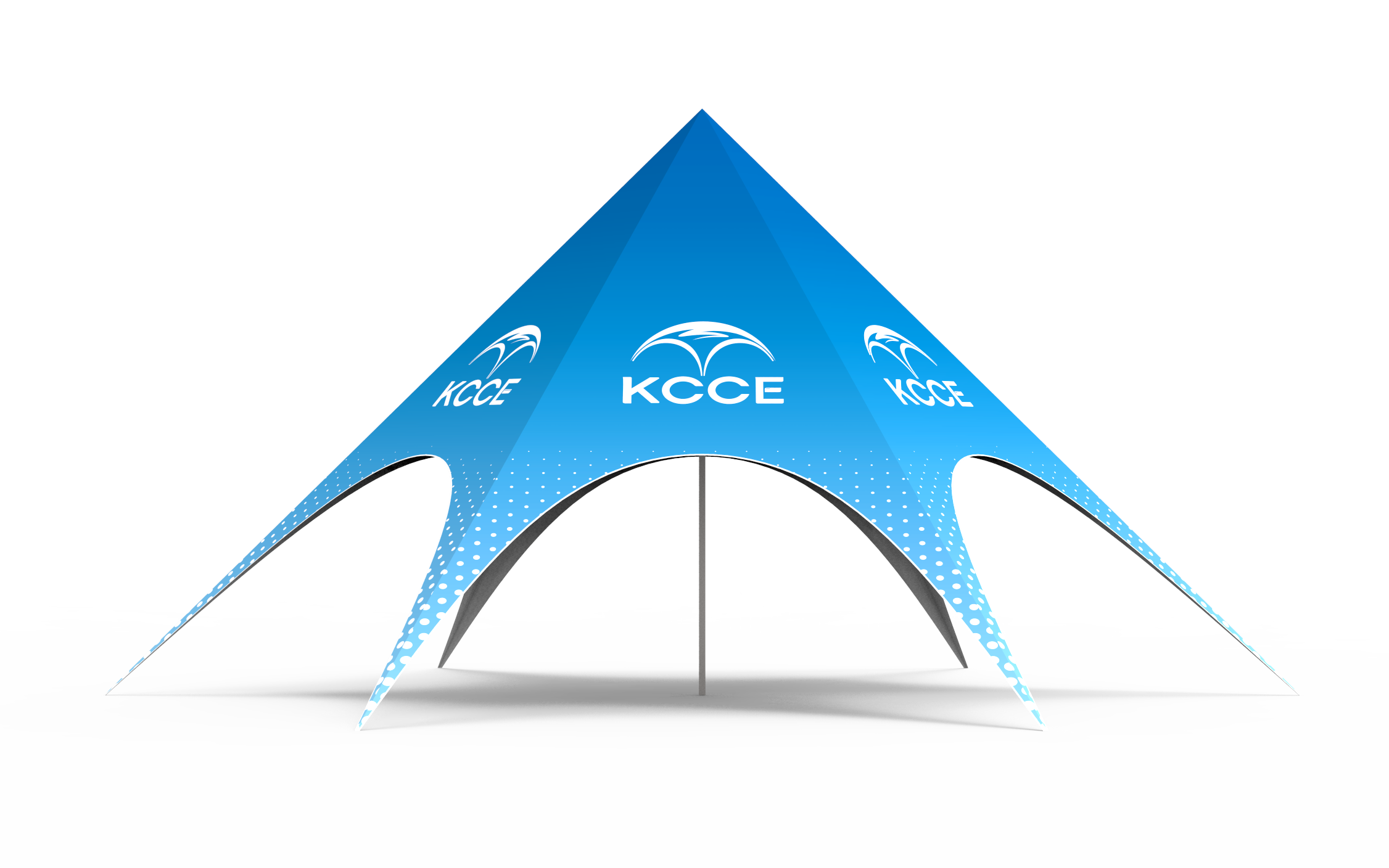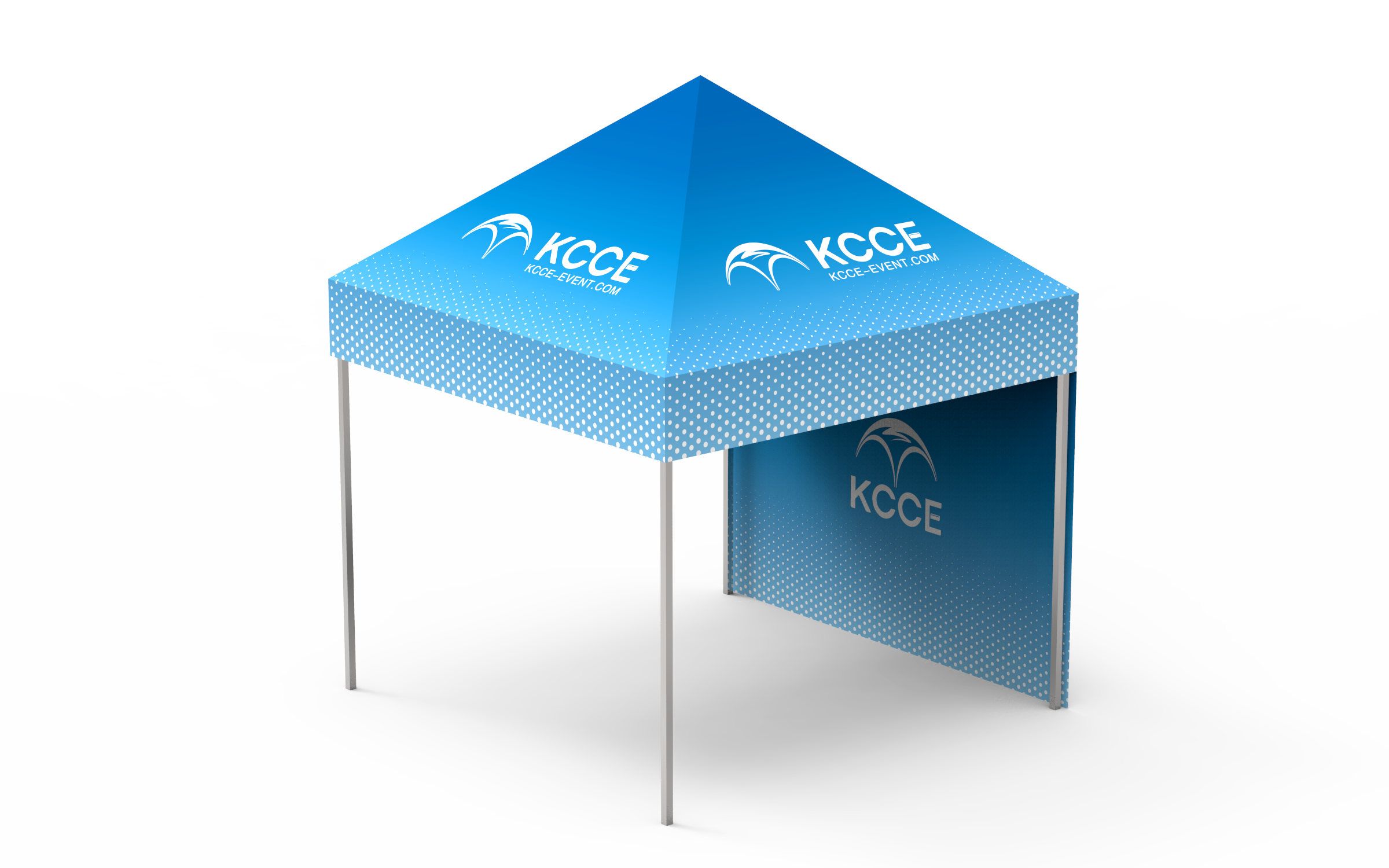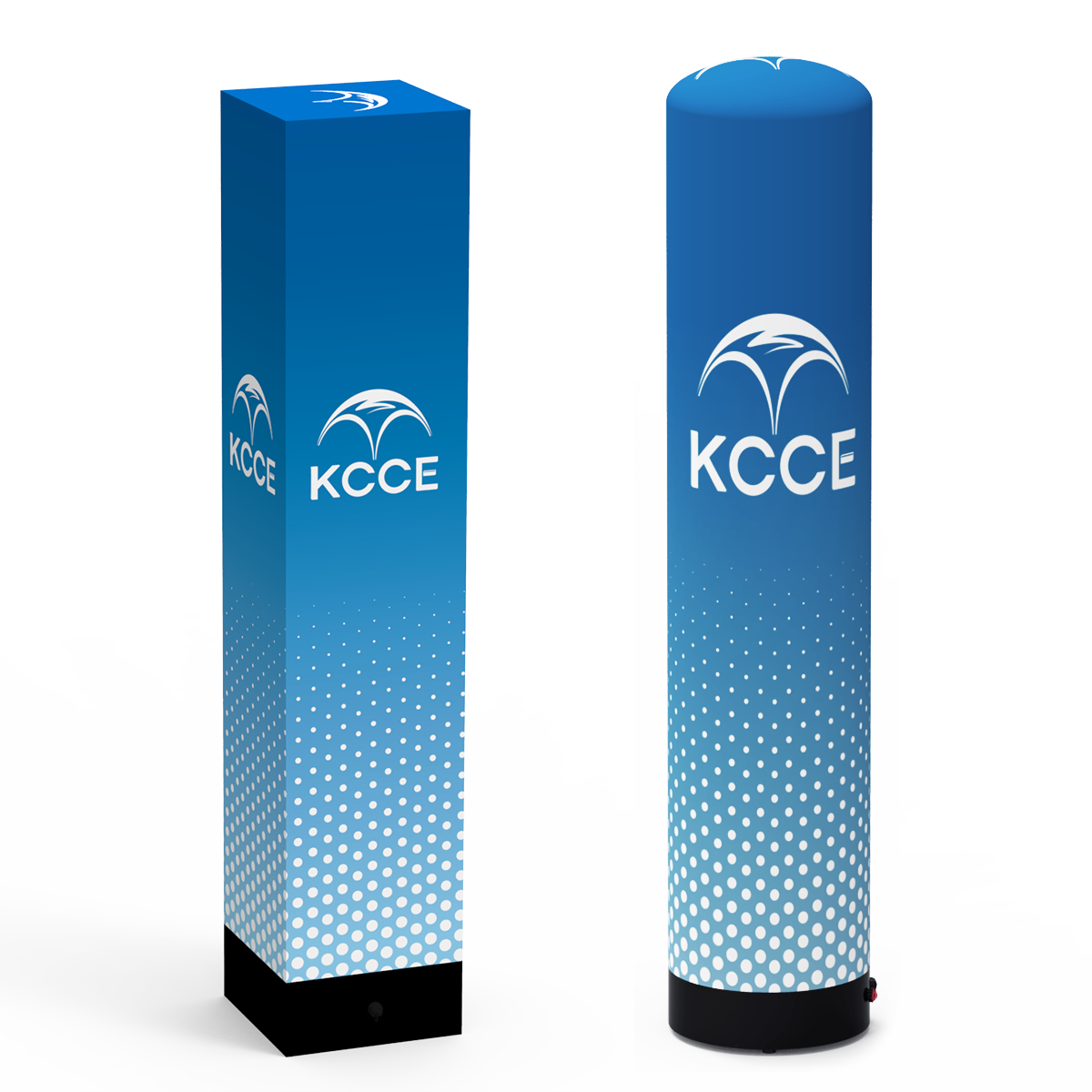
Trade show floors are a sea of white box tents. Ten rows deep, and they all blur into the same 10×10 footprint. You walk past every single one. That’s the problem with standard canopies — they’re invisible by default. Exploring unique shapes for inflatable advertising tents isn’t about being flashy. It’s about not getting skipped. I’ve watched brands spend six figures on booth space and then park a tent that looks like the one next to it, and the one after that. Shape is the cheapest way to break the pattern.
Quick Answer
Inflatable advertising tents come in three main shape families: architectural (domes, cubes, hexagons), object replicas (product bottles, cans, mascots), and abstract/experiential (tunnels, spheres, silhouettes). Your choice drives sightlines, wind load, footprint, and photo value — so pick the shape before you pick the graphics.
Why Shape Is Your First Decision, Not Your Last
Most buyers do it backwards. They pick a size, then a graphic, then maybe think about form. Wrong order.
Shape decides four things nothing else can fix later:
- Sightlines. A dome reads from 360 degrees. A flat wall reads from one.
- Wind load. Tall, thin, abstract shapes catch wind like a sail. Low, rounded shapes shed it. This is physics, not opinion.
- Footprint. A tunnel needs walk-through space. A cube needs corners. A sphere needs almost nothing but air.
- Photo-ops. People photograph shapes, not logos. A giant can gets posted; a rectangle gets ignored.
Honestly, I’d rather see a client nail the shape and use mediocre graphics than the reverse. Graphics you can reprint. A wrong shape is a reorder.
Architectural Shapes: Domes, Cubes, Hexagons
This is the “we mean business” family. Rigid geometry, clean lines, strong authority signal. If you’re a bank, an automaker, or a B2B software company, this is probably your lane.
A custom inflatable dome tent is the workhorse here. It reads from every angle, handles wind reasonably well because of the curve, and gives you a huge uninterrupted print surface overhead. Cubes and hexagons trade some of that 360-degree readability for sharper brand presence — they photograph like architecture.
Best for: outdoor expos, large footprints, brands that want to look established rather than playful.
One caution: domes eat ceiling height indoors. More on that later.
Object Replicas: Product Bottles, Cans, Mascots
Here’s where recall goes through the roof. A tent shaped like your own product is the most literal brand embodiment you can buy. A soda can. A beer bottle. A mascot head you can walk into.
I’ve seen these stop crowds cold at festivals. They’re selfie-magnets, plain and simple. People queue to take a photo inside a giant version of something they already recognize.
But let’s be real about the constraints:
- Sculpting cost. A replica needs custom molds and pattern work. That’s where the money goes.
- Transport bulk. A bottle shape doesn’t fold into a neat cube. You’re paying for volume on every truck.
- Setup complexity. More seams, more chambers, more time.
This is the family where custom inflatable tent shapes earn their premium — and where a cheap quote usually means a cheap result.
Abstract & Experiential: Tunnels, Spheres, Silhouettes
Then there’s the family that doesn’t look like a tent at all. Tunnels you walk through. Spheres you stand inside. Silhouettes that read as pure shape against a skyline.
This is spatial branding. The attendee isn’t standing next to your brand — they’re inside it. For festivals, activations, and indoor venues, an tenda inflável para eventos in an abstract form creates an experience instead of a shelter.
Speaking of which — tunnels are criminally underused at trade shows. You put the entrance at one end and the exit at the other, and suddenly every visitor has walked through your space. No hard sell. Just immersion.
Shape-to-Use-Case Comparison Matrix
Here’s the table I wish every buyer had before their first quote request. Budget tiers are ballpark ranges based on common industry practice — actual quotes depend on size, sculpting, material, and print.
| Shape Family | Example Forms | Best Event Type | Footprint | Budget Tier | Print Area |
|---|---|---|---|---|---|
| Architectural | Dome, cube, hexagon | Outdoor expos, B2B trade shows | Medium–large | Mid | Very high (overhead + walls) |
| Object replica | Bottle, can, mascot | Festivals, product launches, retail | Médio | Alto | Medium (curved, sculpted) |
| Abstract/experiential | Tunnel, sphere, silhouette | Activations, indoor venues, festivals | Small–medium | Mid–high | Low–medium (shape does the work) |
If you’re shortlisting unique shapes for inflatable advertising tents, this matrix is your starting filter. Match the row to your event, then start collecting quotes.
Decision Criteria: Wind, Footprint, Crew, Print Surface
Four constraints decide more projects than any design meeting.
Vento. Outdoor wind load limits tall and abstract shapes. A 6-meter silhouette in an open field is a liability. A low dome isn’t. If your venue is coastal or exposed, this alone narrows your options.
Footprint. Walk-through shapes need clear space around them. If your booth is 10×10 and hemmed in on three sides, a tunnel is a fantasy.
Crew. Setup crew size scales with complexity. A standard canopy is a two-person job. A sculpted replica might need four or more, plus a blower plan. Budget the labor, not just the tent.
Print surface. Curved and sculpted shapes are harder to print cleanly. Flat panels take graphics beautifully; compound curves need careful artwork prep.
What Custom Shapes Actually Cost
Nobody wants to publish numbers, so I will — as tiers, not quotes. Exact pricing is and always depends on your spec.
- Entry tier: standard architectural shapes in common sizes. Lowest sculpting cost, fastest turnaround.
- Mid tier: larger domes, hexagons, and simple abstracts. Custom sizing enters the picture.
- High tier: object replicas and full mascots. Custom molds, pattern development, and prototype rounds.
The cost drivers, in order of impact: size, sculpting complexity, material spec, and print method. A heat-transfer print on a curved surface costs more than a flat dye-sub panel — and it looks better, which is usually the point.
If you’re budgeting custom inflatable advertising tents cost, get two or three quotes on the same spec sheet. Apples to apples or the numbers mean nothing.
Indoor vs. Outdoor: Shape Constraints
Indoor venues flip the rules.
Ceiling height rules out domes and tall abstracts fast. That beautiful 5-meter sphere? It’s a non-starter under a 4-meter ceiling. Confirm venue specs before you brief a designer — I’ve seen this kill projects after artwork was already approved.
The upside indoors: no wind load, so you can go lighter on materials and taller on abstracts. You can also use shapes that would never survive a parking lot.
Outdoors, everything reverses. Wind governs. Anchoring matters. Material weight becomes a feature, not a cost.
Either way: confirm the venue before the brief. Every time.
The Evolution of Inflatable Advertising Tents: From Basic to Bold
The first inflatable tents I sold, back in the early 2000s, were essentially glorified bubble domes — one chamber, one valve, and a blower you prayed wouldn’t cut out. Seams were stitched and taped. A 20 mph gust would fold the thing like a lawn chair.
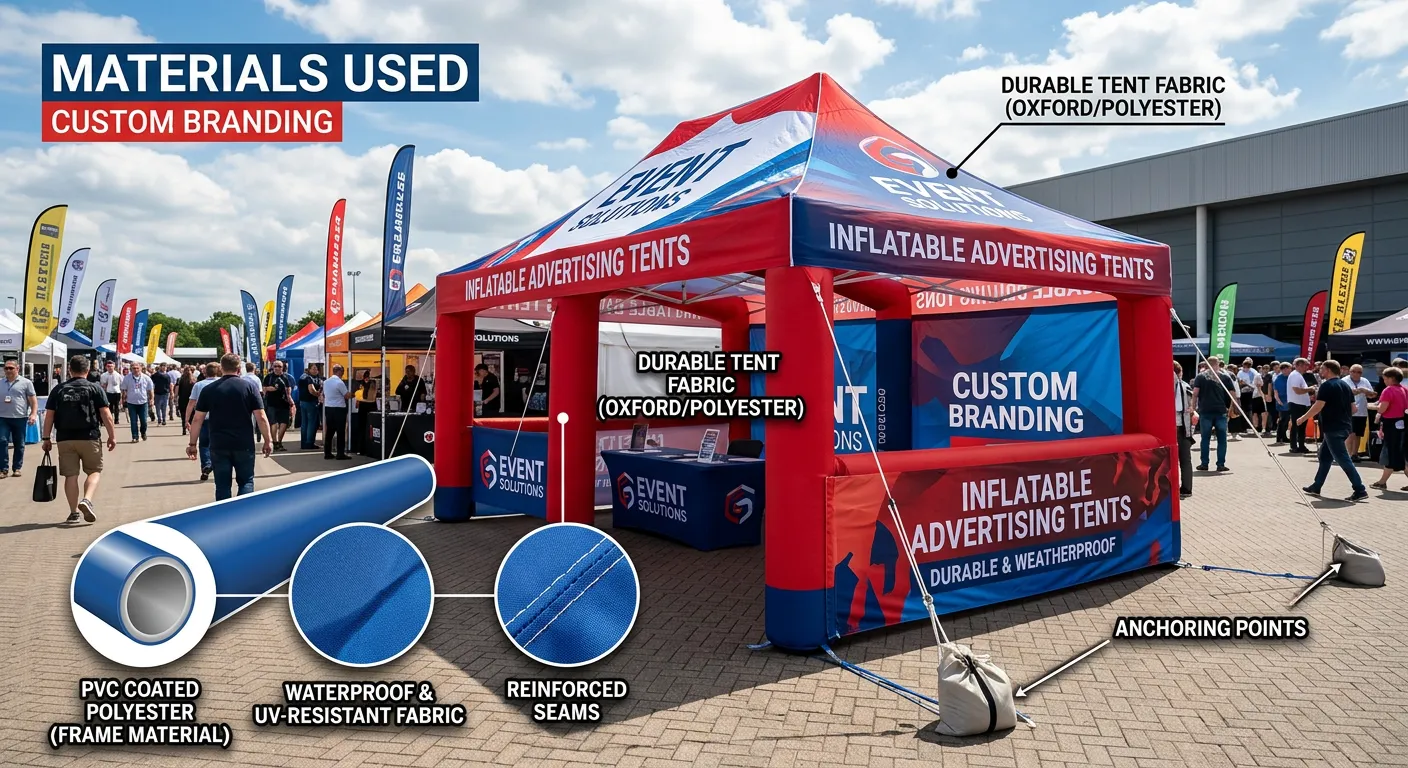
Three engineering shifts changed the category. First, constant-flow air blowers replaced sealed-air chambers on large units, so a single power loss no longer meant catastrophic deflation — the structure just softens and recovers. Second, RF-welded (radio-frequency) seams on PVC-coated polyester replaced stitched seams, pushing burst pressures higher in test chambers and eliminating needle holes as failure points. Third, internal baffle and cable-net systems let designers break away from pure round geometry into cubes, arches, and product replicas without the shape collapsing under load.
The visual result is what you see at festivals now: 30-foot bottle replicas, walk-through tunnels, multi-chamber cubes. The commercial result is that a shape which was once impractical is now a standard line item. If you’re sourcing today, ask your supplier one question: “Constant flow or sealed air?” The answer tells you which decade their engineering lives in.
Cube Tents: Maximizing Brand Visibility on All Sides
A cube tent is four billboards and a roof, and most buyers waste three of them. The geometry is the sell: four vertical print faces plus a peaked or flat canopy, readable from 90-degree approach angles on every side. At a 20×20 booth, that’s a substantial amount of vertical branding surface — versus the smaller valance-and-wall setup on a standard pop-up canopy.
The practical wins are corner placement and aisle junctions. Put a cube at a four-way aisle intersection and you own all four traffic streams. I’ve placed 10×10 cubes at the end of a row and watched them out-draw 20×20 flat booths two rows in, purely because the corner edge catches peripheral vision.
Two cautions. First, cubes are square in plan, so at 10×10 they need a true 10×10 clear footprint — no cheating into the neighbor’s space. Second, flat faces catch wind square-on. A 10×10 cube with 8-foot walls presents a notable sail area per face; in strong wind that’s real load on your anchors. Ballast or stake every corner, not just two. And print all four faces, not just the aisle-facing one — you paid for the geometry, use it.
Dome Tents: The Ultimate 360-Degree Branding Canvas
The dome is the only shape where “reads from every angle” is literally true, and it’s why I default to it for outdoor expos with open sightlines. A 16-foot dome gives you a large continuous curved print surface with no corners to break the graphic — your logo wraps without a seam-line interruption every four feet.
The curve is also an engineering asset. A hemisphere sheds wind rather than catching it; a well-anchored 16-foot dome with constant-flow inflation is designed to hold up in high sustained wind where a flat-walled cube of the same footprint starts deforming. That’s not marketing — it’s why the shape shows up on radar domes and weather stations.
The trade-off is ceiling height. A 16-foot-diameter dome tops out around 8 feet at the apex, and the usable interior narrows fast as the shell curves in. For indoor halls with 12-foot clearance, that’s fine. For a booth where you need to stand a 7-foot product display inside, measure the interior radius at your required height before you buy — not after.
Arch and Tunnel Tents: Creating Immersive Brand Experiences
Tunnels are the most underrated shape in the catalog, and I’ll keep saying it until buyers stop treating them as novelty. The mechanic is simple: entrance at one end, exit at the other, and every visitor who passes through has spent 10–20 seconds inside your brand. No pitch, no gatekeeping — just a captive walk.
A 30-foot tunnel at 10 feet wide can move a high volume of people per hour at normal walking pace, which is why they work at festivals and stadium concourses where you’re competing with foot traffic, not seated attention. Line the interior walls with a sequential story — three or four panels, read in order — and you’ve built a walk-through billboard.
Arch tents are the tunnel’s open cousin: a single curved span you can stand under or beside, often used as a stage backdrop or photo frame. Both shapes need long, narrow footprints — a 30-foot tunnel won’t fit a 20×20 booth, so check your site plan first. And both need cross-bracing or guy lines along the length, because a long tube is a lever arm in a crosswind. Anchor the ends hardest.
Custom Sculpted Shapes: When Your Product Becomes the Tent
This is the family where the tent is the ad. A 25-foot soda can, a walk-in beer bottle, a mascot head with a door in the jaw. I’ve watched a 20-foot coffee cup stop foot traffic at a music festival the way a flat booth never could — people photograph shapes, and they photograph recognizable shapes hardest.
The cost structure is where buyers get surprised, so here’s the honest breakdown. A stock dome is a pattern that’s already been cut a hundred times. A sculpted replica is a one-off pattern: 3D modeling, foam or plywood rib templates, panel-by-panel patterning, then RF-welded assembly. Expect the pattern development alone to account for a significant share of the total project cost, and expect 2–4 rounds of proofing before the first full-size build.
Then there’s transport. A bottle shape doesn’t fold into a cube — it folds into roughly its own volume. A 20-foot replica can eat a full box truck on its own. Budget the freight before you fall in love with the render. And build in a second inflation chamber so a single blower failure doesn’t drop your centerpiece mid-show.
Comparing Shapes: Which One Fits Your Event and Goals?
Here’s the decision framework I run with every client, in order:
1. Site plan first. Measure your actual footprint and overhead clearance. Tunnel needs length, dome needs interior radius, cube needs true square corners. A shape that doesn’t fit the site is a non-starter regardless of how good it looks.
2. Wind exposure second. Open field or waterfront: dome or low arch. Sheltered courtyard or indoor hall: cube, tunnel, or tall replica. Flat-faced shapes in high-wind sites are where anchors fail and insurance claims start.
3. Goal third. Awareness at distance → dome or tall replica. Conversion at close range → cube with four printed faces. Immersion → tunnel. Photo-driven social reach → sculpted replica, no contest.
4. Budget the whole chain, not the tent. Pattern development, freight volume, setup labor, and blower redundancy all scale with shape complexity. A cheap quote on a sculpted piece almost always means corners cut in patterning or chamber design.
If you’re still torn, the tiebreaker is simple: pick the shape that makes a stranger stop walking. That’s the only metric that matters on a crowded floor.
Structural Engineering and Safety Standards for Custom Inflatable Shapes
Shape freedom ends where physics begins, and this is the section most suppliers gloss over. The governing reference in the US is ASTM F2374 (Standard Practice for Design, Manufacture, Operation, and Maintenance of Inflatable Amusement Devices), which sets design, anchoring, and operating requirements for inflatables — including wind limits. In the EU, EN 14960 covers inflatable play equipment with comparable structural and anchorage provisions.
The numbers that matter:
- Wind rating. Many reputable commercial inflatables are rated for 25 mph sustained windnd** in the deployed configuration. Above that, deflate or evacuate. Ask for the rating in writing — “wind-resistant” is not a number.
- Anchorage load. A 16-foot dome in a 25 mph wind can generate significant uplift at the anchor points. Stakes alone are insufficient on pavement — you need ballast (water barrels, concrete blocks) sized to the calculated load, not just “a few sandbags.”
- Constant-flow vs. sealed air. Constant-flow structures stay up on blower power and deflate slowly on failure; sealed-air units hold pressure but can rupture. For occupied structures, constant-flow with a backup blower is the standard.
- Egress. Any walk-in shape needs at least two exits, marked, with limited travel to either side — mirrors the life-safety logic in fire codes for occupied tents.
Get the engineering documentation with the quote: wind rating, anchor point load calculations, chamber count, and blower specs. A supplier who can’t produce those isn’t selling you a structure — they’re selling you a balloon.
Perguntas Frequentes
Q: What shapes can inflatable tents come in?
R: Three families: architectural (domes, cubes, hexagons), object replicas (product bottles, cans, mascots), and abstract/experiential (tunnels, spheres, silhouettes). Within each family, virtually any form can be custom-built. The limit is usually budget and transport, not manufacturing capability.
Q: Are custom shapes worth it for advertising?
R: In my experience, yes — if foot traffic is your goal. Shapes get photographed and shared; rectangles get walked past. If you only need shelter, a standard canopy is cheaper. If you need recall, shape is the highest-leverage spend on your booth.
Q: How much do custom inflatable tents cost?
R: Pricing falls into three tiers: entry (standard architectural forms), mid (large domes, simple abstracts), and high (object replicas and mascots). Cost drivers are size, sculpting complexity, material, and print method. Get multiple quotes on identical specs for a real comparison.
Q: What materials are used?
R: Common industry practice is PVC-coated fabrics for durability and TPU bladders for airtight models. Material choice affects weight, pack size, weather resistance, and print quality. Ask your supplier which spec they’re quoting — it changes everything downstream.
Q: Can they be used indoors?
R: Yes, and indoor use actually opens up options — no wind load means lighter materials and taller abstracts. The main constraint is ceiling height, which rules out domes and tall spheres in low venues. Always confirm venue specs first.
Q: How long do they last?
R: Lifespan depends on material spec, usage frequency, and storage. Long-term durability data for inflatable advertising tents is genuinely hard to find — it’s a gap in the market, and honest suppliers will tell you the same. Treat lifespan as a function of care, not a fixed number.
Q: How do I choose the perfect exhibition solution for every event?
R: Start with constraints: venue height, wind exposure, footprint, and crew size. Then match shape family to event type using the matrix above. Graphics come last. Choosing the perfect exhibition solution for every event is a constraint-matching exercise, not a design contest.
Q: Do I need a backup plan if the tent fails?
R: It’s a fair worry — reliability questions come up constantly in event planning circles. Mitigate with a spare blower, repair patches, and a supplier who ships replacement parts. Most failures are blower-related, not fabric-related, so a backup blower solves the majority of scenarios.
O Resultado Final
Shape is a strategy decision, not decoration. Shortlist two or three shapes, request side-by-side quotes on identical specs, and let the numbers talk. Then ask yourself the only question that matters: will your tent be remembered, or walked past?