
Commercial Tent for Sale: How to Read an Offer Before You Commit
Most searches for a commercial tent for sale end with several offers on one desk, each using the word commercial and none written the same way. Our manuals name thirteen air-frame families in metres, and that documentation is what separates a commercial listing from a catalogue label. This page shows how to read an offer: the six lines a serious quote must state, the red flags to catch, and the written quotation we send back. Custom print begins at one unit. 20 years of manufacturing experience.
Quick Answer: what makes a commercial canopy tent offer worth accepting?
A commercial canopy tent offer is worth accepting when it states six things in writing: the model manual entry behind the price, a published metric size, the printed faces on one approved artwork sheet, the fixing kit per floor zone, the joining parts where units combine, and the terms. On our ranges that means documented entries such as N 4×6M or XL-A within its 4.5×4.8M-bounded range, 400D Oxford cloth with heat transfer printing on the X series, and TPU bladders. Retail listings sell a label; commercial listings sell a manual. Custom print starts at one unit, quotes are answered in writing within 24-48 hours, the figure is Quoted per project (FOB), and the schedule is confirmed after design approval.
What You’ll Learn
- 01What Makes a Listing Commercial
- 02Who the Commercial Buyer Is
- 03From a Catalogue Label to a Written Model
- 04Six Lines a Commercial Quote Must State
- 05What Commercial Grade May Claim
- 06Red Flags in a For-Sale Listing
- 07How to Compare Two Offers Side by Side
- 08What We Send Back With a Written Quote
- 09Pricing & Minimum Order
- 10Three Offers That Passed the Test
- 11Perguntas Frequentes
- 12Customer Cases
What Makes a Tent Listing Commercial
The word commercial does more work in search results than in any product manual. Some listings mean built for repeated professional use; some mean priced for a shop shelf. The difference is not the adjective. It is whether the listing can show the paperwork a professional buyer will need on the second site, not only the first.
A commercial grade canopy tent listing, read properly, makes claims a factory can be held to: a model with a manual behind it, a published metric size, a named fabric and print process where the range records one, a fixing method per floor, and a quote path that does not change when the quantity does. A retail listing sells a size on a label and leaves the rest to the buyer's imagination. Both can be photographed well; only one of them survives contact with a venue.
The test is simple to run. Ask the seller for the manual entry the price is based on. On our ranges the answer is a specific document: the N manual listing rectangles from 3×3M through 4×6M to 5×10M, the XL-A range written down from 4.5×3M to 7.5×4.8M, the X-series manual recording 400D Oxford cloth with heat transfer printing, TPU bladders across the air frames. If the answer is another adjective, you have learned what the offer is worth.
We do not publish a figure that a manual does not carry, and we ask buyers to hold every offer they compare to the same standard. A specification that no manual records is not a discount waiting to happen; it is a drawing that has never been built, and the site is the most expensive place to find that out.
Key Takeaways
- Commercial describes how an offer is documented: manual entry, published size, named print process, fixing kit, joining parts, written terms.
- A retail listing sells a label; a commercial listing sells a model whose manual a service crew can follow.
- The one-question test: ask for the manual entry the price is based on, and judge the answer's specificity.
- Documented claims on our ranges include 400D Oxford cloth with heat transfer printing (X series), TPU bladders, and published metric sizes up to XL-B 9.4×5.5M and XII 10M.
- Custom print MOQ is 1 unit; the quote arrives in writing within 24-48 hours, Quoted per project (FOB), lead time confirmed after design approval.
Who the Commercial Buyer Is
Commercial canopy tents reach three kinds of buyer, and each reads an offer differently: a fleet operator compares how the offer behaves across sites, a venue-bound buyer checks the constraints first, and an institutional buyer starts from the printed faces. The photographs below show one of each. Whether the enquiry says commercial canopy tents, commercial event tent ou commercial outdoor tent, the reading stays the same.
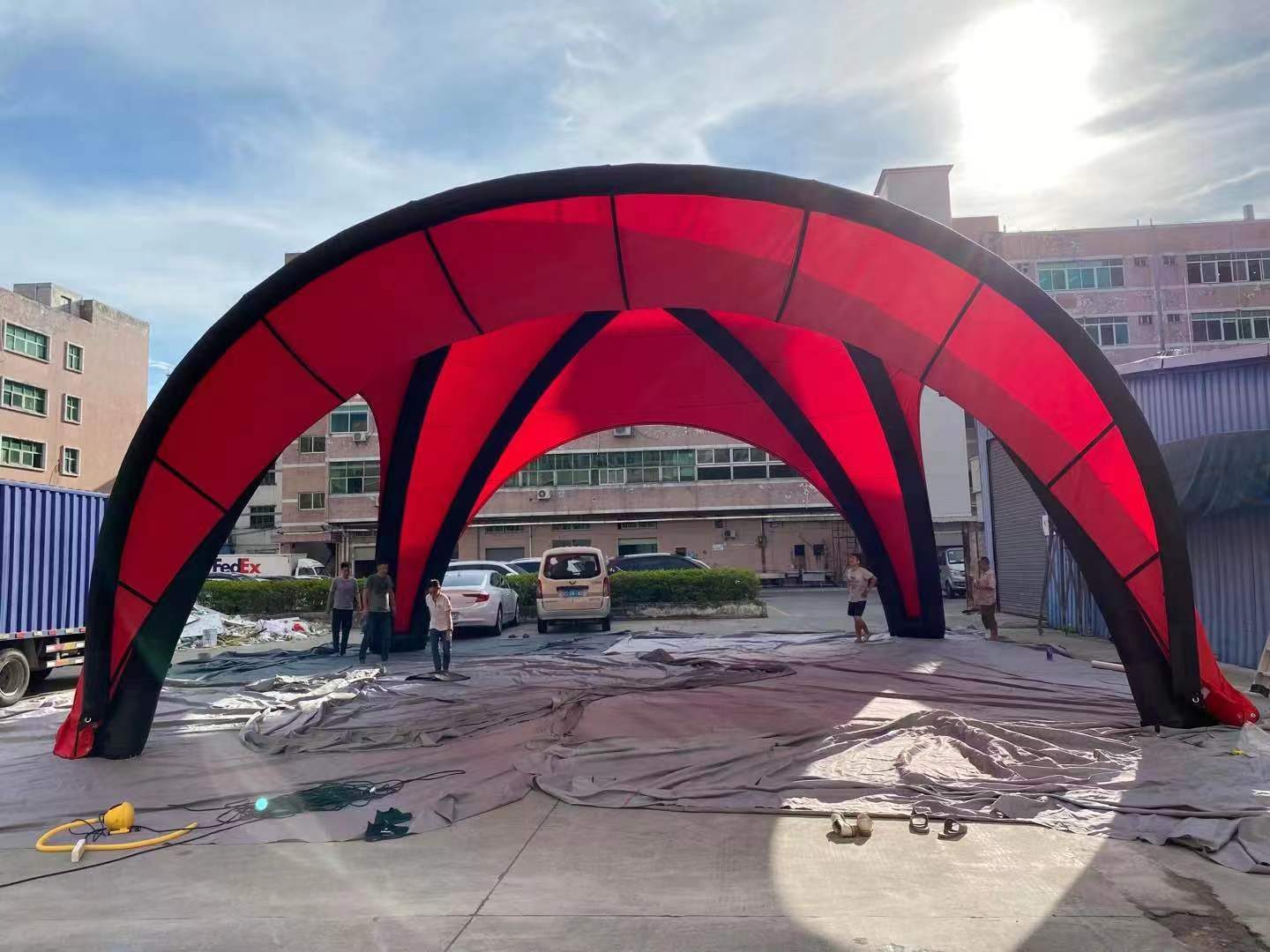
Offers Are Compared Across a Fleet, Not One Site
An airtight arch laid out on a concrete yard before it travels. Fleet buyers compare offers on a different basis from a one-off event: the same structure will be pitched on different floors by different crews, so the written fixing line and the packing method matter more than any single rendering. Ask each supplier how the offer behaves on its second and tenth site, not only the first.
- Concrete hardstanding
- Fleet use
- Repeatable setup
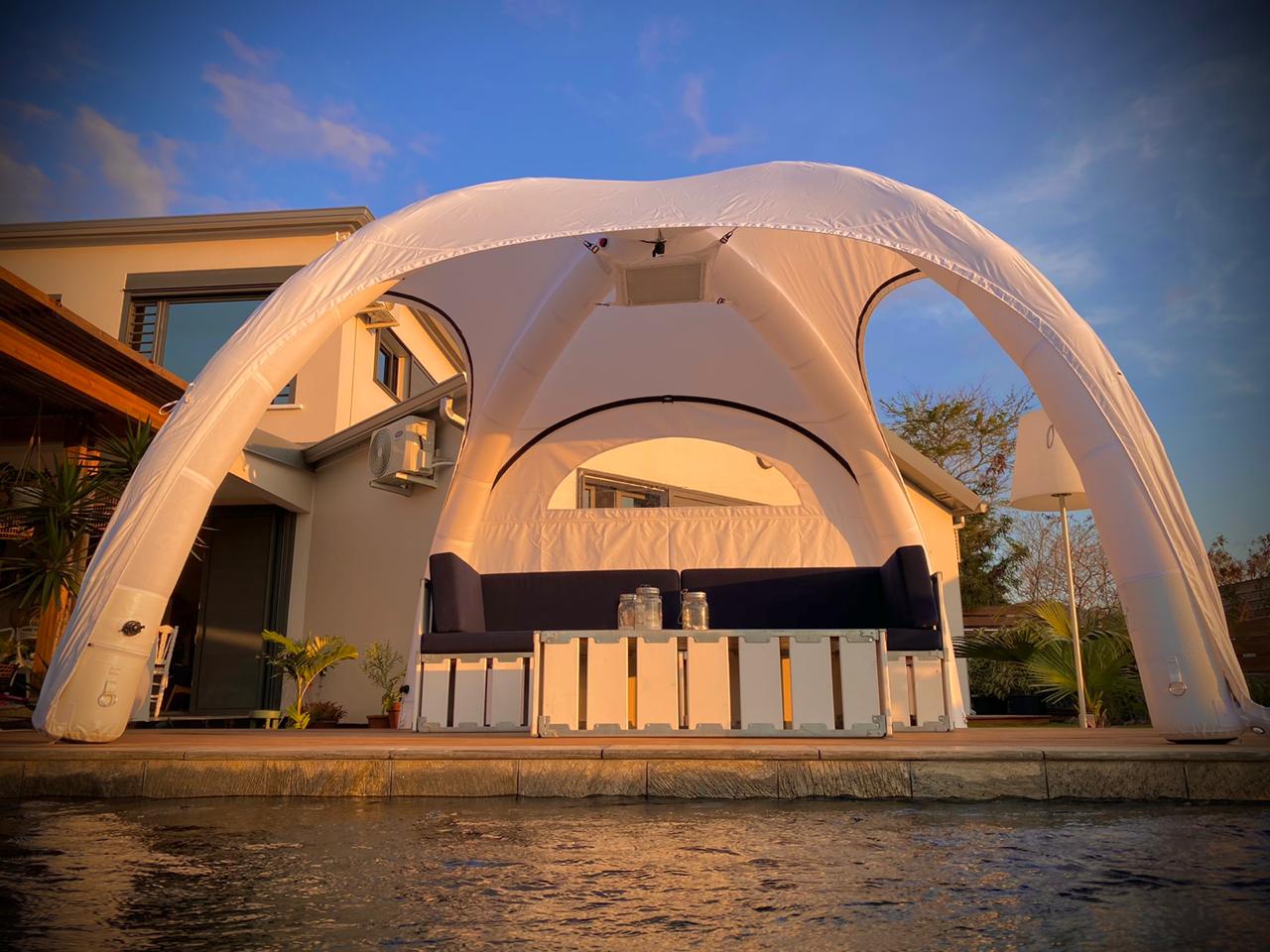
A Venue-Bound Structure Needs Its Constraints in Writing
An unprinted white canopy on a paved terrace with a building behind it. Hospitality and venue buyers inherit fixed edges: no drilling, a set terrace, a headroom line under the building. A commercial offer for a site like this must arrive with the weighted fixing method named, not assumed. If the quote is silent on what holds the unit down, the silence becomes your problem on delivery day.
- Paved terrace
- No drilling
- Weighted fixing named
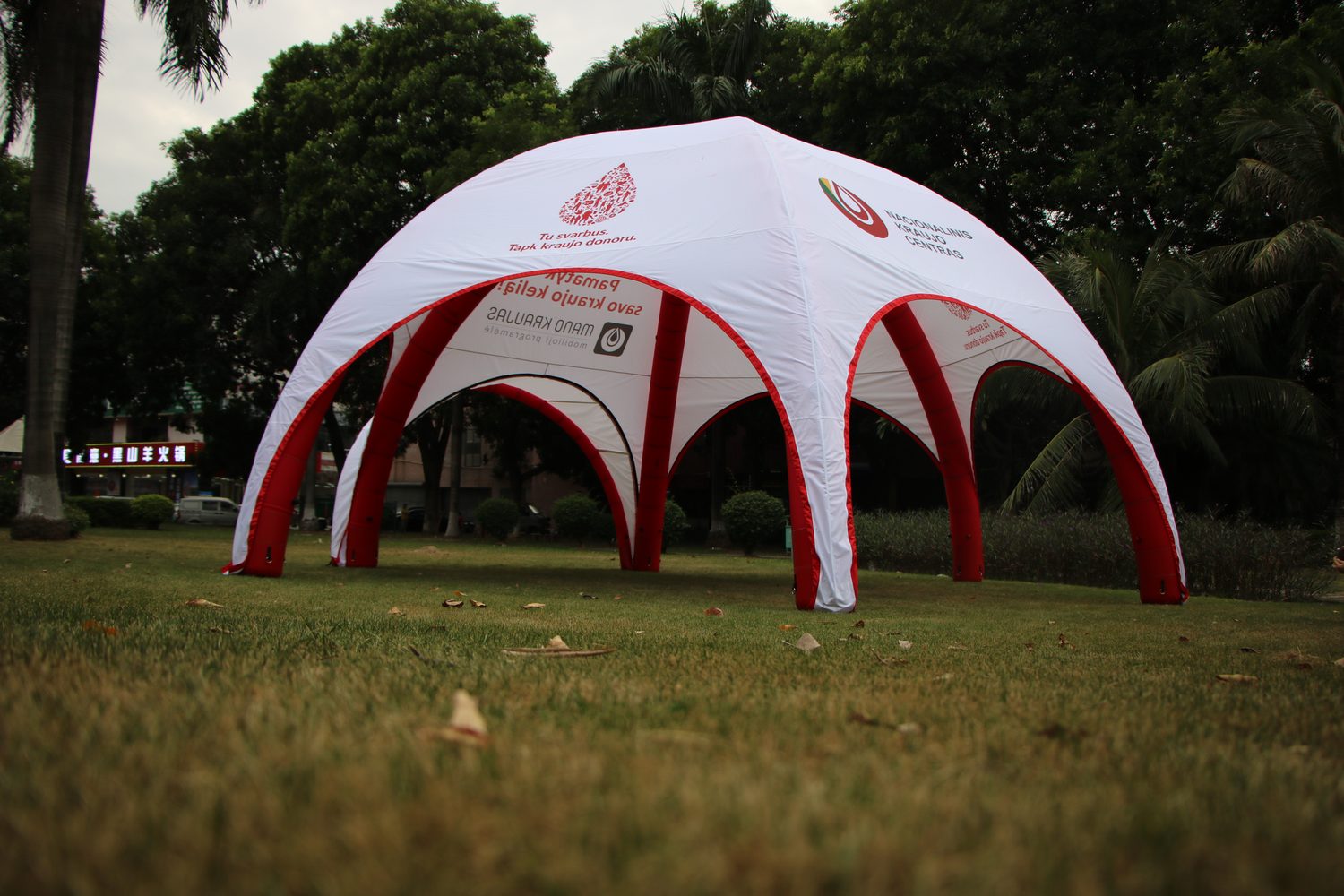
Institutional Buyers Print Everything, So Ask for the Proof
A dome carrying an institutional mark on mown grass. Public service and institutional buyers print every face, which makes the artwork sheet the most important page of the offer. One approved proof should list the roof, valance, walls, awning banner, arch banner and column patches. An offer that promises printing without naming the faces is deferring the decisions, not making them.
- Institutional print
- Approved artwork
- Every face listed
The label is not the specification
Retail listings sell a size on a label. Commercial listings sell a model with a manual behind it: a published metric size, a named fabric and print process where the range records one, and a fixing method per floor. The fastest test of any commercial tent for sale offer is to ask for the manual entry the price is based on.
- Label vs manual
- Ask for the entry
- Written sizes
Spare parts belong in the sale
A commercial structure lives through many setups, so the offer should say what happens when a panel or a bag is lost. Our cloth cover system keeps printed faces replaceable, and every fixing kit is listed per range. An offer that cannot answer the spare-parts question is pricing a one-weekend product into a multi-year job.
- Replaceable faces
- Listed kits
- Multi-year use
One unit or a programme, the terms stay written
Whether the enquiry is a single forecourt unit or a rolling programme, the quote path should not change: MOQ 1 for custom print, a written quotation within 24-48 hours, the figure Quoted per project (FOB), and the schedule confirmed in writing after design approval. Consistent terms are themselves a sign of a commercial-grade supplier.
- MOQ 1
- Written quote
- Same path at scale
From a Catalogue Label to a Written Model
Five KCCE ranges are shown below because each manual records something a buyer should demand to see in any commercial pop up canopy tent offer: how the canopy attaches, which weights hold it, which fabric and print process are recorded, which sizes are published, and how the range scales. These are listed specifications, not marketing lines.
AI Inflatable Tent

The AI manual documents 2.5×3M and 3×3M bays and states that the canopy is held by hook-and-loop rather than a zip. That is the level of detail a commercial listing should reach: not a fabric label, but a written line a service team can follow when a panel has to come off between events. If an offer cannot name how its own parts fasten, it is not a specification yet.
AII Inflatable Tent

AII is documented in 3M and 4M compact formats and its manual names iron blocks as the leg weight. A commercial offer that lists a structure without the holding method is half an offer. When a supplier writes the weight method into the quote, the crew that receives the delivery knows what to load and the venue knows what the floor will carry.
Tenda Inflável X

The X-series manual is the one that records a fabric weight and a print process: 400D Oxford cloth with heat transfer printing. It also lists modular aluminium connectors for joining same-size units, with awnings and banners as named items. A buyer comparing printed offers should ask every supplier to name the fabric and the process this precisely; where the answer is vague, the re-print risk sits with the buyer.
Tenda Inflável XL-A
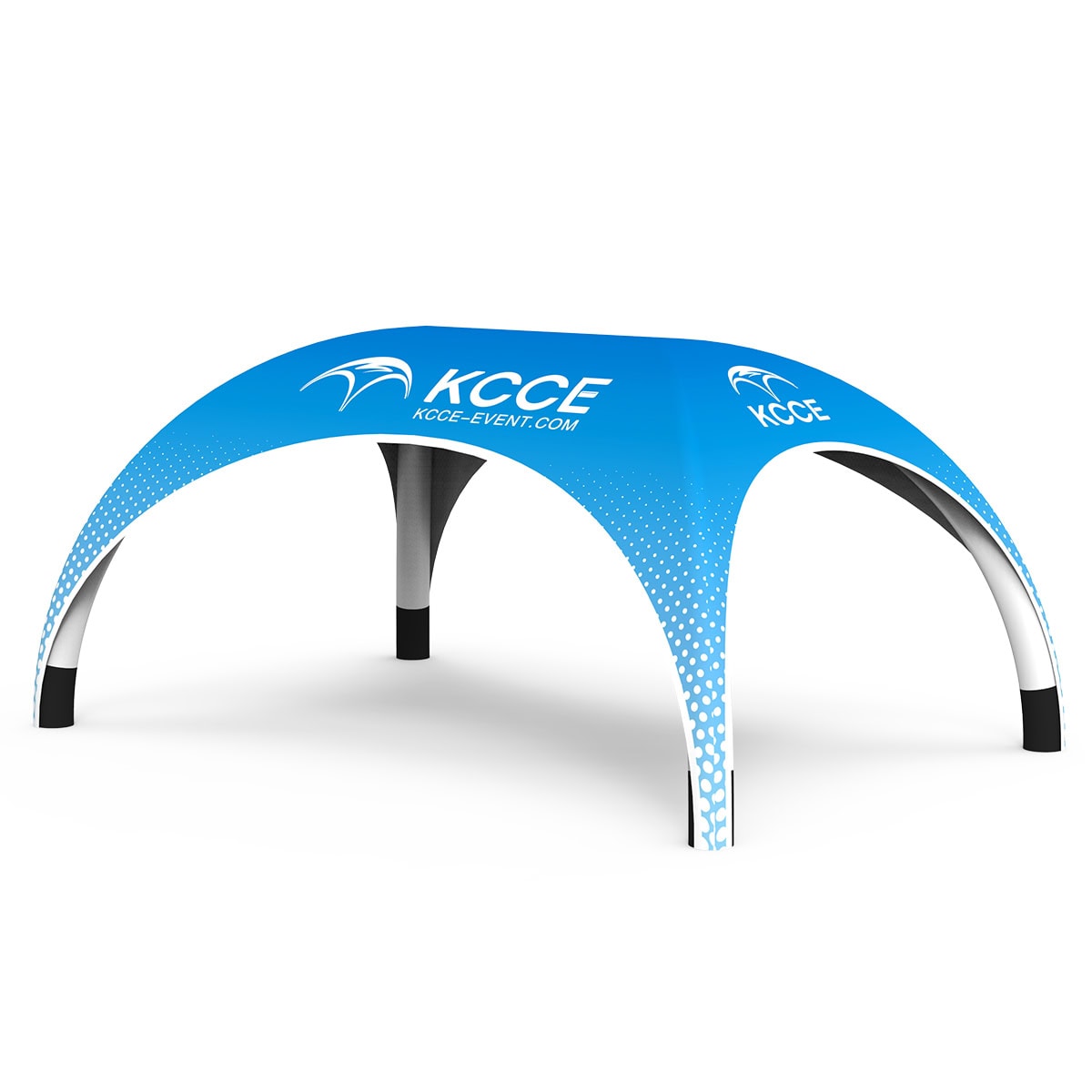
XL-A runs from 4.5×3M up to 7.5×4.8M, and its manual names wide and narrow awnings plus wide and narrow connecting cloth. That spread matters when comparing offers: a range with several published sizes can be matched to the site, while a single invented figure has to be accepted or rejected as a whole. Ask which entry in the range your quote is priced against.
N Inflatable Tent

The N manual writes down 3×3M through 4×6M and a 5×10M rectangle. For larger commercial programmes the documentation points further: an XL-B at 9.4×5.5M and a XII at 10M span are also recorded sizes. A serious offer scales through documented entries like these, not through multiplying a small model's numbers on a slide.
Six Lines a Commercial Quote Must State
A quote is read in minutes and lived with for seasons. Six lines separate a commercial event tent quotation from a price on a slide, and every one of them can be checked before any money moves. Ask both suppliers to answer all six.
Line one: the manual entry
The offer should name the model and the published metric size behind the price, for example an N 4×6M rectangle or an XL-A within its 4.5×3M to 7.5×4.8M range. A size that no manual records is not a bargain; it is a drawing that has never been built.
Line two: the printed faces, sheet by sheet
Roof, valance, walls, awning banner, arch banner and column patches are all listed on one approved artwork sheet. The X-series manual records 400D Oxford cloth with heat transfer printing; ask every offer to be that specific about both the material and the process.
Line three: the fixing kit per floor
Grass and sand take guy ropes with ground stakes; paving and hall floors take guy ropes with sand bags. U, VI and VII name bar bags, AII names iron blocks, XII names strip sand bags. An offer without a fixing line is asking the buyer to discover the floor problem twice.
Line four: the joining parts, if any
Modular aluminium connectors for joining same-size units are documented in the X, X6, XL-A and XL-B manuals, and XL-A names wide and narrow connecting cloth. If the plan joins units, those parts belong on the quote, not in a footnote after the deposit.
Line five: the terms, stated once
A written quotation within 24-48 hours, the figure Quoted per project (FOB), and lead time confirmed in writing after design approval. Vague terms are not flexible terms; they are unfinished ones.
Line six: what the price does not include
Freight beyond FOB, venue approvals, and anything the survey has not yet seen. A commercial offer is allowed to have boundaries as long as the boundaries are written down and the drawing comes first.
What Commercial Grade May Claim
Heavy duty commercial tent language is easy to write and hard to hold. This section fixes what the phrase is allowed to mean: only what a manual records, on the ranges that record it, with the fixing method treated as part of the product rather than an afterthought.
Claim only what the manual records
The phrase commercial grade carries no figure on its own. What it can mean here is concrete: the X-series manual records 400D Oxford cloth, the bladders are TPU, and the cloth cover is a documented part of the system. Where a range does not record a figure, a serious offer says so rather than filling the gap with an impressive number.
The print process is named, not implied
Heat transfer printing is written into the X-series manual alongside its fabric. When comparing printed offers, ask each supplier to name the process and the faces on one approved sheet. Printing that is only promised in adjectives tends to be re-quoted in person.
Fixing is part of the grade
Guy ropes with ground stakes on grass and sand, guy ropes with sand bags where the surface cannot be drilled, and the range-specific kits: bar bags for U, VI and VII, iron blocks for AII, strip sand bags for XII. A commercial quote that leaves these out has not finished pricing the job.
Scaling happens through documented entries
From an AI bay at 2.5×3M, through N rectangles to 5×10M, up to an XL-B at 9.4×5.5M and a XII spanning 10M, growth follows the manuals. An offer that scales by inventing a bigger number has skipped the step that makes it buildable.
Red Flags in a For-Sale Listing
None of these signs proves a bad product on its own, but each one shifts risk onto the buyer. A commercial pop up canopy listing that shows several at once is telling you how the second site will go. Four cards, four habits.
A size no manual records
If the quoted size appears in no model documentation, nothing has ever been built to it. Published rectangles such as N 4×6M or XL-A 6×4M can be traced to a manual page; an invented figure cannot. Ask which entry the price is based on, and watch what happens to the answer.
No fixing line for the floor
A structure without a stated holding method is half a product. Grass and sand take guy ropes with ground stakes; surfaces that cannot be drilled take guy ropes with sand bags; U, VI and VII name bar bags, AII iron blocks, XII strip sand bags. An offer silent on this line hands the problem to whoever unpacks the cartons.
Printing promised without a proof
When printing is sold in adjectives, every face is decided twice: once in the sales message and again after delivery. The X-series route is written down as 400D Oxford cloth with heat transfer printing, and every face lives on one approved artwork sheet. Ask to approve the sheet before anything is cut.
Terms that move with the quantity
A quote path that changes when you order one unit instead of ten is not a commercial path. MOQ 1 for custom print, a written quotation within 24-48 hours, Quoted per project (FOB), and the schedule confirmed after design approval: the same lines for a first unit and a fleet. Consistency here predicts consistency later.
How to Compare Two Offers Side by Side
Two offers rarely fail on the tent; they fail on the missing lines. Six steps take two commercial shade tent quotes, or any pair of offers, onto the same footing before a single figure is compared. All six can be run by email before anything is signed.
Put both offers on the same six lines
Before comparing numbers, rewrite each offer as six lines: manual entry, published size, printed faces, fixing kit, joining parts, terms. What a commercial tent for sale listing leaves out is usually the real difference between two prices.
Check every size against a manual
Take each size in the offer and find it in the model documentation. Published rectangles such as N 4×6M or XL-A 6×4M will be there; a figure that appears nowhere has never been through a workshop, whatever the rendering suggests.
Ask what holds each unit down
One question, asked identically of every supplier: what holds the unit down on my floor? The documented answers are guy ropes with ground stakes, guy ropes with sand bags, and the range-specific weights. Silence on this line disqualifies quietly.
Ask what joins the units
If the plan shows more than one structure, ask for the joining parts in writing. Modular aluminium connectors belong to the X, X6, XL-A and XL-B manuals, and XL-A carries wide and narrow connecting cloth. Improvised joins are where frontages fail.
Compare the written terms, not the totals
A quote is Quoted per project (FOB) here, answered in writing within 24-48 hours, with lead time confirmed after design approval. When one offer is cheaper because half its lines are missing, the two prices are not for the same job.
Ask for the drawing before you commit
Send the survey and the comparison, and ask each shortlisted supplier for a written layout naming the model, the published size, the printed faces, the joining parts and the fixing kit. The supplier who answers that quickly will answer just as quickly after the deposit.
What We Send Back With a Written Quote
The reply to a survey is four things: a written layout, one artwork sheet, a fixing line per floor zone, and terms in the open. A commercial canopy tent quote is judged by whether those four arrive without being chased, so we put them in every first reply.
A written layout, not a label
The reply names the documented model and one of its published sizes, from an AI bay at 2.5×3M through N rectangles up to 5×10M, with XL-B and XII above when the programme outgrows them. The layout is the offer's anchor: every other line refers back to it, and the next venue starts from the same sheet.
One artwork sheet for every printed face
Roof, valance, walls, awning banner, arch banner and column patches are listed together on one approved proof, and the X-series print route of 400D Oxford cloth with heat transfer printing is named on it. Approve the sheet once and the re-print conversation never happens.
A fixing line per floor zone
The quote carries the holding method beside the structure: guy ropes with ground stakes on soft ground, guy ropes with sand bags on surfaces that must not be drilled, and the named range kits where the manual lists them. A mixed site carries more than one line, and the quote says so.
Terms in the open
Written quotation within 24-48 hours, the figure Quoted per project (FOB), lead time confirmed in writing after design approval, and custom print starting at one unit. The same terms apply whether the order is a single forecourt unit or a multi-city programme.
Pricing & Minimum Order
The figure follows the written layout: which model and published size, which printed faces, any joining parts, the fixing kit per floor, and how many identical units move. Comparing a commercial canopy tent for sale quote against another offer only means something when both rest on the same six lines, so the table below shows the terms our figures always carry.
| Item | MOQ | Terms |
|---|---|---|
| One documented unit with a single approved printed set | 1 unit | Quoted per project (FOB) |
| Additional identical units on the same artwork sheet | 1 unit | Quoted per project (FOB) |
| Joined frontage with documented connectors and connecting cloth | Named as lines | Quoted per project (FOB) |
| Fixing kit per floor zone, range-specific weights included | Named as lines | Quoted per project (FOB) |
| Prazo de entrega | — | Confirmed in writing after design approval |
Every quotation is answered in writing within 24-48 hours and the figure is fixed once the artwork sheet is approved. When a commercial canopy tent for sale comparison has a deadline, put it in the first message so the reply lands while the other offers are still open. A quote requested after the venue is approved is a quote you cannot use.
Three Offers That Passed the Test
Three builds photographed where they really stand: a branded unit working a field demonstration, printed canopies forming one frontage on paving, and a row of identical domes reading as a fleet. Read them for the lines that had to be written before delivery: the print process, the weights, and the per-unit repetition.
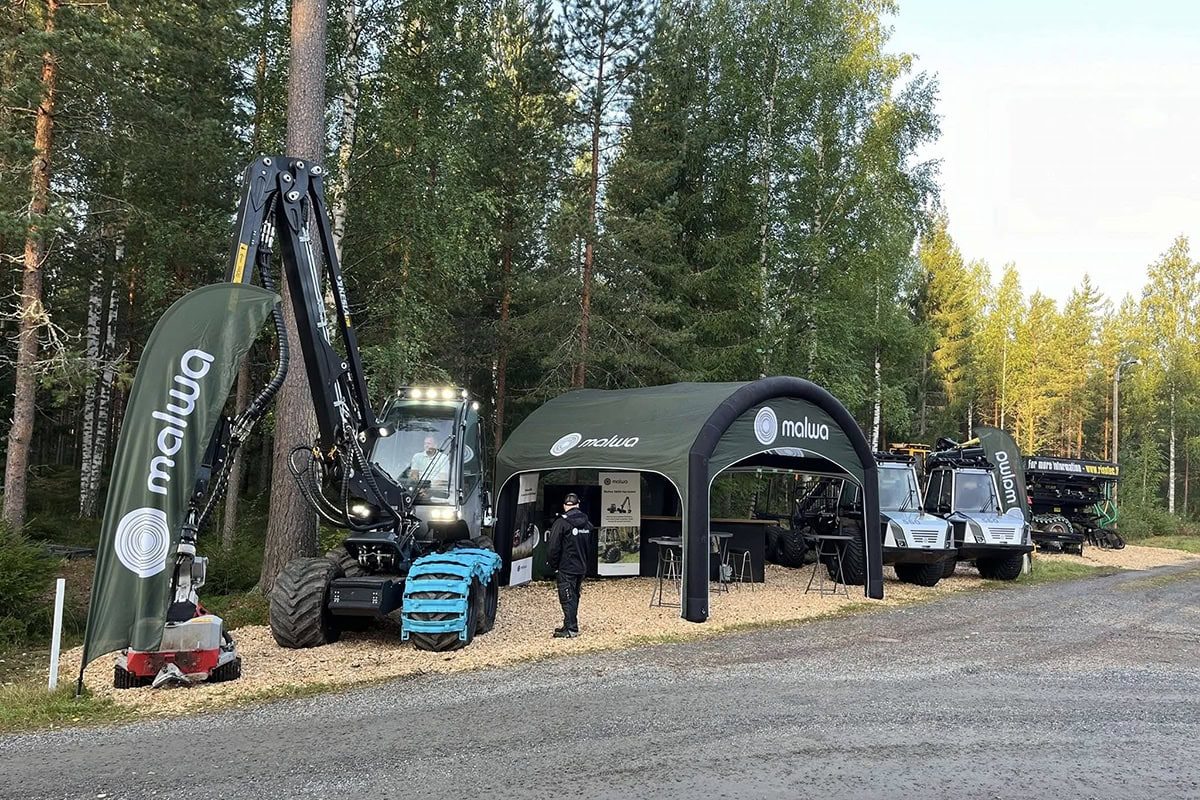
A Working Brand, Printed and Documented
A green unit carries its printed branding through a working demonstration on a field. This is what a commercial print offer looks like after delivery: the faces match the approved sheet, the ground takes the documented stake fixing, and the structure reads as one brand from every side. Offers are compared on whether this outcome is written down in advance.
- Printed branding
- Field setup
- Documented fixing

The Promo Stand Test
Printed canopies form one frontage on paving. Hard surfaces take weighted fixing, so an offer for a site like this must name its weights before the deposit, and the printed frontage must exist as an approved proof rather than a promise. A promo stand that passes both tests is a commercial job; one that skips them is a guess with a logo on it.
- Weighted fixing
- One frontage
- Approved proof
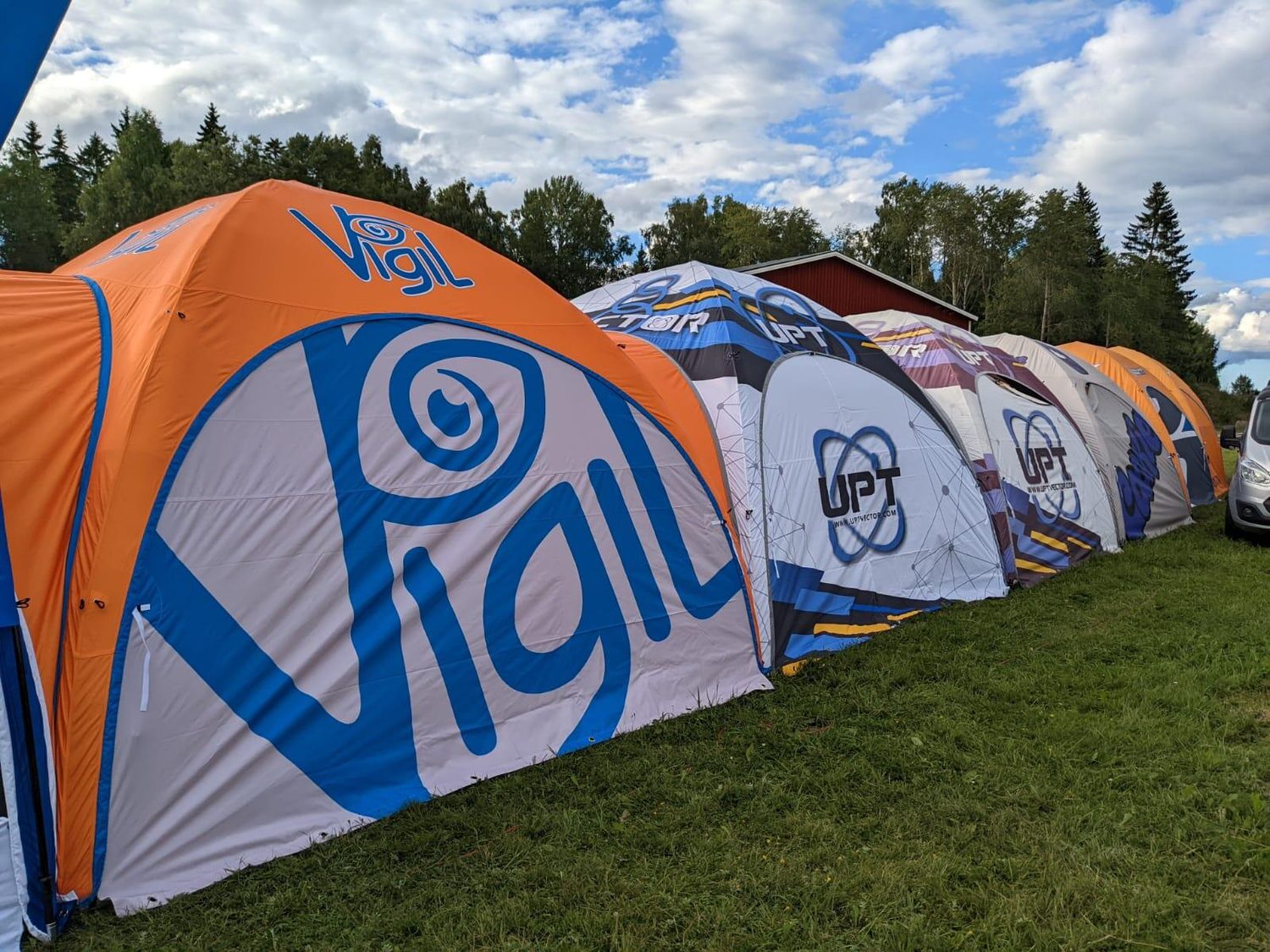
A Row Reads as a Fleet
Several domes line up as one row on paving. A row is how a fleet or a multi-booth offer actually looks on the ground, and it only comes off when every unit is the same documented model with the same packing and fixing method. When comparing offers for a row, ask for the per-unit lines to be identical, because the crews will treat them that way.
- Fleet row
- Same model repeated
- Identical lines
Perguntas Frequentes
Offers That Became Installations
Three cases, three tests an offer had to pass: every printed face on one sheet, a multi-unit set with matching lines, and a full print that survived because the process was named in advance.
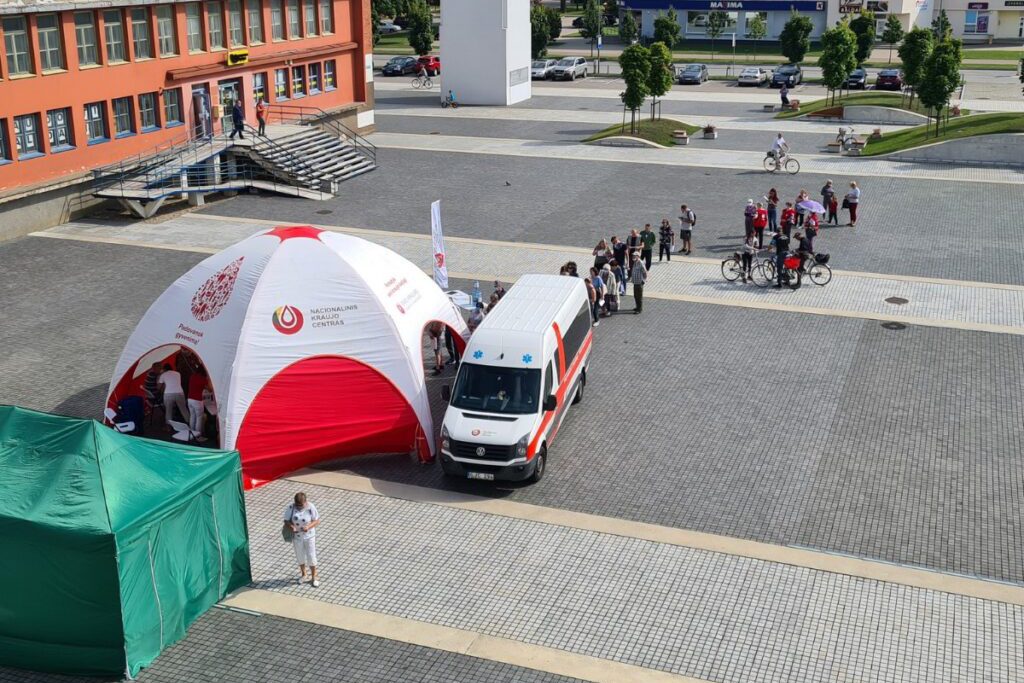
Institutional Print, Every Face
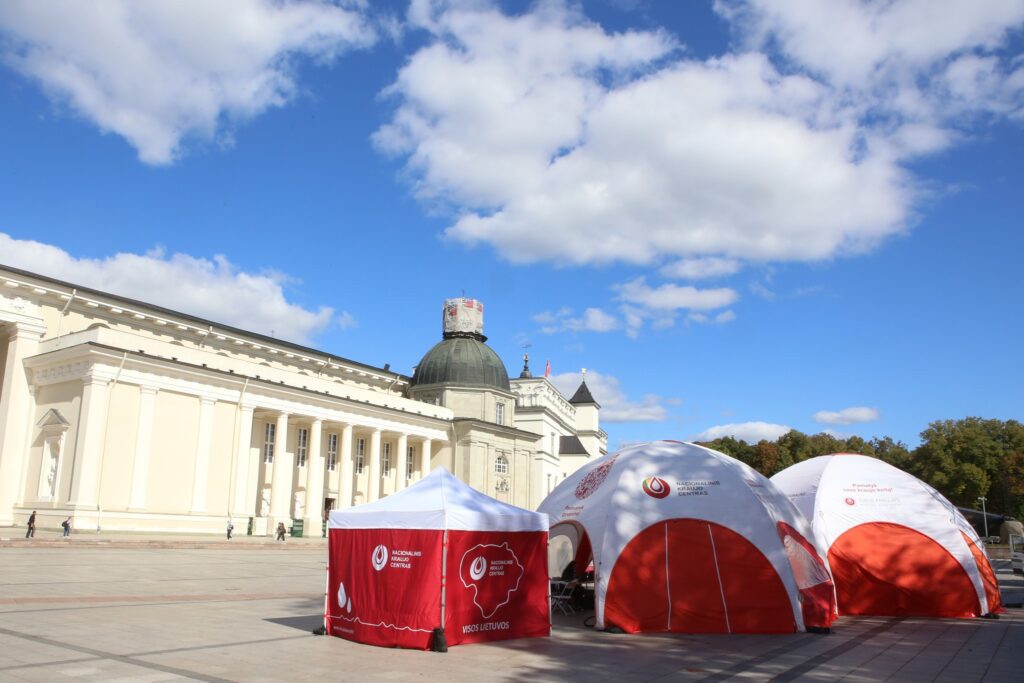
One unit on a public square carries an institutional mark across its faces while a queue forms beside it. Institutional buyers print everything, so the artwork sheet is the heart of the offer: every face listed, every cut approved, before printing begins.
Three Units, One Set of Lines
Three bays stand to one front in front of a colonnaded building. A multi-unit offer is read per unit: same documented model, same fixing line, one artwork sheet across the set. When the lines match, the row assembles without a supervisor explaining it twice.
Full Print Is a Sheet, Not a Surprise
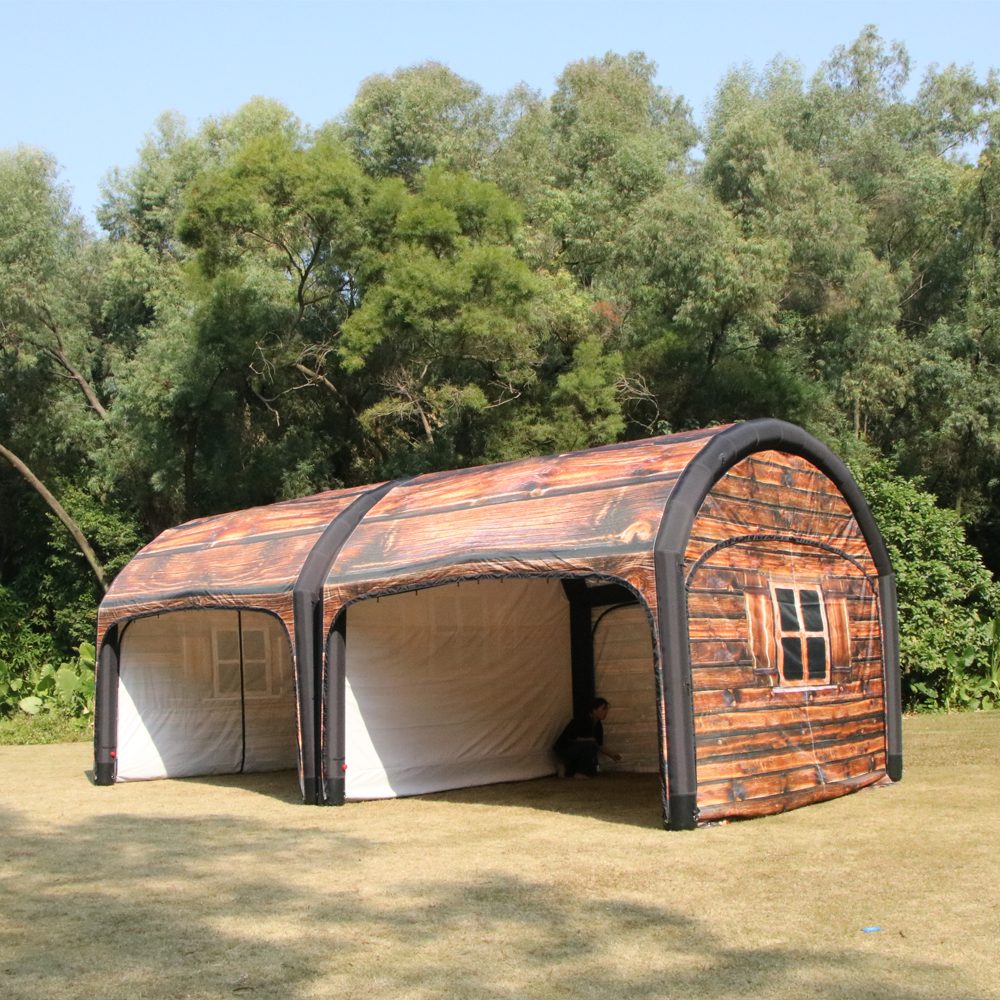
A full-graphic structure stands on open grass with the print carried across roof and walls. Full print is the clearest test of an offer: either the artwork sheet covers every face and the process is named, or the effect is being sold without the means to repeat it.


